


• Players of probability
• Introduction
• History of probability
- A gambler’s game
- Founders
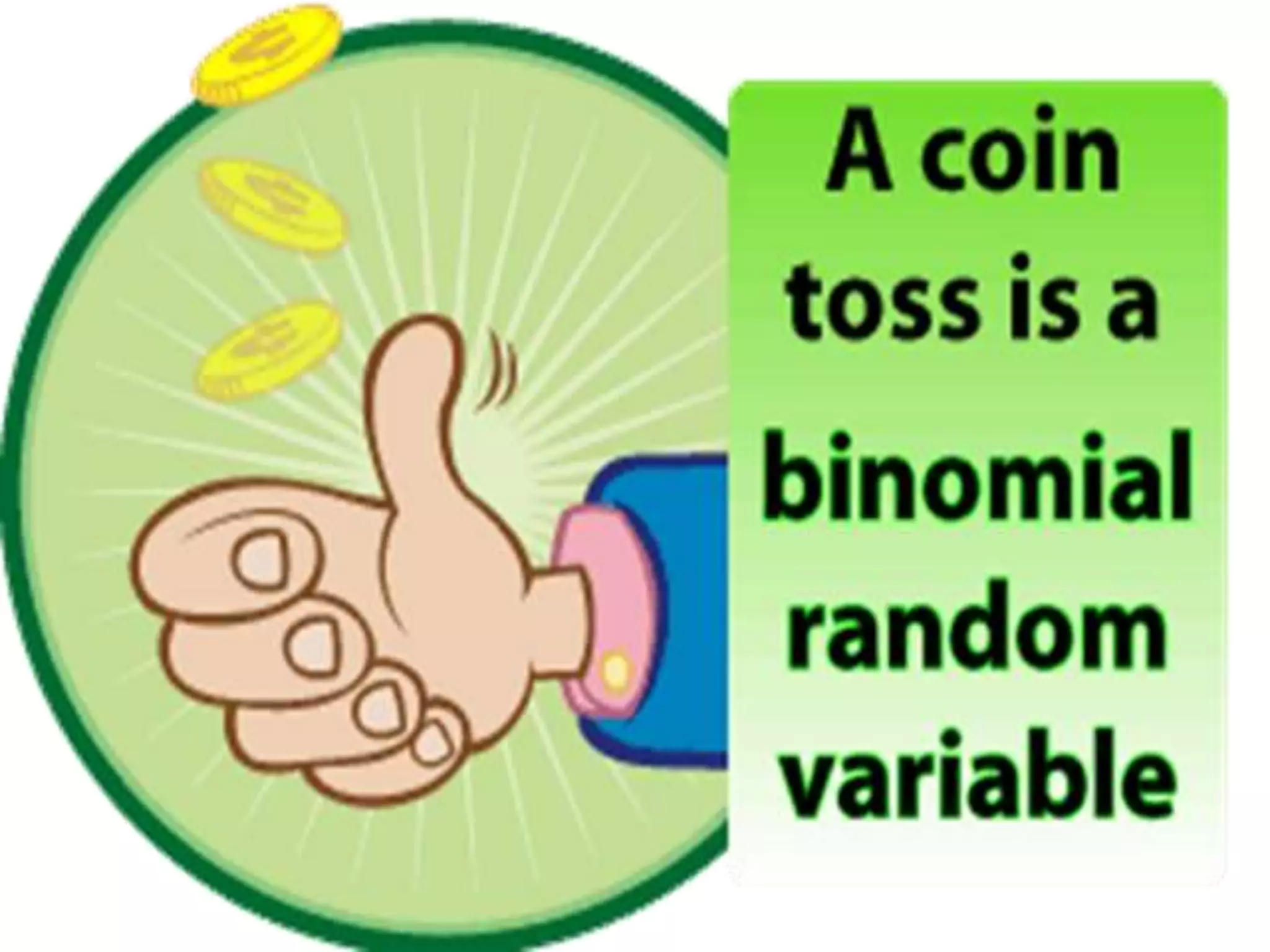
• Yes or No game ( coin toss )
• The game of dice
• Activities related to basic probability
• Quizzes with solutions
• Conclusion
Characters and
their roles
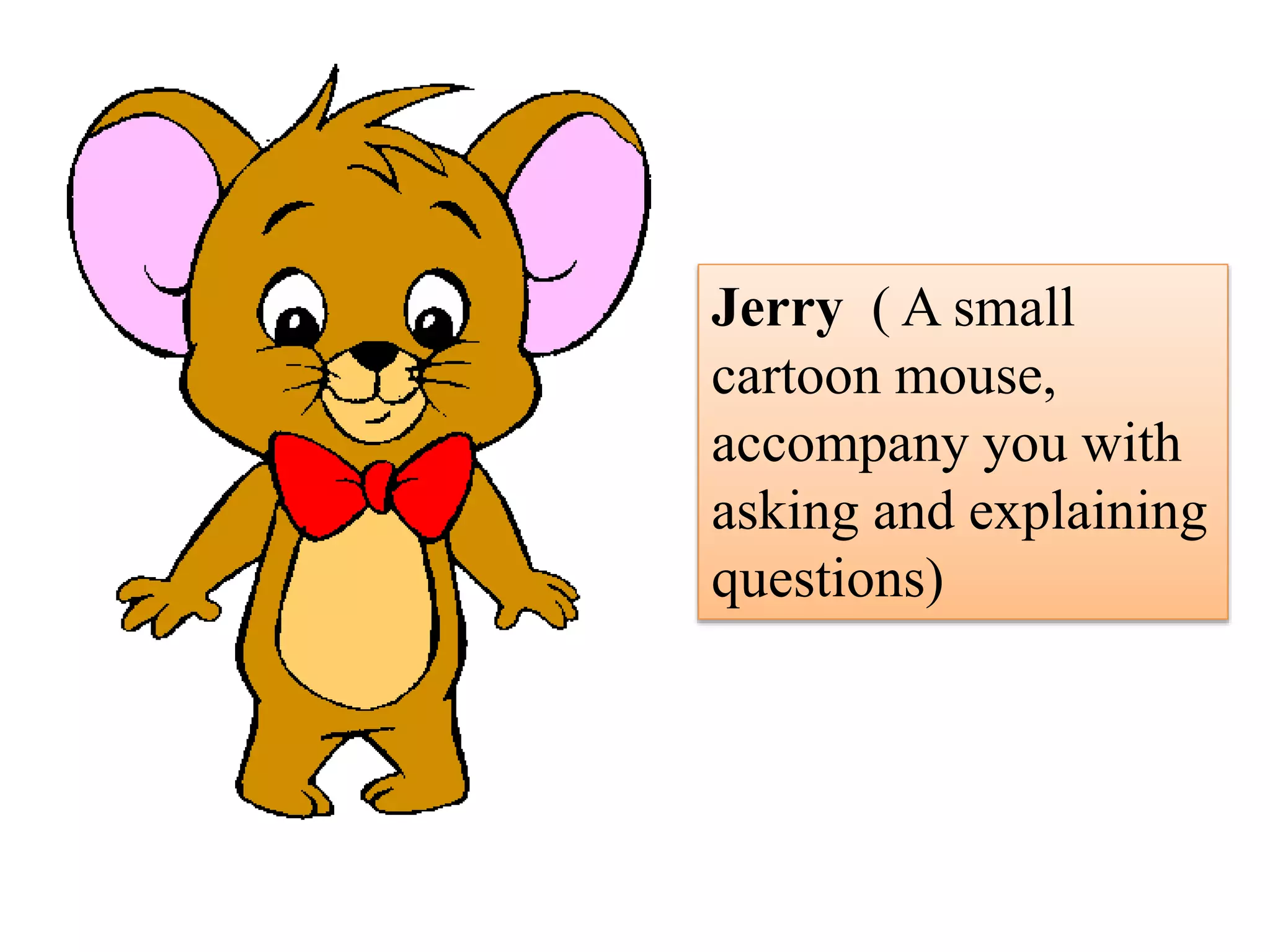
Jerry ( A small
cartoon mouse,
accompany you with
asking and explaining
questions)
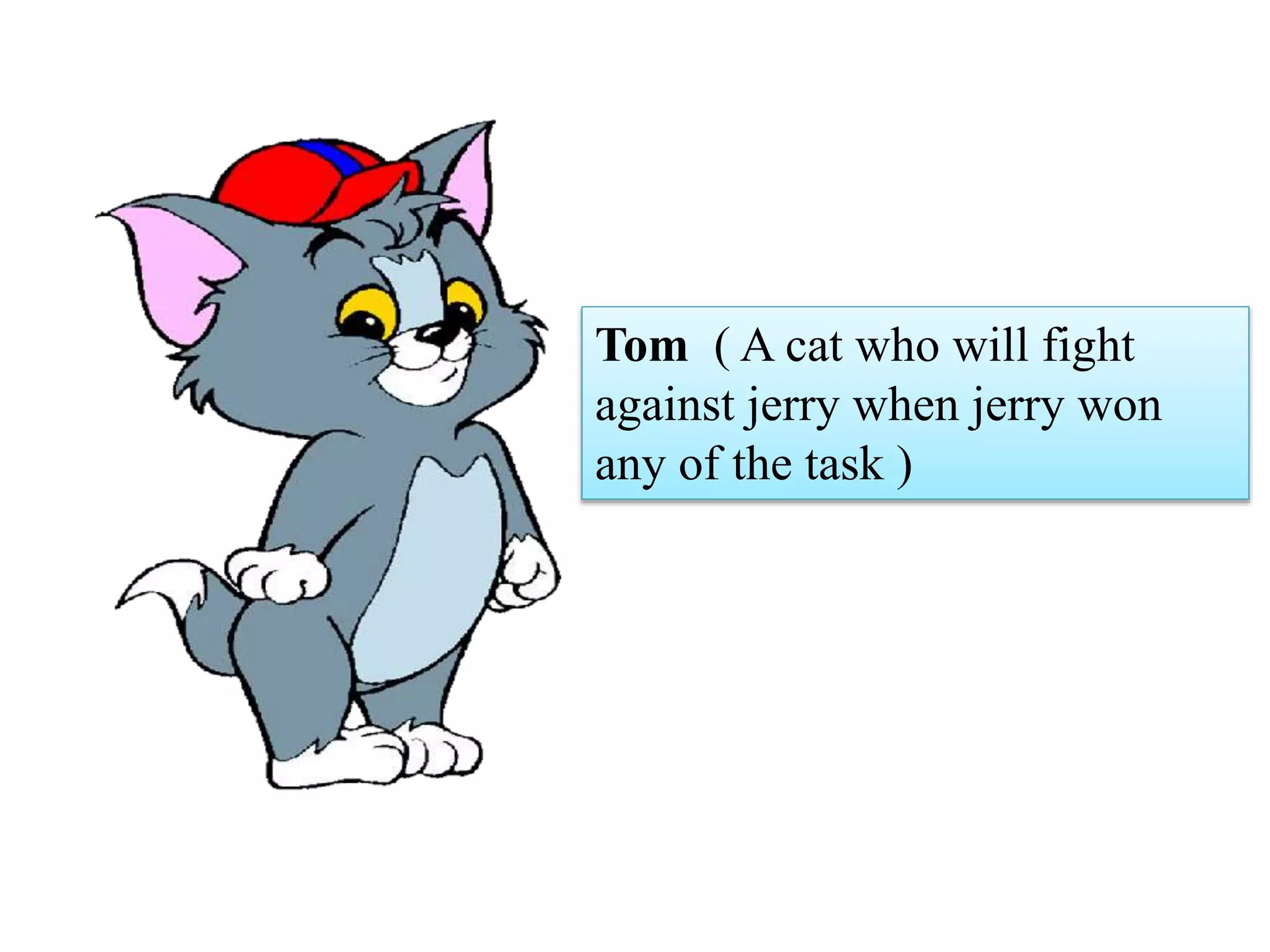
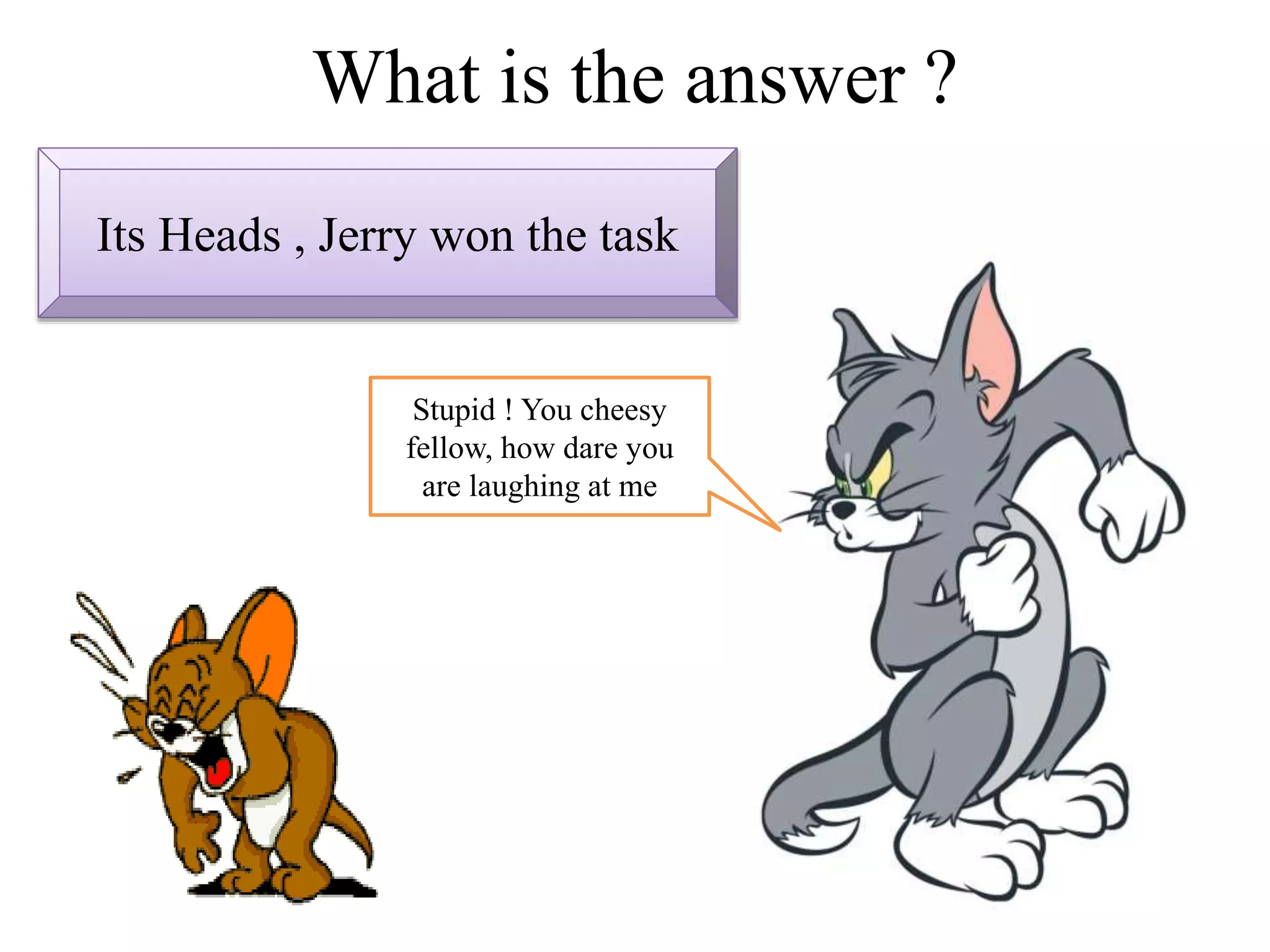
Tom ( A cat who will fight
against jerry when jerry won
any of the task )
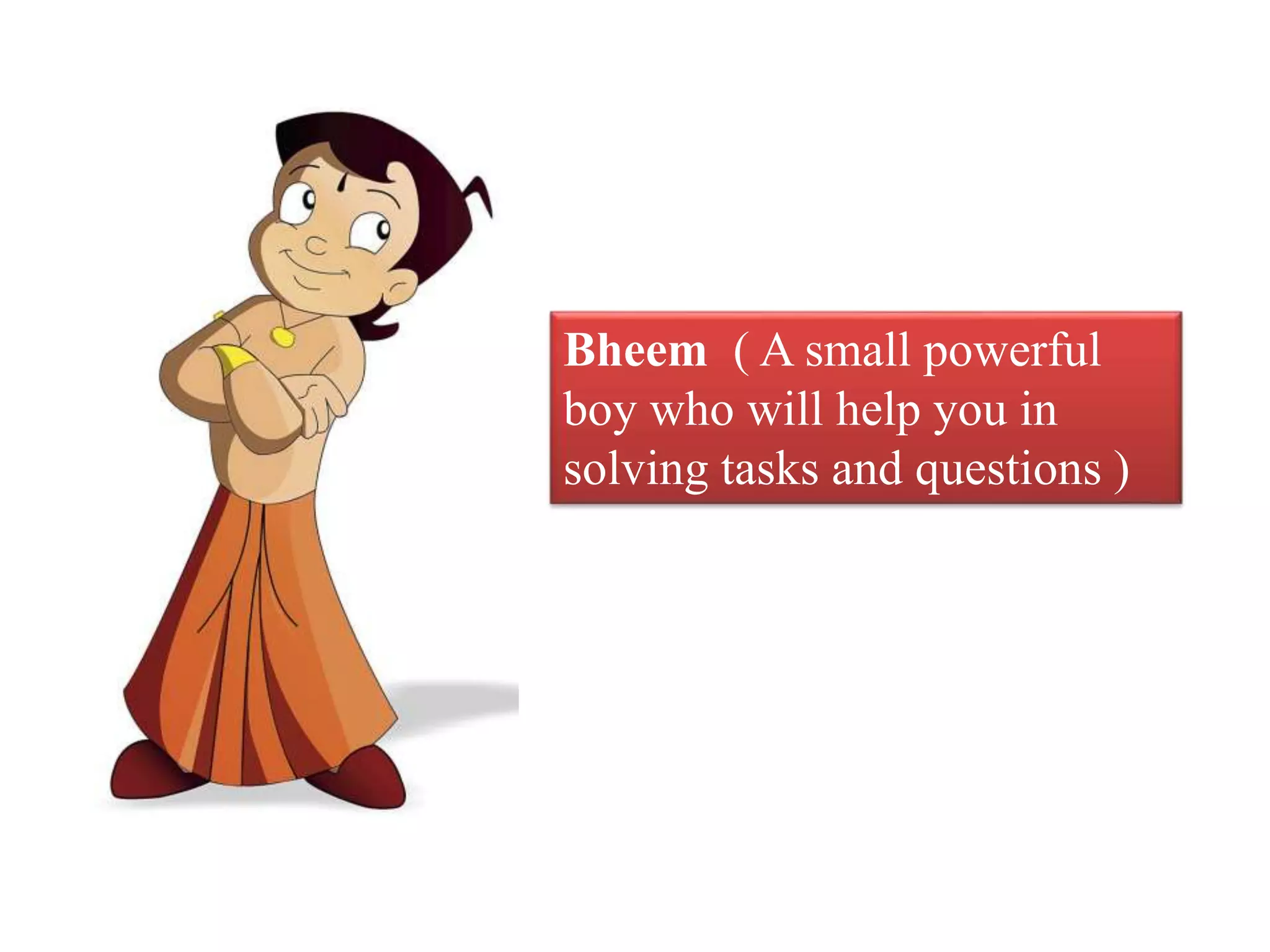
Bheem ( A small powerful
boy who will help you in
solving tasks and questions )
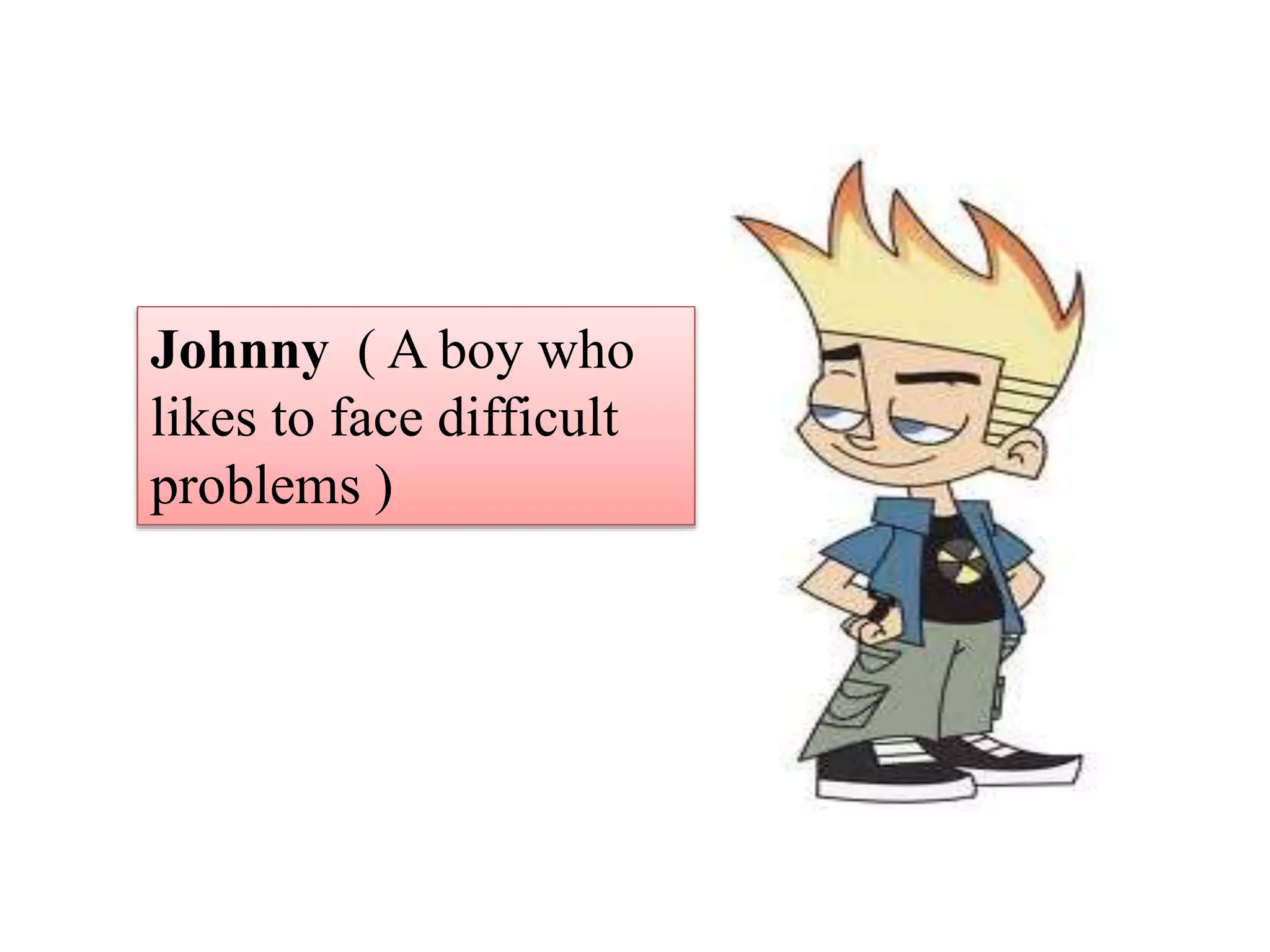
Johnny ( A boy who
likes to face difficult
problems )
In our day to day life , we often hear some
words, which are given below :-
 Probably
 Certain
 Chance
 Luck
In this PPT you will discuss about this in
detail
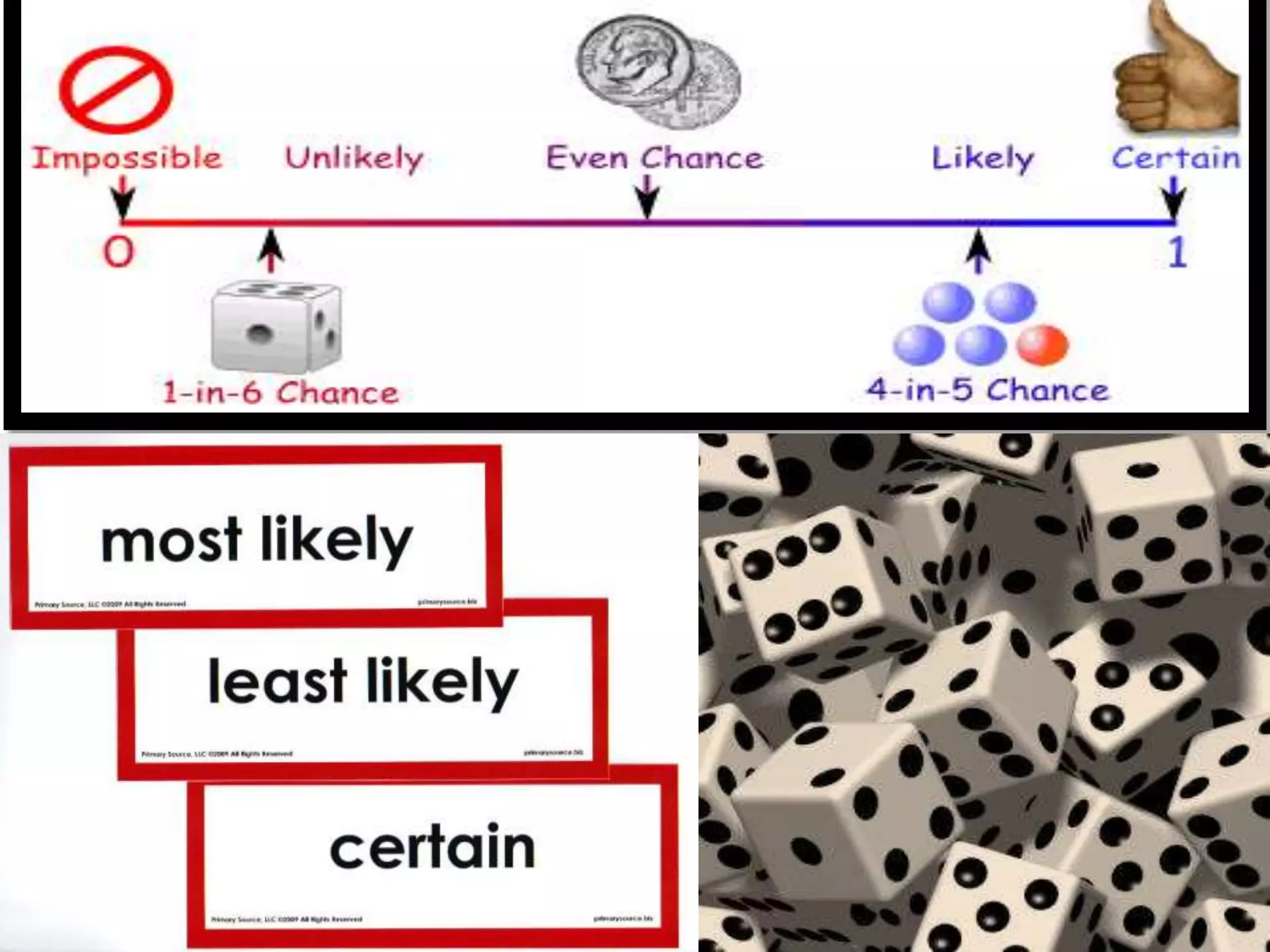
The word probability means
something happening is likely and
unlikely to happen, it is expressed
in fractions or decimals or in
percentage
Probability terms
Trial :-
An action which results in one
or several outcomes
Outcome :-
A situation that occurs at the end
Event :-
A thing that happens in a
particular situation
Did you know ?
Probability first started by a gambler, who had
put forth a task to two mathematician :-
 Blaisie Pascal
 Pierre de Fermat
The game consisted in throwing a pair of dice
24 times; the problem was to decide whether or
not to bet even money on the occurrence of at
least one "double six" during the 24 throws.
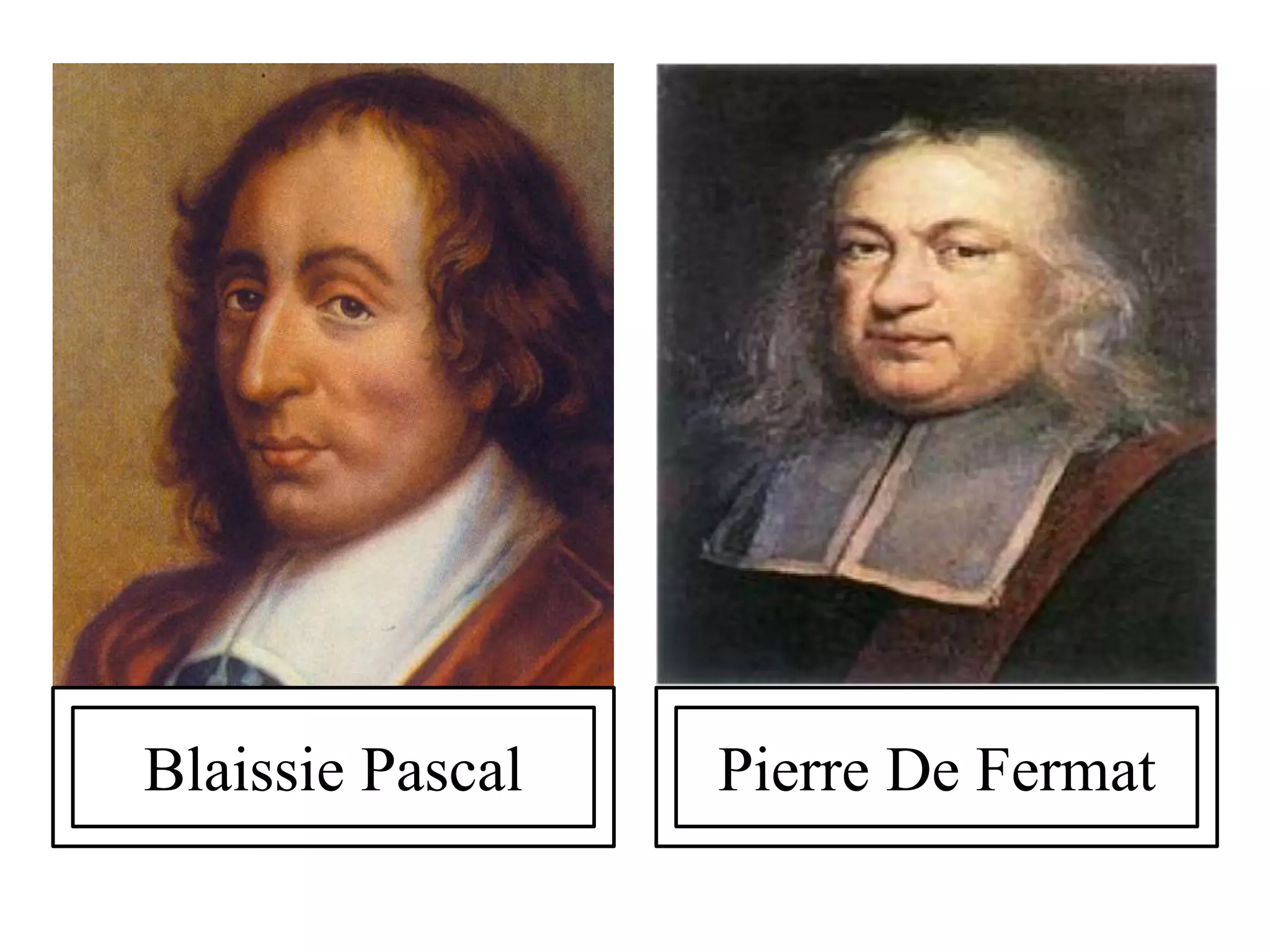
Now we’ll see the two mathematician
Blaissie Pascal Pierre De Fermat
The problem and others posed by de Méré led to an
exchange of letters between Pascal and Fermat in
which the fundamental principles of probability
theory were formulated for the first time. Although
a few special problems on games of chance had
been solved by some Italian mathematicians in the
15th and 16th centuries, no general theory was
developed before this famous correspondence.
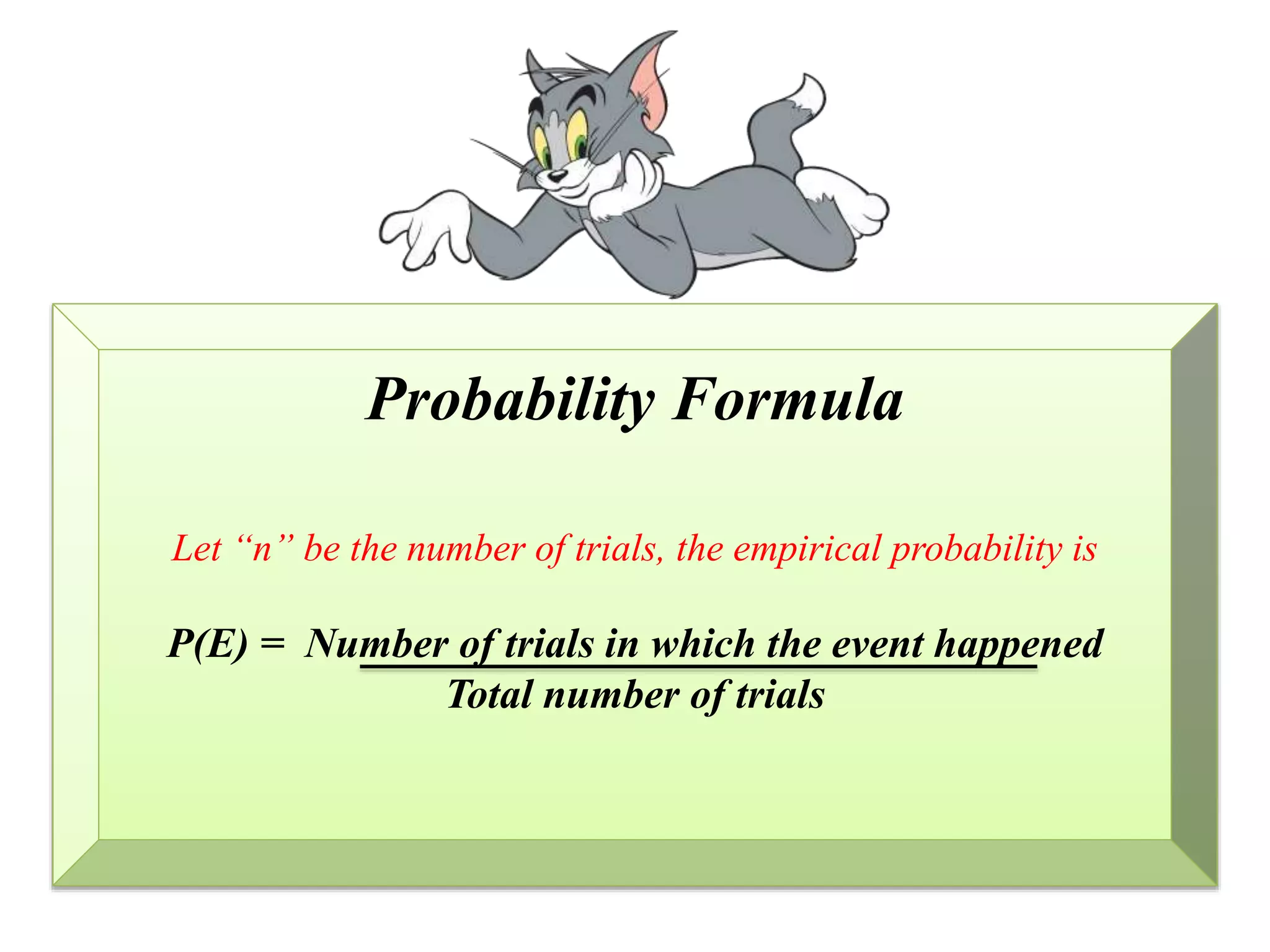
Probability Formula
Let “n” be the number of trials, the empirical probability is
P(E) = Number of trials in which the event happened
Total number of trials
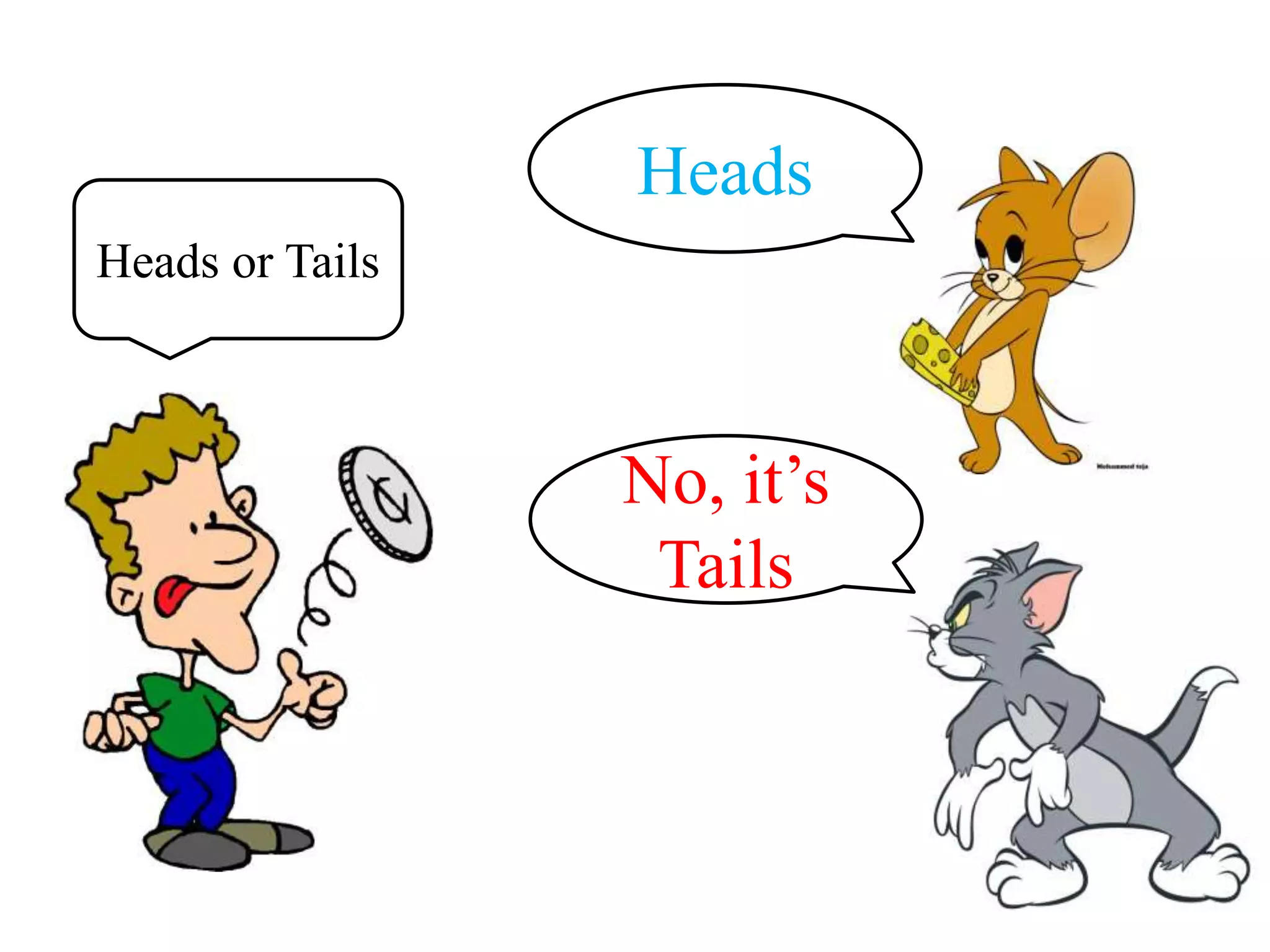
Heads or Tails
Heads
No, it’s
Tails
What is the answer ?
Its Heads , Jerry won the task
Stupid ! You cheesy
fellow, how dare you
are laughing at me
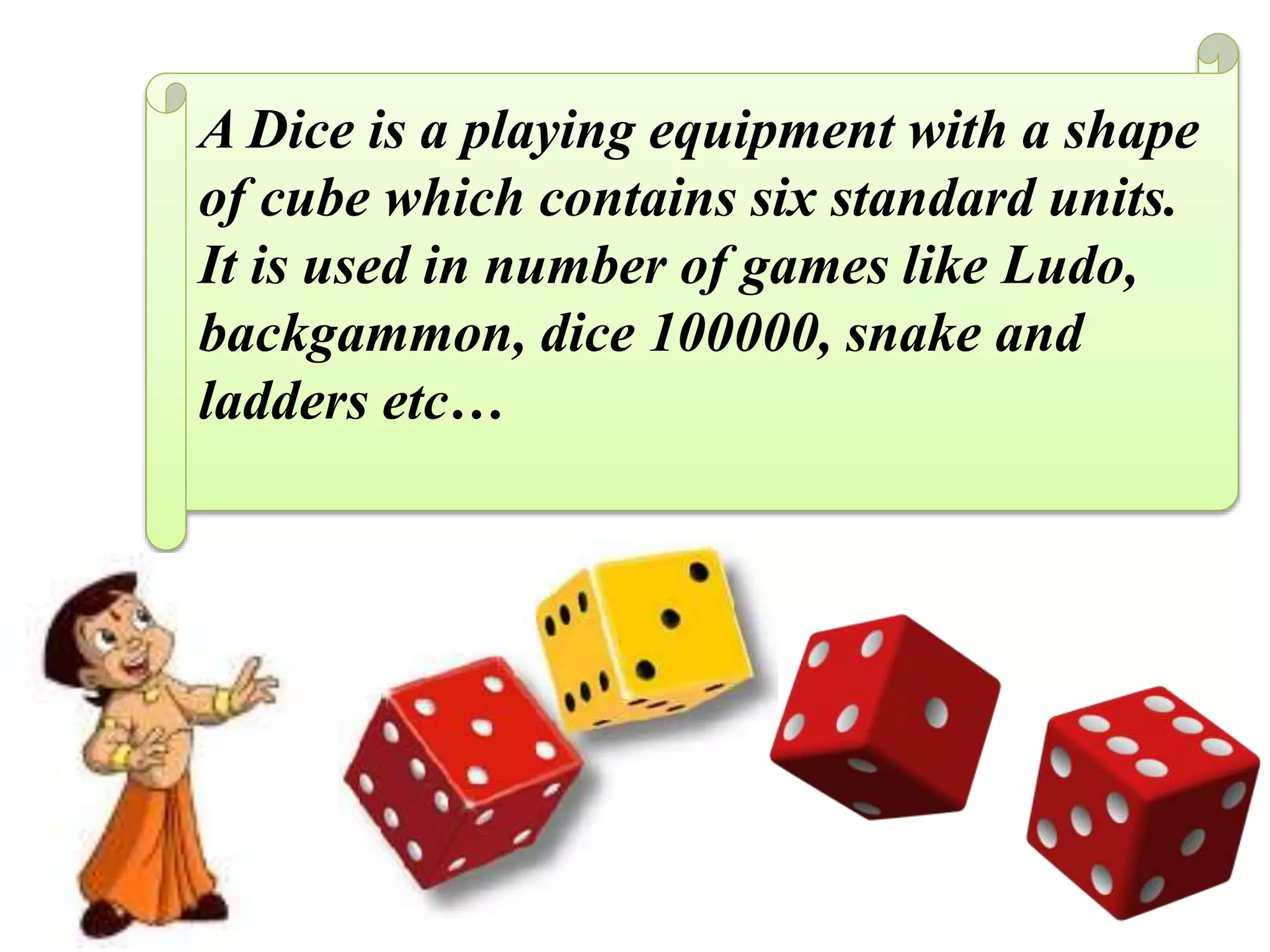
A Dice is a playing equipment with a shape
of cube which contains six standard units.
It is used in number of games like Ludo,
backgammon, dice 100000, snake and
ladders etc…
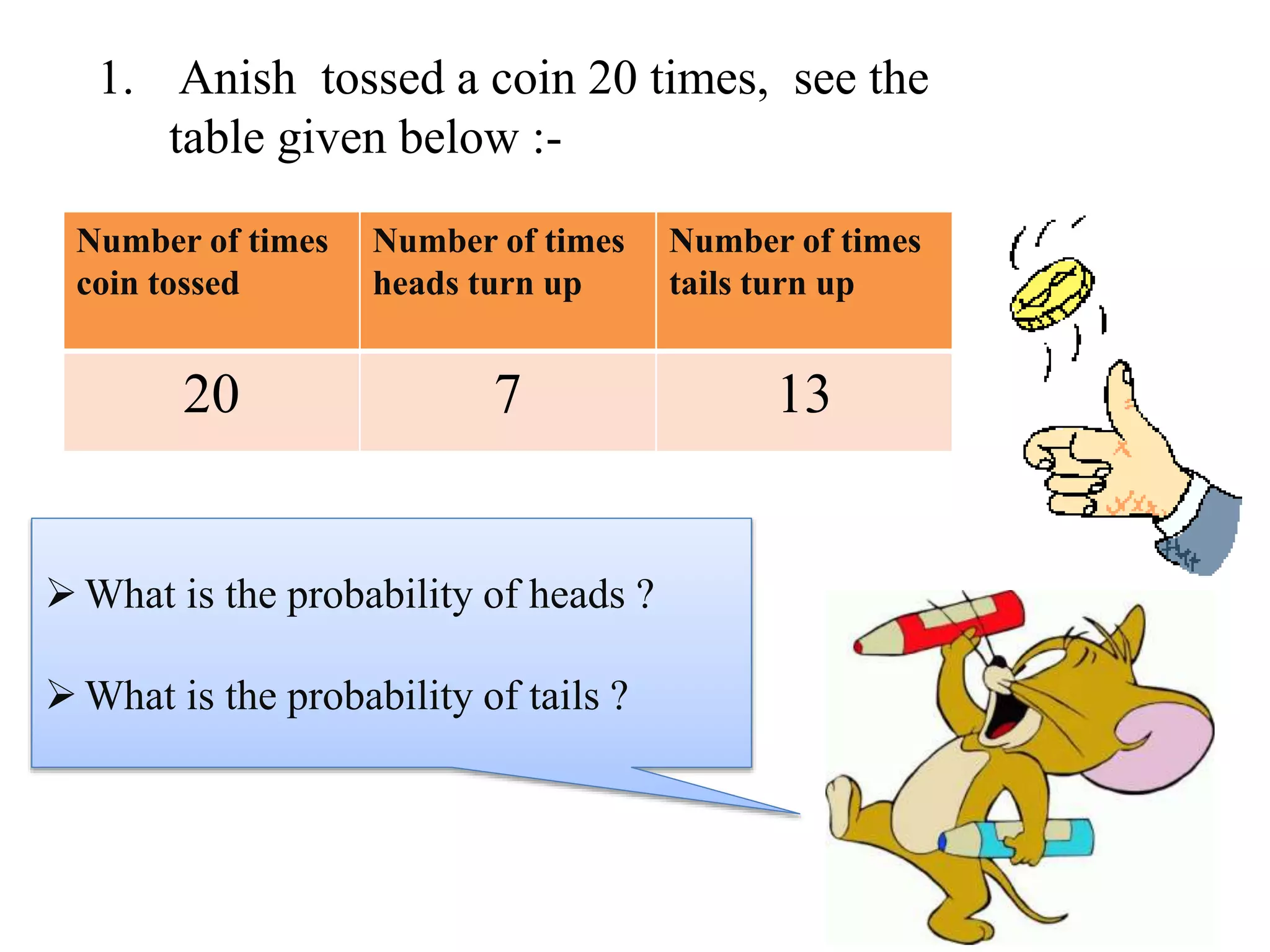
1. Anish tossed a coin 20 times, see the
table given below :-
Number of times
coin tossed
Number of times
heads turn up
Number of times
tails turn up
20 7 13
What is the probability of heads ?
What is the probability of tails ?
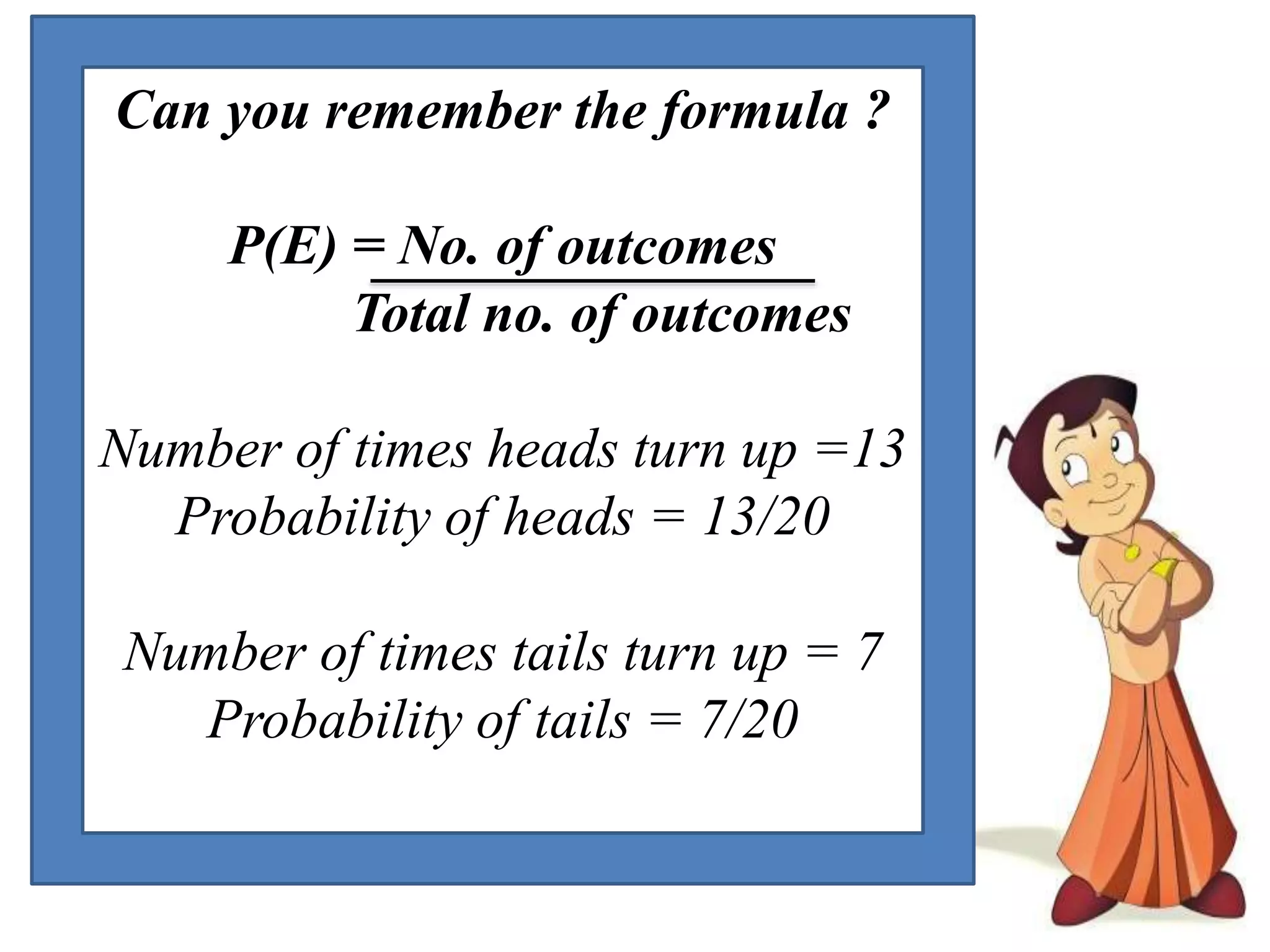
Can you remember the formula ?
P(E) = No. of outcomes
Total no. of outcomes
Number of times heads turn up =13
Probability of heads = 13/20
Number of times tails turn up = 7
Probability of tails = 7/20
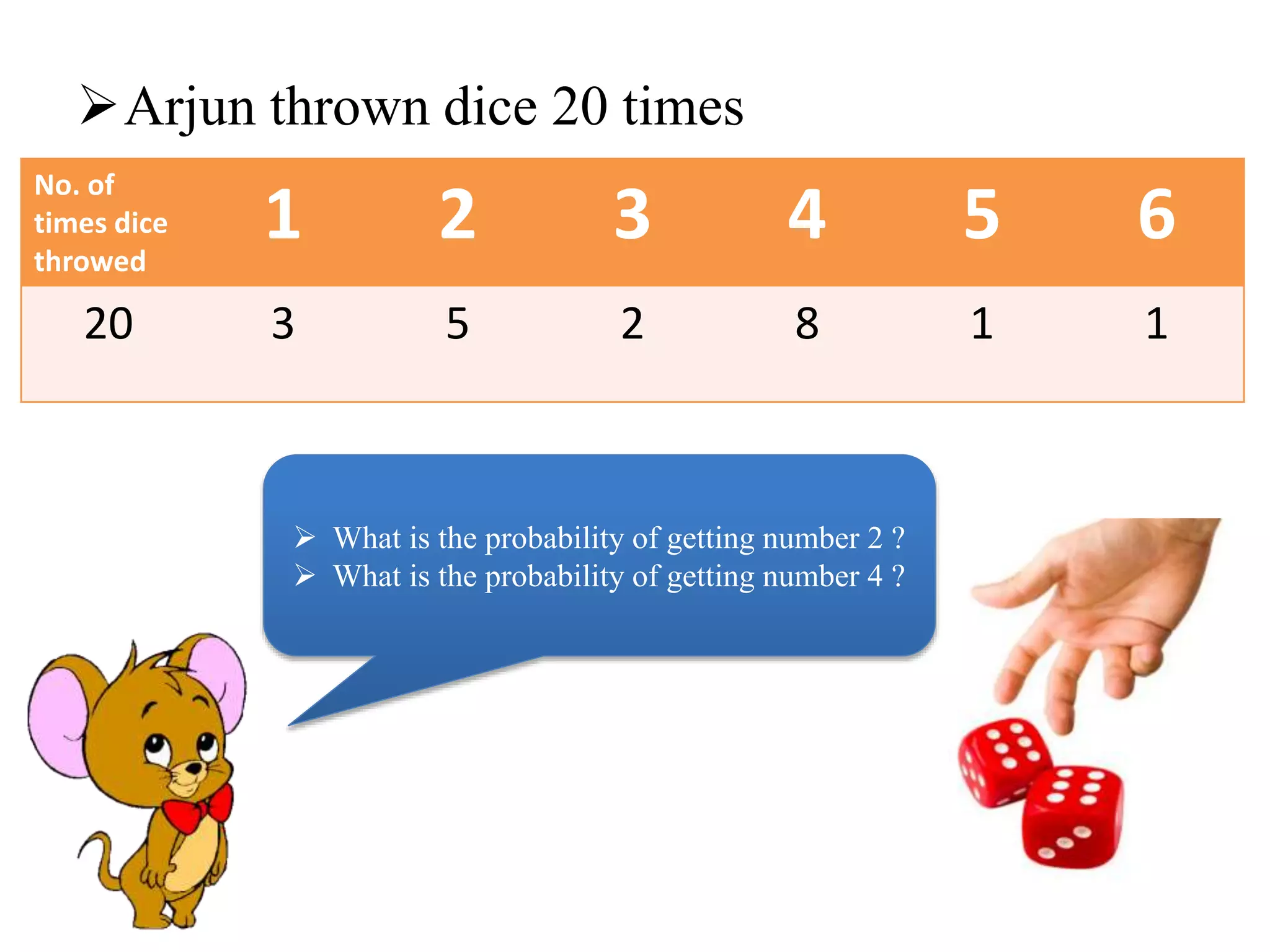
Arjun thrown dice 20 times
No. of
times dice
throwed
1 2 3 4 5 6
20 3 5 2 8 1 1
 What is the probability of getting number 2 ?
 What is the probability of getting number 4 ?
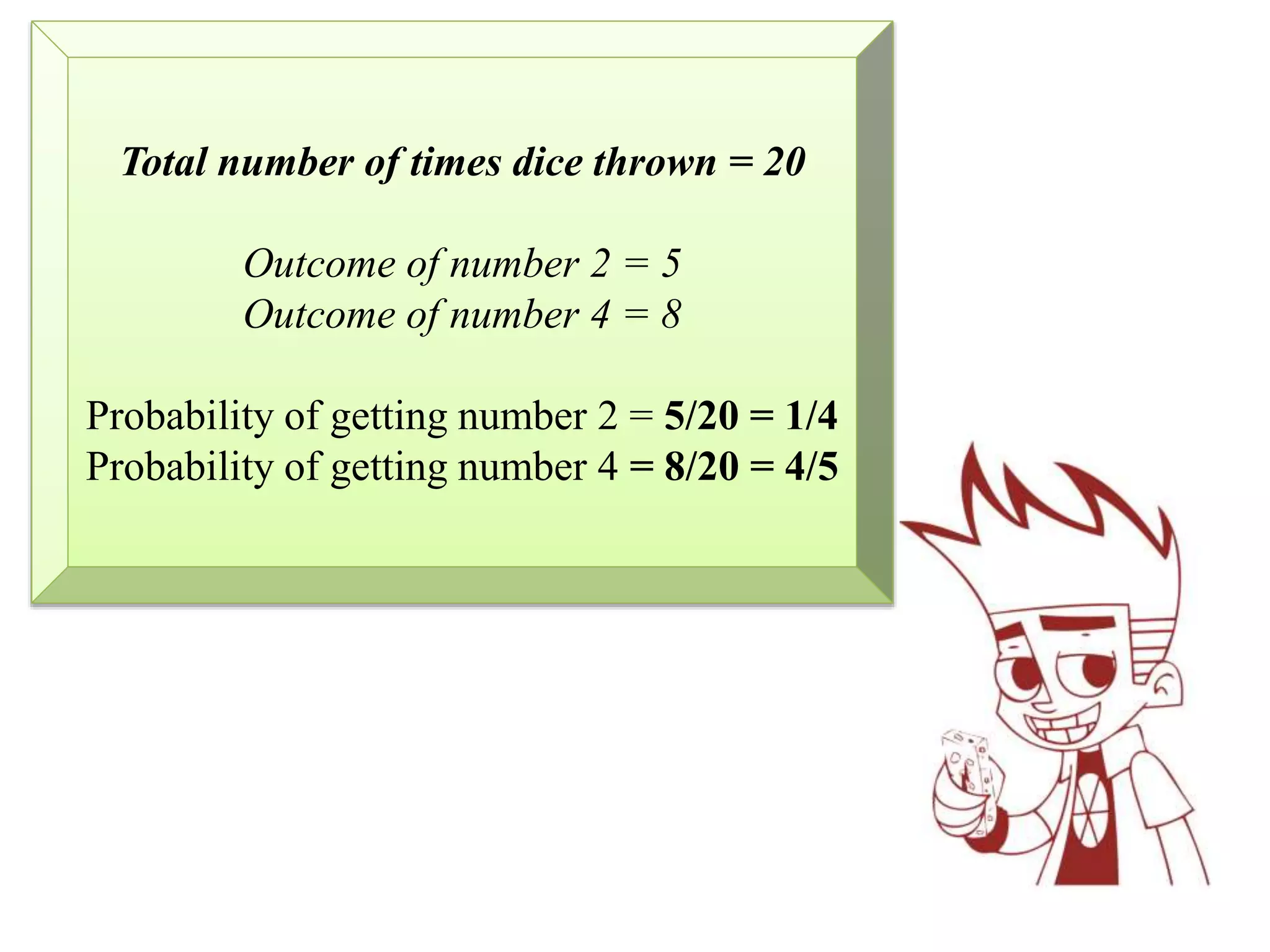
Total number of times dice thrown = 20
Outcome of number 2 = 5
Outcome of number 4 = 8
Probability of getting number 2 = 5/20 = 1/4
Probability of getting number 4 = 8/20 = 4/5
Answer the
upcoming questions
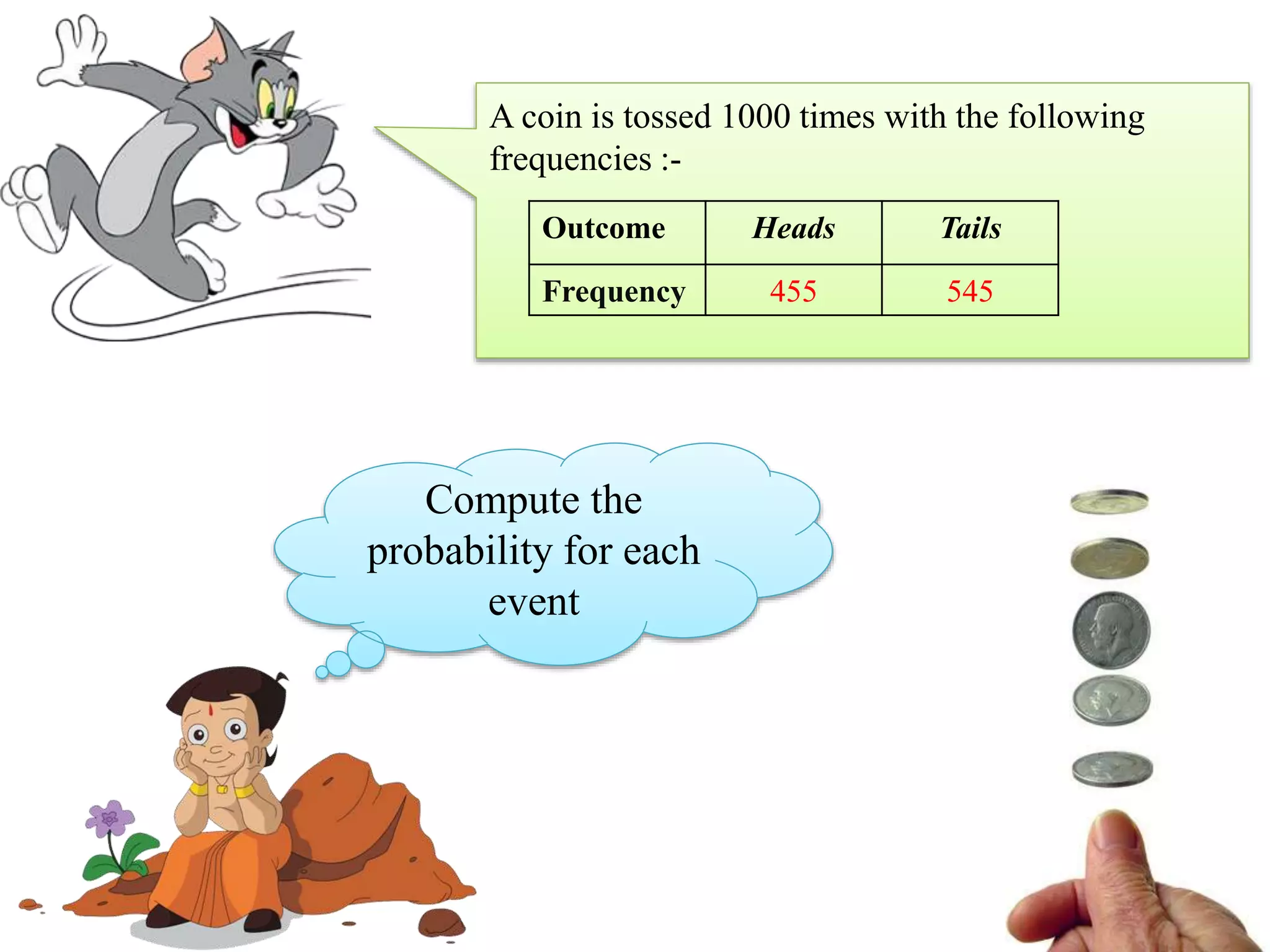
A coin is tossed 1000 times with the following
frequencies :-
Outcome Heads Tails
Frequency 455 545
Compute the
probability for each
event
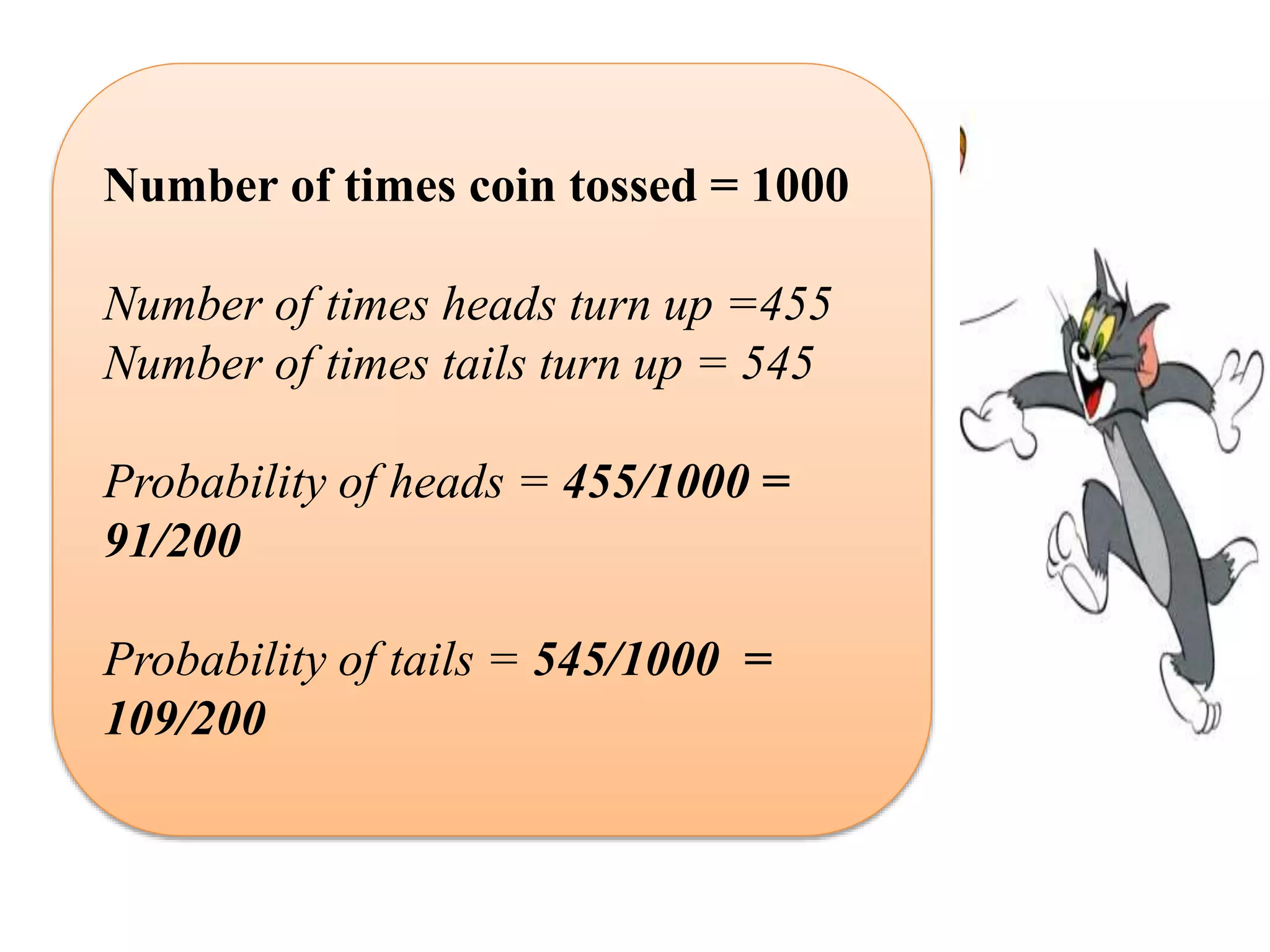
Number of times coin tossed = 1000
Number of times heads turn up =455
Number of times tails turn up = 545
Probability of heads = 455/1000 =
91/200
Probability of tails = 545/1000 =
109/200
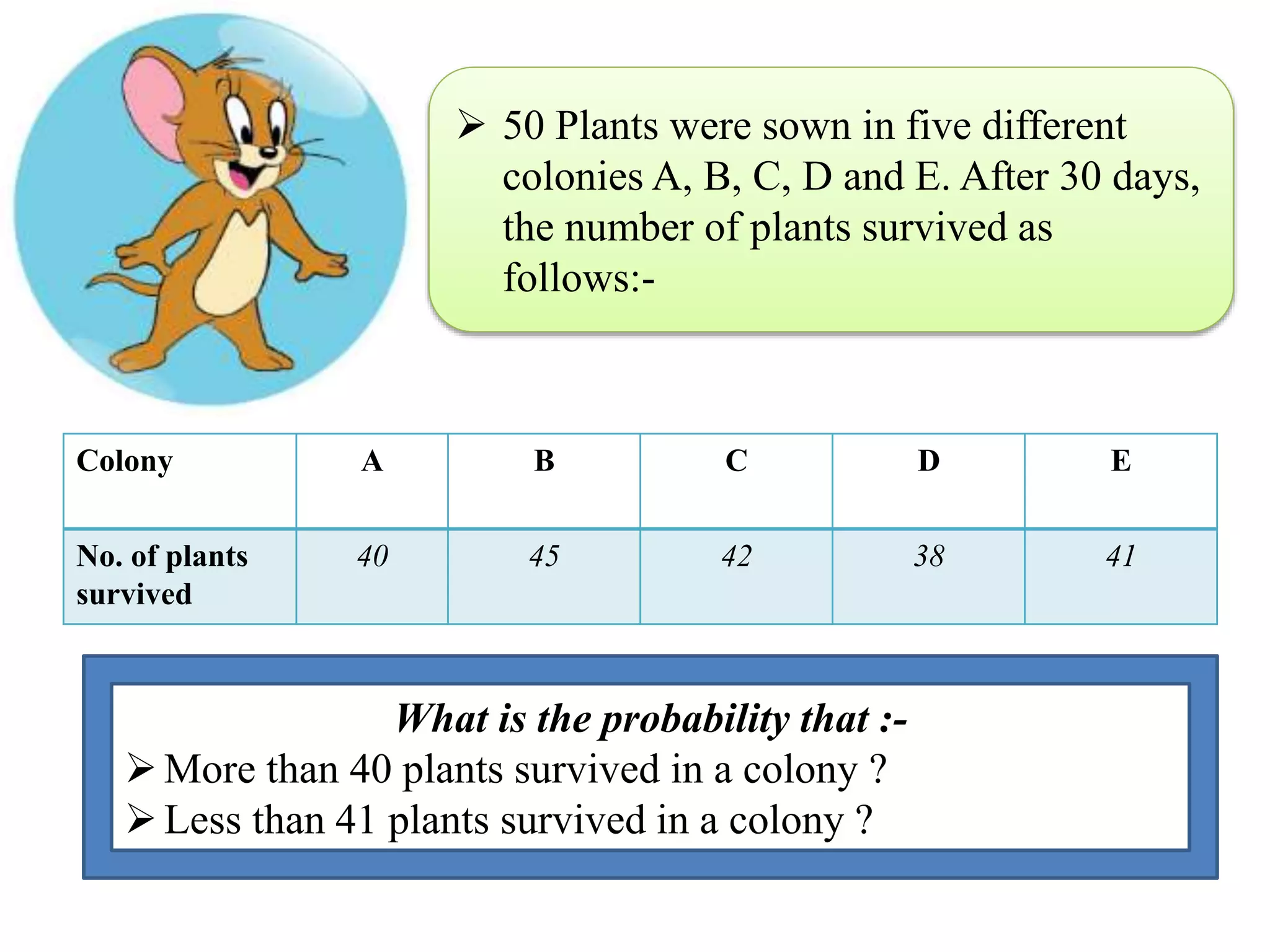
 50 Plants were sown in five different
colonies A, B, C, D and E. After 30 days,
the number of plants survived as
follows:-
Colony A B C D E
No. of plants
survived
40 45 42 38 41
What is the probability that :-
More than 40 plants survived in a colony ?
Less than 41 plants survived in a colony ?
We have total number of colonies = 5
a) Number of colonies in which more than 40 plants survived =
3 ( B, C and E )
Therefore P ( more than 40 plants survived in a colony ) = 3/5
b) Number of colonies in which less than 41 plants survived =
2 ( A and D )
Therefore P ( less than 41 plants survived in a colony ) = 2/5
Friends, I think you are clear
with the problems , now we
will go to an another example
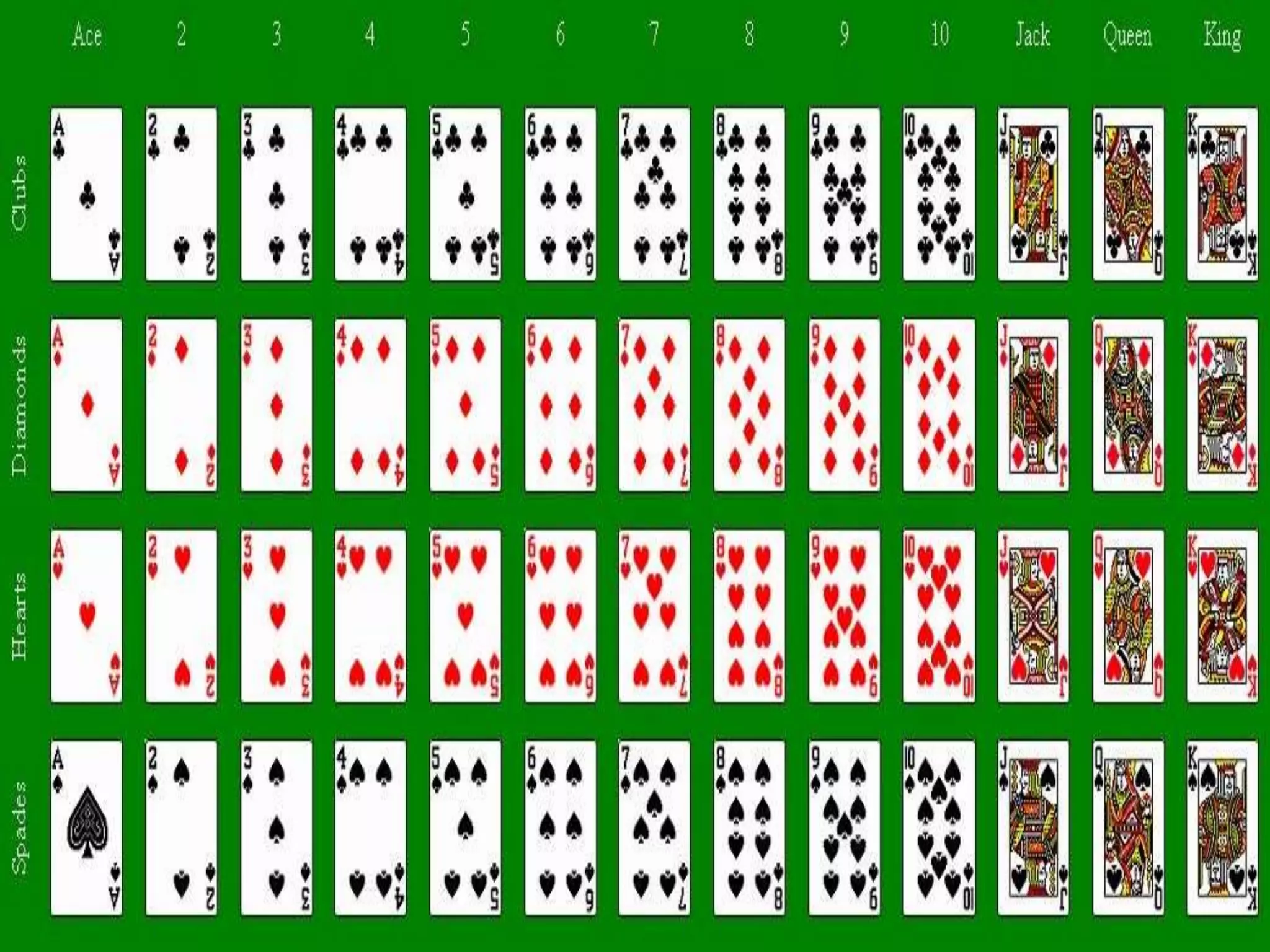
of probability, see the picture
given in the next slide
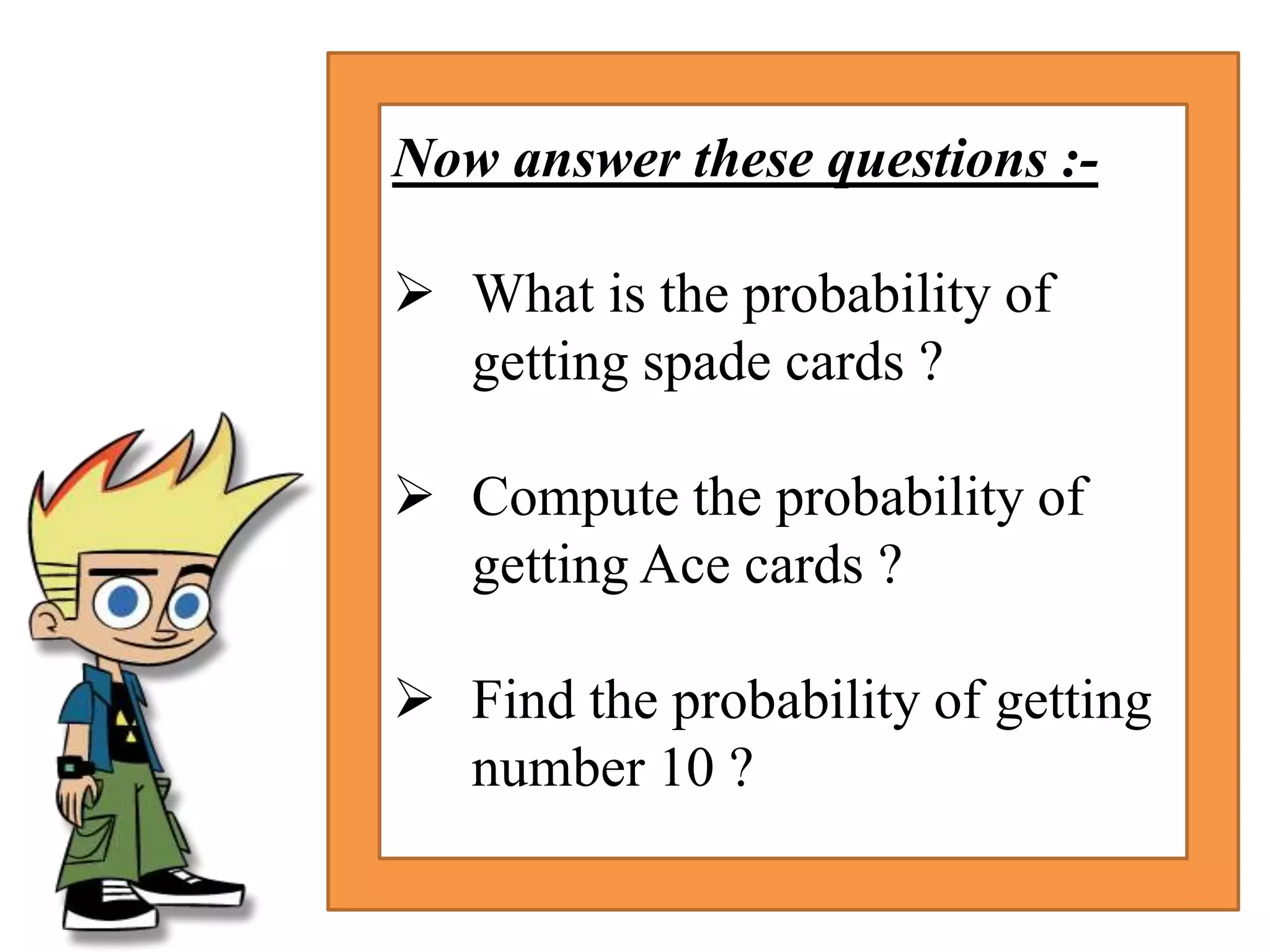
Now answer these questions :-
 What is the probability of
getting spade cards ?
 Compute the probability of
getting Ace cards ?
 Find the probability of getting
number 10 ?
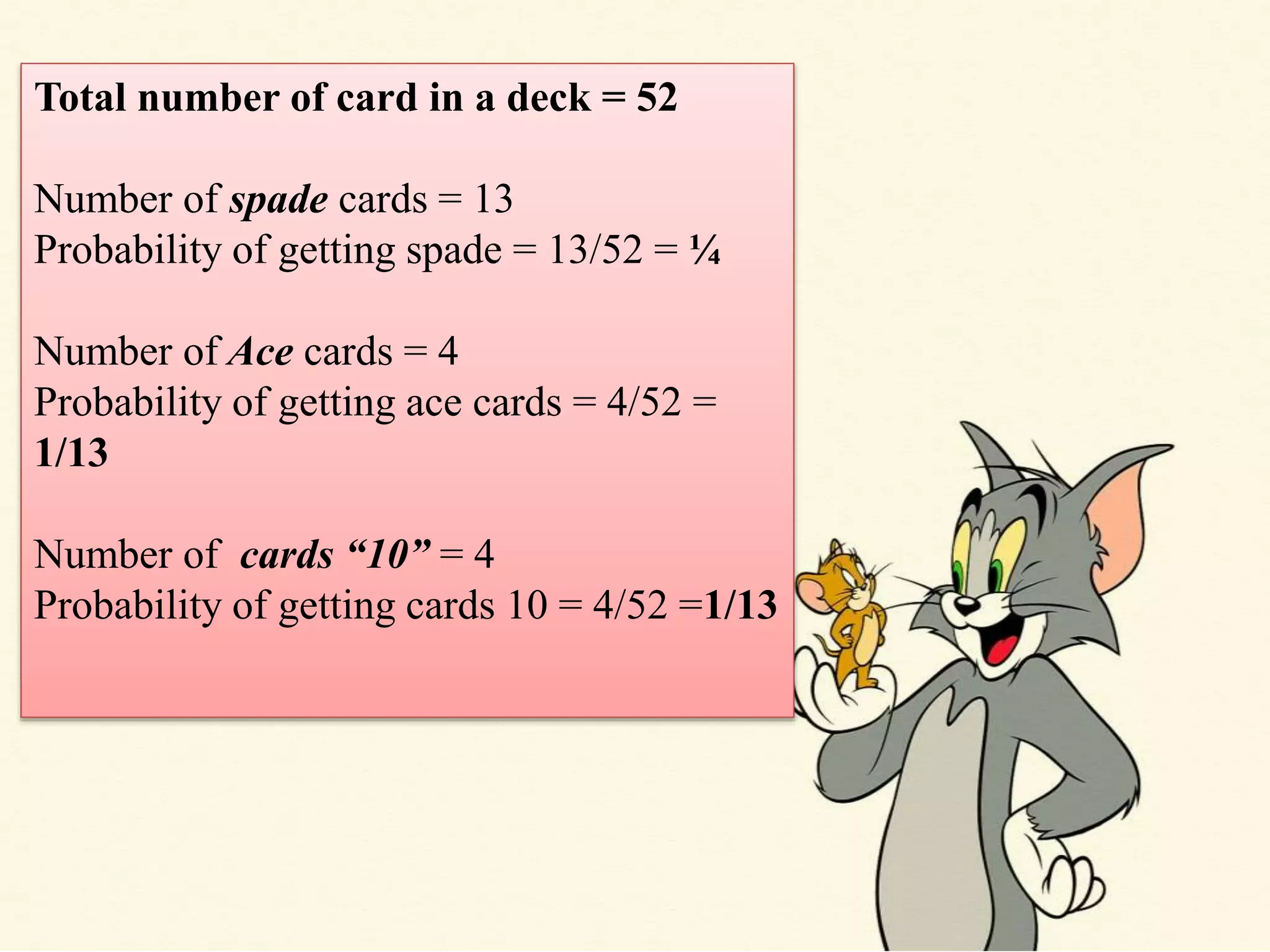
Total number of card in a deck = 52
Number of spade cards = 13
Probability of getting spade = 13/52 = ¼
Number of Ace cards = 4
Probability of getting ace cards = 4/52 =
1/13
Number of cards “10” = 4
Probability of getting cards 10 = 4/52 =1/13
Friends, Let us
have some fun with
pictures related to
probability
C
O
N
C
L
U
S
I
O
N
Let us summarize
the lesson
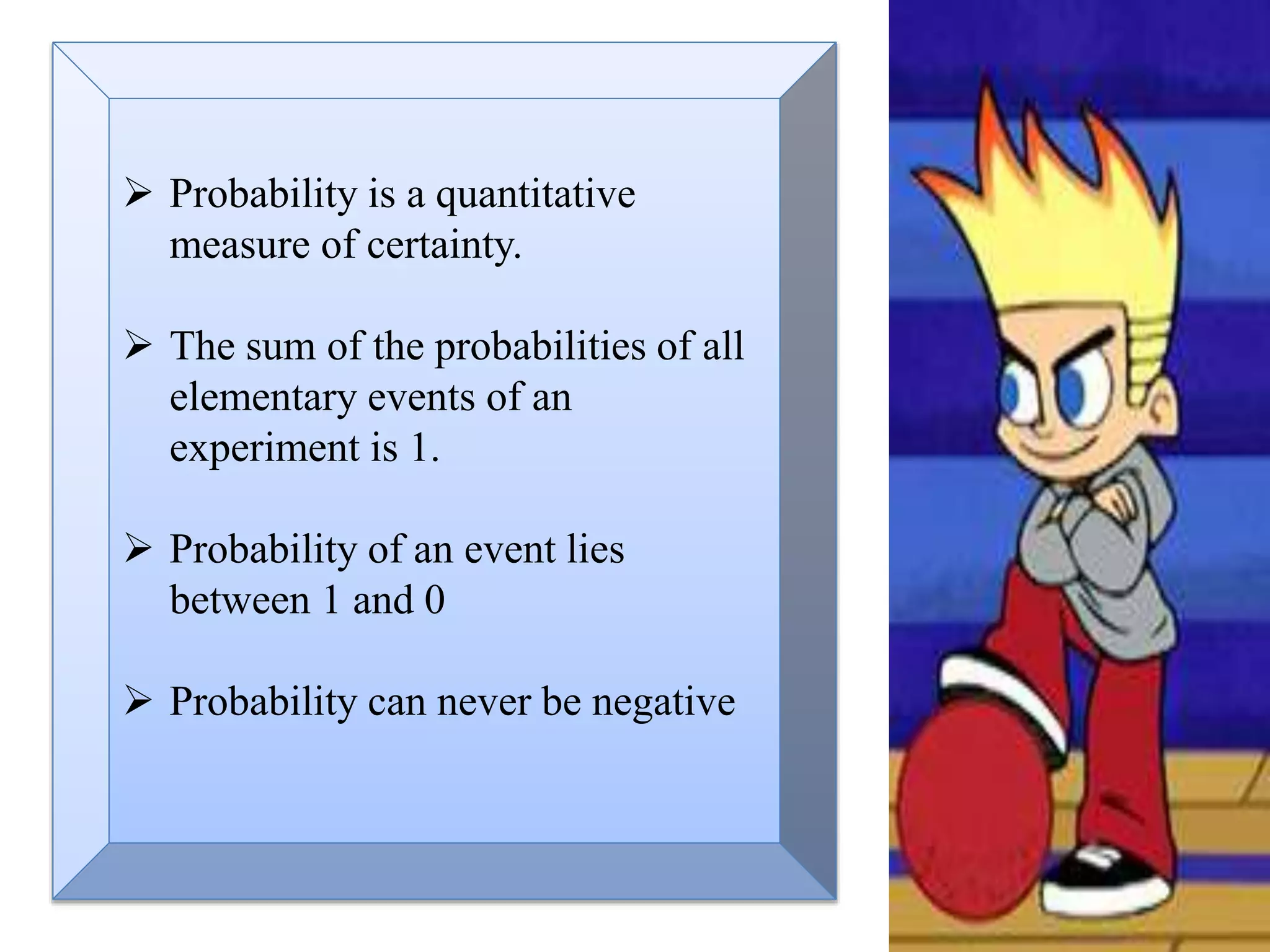
 Probability is a quantitative
measure of certainty.
 The sum of the probabilities of all
elementary events of an
experiment is 1.
 Probability of an event lies
between 1 and 0
 Probability can never be negative
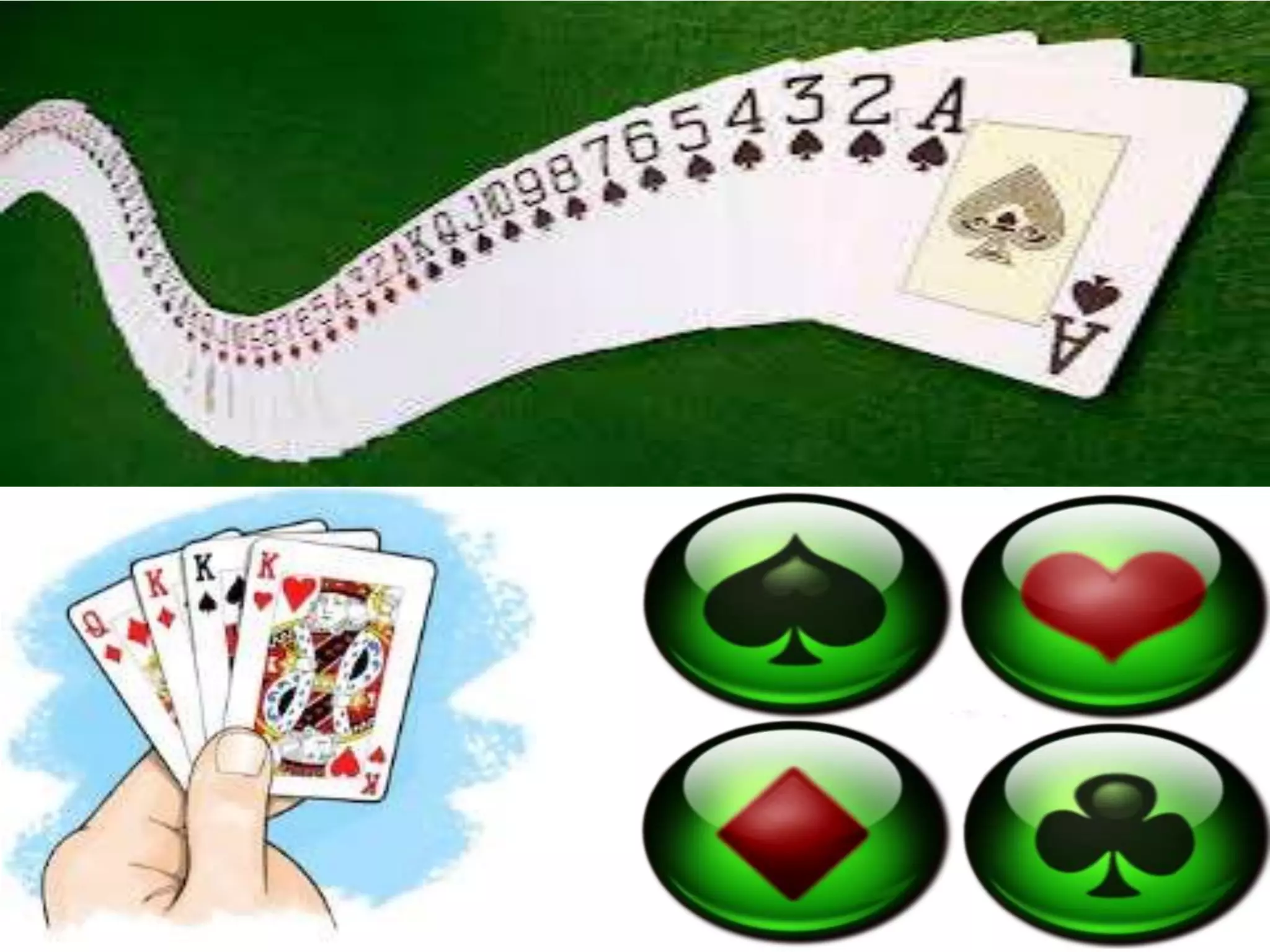
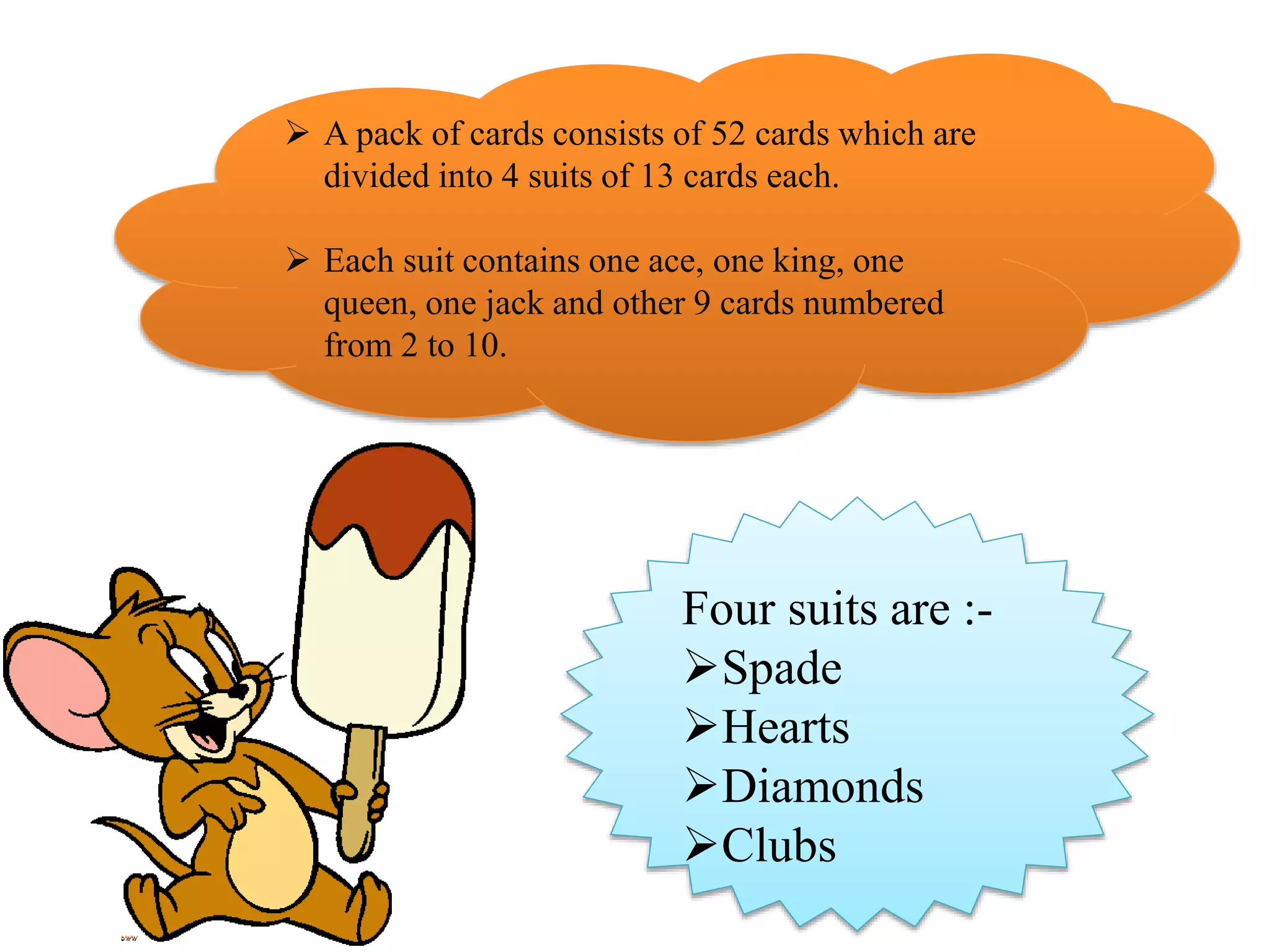
 A pack of cards consists of 52 cards which are
divided into 4 suits of 13 cards each.
 Each suit contains one ace, one king, one
queen, one jack and other 9 cards numbered
from 2 to 10.
Four suits are :-
Spade
Hearts
Diamonds
Clubs
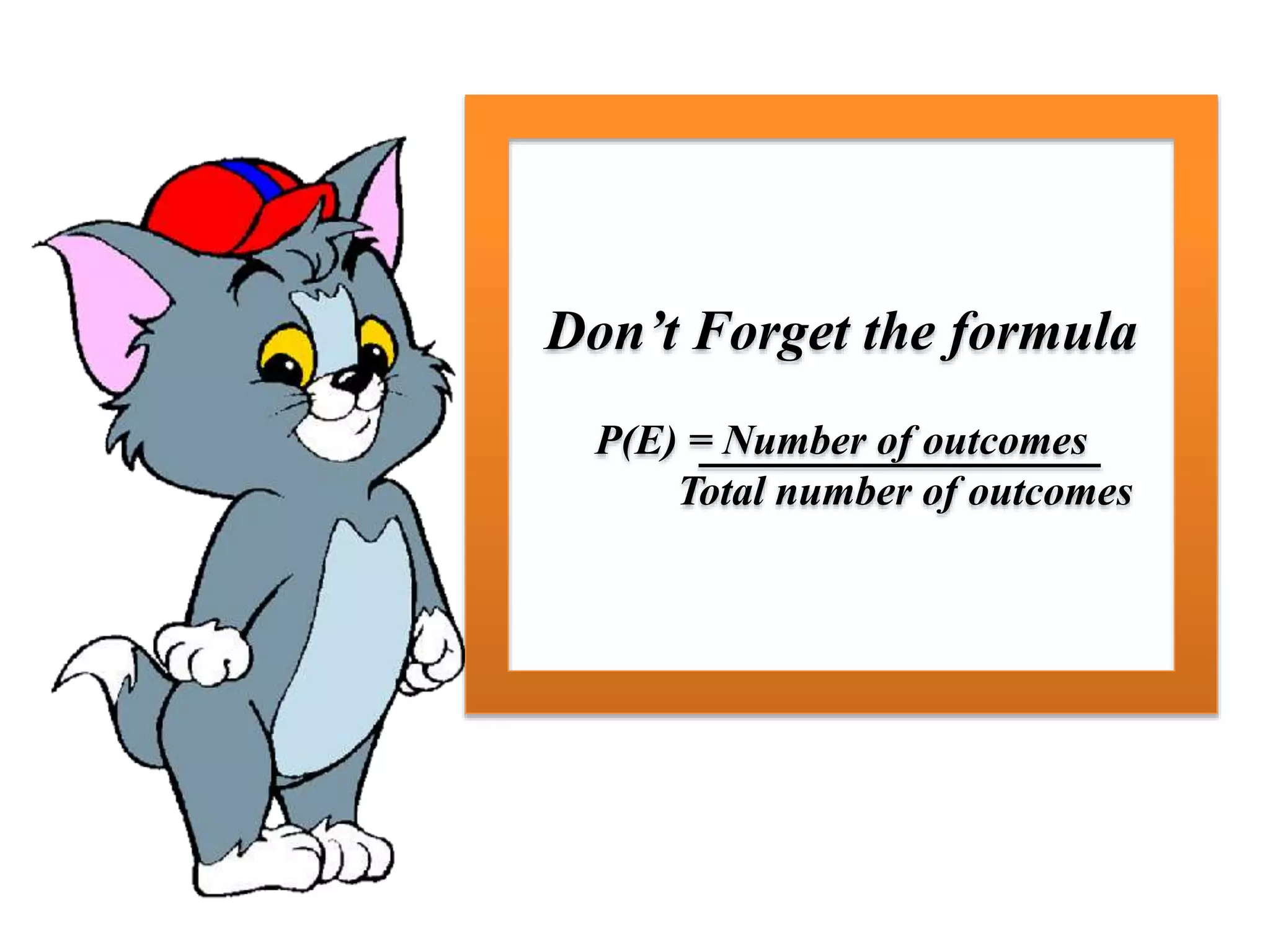
Don’t Forget the formula
P(E) = Number of outcomes
Total number of outcomes
This PPT is
prepared by
R.Akilan
IX std
Roll no. 922
T
H
A
N
K
Y
O
U

Probability done by Endrikate

  • 3.
    • Players ofprobability • Introduction • History of probability - A gambler’s game - Founders • Yes or No game ( coin toss ) • The game of dice • Activities related to basic probability • Quizzes with solutions • Conclusion
  • 4.
  • 5.
    Jerry ( Asmall cartoon mouse, accompany you with asking and explaining questions)
  • 6.
    Tom ( Acat who will fight against jerry when jerry won any of the task )
  • 7.
    Bheem ( Asmall powerful boy who will help you in solving tasks and questions )
  • 8.
    Johnny ( Aboy who likes to face difficult problems )
  • 10.
    In our dayto day life , we often hear some words, which are given below :-  Probably  Certain  Chance  Luck In this PPT you will discuss about this in detail
  • 11.
    The word probabilitymeans something happening is likely and unlikely to happen, it is expressed in fractions or decimals or in percentage
  • 12.
    Probability terms Trial :- Anaction which results in one or several outcomes Outcome :- A situation that occurs at the end Event :- A thing that happens in a particular situation
  • 14.
    Did you know? Probability first started by a gambler, who had put forth a task to two mathematician :-  Blaisie Pascal  Pierre de Fermat The game consisted in throwing a pair of dice 24 times; the problem was to decide whether or not to bet even money on the occurrence of at least one "double six" during the 24 throws. Now we’ll see the two mathematician
  • 15.
  • 16.
    The problem andothers posed by de Méré led to an exchange of letters between Pascal and Fermat in which the fundamental principles of probability theory were formulated for the first time. Although a few special problems on games of chance had been solved by some Italian mathematicians in the 15th and 16th centuries, no general theory was developed before this famous correspondence.
  • 17.
    Probability Formula Let “n”be the number of trials, the empirical probability is P(E) = Number of trials in which the event happened Total number of trials
  • 19.
  • 20.
    What is theanswer ? Its Heads , Jerry won the task Stupid ! You cheesy fellow, how dare you are laughing at me
  • 22.
    A Dice isa playing equipment with a shape of cube which contains six standard units. It is used in number of games like Ludo, backgammon, dice 100000, snake and ladders etc…
  • 24.
    1. Anish tosseda coin 20 times, see the table given below :- Number of times coin tossed Number of times heads turn up Number of times tails turn up 20 7 13 What is the probability of heads ? What is the probability of tails ?
  • 25.
    Can you rememberthe formula ? P(E) = No. of outcomes Total no. of outcomes Number of times heads turn up =13 Probability of heads = 13/20 Number of times tails turn up = 7 Probability of tails = 7/20
  • 26.
    Arjun thrown dice20 times No. of times dice throwed 1 2 3 4 5 6 20 3 5 2 8 1 1  What is the probability of getting number 2 ?  What is the probability of getting number 4 ?
  • 27.
    Total number oftimes dice thrown = 20 Outcome of number 2 = 5 Outcome of number 4 = 8 Probability of getting number 2 = 5/20 = 1/4 Probability of getting number 4 = 8/20 = 4/5
  • 28.
  • 29.
    A coin istossed 1000 times with the following frequencies :- Outcome Heads Tails Frequency 455 545 Compute the probability for each event
  • 30.
    Number of timescoin tossed = 1000 Number of times heads turn up =455 Number of times tails turn up = 545 Probability of heads = 455/1000 = 91/200 Probability of tails = 545/1000 = 109/200
  • 31.
     50 Plantswere sown in five different colonies A, B, C, D and E. After 30 days, the number of plants survived as follows:- Colony A B C D E No. of plants survived 40 45 42 38 41 What is the probability that :- More than 40 plants survived in a colony ? Less than 41 plants survived in a colony ?
  • 32.
    We have totalnumber of colonies = 5 a) Number of colonies in which more than 40 plants survived = 3 ( B, C and E ) Therefore P ( more than 40 plants survived in a colony ) = 3/5 b) Number of colonies in which less than 41 plants survived = 2 ( A and D ) Therefore P ( less than 41 plants survived in a colony ) = 2/5
  • 33.
    Friends, I thinkyou are clear with the problems , now we will go to an another example of probability, see the picture given in the next slide
  • 35.
    Now answer thesequestions :-  What is the probability of getting spade cards ?  Compute the probability of getting Ace cards ?  Find the probability of getting number 10 ?
  • 36.
    Total number ofcard in a deck = 52 Number of spade cards = 13 Probability of getting spade = 13/52 = ¼ Number of Ace cards = 4 Probability of getting ace cards = 4/52 = 1/13 Number of cards “10” = 4 Probability of getting cards 10 = 4/52 =1/13
  • 37.
    Friends, Let us havesome fun with pictures related to probability
  • 41.
  • 42.
  • 43.
     Probability isa quantitative measure of certainty.  The sum of the probabilities of all elementary events of an experiment is 1.  Probability of an event lies between 1 and 0  Probability can never be negative
  • 44.
     A packof cards consists of 52 cards which are divided into 4 suits of 13 cards each.  Each suit contains one ace, one king, one queen, one jack and other 9 cards numbered from 2 to 10. Four suits are :- Spade Hearts Diamonds Clubs
  • 45.
    Don’t Forget theformula P(E) = Number of outcomes Total number of outcomes
  • 46.
    This PPT is preparedby R.Akilan IX std Roll no. 922
  • 47.