PRINCIPLES & LAWS OF MOTION
Dr. Aneri Patwari
MPT
CONTENT
• Causes of motion
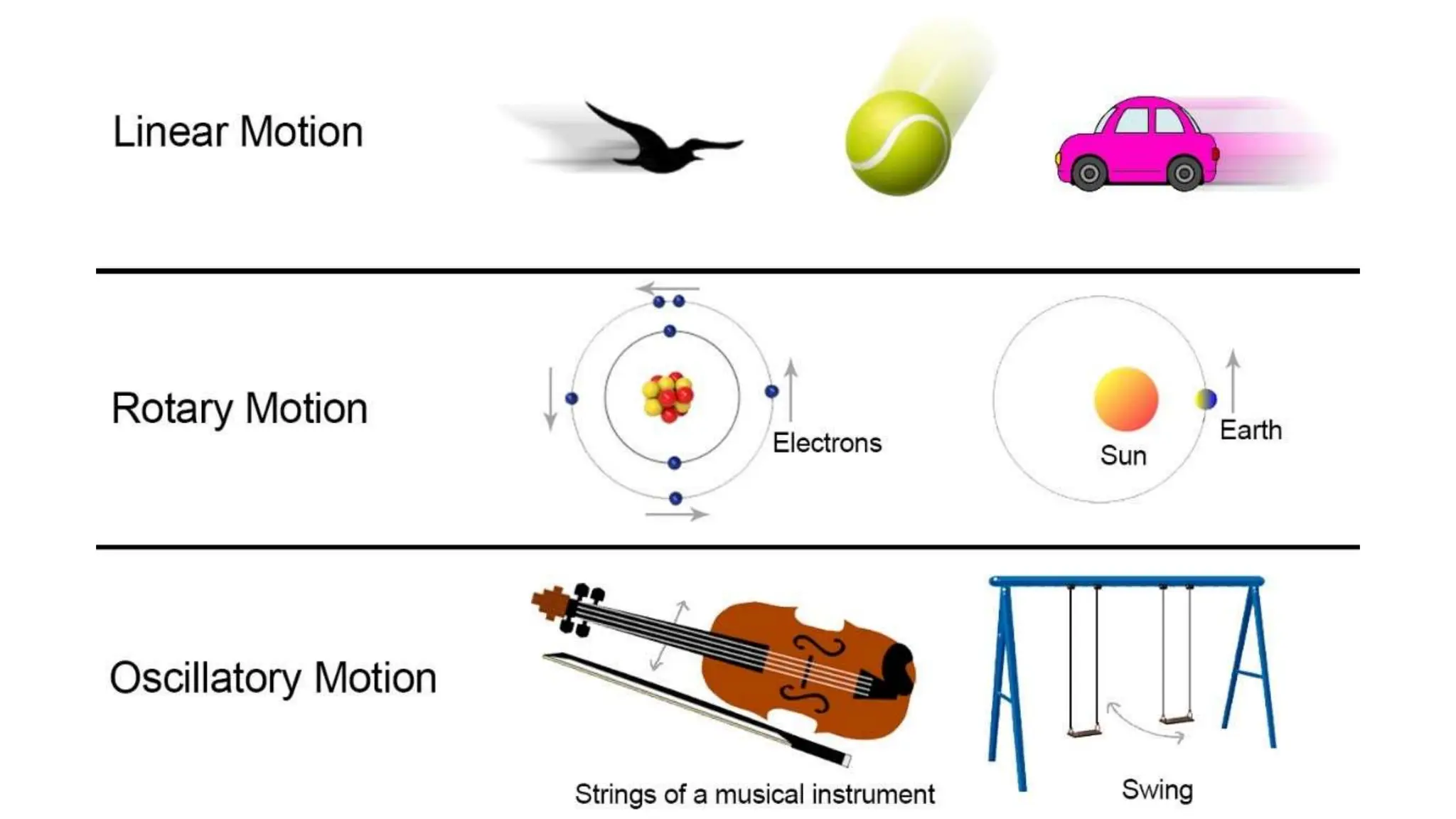
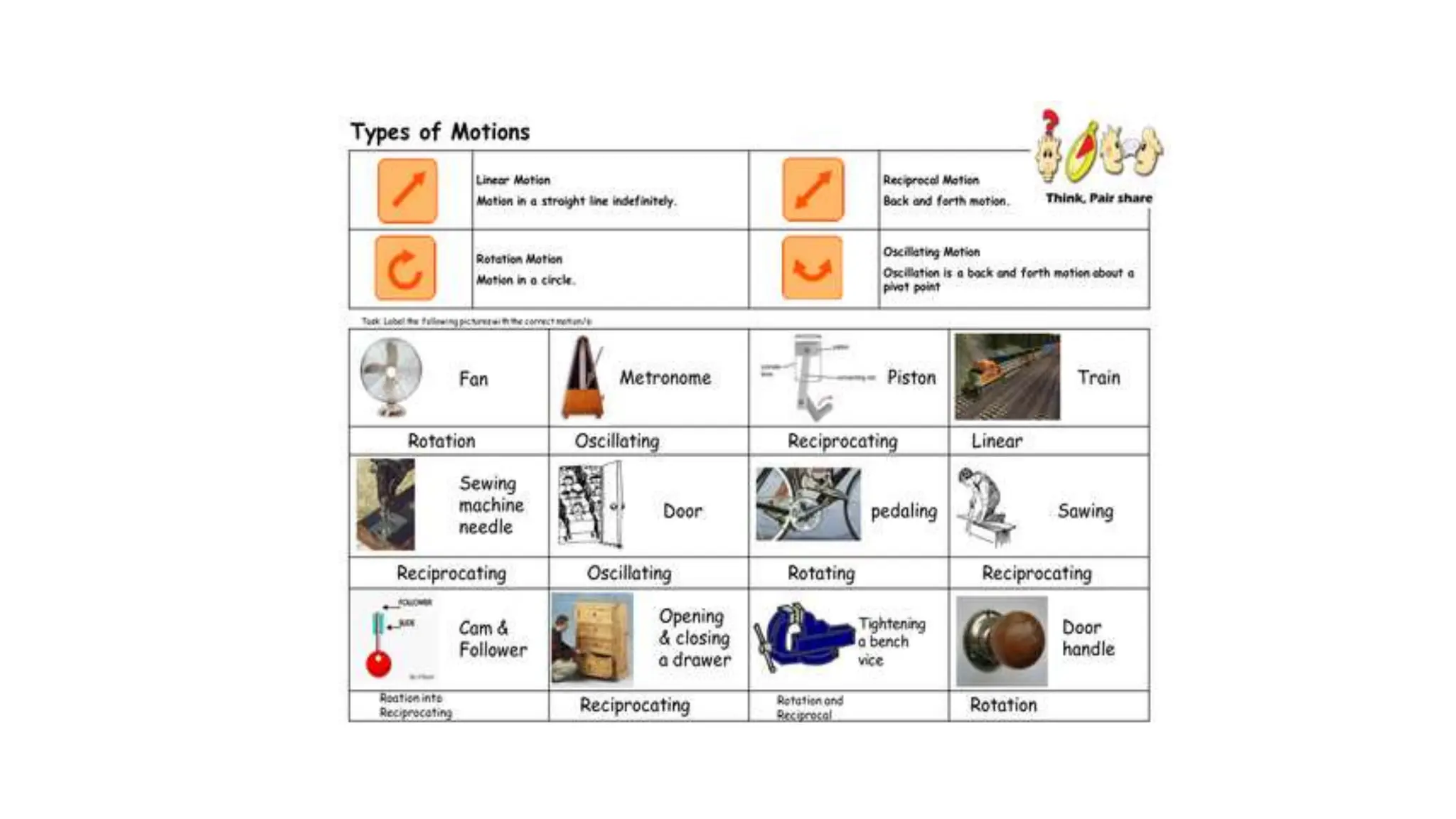
• Types of motion
• Motion experienced by body
• Laws of motion
• Centripetal and centrifugal force
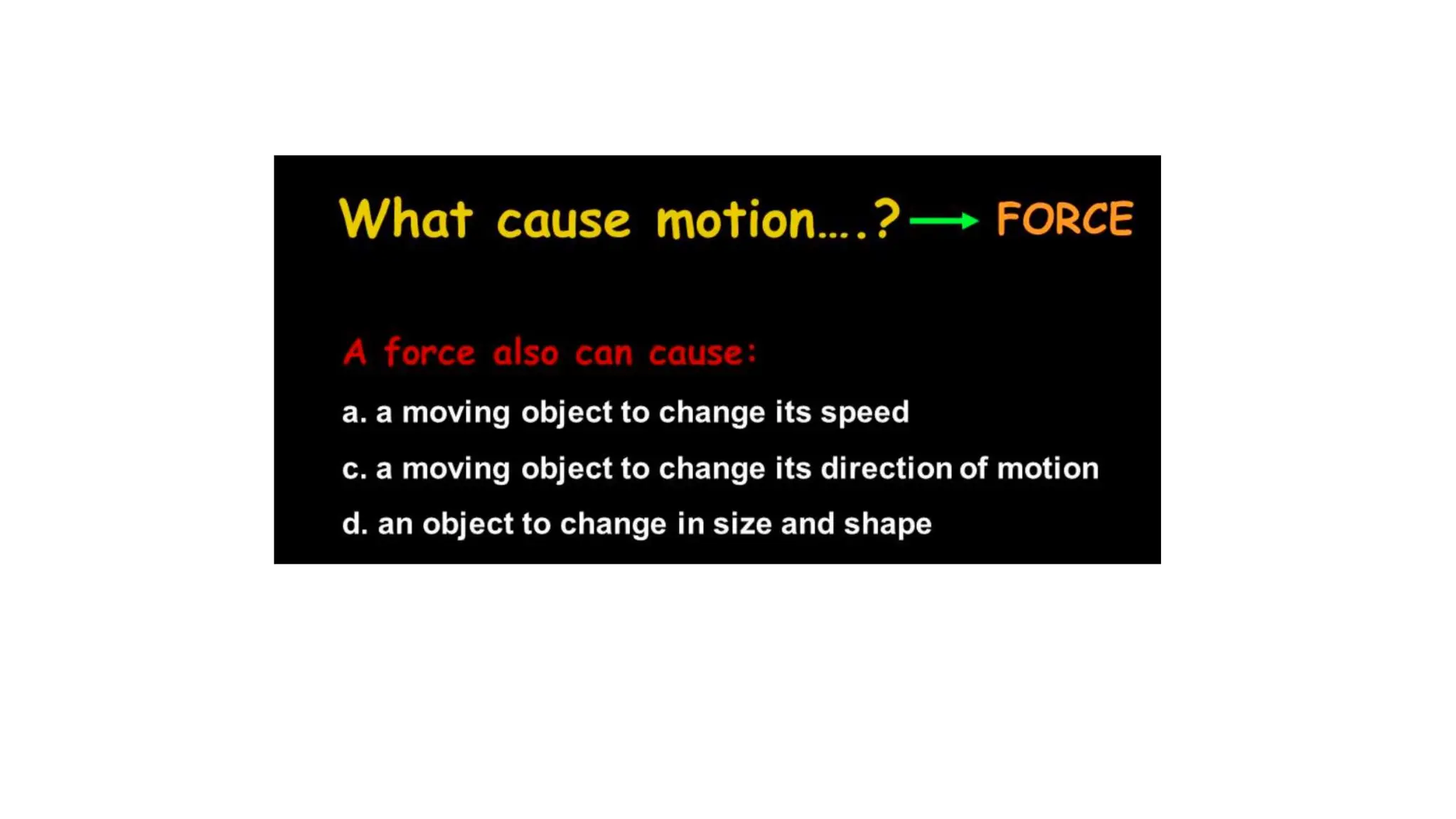
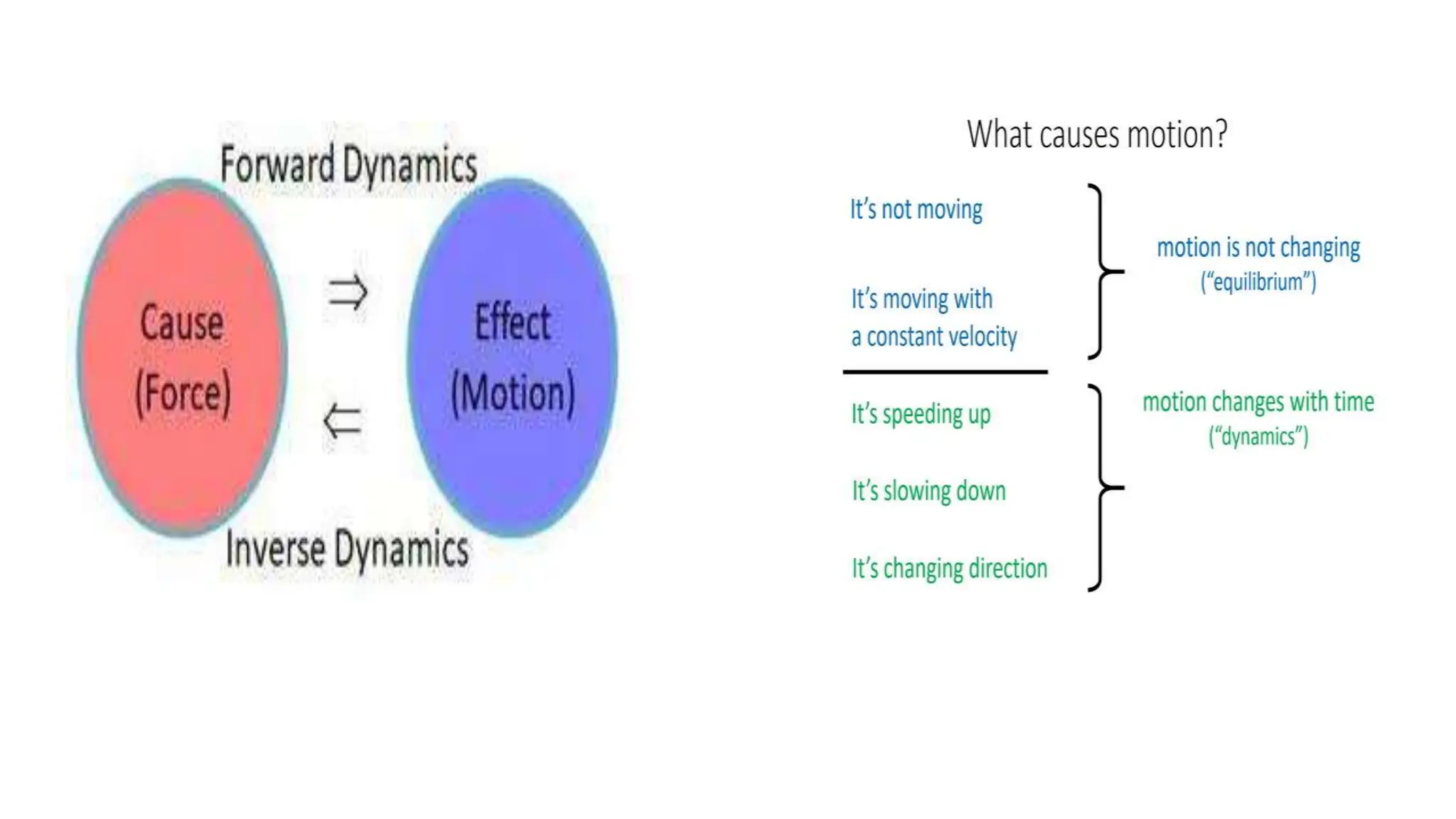
CAUSES OF MOTION
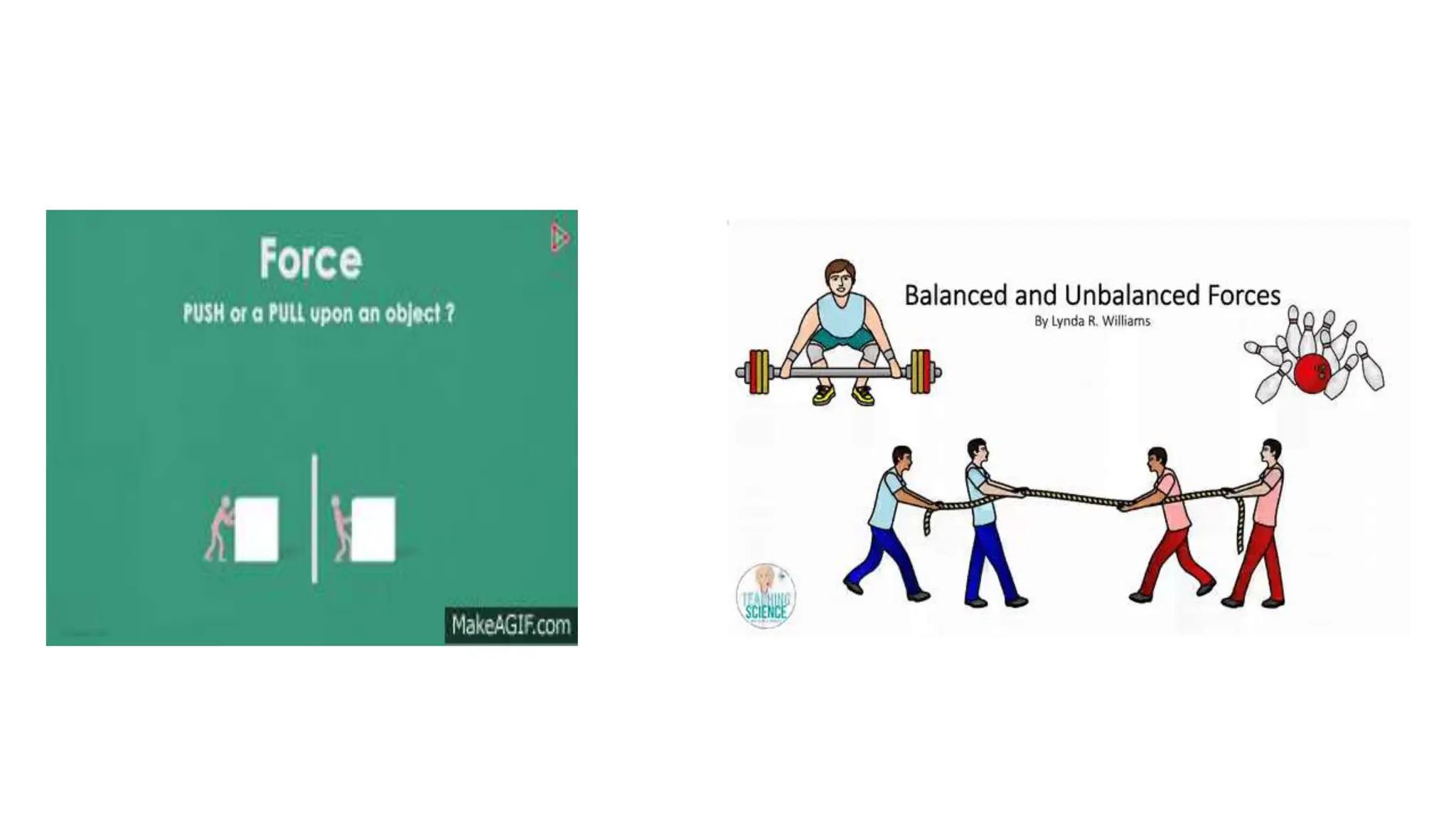
TYPE OF FORCE
.
FORCE
Contact Force
Like force [push
Unlike force
[pull]
Fractional
force.
Field Force
Magnet force
Gravitational
force
Electric force
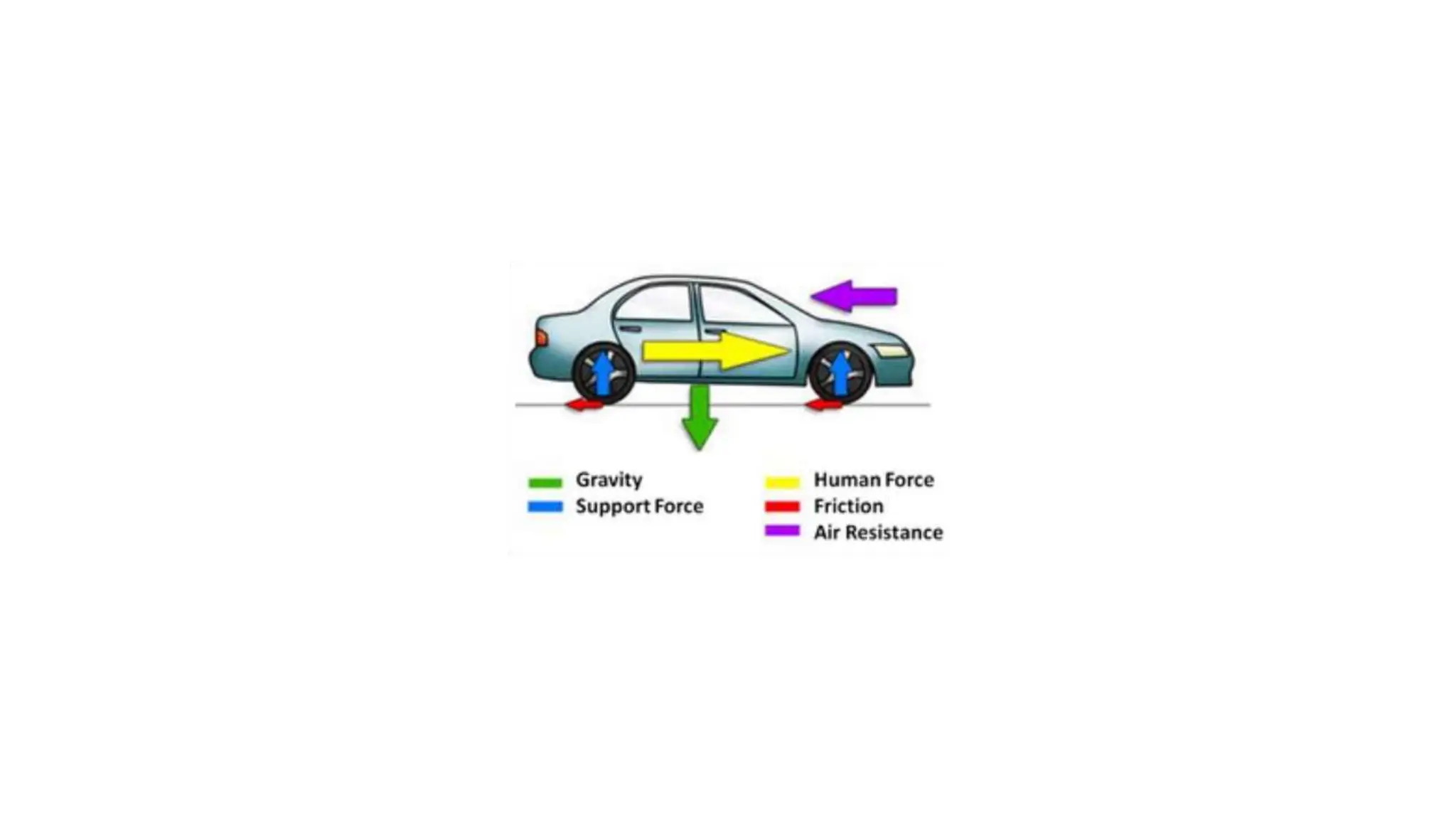
FRICTION
When a body slides over the surface of another body, there is an
opposing force acting opposite to the direction of motion. This opposing
force is called friction. Thus, Friction can be define as a form of force
that opposes the relative sliding motion of objects in contact with
surface. it is a vector quantity which exist in "solid, liquid and gas.
METHOD OF REDUCING FRICTION
1. Streamlining: is used to reduce friction due to the shape of an object which ensures that only
a small surface area of the object is in head-on contact with the field. Example; Aeroplane, ship.
2. Ball Bearing: Shafts are fixed on ball bearing so that friction will reduce because rolling
friction is less than sliding friciton. it is provided in (shafts of motor, axle of motor).
3. Lubricating: is viscous liquid or oil which are applied between two surface contact.
Example; Lubricating of wheels.
4. Polishing: friction between two surfaces in contact can be reduced by polishing them.
Example; Jewel bearing in watches.
5. Use of pencil and polysterene.
6. Banking.
ADVANTAGES
1. The tier of a motor car and a bicycle are
made rough to increase friction.
2. Without friction, the brake of a motor
car cannot work.
3. Without friction between the feet and
the ground, it will not be possible to
walk without falling.
4. Friction helps in the roataion of the
various part of the machine.
5. When ground is slippery after rain, it is
made rough by spreading sand in order
not to cause slipping
DISADVANTAGE
1. It reduce motion.
2. It causes wear and tear in machine.
3. It reduce the efficiency of machine.
4. It causes the heating of engines.
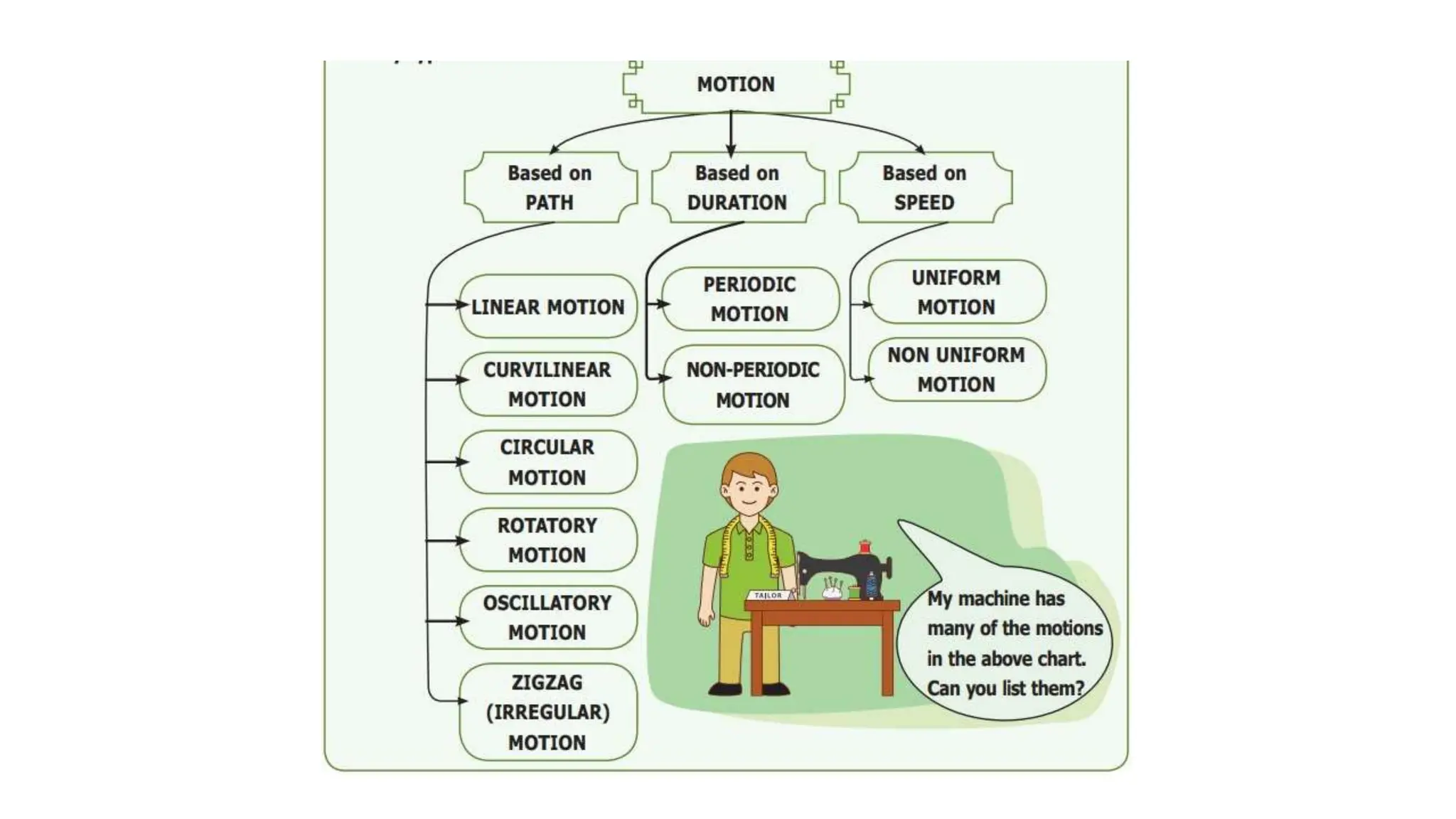
KINDS OF MOTIONS AND Its
EXPERIENCE BY BODY
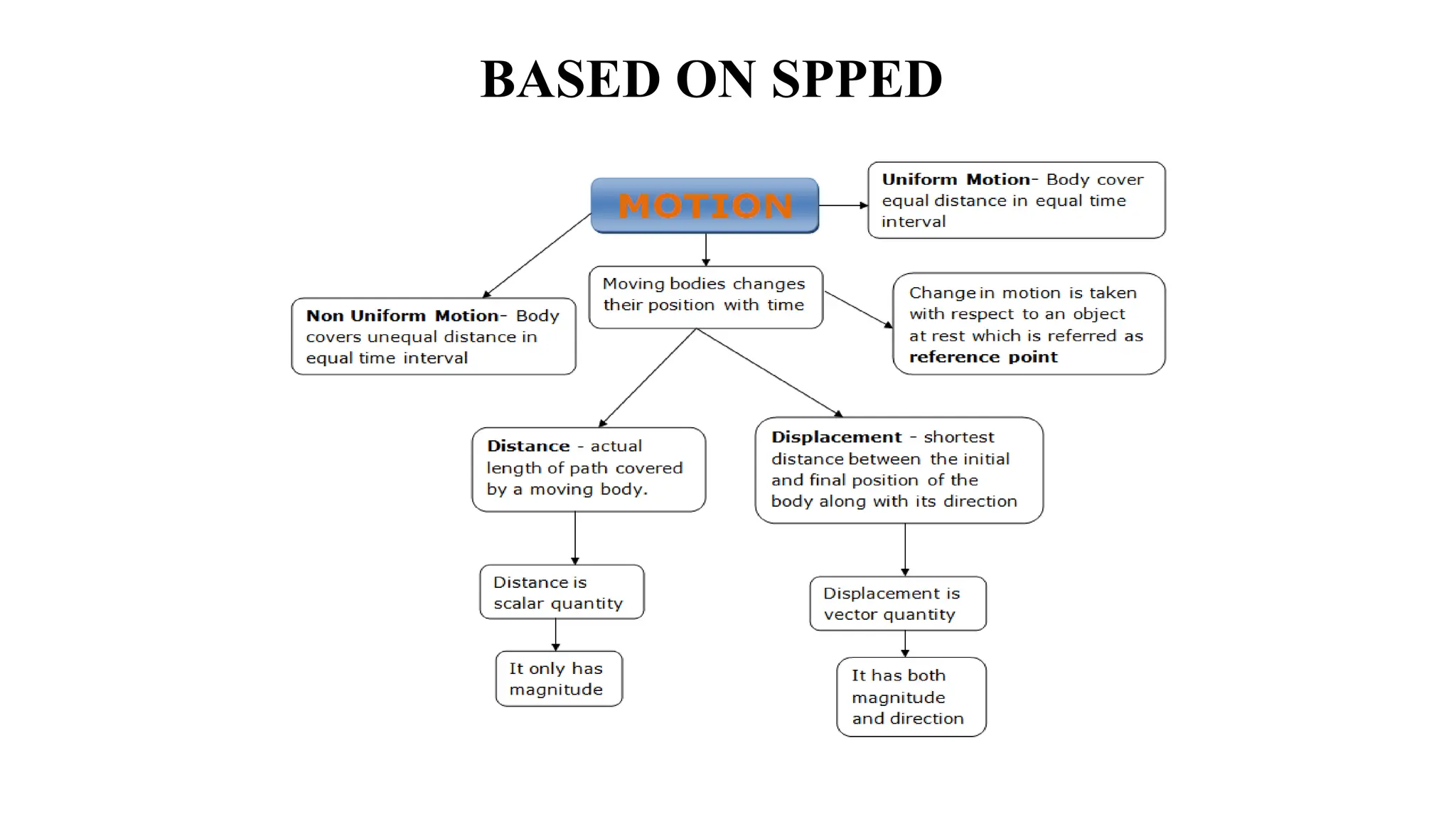
BASED ON SPPED
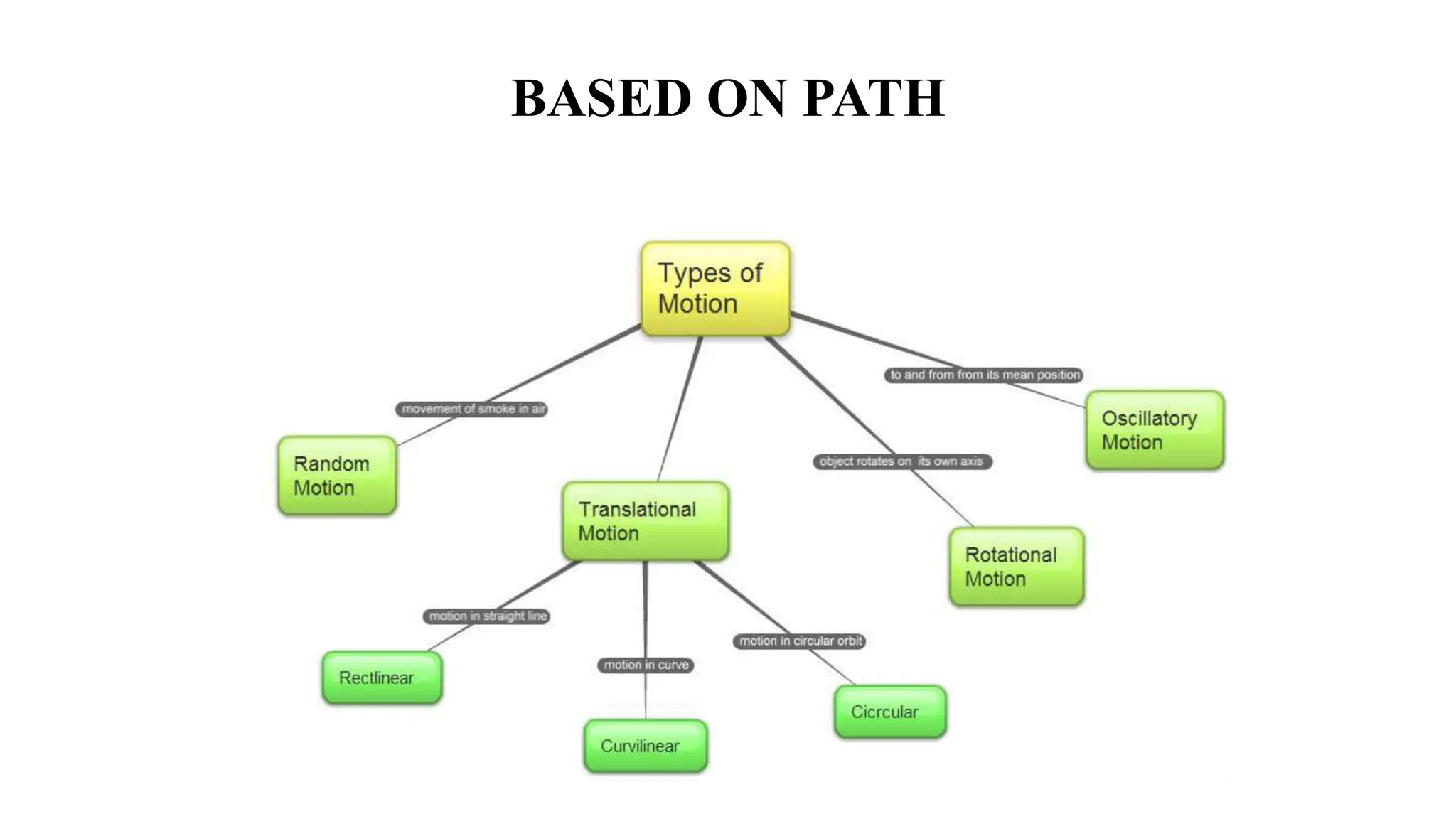
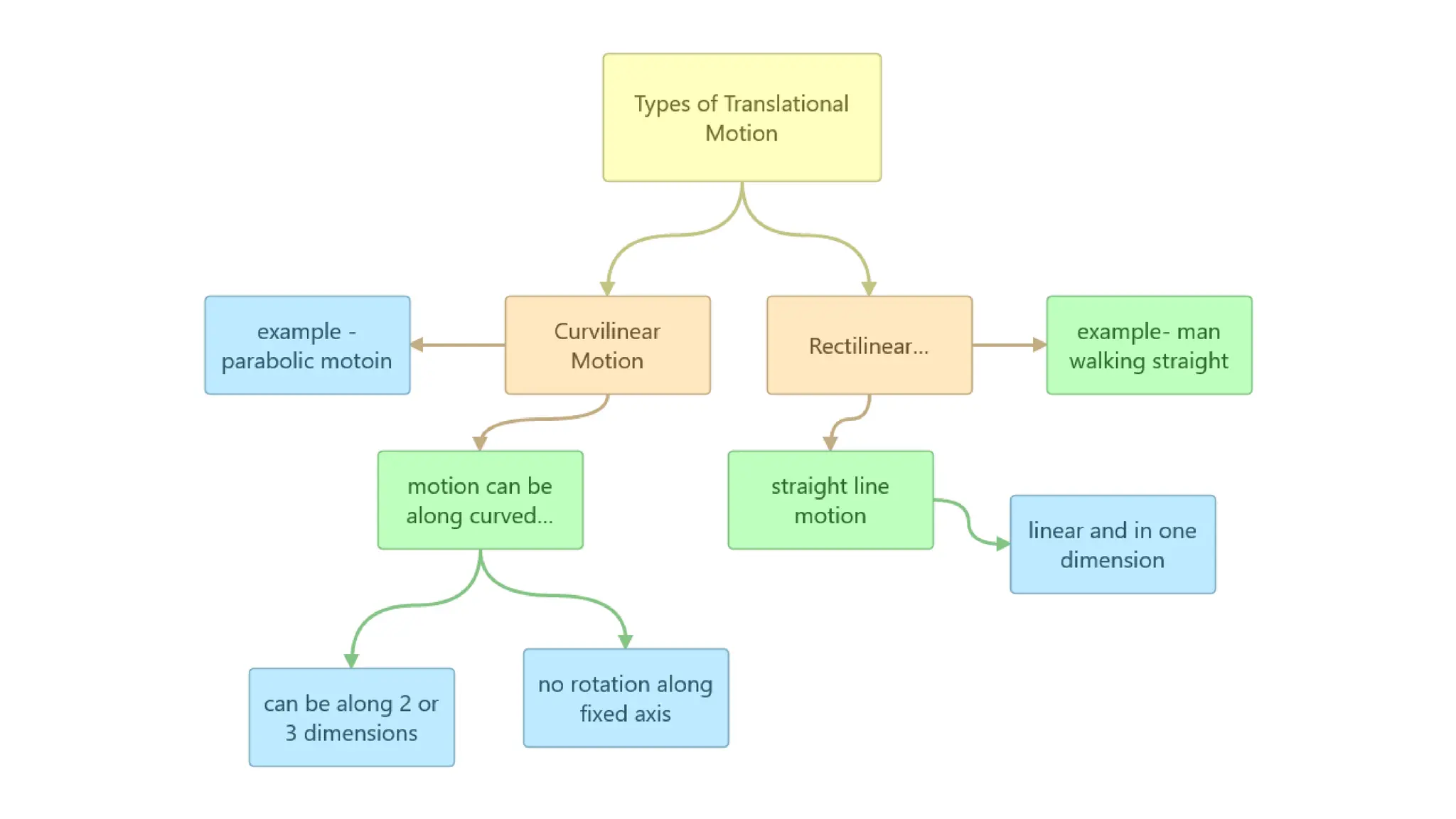
BASED ON PATH
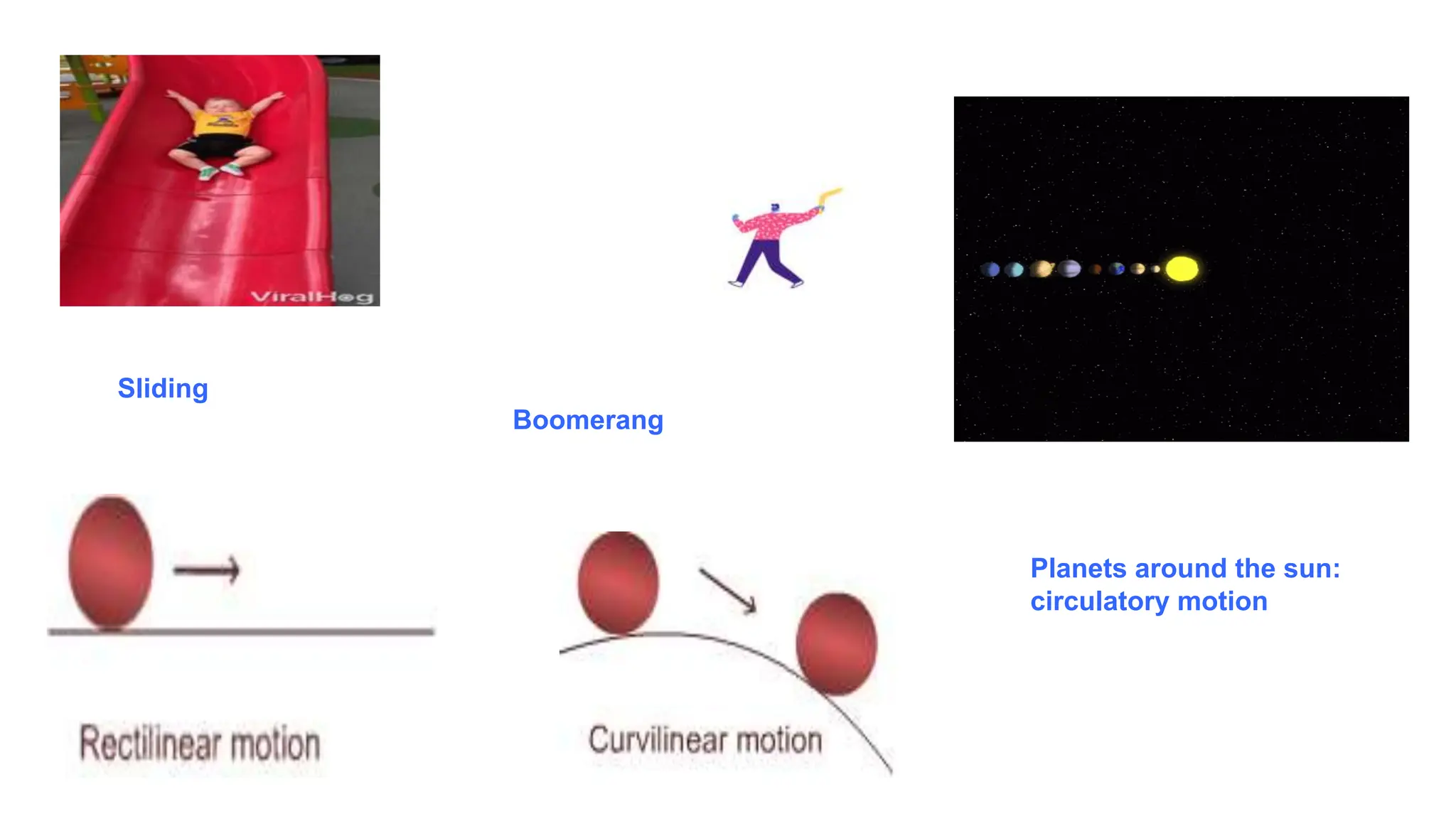
Sliding
Boomerang
Planets around the sun:
circulatory motion
Boomerang
Pendulum: oscillatory
Spinning Top
Ticking of Clock:
periodic and rotatory
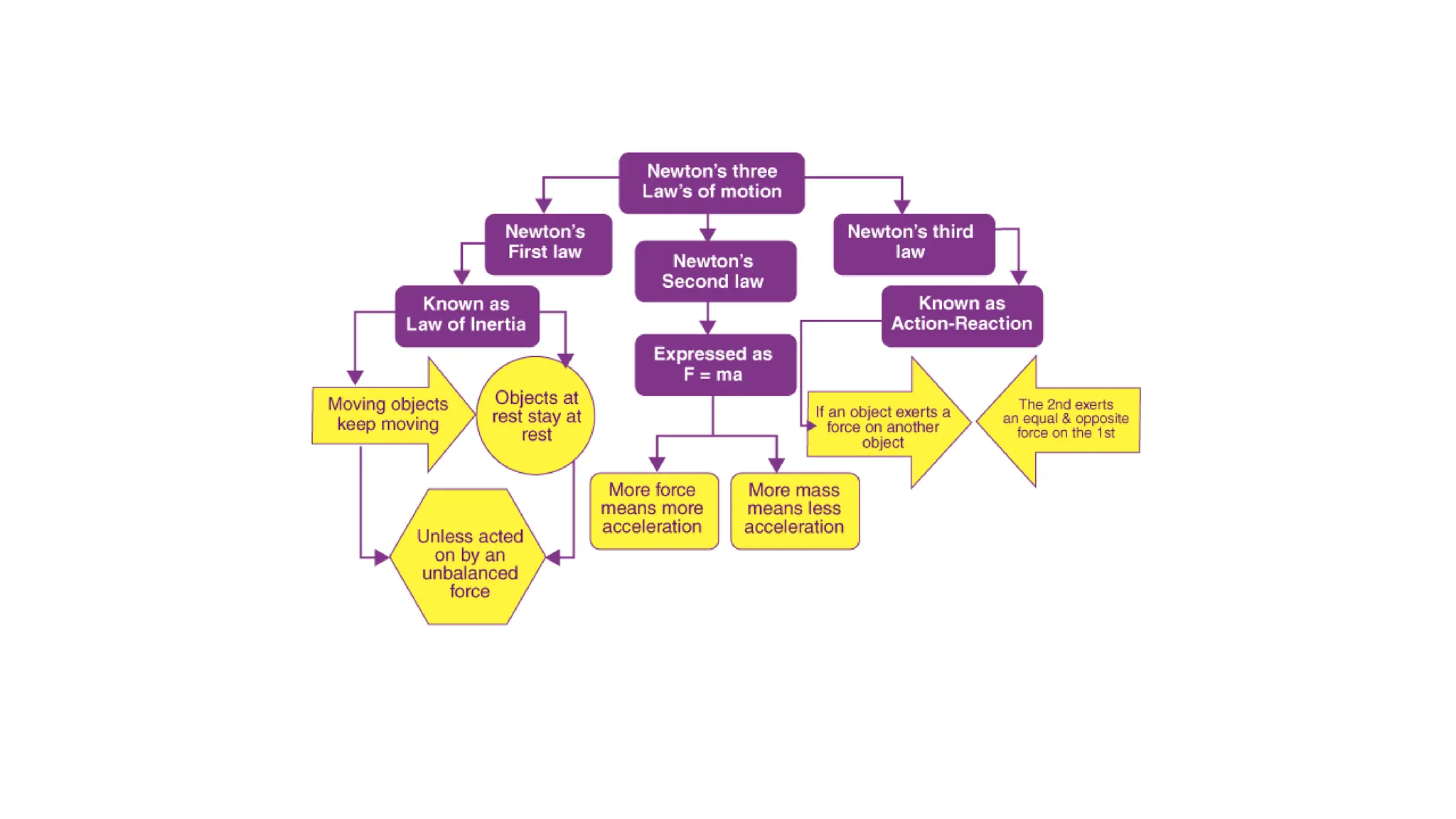
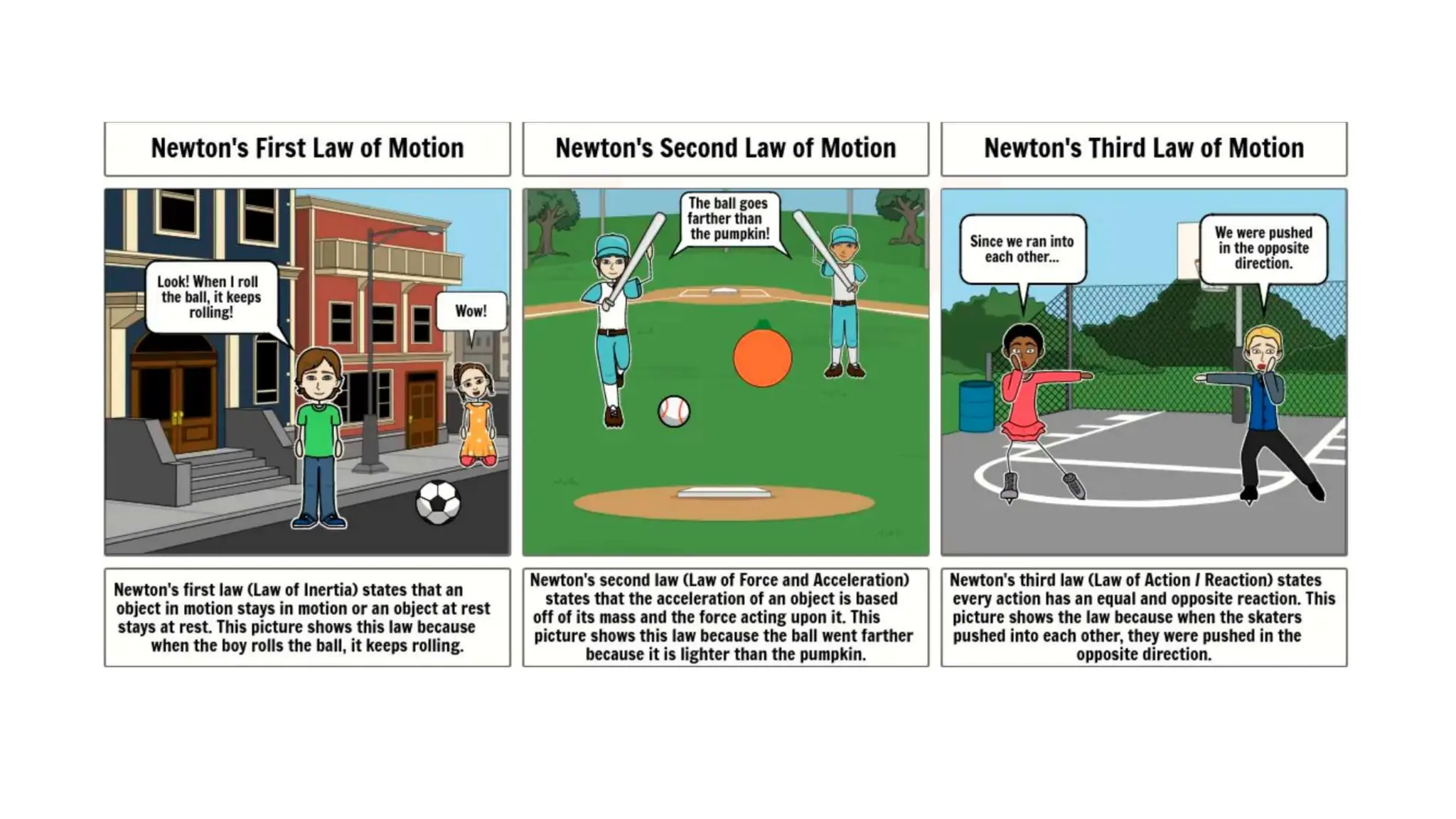
LAWS OF
MOTION
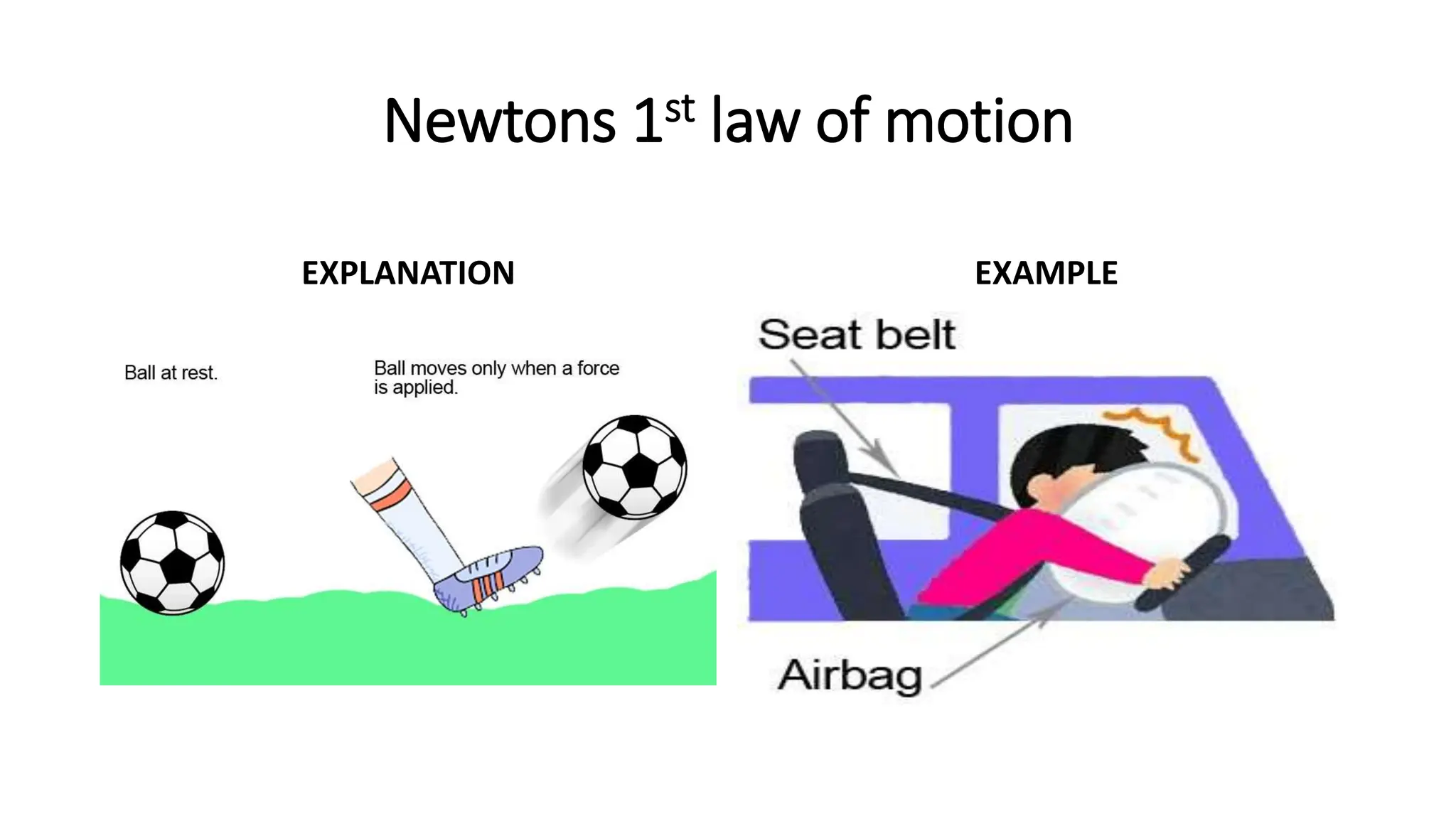
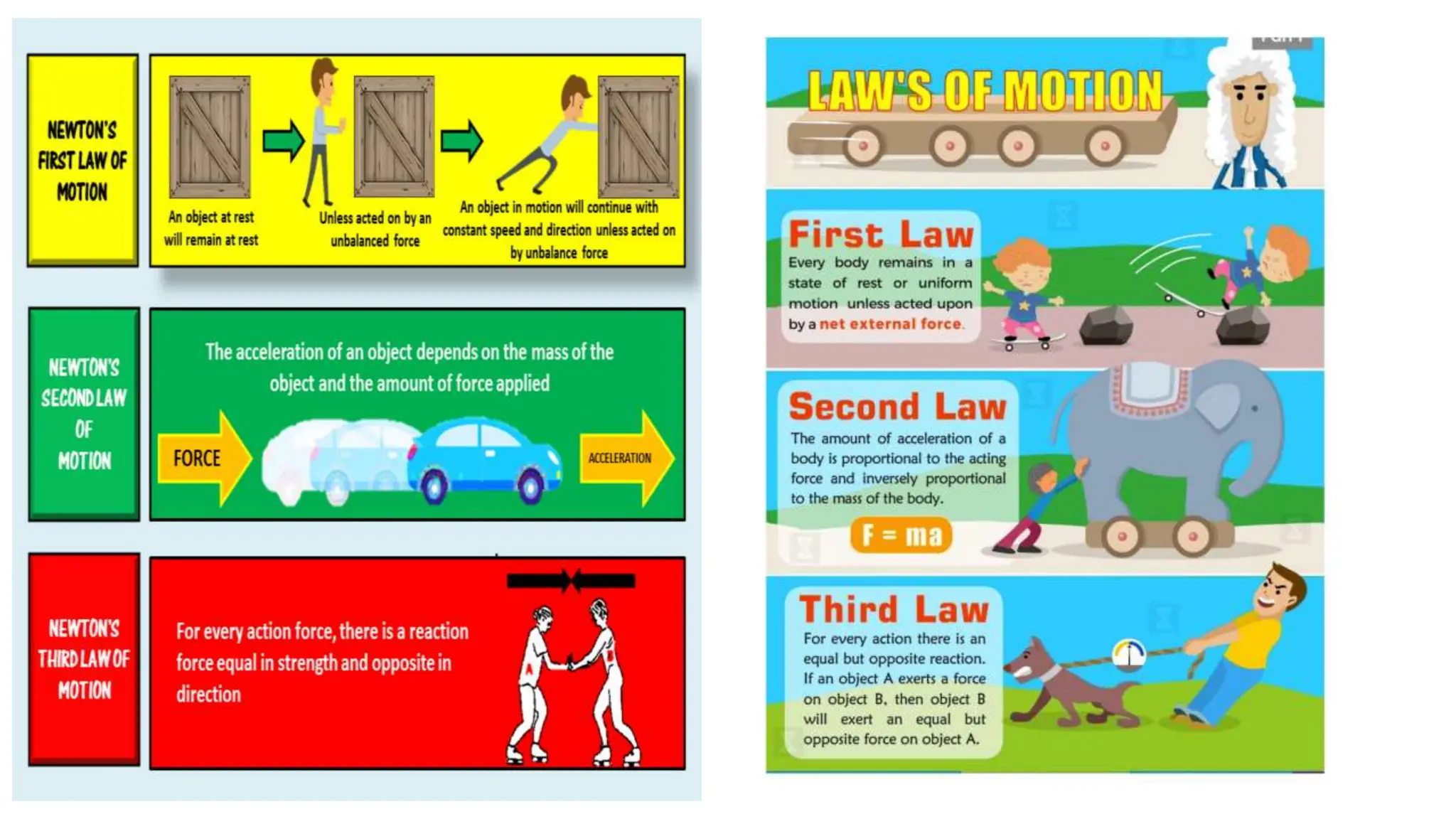
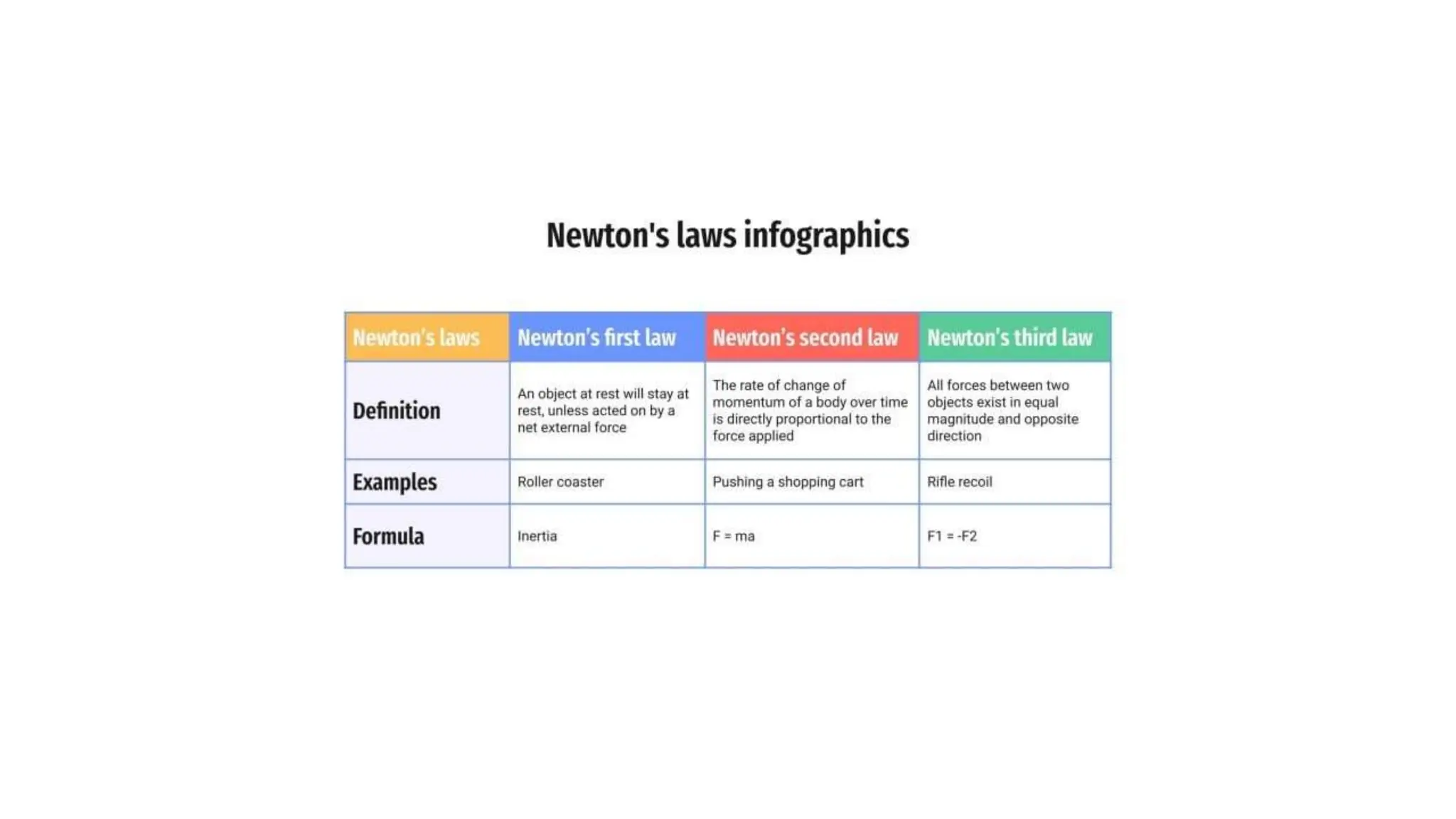
Newtons 1st law of motion
EXPLANATION EXAMPLE
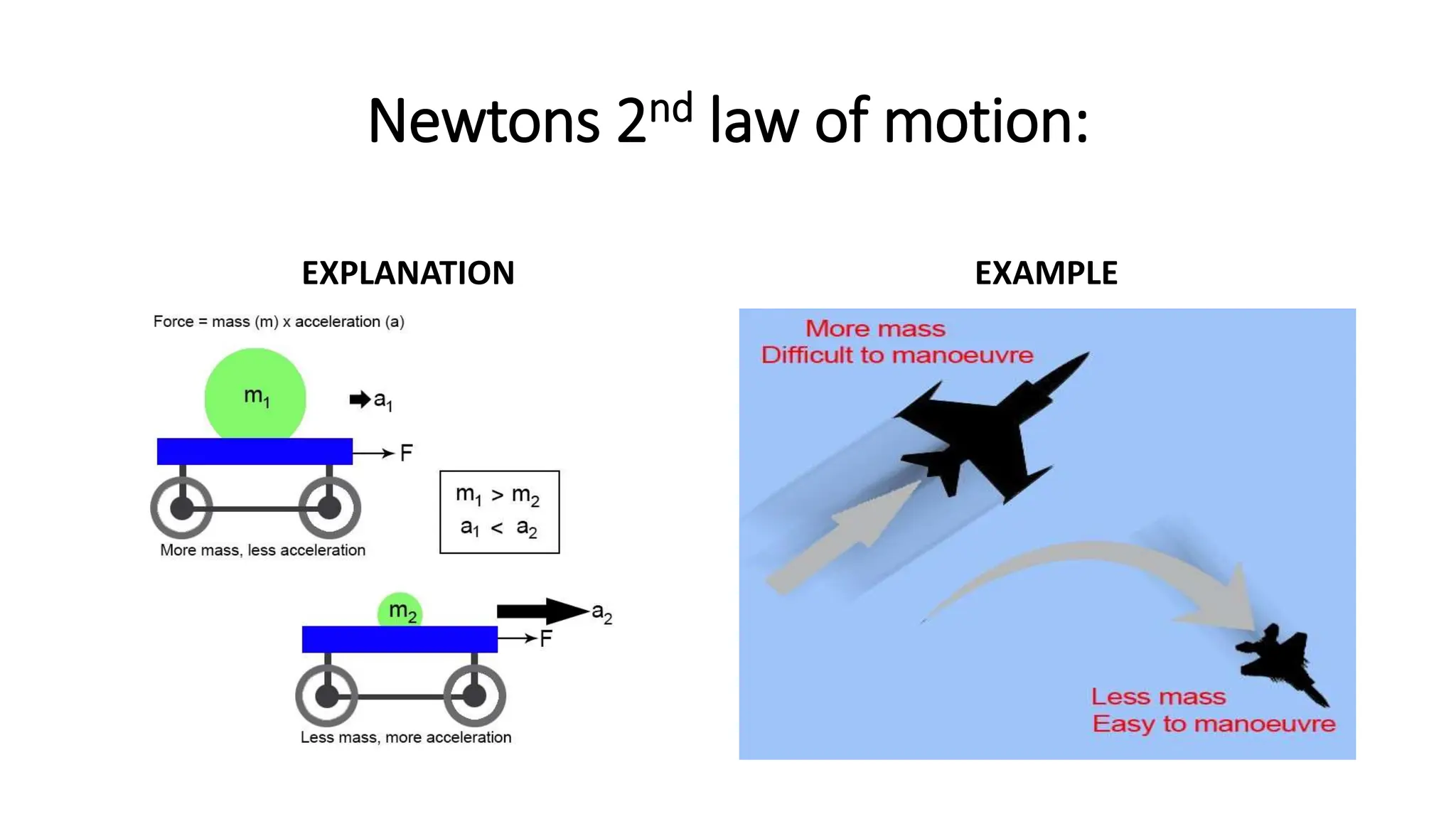
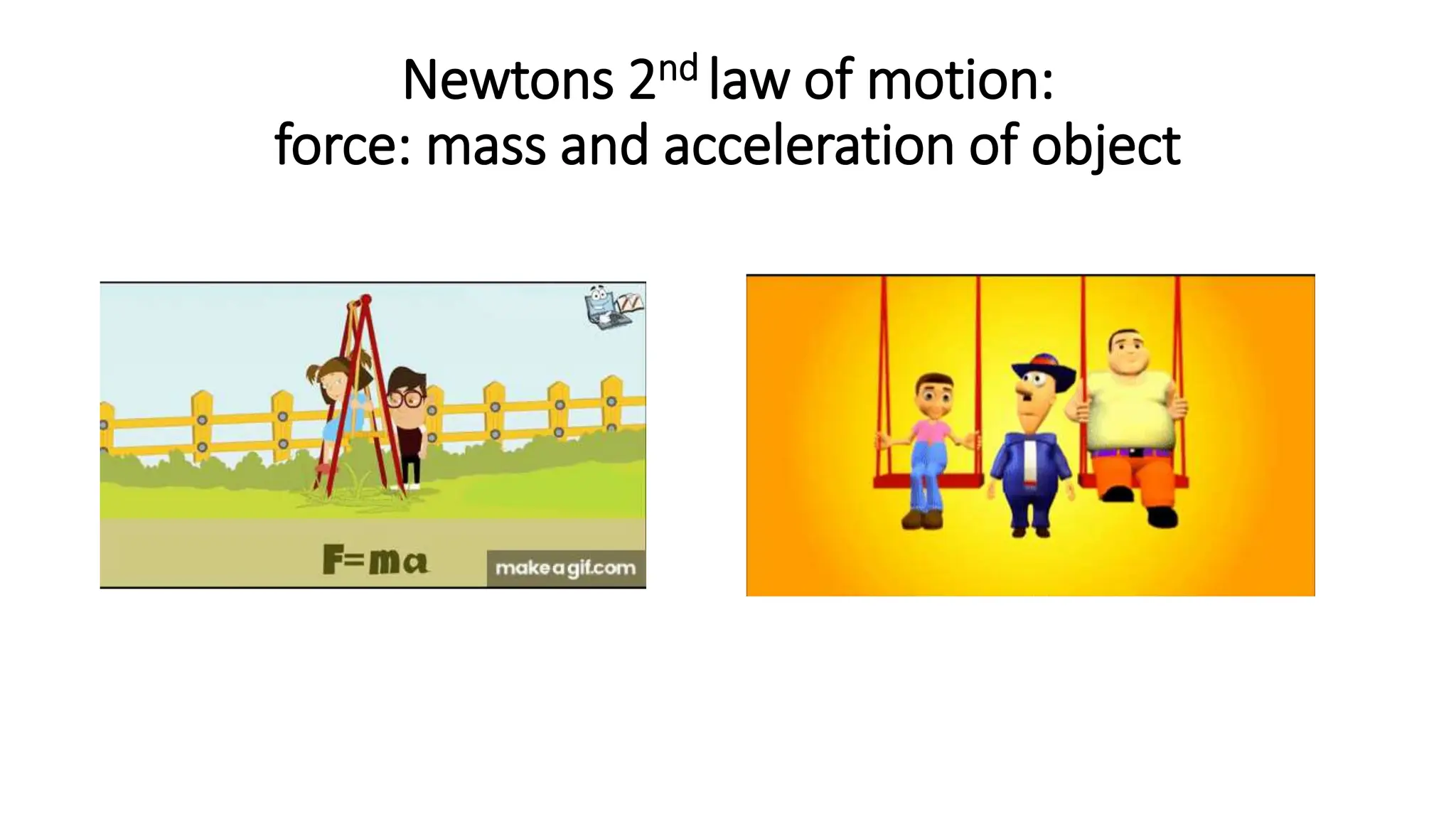
Newtons 2nd law of motion:
EXPLANATION EXAMPLE
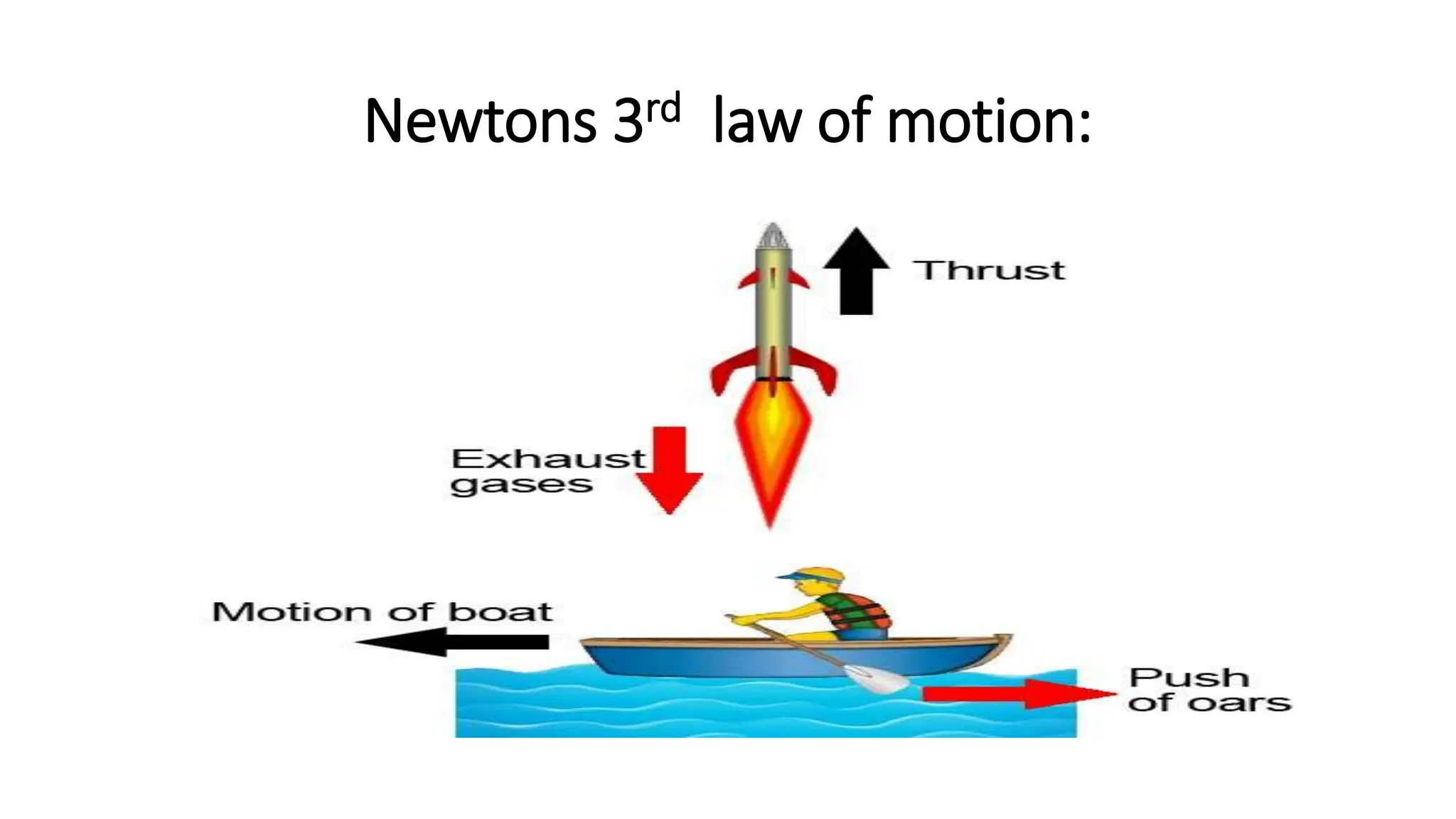
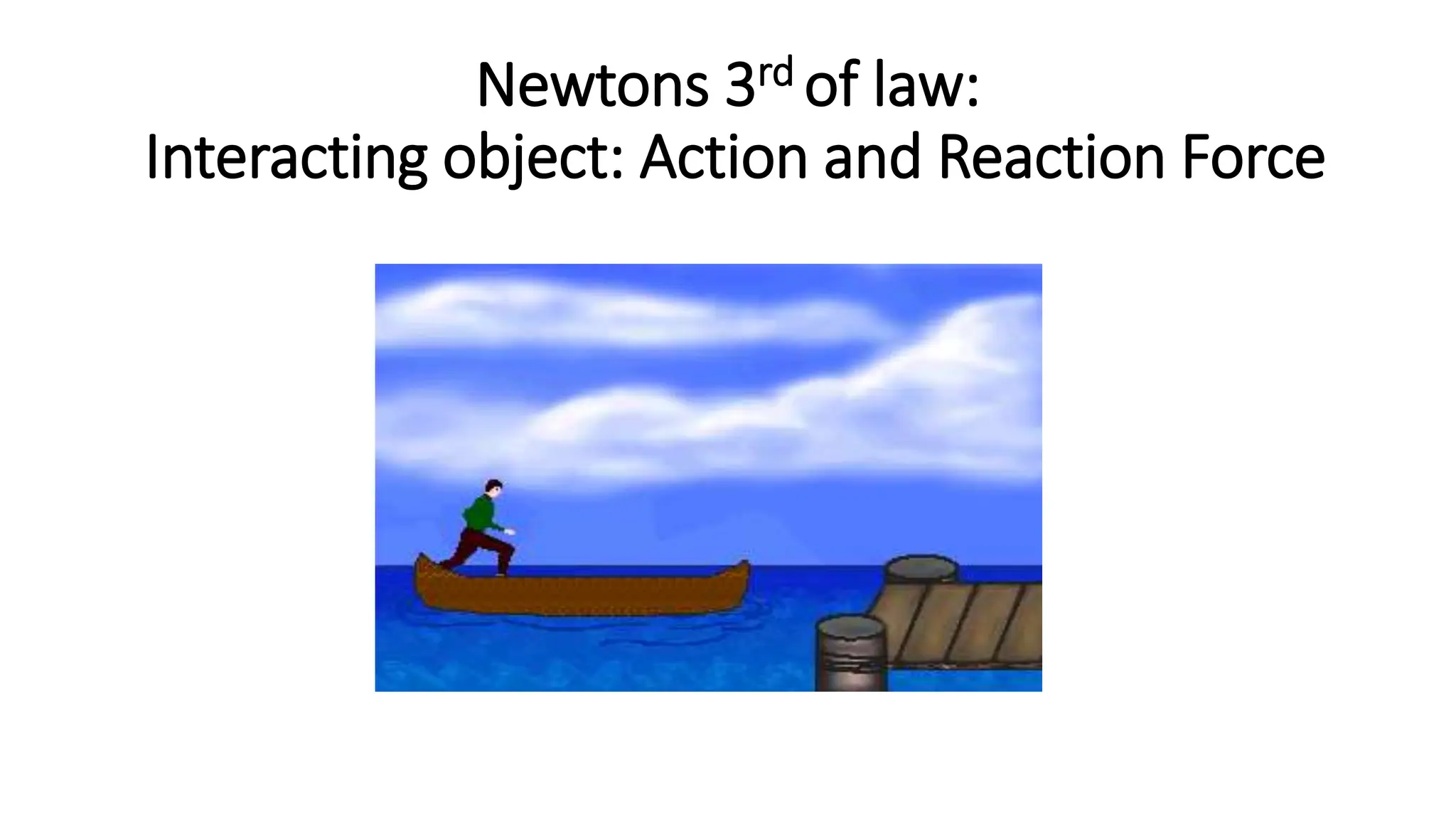
Newtons 3rd law of motion:
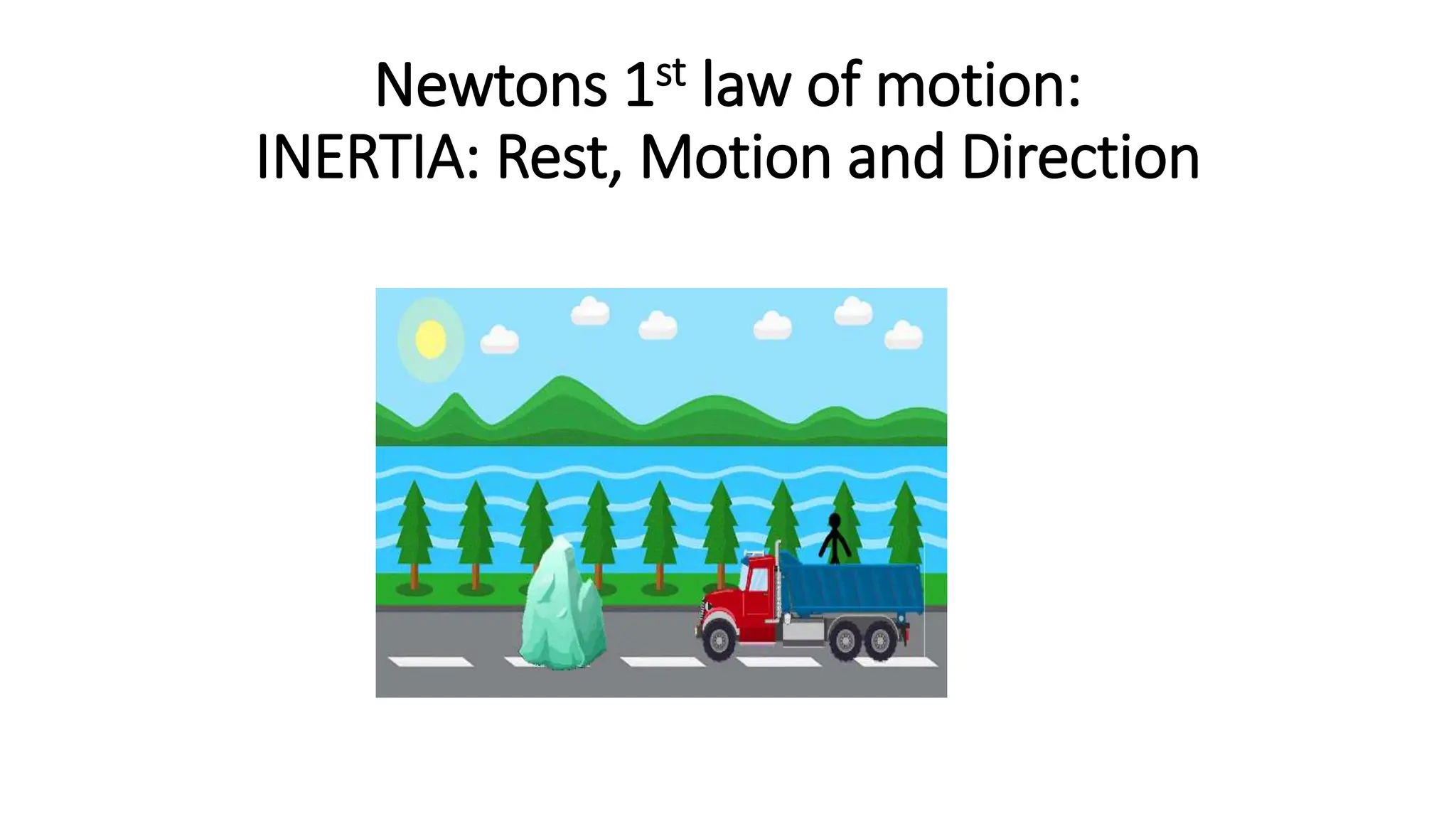
Newtons 1st law of motion:
INERTIA: Rest, Motion and Direction
Newtons 2nd law of motion:
force: mass and acceleration of object
Newtons 3rd of law:
Interacting object: Action and Reaction Force
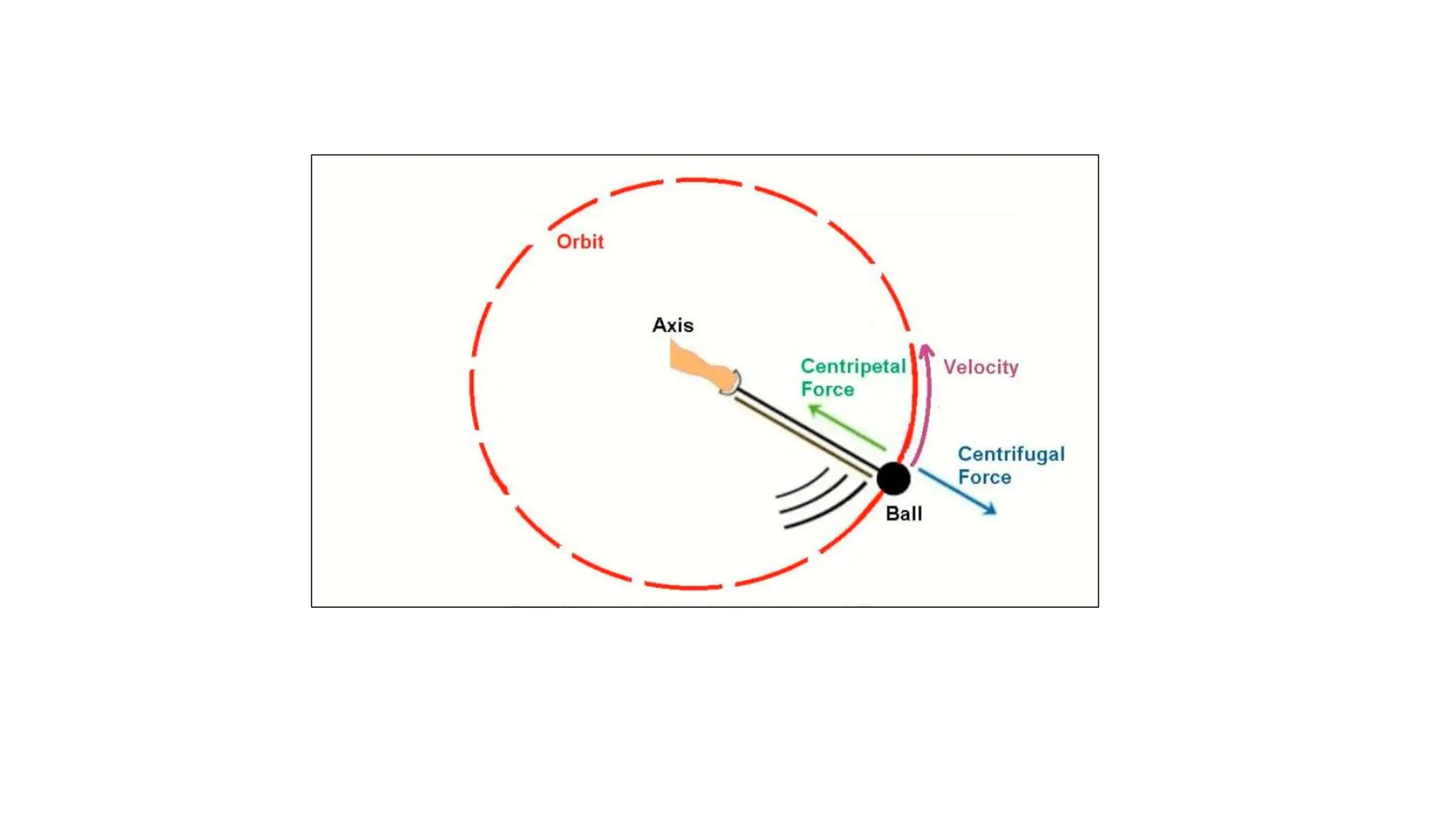
CENTRIPETAL
AND
CENTRIFUGAL
FORCES
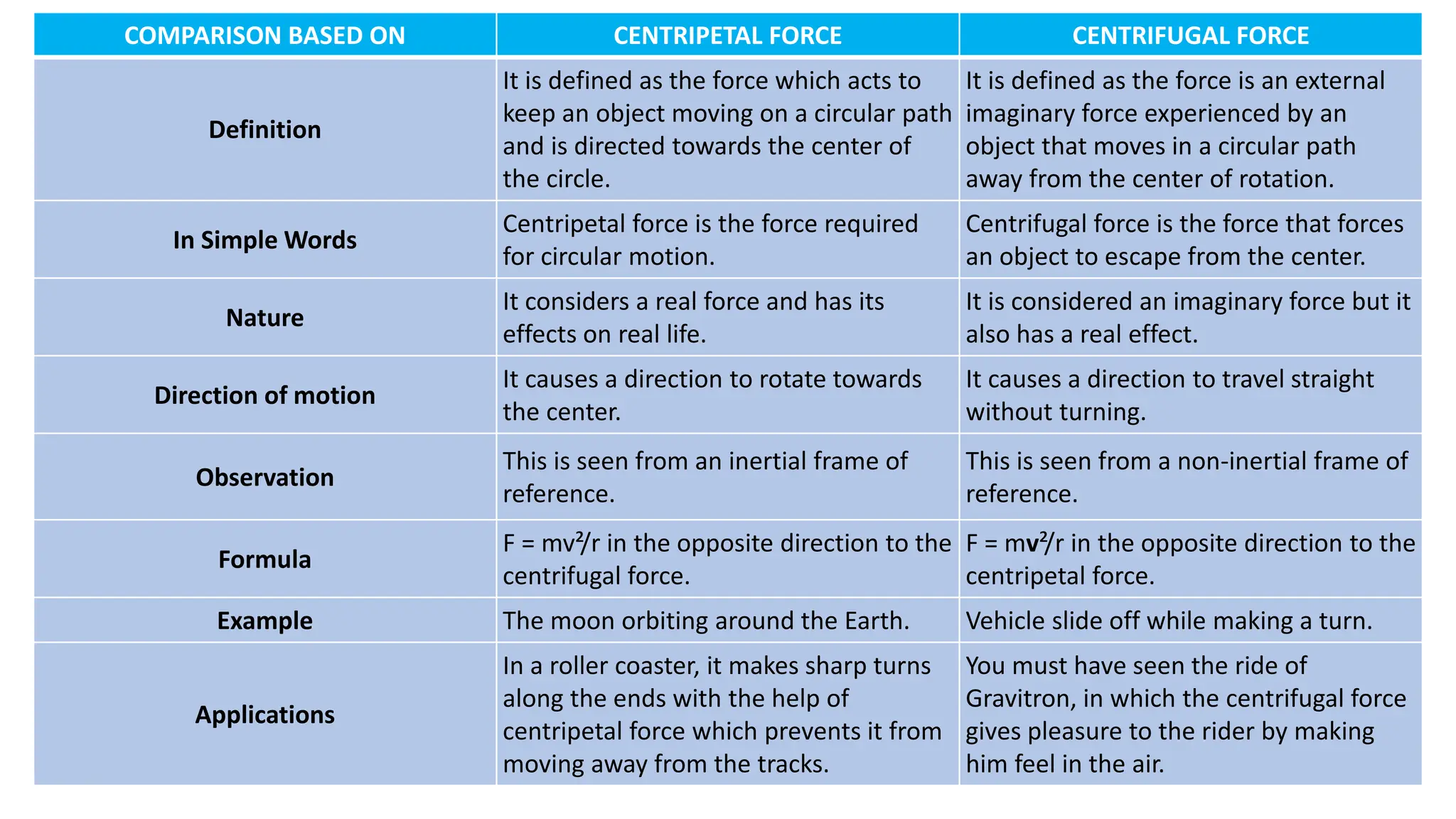
COMPARISON BASED ON CENTRIPETAL FORCE CENTRIFUGAL FORCE
Definition
It is defined as the force which acts to
keep an object moving on a circular path
and is directed towards the center of
the circle.
It is defined as the force is an external
imaginary force experienced by an
object that moves in a circular path
away from the center of rotation.
In Simple Words
Centripetal force is the force required
for circular motion.
Centrifugal force is the force that forces
an object to escape from the center.
Nature
It considers a real force and has its
effects on real life.
It is considered an imaginary force but it
also has a real effect.
Direction of motion
It causes a direction to rotate towards
the center.
It causes a direction to travel straight
without turning.
Observation
This is seen from an inertial frame of
reference.
This is seen from a non-inertial frame of
reference.
Formula
F = mv²/r in the opposite direction to the
centrifugal force.
F = mv²/r in the opposite direction to the
centripetal force.
Example The moon orbiting around the Earth. Vehicle slide off while making a turn.
Applications
In a roller coaster, it makes sharp turns
along the ends with the help of
centripetal force which prevents it from
moving away from the tracks.
You must have seen the ride of
Gravitron, in which the centrifugal force
gives pleasure to the rider by making
him feel in the air.
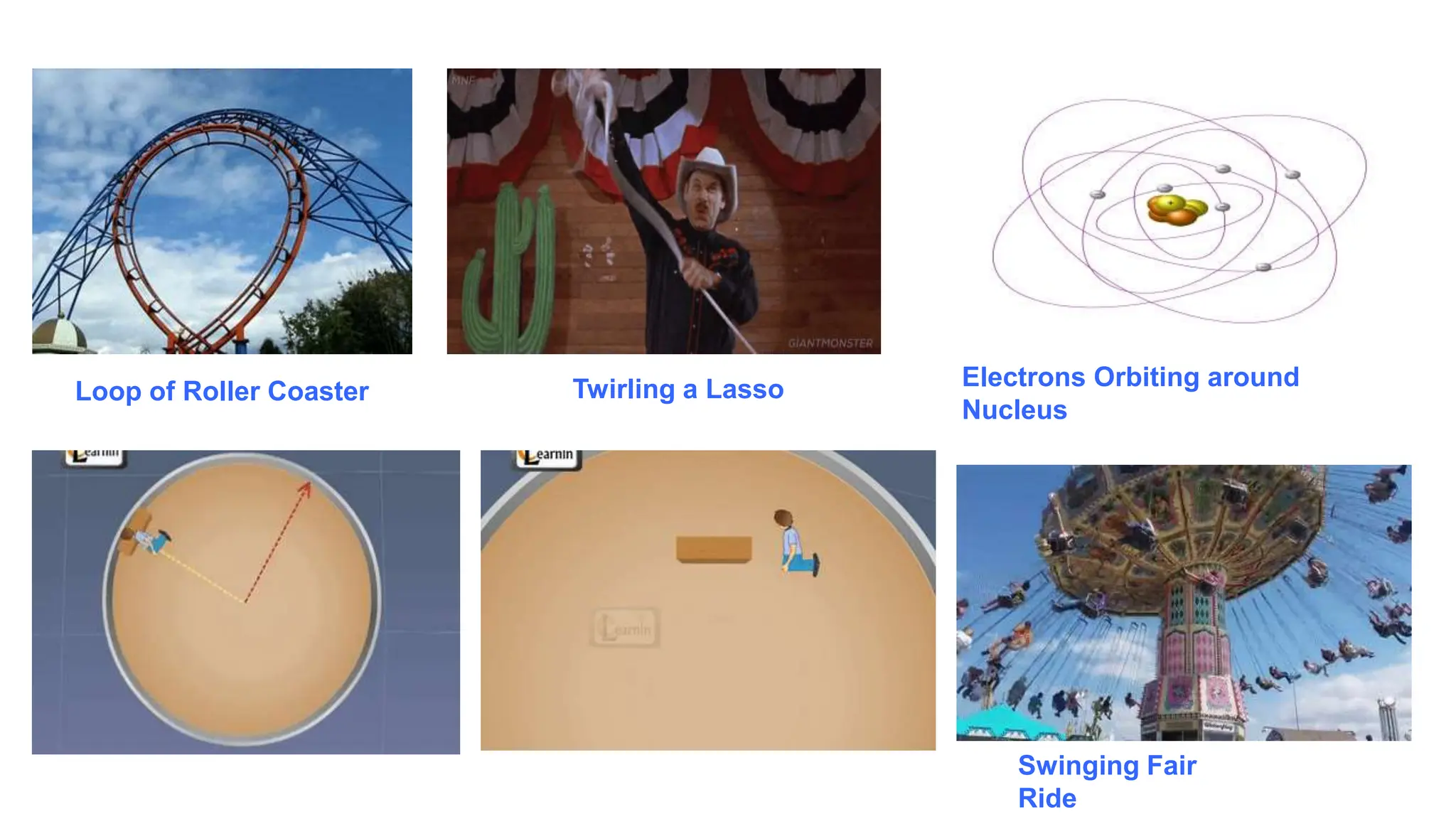
Electrons Orbiting around
Nucleus
Twirling a Lasso
Loop of Roller Coaster
Swinging Fair
Ride
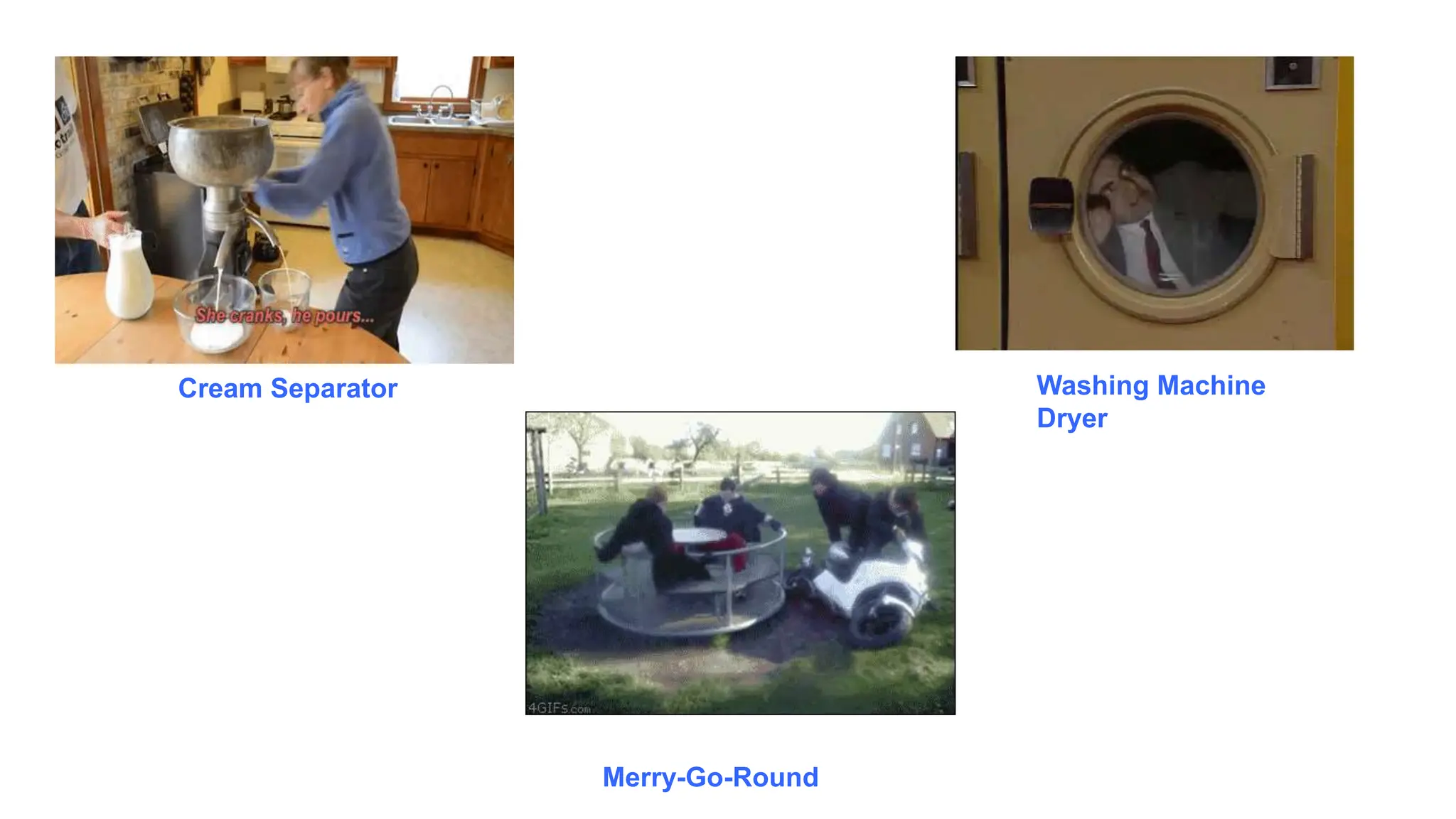
Washing Machine
Dryer
Cream Separator
Merry-Go-Round
PRINCIPLES & LAWS OF MOTION with its types & examples

PRINCIPLES & LAWS OF MOTION with its types & examples

  • 1.
    PRINCIPLES & LAWSOF MOTION Dr. Aneri Patwari MPT
  • 2.
    CONTENT • Causes ofmotion • Types of motion • Motion experienced by body • Laws of motion • Centripetal and centrifugal force
  • 3.
  • 5.
    TYPE OF FORCE . FORCE ContactForce Like force [push Unlike force [pull] Fractional force. Field Force Magnet force Gravitational force Electric force
  • 9.
    FRICTION When a bodyslides over the surface of another body, there is an opposing force acting opposite to the direction of motion. This opposing force is called friction. Thus, Friction can be define as a form of force that opposes the relative sliding motion of objects in contact with surface. it is a vector quantity which exist in "solid, liquid and gas.
  • 10.
    METHOD OF REDUCINGFRICTION 1. Streamlining: is used to reduce friction due to the shape of an object which ensures that only a small surface area of the object is in head-on contact with the field. Example; Aeroplane, ship. 2. Ball Bearing: Shafts are fixed on ball bearing so that friction will reduce because rolling friction is less than sliding friciton. it is provided in (shafts of motor, axle of motor). 3. Lubricating: is viscous liquid or oil which are applied between two surface contact. Example; Lubricating of wheels. 4. Polishing: friction between two surfaces in contact can be reduced by polishing them. Example; Jewel bearing in watches. 5. Use of pencil and polysterene. 6. Banking.
  • 11.
    ADVANTAGES 1. The tierof a motor car and a bicycle are made rough to increase friction. 2. Without friction, the brake of a motor car cannot work. 3. Without friction between the feet and the ground, it will not be possible to walk without falling. 4. Friction helps in the roataion of the various part of the machine. 5. When ground is slippery after rain, it is made rough by spreading sand in order not to cause slipping DISADVANTAGE 1. It reduce motion. 2. It causes wear and tear in machine. 3. It reduce the efficiency of machine. 4. It causes the heating of engines.
  • 13.
    KINDS OF MOTIONSAND Its EXPERIENCE BY BODY
  • 15.
  • 16.
  • 19.
    Sliding Boomerang Planets around thesun: circulatory motion Boomerang
  • 20.
    Pendulum: oscillatory Spinning Top Tickingof Clock: periodic and rotatory
  • 22.
  • 26.
    Newtons 1st lawof motion EXPLANATION EXAMPLE
  • 27.
    Newtons 2nd lawof motion: EXPLANATION EXAMPLE
  • 28.
    Newtons 3rd lawof motion:
  • 30.
    Newtons 1st lawof motion: INERTIA: Rest, Motion and Direction
  • 31.
    Newtons 2nd lawof motion: force: mass and acceleration of object
  • 32.
    Newtons 3rd oflaw: Interacting object: Action and Reaction Force
  • 34.
  • 36.
    COMPARISON BASED ONCENTRIPETAL FORCE CENTRIFUGAL FORCE Definition It is defined as the force which acts to keep an object moving on a circular path and is directed towards the center of the circle. It is defined as the force is an external imaginary force experienced by an object that moves in a circular path away from the center of rotation. In Simple Words Centripetal force is the force required for circular motion. Centrifugal force is the force that forces an object to escape from the center. Nature It considers a real force and has its effects on real life. It is considered an imaginary force but it also has a real effect. Direction of motion It causes a direction to rotate towards the center. It causes a direction to travel straight without turning. Observation This is seen from an inertial frame of reference. This is seen from a non-inertial frame of reference. Formula F = mv²/r in the opposite direction to the centrifugal force. F = mv²/r in the opposite direction to the centripetal force. Example The moon orbiting around the Earth. Vehicle slide off while making a turn. Applications In a roller coaster, it makes sharp turns along the ends with the help of centripetal force which prevents it from moving away from the tracks. You must have seen the ride of Gravitron, in which the centrifugal force gives pleasure to the rider by making him feel in the air.
  • 37.
    Electrons Orbiting around Nucleus Twirlinga Lasso Loop of Roller Coaster Swinging Fair Ride
  • 38.