PRIME-HRM
ORIENTATION
OBJECTIVES
1. Know what PRIME-HRM is
and to understand its
importance.
2. Discuss the coverage and
components of the PRIME-
HRM.
3. Enumerate the criteria for
accreditation and criteria for
award.
4. Familiarize themselves of
their roles, duties and
responsibilities of the
PRIME-ASSESSMENT Phase.
HRM?
PR - ogram to
I - nstitutionalize
M - eritocracy and
E - xcellence
H - uman
R - esource
M - anagement
We want fast and
efficient transactions.
We want to deal with
the best employees.
We want quality service.
What is wrong?
Why do these issues
persist?
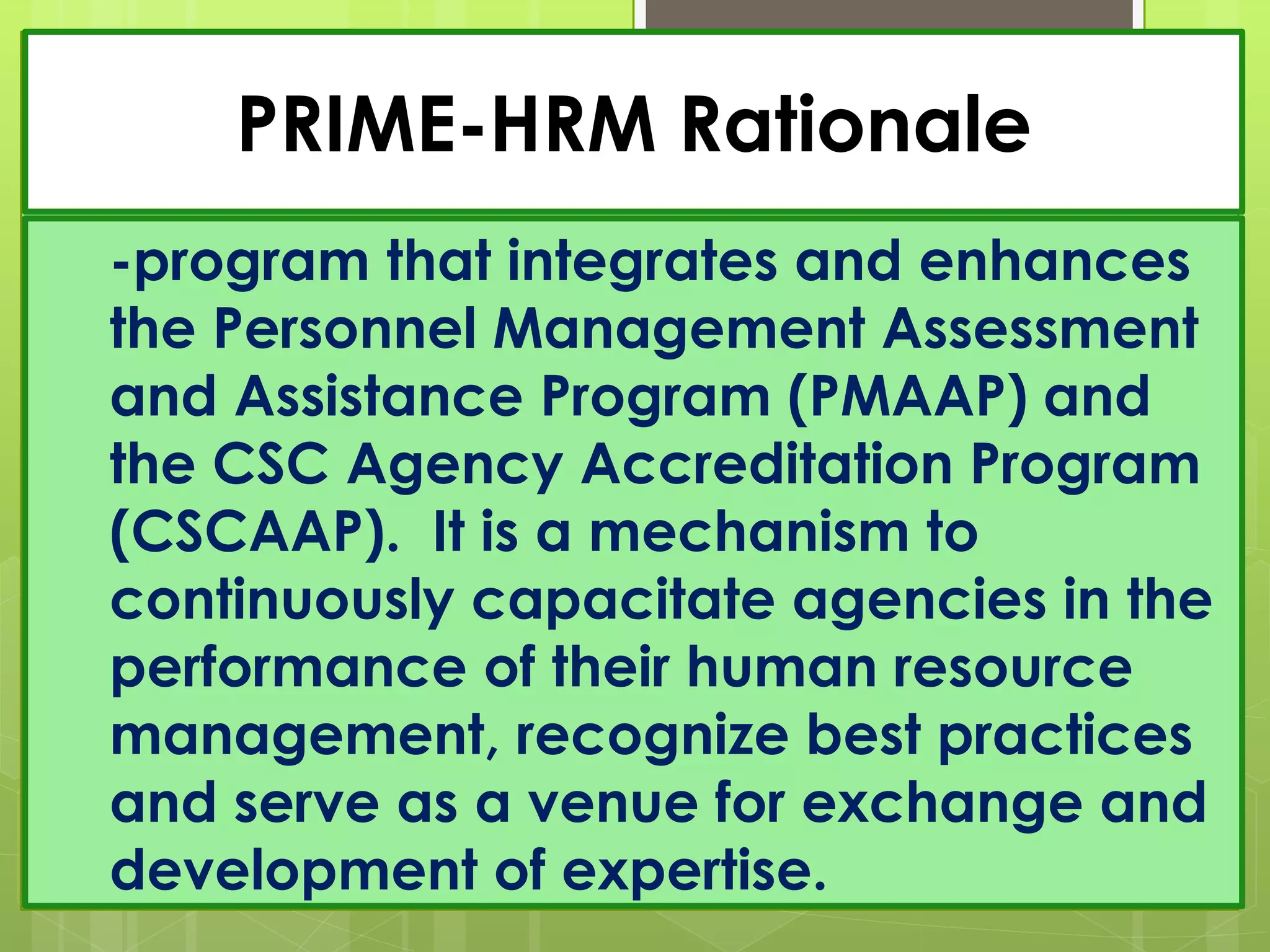
PRIME-HRM Rationale
-program that integrates and enhances
the Personnel Management Assessment
and Assistance Program (PMAAP) and
the CSC Agency Accreditation Program
(CSCAAP). It is a mechanism to
continuously capacitate agencies in the
performance of their human resource
management, recognize best practices
and serve as a venue for exchange and
development of expertise.
PRIME-HRM Objectives
1. assess HRM practices and capabilities of
agencies.
2. search mechanism for best practices
3. serve as a venue for exchange and
development of expertise of HRM between
and among government agencies.
4. empower agencies in the performance
of HRM functions.
5. Promote and reward excellent human
resource management practices.
PRIME-HRM Scope and Coverage
1. assessment of HRM management systems and
standards
2. assessment of the competency level of
agencies HRMOs
3. survey of agency HRM climate
4. customized technical assistance and
developmental interventions according to
determined needs of the agency.
5. Review of decisions made and actions taken
(rewards, incentives, performance ratings,
leave, benefits, discipline and other matters)
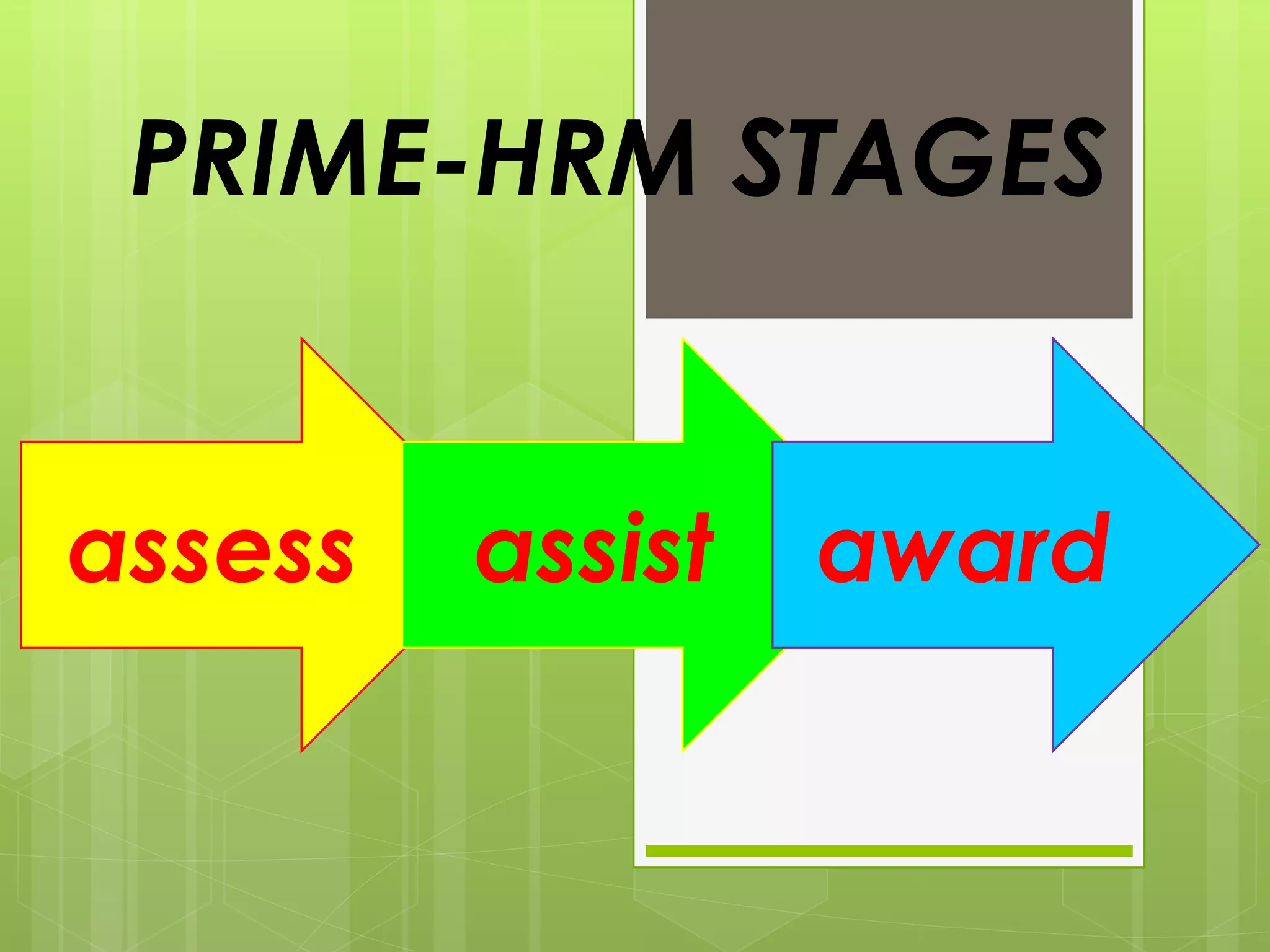
assess assist award
PRIME-HRM STAGES
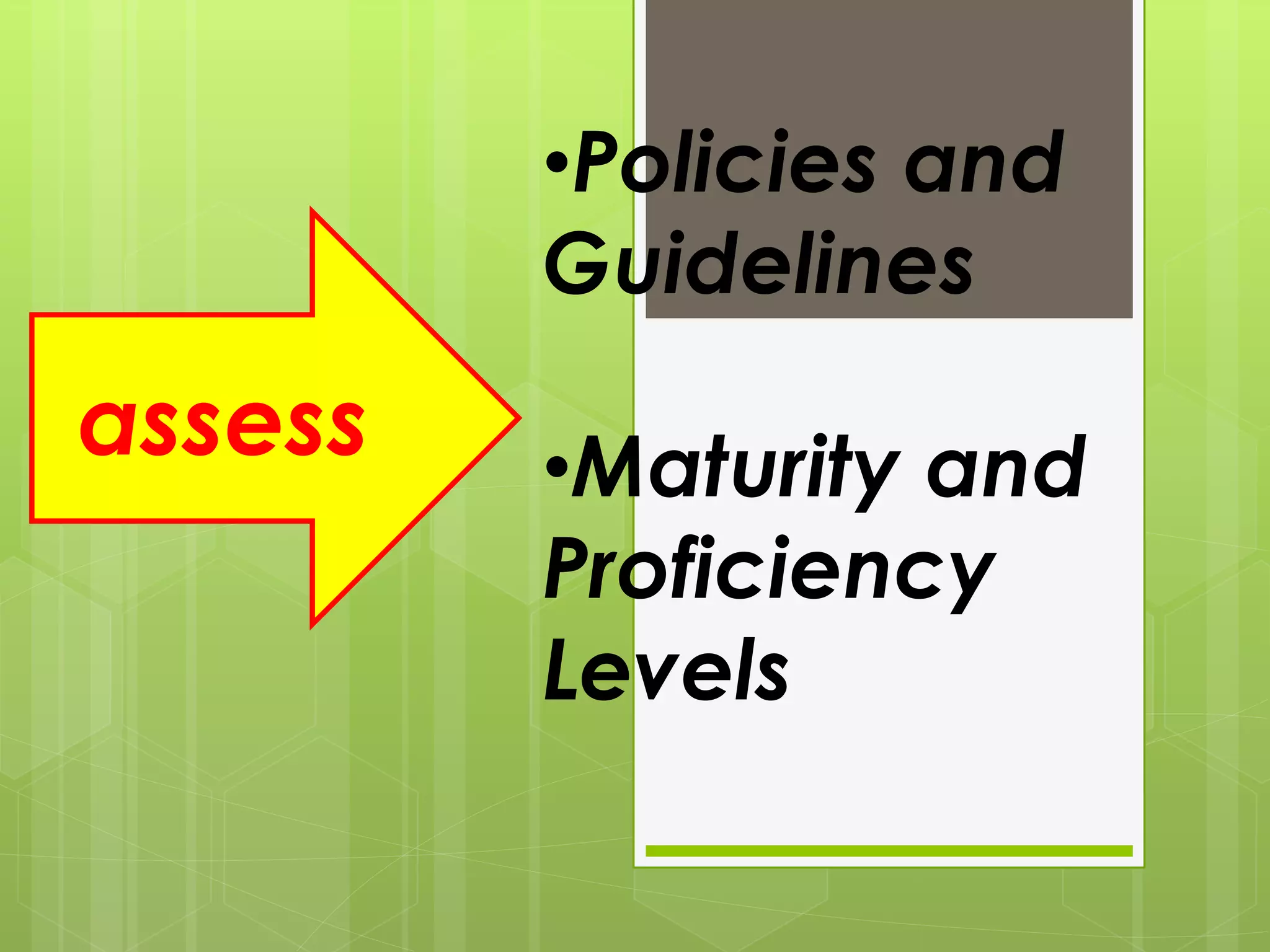
assess
•Policies and
Guidelines
•Maturity and
Proficiency
Levels
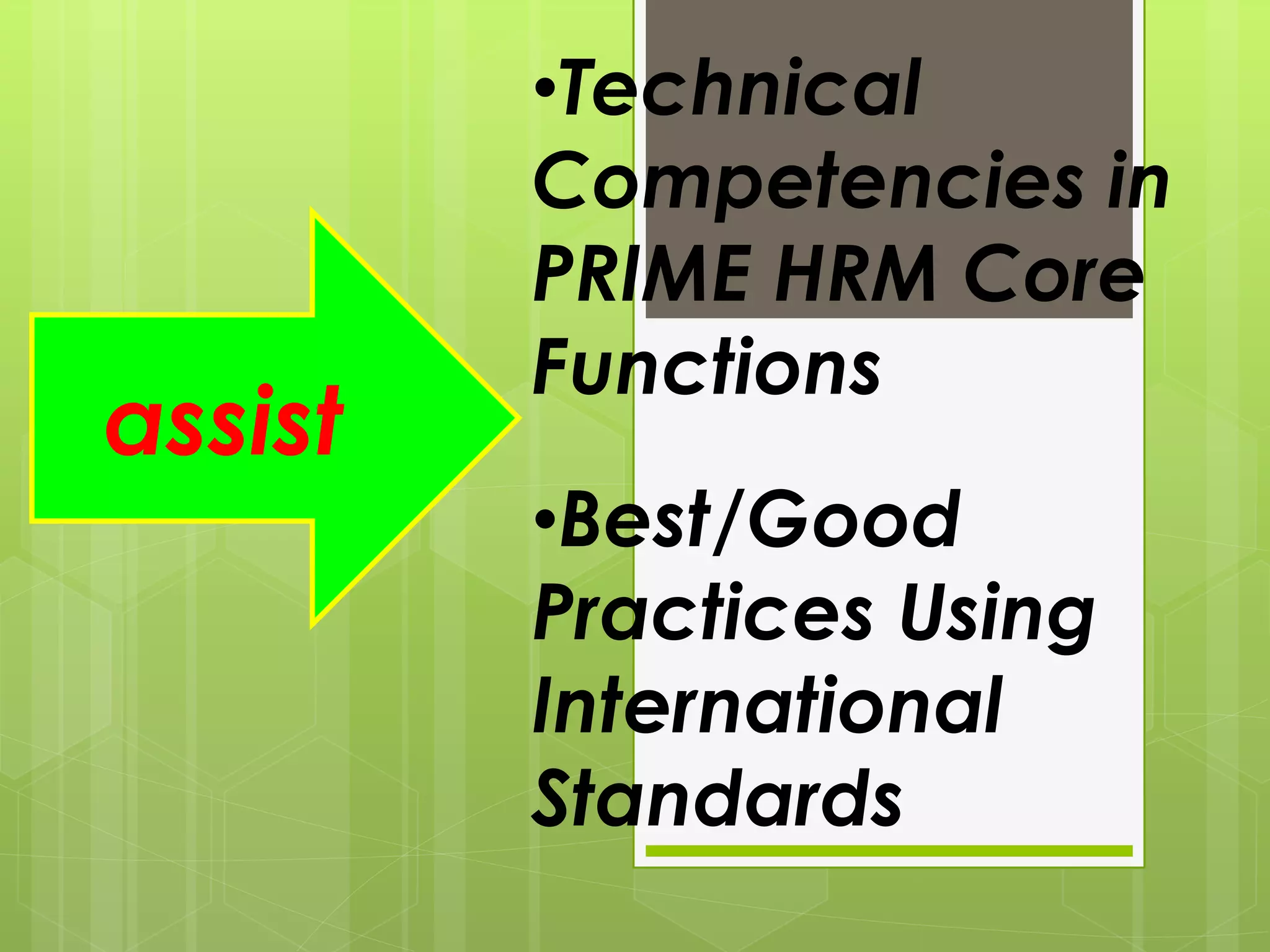
assist
•Technical
Competencies in
PRIME HRM Core
Functions
•Best/Good
Practices Using
International
Standards
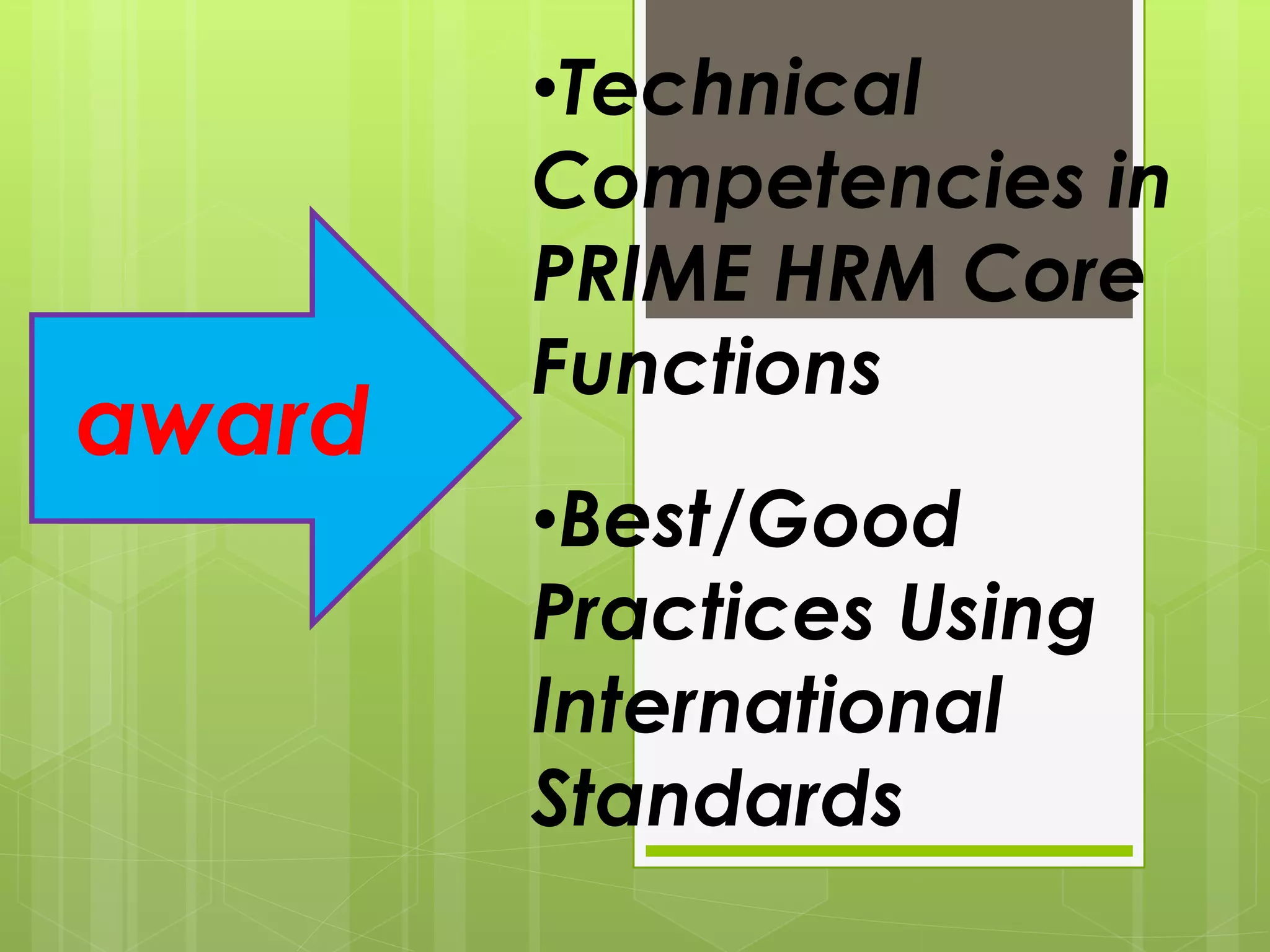
award
•Technical
Competencies in
PRIME HRM Core
Functions
•Best/Good
Practices Using
International
Standards
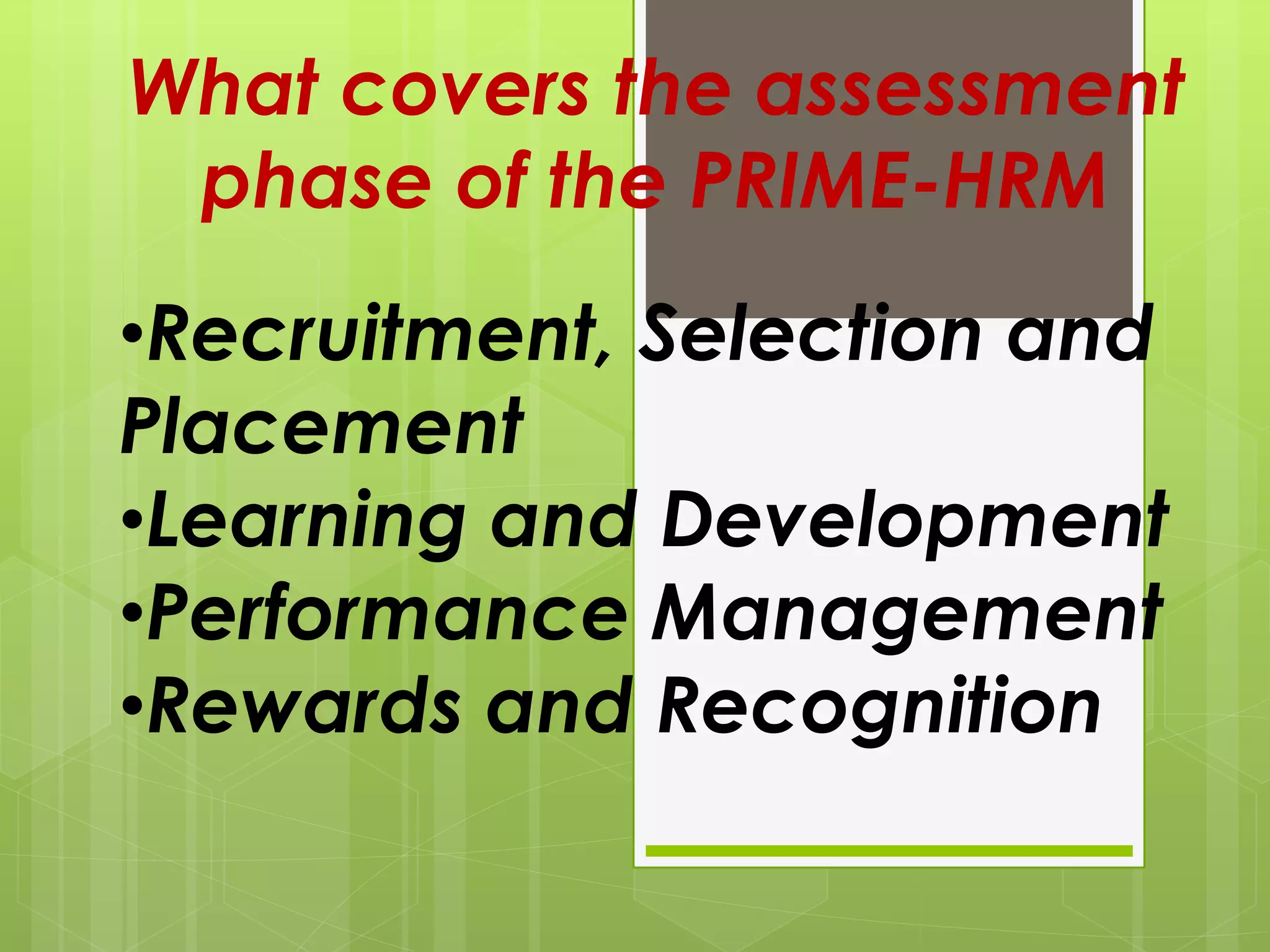
What covers the assessment
phase of the PRIME-HRM
•Recruitment, Selection and
Placement
•Learning and Development
•Performance Management
•Rewards and Recognition
What is an HR Maturity Level?
•Describes how well
behaviors, practices and
processes of organization can
reliably and sustainably
produce outcomes
•“maturity” degree of
formality and optimization of
processes
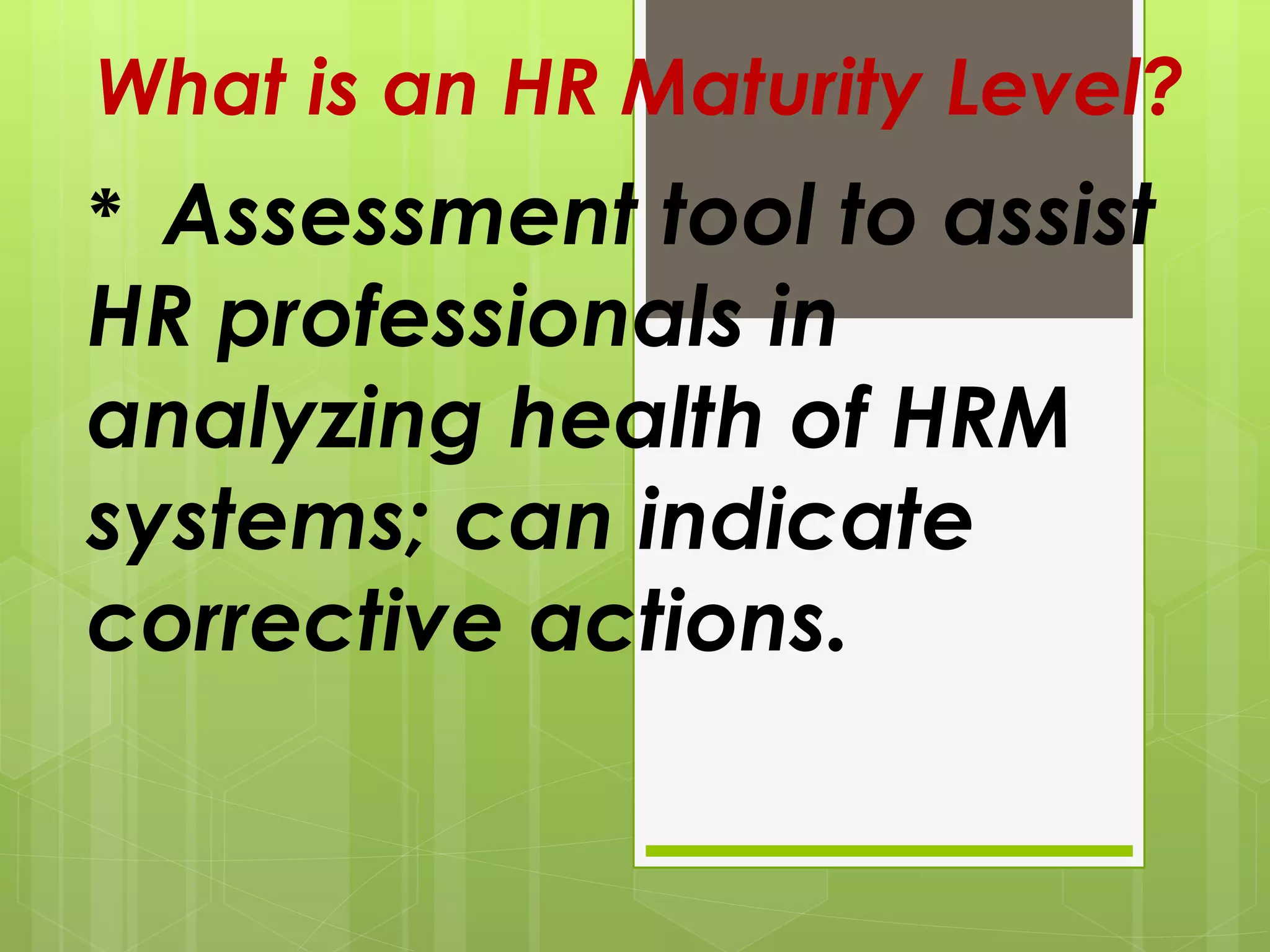
What is an HR Maturity Level?
* Assessment tool to assist
HR professionals in
analyzing health of HRM
systems; can indicate
corrective actions.
Maturity Levels/Indicators
Level I
Transactional HRM
Level II
Process-Defined
HRM
Level IV
Strategic HRM
Level III
Integrated HRM
Level I Transactional HRM
Process at
least
documented
sufficiently
Some
processes
are
repeatable,
possibly with
consistent
result
Personnel
function,
mostly
separate
from
agency/
business and
talent needs
Line
managers
perform HR
activities as
they see
best
Level II Process-defined HRM
Sets of
defined and
documented
SOPs
established,
subject to
improvement
over time
Goal
oriented
decision
making
Some
automated
system but
little
integration of
data
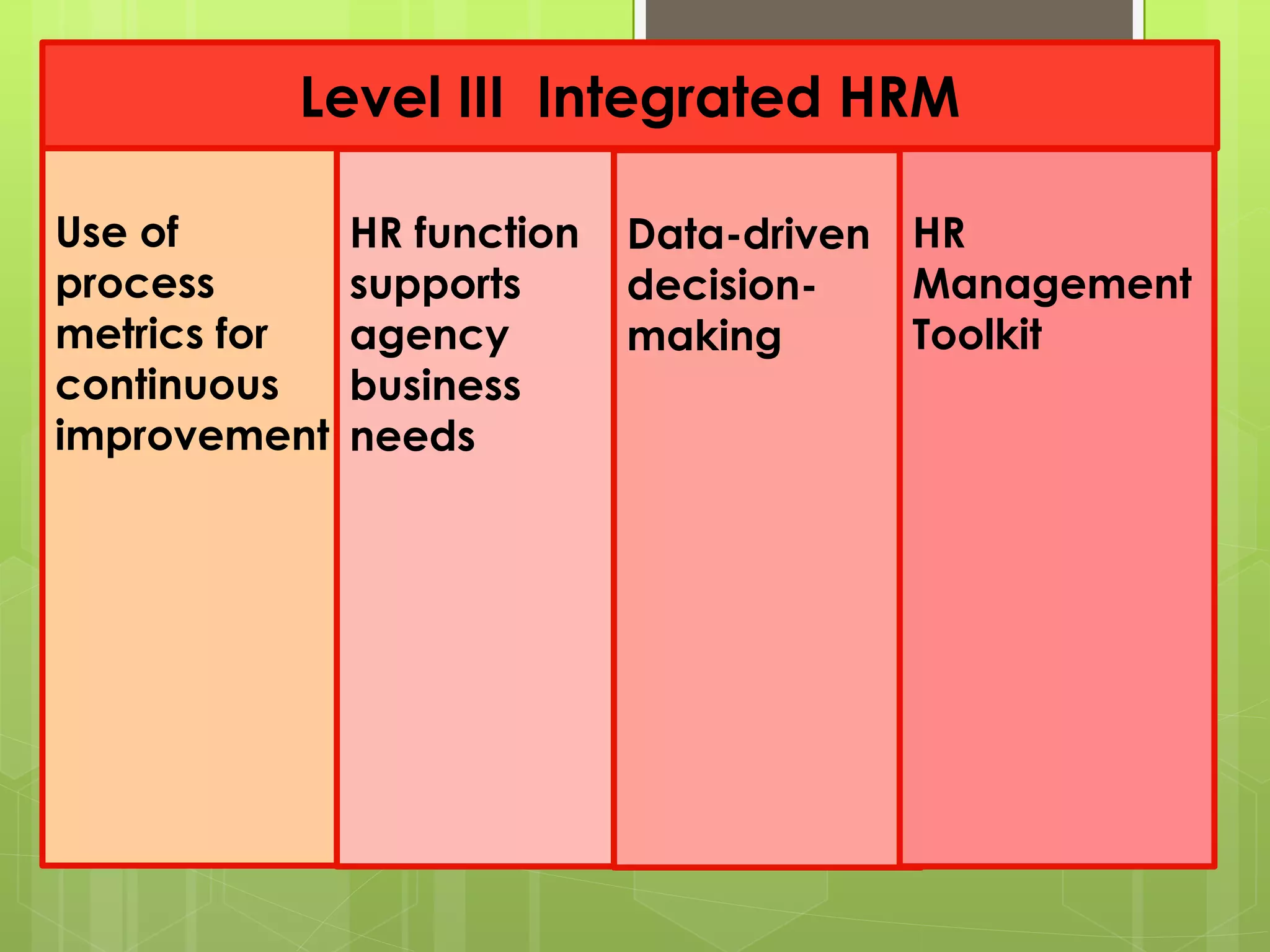
Level III Integrated HRM
Use of
process
metrics for
continuous
improvement
HR function
supports
agency
business
needs
Data-driven
decision-
making
HR
Management
Toolkit
Level IV Strategic HRM
Processes
focused on
continually
improving
performance
Systematicall
y managed
by
combination
of process
optimization
and
continuous
improvement
HR helps to
drive
agency
business
decision on
people data
and insight
HR strategy
part of the
agency
strategy
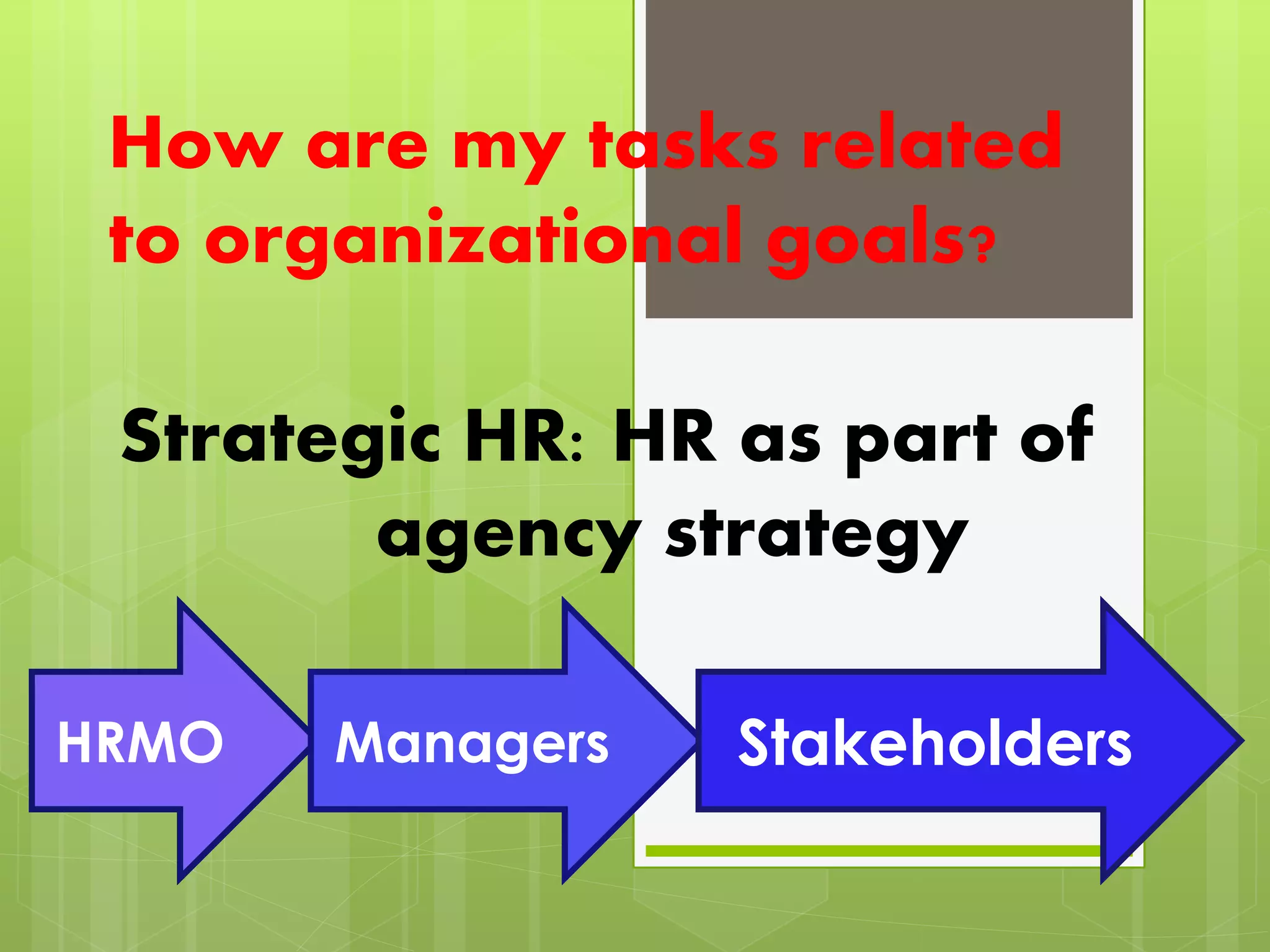
How are my tasks related
to organizational goals?
Strategic HR: HR as part of
agency strategy
HRMO Managers Stakeholders
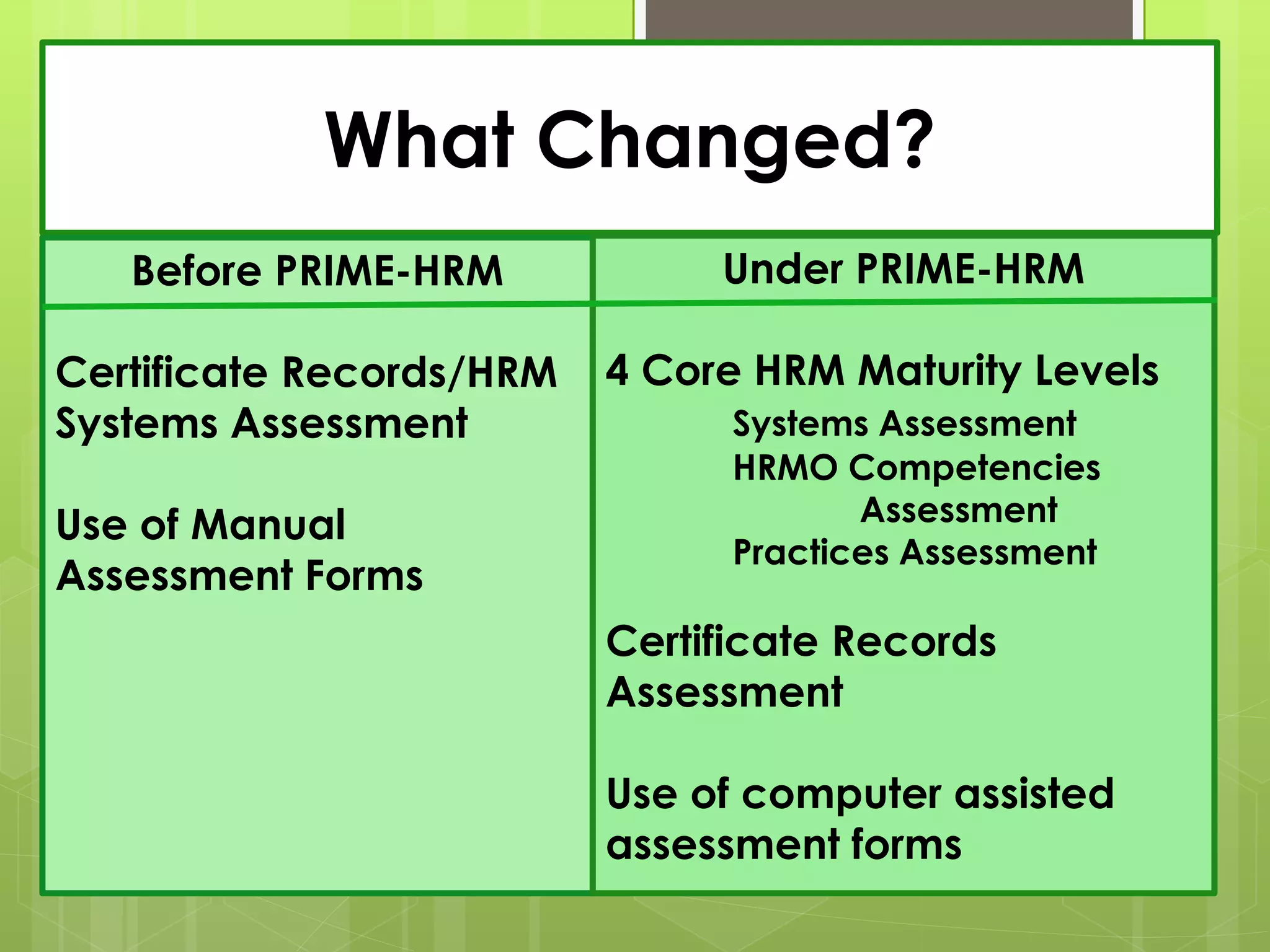
What Changed?
Before PRIME-HRM
Certificate Records/HRM
Systems Assessment
Use of Manual
Assessment Forms
Under PRIME-HRM
4 Core HRM Maturity Levels
Systems Assessment
HRMO Competencies
Assessment
Practices Assessment
Certificate Records
Assessment
Use of computer assisted
assessment forms
Policy Changes
Current
Only HRMO Head is
assessed
Level II Accredited Status
Level III Deregulated Status
Checklist, no weights
As Enhanced
HRMO as an office is
assessed
Maturity Level 1
Maturity Level 2
Maturity Level 3
Maturity Level 4
Systems Assessments
Practices Assessments
HRMO Competencies
Assessments
Proposed HRMO Role
“HR is shifting from
focusing on the
organization of the
business to
focusing on the
business of the
organization”.
-David Ulrich
Future Strategic Focus
Operational People
PeopleProcesses
STRATEGIC
PARTNER
CHANGED
AGENT
ADMINISTRATIVE
EXPERT
EMPLOYEE
CHAMPION
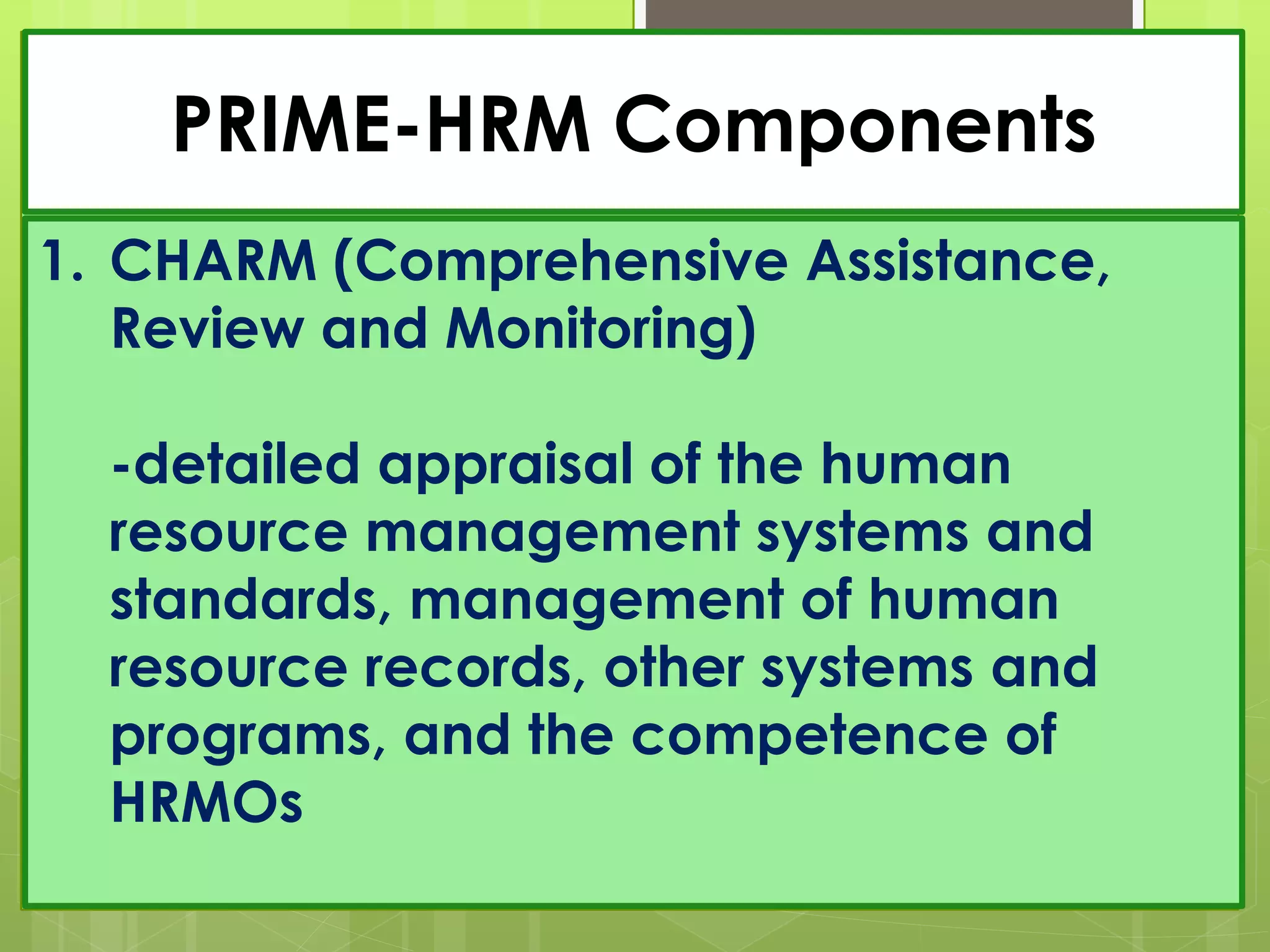
PRIME-HRM Components
1. CHARM (Comprehensive Assistance,
Review and Monitoring)
-detailed appraisal of the human
resource management systems and
standards, management of human
resource records, other systems and
programs, and the competence of
HRMOs
PRIME-HRM Components
2. CARE-HRM (Continuing Assistance and
Review for Excellent HRM)
-continuing program to assist agencies
in implementing the recommendations
contained in the CHARM or CARE-HRM
report.
PRIME-HRM Components
3. SPEAR (Special Program for Evaluation
and Assessment as Required/Requested
-The Commission, upon its initiative or
upon request of concerned parties
conduct a special assessment on all or
certain areas of an agency HRM.
PRIME-HRM Status and Recognition
-used as tool to recognize agencies
with best practices in HRM to
motivate them to aspire for
excellence.
Level I (Regulated) – agencies that
have not fully complied with the
requirements for level II, subjected
to regular monitoring by the CSC
PRIME-HRM Status and Recognition
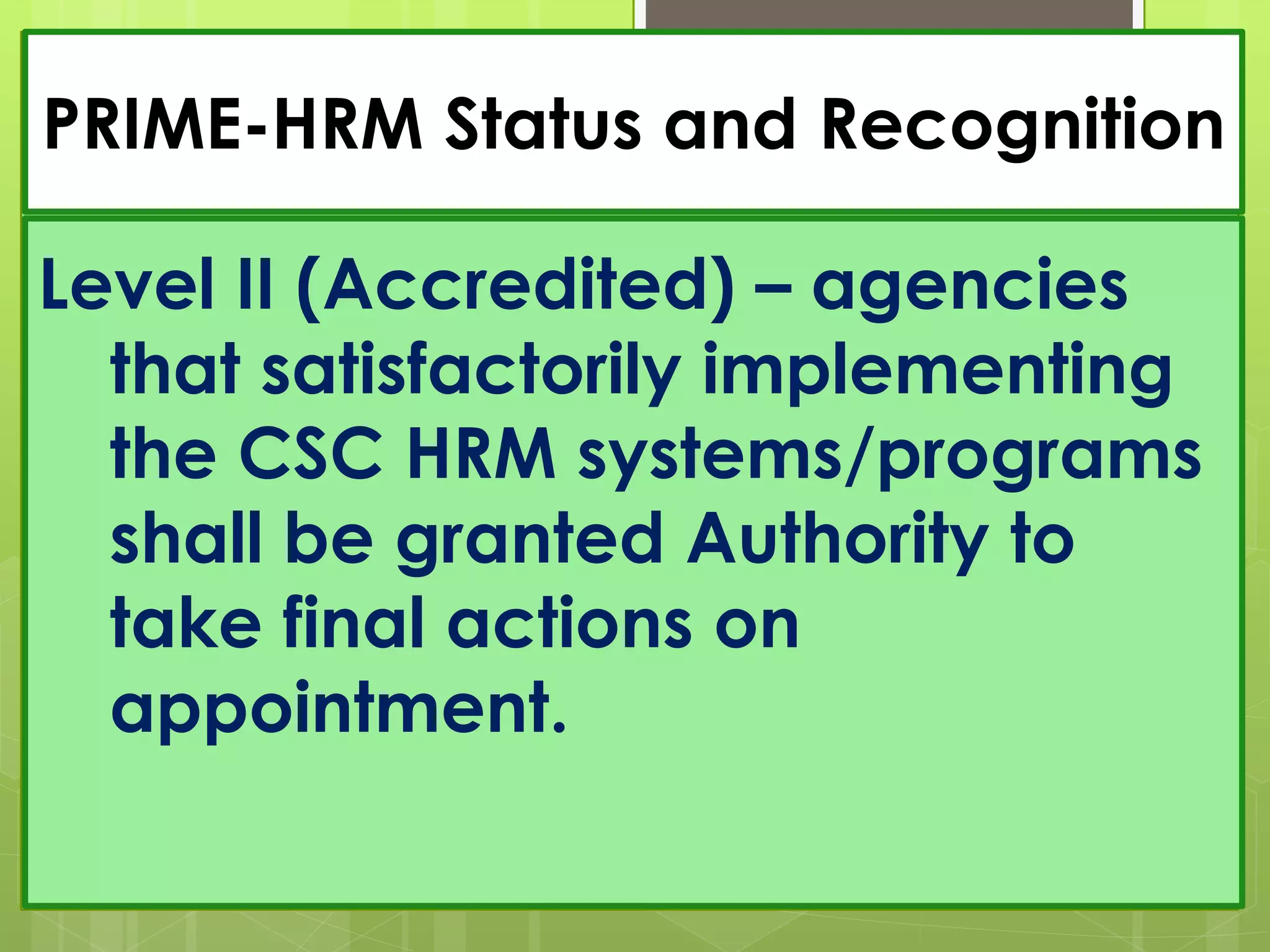
Level II (Accredited) – agencies
that satisfactorily implementing
the CSC HRM systems/programs
shall be granted Authority to
take final actions on
appointment.
PRIME-HRM Status and Recognition
Level III (Deregulated) – agencies
which consistently complied with
the Terms and conditions for Level II
shall be granted Authority to take
final actions on appointment and to
implement HR programs and
systems without the need for prior
approval by the CSC.
PRIME-HRM Status and Recognition
4. Center for Excellence in HRM – a
recognition conferred by the CSC to
agencies with best practices in
some or all HRM areas, subject to
the recommendation of a Certifying
Board composed of HR
practitioners/experts representing
the various sectors.
PRIME-HRM Status and Recognition
5. Seal for Excellence in HRM – the
highest recognition conferred on
institutions or individuals which have
been conferred Center for
Excellence in and/or played pivotal
role in the development/innovation
of three or more HR areas, subject to
the recommendation of a Certifying
Board.
Your life today is a
result of your thinking
today.
Your life tomorrow
will be
determined by what
you
PHILIPPIANS 4:8
Finally brethren, whatsoever
things are true, whatsoever
things are honest, whatsoever
things are just, whatsoever
things are lovely, whatsoever
things are of good report; if
there be any virtue, and if there
be any praise, think on these
things.

PRIME HRM PRESENTATION

  • 1.
  • 2.
    OBJECTIVES 1. Know whatPRIME-HRM is and to understand its importance. 2. Discuss the coverage and components of the PRIME- HRM. 3. Enumerate the criteria for accreditation and criteria for award.
  • 3.
    4. Familiarize themselvesof their roles, duties and responsibilities of the PRIME-ASSESSMENT Phase.
  • 4.
    HRM? PR - ogramto I - nstitutionalize M - eritocracy and E - xcellence H - uman R - esource M - anagement
  • 5.
    We want fastand efficient transactions. We want to deal with the best employees. We want quality service.
  • 6.
    What is wrong? Whydo these issues persist?
  • 7.
    PRIME-HRM Rationale -program thatintegrates and enhances the Personnel Management Assessment and Assistance Program (PMAAP) and the CSC Agency Accreditation Program (CSCAAP). It is a mechanism to continuously capacitate agencies in the performance of their human resource management, recognize best practices and serve as a venue for exchange and development of expertise.
  • 8.
    PRIME-HRM Objectives 1. assessHRM practices and capabilities of agencies. 2. search mechanism for best practices 3. serve as a venue for exchange and development of expertise of HRM between and among government agencies. 4. empower agencies in the performance of HRM functions. 5. Promote and reward excellent human resource management practices.
  • 9.
    PRIME-HRM Scope andCoverage 1. assessment of HRM management systems and standards 2. assessment of the competency level of agencies HRMOs 3. survey of agency HRM climate 4. customized technical assistance and developmental interventions according to determined needs of the agency. 5. Review of decisions made and actions taken (rewards, incentives, performance ratings, leave, benefits, discipline and other matters)
  • 10.
  • 11.
  • 12.
    assist •Technical Competencies in PRIME HRMCore Functions •Best/Good Practices Using International Standards
  • 13.
    award •Technical Competencies in PRIME HRMCore Functions •Best/Good Practices Using International Standards
  • 14.
    What covers theassessment phase of the PRIME-HRM •Recruitment, Selection and Placement •Learning and Development •Performance Management •Rewards and Recognition
  • 15.
    What is anHR Maturity Level? •Describes how well behaviors, practices and processes of organization can reliably and sustainably produce outcomes •“maturity” degree of formality and optimization of processes
  • 16.
    What is anHR Maturity Level? * Assessment tool to assist HR professionals in analyzing health of HRM systems; can indicate corrective actions.
  • 17.
    Maturity Levels/Indicators Level I TransactionalHRM Level II Process-Defined HRM Level IV Strategic HRM Level III Integrated HRM
  • 18.
    Level I TransactionalHRM Process at least documented sufficiently Some processes are repeatable, possibly with consistent result Personnel function, mostly separate from agency/ business and talent needs Line managers perform HR activities as they see best
  • 19.
    Level II Process-definedHRM Sets of defined and documented SOPs established, subject to improvement over time Goal oriented decision making Some automated system but little integration of data
  • 20.
    Level III IntegratedHRM Use of process metrics for continuous improvement HR function supports agency business needs Data-driven decision- making HR Management Toolkit
  • 21.
    Level IV StrategicHRM Processes focused on continually improving performance Systematicall y managed by combination of process optimization and continuous improvement HR helps to drive agency business decision on people data and insight HR strategy part of the agency strategy
  • 22.
    How are mytasks related to organizational goals? Strategic HR: HR as part of agency strategy HRMO Managers Stakeholders
  • 23.
    What Changed? Before PRIME-HRM CertificateRecords/HRM Systems Assessment Use of Manual Assessment Forms Under PRIME-HRM 4 Core HRM Maturity Levels Systems Assessment HRMO Competencies Assessment Practices Assessment Certificate Records Assessment Use of computer assisted assessment forms
  • 24.
    Policy Changes Current Only HRMOHead is assessed Level II Accredited Status Level III Deregulated Status Checklist, no weights As Enhanced HRMO as an office is assessed Maturity Level 1 Maturity Level 2 Maturity Level 3 Maturity Level 4 Systems Assessments Practices Assessments HRMO Competencies Assessments
  • 25.
    Proposed HRMO Role “HRis shifting from focusing on the organization of the business to focusing on the business of the organization”. -David Ulrich Future Strategic Focus Operational People PeopleProcesses STRATEGIC PARTNER CHANGED AGENT ADMINISTRATIVE EXPERT EMPLOYEE CHAMPION
  • 26.
    PRIME-HRM Components 1. CHARM(Comprehensive Assistance, Review and Monitoring) -detailed appraisal of the human resource management systems and standards, management of human resource records, other systems and programs, and the competence of HRMOs
  • 27.
    PRIME-HRM Components 2. CARE-HRM(Continuing Assistance and Review for Excellent HRM) -continuing program to assist agencies in implementing the recommendations contained in the CHARM or CARE-HRM report.
  • 28.
    PRIME-HRM Components 3. SPEAR(Special Program for Evaluation and Assessment as Required/Requested -The Commission, upon its initiative or upon request of concerned parties conduct a special assessment on all or certain areas of an agency HRM.
  • 29.
    PRIME-HRM Status andRecognition -used as tool to recognize agencies with best practices in HRM to motivate them to aspire for excellence. Level I (Regulated) – agencies that have not fully complied with the requirements for level II, subjected to regular monitoring by the CSC
  • 30.
    PRIME-HRM Status andRecognition Level II (Accredited) – agencies that satisfactorily implementing the CSC HRM systems/programs shall be granted Authority to take final actions on appointment.
  • 31.
    PRIME-HRM Status andRecognition Level III (Deregulated) – agencies which consistently complied with the Terms and conditions for Level II shall be granted Authority to take final actions on appointment and to implement HR programs and systems without the need for prior approval by the CSC.
  • 32.
    PRIME-HRM Status andRecognition 4. Center for Excellence in HRM – a recognition conferred by the CSC to agencies with best practices in some or all HRM areas, subject to the recommendation of a Certifying Board composed of HR practitioners/experts representing the various sectors.
  • 33.
    PRIME-HRM Status andRecognition 5. Seal for Excellence in HRM – the highest recognition conferred on institutions or individuals which have been conferred Center for Excellence in and/or played pivotal role in the development/innovation of three or more HR areas, subject to the recommendation of a Certifying Board.
  • 34.
    Your life todayis a result of your thinking today. Your life tomorrow will be determined by what you
  • 35.
    PHILIPPIANS 4:8 Finally brethren,whatsoever things are true, whatsoever things are honest, whatsoever things are just, whatsoever things are lovely, whatsoever things are of good report; if there be any virtue, and if there be any praise, think on these things.