Meagan Garrett
Marketing and
Communications Manager,
ASU SkySong
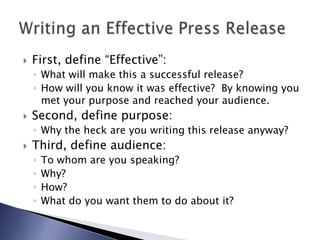
 First, define “Effective”:
◦ What will make this a successful release?
◦ How will you know it was effective? By knowing you
met your purpose and reached your audience.
 Second, define purpose:
◦ Why the heck are you writing this release anyway?
 Third, define audience:
◦ To whom are you speaking?
◦ Why?
◦ How?
◦ What do you want them to do about it?
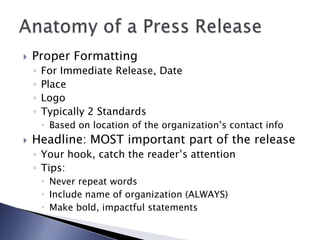
 Proper Formatting
◦ For Immediate Release, Date
◦ Place
◦ Logo
◦ Typically 2 Standards
 Based on location of the organization’s contact info
 Headline: MOST important part of the release
◦ Your hook, catch the reader’s attention
◦ Tips:
 Never repeat words
 Include name of organization (ALWAYS)
 Make bold, impactful statements
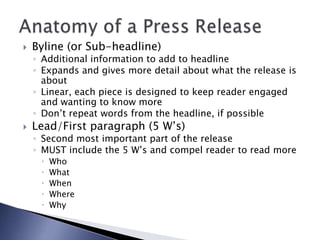
 Byline (or Sub-headline)
◦ Additional information to add to headline
◦ Expands and gives more detail about what the release is
about
◦ Linear, each piece is designed to keep reader engaged
and wanting to know more
◦ Don’t repeat words from the headline, if possible
 Lead/First paragraph (5 W’s)
◦ Second most important part of the release
◦ MUST include the 5 W’s and compel reader to read more
 Who
 What
 When
 Where
 Why
 Body
◦ 3-10 additional paragraphs depending on scope
◦ What does the body include?
 Human element, quote
 The “why” or SWF of the release
 Facts, what statistically backs what you are saying
 Not always relevant or needed
 Call to action
 For the audience the journalist writes to, not the journalist
◦ Inverted Pyramid
 Descending importance the further from the lead
paragraph
 Essential for editing and getting journalist pick up
 Wrap up/conclusion
◦ Impact statements
◦ More info
 Link to website for organization
 Tied to call to action
 Contact info
◦ Organization’s media rep
◦ Startup owner
 Boiler plates
◦ Name of company again with website link
◦ Short (3-6 sentence) paragraph about your
company
◦ Key words!
 Company description
◦ Who are you
◦ What do you do
◦ Why is that important
◦ Other key information
◦ Only place jargon is OK
◦ Write for SEO here
 Use key words that are specific to your industry and
organization
 Entrepreneurship and Innovation Group
 Any from the audience?
 Media Alerts, how are they different
◦ Call to action is for media, not their audience
◦ 5 W’s usually called out in format
 Written as an invitation
◦ Inviting them usually to an event to cover it
◦ Includes specific opportunities for media
 Photo ops
 Speakers to interview
 B-roll opportunities
 SWF, what is really cool?
 Mass distribution services
◦ Allow you to format, include photos, videos, etc
◦ Allow you to schedule distribution
◦ Larger Corporations
 PR Web
 PR Newswire
 Tend to be more expensive
 Distribution services for startups or smaller
companies
◦ Typically less expensive
◦ Possibly not as customizable
◦ Services
 http://new.pitchengine.com/
 http://muckrack.com/pros
 http://www.50states.com/news/arizona.htm
 http://www.wired.com/about/staff_publishing/
 http://www.startupbooster.com/
 http://www.nytco.com/press/press_contact.html
 http://www.free-press-release.com/
 http://www.pressking.com/
 Media contact lists
◦ Personal, positive supporters that you or the media
rep has build good connections with
◦ Specific to the content to the release
 Not every release is applicable to every audience
 Integrated into your social media efforts
◦ Once the PR is live, link to it on your SM accounts
◦ Tweet it and Linked in/Facebook post it to
journalists and key players in your industry that you
are connected to
◦ Ask your brand evangelists to share it on your
behalf
 Avoid jargon
 Tell your audience what they want to hear,
NOT what you want to tell them
 Sell benefits, not features
◦ Where possible
◦ Industry constraints
 Do accuracy checks
 If more parties/organizations than you are
involved, send for approvals
 Tell your story

Press Release Writing Workshop

  • 1.
  • 2.
     First, define“Effective”: ◦ What will make this a successful release? ◦ How will you know it was effective? By knowing you met your purpose and reached your audience.  Second, define purpose: ◦ Why the heck are you writing this release anyway?  Third, define audience: ◦ To whom are you speaking? ◦ Why? ◦ How? ◦ What do you want them to do about it?
  • 3.
     Proper Formatting ◦For Immediate Release, Date ◦ Place ◦ Logo ◦ Typically 2 Standards  Based on location of the organization’s contact info  Headline: MOST important part of the release ◦ Your hook, catch the reader’s attention ◦ Tips:  Never repeat words  Include name of organization (ALWAYS)  Make bold, impactful statements
  • 4.
     Byline (orSub-headline) ◦ Additional information to add to headline ◦ Expands and gives more detail about what the release is about ◦ Linear, each piece is designed to keep reader engaged and wanting to know more ◦ Don’t repeat words from the headline, if possible  Lead/First paragraph (5 W’s) ◦ Second most important part of the release ◦ MUST include the 5 W’s and compel reader to read more  Who  What  When  Where  Why
  • 5.
     Body ◦ 3-10additional paragraphs depending on scope ◦ What does the body include?  Human element, quote  The “why” or SWF of the release  Facts, what statistically backs what you are saying  Not always relevant or needed  Call to action  For the audience the journalist writes to, not the journalist ◦ Inverted Pyramid  Descending importance the further from the lead paragraph  Essential for editing and getting journalist pick up
  • 6.
     Wrap up/conclusion ◦Impact statements ◦ More info  Link to website for organization  Tied to call to action  Contact info ◦ Organization’s media rep ◦ Startup owner  Boiler plates ◦ Name of company again with website link ◦ Short (3-6 sentence) paragraph about your company ◦ Key words!
  • 7.
     Company description ◦Who are you ◦ What do you do ◦ Why is that important ◦ Other key information ◦ Only place jargon is OK ◦ Write for SEO here  Use key words that are specific to your industry and organization
  • 8.
     Entrepreneurship andInnovation Group  Any from the audience?
  • 9.
     Media Alerts,how are they different ◦ Call to action is for media, not their audience ◦ 5 W’s usually called out in format  Written as an invitation ◦ Inviting them usually to an event to cover it ◦ Includes specific opportunities for media  Photo ops  Speakers to interview  B-roll opportunities  SWF, what is really cool?
  • 11.
     Mass distributionservices ◦ Allow you to format, include photos, videos, etc ◦ Allow you to schedule distribution ◦ Larger Corporations  PR Web  PR Newswire  Tend to be more expensive
  • 12.
     Distribution servicesfor startups or smaller companies ◦ Typically less expensive ◦ Possibly not as customizable ◦ Services  http://new.pitchengine.com/  http://muckrack.com/pros  http://www.50states.com/news/arizona.htm  http://www.wired.com/about/staff_publishing/  http://www.startupbooster.com/  http://www.nytco.com/press/press_contact.html  http://www.free-press-release.com/  http://www.pressking.com/
  • 13.
     Media contactlists ◦ Personal, positive supporters that you or the media rep has build good connections with ◦ Specific to the content to the release  Not every release is applicable to every audience  Integrated into your social media efforts ◦ Once the PR is live, link to it on your SM accounts ◦ Tweet it and Linked in/Facebook post it to journalists and key players in your industry that you are connected to ◦ Ask your brand evangelists to share it on your behalf
  • 14.
     Avoid jargon Tell your audience what they want to hear, NOT what you want to tell them  Sell benefits, not features ◦ Where possible ◦ Industry constraints  Do accuracy checks  If more parties/organizations than you are involved, send for approvals  Tell your story