Oral
Presentation
Definition
An oral Presentation is a formal, structural and
systematic presentation of a message to audience.
Features
An oral Presentation is a form of communication. It is
participative two way communication process
characterized by the formal and structured presentation
of a message using visual aids. It is purposeful,
interactive and audience oriented. It communicates a
message to audience in a way that brings about the
desired change in their understanding and opinion
Forms of Oral Presentation
 Seminars
 Workshop symposia
 Student and Team Presentation
 Departmental Presentations
 Industry conferences
 Press Inference of Product launches
 Annual general meeting
 Profile presentation.
Objectives
 Exploring a new area of information
 Introducing a new product by a
company
 Conferring with industry people
 Advertising the products
 Informing developments of a company
Barriers to Effective Presentation
Fear
Lack of Preparation
Unable to control
one’s ideas
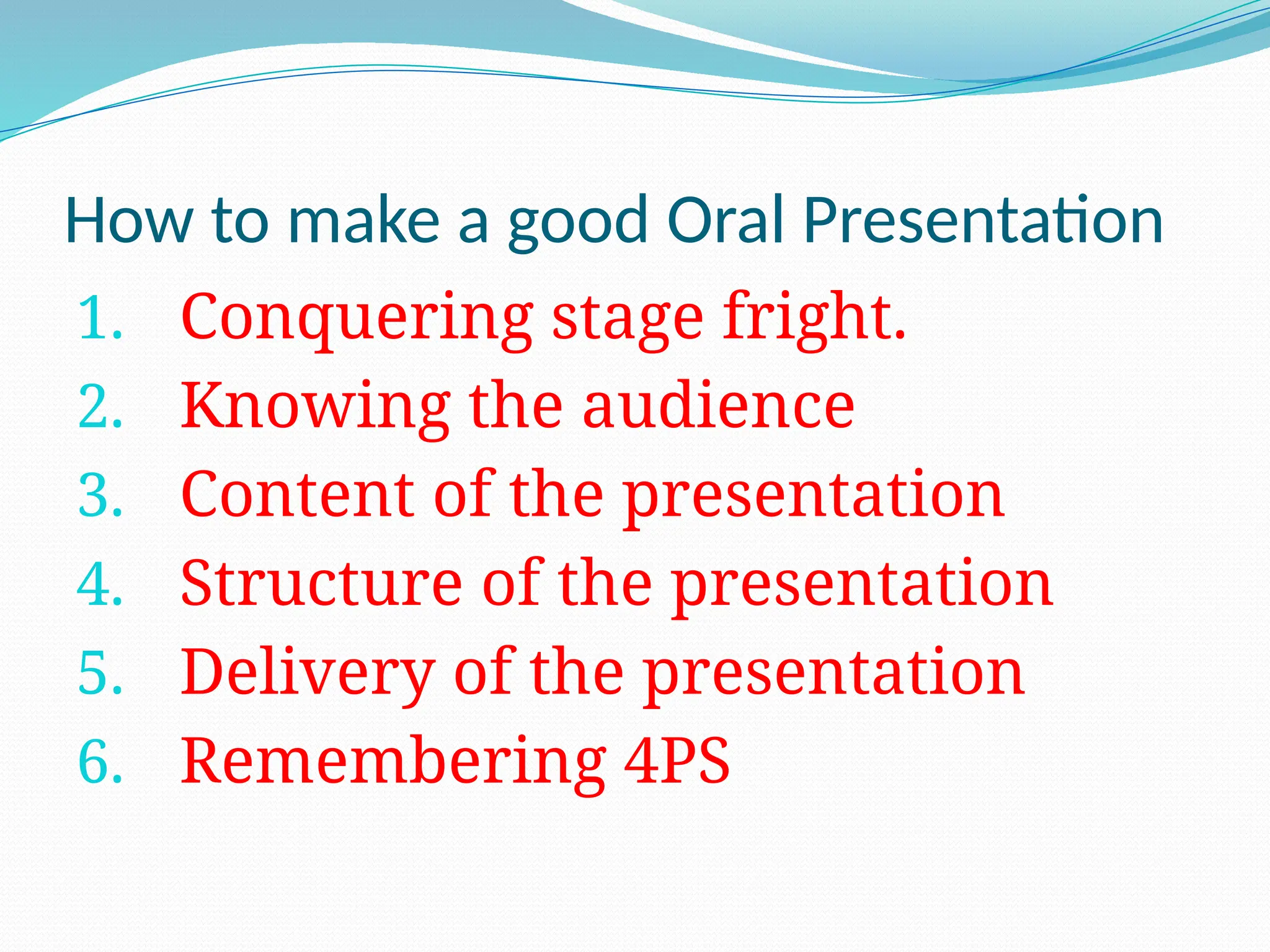
How to make a good Oral Presentation
1. Conquering stage fright.
2. Knowing the audience
3. Content of the presentation
4. Structure of the presentation
5. Delivery of the presentation
6. Remembering 4PS
1. Conquering stage fright
 Some amount of stage fright is helpful
 The main reason is that we are not accustomed to speak in
public
 Symptoms in beginners are trembling arms, excessive
sweating, lack of fluency etc-are mental blocks
 Prepare the subject thoroughly
 Do some warm up exercises such as rotating arms, moving
the facial muscles, taking deep breath etc before speaking
 Take carbohydrate rich meal before going to make
presentation
 Positive thinking-’I will make the presentation’ and ‘I am
confident’
2. Knowing the audience
Before planning we should consider-
 The age group of the audience
 Know the need of the audience
 Utility of the presentation for the audience
 Information gained after attending the
presentation
3. Content of the Presentation
1. It should not be too difficult to
understand
2. If too long shorten the content
according to the time available
3. Include examples and instructions to
support the argument
4.Structure of the presentation
•
Introduce
the
topic
Introductio
n
•
Provide
detail
information
to
the
audience
about
the
topic
•
Use
anecdotes
or
raise
question
to
arouse
interest.
Body
•
State
the
goal
and
uses
of
the
presentation
•
Leave
the
audience
with
a
positive
feeling
about
you
and
your
ideas
Conclusion
5.Delivery of the Presentation
A. The quality of the voice-
• Adjust your tone according to the size of the audience
• Use micro phone or collar mike
• Give pauses to allow the listener to understand
• Pronounce difficult words properly and correctly
B. Rapport with the audience-
• Look into the eyes of the audience while presenting
• Shift from one pair of eye to another so that you have a
glance of all of them.
• Try to involve the audience in present action by asking
questions
C. Pay attention to Body Language
• Express your confidence in your smile and
movements
• Stand straight and do not stagnate at one place
• Avoid unnecessary movements of hands
• Always dress in formals
D. Effective use of Visuals aids
 Remember the value of pictures, symbols and
objectives while preparing transparencies for OHP
 Use a plain font of substantial size-18 point or
more.
 Do not use more than three colors
 Practice before how to operate the equipment
6.Remembering 4PS
4PS
Plannin
g
Practic
e
Perfor
m
Preparati
on
A. Planning
 Define a purpose
 Analyze the audience
 Analyze the occasion
 Select a suitable title
B. Preparation
 Develop the central idea
 Develop the main ideas
 Gather supporting information
C. Practice
• Rehearse before presenting it to the audience
• Time the presentation
• Outline the presentation
D. Perform
 Begin the presentation with confidence
 Be organized
 Pay attention to non-verbal behavior.
 Use4 appropriate visual aids.
Don’t while using visual aids
 Avoid using a diagram prepared for a
technical report in the presentation
 Slides should contain necessary
information
 Avoid pointing at the transparency with
a pen
 Don’t block the audience’s vision.
Thanks

Oral presentation.pptx in Research presentation

  • 1.
  • 2.
    Definition An oral Presentationis a formal, structural and systematic presentation of a message to audience. Features An oral Presentation is a form of communication. It is participative two way communication process characterized by the formal and structured presentation of a message using visual aids. It is purposeful, interactive and audience oriented. It communicates a message to audience in a way that brings about the desired change in their understanding and opinion
  • 3.
    Forms of OralPresentation  Seminars  Workshop symposia  Student and Team Presentation  Departmental Presentations  Industry conferences  Press Inference of Product launches  Annual general meeting  Profile presentation.
  • 4.
    Objectives  Exploring anew area of information  Introducing a new product by a company  Conferring with industry people  Advertising the products  Informing developments of a company
  • 5.
    Barriers to EffectivePresentation Fear Lack of Preparation Unable to control one’s ideas
  • 6.
    How to makea good Oral Presentation 1. Conquering stage fright. 2. Knowing the audience 3. Content of the presentation 4. Structure of the presentation 5. Delivery of the presentation 6. Remembering 4PS
  • 7.
    1. Conquering stagefright  Some amount of stage fright is helpful  The main reason is that we are not accustomed to speak in public  Symptoms in beginners are trembling arms, excessive sweating, lack of fluency etc-are mental blocks  Prepare the subject thoroughly  Do some warm up exercises such as rotating arms, moving the facial muscles, taking deep breath etc before speaking  Take carbohydrate rich meal before going to make presentation  Positive thinking-’I will make the presentation’ and ‘I am confident’
  • 8.
    2. Knowing theaudience Before planning we should consider-  The age group of the audience  Know the need of the audience  Utility of the presentation for the audience  Information gained after attending the presentation
  • 9.
    3. Content ofthe Presentation 1. It should not be too difficult to understand 2. If too long shorten the content according to the time available 3. Include examples and instructions to support the argument
  • 10.
    4.Structure of thepresentation • Introduce the topic Introductio n • Provide detail information to the audience about the topic • Use anecdotes or raise question to arouse interest. Body • State the goal and uses of the presentation • Leave the audience with a positive feeling about you and your ideas Conclusion
  • 11.
    5.Delivery of thePresentation A. The quality of the voice- • Adjust your tone according to the size of the audience • Use micro phone or collar mike • Give pauses to allow the listener to understand • Pronounce difficult words properly and correctly B. Rapport with the audience- • Look into the eyes of the audience while presenting • Shift from one pair of eye to another so that you have a glance of all of them. • Try to involve the audience in present action by asking questions
  • 12.
    C. Pay attentionto Body Language • Express your confidence in your smile and movements • Stand straight and do not stagnate at one place • Avoid unnecessary movements of hands • Always dress in formals D. Effective use of Visuals aids  Remember the value of pictures, symbols and objectives while preparing transparencies for OHP  Use a plain font of substantial size-18 point or more.  Do not use more than three colors  Practice before how to operate the equipment
  • 13.
  • 14.
    A. Planning  Definea purpose  Analyze the audience  Analyze the occasion  Select a suitable title B. Preparation  Develop the central idea  Develop the main ideas  Gather supporting information
  • 15.
    C. Practice • Rehearsebefore presenting it to the audience • Time the presentation • Outline the presentation D. Perform  Begin the presentation with confidence  Be organized  Pay attention to non-verbal behavior.  Use4 appropriate visual aids.
  • 16.
    Don’t while usingvisual aids  Avoid using a diagram prepared for a technical report in the presentation  Slides should contain necessary information  Avoid pointing at the transparency with a pen  Don’t block the audience’s vision.
  • 17.