MEMORY
P R E S E N TAT I O N
ON
PSYCHOLOGY
HAFIZ MUHAMMAD
HABIB ULLAH
INTRODUCTION TO MEMORY
Roll No. 15
DEFINITION
“Memory is the mental capacity to store, recall or
recognize the events that were previously
experienced.”
Remembring
Retaining experiences or recalling them.
ACCORDING TO COGNITIVE
PSYCHOLOGISTS
•Mental system that receives, encodes,
modifies or retrieves information.
Factors Affecting Memory
 Physical health
 ❖ Attention
 ❖ Emotion
 Prejudice etc
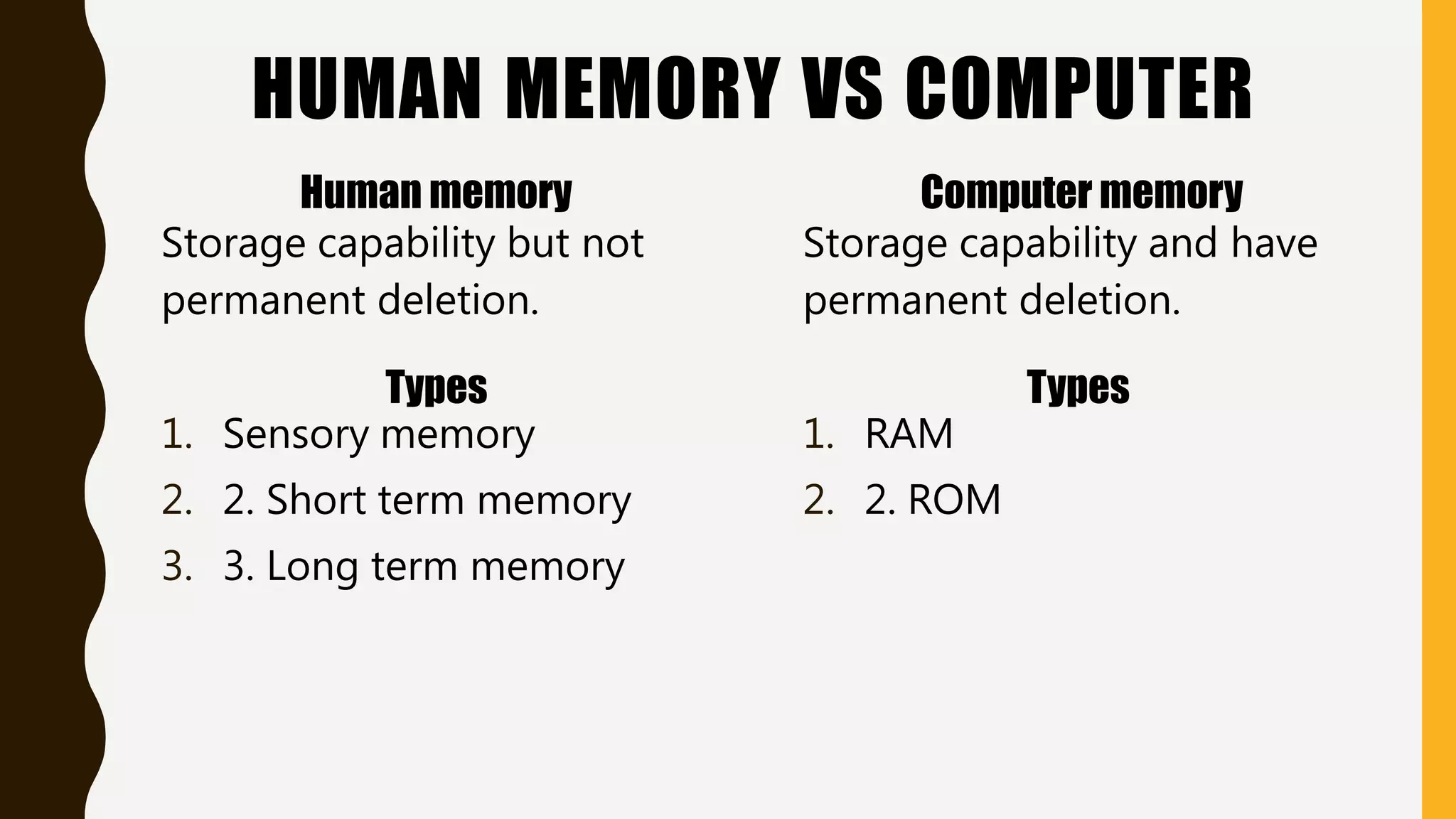
HUMAN MEMORY VS COMPUTER
Human memory
Storage capability but not
permanent deletion.
Types
1. Sensory memory
2. 2. Short term memory
3. 3. Long term memory
Computer memory
Storage capability and have
permanent deletion.
Types
1. RAM
2. 2. ROM
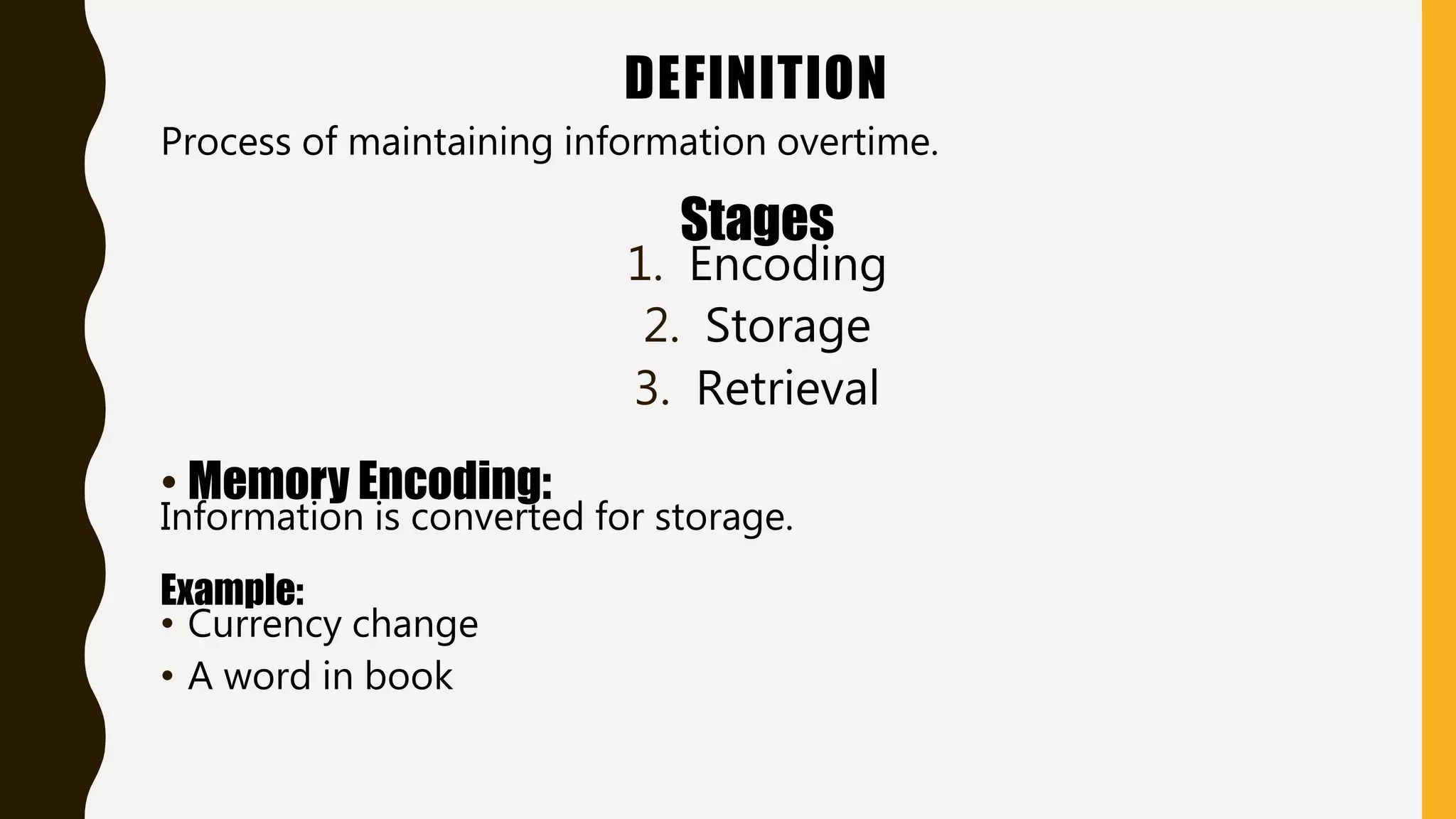
DEFINITION
Process of maintaining information overtime.
Stages
1. Encoding
2. Storage
3. Retrieval
• Memory Encoding:
Information is converted for storage.
Example:
• Currency change
• A word in book
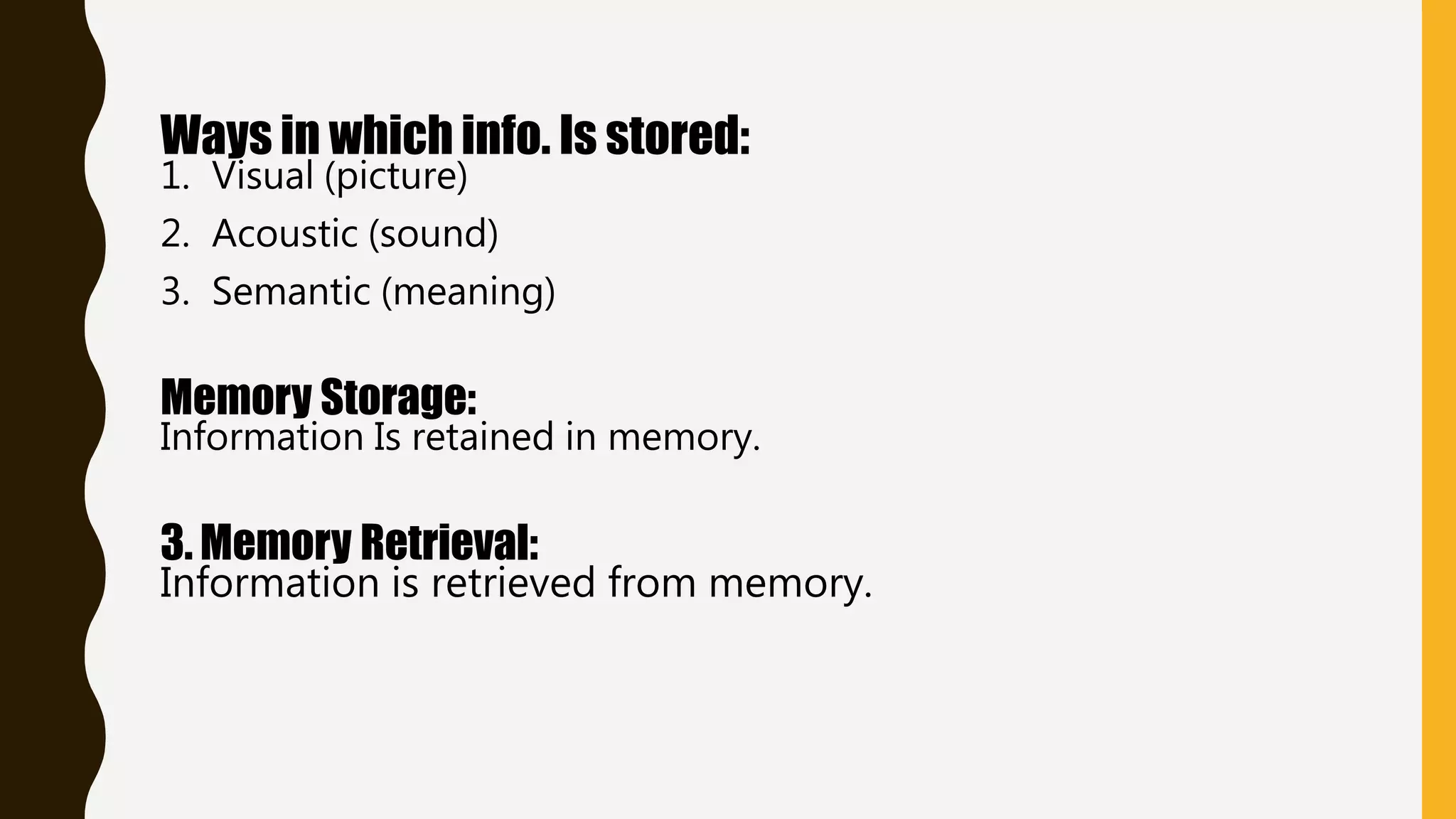
Ways in which info. Is stored:
1. Visual (picture)
2. Acoustic (sound)
3. Semantic (meaning)
Memory Storage:
Information Is retained in memory.
3. Memory Retrieval:
Information is retrieved from memory.
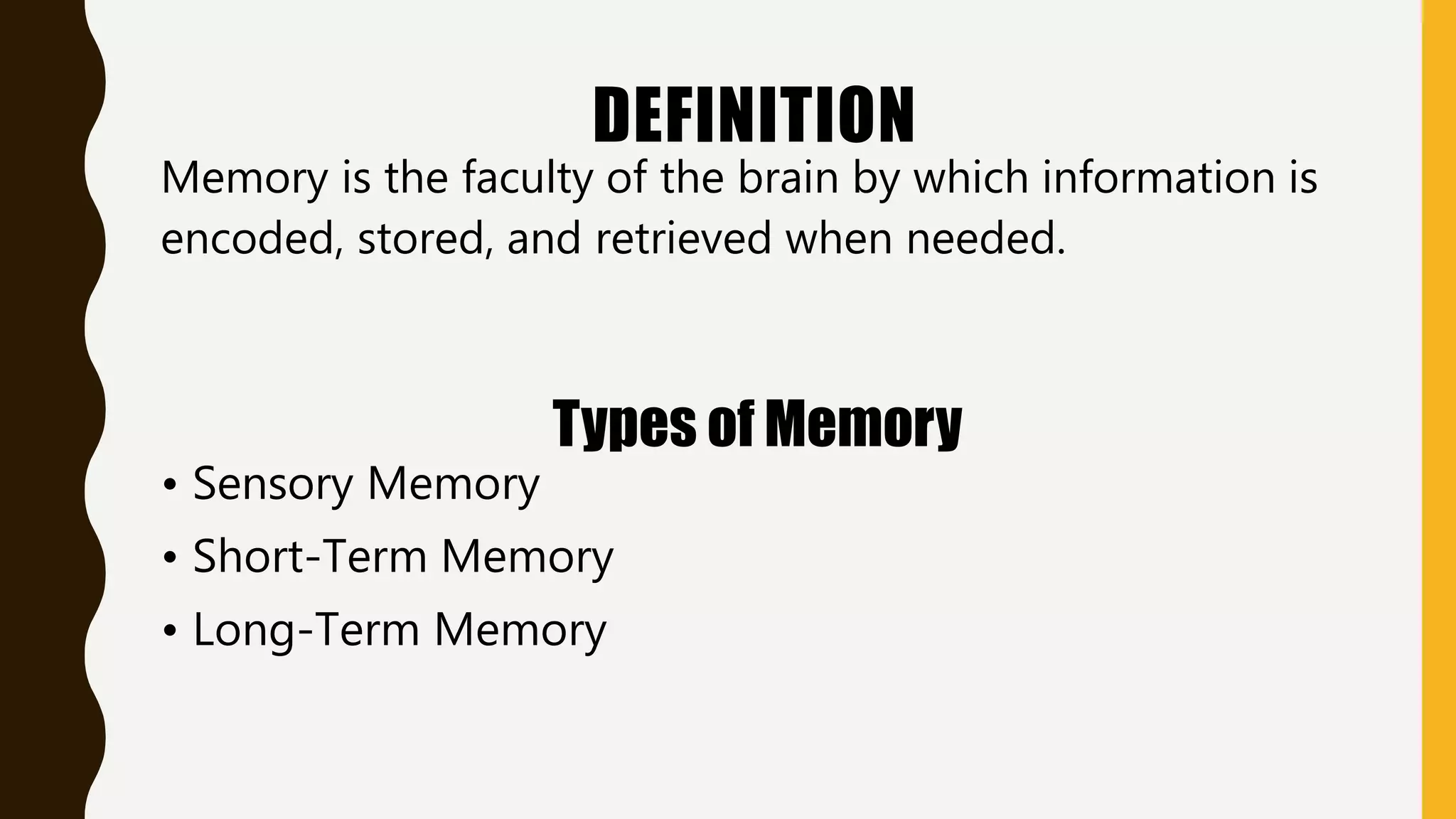
DEFINITION
Memory is the faculty of the brain by which information is
encoded, stored, and retrieved when needed.
Types of Memory
• Sensory Memory
• Short-Term Memory
• Long-Term Memory
SENSORY MEMORY
The part of memory where any information is first
registered is called Sensory Memory.
Example:
Looking at an item and remembering it.
Short-TermMemory
It’s a primary or active memory that is capable of holding small
amount of information for a brief period of time.
Example:
Memorizing a phone number.
Long-Term memory
This form of memory is a memory store capable of storing large quantities
of information for potentially unlimited duration.
Example:
What happened last week, Where and how?
Types
Long-term memory is usually divided into two types:
1. Explicit or Declarative Memory
2. Implicit or Non-Declarative Memory
DEFINITION
Sensory memory is the shortest-term element of memory. Part of memory
where any information is first registered. Has large capacity.
Example:
Trying to remember an object with just a second of observation or
memorization.
Characteristics
• Information in SM is stored in specific
modality(procedure).
• Info. is detail oriented.
• Different SM store might have different durations
HOW DOES SENSORY MEMORY WORKS:
During every moment of your existence, your senses are constantly
taking in an enormous amount of information about what you see,
feel, hear, and taste.
sensory memory creates something of a quick "snapshot" of the
world around you, allowing you to briefly focus your attention on
relevant details.
Types
1. Iconic memory
2. Echoic memory
3. Haptic memory
ICONIC MEMORY
Sensory input to the visual system goes into iconic memory.
Echoic memory:
Echoic memory is the branch of sensory memory used by the
auditory system.
Haptic memory:
Haptic memory is the branch of sensory memory used by the
sense of touch.
DEFINITION:
Short term memory takes over when the information in our
sensory memory is transferred to our consciousness or our
awareness.
This is the information that is current active such as reading this
page, talking to a friend or writing a paper.
Example:
It used to remember a phone number that has just been
recited.
Characteristics:
• Short term memory can definitely last longer than sensory
memory (up to 30 seconds or so).
• Also known as working memory.
• Intermediate memory.
Displacement:
Means that new information will push out part of the old
information.
DEFINITION
The long-term memory refers to unlimited capacity memory
store that hold information over lengthy periods of time.
By saying “lengthy period of time” we mean that it is possible
for memories in LTM to remain there for an entire lifetime.
Example:
Like we can recall some specific past events very easily such as
how many marks I got in 1st grade class or how I first rode my
bike.
SIGNIFICANCE
Imagine how difficult it would be to forget the day you
graduated. Now think about how easy it is to forget
information that has no significance, the color of the car you
parked next to at the store or which shirt you wore last
Thursday.
Types
• Declarative Memory
• Non-Declarative Memory
Declarative memory
Declarative memory consists of facts and events that can be
consciously recalled or "declared." Also known as Explicit
memory.
Example:
let's say that you know that your favorite restaurant is only
open until 6 PM on Sundays.
NON-DECLARATIVE MEMORY
• Implicit memory (also called "non declarative" memory) is a
type of long-term memory that stands in contrast to explicit
memory in that it doesn't require conscious thought.
Example:
When a skilled typist is typing on a keyboard, she does not
need to look at each key. Instead, she is able to type without
recalling the placement of each key.
How are Explicit memories made?
Step 1: Encoding
Step 2: Storage
Step 3: Retrieval
EXPLICIT MEMORY VS IMPLICIT MEMORY
Implicit memory, sometimes called non-declarative memory,
involves the way experiences affect our behaviors. Unlike
explicit memory, which requires making a conscious effort to
recall information, implicit memory operates unconsciously.
Example:
Driving a car, you just do it. You can’t teach them hoe much
pressure to put on gas por break pedal.
presentation.pptx

presentation.pptx

  • 2.
    MEMORY P R ES E N TAT I O N ON PSYCHOLOGY
  • 3.
  • 4.
    DEFINITION “Memory is themental capacity to store, recall or recognize the events that were previously experienced.” Remembring Retaining experiences or recalling them.
  • 5.
    ACCORDING TO COGNITIVE PSYCHOLOGISTS •Mentalsystem that receives, encodes, modifies or retrieves information.
  • 6.
    Factors Affecting Memory Physical health  ❖ Attention  ❖ Emotion  Prejudice etc
  • 7.
    HUMAN MEMORY VSCOMPUTER Human memory Storage capability but not permanent deletion. Types 1. Sensory memory 2. 2. Short term memory 3. 3. Long term memory Computer memory Storage capability and have permanent deletion. Types 1. RAM 2. 2. ROM
  • 8.
    DEFINITION Process of maintaininginformation overtime. Stages 1. Encoding 2. Storage 3. Retrieval • Memory Encoding: Information is converted for storage. Example: • Currency change • A word in book
  • 9.
    Ways in whichinfo. Is stored: 1. Visual (picture) 2. Acoustic (sound) 3. Semantic (meaning) Memory Storage: Information Is retained in memory. 3. Memory Retrieval: Information is retrieved from memory.
  • 10.
    DEFINITION Memory is thefaculty of the brain by which information is encoded, stored, and retrieved when needed. Types of Memory • Sensory Memory • Short-Term Memory • Long-Term Memory
  • 11.
    SENSORY MEMORY The partof memory where any information is first registered is called Sensory Memory. Example: Looking at an item and remembering it.
  • 12.
    Short-TermMemory It’s a primaryor active memory that is capable of holding small amount of information for a brief period of time. Example: Memorizing a phone number. Long-Term memory This form of memory is a memory store capable of storing large quantities of information for potentially unlimited duration. Example: What happened last week, Where and how?
  • 13.
    Types Long-term memory isusually divided into two types: 1. Explicit or Declarative Memory 2. Implicit or Non-Declarative Memory
  • 14.
    DEFINITION Sensory memory isthe shortest-term element of memory. Part of memory where any information is first registered. Has large capacity. Example: Trying to remember an object with just a second of observation or memorization. Characteristics • Information in SM is stored in specific modality(procedure). • Info. is detail oriented. • Different SM store might have different durations
  • 15.
    HOW DOES SENSORYMEMORY WORKS: During every moment of your existence, your senses are constantly taking in an enormous amount of information about what you see, feel, hear, and taste. sensory memory creates something of a quick "snapshot" of the world around you, allowing you to briefly focus your attention on relevant details. Types 1. Iconic memory 2. Echoic memory 3. Haptic memory
  • 16.
    ICONIC MEMORY Sensory inputto the visual system goes into iconic memory. Echoic memory: Echoic memory is the branch of sensory memory used by the auditory system. Haptic memory: Haptic memory is the branch of sensory memory used by the sense of touch.
  • 17.
    DEFINITION: Short term memorytakes over when the information in our sensory memory is transferred to our consciousness or our awareness. This is the information that is current active such as reading this page, talking to a friend or writing a paper. Example: It used to remember a phone number that has just been recited.
  • 18.
    Characteristics: • Short termmemory can definitely last longer than sensory memory (up to 30 seconds or so). • Also known as working memory. • Intermediate memory. Displacement: Means that new information will push out part of the old information.
  • 19.
    DEFINITION The long-term memoryrefers to unlimited capacity memory store that hold information over lengthy periods of time. By saying “lengthy period of time” we mean that it is possible for memories in LTM to remain there for an entire lifetime. Example: Like we can recall some specific past events very easily such as how many marks I got in 1st grade class or how I first rode my bike.
  • 20.
    SIGNIFICANCE Imagine how difficultit would be to forget the day you graduated. Now think about how easy it is to forget information that has no significance, the color of the car you parked next to at the store or which shirt you wore last Thursday. Types • Declarative Memory • Non-Declarative Memory
  • 21.
    Declarative memory Declarative memoryconsists of facts and events that can be consciously recalled or "declared." Also known as Explicit memory. Example: let's say that you know that your favorite restaurant is only open until 6 PM on Sundays.
  • 22.
    NON-DECLARATIVE MEMORY • Implicitmemory (also called "non declarative" memory) is a type of long-term memory that stands in contrast to explicit memory in that it doesn't require conscious thought. Example: When a skilled typist is typing on a keyboard, she does not need to look at each key. Instead, she is able to type without recalling the placement of each key.
  • 23.
    How are Explicitmemories made? Step 1: Encoding Step 2: Storage Step 3: Retrieval
  • 24.
    EXPLICIT MEMORY VSIMPLICIT MEMORY Implicit memory, sometimes called non-declarative memory, involves the way experiences affect our behaviors. Unlike explicit memory, which requires making a conscious effort to recall information, implicit memory operates unconsciously. Example: Driving a car, you just do it. You can’t teach them hoe much pressure to put on gas por break pedal.