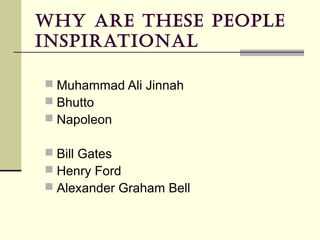
WHY ARE THESE PEOPLE
INSPIRATIONAL

 Muhammad Ali Jinnah
 Bhutto
 Napoleon

 Bill Gates
 Henry Ford
 Alexander Graham Bell
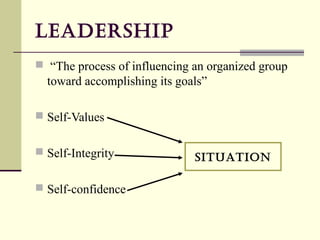
LEAdERSHIP
 “The process of influencing an organized group
  toward accomplishing its goals”

 Self-Values


 Self-Integrity              SITuATION

 Self-confidence
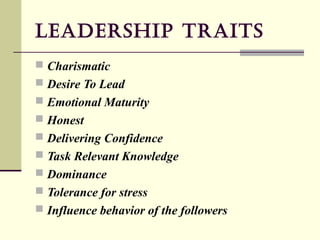
Leadership TraiTs
 Charismatic
 Desire To Lead
 Emotional Maturity
 Honest
 Delivering Confidence
 Task Relevant Knowledge
 Dominance
 Tolerance for stress
 Influence behavior of the followers
iMpOrTaNT aspeCTs

  OF Leadership
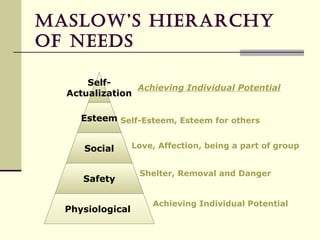
Maslow’s HierarcHy
of Needs

      Self-
                Achieving Individual Potential
  Actualization

     Esteem Self-Esteem, Esteem for others


     Social       Love, Affection, being a part of group


                   Shelter, Removal and Danger
     Safety

                      Achieving Individual Potential
  Physiological
N t
    r e
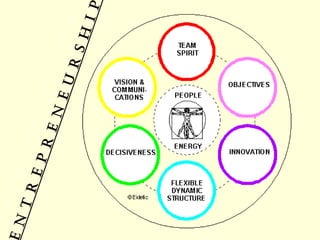
        p r
            e N
                e u
                    r s
                        H i
                            p
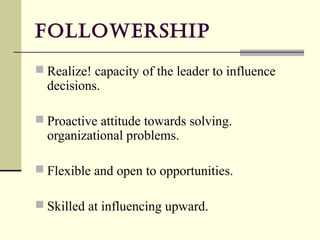
followersHip
 Realize! capacity of the leader to influence
  decisions.

 Proactive attitude towards solving.
  organizational problems.

 Flexible and open to opportunities.

 Skilled at influencing upward.
Comparison of
Theories


WesTern Vs. easTern
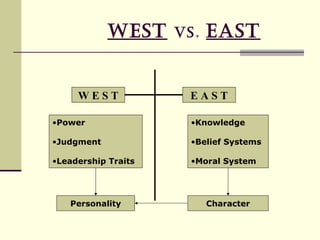
WesT     Vs .   easT


     WEST              EAST

•Power                 •Knowledge

•Judgment              •Belief Systems

•Leadership Traits     •Moral System


   Personality              Character
Presentation1

Presentation1

  • 2.
    WHY ARE THESEPEOPLE INSPIRATIONAL  Muhammad Ali Jinnah  Bhutto  Napoleon  Bill Gates  Henry Ford  Alexander Graham Bell
  • 3.
    LEAdERSHIP  “The processof influencing an organized group toward accomplishing its goals”  Self-Values  Self-Integrity SITuATION  Self-confidence
  • 5.
    Leadership TraiTs  Charismatic Desire To Lead  Emotional Maturity  Honest  Delivering Confidence  Task Relevant Knowledge  Dominance  Tolerance for stress  Influence behavior of the followers
  • 6.
    iMpOrTaNT aspeCTs OF Leadership
  • 7.
    Maslow’s HierarcHy of Needs Self- Achieving Individual Potential Actualization Esteem Self-Esteem, Esteem for others Social Love, Affection, being a part of group Shelter, Removal and Danger Safety Achieving Individual Potential Physiological
  • 8.
    N t r e p r e N e u r s H i p
  • 9.
    followersHip  Realize! capacityof the leader to influence decisions.  Proactive attitude towards solving. organizational problems.  Flexible and open to opportunities.  Skilled at influencing upward.
  • 10.
  • 11.
    WesT Vs . easT WEST EAST •Power •Knowledge •Judgment •Belief Systems •Leadership Traits •Moral System Personality Character