Chapter INTRODUCTION & OVERVIEW 1
Case: Wal-mart’s global expansion Largest retailer in the world –Over 4500 stores International expansion in 1991begins with Mexico in response to market saturation in the US Localization strategy adopted after trial and error Global buying power has allowed it to reap economies of scale  Wal-mart faces significant competition from other  global retailers, but has the first mover advantage in some markets 1-
International Management 1- International Management refers to the study of issues and problems that arise from the management of international, multinational and global organisations However, organisation and management theorists are: Virtually all western in their cultural assumptions By and large Anglo-American in their values
What is globalization? The shift towards a more integrated and interdependent world economy  Two components: The globalization of markets The globalization of production 1-
Globalization of markets The  merging of distinctly separate national markets into a global marketplace Tastes and preferences converge onto a global norm Firms offer standardized products worldwide creating a world market 1-
Globalization of markets Significant differences still exist between national markets on many relevant dimensions These differences require that marketing and operating strategies and product features be customized to best match conditions in a country. 1-
Globalization of markets Countries are different Range of problems are wider and more complex Government intervention in trade and investment creates problems International investment is impacted by different currencies 1-
Globalization of production Refers to sourcing of goods and services from locations around the world to take advantage of  Differences in cost or quality of the factors of production Labor Land Capital 1-
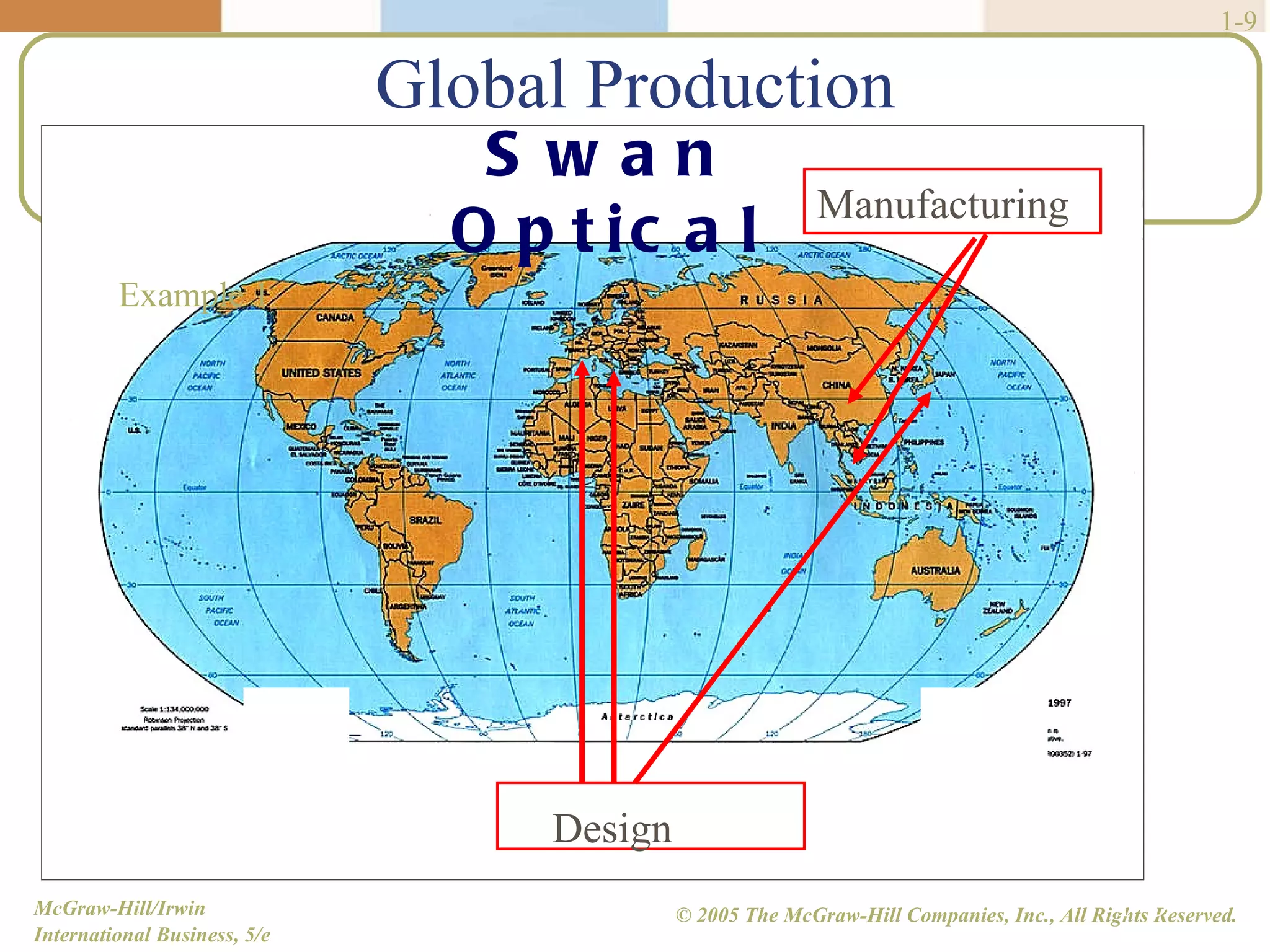
Global Production 1- Swan Optical Manufacturing 1-5 Design Example 1
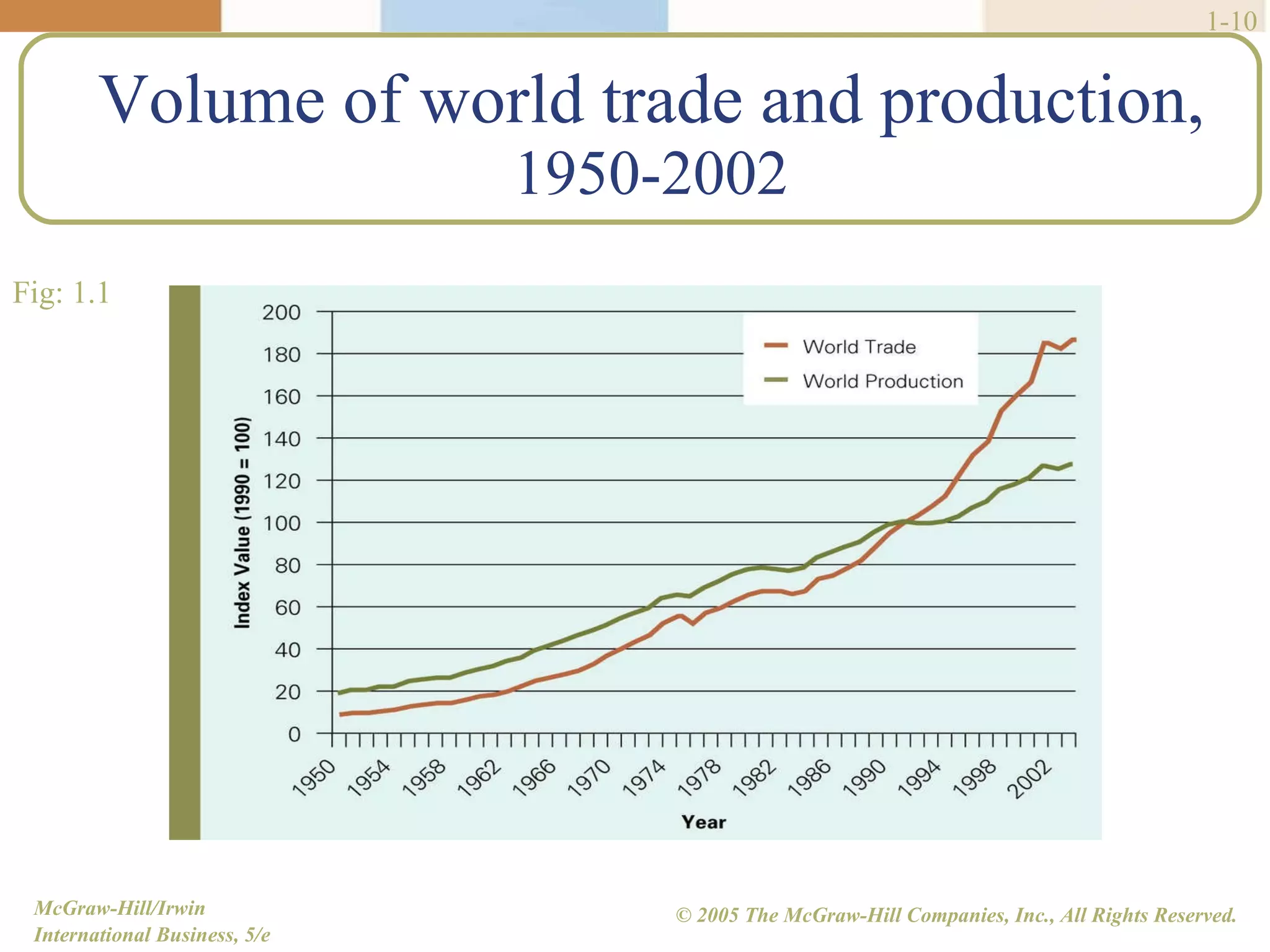
Volume of world trade and production,  1950-2002 1- Fig: 1.1
Emergence of global institutions Globalization has created the need for institutions to help manage, regulate and police the global marketplace GATT WTO IMF World bank United Nations 1-
Global drivers Macro factors that underlie trend towards greater globalization Decline in trade barriers Technological change 1-
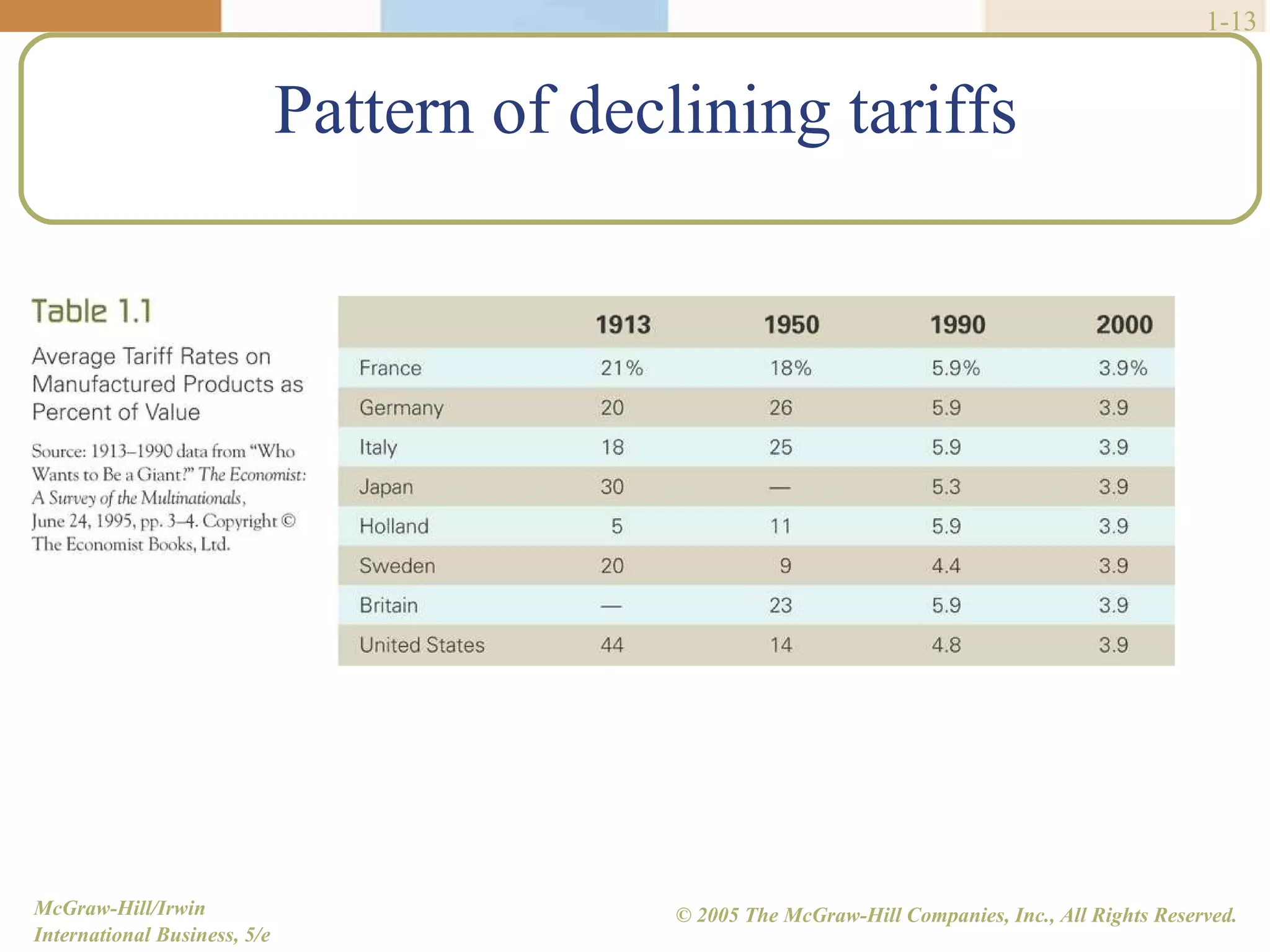
Pattern of declining tariffs 1-
Declining barriers to trade Globalization of markets and production has been facilitated by  Reduction in trade barriers Removal of restrictions to foreign direct investment 1-
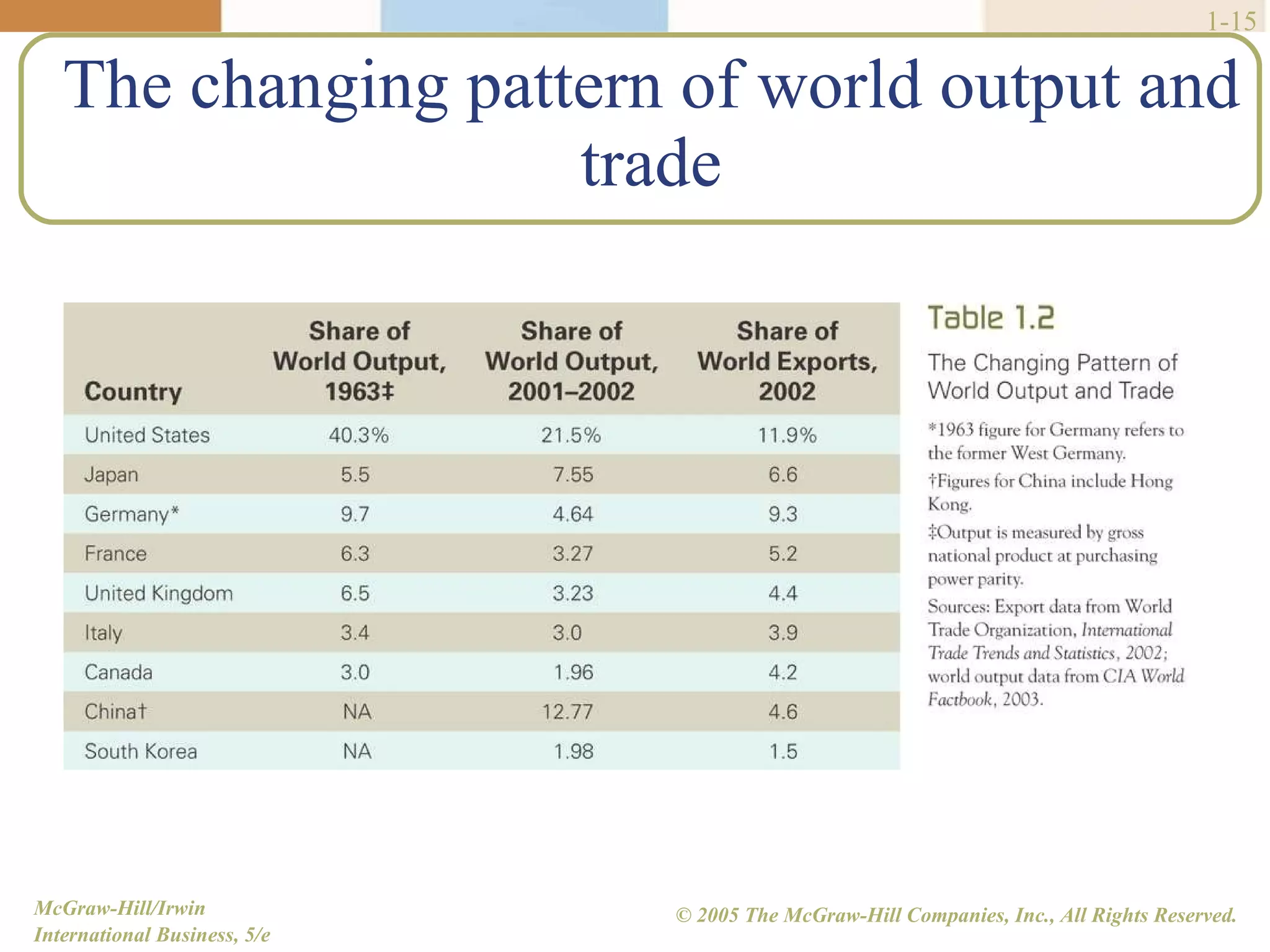
The changing pattern of world output and trade 1-
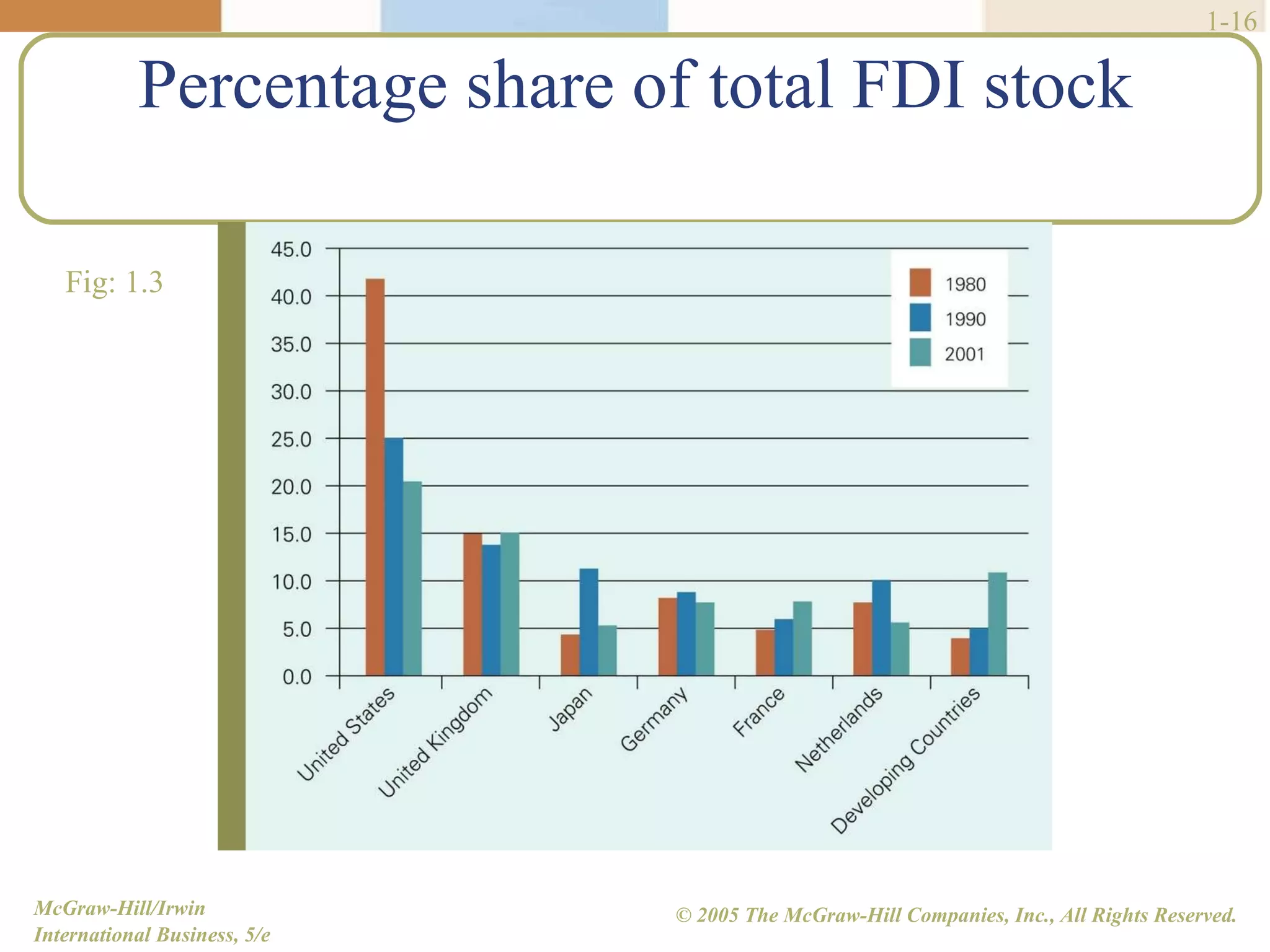
Percentage share of total FDI stock 1- Fig: 1.3
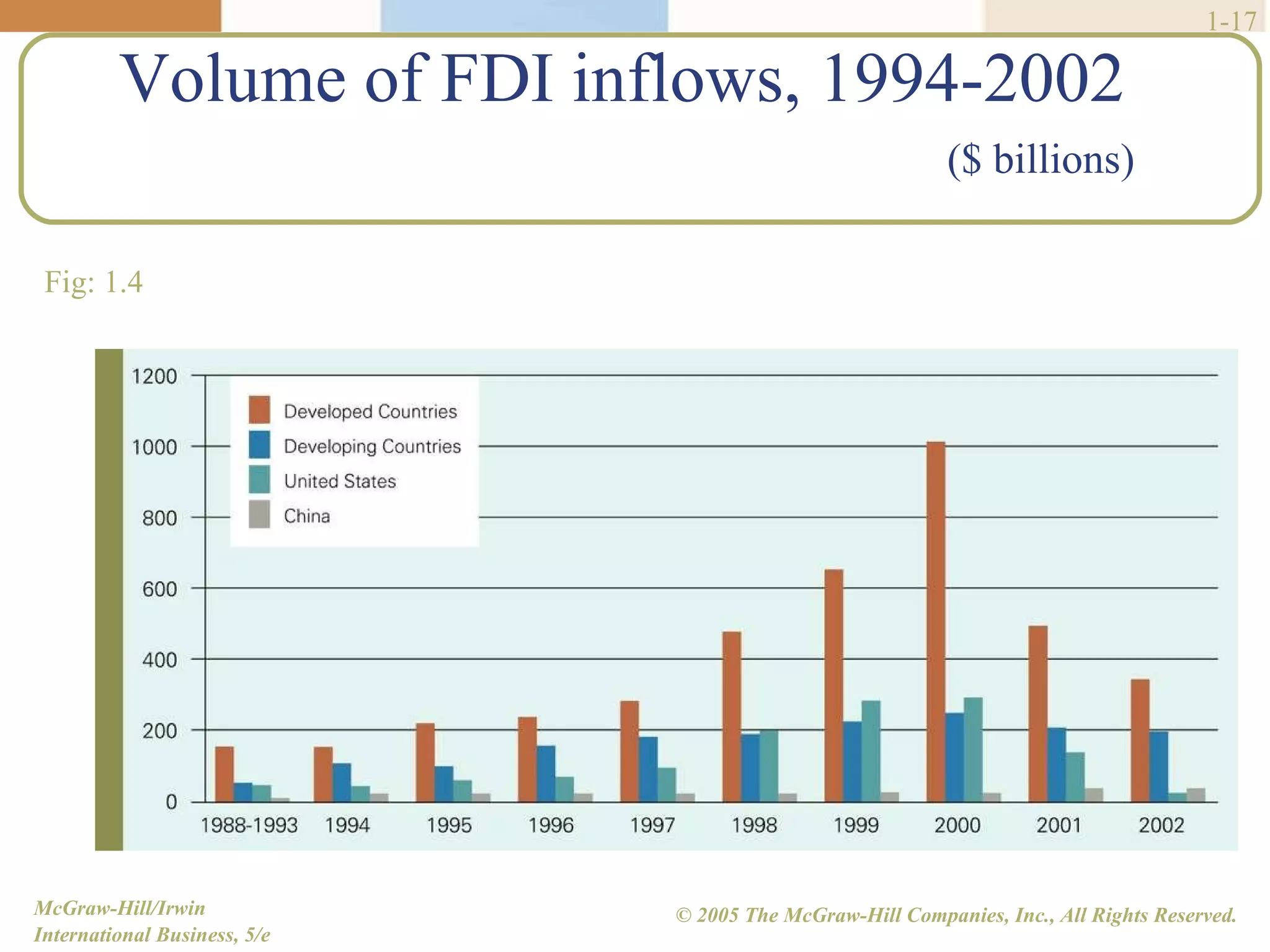
Volume of FDI inflows, 1994-2002   ($ billions)   1- Fig: 1.4
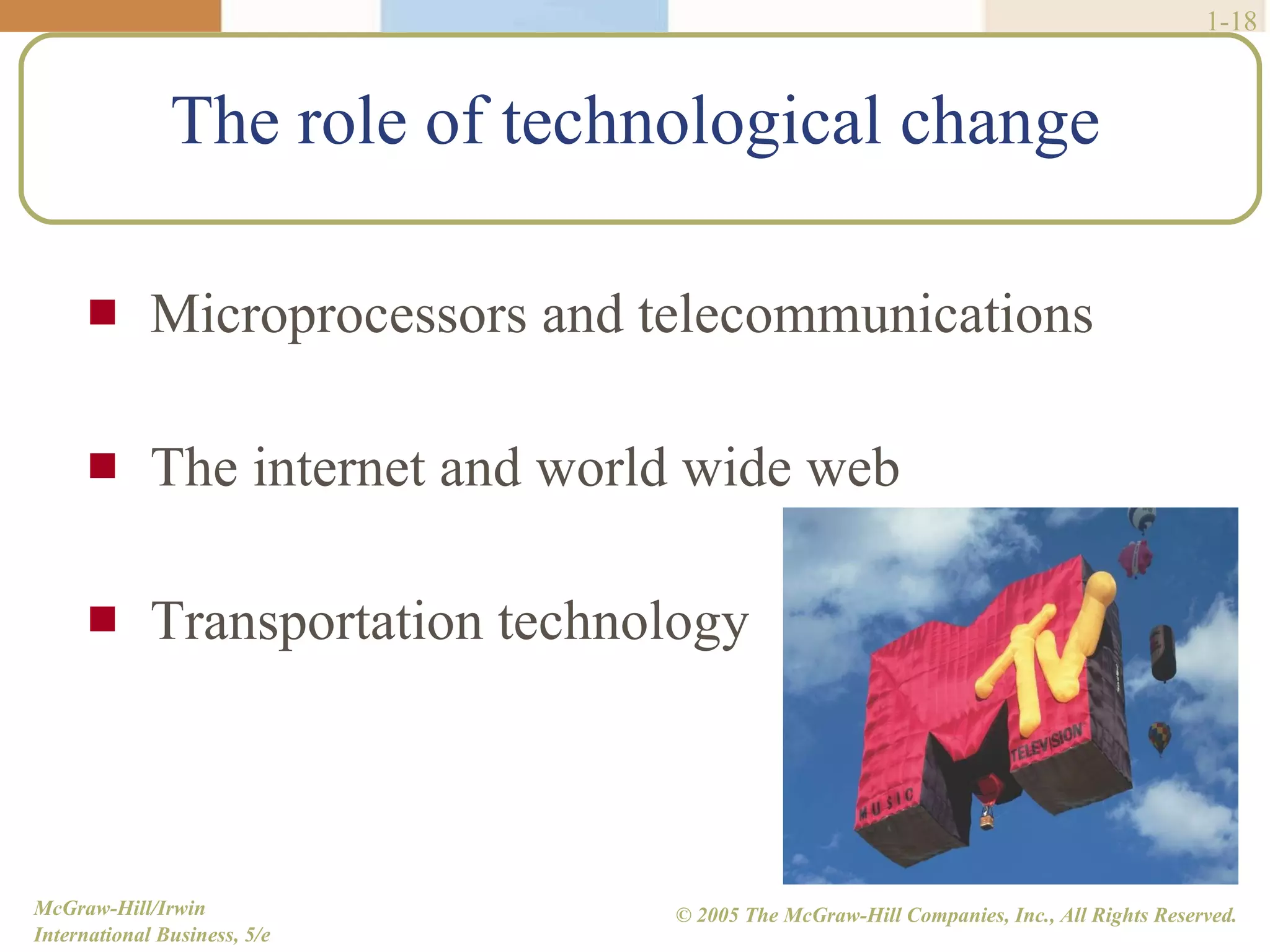
The role of technological change Microprocessors and telecommunications The internet and world wide web Transportation technology 1-
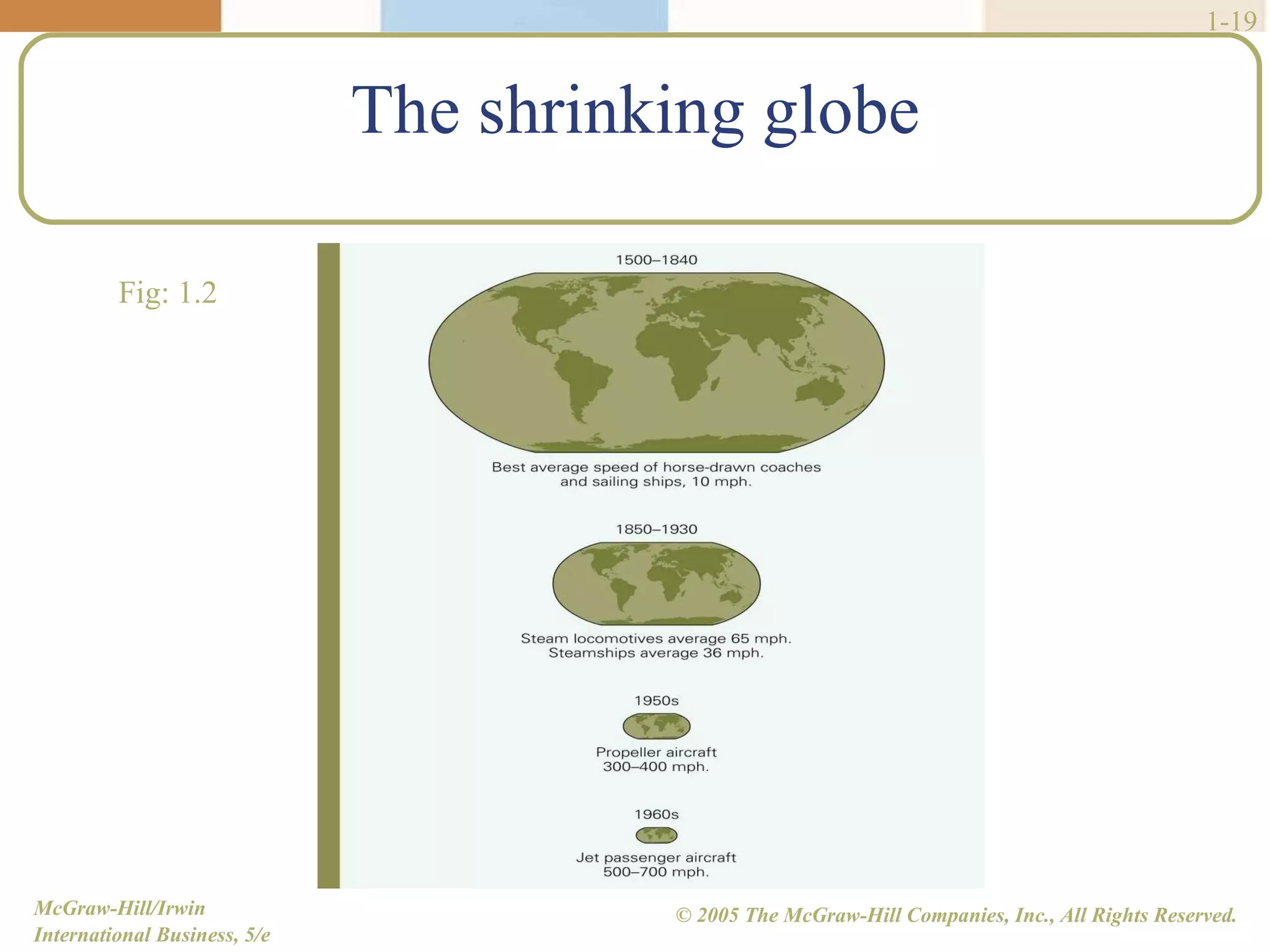
The shrinking globe 1- Fig: 1.2
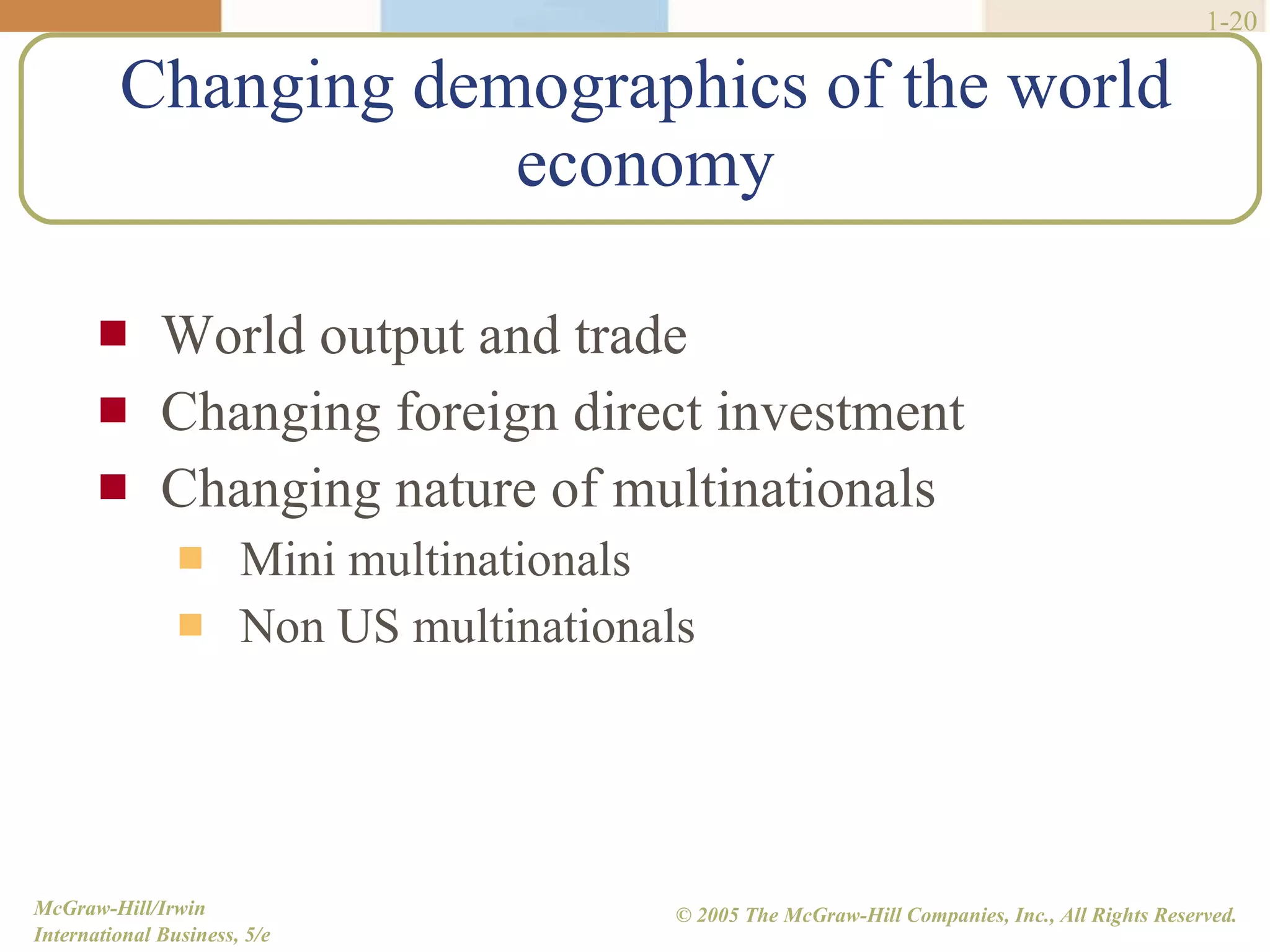
Changing demographics of the world economy World output and trade Changing foreign direct investment Changing nature of multinationals Mini multinationals Non US multinationals 1-
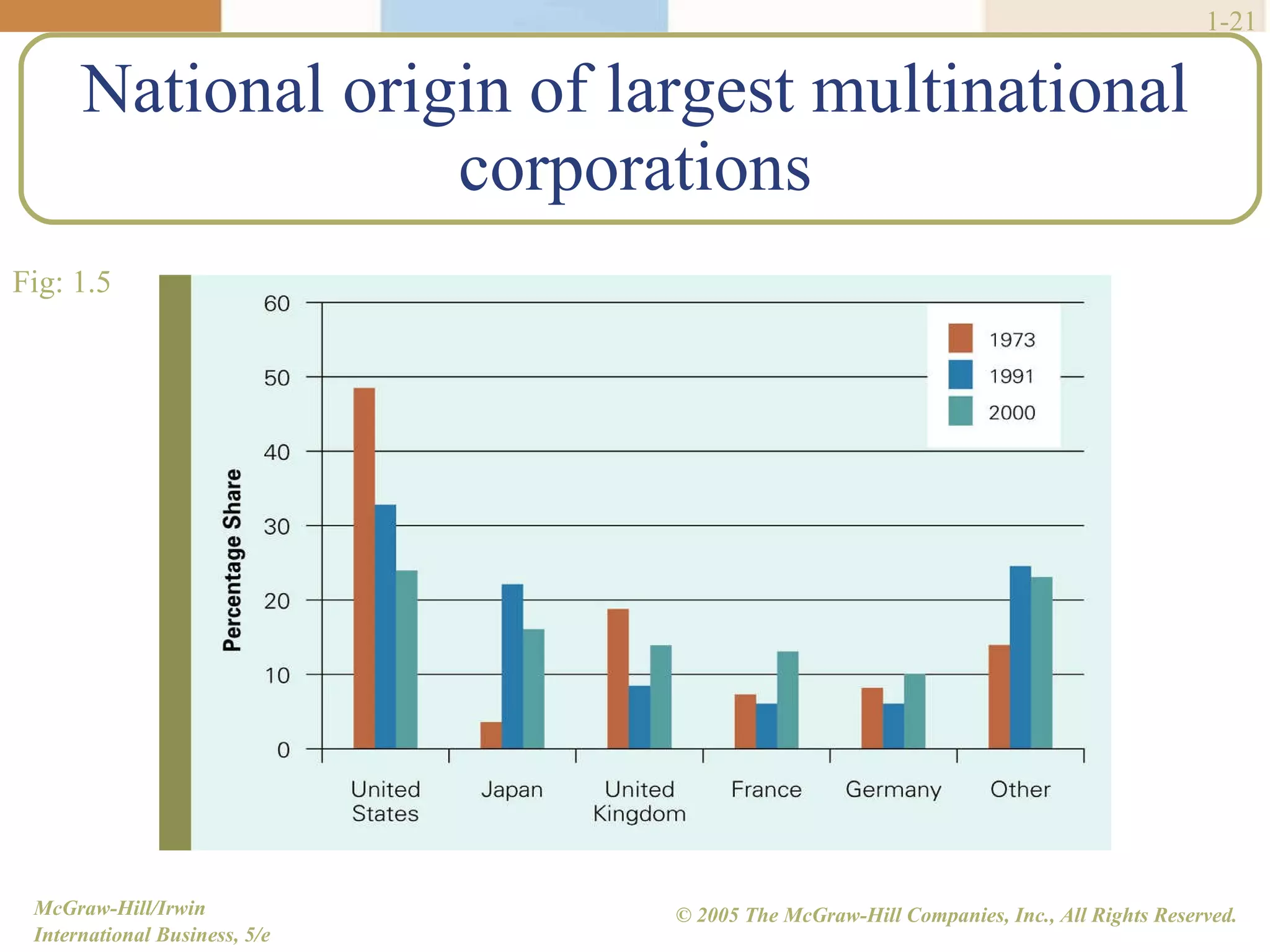
National origin of largest multinational corporations 1- Fig: 1.5
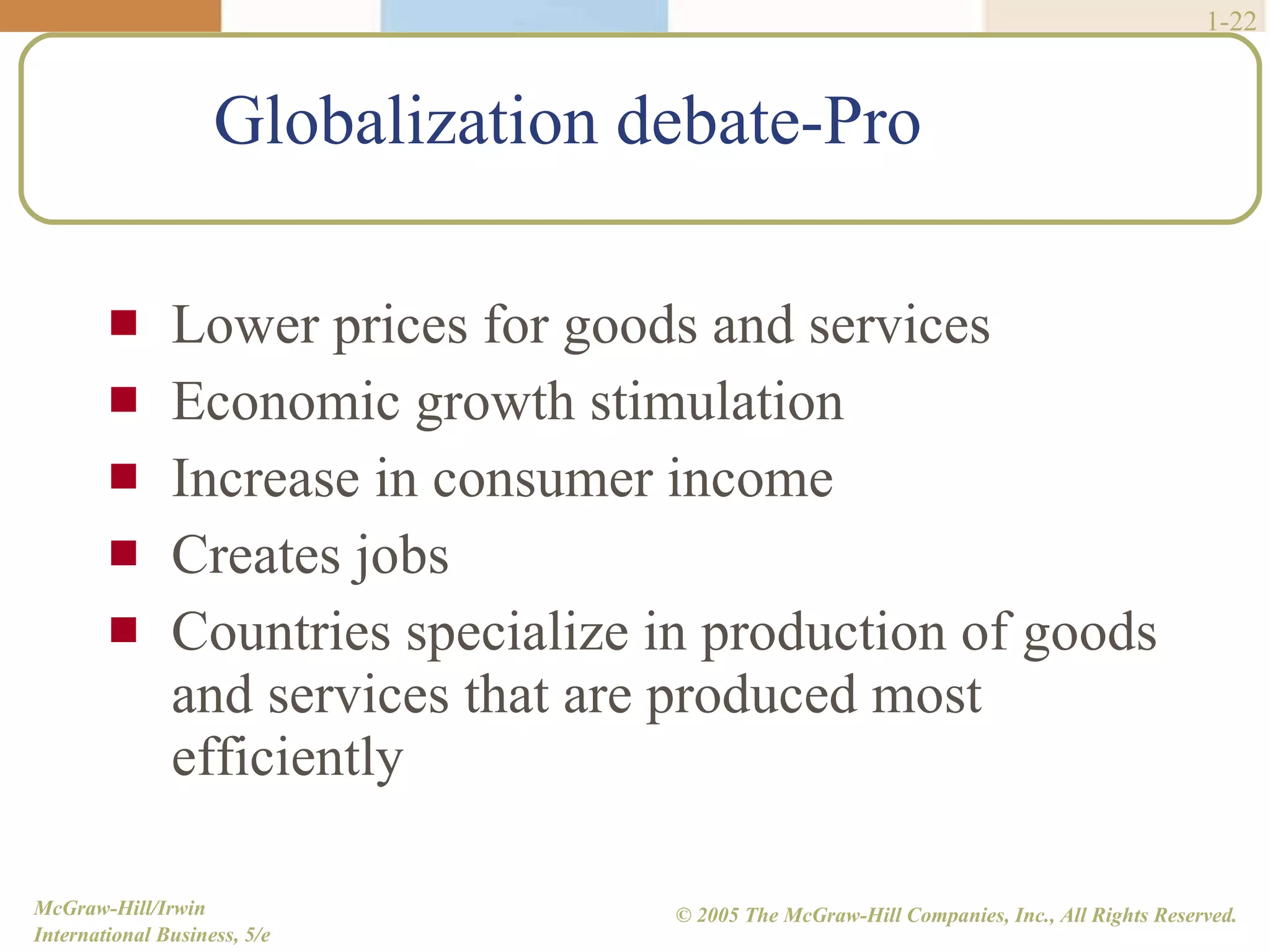
Globalization debate-Pro Lower prices for goods and services Economic growth stimulation Increase in consumer income Creates jobs Countries specialize in production of goods and services that are produced most efficiently 1-
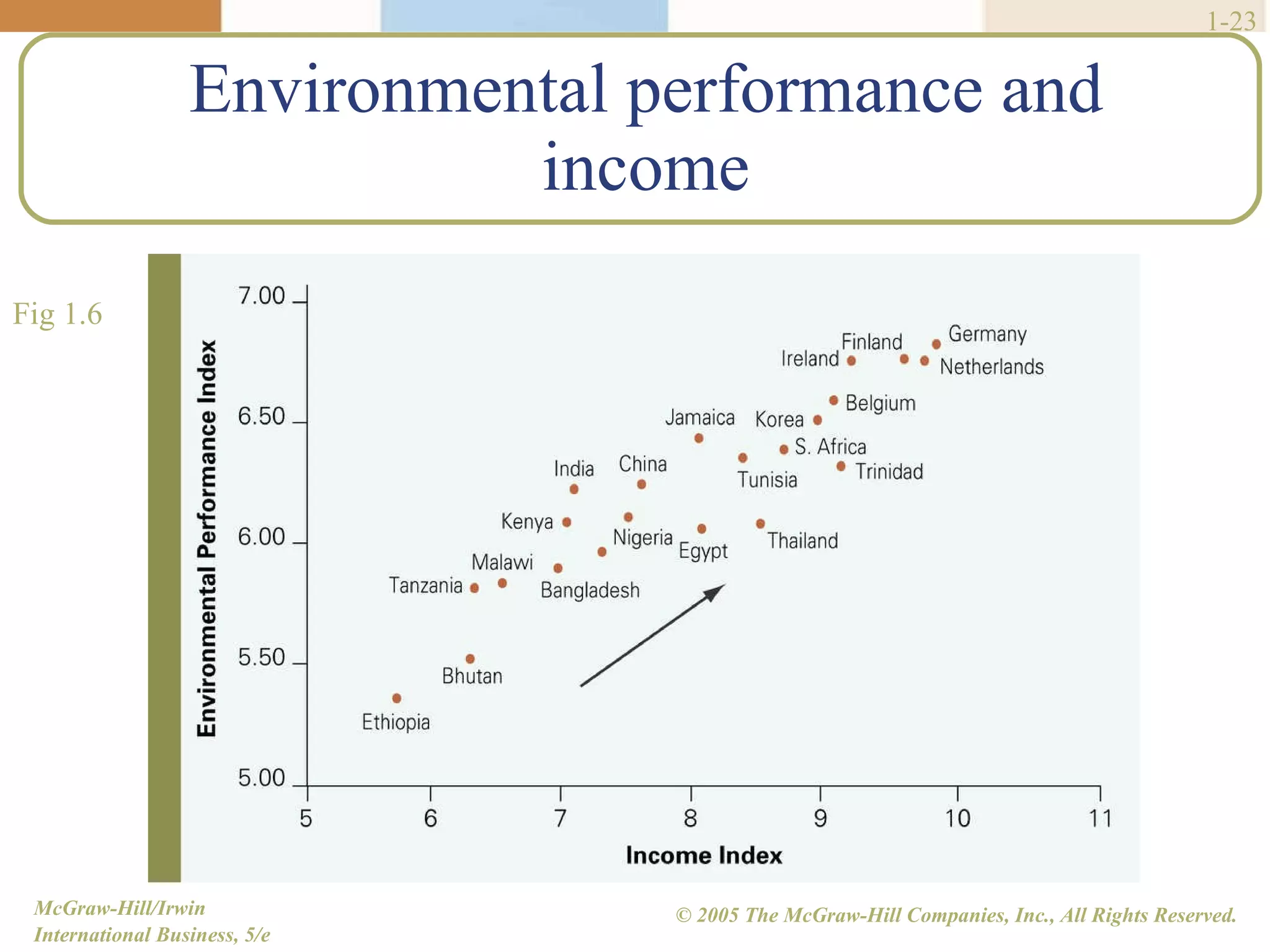
Environmental performance and income 1- Fig 1.6
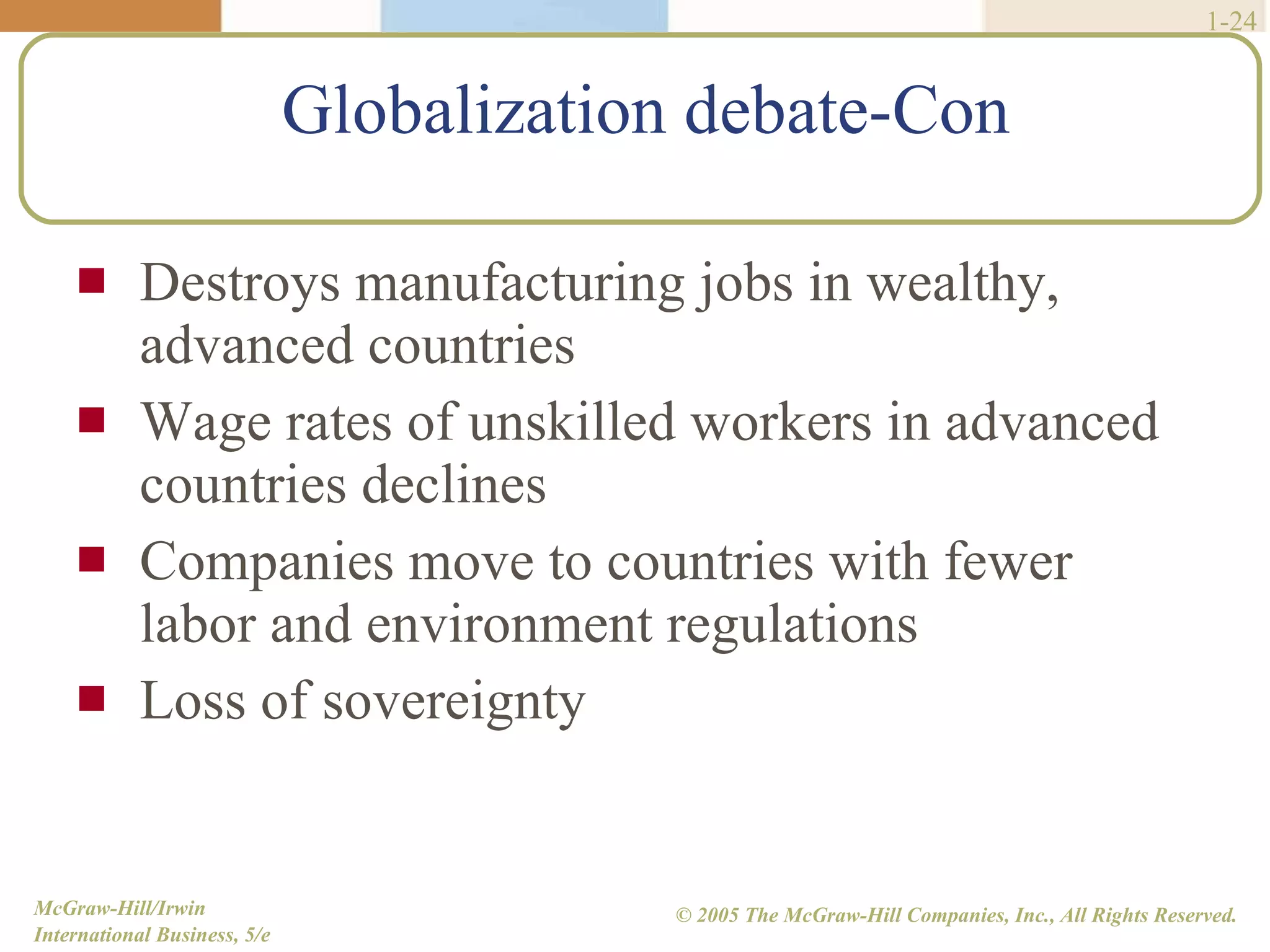
Globalization debate-Con Destroys manufacturing jobs in wealthy, advanced countries Wage rates of unskilled workers in advanced countries declines Companies move to countries with fewer labor and environment regulations Loss of sovereignty 1-

Overview of International Business

  • 1.
  • 2.
    Case: Wal-mart’s globalexpansion Largest retailer in the world –Over 4500 stores International expansion in 1991begins with Mexico in response to market saturation in the US Localization strategy adopted after trial and error Global buying power has allowed it to reap economies of scale Wal-mart faces significant competition from other global retailers, but has the first mover advantage in some markets 1-
  • 3.
    International Management 1-International Management refers to the study of issues and problems that arise from the management of international, multinational and global organisations However, organisation and management theorists are: Virtually all western in their cultural assumptions By and large Anglo-American in their values
  • 4.
    What is globalization?The shift towards a more integrated and interdependent world economy Two components: The globalization of markets The globalization of production 1-
  • 5.
    Globalization of marketsThe merging of distinctly separate national markets into a global marketplace Tastes and preferences converge onto a global norm Firms offer standardized products worldwide creating a world market 1-
  • 6.
    Globalization of marketsSignificant differences still exist between national markets on many relevant dimensions These differences require that marketing and operating strategies and product features be customized to best match conditions in a country. 1-
  • 7.
    Globalization of marketsCountries are different Range of problems are wider and more complex Government intervention in trade and investment creates problems International investment is impacted by different currencies 1-
  • 8.
    Globalization of productionRefers to sourcing of goods and services from locations around the world to take advantage of Differences in cost or quality of the factors of production Labor Land Capital 1-
  • 9.
    Global Production 1-Swan Optical Manufacturing 1-5 Design Example 1
  • 10.
    Volume of worldtrade and production, 1950-2002 1- Fig: 1.1
  • 11.
    Emergence of globalinstitutions Globalization has created the need for institutions to help manage, regulate and police the global marketplace GATT WTO IMF World bank United Nations 1-
  • 12.
    Global drivers Macrofactors that underlie trend towards greater globalization Decline in trade barriers Technological change 1-
  • 13.
  • 14.
    Declining barriers totrade Globalization of markets and production has been facilitated by Reduction in trade barriers Removal of restrictions to foreign direct investment 1-
  • 15.
    The changing patternof world output and trade 1-
  • 16.
    Percentage share oftotal FDI stock 1- Fig: 1.3
  • 17.
    Volume of FDIinflows, 1994-2002 ($ billions) 1- Fig: 1.4
  • 18.
    The role oftechnological change Microprocessors and telecommunications The internet and world wide web Transportation technology 1-
  • 19.
  • 20.
    Changing demographics ofthe world economy World output and trade Changing foreign direct investment Changing nature of multinationals Mini multinationals Non US multinationals 1-
  • 21.
    National origin oflargest multinational corporations 1- Fig: 1.5
  • 22.
    Globalization debate-Pro Lowerprices for goods and services Economic growth stimulation Increase in consumer income Creates jobs Countries specialize in production of goods and services that are produced most efficiently 1-
  • 23.
  • 24.
    Globalization debate-Con Destroysmanufacturing jobs in wealthy, advanced countries Wage rates of unskilled workers in advanced countries declines Companies move to countries with fewer labor and environment regulations Loss of sovereignty 1-