






COMMUNICATION Latest trends and case studies Silvia Cambié Marc Wright
Introductions
 
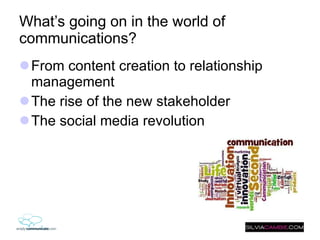
What’s going on in the world of communications? From content creation to relationship management  The rise of the new stakeholder The social media revolution
A new type of communication Pre Web 2.0 Controlled & Structured Access Trust in Corporate World Text before Pictures Interact/Network Knowledge is Power Post Web 2.0 Instant Multiple Access Emphasis on Governance Pictures, Sound and Video before Text Interact/Network simultaneously with Many Power is Knowledge Shared
Shift from content creation to relationship management Instead of controlling the message, inspire the public to spread the message Become part of the culture of a network and use it as multiplier
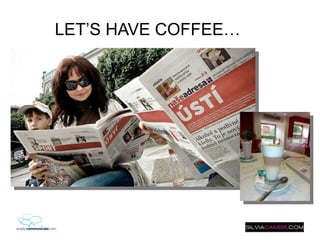
LET’S HAVE COFFEE…
 
 
How do you start? Stakeholder mapping A comprehensive review of the different players that have an influence on your reputation and success
Stakeholder Mapping  Primary stakeholders Social Donors & investors Employees Sponsors & business partners Local communities Non-social Natural environment Future generations  Secondary stakeholders Social  Government & regulators NGOs & civil society  Media  Academia Non-social Environmental pressure groups  Animal-welfare organisations
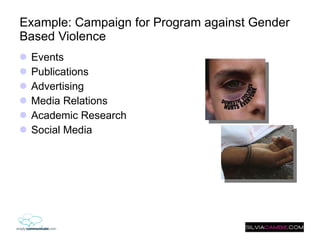
Example: Campaign for Program against Gender Based Violence  Events Publications Advertising Media Relations Academic Research Social Media
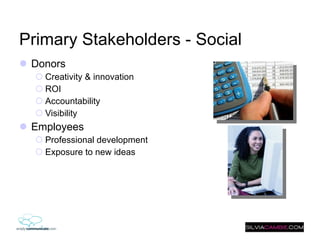
Primary Stakeholders - Social Donors Creativity & innovation  ROI Accountability  Visibility  Employees Professional development  Exposure to new ideas
Primary Stakeholders - Social Sponsors Visibility Alignment of messages with their goals Innovative approach Local Communities  Partnerships Outreach to social services, training centers and universities
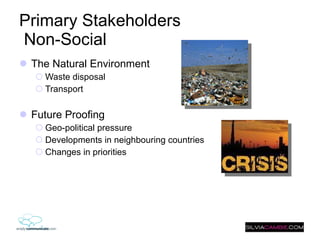
Primary Stakeholders  Non-Social The Natural Environment Waste disposal  Transport Future Proofing Geo-political pressure  Developments in neighbouring countries  Changes in priorities
Secondary Stakeholders - Social Government Partnerships Professional management of programs Censorship  Nepotism & corruption NGOs & civil society Partnerships & access to information Support of their agendas Encourage innovation Strengthen community links
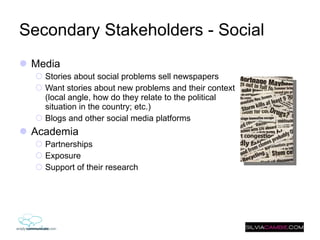
Secondary Stakeholders - Social Media Stories about social problems sell newspapers Want stories about new problems and their context (local angle, how do they relate to the political situation in the country; etc.) Blogs and other social media platforms  Academia Partnerships Exposure Support of their research
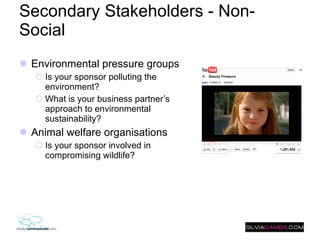
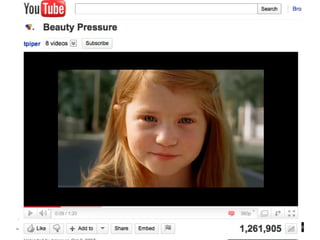
Secondary Stakeholders - Non-Social Environmental pressure groups Is your sponsor polluting the environment?  What is your business partner’s approach to environmental sustainability? Animal welfare organisations Is your sponsor involved in compromising wildlife?
 
 
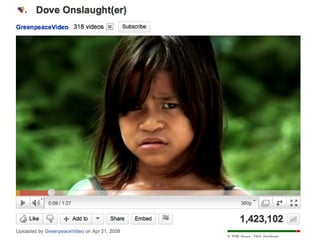
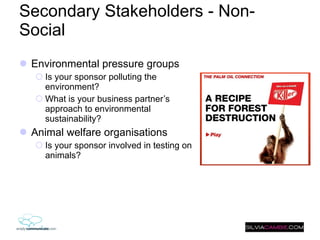
Secondary Stakeholders - Non-Social Environmental pressure groups Is your sponsor polluting the environment?  What is your business partner’s approach to environmental sustainability? Animal welfare organisations Is your sponsor involved in testing on animals?
 
Storytelling S omething T hey  A ll R emember
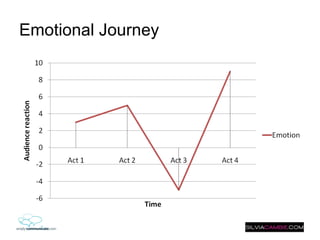
Emotional Journey


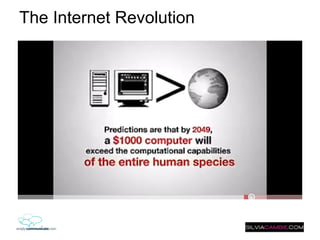
The Internet Revolution
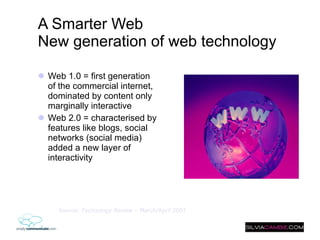
A Smarter Web New generation of web technology   Web 1.0 = first generation of the commercial internet, dominated by content only marginally interactive Web 2.0 = characterised by features like blogs, social networks (social media) added a new layer of interactivity Source:  Technology Review  – March/April 2007
Web 2.0: A State of Mind  “ The w eb has become the way for humanity to interact.  “ “ The w eb is connecting humanity. It is not about connections between sites.” “ If you want to create something on the web, you have to create an environment of trust.” Tim Berners-Lee Inventor of the World Wide Web
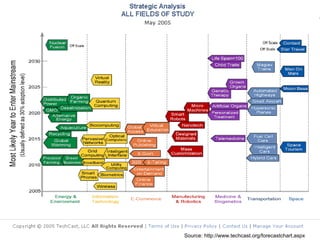
Source: http://www.techcast.org/forecastchart.aspx
“ Networks  are replacing the individual as the base unit of communication” Mark Comerford @markmedia
 
CASE STUDY 1
 
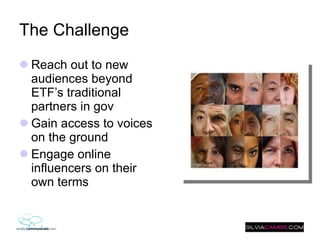
The Challenge  Reach out to new audiences beyond ETF’s traditional partners in gov Gain access to voices on the ground  Engage online influencers on their own terms
The Opportunity Extend  duration and impact  of two major conferences Add  online dimension  to event organised on International Women’s Day Tap into  networks  of online influencers Convince  senior management  of advantages of social media Position ETF as  Web 2.0 champion
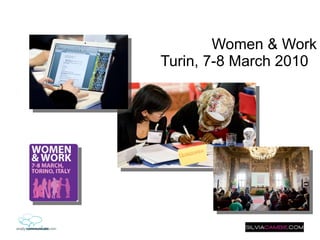
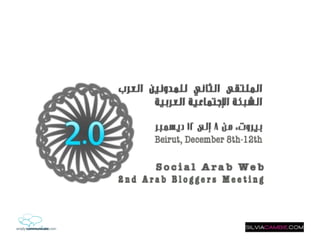
Women & Work Turin, 7-8 March 2010
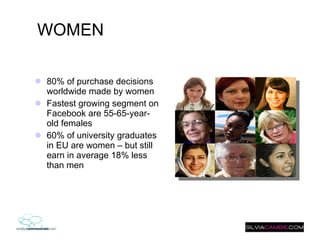
WOMEN 80% of purchase decisions worldwide made by women Fastest growing segment on Facebook are 55-65-year-old females  60% of university graduates in EU are women – but still earn in average 18% less than men
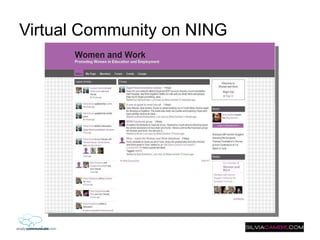
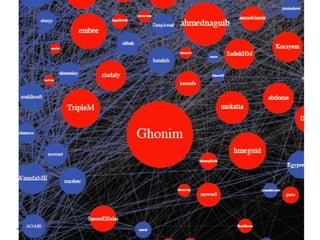
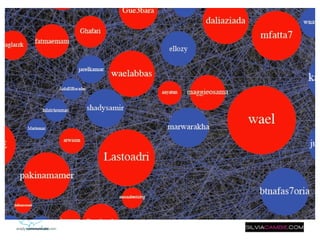
Virtual Community on NING
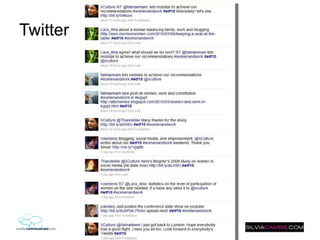
Twitter
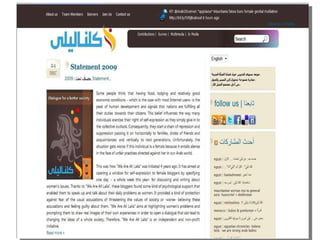
The Group 22 women bloggers and writers  From EU Partner Countries: Armenia, Azerbaijan, BiH, Croatia, Egypt, Georgia, Jordan, Lebanon, Russia, Tunisia and more Key characteristics Committed to the issues Established regional following Would benefit from exposure and visibility


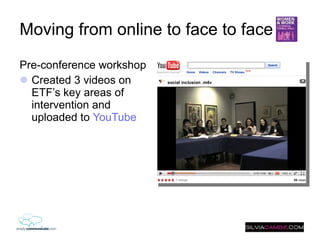
Moving from online to face to face Pre-conference workshop Created 3 videos on ETF’s key areas of intervention and  uploaded to  YouTube
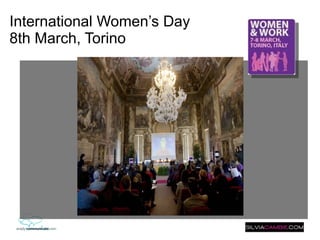
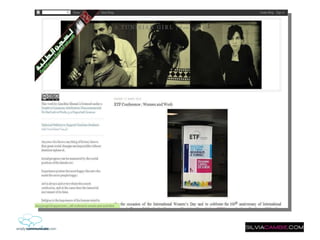
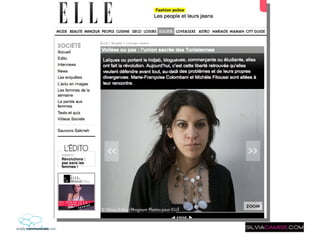
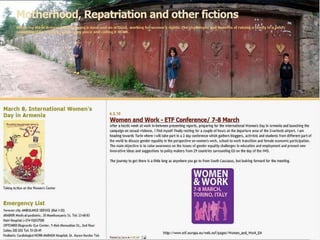
International Women’s Day 8th March, Torino


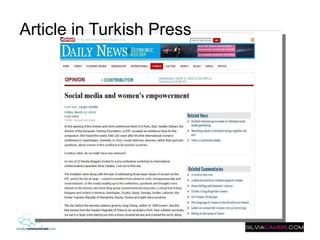
Article in Turkish Press
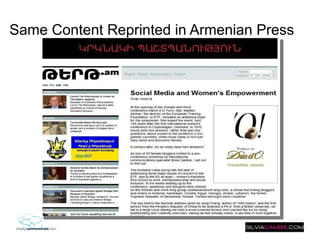
Same Content Reprinted in Armenian Press
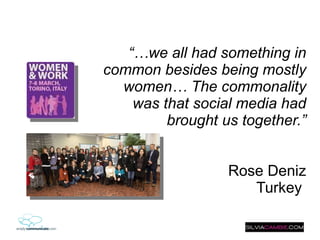
“… we all had something in common besides being mostly women… The commonality was that social media had brought us together.”   Rose Deniz Turkey
CASE STUDY 2
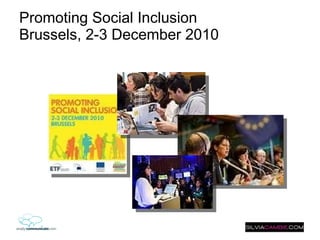
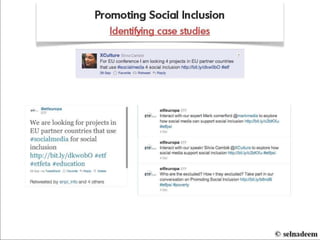
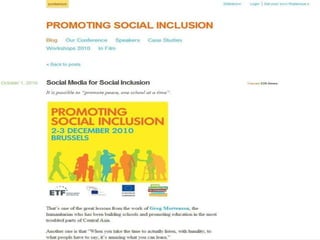
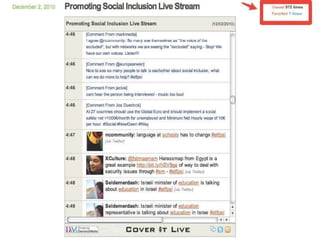
Promoting Social Inclusion Brussels, 2-3 December 2010


Challenges encountered during the project  Working with 30 countries and different degrees of social media literacy and take-up Gap between policy makers and digital grass-root influencers  Building ETF social media presence from scratch Reluctance by some ETF staff to use social media
Outcomes Live stream of “Promoting Social Inclusion” viewed more than 900x.  6x actual participation rate of ETF conferences . More than total number of all participants in one single year.  Online participation by 900 people  saved ETF € 900,000  (5% of annual budget) Key ETF staff members  began using social media and interacting with online audiences. ETF comms team  invited to present at annual gathering of EU agencies  head of comms. ETF web master invited to present at annual gathering of EU agencies’ web masters.
  Lessons Learned  It’s all about the network…. Build your  network first Interact actively  with public  before  asking for their support Demonstrate commitment  to the network and nurture relationships (leave comments on blogs, answer questions on FB, etc.) Use network to conduct online conversations about your event/project and to promote your ideas/conferences Don't drop the connection  when the project is finished Continue the conversation  and  capitalise  on your  network for future projects
 
Social media personality types you should reach The sharer:  This person is constantly sharing your links, retweeting your messages and posting your news on their social networks. The reader:  people who genuinely take interest in what you have to say and regularly read the information to which you link. The Maven:  a respected subject expert e.g. Seth Godin, Malcolm Gladwell
Social media personality types you should reach The commenter:  these people are constantly commenting on your blog posts, tweets and Facebook links. They are the ones who encourage other people to join the conversation. The word-of-mouther:  you need to target the ones who then spread the word by mouth to their non-web savvy friends.  The power holder:  In order to achieve a reaction you need to target the change makers and people of power.
What will you take from today?
Silvia Cambié [email_address] www.chandacom.com @xculture Marc Wright [email_address] www.simply-communicate.com @simplygroup

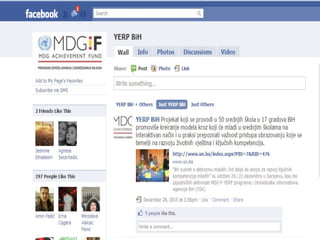
Presentation to the UN in Sarajevo

  • 1.
    COMMUNICATION Latest trendsand case studies Silvia Cambié Marc Wright
  • 2.
  • 3.
  • 4.
    What’s going onin the world of communications? From content creation to relationship management The rise of the new stakeholder The social media revolution
  • 5.
    A new typeof communication Pre Web 2.0 Controlled & Structured Access Trust in Corporate World Text before Pictures Interact/Network Knowledge is Power Post Web 2.0 Instant Multiple Access Emphasis on Governance Pictures, Sound and Video before Text Interact/Network simultaneously with Many Power is Knowledge Shared
  • 6.
    Shift from contentcreation to relationship management Instead of controlling the message, inspire the public to spread the message Become part of the culture of a network and use it as multiplier
  • 7.
  • 8.
  • 9.
  • 10.
    How do youstart? Stakeholder mapping A comprehensive review of the different players that have an influence on your reputation and success
  • 11.
    Stakeholder Mapping Primary stakeholders Social Donors & investors Employees Sponsors & business partners Local communities Non-social Natural environment Future generations Secondary stakeholders Social Government & regulators NGOs & civil society Media Academia Non-social Environmental pressure groups Animal-welfare organisations
  • 12.
    Example: Campaign forProgram against Gender Based Violence Events Publications Advertising Media Relations Academic Research Social Media
  • 13.
    Primary Stakeholders -Social Donors Creativity & innovation ROI Accountability Visibility Employees Professional development Exposure to new ideas
  • 14.
    Primary Stakeholders -Social Sponsors Visibility Alignment of messages with their goals Innovative approach Local Communities Partnerships Outreach to social services, training centers and universities
  • 15.
    Primary Stakeholders Non-Social The Natural Environment Waste disposal Transport Future Proofing Geo-political pressure Developments in neighbouring countries Changes in priorities
  • 16.
    Secondary Stakeholders -Social Government Partnerships Professional management of programs Censorship Nepotism & corruption NGOs & civil society Partnerships & access to information Support of their agendas Encourage innovation Strengthen community links
  • 17.
    Secondary Stakeholders -Social Media Stories about social problems sell newspapers Want stories about new problems and their context (local angle, how do they relate to the political situation in the country; etc.) Blogs and other social media platforms Academia Partnerships Exposure Support of their research
  • 18.
    Secondary Stakeholders -Non-Social Environmental pressure groups Is your sponsor polluting the environment? What is your business partner’s approach to environmental sustainability? Animal welfare organisations Is your sponsor involved in compromising wildlife?
  • 19.
  • 20.
  • 21.
    Secondary Stakeholders -Non-Social Environmental pressure groups Is your sponsor polluting the environment? What is your business partner’s approach to environmental sustainability? Animal welfare organisations Is your sponsor involved in testing on animals?
  • 22.
  • 23.
    Storytelling S omethingT hey A ll R emember
  • 24.
  • 25.
  • 26.
  • 27.
  • 28.
  • 29.
    A Smarter WebNew generation of web technology Web 1.0 = first generation of the commercial internet, dominated by content only marginally interactive Web 2.0 = characterised by features like blogs, social networks (social media) added a new layer of interactivity Source: Technology Review – March/April 2007
  • 30.
    Web 2.0: AState of Mind “ The w eb has become the way for humanity to interact. “ “ The w eb is connecting humanity. It is not about connections between sites.” “ If you want to create something on the web, you have to create an environment of trust.” Tim Berners-Lee Inventor of the World Wide Web
  • 31.
  • 32.
    “ Networks are replacing the individual as the base unit of communication” Mark Comerford @markmedia
  • 33.
  • 34.
  • 35.
  • 36.
    The Challenge Reach out to new audiences beyond ETF’s traditional partners in gov Gain access to voices on the ground Engage online influencers on their own terms
  • 37.
    The Opportunity Extend duration and impact of two major conferences Add online dimension to event organised on International Women’s Day Tap into networks of online influencers Convince senior management of advantages of social media Position ETF as Web 2.0 champion
  • 38.
    Women & WorkTurin, 7-8 March 2010
  • 39.
    WOMEN 80% ofpurchase decisions worldwide made by women Fastest growing segment on Facebook are 55-65-year-old females 60% of university graduates in EU are women – but still earn in average 18% less than men
  • 40.
  • 41.
  • 42.
    The Group 22women bloggers and writers From EU Partner Countries: Armenia, Azerbaijan, BiH, Croatia, Egypt, Georgia, Jordan, Lebanon, Russia, Tunisia and more Key characteristics Committed to the issues Established regional following Would benefit from exposure and visibility
  • 43.
  • 44.
  • 45.
  • 46.
  • 47.
  • 48.
    Moving from onlineto face to face Pre-conference workshop Created 3 videos on ETF’s key areas of intervention and uploaded to YouTube
  • 49.
    International Women’s Day8th March, Torino
  • 50.
  • 51.
  • 52.
  • 53.
  • 54.
    Same Content Reprintedin Armenian Press
  • 55.
    “… we allhad something in common besides being mostly women… The commonality was that social media had brought us together.” Rose Deniz Turkey
  • 56.
  • 57.
    Promoting Social InclusionBrussels, 2-3 December 2010
  • 58.
  • 59.
  • 60.
  • 61.
  • 62.
  • 63.
  • 64.
  • 65.
    Challenges encountered duringthe project Working with 30 countries and different degrees of social media literacy and take-up Gap between policy makers and digital grass-root influencers Building ETF social media presence from scratch Reluctance by some ETF staff to use social media
  • 66.
    Outcomes Live streamof “Promoting Social Inclusion” viewed more than 900x. 6x actual participation rate of ETF conferences . More than total number of all participants in one single year. Online participation by 900 people saved ETF € 900,000 (5% of annual budget) Key ETF staff members began using social media and interacting with online audiences. ETF comms team invited to present at annual gathering of EU agencies head of comms. ETF web master invited to present at annual gathering of EU agencies’ web masters.
  • 67.
    LessonsLearned It’s all about the network…. Build your network first Interact actively with public before asking for their support Demonstrate commitment to the network and nurture relationships (leave comments on blogs, answer questions on FB, etc.) Use network to conduct online conversations about your event/project and to promote your ideas/conferences Don't drop the connection when the project is finished Continue the conversation and capitalise on your network for future projects
  • 68.
  • 69.
    Social media personalitytypes you should reach The sharer: This person is constantly sharing your links, retweeting your messages and posting your news on their social networks. The reader: people who genuinely take interest in what you have to say and regularly read the information to which you link. The Maven: a respected subject expert e.g. Seth Godin, Malcolm Gladwell
  • 70.
    Social media personalitytypes you should reach The commenter: these people are constantly commenting on your blog posts, tweets and Facebook links. They are the ones who encourage other people to join the conversation. The word-of-mouther: you need to target the ones who then spread the word by mouth to their non-web savvy friends. The power holder: In order to achieve a reaction you need to target the change makers and people of power.
  • 71.
    What will youtake from today?
  • 72.
    Silvia Cambié [email_address]www.chandacom.com @xculture Marc Wright [email_address] www.simply-communicate.com @simplygroup

Editor's Notes

  • #32 This screen from the Website of the TechCast Project represents the pooled contributions of 100 high tech executives, scientists, engineers, academics, consultant, futurists and other leading experts from around the world. This graph groups their fourth generation update of their forecast of when new technologies will enter the mainstream (30% adoption level). This “virtual think tank” also provides estimated levels of certainty for each technology. An update is coming later this year. ($950.00 buys a subscription)