HYPERCONJUCATION
2nd semester Presentation
submitted to
Yogoda Satsanga Mahavidyalaya, Ranchi
(2022-2026)
By
SARWESH ANAND
BSC2022CHE004
Department of Chemistry
Under The Supervision OF
Dr. Anurag Mehta Dr. N.N. Choudhary
(Guide)
(HOD)
TABLE OF
CONTENTS
1. HYPERCONJUCATION
•What is hyperconjucatjon
•Orbital concept
•Hyperconjucatjo ipropane
•Significance of h ercon
•ucation
WHAT IS HYPERCONJUGATION EFFECT oWhen alkyl groups are attached to an
unsaturated system like double bond or a benzene ring, the +1 —effect is
reversed. This effect is called hyperconjugation
• Empty p orbital
•ORBITAL CONCEPT
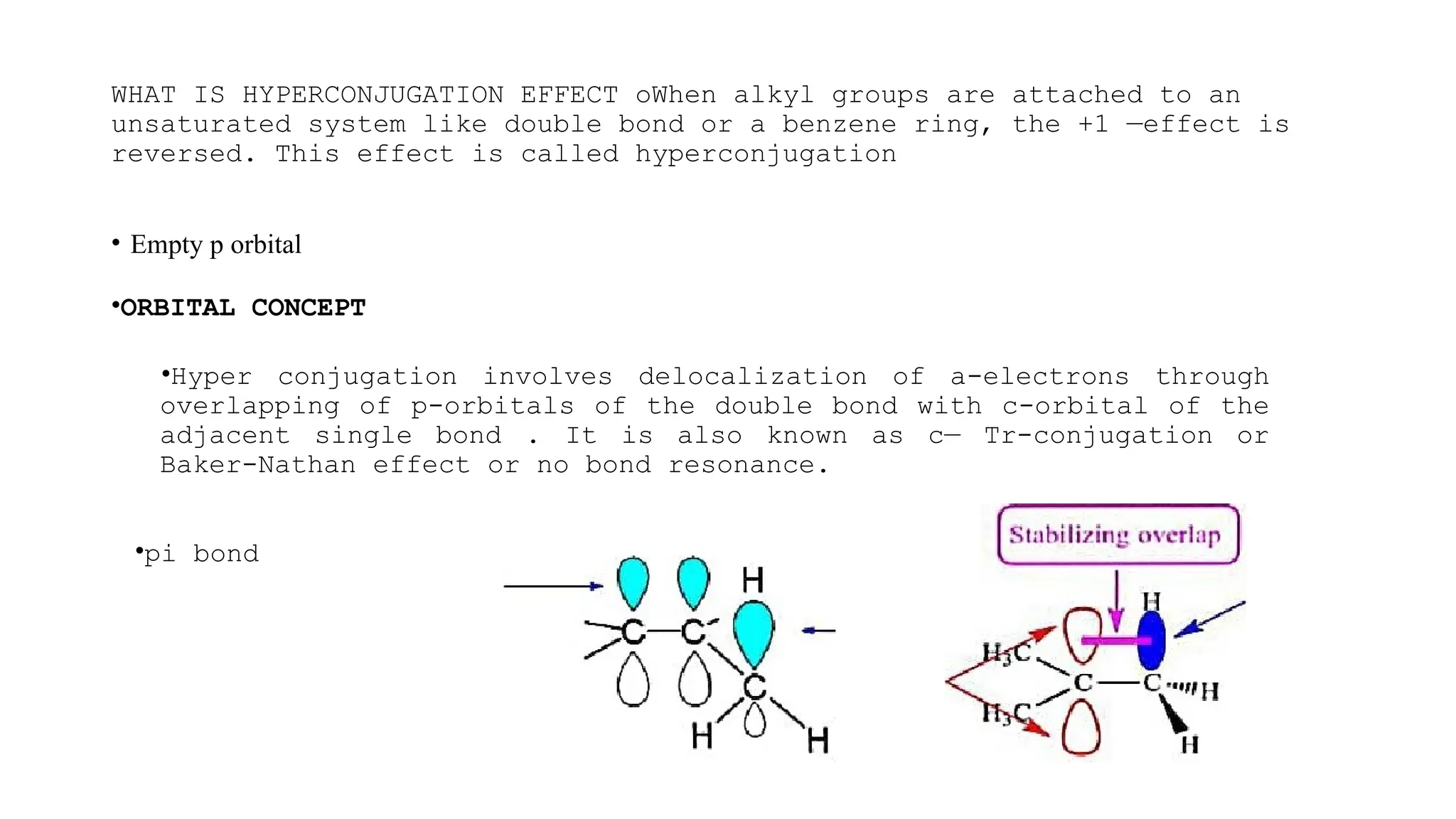
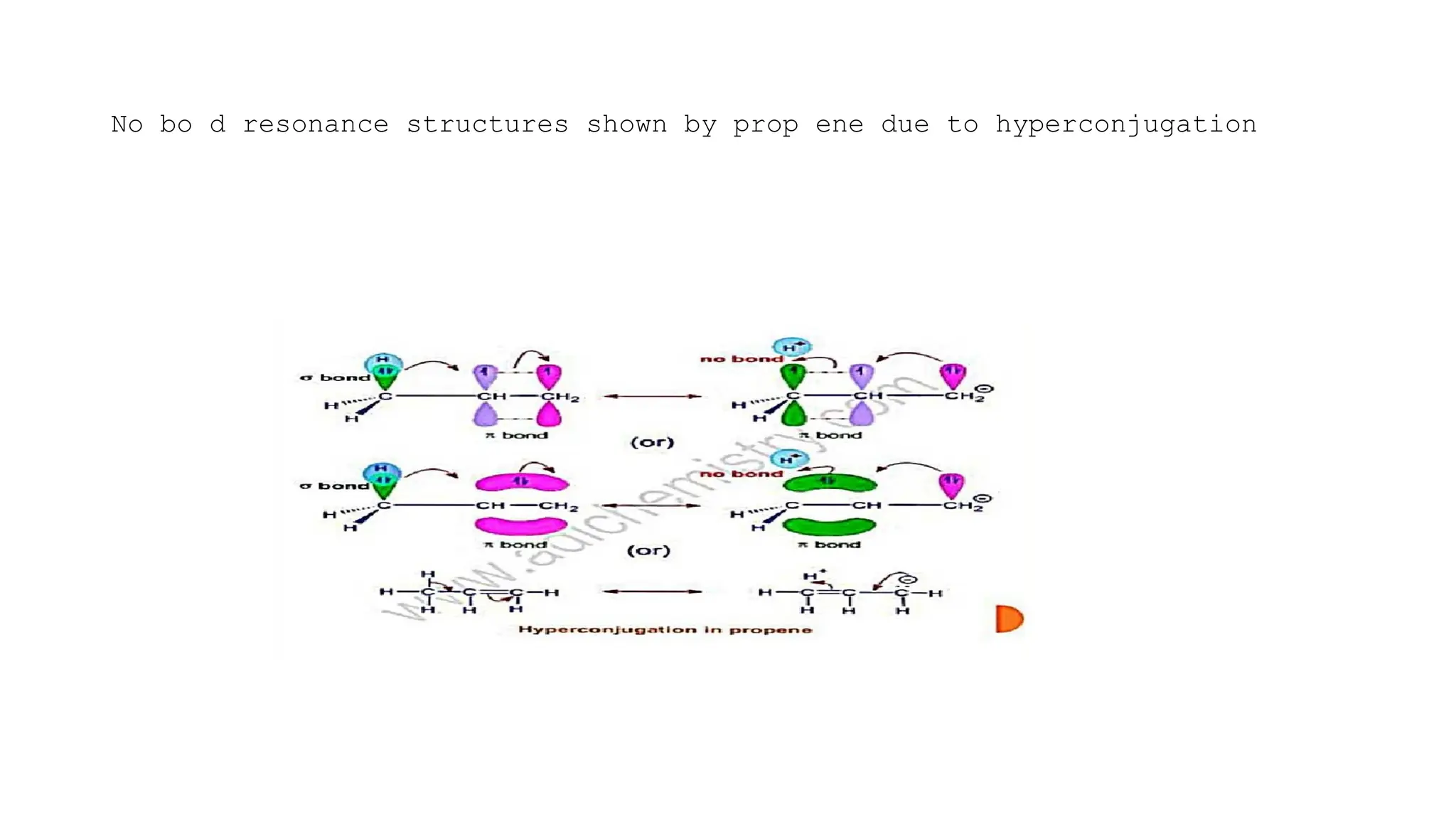
•Hyper conjugation involves delocalization of a-electrons through
overlapping of p-orbitals of the double bond with c-orbital of the
adjacent single bond . It is also known as c— Tr-conjugation or
Baker-Nathan effect or no bond resonance.
•pi bond
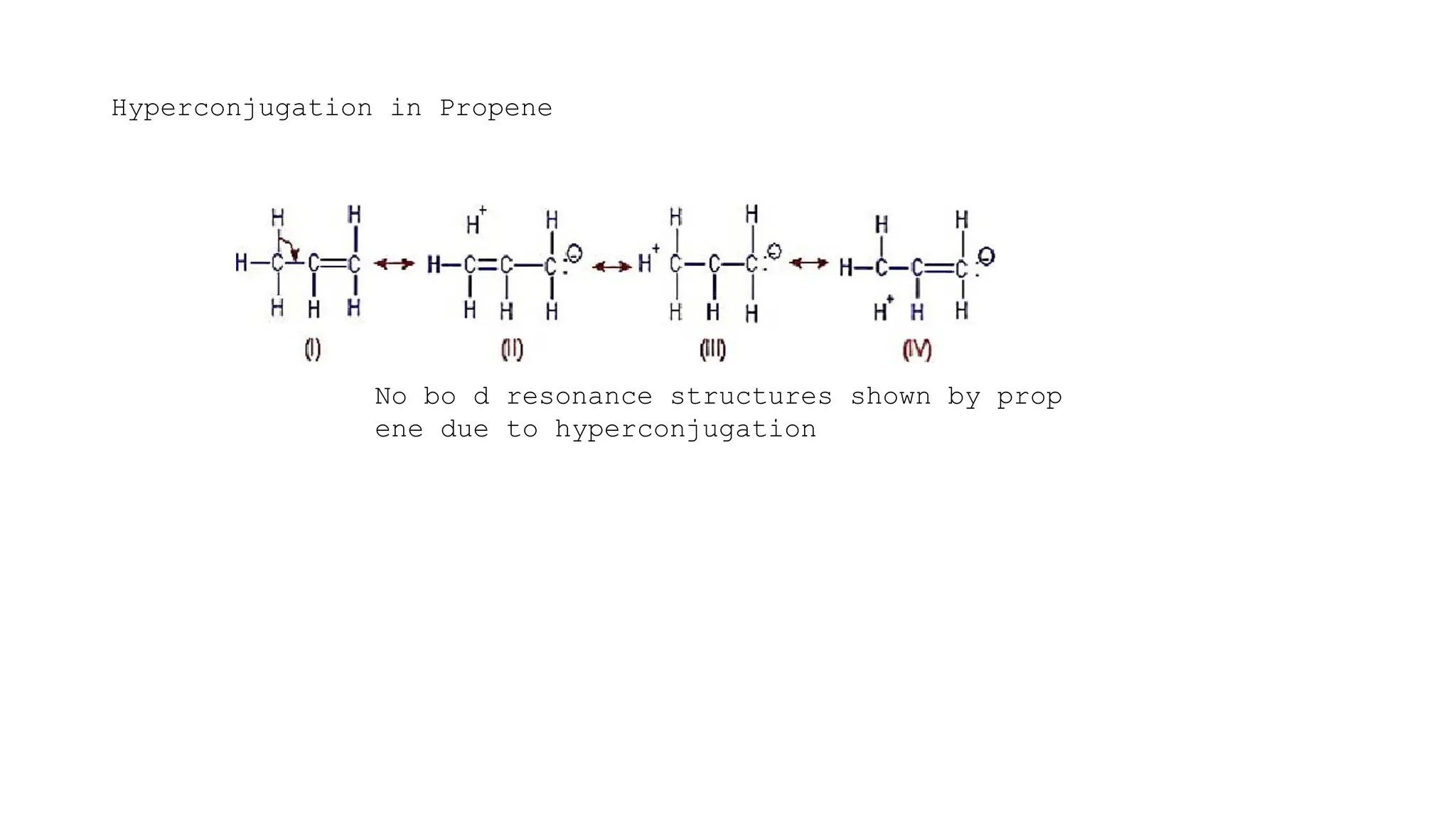
Hyperconjugation in Propene
No bo d resonance structures shown by prop
ene due to hyperconjugation
No bo d resonance structures shown by prop ene due to hyperconjugation
SIGNIFICANCE OF HYPERCONJUGATION
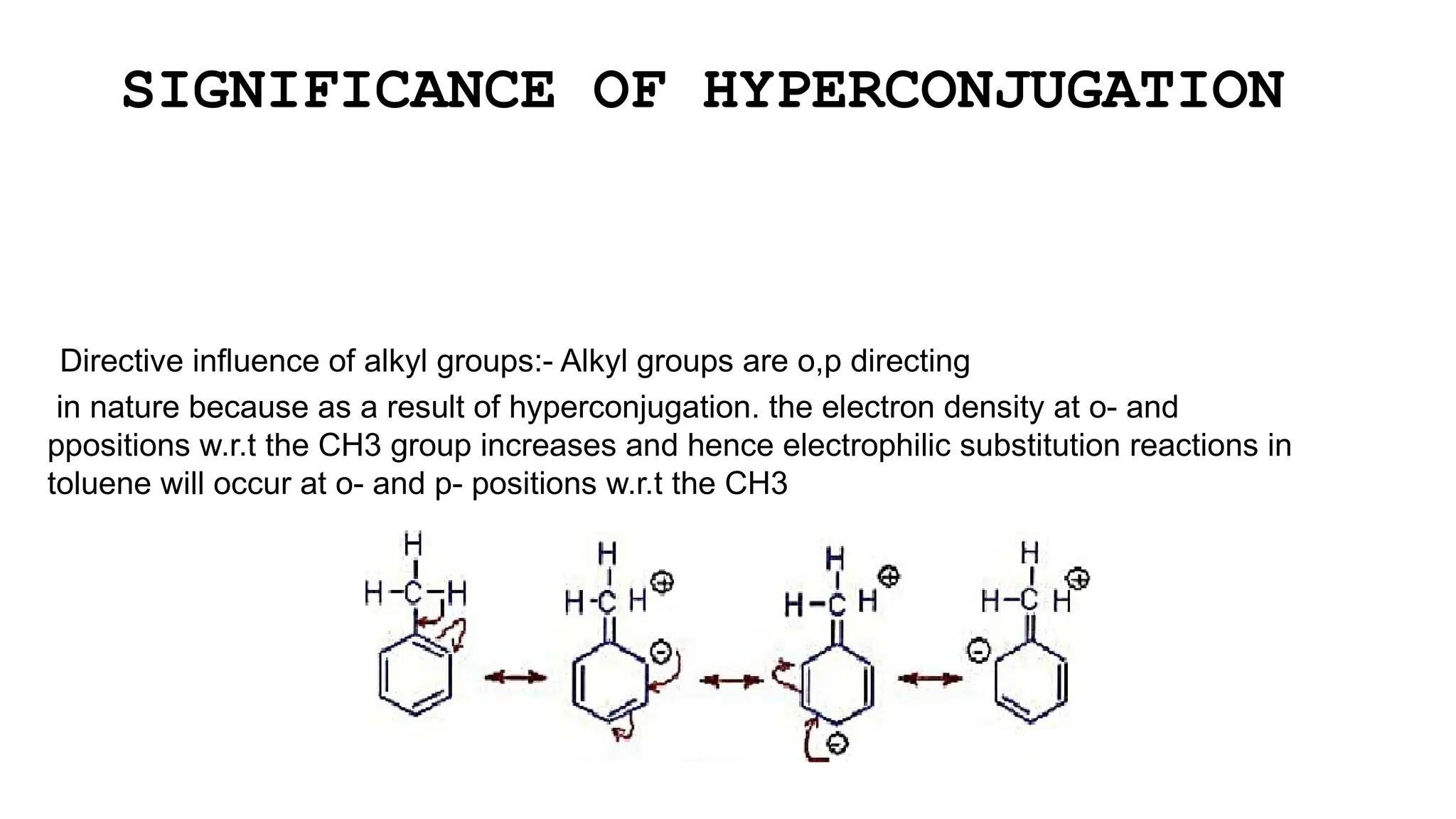
Directive influence of alkyl groups:- Alkyl groups are o,p directing
in nature because as a result of hyperconjugation. the electron density at o- and
ppositions w.r.t the CH3 group increases and hence electrophilic substitution reactions in
toluene will occur at o- and p- positions w.r.t the CH3
Hyperconjugation in toluene
The stability of alkenes increases with increase in the number of alkyl groups
(containing hydrogens) on the double bond. It is due to increase in the number of
contributing no bond resonance structures.
For example, 2-butene is more stable than I-butene. This is because in
2-butene, there are six hydrogens involved in hyperconjugation whereas
there are only two hydrogens involved in case of I-butene. Hence the
contributing structures in 2-butene are more and is more
stable than I-butene
.
I—butene 2— b u te n e
The increasing order of stability of alkenes with
increases in the number of methyl groups on the double
bond is depicted below
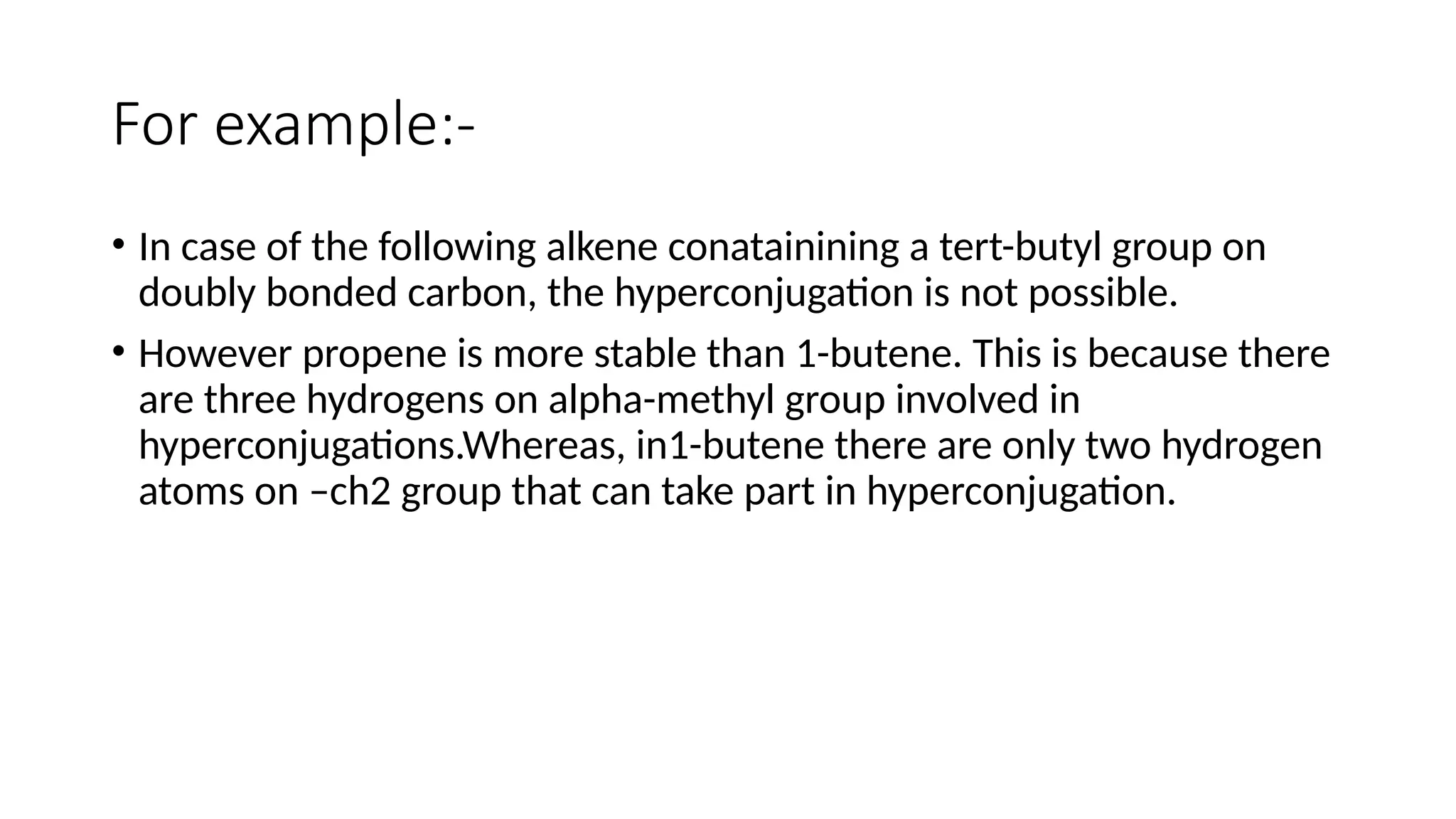
•This order is supported by the heat of
hydrogenation data of these alkenes. The
values of heats of hydrogenation decrease with
increase in the stability of alkenes.
•Also the heats of formation of more
substituted alkenes are higher than expected.
•It is important to note that the alkyl
groups attached to the double bond must
contain at least one hydrogen atom for
hyperconjugation.
For example:-
• In case of the following alkene conatainining a tert-butyl group on
doubly bonded carbon, the hyperconjugation is not possible.
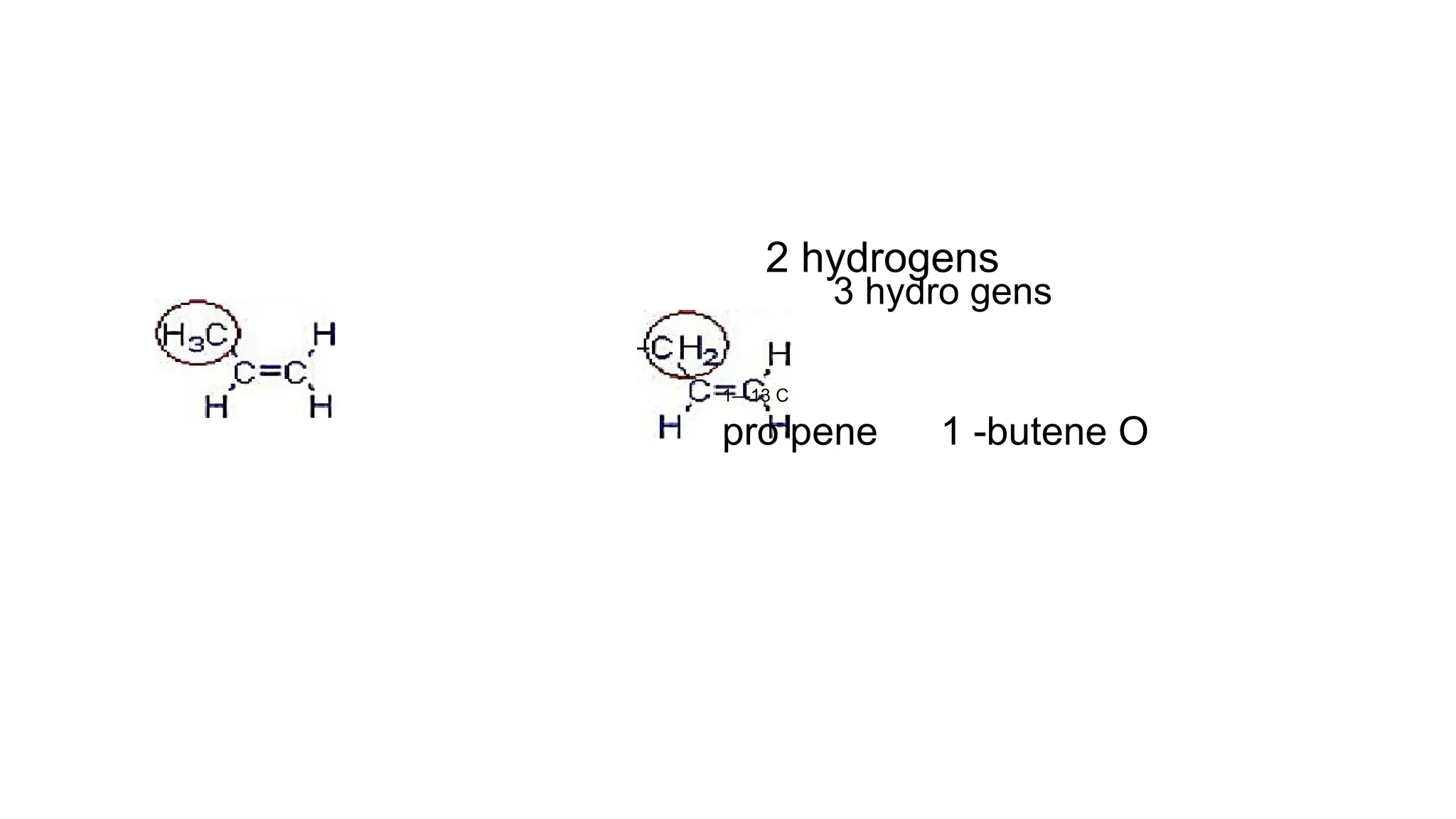
• However propene is more stable than 1-butene. This is because there
are three hydrogens on alpha-methyl group involved in
hyperconjugations.Whereas, in1-butene there are only two hydrogen
atoms on –ch2 group that can take part in hyperconjugation.
2 hydrogens
3 hydro gens
1—13 C
pro pene 1 -butene O
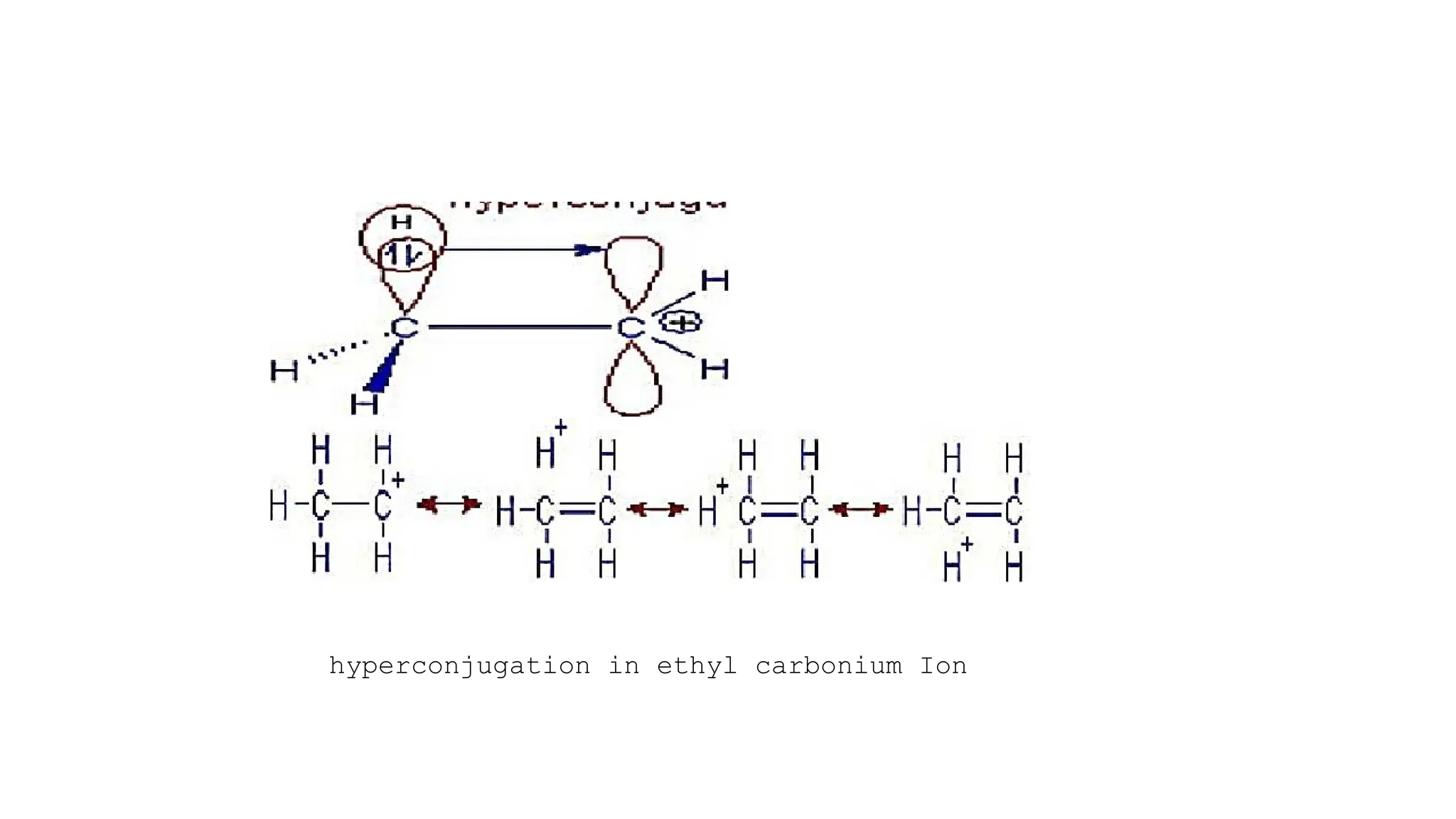
• The ethyl carbocation, CH3-CH2+ is more stable than the methyl
carbocation, CH +. This is because, the oelectrons of the a-C-H bond in
ethyl group are delocalized into the empty p-orbital of the positive
carbon center and thus by giving rise to •no bond resonance structures'
as shown below. Whereas hyperconjugation is not possible in methyl
carbocation and hence is less stable.
2) Stability of carbocations
hyperconjugation in ethyl carbonium Ion
• The stability of carbonium ions increases with decrease in the number
of alkyl groups attached to the positively charged carbon due tp
increase in the number of contributing structures to
hyperconjucations.
• Thus the increasing order of stability of carbocations can be given as :
• Methyl < primary < secondary < tertiary
THANK YOU

Presentation sarwesh.pptx on topic hyperconjugation

  • 1.
    HYPERCONJUCATION 2nd semester Presentation submittedto Yogoda Satsanga Mahavidyalaya, Ranchi (2022-2026) By SARWESH ANAND BSC2022CHE004 Department of Chemistry Under The Supervision OF Dr. Anurag Mehta Dr. N.N. Choudhary (Guide) (HOD)
  • 2.
    TABLE OF CONTENTS 1. HYPERCONJUCATION •Whatis hyperconjucatjon •Orbital concept •Hyperconjucatjo ipropane •Significance of h ercon •ucation
  • 3.
    WHAT IS HYPERCONJUGATIONEFFECT oWhen alkyl groups are attached to an unsaturated system like double bond or a benzene ring, the +1 —effect is reversed. This effect is called hyperconjugation • Empty p orbital •ORBITAL CONCEPT •Hyper conjugation involves delocalization of a-electrons through overlapping of p-orbitals of the double bond with c-orbital of the adjacent single bond . It is also known as c— Tr-conjugation or Baker-Nathan effect or no bond resonance. •pi bond
  • 4.
    Hyperconjugation in Propene Nobo d resonance structures shown by prop ene due to hyperconjugation
  • 5.
    No bo dresonance structures shown by prop ene due to hyperconjugation
  • 6.
    SIGNIFICANCE OF HYPERCONJUGATION Directiveinfluence of alkyl groups:- Alkyl groups are o,p directing in nature because as a result of hyperconjugation. the electron density at o- and ppositions w.r.t the CH3 group increases and hence electrophilic substitution reactions in toluene will occur at o- and p- positions w.r.t the CH3
  • 7.
    Hyperconjugation in toluene Thestability of alkenes increases with increase in the number of alkyl groups (containing hydrogens) on the double bond. It is due to increase in the number of contributing no bond resonance structures. For example, 2-butene is more stable than I-butene. This is because in 2-butene, there are six hydrogens involved in hyperconjugation whereas there are only two hydrogens involved in case of I-butene. Hence the contributing structures in 2-butene are more and is more stable than I-butene
  • 8.
    . I—butene 2— bu te n e The increasing order of stability of alkenes with increases in the number of methyl groups on the double bond is depicted below
  • 9.
    •This order issupported by the heat of hydrogenation data of these alkenes. The values of heats of hydrogenation decrease with increase in the stability of alkenes. •Also the heats of formation of more substituted alkenes are higher than expected. •It is important to note that the alkyl groups attached to the double bond must contain at least one hydrogen atom for hyperconjugation.
  • 10.
    For example:- • Incase of the following alkene conatainining a tert-butyl group on doubly bonded carbon, the hyperconjugation is not possible. • However propene is more stable than 1-butene. This is because there are three hydrogens on alpha-methyl group involved in hyperconjugations.Whereas, in1-butene there are only two hydrogen atoms on –ch2 group that can take part in hyperconjugation.
  • 11.
    2 hydrogens 3 hydrogens 1—13 C pro pene 1 -butene O
  • 12.
    • The ethylcarbocation, CH3-CH2+ is more stable than the methyl carbocation, CH +. This is because, the oelectrons of the a-C-H bond in ethyl group are delocalized into the empty p-orbital of the positive carbon center and thus by giving rise to •no bond resonance structures' as shown below. Whereas hyperconjugation is not possible in methyl carbocation and hence is less stable. 2) Stability of carbocations
  • 13.
  • 14.
    • The stabilityof carbonium ions increases with decrease in the number of alkyl groups attached to the positively charged carbon due tp increase in the number of contributing structures to hyperconjucations. • Thus the increasing order of stability of carbocations can be given as : • Methyl < primary < secondary < tertiary
  • 15.