
by:-
Maneesh Kumar Shukla
Introduction
 Brake is a device which is used for stopping the vehicle or
slowing down the speed of vehicle.
 They are required to stop vehicle within smallest possible
distance.
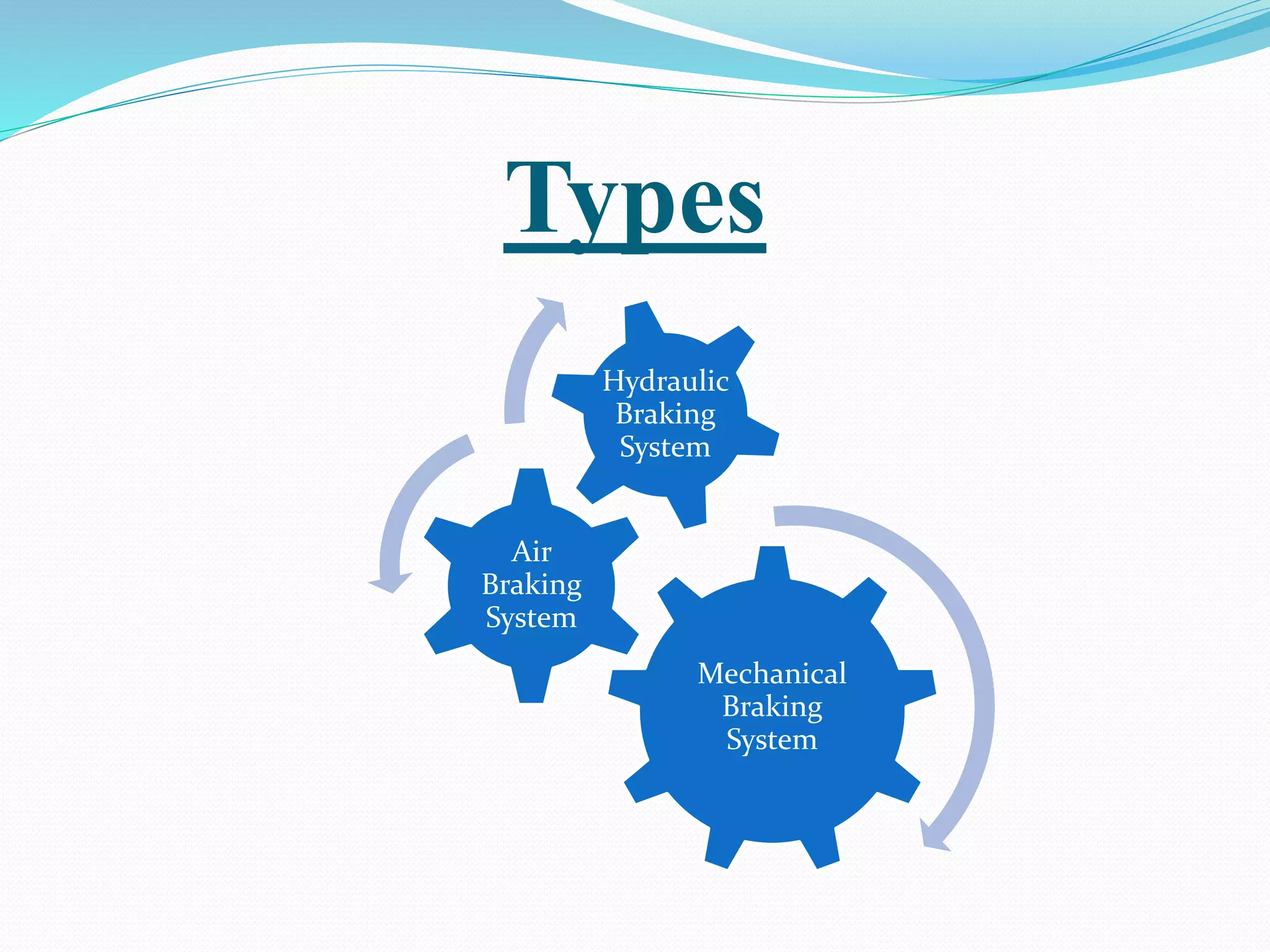
Types
Mechanical
Braking
System
Air
Braking
System
Hydraulic
Braking
System
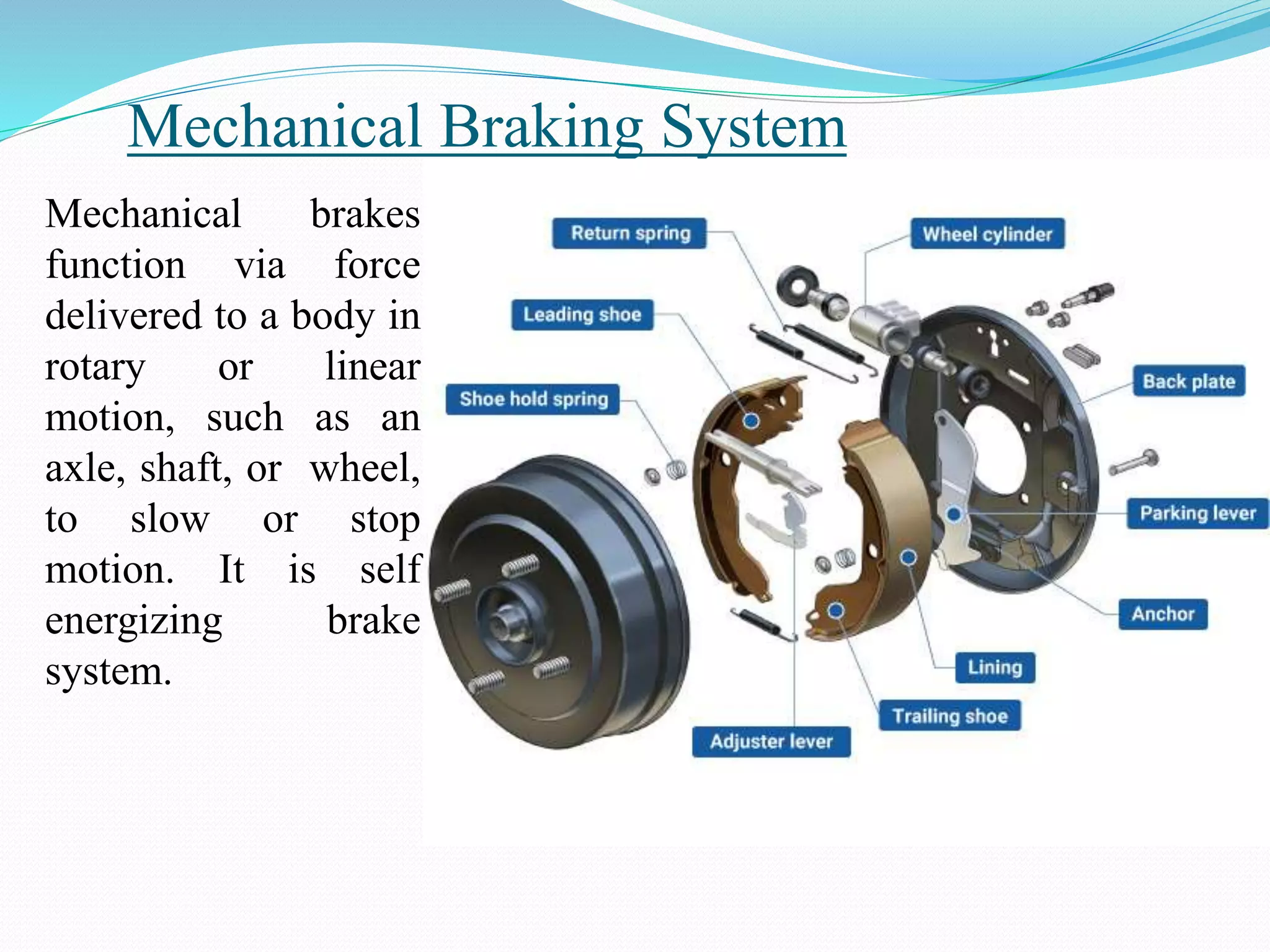
Mechanical Braking System
Mechanical brakes
function via force
delivered to a body in
rotary or linear
motion, such as an
axle, shaft, or wheel,
to slow or stop
motion. It is self
energizing brake
system.
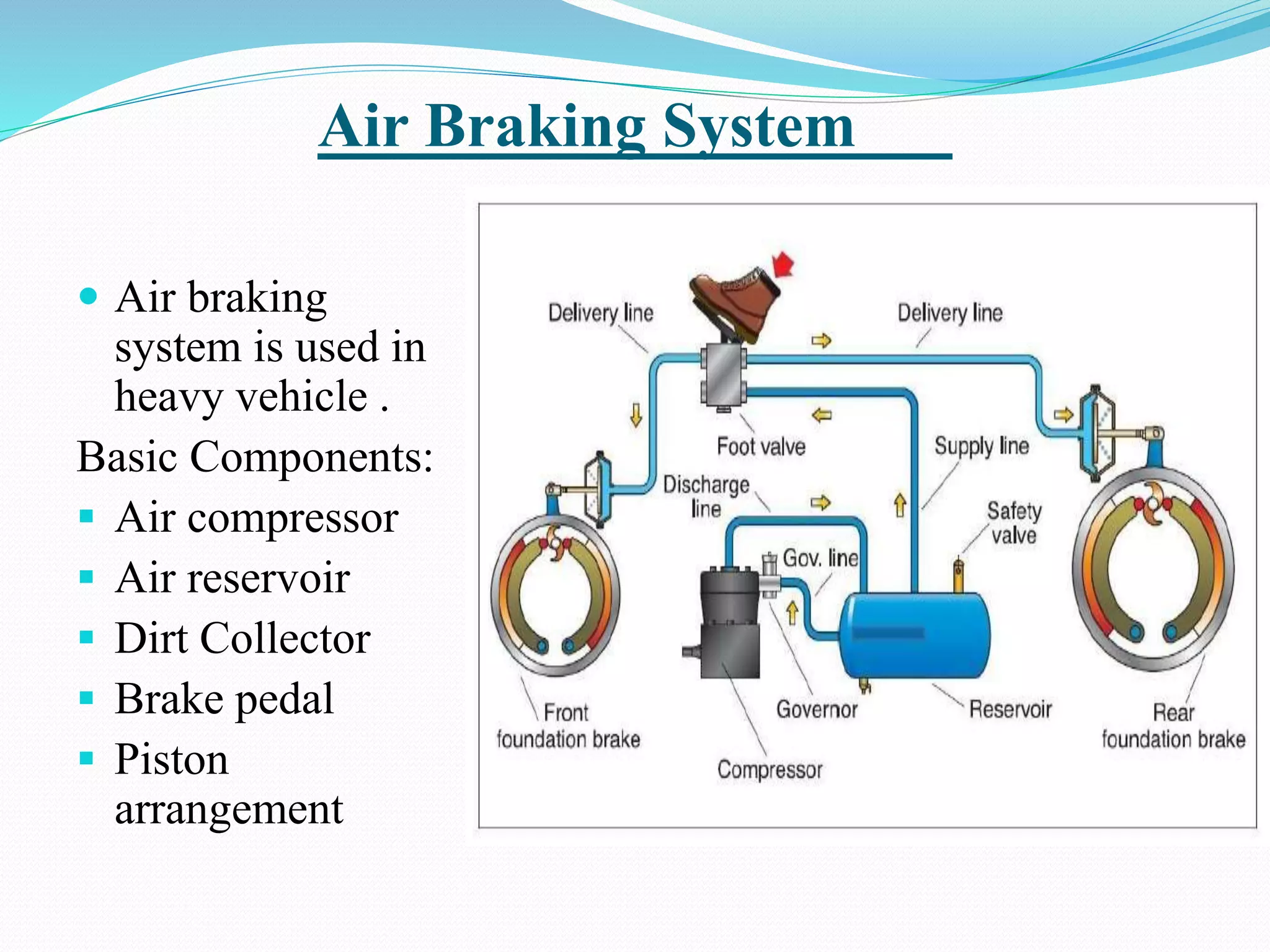
Air Braking System
 Air braking
system is used in
heavy vehicle .
Basic Components:
 Air compressor
 Air reservoir
 Dirt Collector
 Brake pedal
 Piston
arrangement
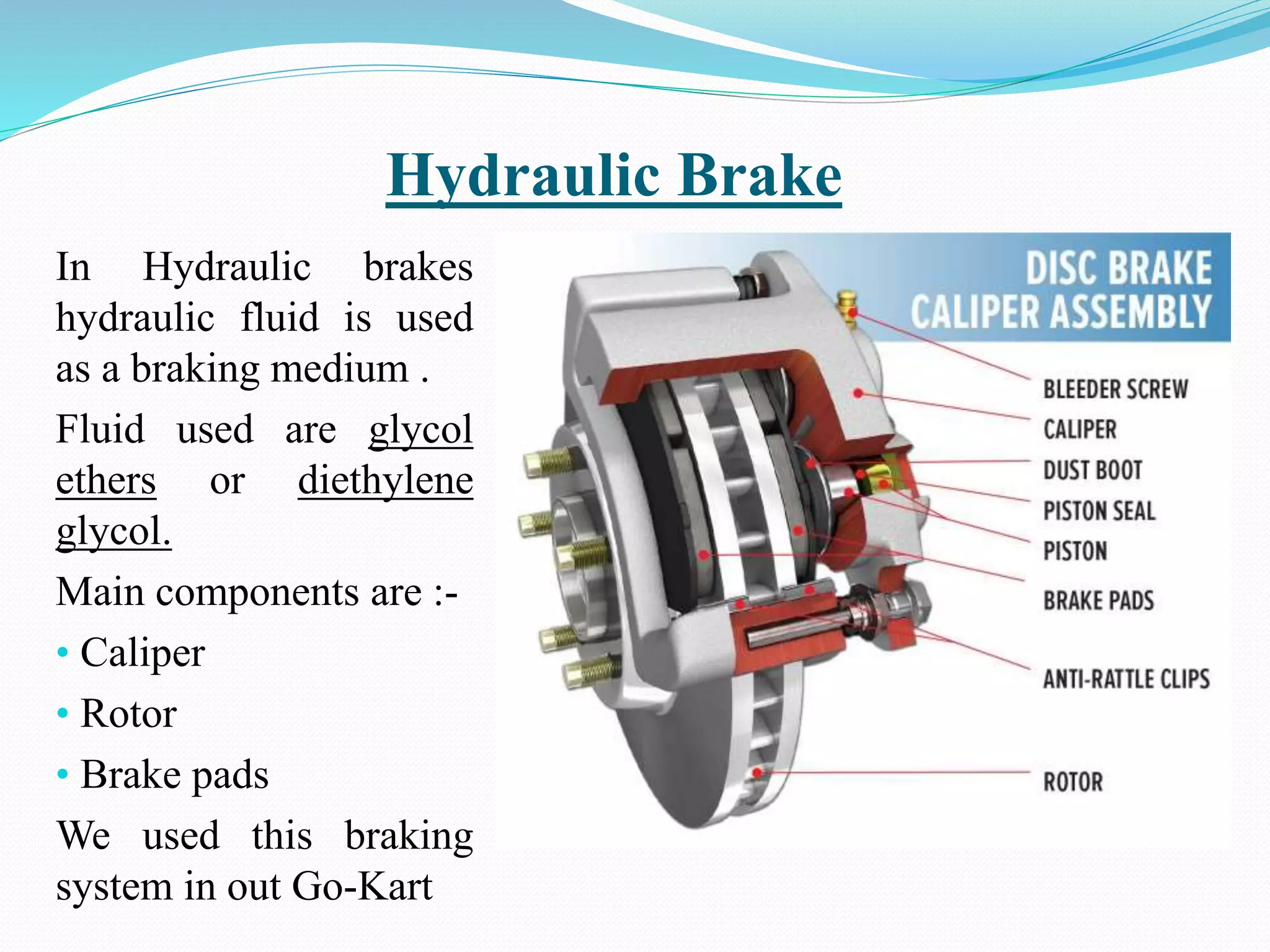
Hydraulic Brake
In Hydraulic brakes
hydraulic fluid is used
as a braking medium .
Fluid used are glycol
ethers or diethylene
glycol.
Main components are :-
• Caliper
• Rotor
• Brake pads
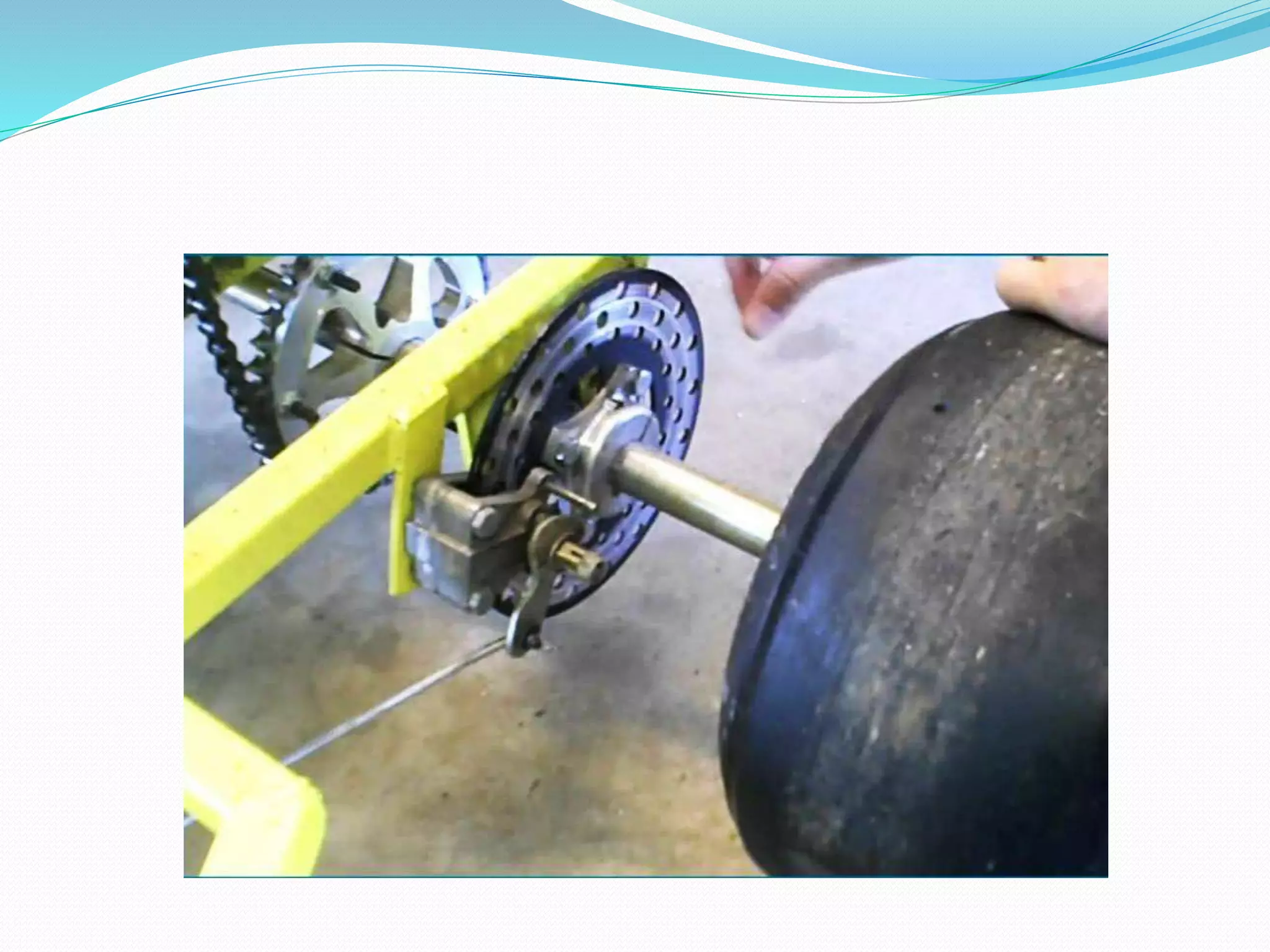
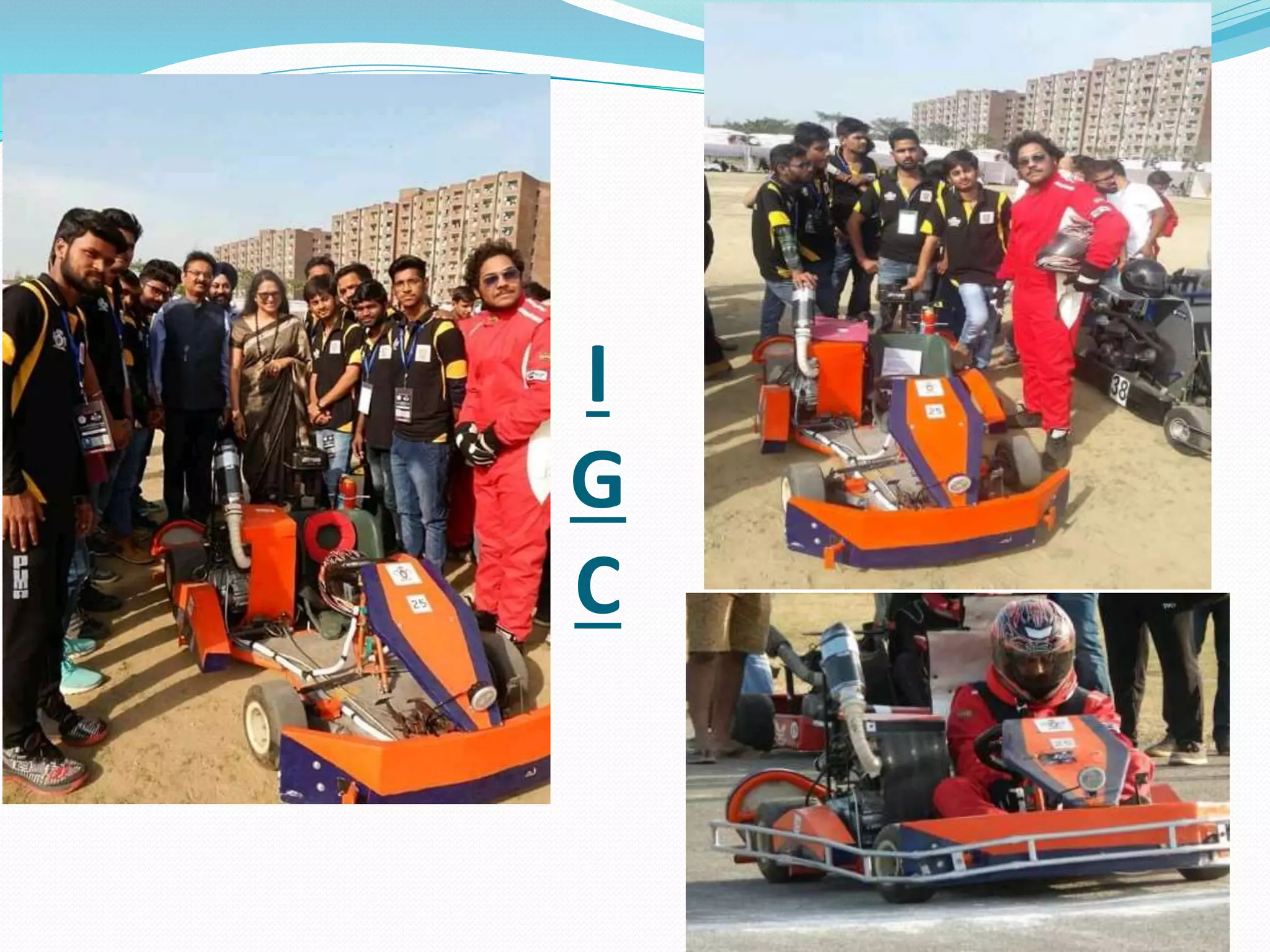
We used this braking
system in out Go-Kart
Importance of Braking System
 Brakes are very crucial part of a vehicle.
 These are used to avoid any type of accidents.
 Brakes are used in order to increase safety of the passenger.
 In modern technology there are many invention are done for
safety in vehicles.
Advanced safety in vehicles
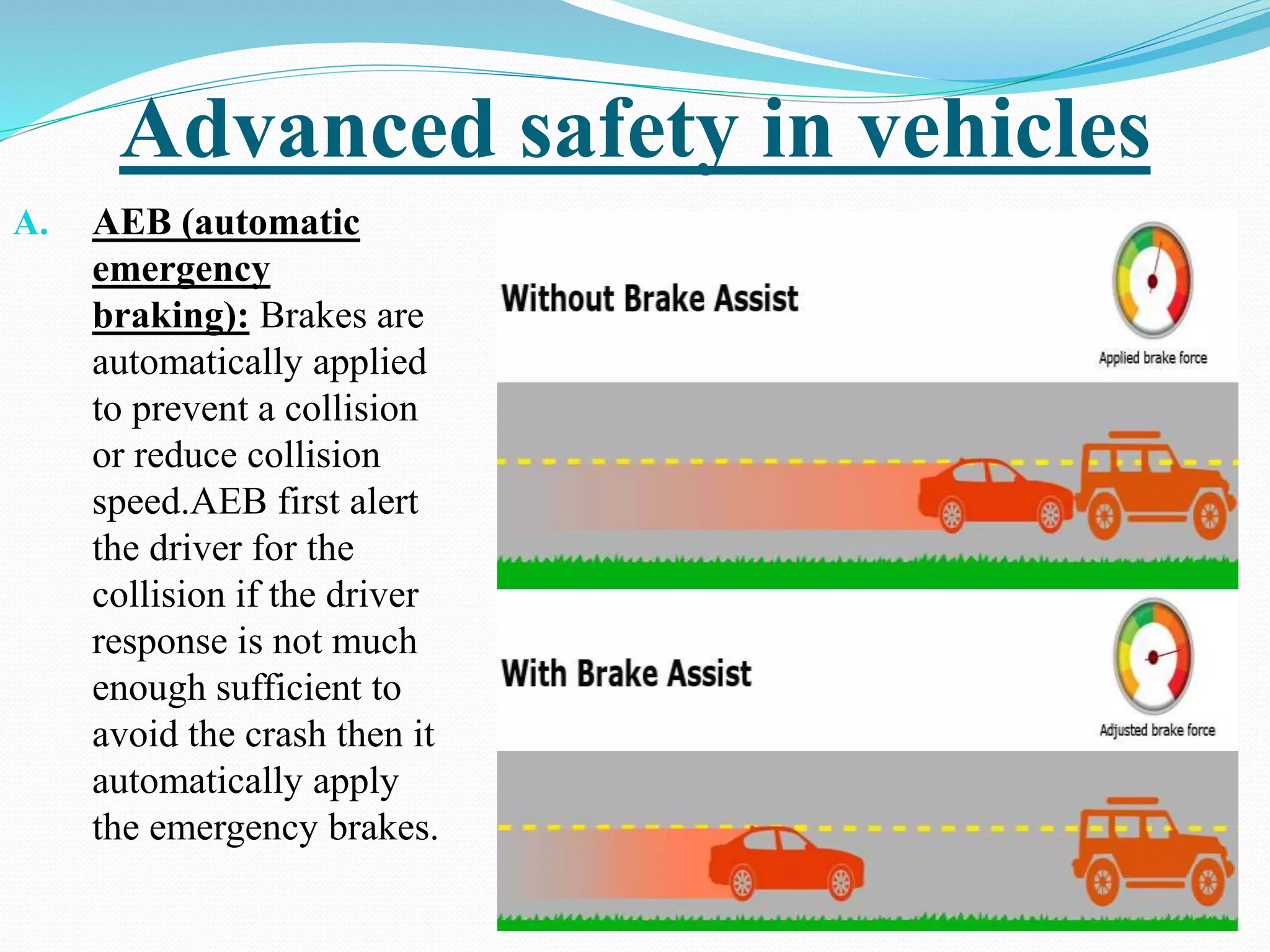
A. AEB (automatic
emergency
braking): Brakes are
automatically applied
to prevent a collision
or reduce collision
speed.AEB first alert
the driver for the
collision if the driver
response is not much
enough sufficient to
avoid the crash then it
automatically apply
the emergency brakes.
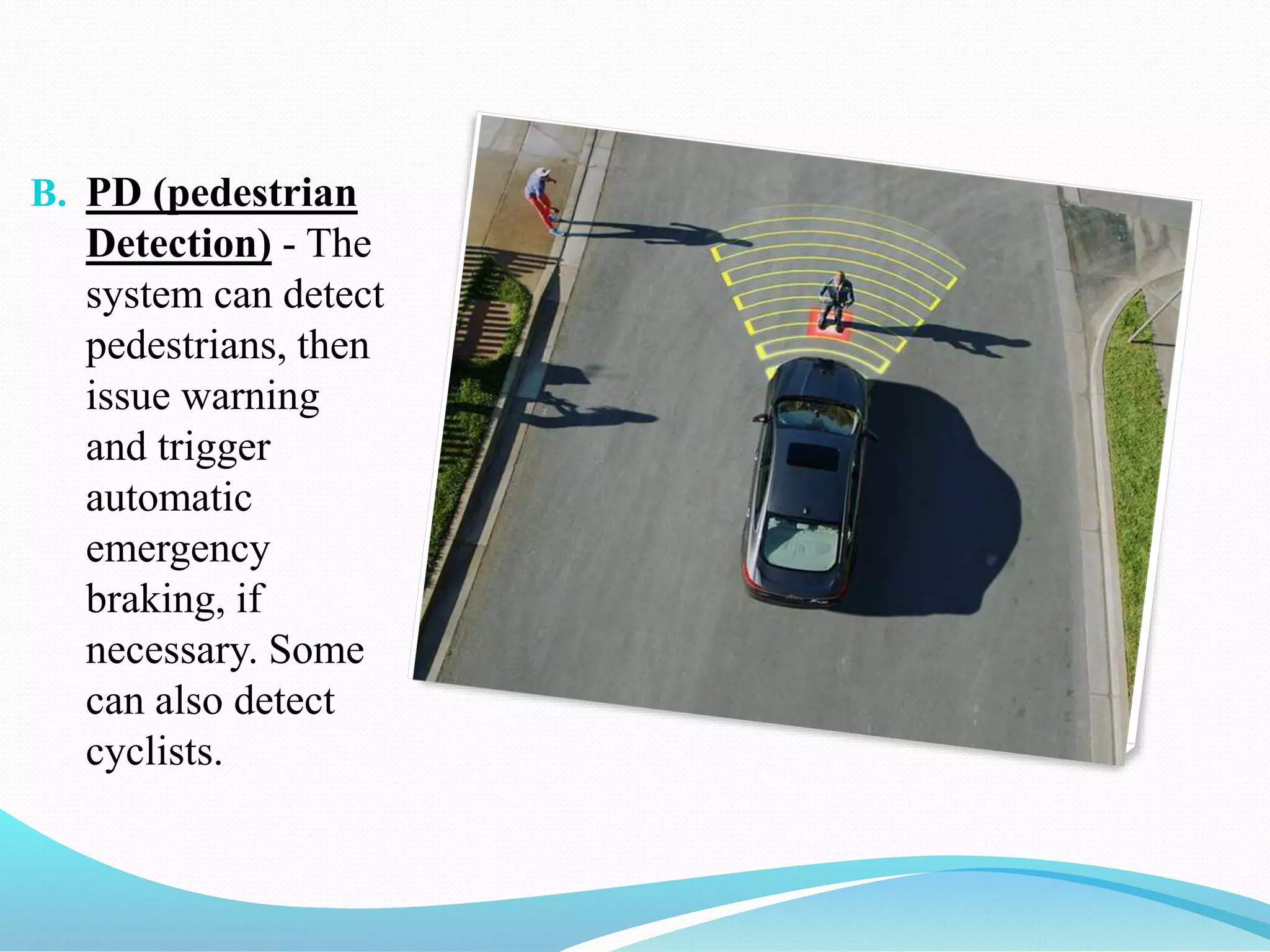
B. PD (pedestrian
Detection) - The
system can detect
pedestrians, then
issue warning
and trigger
automatic
emergency
braking, if
necessary. Some
can also detect
cyclists.
C. LKA (lane keeping assist): Automatic corrective steering
input or braking provided by the vehicle when crossing lane
markings.
 LCA (lane-centering assist): Continuous active steering to stay
in between lanes (active steer, autosteer, etc.)
 LDW (lane departure warning): Visual, audible, warning to
alert the driver when they are crossing lane markings.
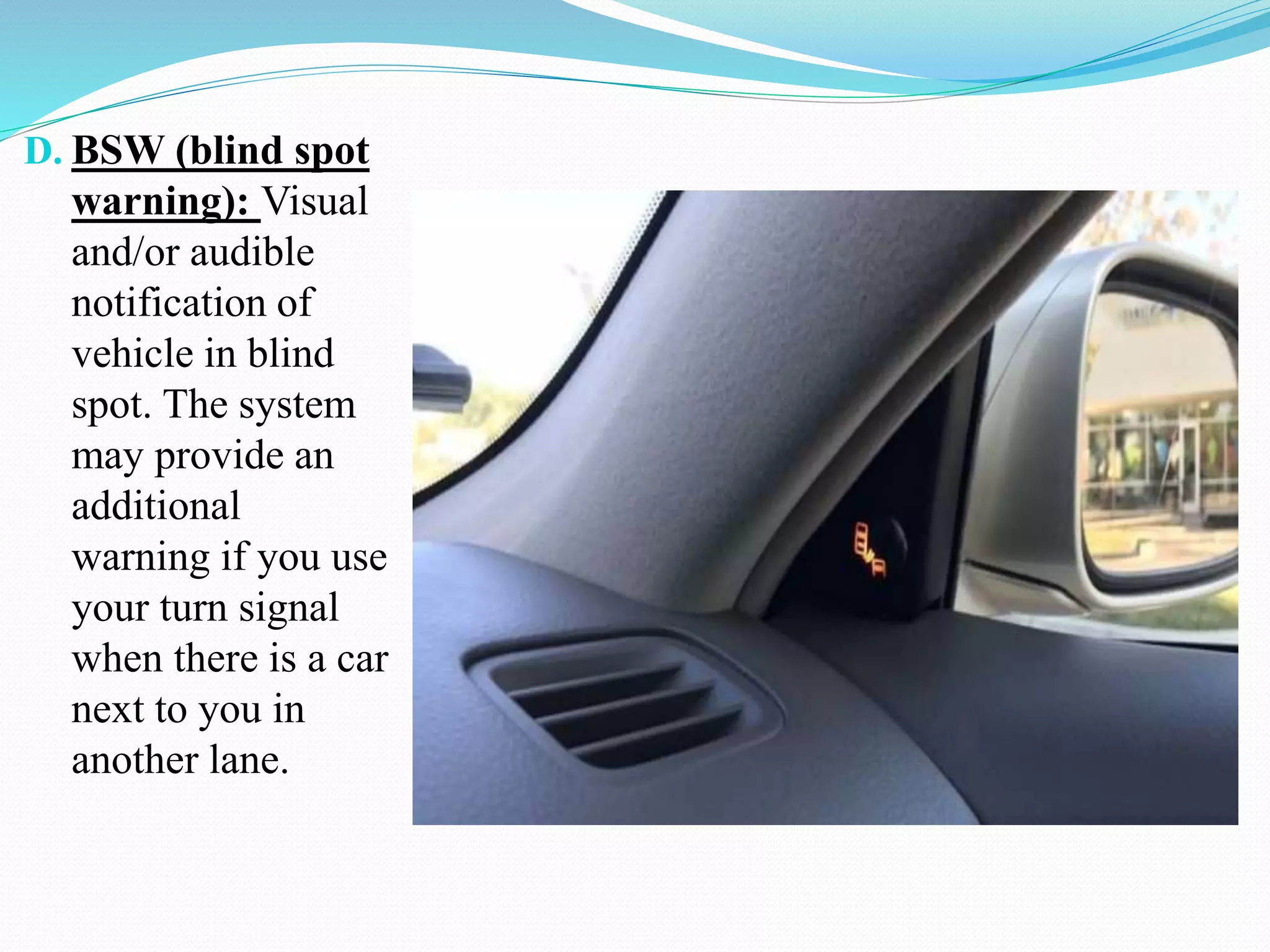
D. BSW (blind spot
warning): Visual
and/or audible
notification of
vehicle in blind
spot. The system
may provide an
additional
warning if you use
your turn signal
when there is a car
next to you in
another lane.
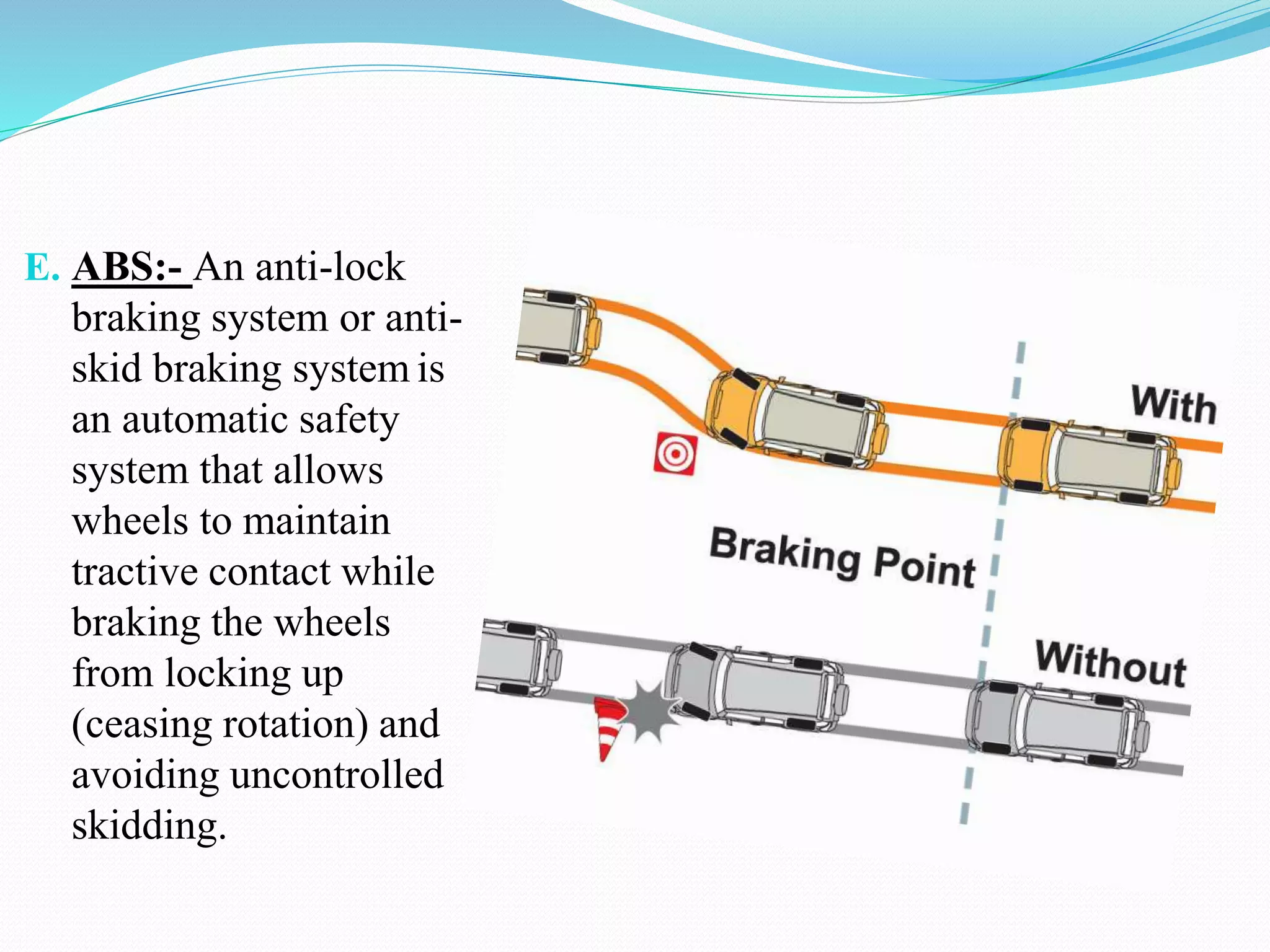
E. ABS:- An anti-lock
braking system or anti-
skid braking system is
an automatic safety
system that allows
wheels to maintain
tractive contact while
braking the wheels
from locking up
(ceasing rotation) and
avoiding uncontrolled
skidding.
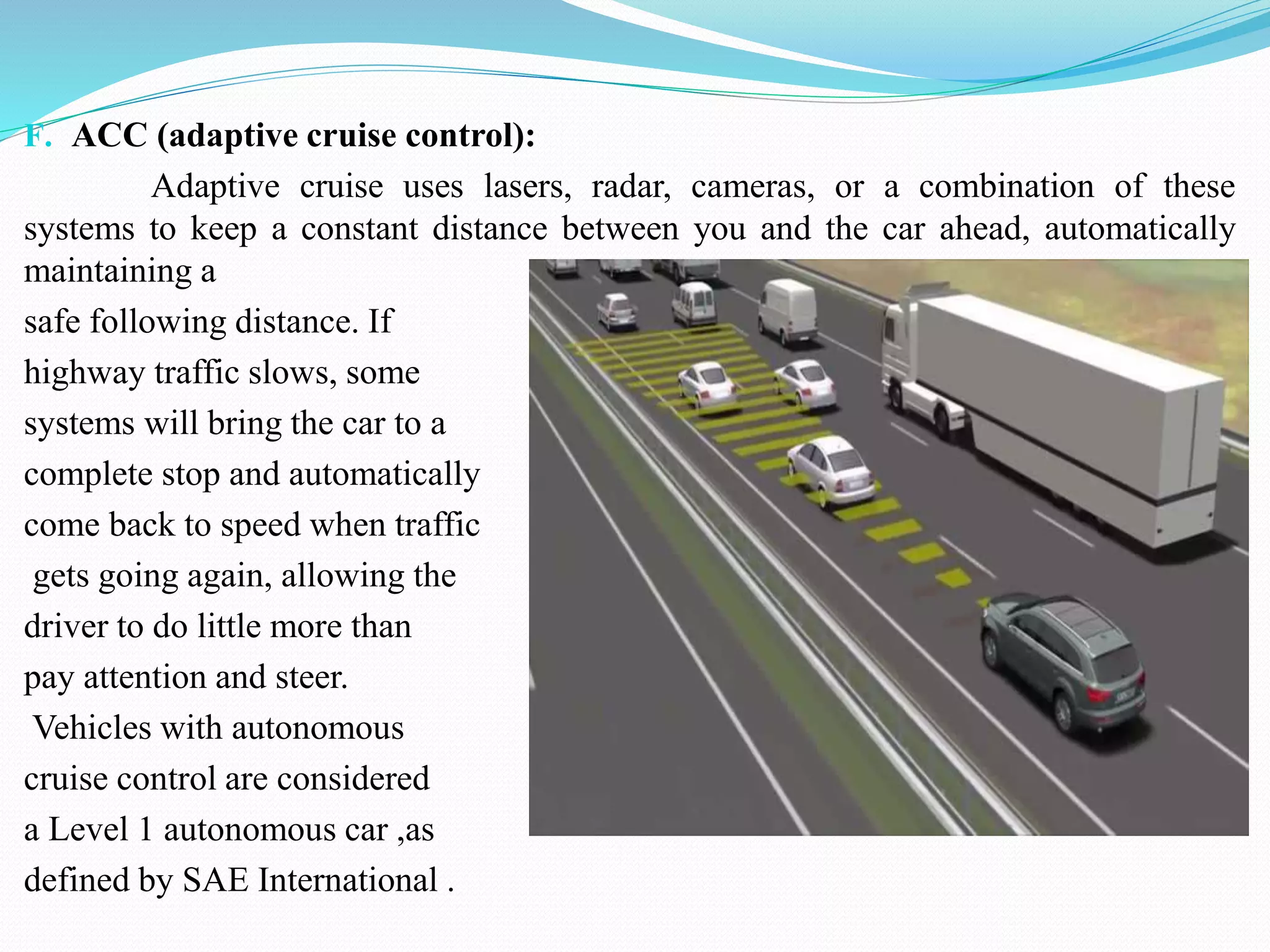
F. ACC (adaptive cruise control):
Adaptive cruise uses lasers, radar, cameras, or a combination of these
systems to keep a constant distance between you and the car ahead, automatically
maintaining a
safe following distance. If
highway traffic slows, some
systems will bring the car to a
complete stop and automatically
come back to speed when traffic
gets going again, allowing the
driver to do little more than
pay attention and steer.
Vehicles with autonomous
cruise control are considered
a Level 1 autonomous car ,as
defined by SAE International .
I
G
C
Any Question ?

Presentation on braking system

  • 1.
  • 2.
    Introduction  Brake isa device which is used for stopping the vehicle or slowing down the speed of vehicle.  They are required to stop vehicle within smallest possible distance.
  • 3.
  • 4.
    Mechanical Braking System Mechanicalbrakes function via force delivered to a body in rotary or linear motion, such as an axle, shaft, or wheel, to slow or stop motion. It is self energizing brake system.
  • 5.
    Air Braking System Air braking system is used in heavy vehicle . Basic Components:  Air compressor  Air reservoir  Dirt Collector  Brake pedal  Piston arrangement
  • 6.
    Hydraulic Brake In Hydraulicbrakes hydraulic fluid is used as a braking medium . Fluid used are glycol ethers or diethylene glycol. Main components are :- • Caliper • Rotor • Brake pads We used this braking system in out Go-Kart
  • 8.
    Importance of BrakingSystem  Brakes are very crucial part of a vehicle.  These are used to avoid any type of accidents.  Brakes are used in order to increase safety of the passenger.  In modern technology there are many invention are done for safety in vehicles.
  • 9.
    Advanced safety invehicles A. AEB (automatic emergency braking): Brakes are automatically applied to prevent a collision or reduce collision speed.AEB first alert the driver for the collision if the driver response is not much enough sufficient to avoid the crash then it automatically apply the emergency brakes.
  • 10.
    B. PD (pedestrian Detection)- The system can detect pedestrians, then issue warning and trigger automatic emergency braking, if necessary. Some can also detect cyclists.
  • 11.
    C. LKA (lanekeeping assist): Automatic corrective steering input or braking provided by the vehicle when crossing lane markings.  LCA (lane-centering assist): Continuous active steering to stay in between lanes (active steer, autosteer, etc.)  LDW (lane departure warning): Visual, audible, warning to alert the driver when they are crossing lane markings.
  • 12.
    D. BSW (blindspot warning): Visual and/or audible notification of vehicle in blind spot. The system may provide an additional warning if you use your turn signal when there is a car next to you in another lane.
  • 13.
    E. ABS:- Ananti-lock braking system or anti- skid braking system is an automatic safety system that allows wheels to maintain tractive contact while braking the wheels from locking up (ceasing rotation) and avoiding uncontrolled skidding.
  • 14.
    F. ACC (adaptivecruise control): Adaptive cruise uses lasers, radar, cameras, or a combination of these systems to keep a constant distance between you and the car ahead, automatically maintaining a safe following distance. If highway traffic slows, some systems will bring the car to a complete stop and automatically come back to speed when traffic gets going again, allowing the driver to do little more than pay attention and steer. Vehicles with autonomous cruise control are considered a Level 1 autonomous car ,as defined by SAE International .
  • 15.
  • 16.