Cultuurconferentie 15 februari 2008 Tim Van Lier Gaming,  Community,  Creativity!   The Ketnet Kick-case
Purpose Understanding children’s experiences in the network society Searching for ways to foster creativity and culture of children Trying to set up a debate about the potential of games and communities Creativity is becoming more important in this innovation driven society Creativity is not enough stressed in education See Sir Ken Robinson
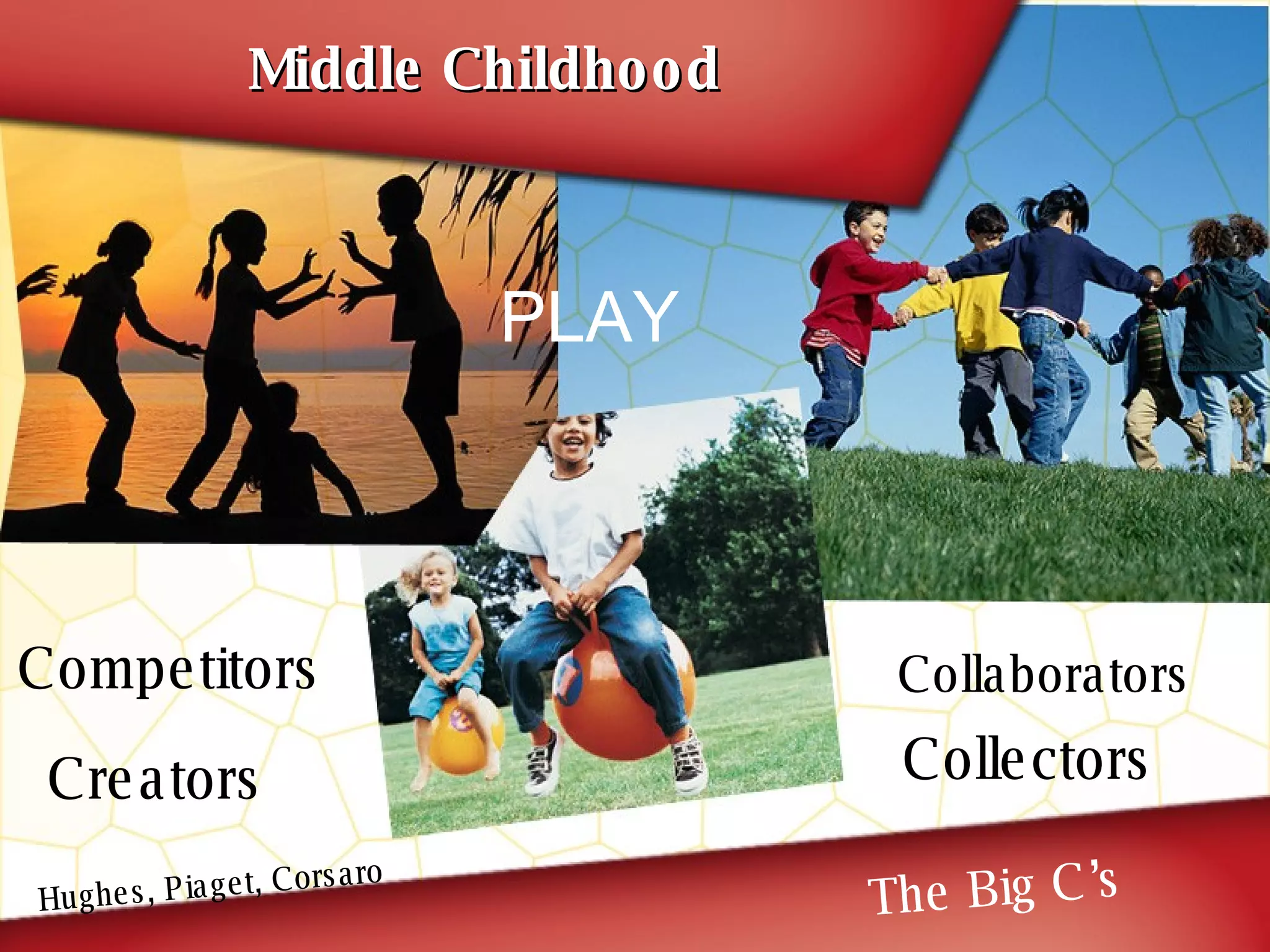
Middle Childhood The Big C’s Competitors Creators Collaborators Collectors Hughes, Piaget, Corsaro PLAY
PLAY Play is universal and essential for learning
Play and community It is during play that children are making friends and social networks
Playgrounds in the network society Playgrounds are changing. Children play offline and online. Internet and games are infiltrating in the lives of children.Children are digital natives.
The netplay society
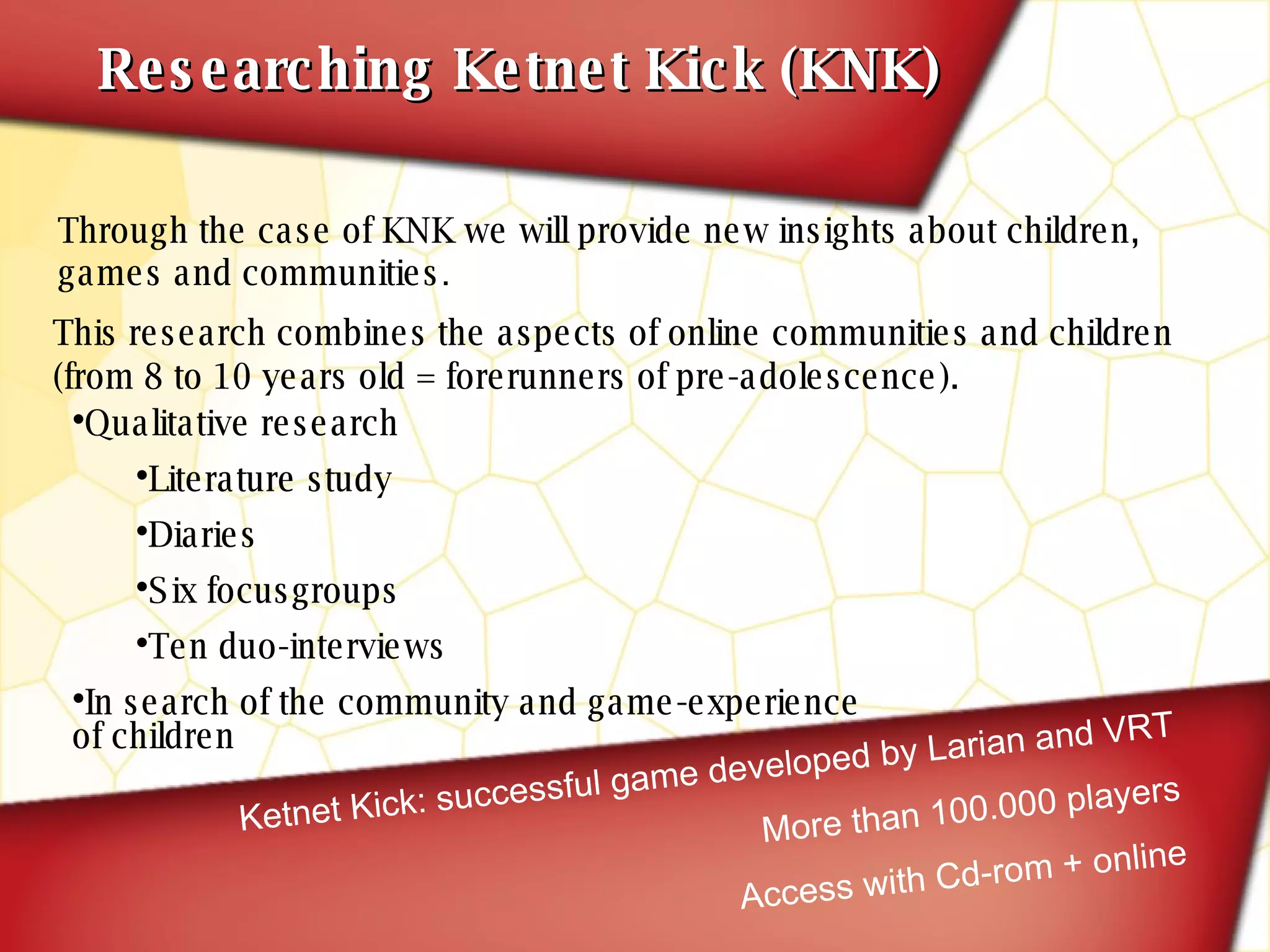
Researching Ketnet Kick (KNK) Ketnet Kick: successful game developed by Larian and VRT More than 100.000 players Access with Cd-rom + online Qualitative research Literature study Diaries Six focusgroups Ten duo-interviews In search of the community and game-experience of children This research combines the aspects of online communities and children   (from 8 to 10 years old = forerunners of pre-adolescence). Through the case of KNK we will provide new insights about children, games and communities .
Ketnet Kick Gaming Community Creativity Online-offline Making stuff, art Having original ideas
Unfortunately no one can be told what Ketnet Kick is… …  you have to see it for yourself!
Games are part of the lives of children and are appealing to the thinking of children Games are learning tools Games are fun and motivating because they are challenging. The learning aspect makes it fun Koster, Johnssen, Gee  Gaming
Ketnet Kick as a game
The community experience of Ketnet Kick From an imagined community… …  to an interpretative community
From an imagined community to… Imagination and fun Game Online presence Collaboration through creation (feedback loop) Shared symbol Fighting for KNK Myth - Mysterious island Sense of community
The imagined community Iris (9 years old, PC-specialist): ‘At one point I was standing before a rock far away. A friend from school told me that when you jump very far and you almost fall, you have to jump again at the right time. Then it is possible to reach the mysterious island, because he has reached it many times already. He even found a red bottle. Int: ‘So you think that children already have reached the island?’ Iris: ‘If it is true of course’ The myth about the mysterious island
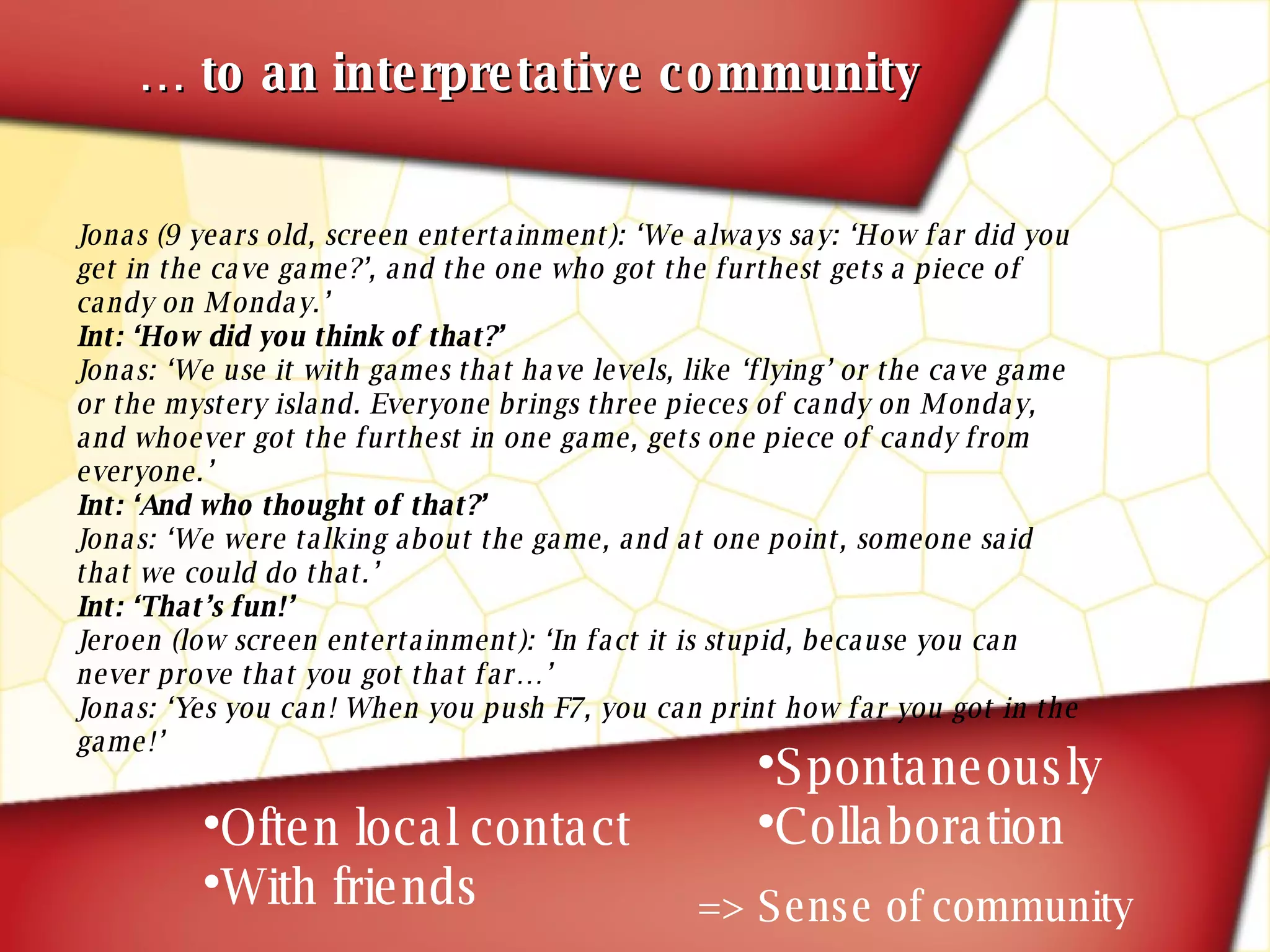
…  to an interpretative community Often local contact With friends Jonas (9 years old, screen entertainment): ‘We always say: ‘How far did you get in the cave game?’, and the one who got the furthest gets a piece of candy on Monday.’ Int: ‘How did you think of that?’ Jonas: ‘We use it with games that have levels, like ‘flying’ or the cave game or the mystery island. Everyone brings three pieces of candy on Monday, and whoever got the furthest in one game, gets one piece of candy from everyone.’ Int: ‘And who thought of that?’   Jonas: ‘We were talking about the game, and at one point, someone said that we could do that.’ Int: ‘That’s fun!’ Jeroen (low screen entertainment): ‘In fact it is stupid, because you can never prove that you got that far…’ Jonas: ‘Yes you can! When you push F7, you can print how far you got in the game!’   Spontaneously Collaboration => Sense of community
 
Action and play Collecting Adventurous world Creativity Imagination Ketnet brand Ketnet Kick = game => appropriate medium to set up a community for children  ‘ The cultures of games playing involves an ongoing construction of an ‘interpretive community’ and in this respect it may be better suited to the patterns of children’s play than older media such as books, which one is alone in consuming’   ( Jessen, 1999 ) .   Appeal of Ketnet Kick
Conclusions
Games are mediums that fit in the lives of children Games are learning tools and can be suited to stimulate creativity, which is becoming more important in this network society ‘ play’ and ‘community’ are important dimensions to reach children and stimulate creativity
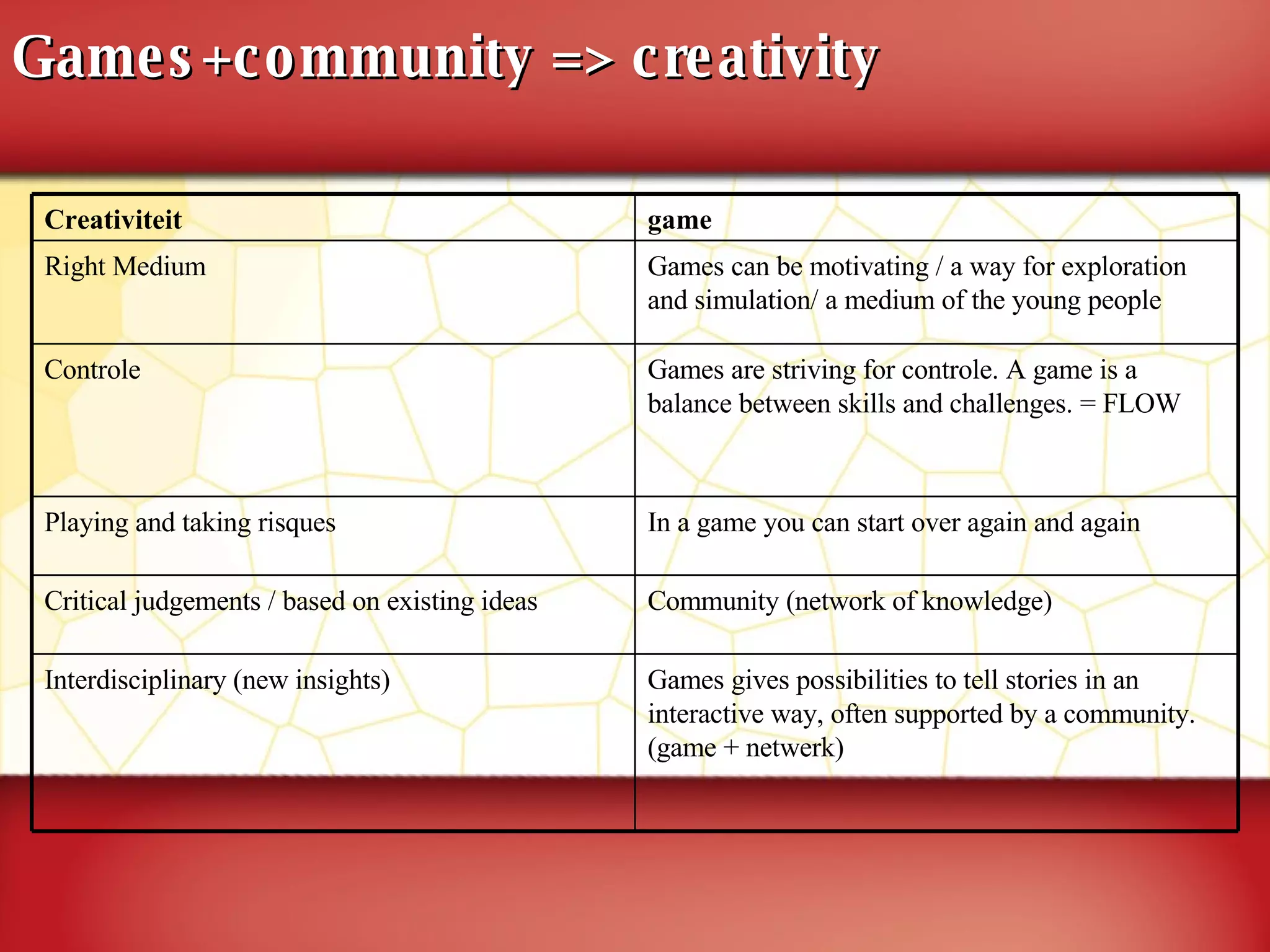
Games+community => creativity Games gives possibilities to tell stories in an interactive way, often supported by a community. (game + netwerk) Interdisciplinary (new insights) Community (network of knowledge) Critical judgements / based on existing ideas In a game you can start over again and again Playing and taking risques Games are striving for controle. A game is a balance between skills and challenges. = FLOW Controle Games can be motivating / a way for exploration and simulation/ a medium of the young people Right Medium game Creativiteit
Need for further research about the potential of games Finding the balance between fun and education Where? In the classroom or in free time? How? Implicit or explicit? Need for innovation in games and game-content Need to search for ways to incorporate creativity in games (next to aiming, timing, exploring,...)
 
Questions? Contacts:  Tim Van Lier, +32 (0)2 6291835,  Tim.Van. [email_address] .ac.be IBBT Research Group SMIT - Vrije Universiteit Brussel (VUB) Pleinlaan 2, 1050 Brussels (Belgium) Thank you for listening!

Presentation Ketnet Kick Gaming Community Creativity

  • 1.
    Cultuurconferentie 15 februari2008 Tim Van Lier Gaming, Community, Creativity! The Ketnet Kick-case
  • 2.
    Purpose Understanding children’sexperiences in the network society Searching for ways to foster creativity and culture of children Trying to set up a debate about the potential of games and communities Creativity is becoming more important in this innovation driven society Creativity is not enough stressed in education See Sir Ken Robinson
  • 3.
    Middle Childhood TheBig C’s Competitors Creators Collaborators Collectors Hughes, Piaget, Corsaro PLAY
  • 4.
    PLAY Play isuniversal and essential for learning
  • 5.
    Play and communityIt is during play that children are making friends and social networks
  • 6.
    Playgrounds in thenetwork society Playgrounds are changing. Children play offline and online. Internet and games are infiltrating in the lives of children.Children are digital natives.
  • 7.
  • 8.
    Researching Ketnet Kick(KNK) Ketnet Kick: successful game developed by Larian and VRT More than 100.000 players Access with Cd-rom + online Qualitative research Literature study Diaries Six focusgroups Ten duo-interviews In search of the community and game-experience of children This research combines the aspects of online communities and children (from 8 to 10 years old = forerunners of pre-adolescence). Through the case of KNK we will provide new insights about children, games and communities .
  • 9.
    Ketnet Kick GamingCommunity Creativity Online-offline Making stuff, art Having original ideas
  • 10.
    Unfortunately no onecan be told what Ketnet Kick is… … you have to see it for yourself!
  • 11.
    Games are partof the lives of children and are appealing to the thinking of children Games are learning tools Games are fun and motivating because they are challenging. The learning aspect makes it fun Koster, Johnssen, Gee Gaming
  • 12.
  • 13.
    The community experienceof Ketnet Kick From an imagined community… … to an interpretative community
  • 14.
    From an imaginedcommunity to… Imagination and fun Game Online presence Collaboration through creation (feedback loop) Shared symbol Fighting for KNK Myth - Mysterious island Sense of community
  • 15.
    The imagined communityIris (9 years old, PC-specialist): ‘At one point I was standing before a rock far away. A friend from school told me that when you jump very far and you almost fall, you have to jump again at the right time. Then it is possible to reach the mysterious island, because he has reached it many times already. He even found a red bottle. Int: ‘So you think that children already have reached the island?’ Iris: ‘If it is true of course’ The myth about the mysterious island
  • 16.
    … toan interpretative community Often local contact With friends Jonas (9 years old, screen entertainment): ‘We always say: ‘How far did you get in the cave game?’, and the one who got the furthest gets a piece of candy on Monday.’ Int: ‘How did you think of that?’ Jonas: ‘We use it with games that have levels, like ‘flying’ or the cave game or the mystery island. Everyone brings three pieces of candy on Monday, and whoever got the furthest in one game, gets one piece of candy from everyone.’ Int: ‘And who thought of that?’ Jonas: ‘We were talking about the game, and at one point, someone said that we could do that.’ Int: ‘That’s fun!’ Jeroen (low screen entertainment): ‘In fact it is stupid, because you can never prove that you got that far…’ Jonas: ‘Yes you can! When you push F7, you can print how far you got in the game!’ Spontaneously Collaboration => Sense of community
  • 17.
  • 18.
    Action and playCollecting Adventurous world Creativity Imagination Ketnet brand Ketnet Kick = game => appropriate medium to set up a community for children ‘ The cultures of games playing involves an ongoing construction of an ‘interpretive community’ and in this respect it may be better suited to the patterns of children’s play than older media such as books, which one is alone in consuming’ ( Jessen, 1999 ) . Appeal of Ketnet Kick
  • 19.
  • 20.
    Games are mediumsthat fit in the lives of children Games are learning tools and can be suited to stimulate creativity, which is becoming more important in this network society ‘ play’ and ‘community’ are important dimensions to reach children and stimulate creativity
  • 21.
    Games+community => creativityGames gives possibilities to tell stories in an interactive way, often supported by a community. (game + netwerk) Interdisciplinary (new insights) Community (network of knowledge) Critical judgements / based on existing ideas In a game you can start over again and again Playing and taking risques Games are striving for controle. A game is a balance between skills and challenges. = FLOW Controle Games can be motivating / a way for exploration and simulation/ a medium of the young people Right Medium game Creativiteit
  • 22.
    Need for furtherresearch about the potential of games Finding the balance between fun and education Where? In the classroom or in free time? How? Implicit or explicit? Need for innovation in games and game-content Need to search for ways to incorporate creativity in games (next to aiming, timing, exploring,...)
  • 23.
  • 24.
    Questions? Contacts: Tim Van Lier, +32 (0)2 6291835, Tim.Van. [email_address] .ac.be IBBT Research Group SMIT - Vrije Universiteit Brussel (VUB) Pleinlaan 2, 1050 Brussels (Belgium) Thank you for listening!

Editor's Notes

  • #2 When iwas a little boy, i used to be in a kind of club of friends and together we liked to play games, in these games, tv-shows that we liked, where acted out. It was a great feeling to relive the adventures of the characters and even to invent new stories and chararters. We even made our own props. (when i hear it now, we were kinda geeks) Anyway i believe at that point i was, for the very first time, i was particupating in a community. Maybee this sounds familiar to some of you? Aty least i hope i am not the only one who used to play this kind of geeky games.