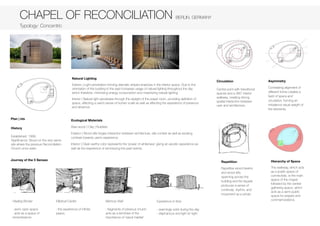
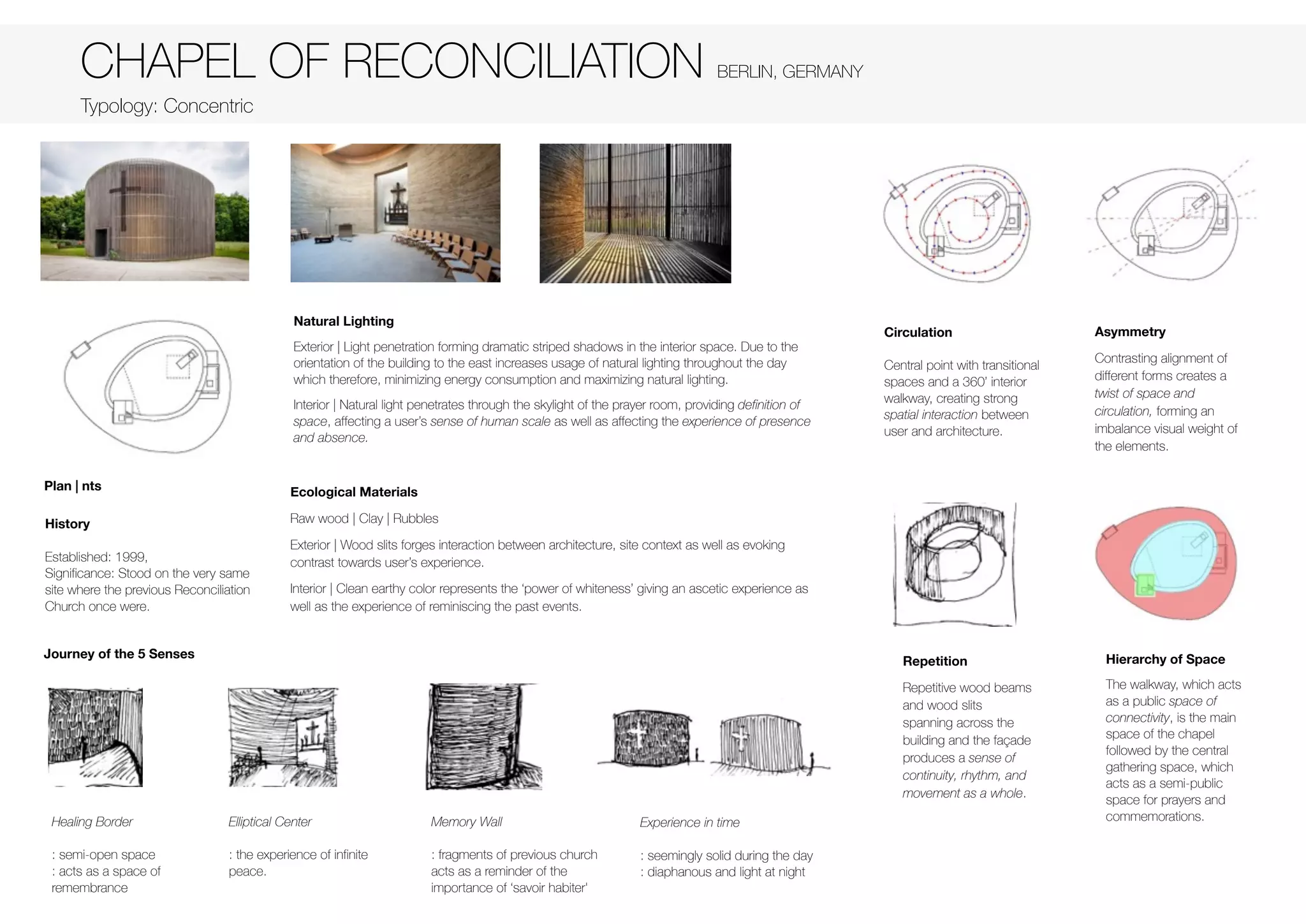
The Chapel of Reconciliation in Berlin, Germany was established in 1999 on the site of a previous Reconciliation Church. It uses ecological materials like raw wood, clay, and rubble. The exterior features wood slits that allow interaction between the architecture and context while evoking contrast for users. The interior has clean earth tones representing "the power of whiteness" and allowing recollection of past events. Natural light penetrates through the wood slits and skylight, minimizing energy usage. The central space has transitional areas and a 360-degree interior walkway creating interaction between users and the architecture. The hierarchy moves from the connecting walkway to the central gathering space. Asymmetry is created through differing alignments, forming an imbalanced visual