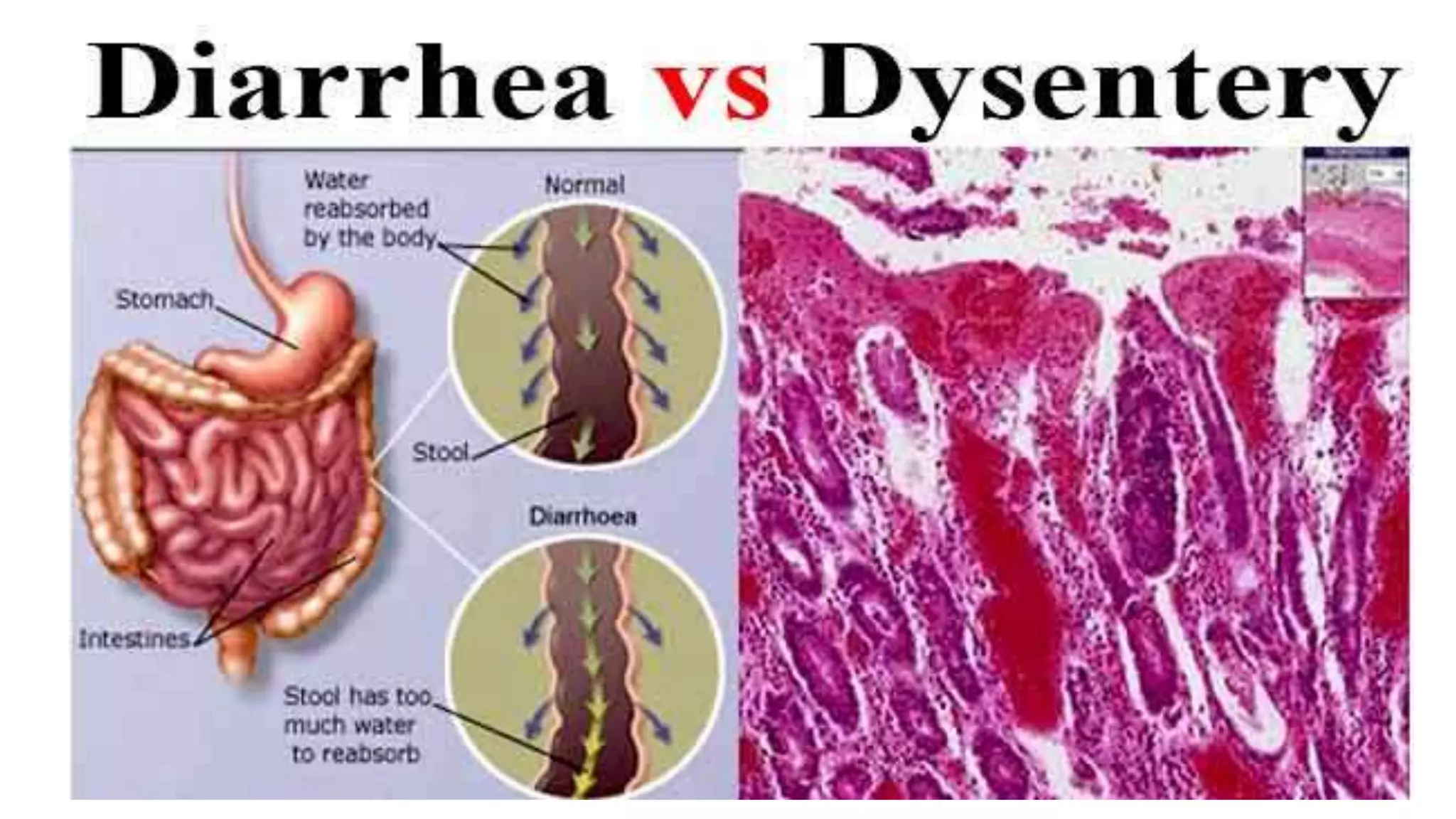
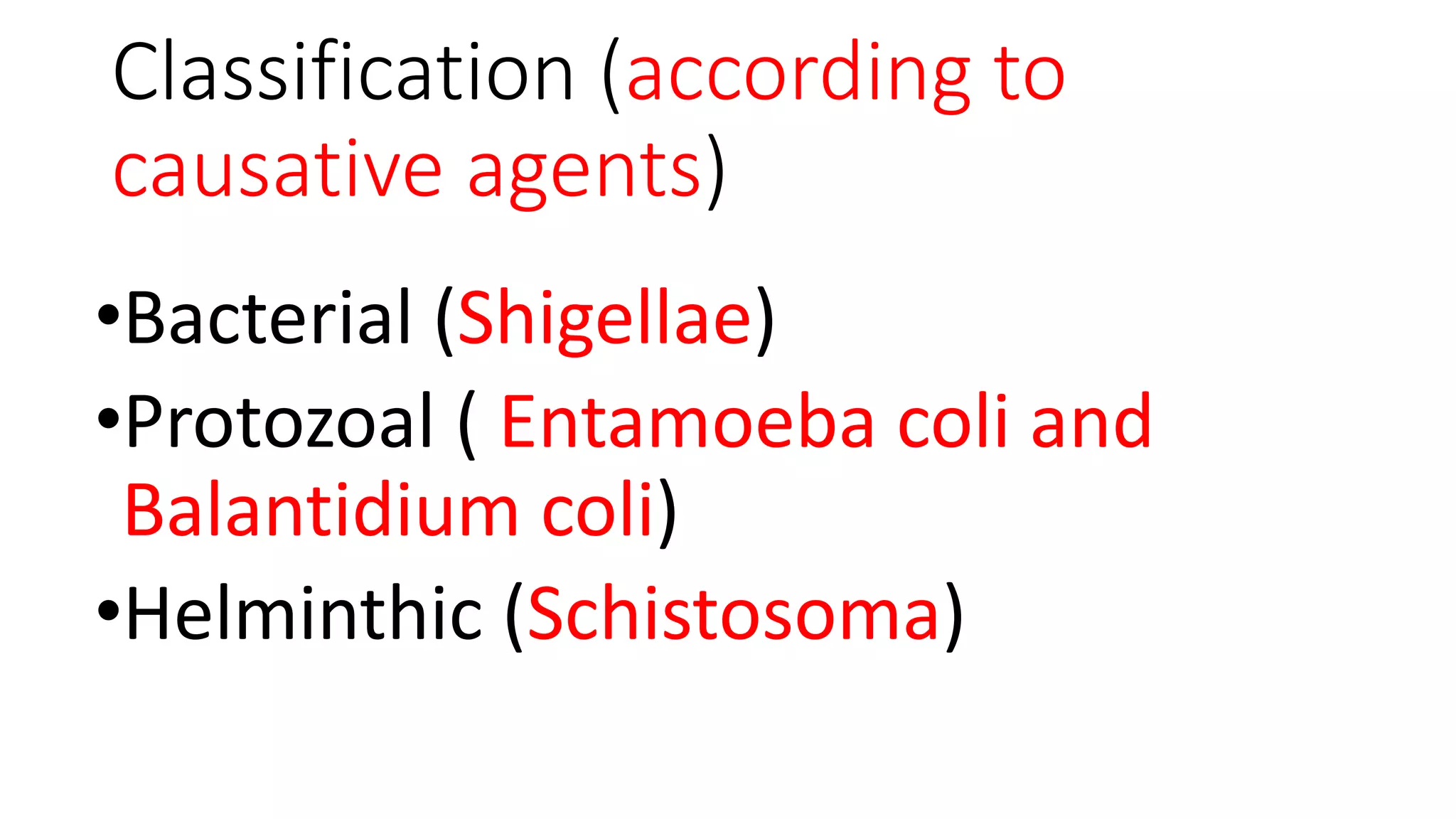
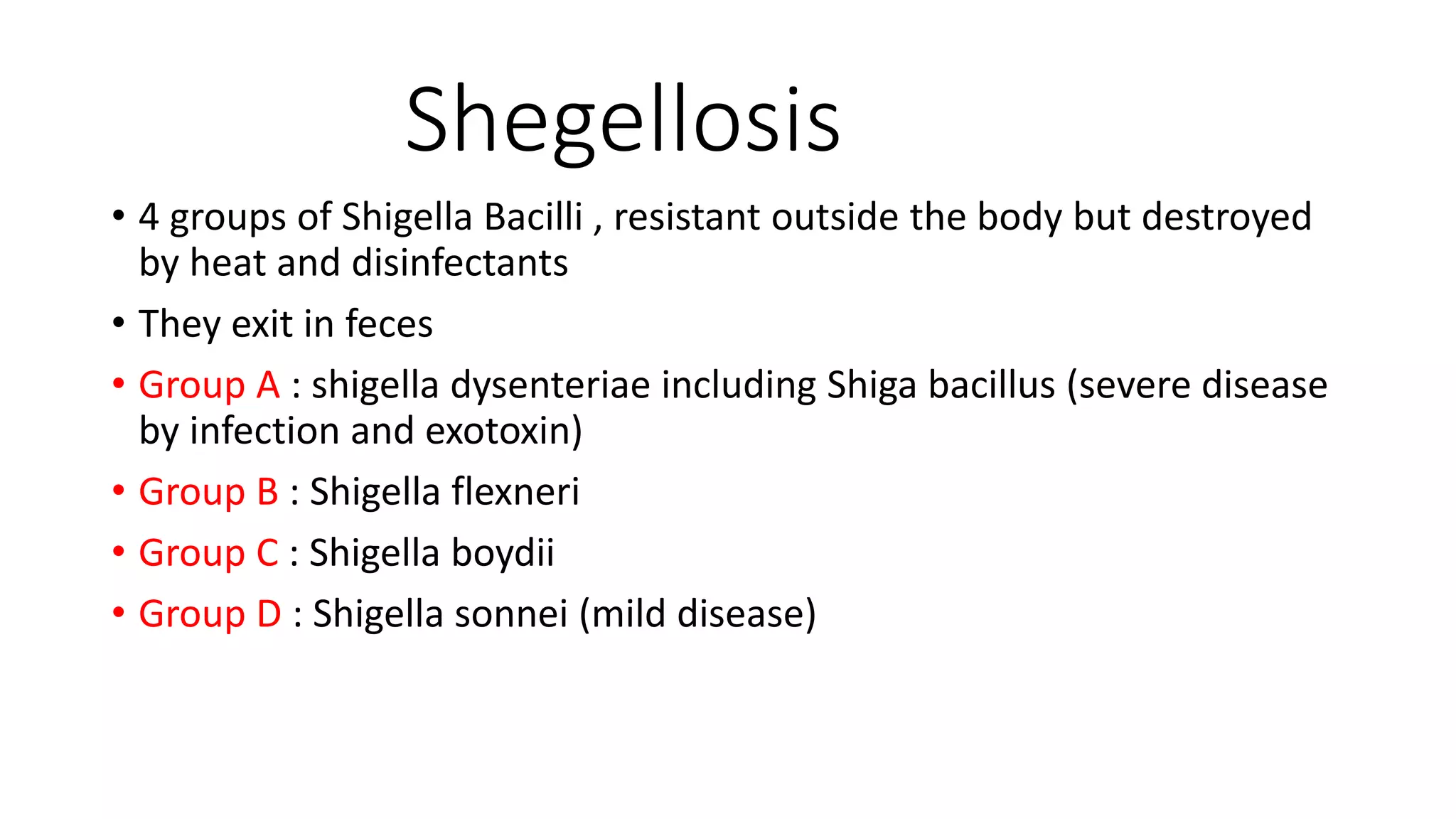
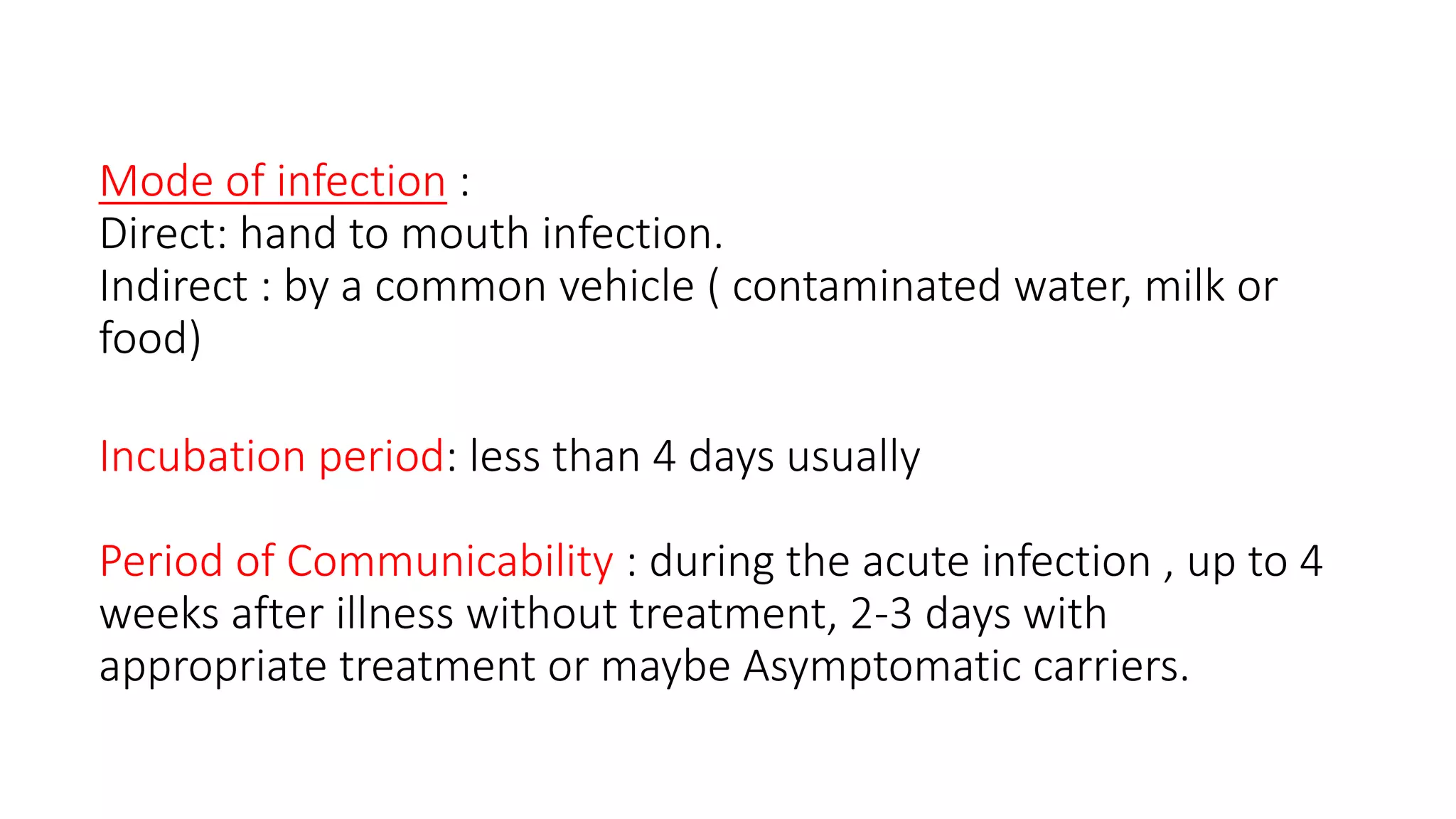
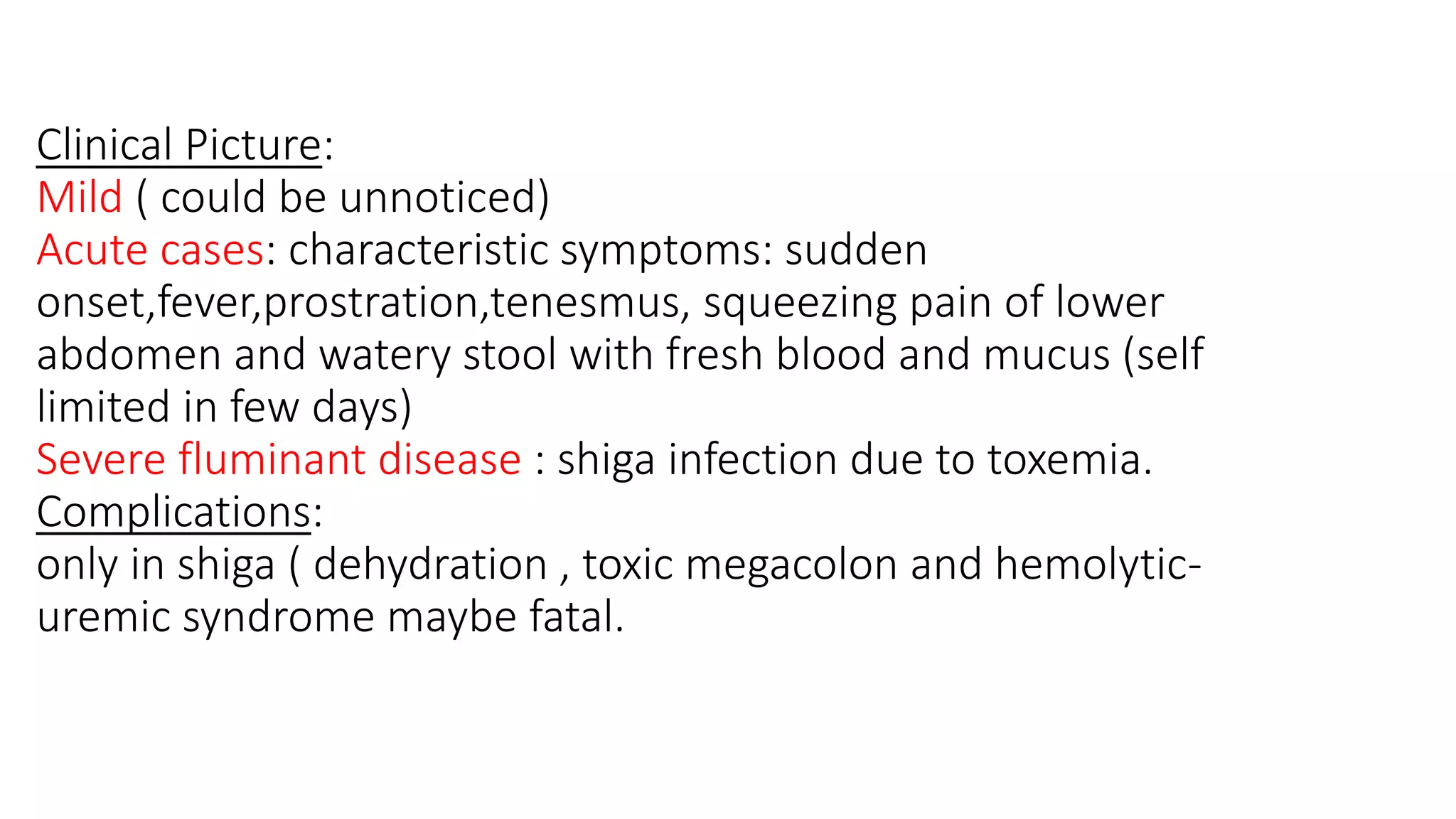
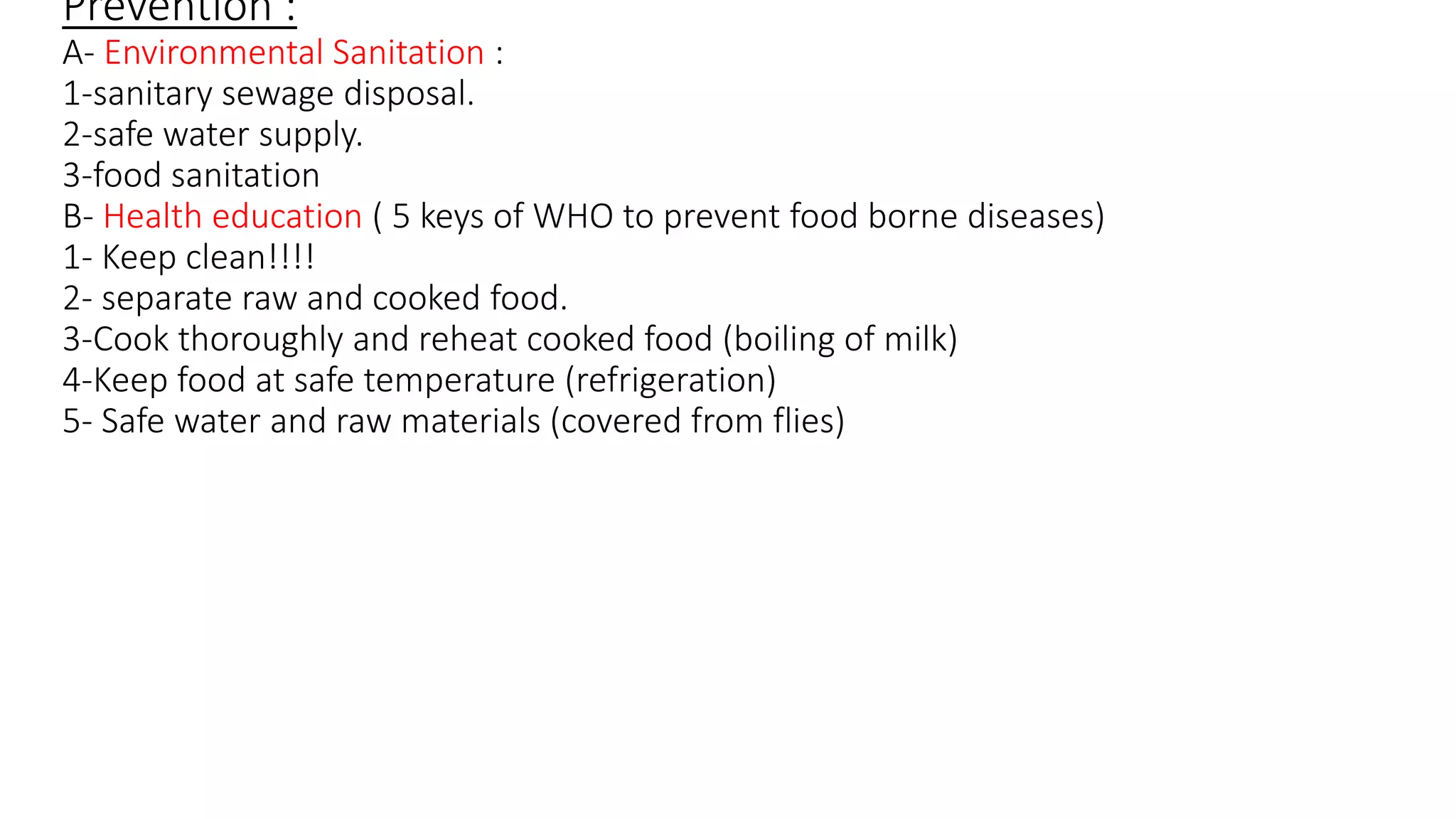
Dysentery is an inflammation of the large intestine characterized by frequent stools containing blood and mucus, abdominal pain, and tenesmus. It can be caused by bacteria (like Shigella), protozoa (Entamoeba coli and Balantidium coli), or helminths (Schistosoma). Shigella dysenteriae causes the most severe form of bacterial dysentery. The disease spreads through the fecal-oral route or contaminated food and water. Symptoms include fever, abdominal pain, and bloody stools. Complications can include dehydration, toxic megacolon, and hemolytic-uremic syndrome. Prevention relies on good sanitation, safe food and water