Salt Intakes
                                                Lisa
                 Intern in Luna Medical Primary Care


12.10.12
Source
Salt Source
   Table salt----10~15%
   Naturally present in food----10%
   Processed food----75~80%
       As salt
       Sodium-containing food additives


 Almost      all unprocessed food naturally contain little
    sodium
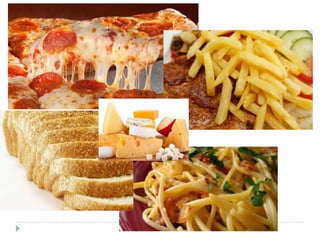
Processed food
   Bread and rolls
   Cold cuts/cured meats
   Pizza
   Sandwiches
   Cheese
   Pasta dishes like spaghetti with meat sauce
   Meat dishes like meatloaf with tomato sauce
   Snacks, like chips, popcorn and puffs
But the problem is …..
Institute of Medicine/National
Academic Science
   Adequate Intake for Adults is 1500mg of Sodium.
       Less for Older people
   Upper Level is 2300mg per day


   However,
   Our daily value is 2400mg per day.

   Which means, average Americans intake more
    Sodium( NaCl—Salt ) than the tolerable level.
Health Risks for high
intakes of Salt
Health Risks for high intakes of Salt


   High Blood Pressure—hypertension
   Heart Disease
   Stroke
What should we Do?

   American Medical Association & World Health
    Organization

       Call for a 50% reduction in Salt intakes
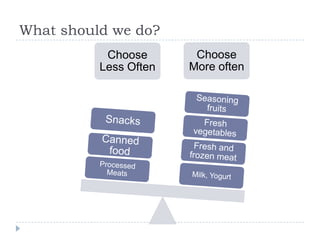
What should we do?
           Choose       Choose
          Less Often   More often
Calm Down!
   Reduce Salt intakes a little bit everyday


   Please Do NOT eat salt-FREE diets
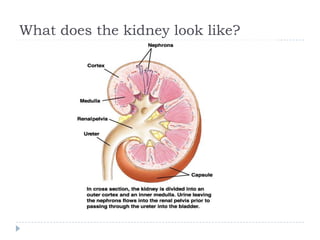
What does the kidney look like?
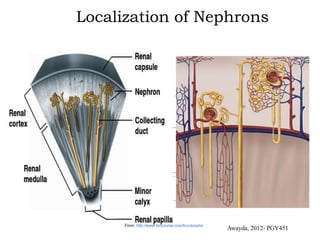
Localization of Nephrons


      From: http://www.biocourse.com/bcc/assets/
                                                   Awayda, 2012- PGY451
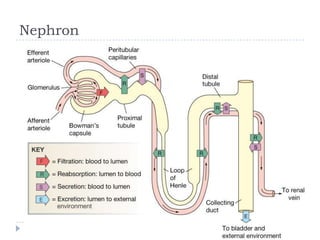
Nephron
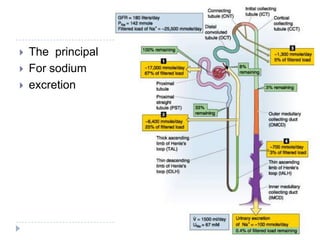
   The principal
   For sodium
   excretion
The Key is……
The Key is….

   Always Aware of what you are eating or
    adding
Thank you

Presentation 4

  • 1.
    Salt Intakes Lisa Intern in Luna Medical Primary Care 12.10.12
  • 2.
  • 3.
    Salt Source  Table salt----10~15%  Naturally present in food----10%  Processed food----75~80%  As salt  Sodium-containing food additives  Almost all unprocessed food naturally contain little sodium
  • 4.
    Processed food  Bread and rolls  Cold cuts/cured meats  Pizza  Sandwiches  Cheese  Pasta dishes like spaghetti with meat sauce  Meat dishes like meatloaf with tomato sauce  Snacks, like chips, popcorn and puffs
  • 6.
  • 8.
    Institute of Medicine/National AcademicScience  Adequate Intake for Adults is 1500mg of Sodium.  Less for Older people  Upper Level is 2300mg per day  However,  Our daily value is 2400mg per day.  Which means, average Americans intake more Sodium( NaCl—Salt ) than the tolerable level.
  • 10.
    Health Risks forhigh intakes of Salt
  • 11.
    Health Risks forhigh intakes of Salt  High Blood Pressure—hypertension  Heart Disease  Stroke
  • 12.
    What should weDo?  American Medical Association & World Health Organization  Call for a 50% reduction in Salt intakes
  • 13.
    What should wedo? Choose Choose Less Often More often
  • 14.
    Calm Down!  Reduce Salt intakes a little bit everyday  Please Do NOT eat salt-FREE diets
  • 15.
    What does thekidney look like?
  • 16.
    Localization of Nephrons From: http://www.biocourse.com/bcc/assets/ Awayda, 2012- PGY451
  • 17.
  • 18.
    The principal  For sodium  excretion
  • 20.
  • 21.
    The Key is….  Always Aware of what you are eating or adding
  • 22.