• In the United States alone nearly 40% of the
  adults are obese and this number is
  continuing to grow causing more serious
  health issues.
• The initial goal is to reduce body weight by
  10% percent in 6 months.
Qsymia
• May help some obese adults or
  some overweight adults who also
  have weight-related medical
  problems lose weight and keep
  the weight off.
Those who should try Qsymia
• Qsymia is commonly described as assistance to a
  reduced-calorie diet and increased physical
  activity to reduce body weight.


• The overweight group are those that also have a
  weight related symptom such as hypertension,
  type 2 diabetes or dyslipidemia(high blood
  cholesterol).
BMI(Body Mass Index)
• The Body mass index is to measure the body of fat based on
  height and weight, it is not just your weight so do not let the
  numbers confuse you.
The Mechanism of Qsymia
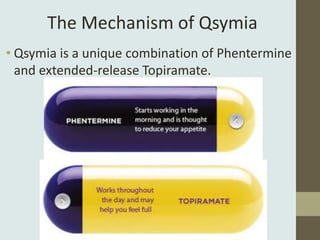
• Qsymia is a unique combination of Phentermine
  and extended-release Topiramate.
The Mechanism of Qsymia
• The Phentermine which is an ingredient in
  Qsymia is released immediately and is
  thought to reduce appetite and enhance
  satiety which is feeling too full.
• The Topiramate is an anticonvulsant which
  means it has been reported to have mood
  stabilizing properties. Anticonvulsants are
  used to treat bipolar disorder, epilepsy,
  and neuropathic pains.
Adverse Reactions
• For patients treated with Qsymia the most
  common reactions are paraesthesia,
  dizziness, dysgeusia, insomnia,
  constipation, and dry mouth.
• Parathesia is a sensation described as
  burning, tingling or pin pricks on certain
  areas.
• Dysgeusia is a distorted sense of taste.
Reasons not to give medication
• Qsymia should not be taken if you are
  pregnant or may become pregnant, have
  glaucoma, hyperthyroidism, or any patient
  that has recently been given a new
  medication within 14 days with
  monoamine oxidase inhibitors.
• The should not take Qsymia if they also
  have a hypersensitivity to
  sympathomimetic amines, topiramate, or
  any other inactive ingredients.
Warnings and Precautions
• The following are pre-existing conditions
  or symptoms that may result from using
  Qsymia. If any occur the dosage should be
  decreased, discontinued, or not prescribed
  to the patient.
____________________________________
• Patients using Antidiabetic Medications
  should not use this drug because it
  increases the risk of hypoglycemia.
Warnings and Precautions
• Fetal toxicity- can cause fetal harm during
  the first trimester leading to risk of oral
  clefts.
• Females should have a negative pregnancy
  test(not pregnant) before treatment and
  use of effective contraception during use
  of Qsymia.
• If a patient becomes pregnant while use of
  Qsymia then the treatment should be
  discontinued.
Warnings and Precautions
• Qsymia can cause an increase in resting
  heart rate. Regular measurement of
  resting heart rate is recommended.
• Patients with unstable cardiac or
  cerebrovascular disease are recommended
  NOT to take the drug.
• Patients should notify a healthcare
  provider of any feelings relating to a racing
  heartbeat while on the treatment and the
  dose should be reduced.
Warnings and Precautions
• The Topiramate in Qsymia can
  increase the risk of suicidal thoughts
  or behavior in patients taking these
  drugs for any purpose. If this occurs
  Qsymia treatment should be
  discontinued.
• Qsymia can cause mood disorders,
  depression, anxiety, and insomnia.
Warnings and Precautions
• Those with glaucoma can receive a
  decreased visual acuity and/or eye pain.
  Symptoms typically occur within one
  month of treatment.
• Creatinine may increase in the blood and if
  so the treatment should be discontinued.
• There may be cognitive dysfunction such
  as memory loss or difficulty with speech.
  Patients are cautioned about operating
  hazardous machinery.
Warnings and Precautions
• Metabolic Acidosis
• Potential risk of hypotension in patients
  treated with Antihypertensive medications
• Potential seizures with abrupt withdrawal
  of Qsymia
• Patients with Renal Impairment
• Patients with Hepatic Impairment
Warnings and Precautions
• Patients with Kidney Stones
• Hypokalemia
• Drug abuse and dependence- The
  Phentermine component has known
  potential for abuse.
• Use of drugs or alcohol during the
  ingestion of Qsymia may cause CNS
  depression or other centrally mediated
  effects of these agents.
Limitations
• The effect of Qsymia on
  cardiovascular morbidity and
  mortality has not been established,
  the safety and effectiveness of
  Qsymia in combination with other
  products intended for weight loss,
  including prescription and over the
  counter drugs, and herbal preparation
  have not been established.

Qsymia

  • 2.
    • In theUnited States alone nearly 40% of the adults are obese and this number is continuing to grow causing more serious health issues. • The initial goal is to reduce body weight by 10% percent in 6 months.
  • 3.
    Qsymia • May helpsome obese adults or some overweight adults who also have weight-related medical problems lose weight and keep the weight off.
  • 4.
    Those who shouldtry Qsymia • Qsymia is commonly described as assistance to a reduced-calorie diet and increased physical activity to reduce body weight. • The overweight group are those that also have a weight related symptom such as hypertension, type 2 diabetes or dyslipidemia(high blood cholesterol).
  • 5.
    BMI(Body Mass Index) •The Body mass index is to measure the body of fat based on height and weight, it is not just your weight so do not let the numbers confuse you.
  • 6.
    The Mechanism ofQsymia • Qsymia is a unique combination of Phentermine and extended-release Topiramate.
  • 7.
    The Mechanism ofQsymia • The Phentermine which is an ingredient in Qsymia is released immediately and is thought to reduce appetite and enhance satiety which is feeling too full. • The Topiramate is an anticonvulsant which means it has been reported to have mood stabilizing properties. Anticonvulsants are used to treat bipolar disorder, epilepsy, and neuropathic pains.
  • 8.
    Adverse Reactions • Forpatients treated with Qsymia the most common reactions are paraesthesia, dizziness, dysgeusia, insomnia, constipation, and dry mouth. • Parathesia is a sensation described as burning, tingling or pin pricks on certain areas. • Dysgeusia is a distorted sense of taste.
  • 9.
    Reasons not togive medication • Qsymia should not be taken if you are pregnant or may become pregnant, have glaucoma, hyperthyroidism, or any patient that has recently been given a new medication within 14 days with monoamine oxidase inhibitors. • The should not take Qsymia if they also have a hypersensitivity to sympathomimetic amines, topiramate, or any other inactive ingredients.
  • 10.
    Warnings and Precautions •The following are pre-existing conditions or symptoms that may result from using Qsymia. If any occur the dosage should be decreased, discontinued, or not prescribed to the patient. ____________________________________ • Patients using Antidiabetic Medications should not use this drug because it increases the risk of hypoglycemia.
  • 11.
    Warnings and Precautions •Fetal toxicity- can cause fetal harm during the first trimester leading to risk of oral clefts. • Females should have a negative pregnancy test(not pregnant) before treatment and use of effective contraception during use of Qsymia. • If a patient becomes pregnant while use of Qsymia then the treatment should be discontinued.
  • 12.
    Warnings and Precautions •Qsymia can cause an increase in resting heart rate. Regular measurement of resting heart rate is recommended. • Patients with unstable cardiac or cerebrovascular disease are recommended NOT to take the drug. • Patients should notify a healthcare provider of any feelings relating to a racing heartbeat while on the treatment and the dose should be reduced.
  • 13.
    Warnings and Precautions •The Topiramate in Qsymia can increase the risk of suicidal thoughts or behavior in patients taking these drugs for any purpose. If this occurs Qsymia treatment should be discontinued. • Qsymia can cause mood disorders, depression, anxiety, and insomnia.
  • 14.
    Warnings and Precautions •Those with glaucoma can receive a decreased visual acuity and/or eye pain. Symptoms typically occur within one month of treatment. • Creatinine may increase in the blood and if so the treatment should be discontinued. • There may be cognitive dysfunction such as memory loss or difficulty with speech. Patients are cautioned about operating hazardous machinery.
  • 15.
    Warnings and Precautions •Metabolic Acidosis • Potential risk of hypotension in patients treated with Antihypertensive medications • Potential seizures with abrupt withdrawal of Qsymia • Patients with Renal Impairment • Patients with Hepatic Impairment
  • 16.
    Warnings and Precautions •Patients with Kidney Stones • Hypokalemia • Drug abuse and dependence- The Phentermine component has known potential for abuse. • Use of drugs or alcohol during the ingestion of Qsymia may cause CNS depression or other centrally mediated effects of these agents.
  • 17.
    Limitations • The effectof Qsymia on cardiovascular morbidity and mortality has not been established, the safety and effectiveness of Qsymia in combination with other products intended for weight loss, including prescription and over the counter drugs, and herbal preparation have not been established.

Editor's Notes

  • #3 6 months is a reasonable amount of time so that the patient does not lose the weight too quickly causing physical symptoms.