
Uploaded byInsight
Preparing for Change Infographic
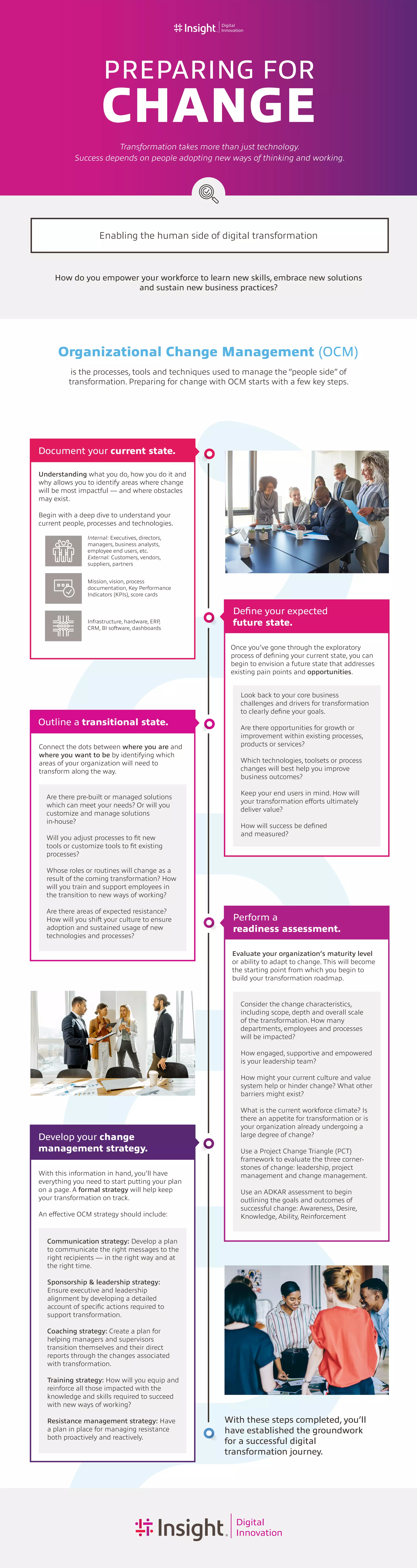
The document outlines a framework for enabling the human side of digital transformation by assessing the current state, defining future goals, and evaluating organizational readiness. It emphasizes the importance of change management strategies that include communication, leadership alignment, coaching, training, and resistance management to ensure successful adoption of new processes and technologies. Ultimately, the emphasis is on empowering employees and aligning organizational culture to facilitate and sustain transformation.
More Related Content


Similar to Preparing for Change Infographic


Preparing for Change Infographic
- 1. Enabling the humanside of digital transformation Document your current state. Define your expected future state. Once you’ve gone through the exploratory process of defining your current state, you can begin to envision a future state that addresses existing pain points and opportunities. Look back to your core business challenges and drivers for transformation to clearly define your goals. Are there opportunities for growth or improvement within existing processes, products or services? Which technologies, toolsets or process changes will best help you improve business outcomes? Keep your end users in mind. How will your transformation efforts ultimately deliver value? How will success be defined and measured? Perform a readiness assessment. Evaluate your organization’s maturity level or ability to adapt to change. This will become the starting point from which you begin to build your transformation roadmap. Consider the change characteristics, including scope, depth and overall scale of the transformation. How many departments, employees and processes will be impacted? How engaged, supportive and empowered is your leadership team? How might your current culture and value system help or hinder change? What other barriers might exist? What is the current workforce climate? Is there an appetite for transformation or is your organization already undergoing a large degree of change? Use a Project Change Triangle (PCT) framework to evaluate the three corner- stones of change: leadership, project management and change management. Use an ADKAR assessment to begin outlining the goals and outcomes of successful change: Awareness, Desire, Knowledge, Ability, Reinforcement Are there pre-built or managed solutions which can meet your needs? Or will you customize and manage solutions in-house? Will you adjust processes to fit new tools or customize tools to fit existing processes? Whose roles or routines will change as a result of the coming transformation? How will you train and support employees in the transition to new ways of working? Are there areas of expected resistance? How will you shift your culture to ensure adoption and sustained usage of new technologies and processes? Understanding what you do, how you do it and why allows you to identify areas where change will be most impactful — and where obstacles may exist. Begin with a deep dive to understand your current people, processes and technologies. Outline a transitional state. Connect the dots between where you are and where you want to be by identifying which areas of your organization will need to transform along the way. Communication strategy: Develop a plan to communicate the right messages to the right recipients — in the right way and at the right time. Sponsorship & leadership strategy: Ensure executive and leadership alignment by developing a detailed account of specific actions required to support transformation. Coaching strategy: Create a plan for helping managers and supervisors transition themselves and their direct reports through the changes associated with transformation. Training strategy: How will you equip and reinforce all those impacted with the knowledge and skills required to succeed with new ways of working? Resistance management strategy: Have a plan in place for managing resistance both proactively and reactively. Develop your change management strategy. With this information in hand, you’ll have everything you need to start putting your plan on a page. A formal strategy will help keep your transformation on track. An effective OCM strategy should include: Internal: Executives, directors, managers, business analysts, employee end users, etc. External: Customers, vendors, suppliers, partners Mission, vision, process documentation, Key Performance Indicators (KPIs), score cards Infrastructure, hardware, ERP, CRM, BI software, dashboards Transformation takes more than just technology. Success depends on people adopting new ways of thinking and working. How do you empower your workforce to learn new skills, embrace new solutions and sustain new business practices? is the processes, tools and techniques used to manage the “people side” of transformation. Preparing for change with OCM starts with a few key steps. Organizational Change Management (OCM) With these steps completed, you’ll have established the groundwork for a successful digital transformation journey.