




PRESENTED BY,
SONAL PATEL,
F.Y.M.Sc(N).
J.G COLLEGE OF NURSING,
AHMEDABAD.
PREGNANCY
AND ITS
MANAGEMENT
PREGNANCY
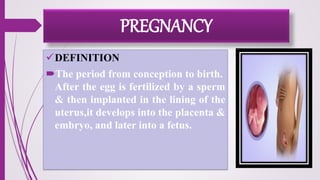
DEFINITION
The period from conception to birth.
After the egg is fertilized by a sperm
& then implanted in the lining of the
uterus,it develops into the placenta &
embryo, and later into a fetus.
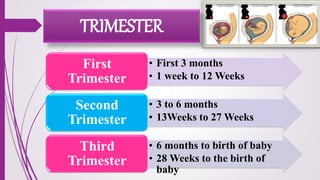
• First 3 months
• 1 week to 12 Weeks
First
Trimester
• 3 to 6 months
• 13Weeks to 27 Weeks
Second
Trimester
• 6 months to birth of baby
• 28 Weeks to the birth of
baby
Third
Trimester
TRIMESTER
SIGN AND
SYMPTOMS:
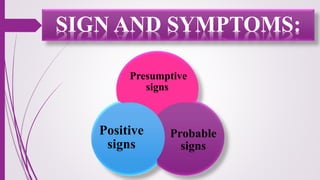
SIGN AND SYMPTOMS:
Presumptive
signs
Probable
signs
Positive
signs
1. Presumptive signs
Amenorrhea at 4th week
Morning sickness at 14th
week
Unexplained fatigue
Frequent urination at 6th to
12th week
Breast tenderness and
changes
Excessive salivation
(ptyalism)
Skin changes
Quickening at 18th to 20th
week.
2. Probable signs
Positive pregnancy test (presence of HCG
detected, by blood or urine test)
Enlargement of Uterus
Braxton-Hicks contractions
Softening of cervix at six to eight weeks
(Goodell's sign)
2. Probable signs
Bluish coloration of cervix, vagina and vulva at six to
eight weeks (Chadwick's sign/Jacquemier’s sign)
Pulsation in the lateral fornices (Osiander’s
sign)
Softening & compressibility of the
Isthmus(Hegar’s sign)
Passive movement of the fetus during an exam
(ballottement)
3. Positive signs
Fetal heart
sounds heard
by Doppler
Fetus
visible on
ultrasound
Fetal
movements
felt by
caregiver
Fetus
visible
on X-
ray,
MRI
MINOR DISORDER
OF PREGNANCY
AND
MANAGEMENT
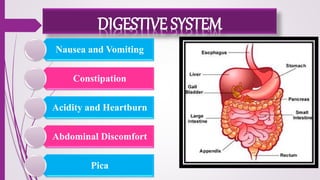
DIGESTIVE SYSTEM
Nausea and Vomiting
Constipation
Acidity and Heartburn
Abdominal Discomfort
Pica
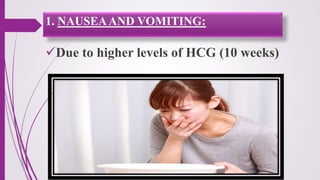
1. NAUSEAAND VOMITING:
Due to higher levels of HCG (10 weeks)
MANAGMENT
• Dietary changes
• Symptomatic Treatment
Avoid
• Disagreeable odors, spicy, or Oily foods
Medication
• When indicated and prescribed.
2. CONSTIPATION:
due to the effect of progesterone, it
diminished physical activity and
pressure of the gravid uterus on the
pelvic colon.
Iron supplements also can
contribute to constipation.
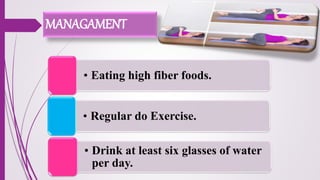
MANAGAMENT
• Eating high fiber foods.
• Regular do Exercise.
• Drink at least six glasses of water
per day.
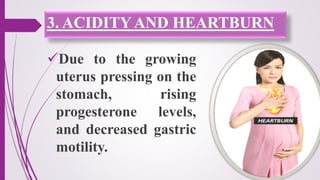
3. ACIDITYAND HEARTBURN
Due to the growing
uterus pressing on the
stomach, rising
progesterone levels,
and decreased gastric
motility.
Eating Slowly
Eat frequent, small meals.
Drinking milk between meals.
To avoid over eating and not to go to bed
immediately after the meal.
Avoid fatty & gas forming foods.
MANAGEMENT:
4. ABDOMINAL DISCOMFORT
Due to Pressure, pelvic heaviness, is
caused by the weight of the uterus on
the abdominal wall.
Flatulence and distention can be due
to large meals, gas-forming foods, and
chilled drink.
MANAGEMENT
Rest (lateral
recumbent
position)
Dietary
modifications Exercise
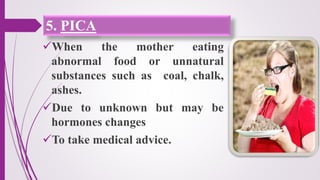
5. PICA
When the mother eating
abnormal food or unnatural
substances such as coal, chalk,
ashes.
Due to unknown but may be
hormones changes
To take medical advice.
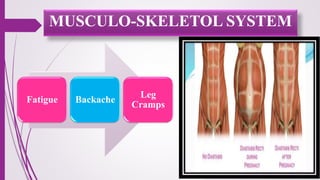
Fatigue Backache
Leg
Cramps
MUSCULO-SKELETOL SYSTEM
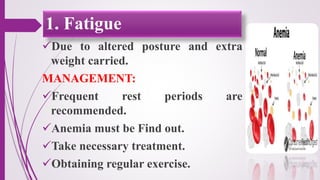
Due to altered posture and extra
weight carried.
MANAGEMENT:
Frequent rest periods are
recommended.
Anemia must be Find out.
Take necessary treatment.
Obtaining regular exercise.
1. Fatigue
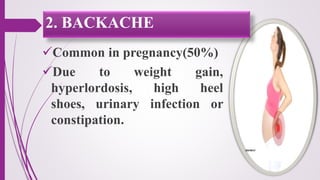
Common in pregnancy(50%)
Due to weight gain,
hyperlordosis, high heel
shoes, urinary infection or
constipation.
2. BACKACHE
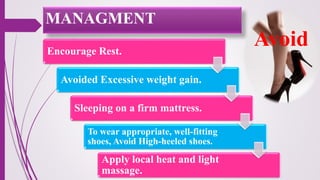
Encourage Rest.
Avoided Excessive weight gain.
Sleeping on a firm mattress.
To wear appropriate, well-fitting
shoes, Avoid High-heeled shoes.
Apply local heat and light
massage.
Avoid
MANAGMENT
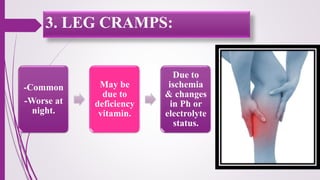
-Common
-Worse at
night.
May be
due to
deficiency
vitamin.
Due to
ischemia
& changes
in Ph or
electrolyte
status.
3. LEG CRAMPS:
Take the prescribed vitamins B & D per
doctor’s instructions.
Eat a diet with adequate calcium or
prescribed calcium.
Getting regular exercise, especially walking.
Patient lie on her back.
MANAGMENT
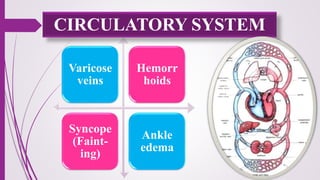
Varicose
veins
Hemorr
hoids
Syncope
(Faint-
ing)
Ankle
edema
CIRCULATORY SYSTEM
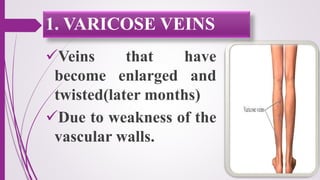
Veins that have
become enlarged and
twisted(later months)
Due to weakness of the
vascular walls.
1. VARICOSE VEINS
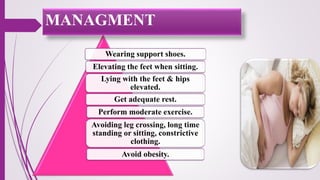
Wearing support shoes.
Elevating the feet when sitting.
Lying with the feet & hips
elevated.
Get adequate rest.
Perform moderate exercise.
Avoiding leg crossing, long time
standing or sitting, constrictive
clothing.
Avoid obesity.
MANAGMENT
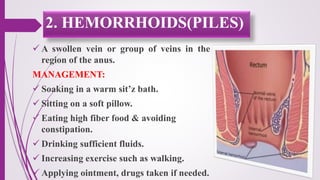
 A swollen vein or group of veins in the
region of the anus.
MANAGEMENT:
 Soaking in a warm sit’z bath.
 Sitting on a soft pillow.
 Eating high fiber food & avoiding
constipation.
 Drinking sufficient fluids.
 Increasing exercise such as walking.
 Applying ointment, drugs taken if needed.
2. HEMORRHOIDS(PILES)
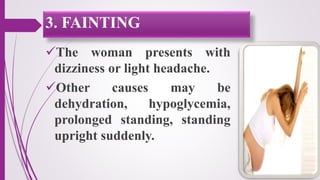
The woman presents with
dizziness or light headache.
Other causes may be
dehydration, hypoglycemia,
prolonged standing, standing
upright suddenly.
3. FAINTING
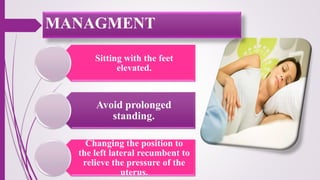
Sitting with the feet
elevated.
Avoid prolonged
standing.
Changing the position to
the left lateral recumbent to
relieve the pressure of the
uterus.
MANAGMENT
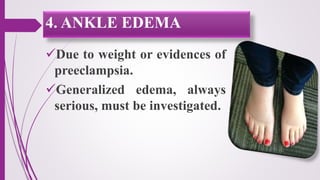
Due to weight or evidences of
preeclampsia.
Generalized edema, always
serious, must be investigated.
4. ANKLE EDEMA
Edema subsides on rest with slight
elevation of the limbs.
Maintain good posture.
Restrict excessive salt intake.
Avoiding prolonged standing & sitting.
MANAGMENT
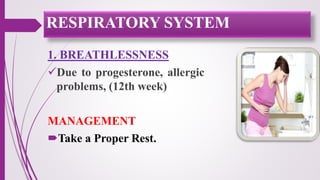
1. BREATHLESSNESS
Due to progesterone, allergic
problems, (12th week)
MANAGEMENT
Take a Proper Rest.
RESPIRATORY SYSTEM
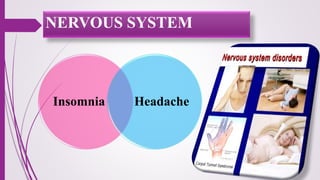
Insomnia Headache
NERVOUS SYSTEM
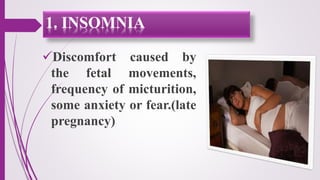
Discomfort caused by
the fetal movements,
frequency of micturition,
some anxiety or fear.(late
pregnancy)
1. INSOMNIA
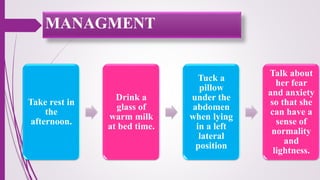
MANAGMENT
Take rest in
the
afternoon.
Drink a
glass of
warm milk
at bed time.
Tuck a
pillow
under the
abdomen
when lying
in a left
lateral
position
Talk about
her fear
and anxiety
so that she
can have a
sense of
normality
and
lightness.
Common and usually due to tension.
Severe, persistent headache due to
preeclampsia, eclampsia. (third trimester)
MANAGEMENT
Changing position slowly.
Regularly Check Blood Pressure.
Eating small snack.
Use PCM only if prescribed by physician.
2. HEADACHE
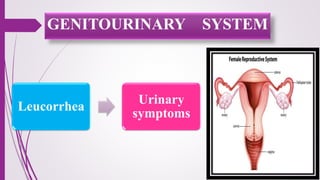
Leucorrhea
Urinary
symptoms
GENITOURINARY SYSTEM
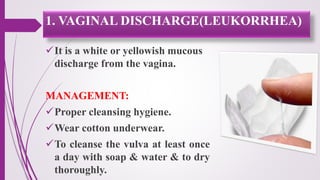
It is a white or yellowish mucous
discharge from the vagina.
MANAGEMENT:
Proper cleansing hygiene.
Wear cotton underwear.
To cleanse the vulva at least once
a day with soap & water & to dry
thoroughly.
1. VAGINAL DISCHARGE(LEUKORRHEA)
Urinary frequency and stress incontinence
in multiparas are common, especially in
advanced pregnancy.
Due to increased intra abdominal pressure
and reduced bladder capacity.
Suspect urinary tract disease if dysuria or
hematuria is present.
2. URINARY SYMPTOMPS
Limiting fluid
intake in the
evening.
Voiding at
regular
intervals.
MANAGMENT
1.SKIN
Scarring of the skin of abdominal area is
called Pregnancy stretch marks or Striae
gravidarum.
Dark vertical line that appearance from
navel to pubis is called Linea Nigra.
Chloasma or Mask of Pregnancy means
Brown patches of pigmentation on
forehead, cheek,neck.
INTEGUMENTARY SYSTEM
Take anti-histamine, if
needed.
Washing with mild soap and
cotton underwear might
help to ease the irritation.
MANAGMENT
Antenatal
Advice
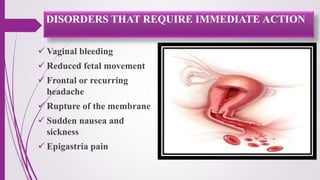
 Vaginal bleeding
 Reduced fetal movement
 Frontal or recurring
headache
 Rupture of the membrane
 Sudden nausea and
sickness
 Epigastria pain
DISORDERS THAT REQUIRE IMMEDIATE ACTION
Summary
Write Nursing care plan on
Antenatal mother.
Submitted Date :26/01/2018
Venue: F.Y.MSc (N) Class
Assignment
Pregnancy and  its management

Pregnancy and its management

  • 1.
    PRESENTED BY, SONAL PATEL, F.Y.M.Sc(N). J.GCOLLEGE OF NURSING, AHMEDABAD.
  • 3.
  • 4.
    PREGNANCY DEFINITION The period fromconception to birth. After the egg is fertilized by a sperm & then implanted in the lining of the uterus,it develops into the placenta & embryo, and later into a fetus.
  • 5.
    • First 3months • 1 week to 12 Weeks First Trimester • 3 to 6 months • 13Weeks to 27 Weeks Second Trimester • 6 months to birth of baby • 28 Weeks to the birth of baby Third Trimester TRIMESTER
  • 6.
  • 7.
  • 8.
    1. Presumptive signs Amenorrheaat 4th week Morning sickness at 14th week Unexplained fatigue Frequent urination at 6th to 12th week Breast tenderness and changes Excessive salivation (ptyalism) Skin changes Quickening at 18th to 20th week.
  • 9.
    2. Probable signs Positivepregnancy test (presence of HCG detected, by blood or urine test) Enlargement of Uterus Braxton-Hicks contractions Softening of cervix at six to eight weeks (Goodell's sign)
  • 10.
    2. Probable signs Bluishcoloration of cervix, vagina and vulva at six to eight weeks (Chadwick's sign/Jacquemier’s sign) Pulsation in the lateral fornices (Osiander’s sign) Softening & compressibility of the Isthmus(Hegar’s sign) Passive movement of the fetus during an exam (ballottement)
  • 11.
    3. Positive signs Fetalheart sounds heard by Doppler Fetus visible on ultrasound Fetal movements felt by caregiver Fetus visible on X- ray, MRI
  • 12.
  • 13.
    DIGESTIVE SYSTEM Nausea andVomiting Constipation Acidity and Heartburn Abdominal Discomfort Pica
  • 14.
    1. NAUSEAAND VOMITING: Dueto higher levels of HCG (10 weeks)
  • 15.
    MANAGMENT • Dietary changes •Symptomatic Treatment Avoid • Disagreeable odors, spicy, or Oily foods Medication • When indicated and prescribed.
  • 16.
    2. CONSTIPATION: due tothe effect of progesterone, it diminished physical activity and pressure of the gravid uterus on the pelvic colon. Iron supplements also can contribute to constipation.
  • 17.
    MANAGAMENT • Eating highfiber foods. • Regular do Exercise. • Drink at least six glasses of water per day.
  • 18.
    3. ACIDITYAND HEARTBURN Dueto the growing uterus pressing on the stomach, rising progesterone levels, and decreased gastric motility.
  • 19.
    Eating Slowly Eat frequent,small meals. Drinking milk between meals. To avoid over eating and not to go to bed immediately after the meal. Avoid fatty & gas forming foods. MANAGEMENT:
  • 20.
    4. ABDOMINAL DISCOMFORT Dueto Pressure, pelvic heaviness, is caused by the weight of the uterus on the abdominal wall. Flatulence and distention can be due to large meals, gas-forming foods, and chilled drink.
  • 21.
  • 22.
    5. PICA When themother eating abnormal food or unnatural substances such as coal, chalk, ashes. Due to unknown but may be hormones changes To take medical advice.
  • 23.
  • 24.
    Due to alteredposture and extra weight carried. MANAGEMENT: Frequent rest periods are recommended. Anemia must be Find out. Take necessary treatment. Obtaining regular exercise. 1. Fatigue
  • 25.
    Common in pregnancy(50%) Dueto weight gain, hyperlordosis, high heel shoes, urinary infection or constipation. 2. BACKACHE
  • 26.
    Encourage Rest. Avoided Excessiveweight gain. Sleeping on a firm mattress. To wear appropriate, well-fitting shoes, Avoid High-heeled shoes. Apply local heat and light massage. Avoid MANAGMENT
  • 27.
    -Common -Worse at night. May be dueto deficiency vitamin. Due to ischemia & changes in Ph or electrolyte status. 3. LEG CRAMPS:
  • 28.
    Take the prescribedvitamins B & D per doctor’s instructions. Eat a diet with adequate calcium or prescribed calcium. Getting regular exercise, especially walking. Patient lie on her back. MANAGMENT
  • 29.
  • 30.
    Veins that have becomeenlarged and twisted(later months) Due to weakness of the vascular walls. 1. VARICOSE VEINS
  • 31.
    Wearing support shoes. Elevatingthe feet when sitting. Lying with the feet & hips elevated. Get adequate rest. Perform moderate exercise. Avoiding leg crossing, long time standing or sitting, constrictive clothing. Avoid obesity. MANAGMENT
  • 32.
     A swollenvein or group of veins in the region of the anus. MANAGEMENT:  Soaking in a warm sit’z bath.  Sitting on a soft pillow.  Eating high fiber food & avoiding constipation.  Drinking sufficient fluids.  Increasing exercise such as walking.  Applying ointment, drugs taken if needed. 2. HEMORRHOIDS(PILES)
  • 33.
    The woman presentswith dizziness or light headache. Other causes may be dehydration, hypoglycemia, prolonged standing, standing upright suddenly. 3. FAINTING
  • 34.
    Sitting with thefeet elevated. Avoid prolonged standing. Changing the position to the left lateral recumbent to relieve the pressure of the uterus. MANAGMENT
  • 35.
    Due to weightor evidences of preeclampsia. Generalized edema, always serious, must be investigated. 4. ANKLE EDEMA
  • 36.
    Edema subsides onrest with slight elevation of the limbs. Maintain good posture. Restrict excessive salt intake. Avoiding prolonged standing & sitting. MANAGMENT
  • 37.
    1. BREATHLESSNESS Due toprogesterone, allergic problems, (12th week) MANAGEMENT Take a Proper Rest. RESPIRATORY SYSTEM
  • 38.
  • 39.
    Discomfort caused by thefetal movements, frequency of micturition, some anxiety or fear.(late pregnancy) 1. INSOMNIA
  • 40.
    MANAGMENT Take rest in the afternoon. Drinka glass of warm milk at bed time. Tuck a pillow under the abdomen when lying in a left lateral position Talk about her fear and anxiety so that she can have a sense of normality and lightness.
  • 41.
    Common and usuallydue to tension. Severe, persistent headache due to preeclampsia, eclampsia. (third trimester) MANAGEMENT Changing position slowly. Regularly Check Blood Pressure. Eating small snack. Use PCM only if prescribed by physician. 2. HEADACHE
  • 42.
  • 43.
    It is awhite or yellowish mucous discharge from the vagina. MANAGEMENT: Proper cleansing hygiene. Wear cotton underwear. To cleanse the vulva at least once a day with soap & water & to dry thoroughly. 1. VAGINAL DISCHARGE(LEUKORRHEA)
  • 44.
    Urinary frequency andstress incontinence in multiparas are common, especially in advanced pregnancy. Due to increased intra abdominal pressure and reduced bladder capacity. Suspect urinary tract disease if dysuria or hematuria is present. 2. URINARY SYMPTOMPS
  • 45.
    Limiting fluid intake inthe evening. Voiding at regular intervals. MANAGMENT
  • 46.
    1.SKIN Scarring of theskin of abdominal area is called Pregnancy stretch marks or Striae gravidarum. Dark vertical line that appearance from navel to pubis is called Linea Nigra. Chloasma or Mask of Pregnancy means Brown patches of pigmentation on forehead, cheek,neck. INTEGUMENTARY SYSTEM
  • 47.
    Take anti-histamine, if needed. Washingwith mild soap and cotton underwear might help to ease the irritation. MANAGMENT
  • 48.
  • 49.
     Vaginal bleeding Reduced fetal movement  Frontal or recurring headache  Rupture of the membrane  Sudden nausea and sickness  Epigastria pain DISORDERS THAT REQUIRE IMMEDIATE ACTION
  • 50.
  • 52.
    Write Nursing careplan on Antenatal mother. Submitted Date :26/01/2018 Venue: F.Y.MSc (N) Class Assignment