PRECEDE-PROCEED
MODEL
Apalin, Ruth Rendell D.
Batang, Jonalyn R.
1
PRECEDE-PROCEED
2
 It provides a comprehensive structure for
assessing health and quality of life needs, and
for designing, implementing, and evaluating
health promotion and other public health
programs to meet those needs.
 It guides planners through a process that starts
with desired outcomes and then works
backwards in the causal chain to identify a mix
of strategies for achieving those objectives
3
In this framework, health
behavior is regarded as being
influenced by both individual
and environmental factors,
and hence has two distinct
parts.
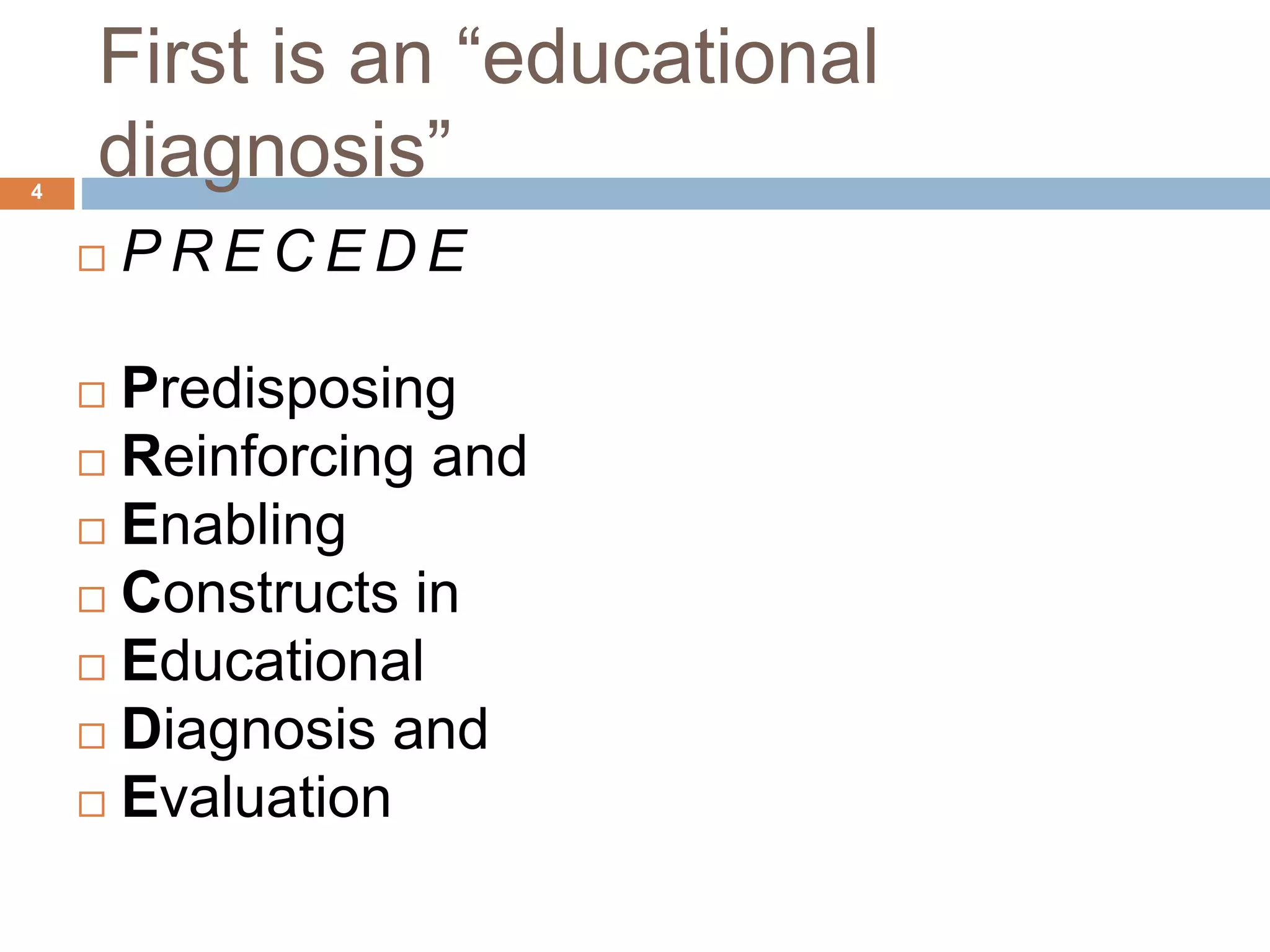
First is an “educational
diagnosis”4
 P R E C E D E
 Predisposing
 Reinforcing and
 Enabling
 Constructs in
 Educational
 Diagnosis and
 Evaluation
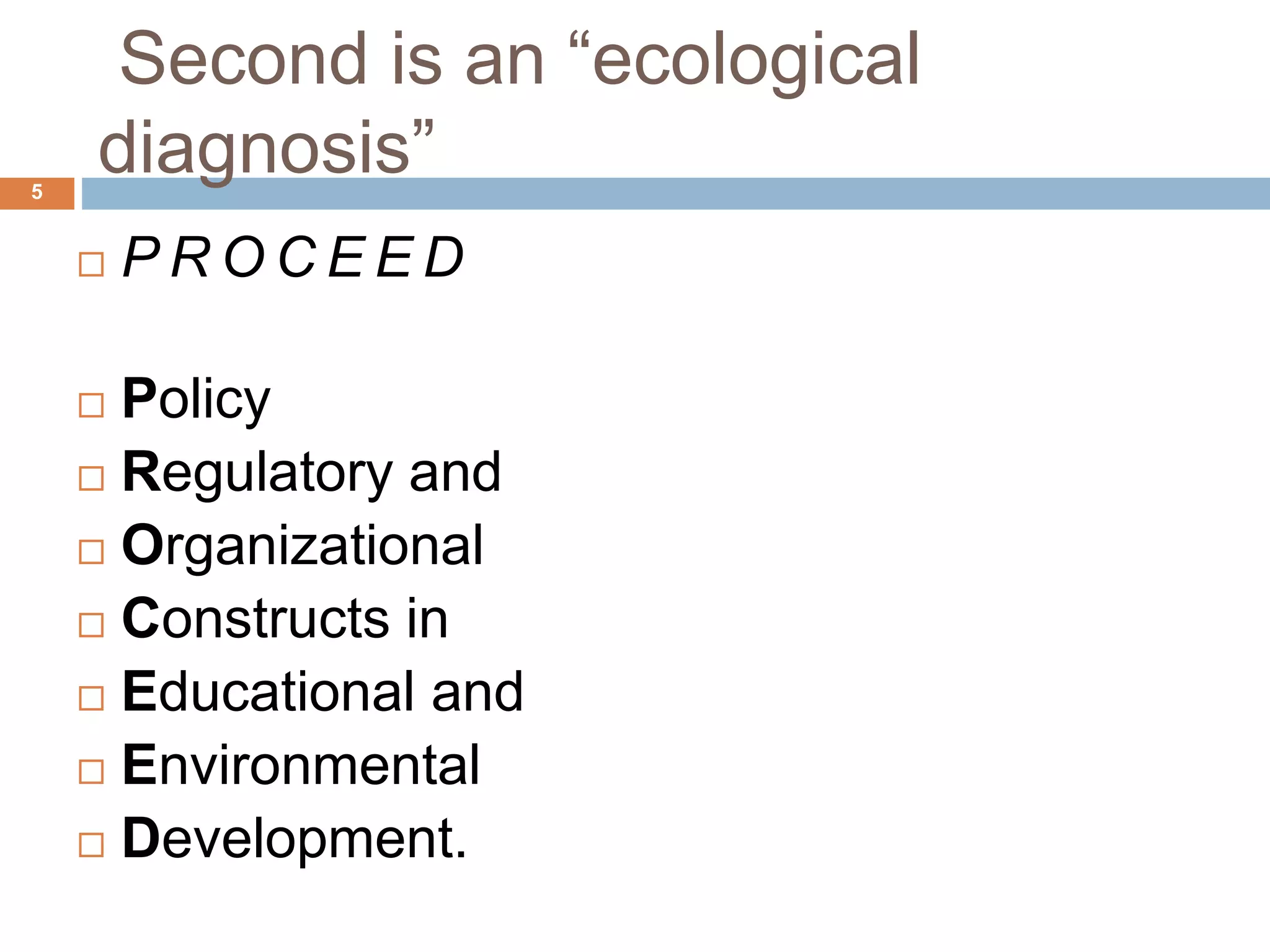
Second is an “ecological
diagnosis”5
 P R O C E E D
 Policy
 Regulatory and
 Organizational
 Constructs in
 Educational and
 Environmental
 Development.
6
 The model is multidimensional and is
founded in the social/behavioral
sciences, epidemiology,
administration, and education
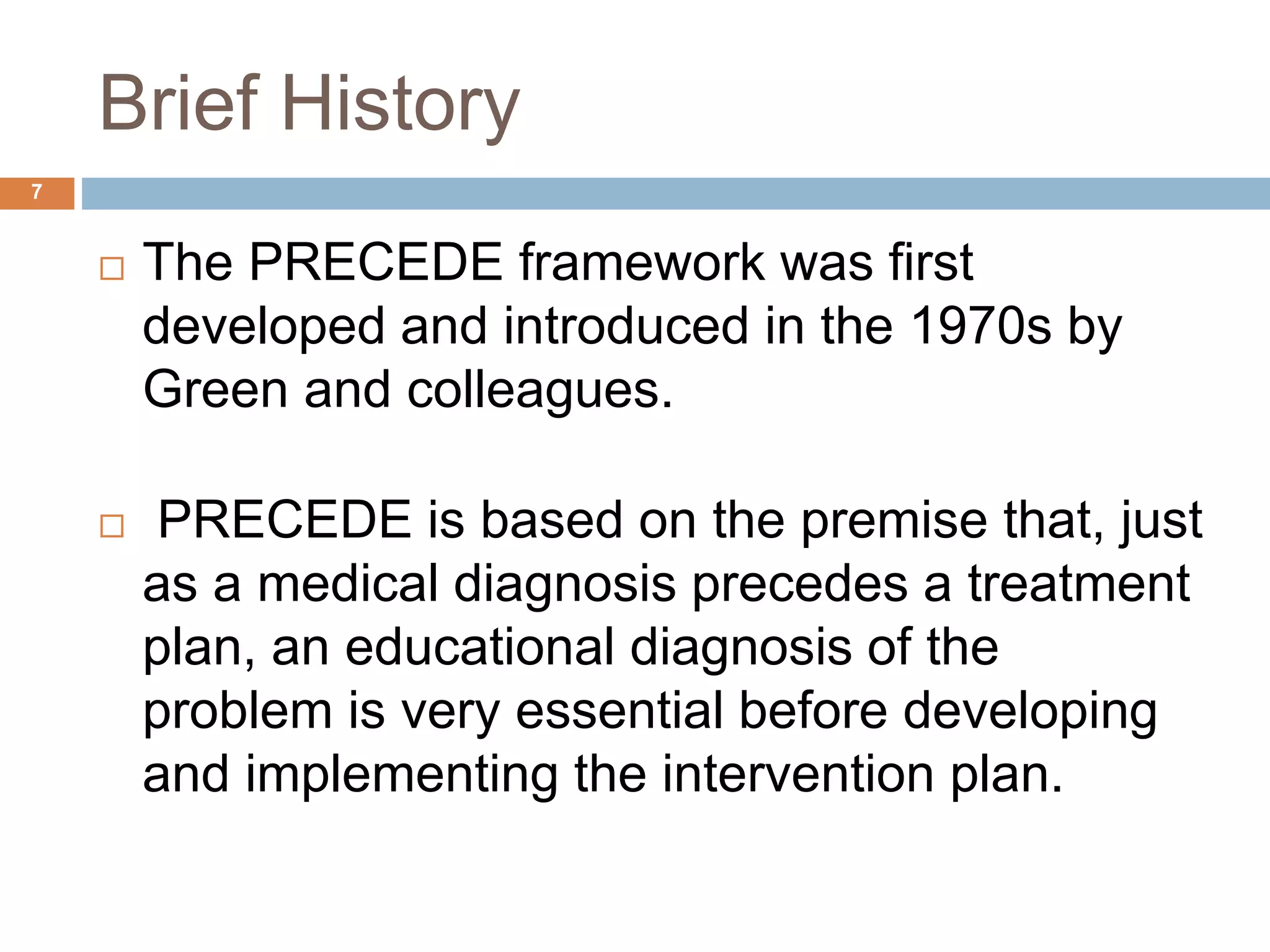
Brief History
7
 The PRECEDE framework was first
developed and introduced in the 1970s by
Green and colleagues.
 PRECEDE is based on the premise that, just
as a medical diagnosis precedes a treatment
plan, an educational diagnosis of the
problem is very essential before developing
and implementing the intervention plan.
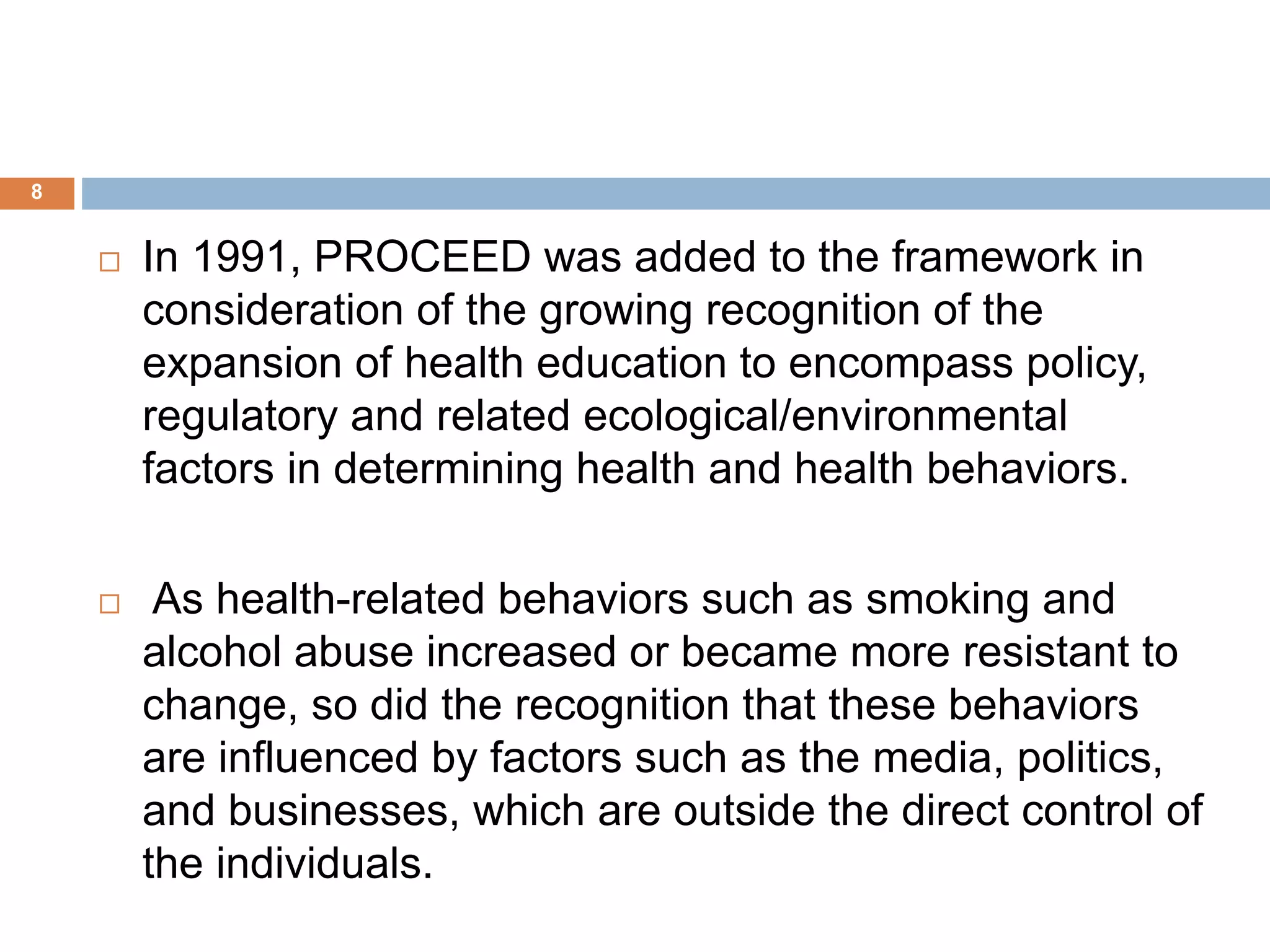
8
 In 1991, PROCEED was added to the framework in
consideration of the growing recognition of the
expansion of health education to encompass policy,
regulatory and related ecological/environmental
factors in determining health and health behaviors.
 As health-related behaviors such as smoking and
alcohol abuse increased or became more resistant to
change, so did the recognition that these behaviors
are influenced by factors such as the media, politics,
and businesses, which are outside the direct control of
the individuals.
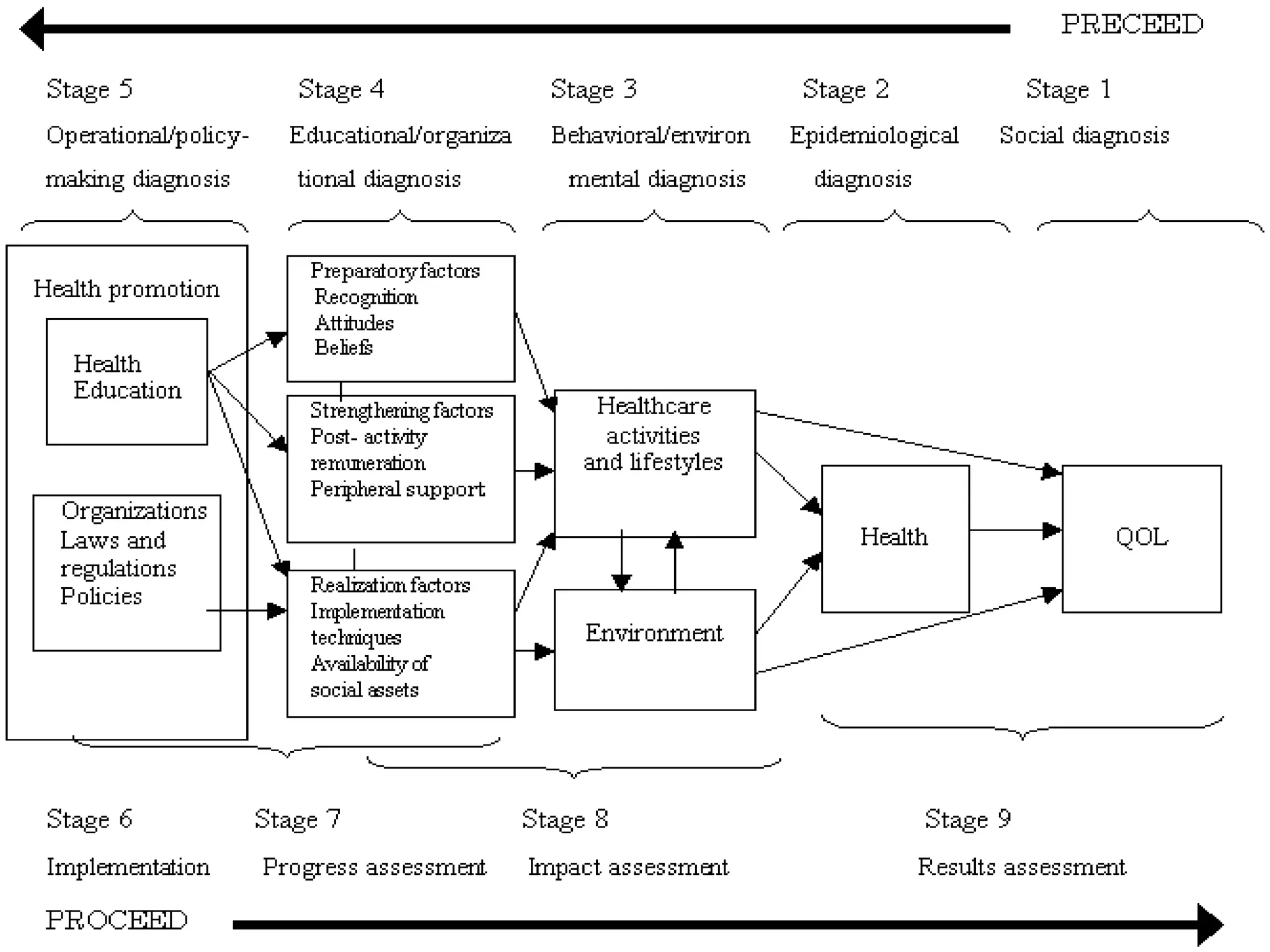
Description of the
model
9
10
PHASE 1 – SOCIAL
DIAGNOSIS11
 The first stage in the program planning phase
deals with identifying and evaluating the social
problems that have an impact on the quality of
life of a population of interest.
 During this stage, the program planners try to
gain an understanding of the social problems
that affects the quality of life of the community
and its members, their strengths, weaknesses,
and resources; and their readiness to change.
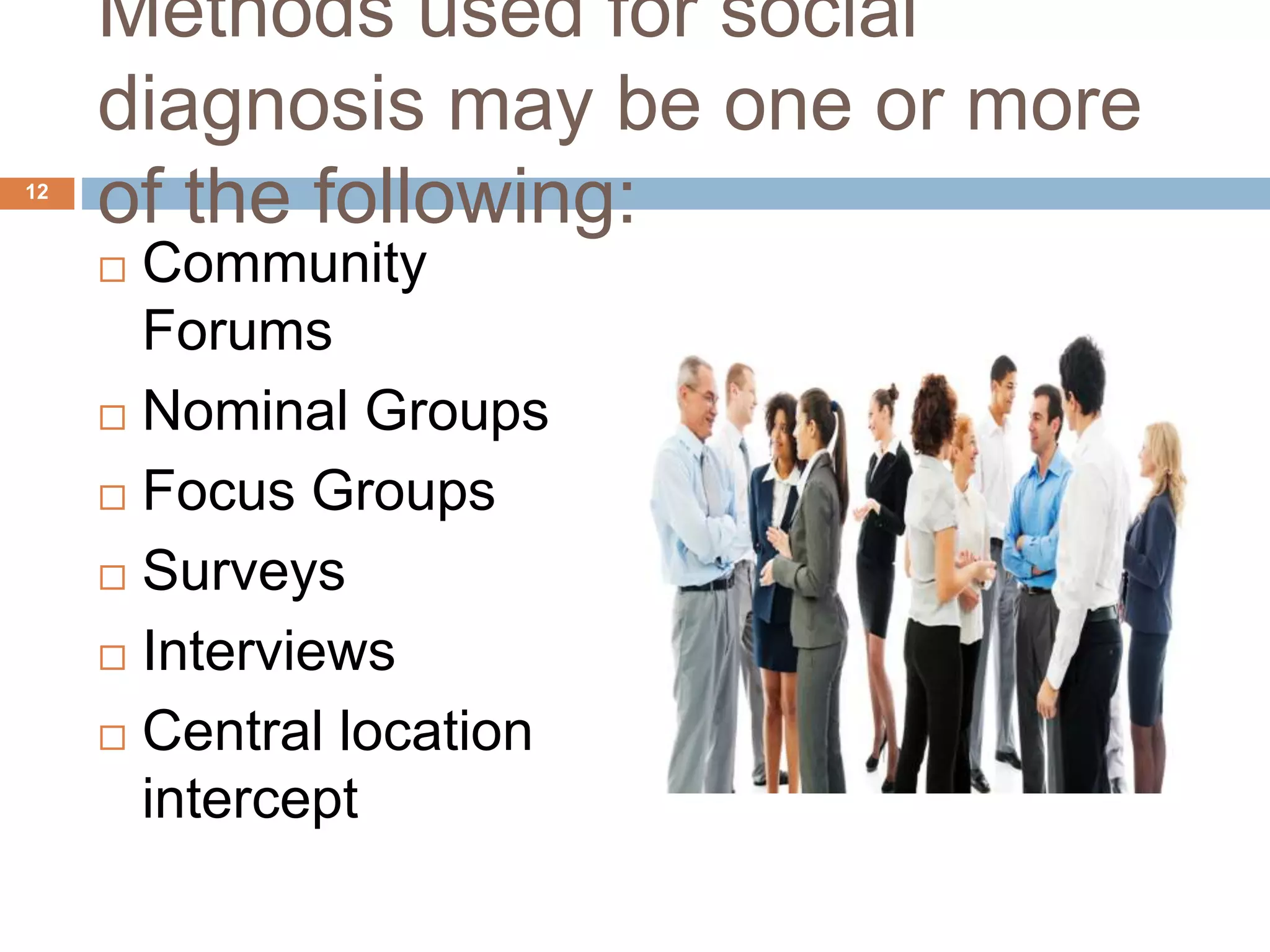
Methods used for social
diagnosis may be one or more
of the following:
 Community
Forums
 Nominal Groups
 Focus Groups
 Surveys
 Interviews
 Central location
intercept
12
PHASE 2 – EPIDEMIOLOGICAL
DIAGNOSIS
13
 Epidemiological Diagnosis helps determine
health issues associated with the quality of life.
 The focus of this phase is to identify specific
health problem and non health factors which are
associated with a poor quality of life.
 Epidemiological assessment may include
secondary data analysis or original data
collection.
14
From phase 1 and 2 program
objectives are created - that is
the goal or goals you hope to
achieve as a result of
implementing this program
Phase 3 - BEHAVIORAL AND
ENVIRONMENTAL
DIAGNOSIS15
 BEHAVIORAL DIAGNOSIS
 This is the analysis of behavioral links to the
goals or problems that are identified in the
social or epidemiological diagnosis.
 The behavioral ascertainment of a health issue
is understood firstly through those behaviors
that exemplify the severity of the disease
 Secondly, through the behavior of the
16
 Thirdly, through the actions of the decision-
makers that affects the environment of the
individuals at risk, such as law enforcement
actions that restrict the teen’s access to
cigarettes.
 Once behavioral diagnosis is completed for
each health problem identified, the planner is
able to develop more specific and effective
interventions.
17
 ENVIRONMENTAL DIAGNOSIS
 This is a parallel analysis of social and physical
environmental factors other than specific actions
that could be linked to behaviors. In this
assessment, environmental factors beyond the
control of the individual are modified to influence
the health outcome.
 For example, poor nutritional status among
school children may be due to the availability of
unhealthful foods in school.
Phase 4 - EDUCATIONAL
DIAGNOSIS18
 Once the behavioral and environmental factors
are identified and interventions are selected,
planners can start to work on selecting factors
that if modified will be most likely to result in
behavior change, and can sustain this change
process.
 These factors are classified as predisposing
factors, enabling factors, and reinforcing factors
19
 Predisposing factors include knowledge, attitudes,
beliefs, personal preferences, existing skills, and
self-efficacy towards the desired behavior change.
 Reinforcing factors include factors that reward or
reinforce the desired behavior change, including
social support, economic rewards, and changing
social norms.
 Enabling factors are skills or physical factors such
as availability and accessibility of resources, or
services that facilitate achievement of motivation to
Phase 5 - ADMINISTRATIVE
AND POLICY DIAGNOSIS20
 This phase focuses on the administrative and
organizational concerns, which must be
addressed prior to program implementation.
 This includes assessment of resources,
development and allocation of budget, looking at
organizational barriers, and coordination of the
program with all other departments, including
external organizations and the community.
These are detailed further in Green & Ottoson.
21
 Administrative Diagnosis assess policies,
resources, circumstances, prevailing
organizational situations that could hinder or
facilitate the development of the health program.
 Policy Diagnosis assesses the compatibility of
the program goals and objectives with those of
the organization and its administration. This
evaluates whether the program goals fit into the
mission statements, rules and regulations that
are needed for the implementation and
sustainability of the program.
Phase 6 -
IMPLEMENTATION
OF THE PROGRAM
22
Phase 7 - PROCESS
EVALUATION23
 It is used to evaluate the process
by which the program is being
implemented.
 It also helps identify modifications
that may be needed to improve
the program.
Phase 8 - IMPACT
EVALUATION24
 It measures the effectiveness of the
program with regards to the
intermediate objectives as well as the
changes in predisposing, enabling,
and reinforcing factors.
 Often this phase is used to evaluate
the performance of educators.
Phase 9 - OUTCOME
EVALUATION25
 It measures change in terms of
overall objectives and changes in
health and social benefits or the
quality of life.
 That is, it determines the effect the
program had in the health and quality
of life of the community.
Conclusion26
27
 PRECEDE-PROCEED model is a participatory
model for creating successful community health
promotion and other public health interventions.
 It is based on the premise that behavior change
is by and large voluntary, and that health
programs are more likely to be effective if they
are planned and evaluated with the active
participation of those people who will have to
implement them, and those who are affected by
them.
28
 Thus health and other issues must be looked at in the
context of the community.
 Interventions designed for behavior
change to help prevent injuries and
violence, improve heart-healthy
behaviors, and those to improve and
increase scholarly productivity among
health education faculty are among the
more than 1000 published applications
that have been developed or evaluated
that use the Precede-Proceed model as
a guideline.

Precede - Proceed Model

  • 1.
  • 2.
    PRECEDE-PROCEED 2  It providesa comprehensive structure for assessing health and quality of life needs, and for designing, implementing, and evaluating health promotion and other public health programs to meet those needs.  It guides planners through a process that starts with desired outcomes and then works backwards in the causal chain to identify a mix of strategies for achieving those objectives
  • 3.
    3 In this framework,health behavior is regarded as being influenced by both individual and environmental factors, and hence has two distinct parts.
  • 4.
    First is an“educational diagnosis”4  P R E C E D E  Predisposing  Reinforcing and  Enabling  Constructs in  Educational  Diagnosis and  Evaluation
  • 5.
    Second is an“ecological diagnosis”5  P R O C E E D  Policy  Regulatory and  Organizational  Constructs in  Educational and  Environmental  Development.
  • 6.
    6  The modelis multidimensional and is founded in the social/behavioral sciences, epidemiology, administration, and education
  • 7.
    Brief History 7  ThePRECEDE framework was first developed and introduced in the 1970s by Green and colleagues.  PRECEDE is based on the premise that, just as a medical diagnosis precedes a treatment plan, an educational diagnosis of the problem is very essential before developing and implementing the intervention plan.
  • 8.
    8  In 1991,PROCEED was added to the framework in consideration of the growing recognition of the expansion of health education to encompass policy, regulatory and related ecological/environmental factors in determining health and health behaviors.  As health-related behaviors such as smoking and alcohol abuse increased or became more resistant to change, so did the recognition that these behaviors are influenced by factors such as the media, politics, and businesses, which are outside the direct control of the individuals.
  • 9.
  • 10.
  • 11.
    PHASE 1 –SOCIAL DIAGNOSIS11  The first stage in the program planning phase deals with identifying and evaluating the social problems that have an impact on the quality of life of a population of interest.  During this stage, the program planners try to gain an understanding of the social problems that affects the quality of life of the community and its members, their strengths, weaknesses, and resources; and their readiness to change.
  • 12.
    Methods used forsocial diagnosis may be one or more of the following:  Community Forums  Nominal Groups  Focus Groups  Surveys  Interviews  Central location intercept 12
  • 13.
    PHASE 2 –EPIDEMIOLOGICAL DIAGNOSIS 13  Epidemiological Diagnosis helps determine health issues associated with the quality of life.  The focus of this phase is to identify specific health problem and non health factors which are associated with a poor quality of life.  Epidemiological assessment may include secondary data analysis or original data collection.
  • 14.
    14 From phase 1and 2 program objectives are created - that is the goal or goals you hope to achieve as a result of implementing this program
  • 15.
    Phase 3 -BEHAVIORAL AND ENVIRONMENTAL DIAGNOSIS15  BEHAVIORAL DIAGNOSIS  This is the analysis of behavioral links to the goals or problems that are identified in the social or epidemiological diagnosis.  The behavioral ascertainment of a health issue is understood firstly through those behaviors that exemplify the severity of the disease  Secondly, through the behavior of the
  • 16.
    16  Thirdly, throughthe actions of the decision- makers that affects the environment of the individuals at risk, such as law enforcement actions that restrict the teen’s access to cigarettes.  Once behavioral diagnosis is completed for each health problem identified, the planner is able to develop more specific and effective interventions.
  • 17.
    17  ENVIRONMENTAL DIAGNOSIS This is a parallel analysis of social and physical environmental factors other than specific actions that could be linked to behaviors. In this assessment, environmental factors beyond the control of the individual are modified to influence the health outcome.  For example, poor nutritional status among school children may be due to the availability of unhealthful foods in school.
  • 18.
    Phase 4 -EDUCATIONAL DIAGNOSIS18  Once the behavioral and environmental factors are identified and interventions are selected, planners can start to work on selecting factors that if modified will be most likely to result in behavior change, and can sustain this change process.  These factors are classified as predisposing factors, enabling factors, and reinforcing factors
  • 19.
    19  Predisposing factorsinclude knowledge, attitudes, beliefs, personal preferences, existing skills, and self-efficacy towards the desired behavior change.  Reinforcing factors include factors that reward or reinforce the desired behavior change, including social support, economic rewards, and changing social norms.  Enabling factors are skills or physical factors such as availability and accessibility of resources, or services that facilitate achievement of motivation to
  • 20.
    Phase 5 -ADMINISTRATIVE AND POLICY DIAGNOSIS20  This phase focuses on the administrative and organizational concerns, which must be addressed prior to program implementation.  This includes assessment of resources, development and allocation of budget, looking at organizational barriers, and coordination of the program with all other departments, including external organizations and the community. These are detailed further in Green & Ottoson.
  • 21.
    21  Administrative Diagnosisassess policies, resources, circumstances, prevailing organizational situations that could hinder or facilitate the development of the health program.  Policy Diagnosis assesses the compatibility of the program goals and objectives with those of the organization and its administration. This evaluates whether the program goals fit into the mission statements, rules and regulations that are needed for the implementation and sustainability of the program.
  • 22.
  • 23.
    Phase 7 -PROCESS EVALUATION23  It is used to evaluate the process by which the program is being implemented.  It also helps identify modifications that may be needed to improve the program.
  • 24.
    Phase 8 -IMPACT EVALUATION24  It measures the effectiveness of the program with regards to the intermediate objectives as well as the changes in predisposing, enabling, and reinforcing factors.  Often this phase is used to evaluate the performance of educators.
  • 25.
    Phase 9 -OUTCOME EVALUATION25  It measures change in terms of overall objectives and changes in health and social benefits or the quality of life.  That is, it determines the effect the program had in the health and quality of life of the community.
  • 26.
  • 27.
    27  PRECEDE-PROCEED modelis a participatory model for creating successful community health promotion and other public health interventions.  It is based on the premise that behavior change is by and large voluntary, and that health programs are more likely to be effective if they are planned and evaluated with the active participation of those people who will have to implement them, and those who are affected by them.
  • 28.
    28  Thus healthand other issues must be looked at in the context of the community.  Interventions designed for behavior change to help prevent injuries and violence, improve heart-healthy behaviors, and those to improve and increase scholarly productivity among health education faculty are among the more than 1000 published applications that have been developed or evaluated that use the Precede-Proceed model as a guideline.