Doing Ethical Policy 
Analysis
What is Policy 
Analysis? 
Policy recommendations, or simply written 
policy advice, are the key means through 
which policy decisions are made in most 
levels of government. 
™Whether the policy recommendation is 
accepted as sound or dismissed in favor of 
another option largely depends on how 
well the issue and the arguments justifying 
the recommended course of action are 
presented. 
™
A step-by-step guide 
Step 1: Defining the problem 
Step 2: Establishing goals 
Step 3: Selecting a policy 
Step 4: Implementing a policy 
Step 5: Evaluating the policy
Policy Analysis and Ethical 
Practice 
• define the problem at hand 
• assemble some evidence about the 
problem, its causes, and its effects 
• construct a set of alternative ways to 
address the problem 
• select the criteria for judging the relative 
merits of each alternative 
• project the likely outcomes of each 
alternative, given the chosen criteria
Policy Analysis and Ethical 
Practice 
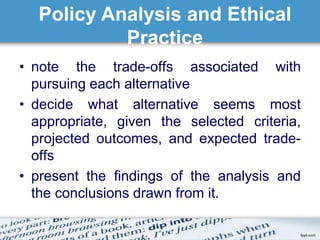
• note the trade-offs associated with 
pursuing each alternative 
• decide what alternative seems most 
appropriate, given the selected criteria, 
projected outcomes, and expected trade-offs 
• present the findings of the analysis and 
the conclusions drawn from it.
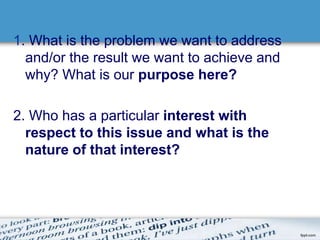
1. What is the problem we want to address 
and/or the result we want to achieve and 
why? What is our purpose here? 
2. Who has a particular interest with 
respect to this issue and what is the 
nature of that interest?
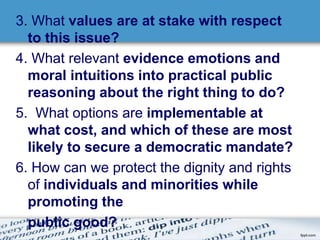
3. What values are at stake with respect 
to this issue? 
4. What relevant evidence emotions and 
moral intuitions into practical public 
reasoning about the right thing to do? 
5. What options are implementable at 
what cost, and which of these are most 
likely to secure a democratic mandate? 
6. How can we protect the dignity and rights 
of individuals and minorities while 
promoting the 
public good?
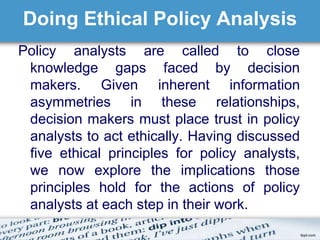
Doing Ethical Policy Analysis 
Policy analysts are called to close 
knowledge gaps faced by decision 
makers. Given inherent information 
asymmetries in these relationships, 
decision makers must place trust in policy 
analysts to act ethically. Having discussed 
five ethical principles for policy analysts, 
we now explore the implications those 
principles hold for the actions of policy 
analysts at each step in their work.
Ethics Defined 
z Moral codes are the rules that 
establish the boundaries of generally 
accepted behavior. 
Morality refers to social conventions 
about right and wrong human 
conduct. 
Ethics are beliefs regarding right 
and wrong behavior.
Ethics and Work 
The core values of ethics can 
help us evaluate the rationality 
and acceptability of public 
policies formulated to address 
social problems or market 
imperfections that arise in 
cyberspace.
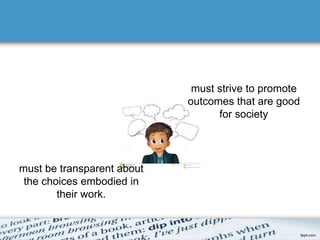
must strive to promote 
outcomes that are good 
for society 
must be transparent about 
the choices embodied in 
their work.
Five ethical principles 
INTEGRITY 
When people act with integrity, they are 
directed by an internal moral compass. 
They strive to do the right thing in any 
given situation and to achieve consistency 
in their intentions and actions across 
contexts.
People display integrity when they follow 
high standards of honesty and when they 
show commitment to the values of justice 
and fairness. 
People of integrity do not seek selfish, 
short-term gains through opportunistic 
actions that harm others.
Competence 
A strong relationship exists 
between competence and ethical 
behaviour. When you talk or act as if you 
can do something, then the qualities of 
honesty and integrity dictate that you can 
actually do it. It is dishonest for anyone to 
say they can do something when they 
cannot. Most professionals have 
specialised knowledge and skills, making 
them highly competent in a narrow set of 
areas.
Respect 
means being considerate and appreciative 
of others. It means treating others as you 
would like to be treated (Plante 2004) 
The tough part of respect is looking for the 
humanity, the good, and the 
reasonableness in people who our gut 
instincts lead us to despise
Responsibility 
Taking responsibility means 
acknowledging the part you play in 
contributing to expected or observed 
outcomes. It is commonplace for people to 
willingly accept the credit when good 
outcomes occur but to deflect blame for 
poor outcomes.
Concern 
Concern means caring about, 
showing an interest in, and being involved 
in the lives of others. When people devote 
their lives to working with and advancing 
the interests of the poor, they demonstrate 
exceptional levels of concern for others. 
Without making that level of sacrifice, 
many people – through their work, their 
philanthropy, and their acts of altruism – 
do an enormous amount to help others to 
live better lives.
Ethical Analysis Format 
1. State The Moral Issues 
2. Apply Ethical Principles 
3. Identify Options 
4. Make A Recommendations/Decisions
Ethical Construction of 
Alternatives 
we should treat our analysis as a 
vehicle for facilitating discussion of 
additional alternatives 
the construction of alternatives offers 
an opportunity for policy analysts to 
broaden policy discussions 
the set of alternatives should be 
constructed taking account of the 
broader financial context 
we should include alternatives that 
appear most relevant, given the 
problem and discussions surrounding it
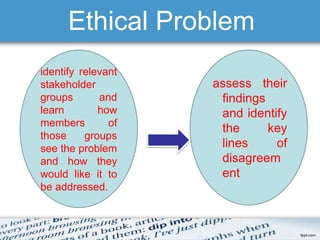
Ethical Problem 
identify relevant 
stakeholder 
groups and 
learn how 
members of 
those groups 
see the problem 
and how they 
would like it to 
be addressed. 
assess their 
findings 
and identify 
the key 
lines of 
disagreem 
ent
Ethical Decision Making 
It is important to develop a logical approach 
to ethical decision making. Here are some 
steps: 
Get the facts. 
Identify the stakeholders and their 
positions. 
Consider the consequences of your 
decision. 
Weigh various guidelines and principles 
(Virtue,Utilitarian, Fairness, Common 
Good).
Ethical Decision Making 
Develop and evaluate options. 
Review your decision. 
Evaluate the results of your decision.
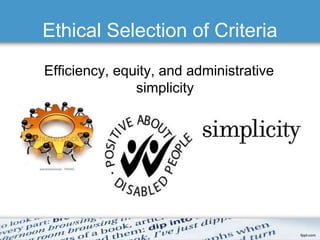
Ethical Selection of Criteria 
Efficiency, equity, and administrative 
simplicity

Ppt policy report

  • 1.
  • 2.
    What is Policy Analysis? Policy recommendations, or simply written policy advice, are the key means through which policy decisions are made in most levels of government. ™Whether the policy recommendation is accepted as sound or dismissed in favor of another option largely depends on how well the issue and the arguments justifying the recommended course of action are presented. ™
  • 3.
    A step-by-step guide Step 1: Defining the problem Step 2: Establishing goals Step 3: Selecting a policy Step 4: Implementing a policy Step 5: Evaluating the policy
  • 4.
    Policy Analysis andEthical Practice • define the problem at hand • assemble some evidence about the problem, its causes, and its effects • construct a set of alternative ways to address the problem • select the criteria for judging the relative merits of each alternative • project the likely outcomes of each alternative, given the chosen criteria
  • 5.
    Policy Analysis andEthical Practice • note the trade-offs associated with pursuing each alternative • decide what alternative seems most appropriate, given the selected criteria, projected outcomes, and expected trade-offs • present the findings of the analysis and the conclusions drawn from it.
  • 6.
    1. What isthe problem we want to address and/or the result we want to achieve and why? What is our purpose here? 2. Who has a particular interest with respect to this issue and what is the nature of that interest?
  • 7.
    3. What valuesare at stake with respect to this issue? 4. What relevant evidence emotions and moral intuitions into practical public reasoning about the right thing to do? 5. What options are implementable at what cost, and which of these are most likely to secure a democratic mandate? 6. How can we protect the dignity and rights of individuals and minorities while promoting the public good?
  • 8.
    Doing Ethical PolicyAnalysis Policy analysts are called to close knowledge gaps faced by decision makers. Given inherent information asymmetries in these relationships, decision makers must place trust in policy analysts to act ethically. Having discussed five ethical principles for policy analysts, we now explore the implications those principles hold for the actions of policy analysts at each step in their work.
  • 9.
    Ethics Defined zMoral codes are the rules that establish the boundaries of generally accepted behavior. Morality refers to social conventions about right and wrong human conduct. Ethics are beliefs regarding right and wrong behavior.
  • 10.
    Ethics and Work The core values of ethics can help us evaluate the rationality and acceptability of public policies formulated to address social problems or market imperfections that arise in cyberspace.
  • 11.
    must strive topromote outcomes that are good for society must be transparent about the choices embodied in their work.
  • 12.
    Five ethical principles INTEGRITY When people act with integrity, they are directed by an internal moral compass. They strive to do the right thing in any given situation and to achieve consistency in their intentions and actions across contexts.
  • 13.
    People display integritywhen they follow high standards of honesty and when they show commitment to the values of justice and fairness. People of integrity do not seek selfish, short-term gains through opportunistic actions that harm others.
  • 14.
    Competence A strongrelationship exists between competence and ethical behaviour. When you talk or act as if you can do something, then the qualities of honesty and integrity dictate that you can actually do it. It is dishonest for anyone to say they can do something when they cannot. Most professionals have specialised knowledge and skills, making them highly competent in a narrow set of areas.
  • 15.
    Respect means beingconsiderate and appreciative of others. It means treating others as you would like to be treated (Plante 2004) The tough part of respect is looking for the humanity, the good, and the reasonableness in people who our gut instincts lead us to despise
  • 16.
    Responsibility Taking responsibilitymeans acknowledging the part you play in contributing to expected or observed outcomes. It is commonplace for people to willingly accept the credit when good outcomes occur but to deflect blame for poor outcomes.
  • 17.
    Concern Concern meanscaring about, showing an interest in, and being involved in the lives of others. When people devote their lives to working with and advancing the interests of the poor, they demonstrate exceptional levels of concern for others. Without making that level of sacrifice, many people – through their work, their philanthropy, and their acts of altruism – do an enormous amount to help others to live better lives.
  • 18.
    Ethical Analysis Format 1. State The Moral Issues 2. Apply Ethical Principles 3. Identify Options 4. Make A Recommendations/Decisions
  • 19.
    Ethical Construction of Alternatives we should treat our analysis as a vehicle for facilitating discussion of additional alternatives the construction of alternatives offers an opportunity for policy analysts to broaden policy discussions the set of alternatives should be constructed taking account of the broader financial context we should include alternatives that appear most relevant, given the problem and discussions surrounding it
  • 20.
    Ethical Problem identifyrelevant stakeholder groups and learn how members of those groups see the problem and how they would like it to be addressed. assess their findings and identify the key lines of disagreem ent
  • 21.
    Ethical Decision Making It is important to develop a logical approach to ethical decision making. Here are some steps: Get the facts. Identify the stakeholders and their positions. Consider the consequences of your decision. Weigh various guidelines and principles (Virtue,Utilitarian, Fairness, Common Good).
  • 22.
    Ethical Decision Making Develop and evaluate options. Review your decision. Evaluate the results of your decision.
  • 23.
    Ethical Selection ofCriteria Efficiency, equity, and administrative simplicity