Downloaded 58 times








![COMPUTATION OF TRAFFIC FOR USE
OF PAVEMENT THICKNESS DESIGN
CHART
365 xA[(1+r)n – 1]
N = --------------------------- x D x F
r
N = Cumulative No. of standard axles to be catered for the
design in terms of msa
D = Lane distribution factor
A = Initial traffic, in the year of completion of construction,
in terms of number of commercial vehicles per day
F = Vehicle Damage Factor
n = Design life in years
r = Annual growth rate of commercial vehicles](https://image.slidesharecdn.com/seminar-190527080607/75/ppt-on-construction-and-design-of-flexible-pavement-23-2048.jpg)


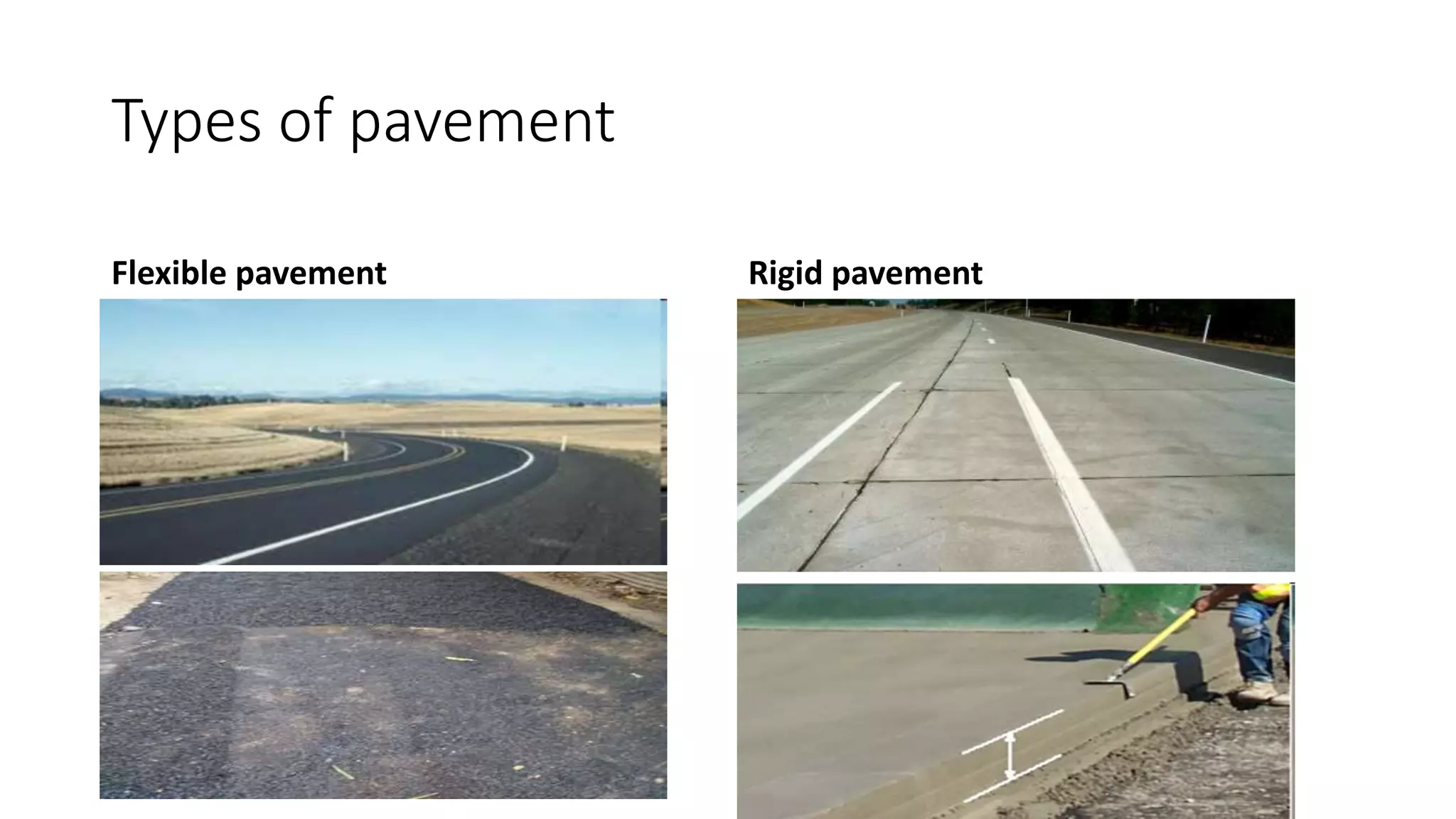
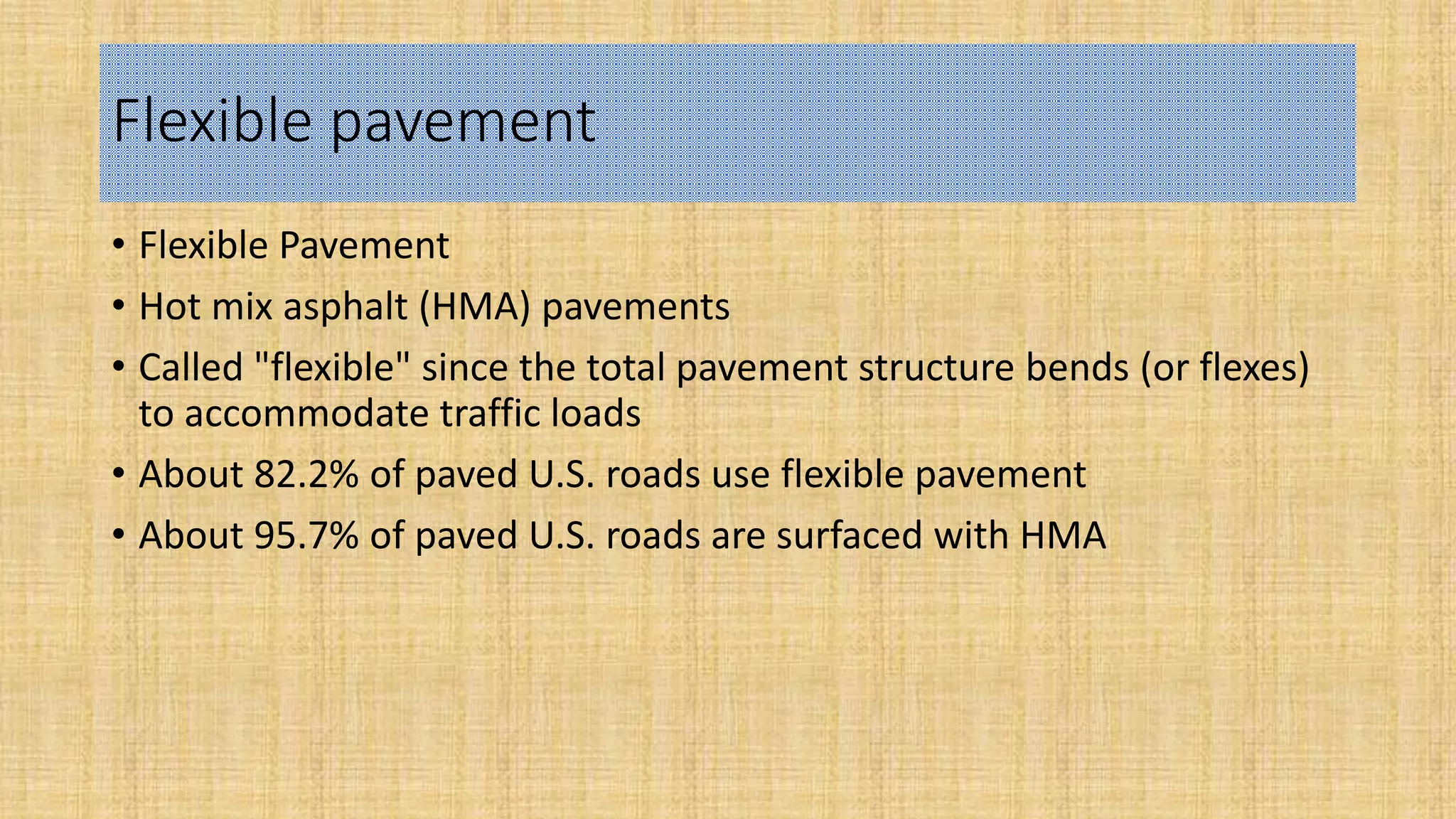
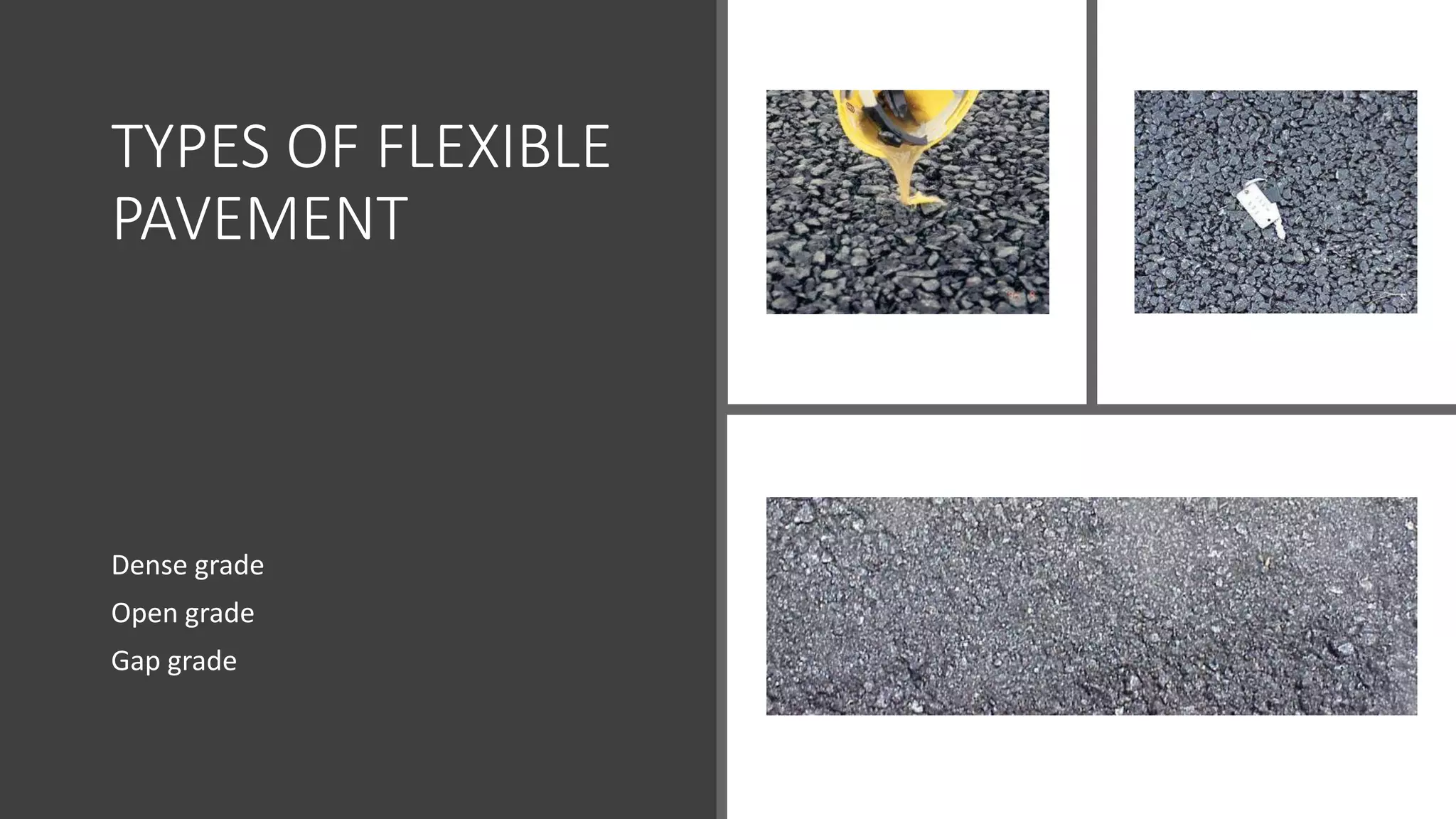
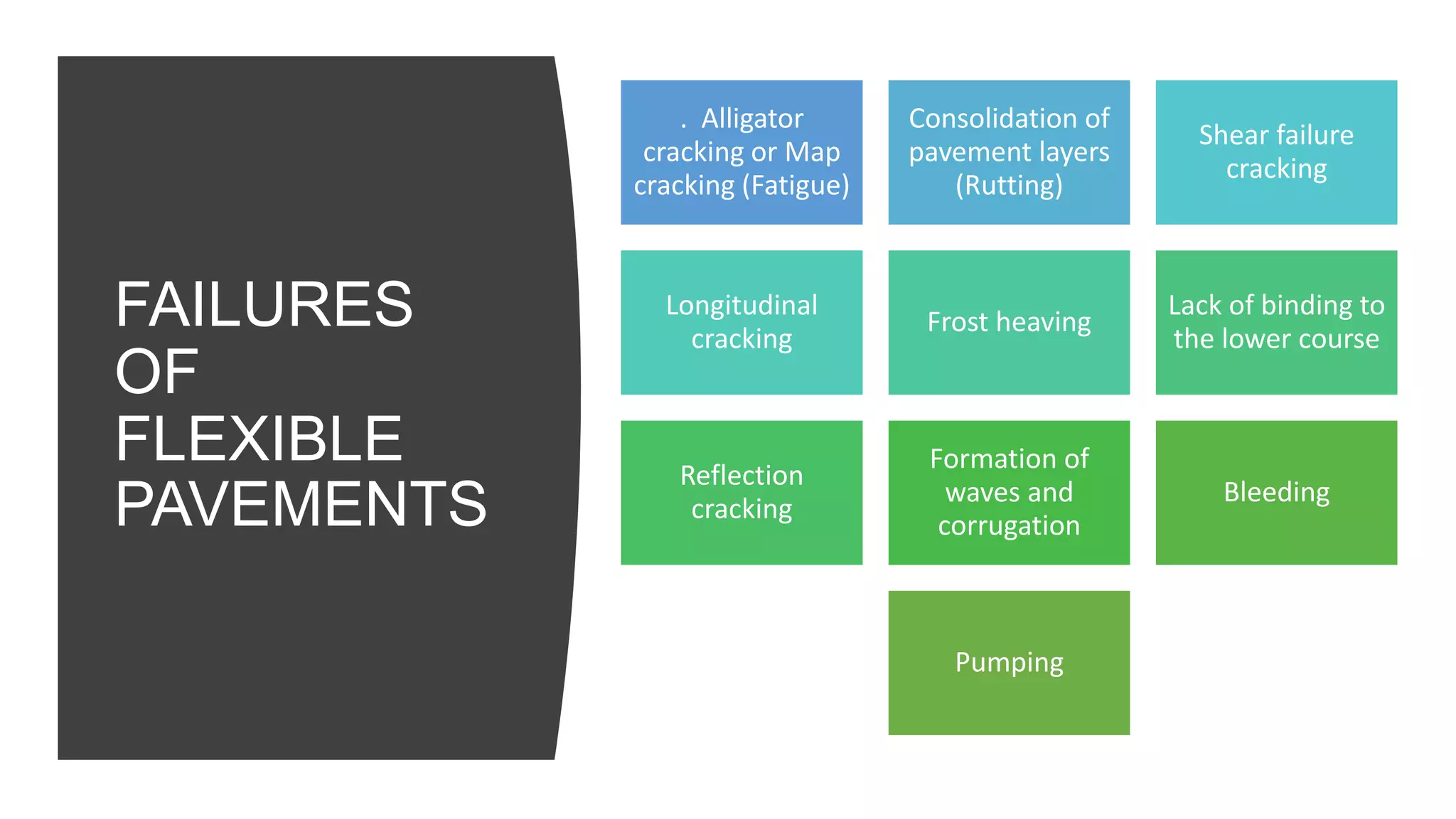
1) The document summarizes the design and construction of flexible pavements. It describes the typical layers of a flexible pavement from top to bottom including the surface course, binder course, base course, sub-base course, and subgrade. 2) It also discusses factors involved in the design of flexible pavements like traffic load, subgrade soil properties, climate, and required material properties. Common failure modes of flexible pavements include alligator cracking, rutting, and reflection cracking. 3) Design life, traffic calculations, and common tests for bitumen are also outlined. The advantages of flexible pavements include adaptability and ease of repair while the disadvantages include higher maintenance costs and shorter life under heavy traffic loads


