Creative Non-fiction Writing
Prepared by:
MARK CESAR R. VILLANUEVA
SUBJECT TEACHER
Objectives:
1. Do a close reading of creative nonfictional
texts.
2. Identify the fictional elements in the text.
3. Analyze and interpret factual/nonfictional
aspects in the texts.
It is only with the heart that one
can see rightly: What is essential is
invisible to the eye.
Antoine de Saint Exupery
(The Little Prince)
It is only with the heart that one
can see rightly: What is essential is
invisible to the eye.
Antoine de Saint Exupery
(The Little Prince)
It is only with the heart that one
can see rightly: What is essential is
invisible to the eye.
Antoine de Saint Exupery
(The Little Prince)
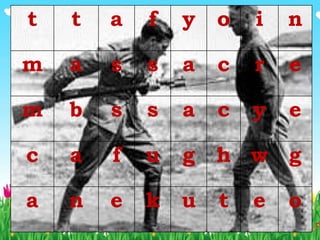
t t a f y o i n
m a s s a c r e
m b s s a c y e
c a f u g h w g
a n e k u t e o
Elements of Creative Nonfiction
 Fact. The writing must be based on fact, rather than fiction. It cannot be made up.
 Extensive research. The piece of writing is based on primary research, such as an
interview or personal experience, and often secondary research, such as gathering
information from books, magazines, and newspapers.
 Reportage/reporting. The writer must be able to document events or personal
experiences.
 Personal experience and personal opinion. Often, the writer includes personal
experience, feelings, thoughts, and opinions. For instance, when writing a personal
essay or memoir.
 Explanation/Exposition. The writer is required to explain the personal experience
or topic to the reader.
 Essay format. Creative nonfiction is often written in essay format. Example:
Personal Essay, Literary Journalistic essay, brief essay.
Literary Elements
 Storytelling/narration. The writer needs to be able to tell his/her story. A good story includes
an inciting incident, a goal, challenges and obstacles, a turning point, and resolution of the
story.
 Character. The nonfiction piece often requires a main character. Example: If a writer is
creating his/her memoir, then the writer is the central character.
 Setting and scene. The writer creates scenes that are action-oriented; include dialogue; and
contain vivid descriptions.
 Plot and plot structure. These are the main events that make up the story. In a personal
essay, there might be only one event. In a memoir, there are often several significant events.
 Figurative language. The writer often uses simile and metaphor to create an interesting piece
of creative nonfiction.
 Imagery. The writer constructs “word pictures” using sensory language. Imagery can be
figurative or literal.
 Point of view. Often the writer uses the first person “I.”
 Dialogue. These are the conversations spoken between people. It is an important component
of creative nonfiction.
 Theme. There is a central idea that is weaved through the essay or work. Often, the theme
reveals a universal truth.
The 5’Rs of Creative Nonfiction
• Creative nonfiction has a “real life” aspect. The writer constructs a personal essay, memoir,
and so forth, that is based on personal experience. He also writes about real people and true
events.
• Creative nonfiction is based on the writer engaging in personal “reflection” about what
he/she is writing about. After gathering information, the writer needs to analyze and assess
what he/she has collected. He then must evaluate it and expression his thoughts, views,
opinions. Personal opinion is permissible and encouraged.
• Creative nonfiction requires that the writer complete research. The writer needs to conduct
research to learn about the topic. The writer also needs to complete research to discover
what has been written about the topic. Even if a writer is crafting a personal essay, he will
need to complete secondary research, such as reviewing a personal journal, or primary
research, such as interviewing a friend or family member, to ensure that the information is
truthful and factual.
• The fourth aspect of creative nonfiction is reading. Reading while conducting research is not
sufficient. The writer must read the work of the masters of his profession.
• The final element of creative nonfiction is writing. Writing creative nonfiction is both an art
and craft. The art of creative nonfiction requires that the writer uses his talents, instincts,
creative abilities, and imagination to write memorable creative nonfiction. The craft of
creative nonfiction requires that the writer learn and deploy the style and techniques of
creative nonfiction in his/her work.
Types of Creative Nonfiction
 Personal Essay. The writer crafts and essay that is based on personal
experience or a single event, which results in significant personal meaning
or a lesson learned. The writer uses the first person “I.”
 Memoir. The writer constructs a true story about a time or period in
his/life, one that had significant personal meaning and a universal truth.
The writer composes the story using the first person “I.”
 Literary journalism essay. The writer crafts an essay about an issue or
topic using literary devices, such as the elements of fiction and figurative
language.
 Autobiography. The writer composes his/her life story, from birth to the
present, using the first person “I.”
 Travel Writing. The writer crafts articles or essays about travel using
literary devices.
 Food writing. The writer crafts stories about food and cuisine using
literary devices.
 Profiles. The writer constructs biographies or essays on real people using
literary devices.
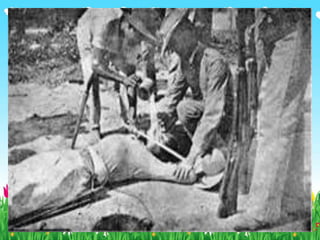
Taban Massacre
This tragic infamous incident etched in the annals of Alimodian history and
forever ingrained in the memories of the townsfolk took place in the early
morning of August 17, 1942.
It was a fine busy Tuesday morning and people were busy trading and
buying and selling of farm produce were briskly done and people of all ages
and gender crowded the marketplace. All of a sudden the Japanese appeared
in a flash; the first impulse is to escape but it was too late for most of the
people there to get out. The preconceived plan of getting all the able bodied
men from the crowd was carried out, seizing them and tied their hands and
feet by the Japanese forces.
About 50 men were captured after all the rest successfully eluded the
Japanese while those who were left in the scene were women. Bayonets and
sabers were immediately put into action after lining up the captured 50 men
who were securely tied up. One by one, the captives were made to stand
against the trunk of a coconut tree. Immediately, each one of them was
subjected to bayonet thrusts and later beheaded with sabers; the massacre is
completed and the severed heads of the victims were left scattered around to
be eaten and taken cared of by the dogs after the murderers had gone.
On the HOTS seat!
1. In what category of non-fictional text does this story
belong? Which point of view is used? Why?
2. What is the setting of this selection? (Time and place) Is it
specific in this selection?
3. Who is the main character of this selection? What kind of
person is the character?
4. Is this selection of historical significance?
5. What conflicts are found in this selection? Explain each.
6. Why was the selection written? Is this important?
7. What is the theme of the selection?
Give that Element! (Matching Type)
1.Filipinos who are victims of the a. Imagery
Taban Massacre and the Japanese b. Theme
Soldiers c. Character
2.The author himself is reporting the d. Plot
Events in the story. e. Personal experience and opinion
3.the Japanese appeared in a flash f. Figurative language
4. It was a fine busy Tuesday g. Setting and scene
morning and people were busy trading h. Reportage/reporting
and buying and selling of farm produce i. Point of view
were briskly done and people of all j. Factual information
ages and gender crowded the
marketplace.
Give that Element! (Matching Type)
5. Third person Omniscient
6. the massacre is completed and the severed heads of
the victims were left scattered around to be eaten and
taken care of by the dogs.
7. This tragic infamous incident etched in the annals of
Alimodian history
8. Better to die for freedom
9. All of a sudden the Japanese appeared in a flash; the
first impulse is to escape but it was too late for most of
the
people there to get out.
10. About 50 men were captured after all the rest
successfully eluded the Japanese while those who
were left in the scene were women.
Assignment!
• Select from the types of creative non-fiction and
write a short paragraph about what you have chosen
(any topic will do) do it in a one whole sheet of
paper, make sure to use the elements of creative
writing non-fiction.

PPT INTRODUCTION CREATIVE NONFICTION.pptx

  • 1.
    Creative Non-fiction Writing Preparedby: MARK CESAR R. VILLANUEVA SUBJECT TEACHER
  • 2.
    Objectives: 1. Do aclose reading of creative nonfictional texts. 2. Identify the fictional elements in the text. 3. Analyze and interpret factual/nonfictional aspects in the texts.
  • 3.
    It is onlywith the heart that one can see rightly: What is essential is invisible to the eye. Antoine de Saint Exupery (The Little Prince)
  • 4.
    It is onlywith the heart that one can see rightly: What is essential is invisible to the eye. Antoine de Saint Exupery (The Little Prince)
  • 5.
    It is onlywith the heart that one can see rightly: What is essential is invisible to the eye. Antoine de Saint Exupery (The Little Prince) t t a f y o i n m a s s a c r e m b s s a c y e c a f u g h w g a n e k u t e o
  • 6.
    Elements of CreativeNonfiction  Fact. The writing must be based on fact, rather than fiction. It cannot be made up.  Extensive research. The piece of writing is based on primary research, such as an interview or personal experience, and often secondary research, such as gathering information from books, magazines, and newspapers.  Reportage/reporting. The writer must be able to document events or personal experiences.  Personal experience and personal opinion. Often, the writer includes personal experience, feelings, thoughts, and opinions. For instance, when writing a personal essay or memoir.  Explanation/Exposition. The writer is required to explain the personal experience or topic to the reader.  Essay format. Creative nonfiction is often written in essay format. Example: Personal Essay, Literary Journalistic essay, brief essay.
  • 7.
    Literary Elements  Storytelling/narration.The writer needs to be able to tell his/her story. A good story includes an inciting incident, a goal, challenges and obstacles, a turning point, and resolution of the story.  Character. The nonfiction piece often requires a main character. Example: If a writer is creating his/her memoir, then the writer is the central character.  Setting and scene. The writer creates scenes that are action-oriented; include dialogue; and contain vivid descriptions.  Plot and plot structure. These are the main events that make up the story. In a personal essay, there might be only one event. In a memoir, there are often several significant events.  Figurative language. The writer often uses simile and metaphor to create an interesting piece of creative nonfiction.  Imagery. The writer constructs “word pictures” using sensory language. Imagery can be figurative or literal.  Point of view. Often the writer uses the first person “I.”  Dialogue. These are the conversations spoken between people. It is an important component of creative nonfiction.  Theme. There is a central idea that is weaved through the essay or work. Often, the theme reveals a universal truth.
  • 8.
    The 5’Rs ofCreative Nonfiction • Creative nonfiction has a “real life” aspect. The writer constructs a personal essay, memoir, and so forth, that is based on personal experience. He also writes about real people and true events. • Creative nonfiction is based on the writer engaging in personal “reflection” about what he/she is writing about. After gathering information, the writer needs to analyze and assess what he/she has collected. He then must evaluate it and expression his thoughts, views, opinions. Personal opinion is permissible and encouraged. • Creative nonfiction requires that the writer complete research. The writer needs to conduct research to learn about the topic. The writer also needs to complete research to discover what has been written about the topic. Even if a writer is crafting a personal essay, he will need to complete secondary research, such as reviewing a personal journal, or primary research, such as interviewing a friend or family member, to ensure that the information is truthful and factual. • The fourth aspect of creative nonfiction is reading. Reading while conducting research is not sufficient. The writer must read the work of the masters of his profession. • The final element of creative nonfiction is writing. Writing creative nonfiction is both an art and craft. The art of creative nonfiction requires that the writer uses his talents, instincts, creative abilities, and imagination to write memorable creative nonfiction. The craft of creative nonfiction requires that the writer learn and deploy the style and techniques of creative nonfiction in his/her work.
  • 9.
    Types of CreativeNonfiction  Personal Essay. The writer crafts and essay that is based on personal experience or a single event, which results in significant personal meaning or a lesson learned. The writer uses the first person “I.”  Memoir. The writer constructs a true story about a time or period in his/life, one that had significant personal meaning and a universal truth. The writer composes the story using the first person “I.”  Literary journalism essay. The writer crafts an essay about an issue or topic using literary devices, such as the elements of fiction and figurative language.  Autobiography. The writer composes his/her life story, from birth to the present, using the first person “I.”  Travel Writing. The writer crafts articles or essays about travel using literary devices.  Food writing. The writer crafts stories about food and cuisine using literary devices.  Profiles. The writer constructs biographies or essays on real people using literary devices.
  • 10.
    Taban Massacre This tragicinfamous incident etched in the annals of Alimodian history and forever ingrained in the memories of the townsfolk took place in the early morning of August 17, 1942. It was a fine busy Tuesday morning and people were busy trading and buying and selling of farm produce were briskly done and people of all ages and gender crowded the marketplace. All of a sudden the Japanese appeared in a flash; the first impulse is to escape but it was too late for most of the people there to get out. The preconceived plan of getting all the able bodied men from the crowd was carried out, seizing them and tied their hands and feet by the Japanese forces. About 50 men were captured after all the rest successfully eluded the Japanese while those who were left in the scene were women. Bayonets and sabers were immediately put into action after lining up the captured 50 men who were securely tied up. One by one, the captives were made to stand against the trunk of a coconut tree. Immediately, each one of them was subjected to bayonet thrusts and later beheaded with sabers; the massacre is completed and the severed heads of the victims were left scattered around to be eaten and taken cared of by the dogs after the murderers had gone.
  • 11.
    On the HOTSseat! 1. In what category of non-fictional text does this story belong? Which point of view is used? Why? 2. What is the setting of this selection? (Time and place) Is it specific in this selection? 3. Who is the main character of this selection? What kind of person is the character? 4. Is this selection of historical significance? 5. What conflicts are found in this selection? Explain each. 6. Why was the selection written? Is this important? 7. What is the theme of the selection?
  • 12.
    Give that Element!(Matching Type) 1.Filipinos who are victims of the a. Imagery Taban Massacre and the Japanese b. Theme Soldiers c. Character 2.The author himself is reporting the d. Plot Events in the story. e. Personal experience and opinion 3.the Japanese appeared in a flash f. Figurative language 4. It was a fine busy Tuesday g. Setting and scene morning and people were busy trading h. Reportage/reporting and buying and selling of farm produce i. Point of view were briskly done and people of all j. Factual information ages and gender crowded the marketplace.
  • 13.
    Give that Element!(Matching Type) 5. Third person Omniscient 6. the massacre is completed and the severed heads of the victims were left scattered around to be eaten and taken care of by the dogs. 7. This tragic infamous incident etched in the annals of Alimodian history 8. Better to die for freedom 9. All of a sudden the Japanese appeared in a flash; the first impulse is to escape but it was too late for most of the people there to get out. 10. About 50 men were captured after all the rest successfully eluded the Japanese while those who were left in the scene were women.
  • 14.
    Assignment! • Select fromthe types of creative non-fiction and write a short paragraph about what you have chosen (any topic will do) do it in a one whole sheet of paper, make sure to use the elements of creative writing non-fiction.