CPU Scheduling
INTRODUCTION
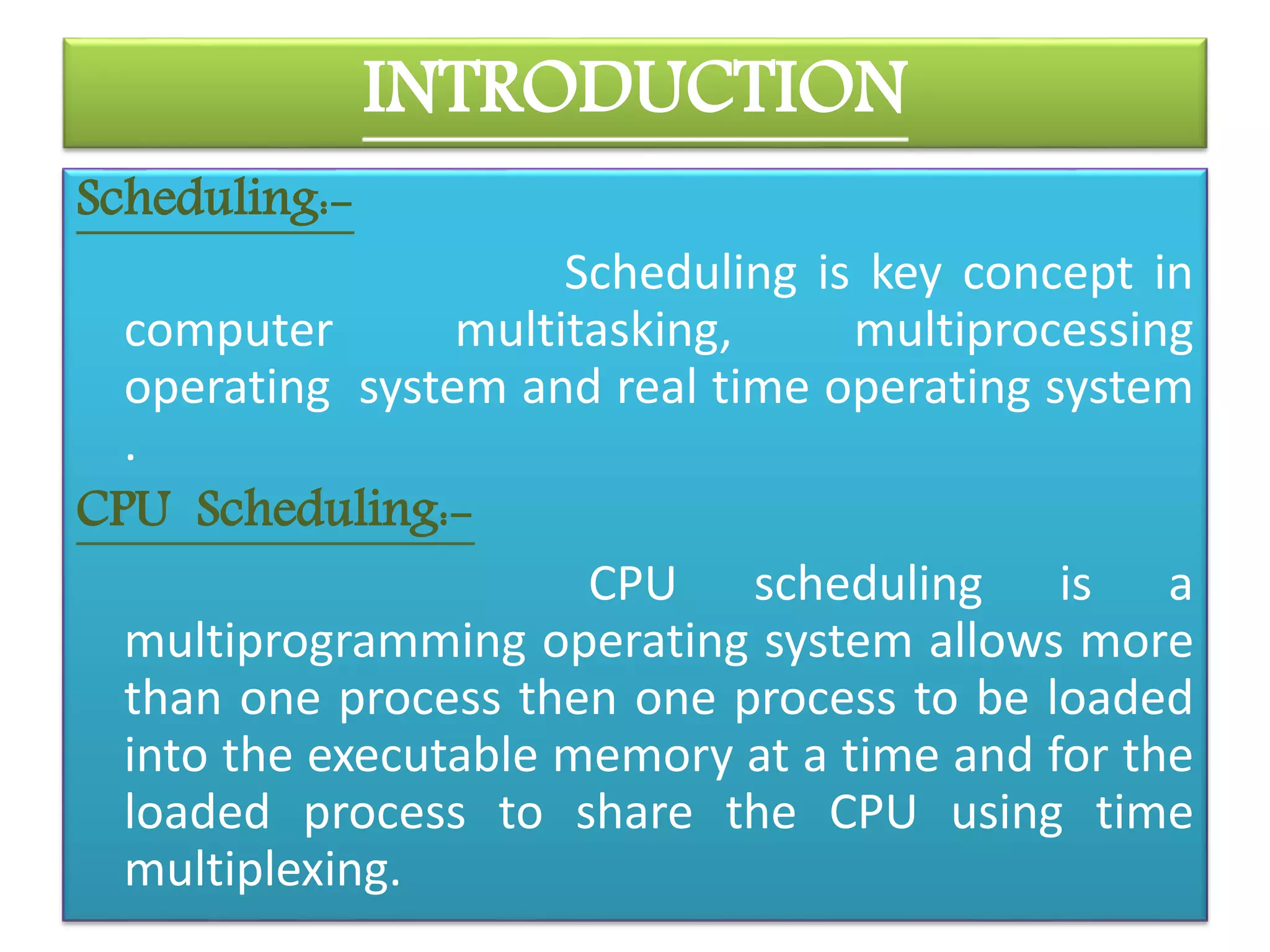
Scheduling:-
Scheduling is key concept in
computer multitasking, multiprocessing
operating system and real time operating system
.
CPU Scheduling:-
CPU scheduling is a
multiprogramming operating system allows more
than one process then one process to be loaded
into the executable memory at a time and for the
loaded process to share the CPU using time
multiplexing.
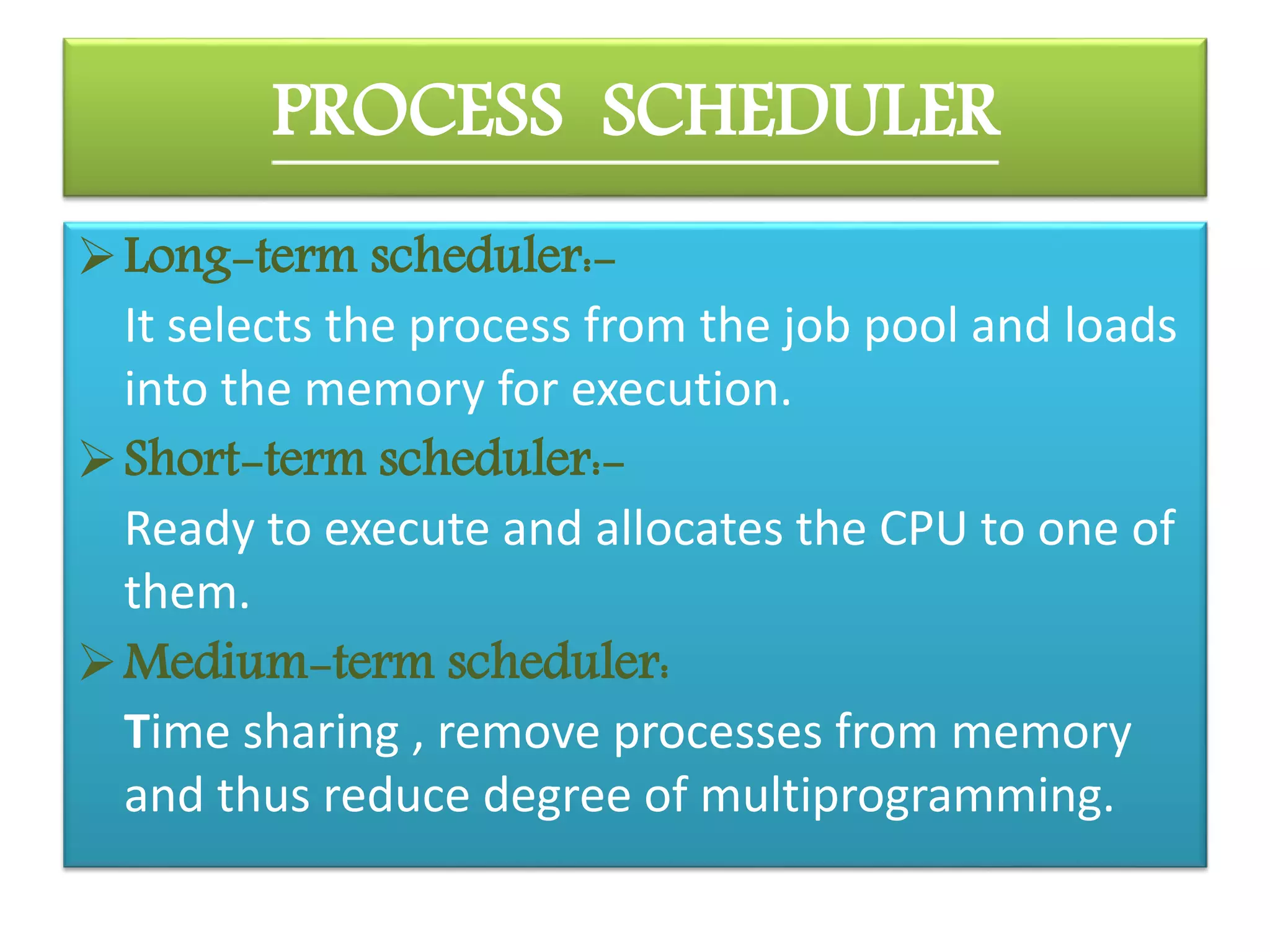
PROCESS SCHEDULER
Long-term scheduler:-
It selects the process from the job pool and loads
into the memory for execution.
Short-term scheduler:-
Ready to execute and allocates the CPU to one of
them.
Medium-term scheduler:
Time sharing , remove processes from memory
and thus reduce degree of multiprogramming.
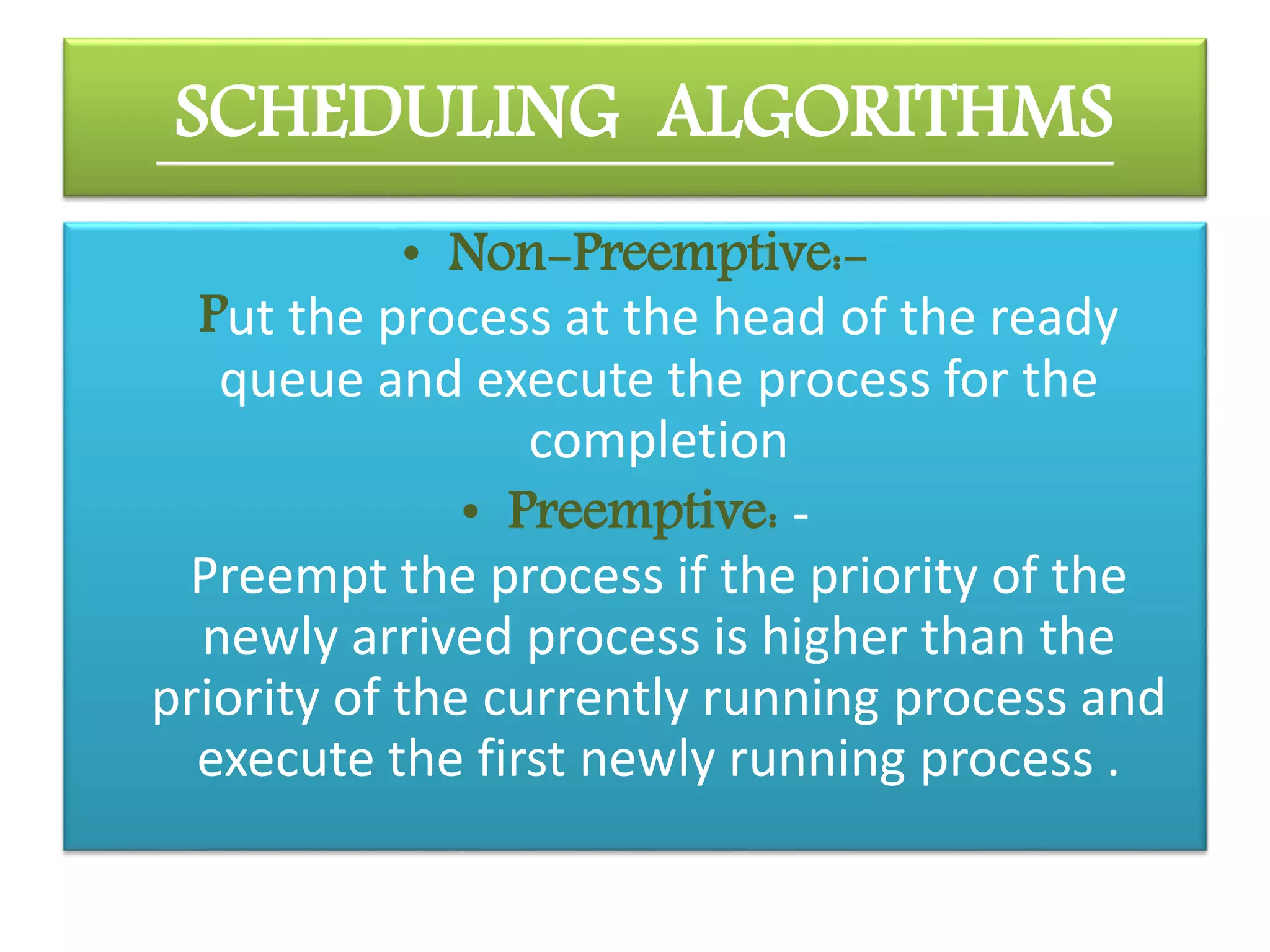
SCHEDULING ALGORITHMS
• Non-Preemptive:-
Put the process at the head of the ready
queue and execute the process for the
completion
• Preemptive: -
Preempt the process if the priority of the
newly arrived process is higher than the
priority of the currently running process and
execute the first newly running process .
CPU SCHEDULING ALGORITHMS
FCFS
SJF
RRS
FCFS
First Come First Served (FCFS):-
• FCFS is the non-preemptive in nature will have
negligible amount of context switching as a
process.
• The execution of the FCFS algorithm is easily
managed with a FIFO queue.
SJF
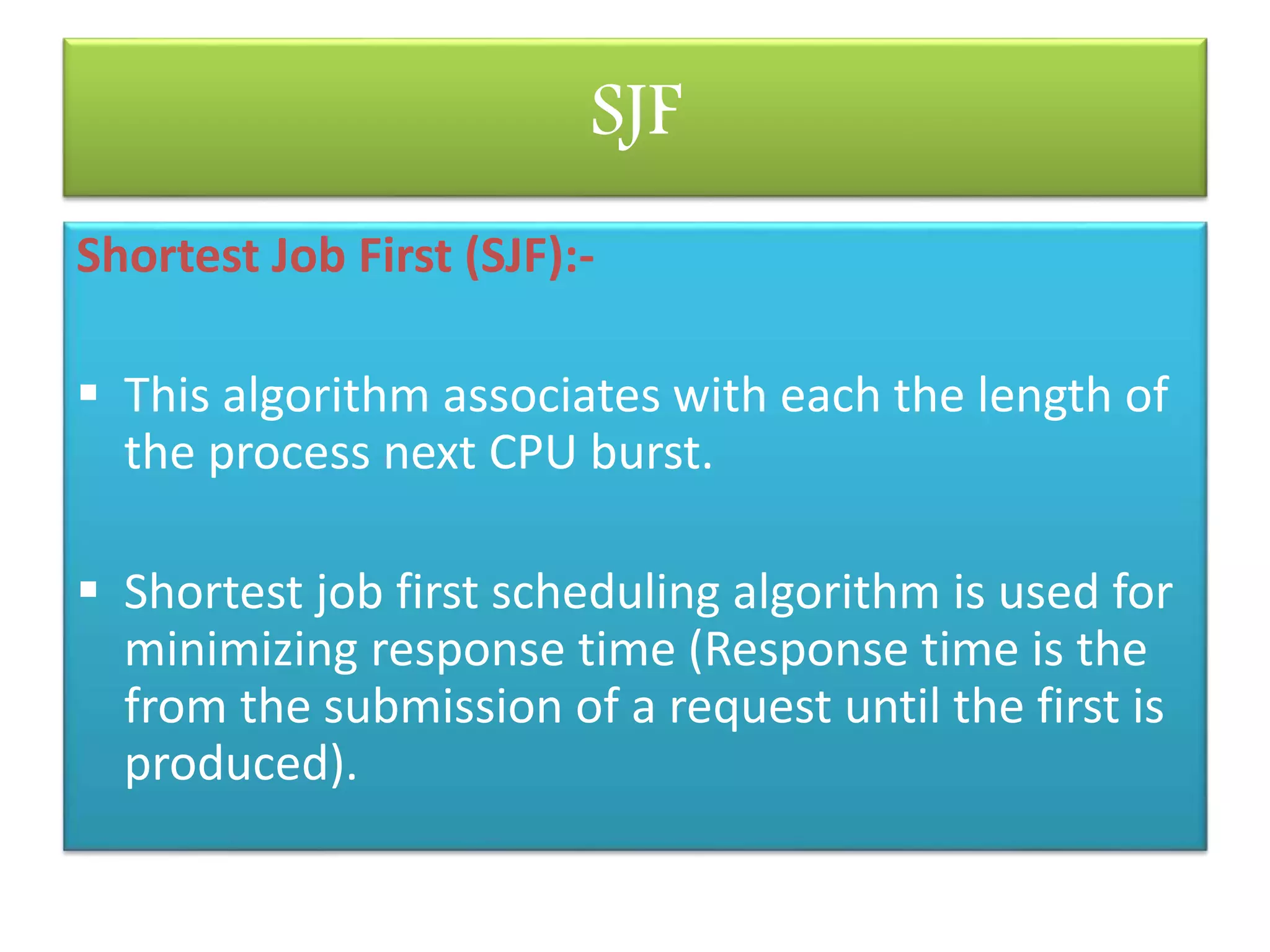
Shortest Job First (SJF):-
 This algorithm associates with each the length of
the process next CPU burst.
 Shortest job first scheduling algorithm is used for
minimizing response time (Response time is the
from the submission of a request until the first is
produced).
RRS
Round Robin Scheduling (RRS):-
 One of the oldest, simplest, fairest and widely
used algorithms is Round Robin.
 RRS algorithm is designed especially for time
sharing system (sharing computing resources
among many users by means of
multiprogramming and multitasking).
CONCLUSION
• Conclusion is all process to be suggested the
algorithm needed to increment process OS
system and scheduling. SJF scheduling tends
to result in increased waiting time for long
processes.
REFERENCES
• http://siber.cankaya.edu.tr/ozdogan/Operatin
gSystems/ceng328/node123.html
• http://web.cse.ohio-
state.edu/~agrawal/660/Slides/jan16.pdf
• Operating Systems Lecture Notes
THANK YOU

PPT CPU

  • 1.
  • 2.
    INTRODUCTION Scheduling:- Scheduling is keyconcept in computer multitasking, multiprocessing operating system and real time operating system . CPU Scheduling:- CPU scheduling is a multiprogramming operating system allows more than one process then one process to be loaded into the executable memory at a time and for the loaded process to share the CPU using time multiplexing.
  • 3.
    PROCESS SCHEDULER Long-term scheduler:- Itselects the process from the job pool and loads into the memory for execution. Short-term scheduler:- Ready to execute and allocates the CPU to one of them. Medium-term scheduler: Time sharing , remove processes from memory and thus reduce degree of multiprogramming.
  • 4.
    SCHEDULING ALGORITHMS • Non-Preemptive:- Putthe process at the head of the ready queue and execute the process for the completion • Preemptive: - Preempt the process if the priority of the newly arrived process is higher than the priority of the currently running process and execute the first newly running process .
  • 5.
  • 6.
    FCFS First Come FirstServed (FCFS):- • FCFS is the non-preemptive in nature will have negligible amount of context switching as a process. • The execution of the FCFS algorithm is easily managed with a FIFO queue.
  • 7.
    SJF Shortest Job First(SJF):-  This algorithm associates with each the length of the process next CPU burst.  Shortest job first scheduling algorithm is used for minimizing response time (Response time is the from the submission of a request until the first is produced).
  • 8.
    RRS Round Robin Scheduling(RRS):-  One of the oldest, simplest, fairest and widely used algorithms is Round Robin.  RRS algorithm is designed especially for time sharing system (sharing computing resources among many users by means of multiprogramming and multitasking).
  • 9.
    CONCLUSION • Conclusion isall process to be suggested the algorithm needed to increment process OS system and scheduling. SJF scheduling tends to result in increased waiting time for long processes.
  • 10.
  • 11.