PRESENTED BY
Sakuntala Giri
Lecturer in MHN
SUM Nursing College
S’O’A UNIVERSITY
Power and politics influence nursing practice,
education, and research, which in turn influence health
care. Power gives one the potential to change the
attitudes and behaviour of individual people and
groups. Politics is the art of using power wisely.
Definition:
 Power is the ability to influence others through
the use of energy and strength.
 Power can also be defined as the capacity to act
or the strength and potency to accomplish
something.
 Its original meaning is –“to be able
to”
 Power is defined as “ the ability to
employ force” -(Bierstadt)
 Power includes caring practices by
nurses which are used to empower
patients. – (Benner ,2001)
 To provide competent, humanistic, and
affordable care to people.
 To participate in health care policy
development.
 To ensure that nursing is an attractive
career choice for all who want to provide
care, influence, and improve nursing,
health care and health policy.
 Power is dynamic and elusive and
must be continuously replenished.
 Power can be obtained only through
active means.
 A power obtained manager uses any
means of control.
 Restraints is needed to use power
appropriate .
 Power relation in an organization are
situational.
 All agency employee desire clear definition of
power and control relationship among staff
members.
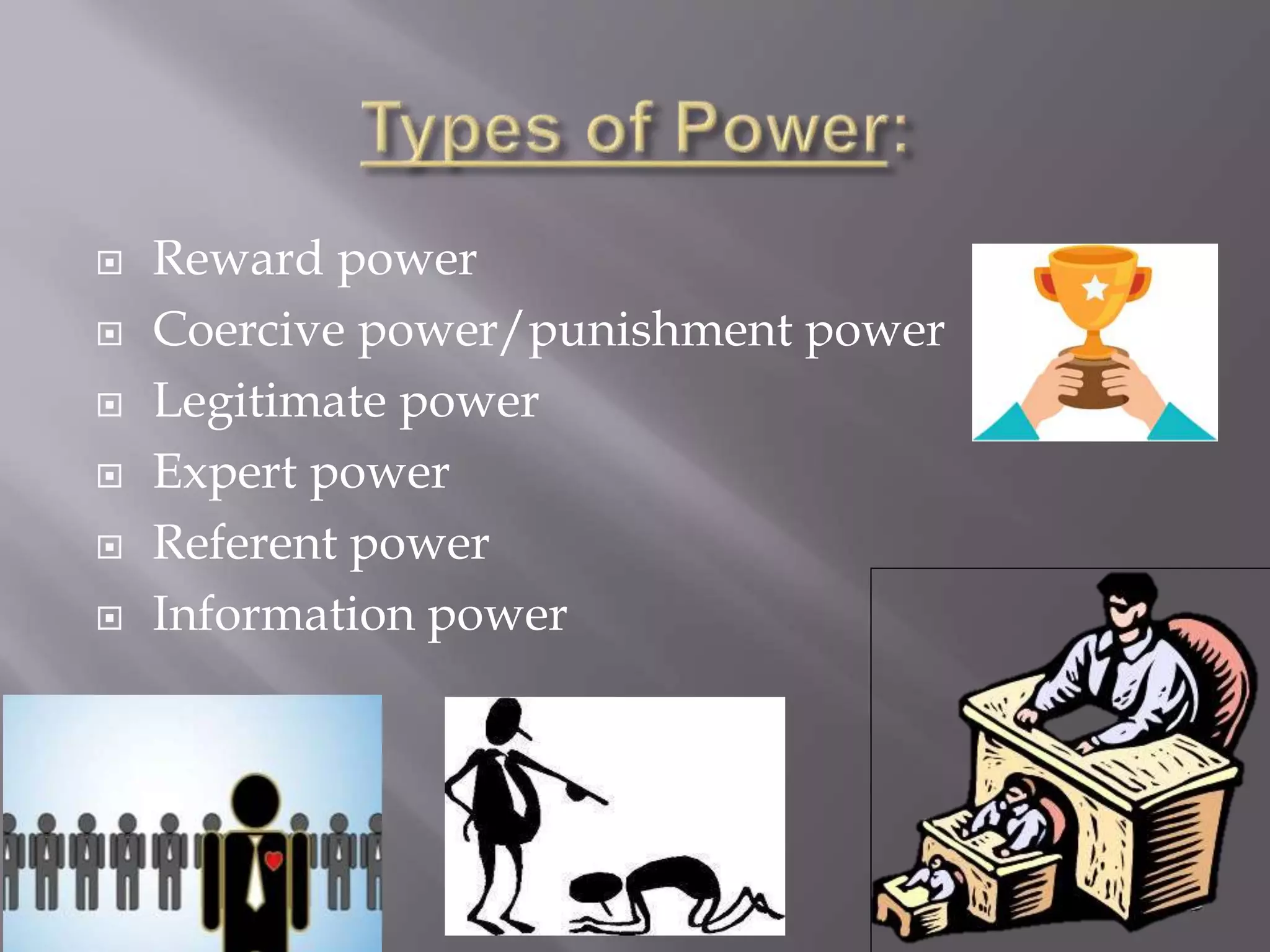
 Reward power
 Coercive power/punishment power
 Legitimate power
 Expert power
 Referent power
 Information power
 Broad human networks
 Broad information networks
 Multiple formal and informal leadership roles.
 Ability to assess situations accurately and to
solve problems.
 Authority over others and resources via
legitimate work organizational roles.
 Vision for future and creativity.
 Participate in interdisciplinary conferences to
broaden knowledge, develop skills, and build
networks.
 Keep knowledge and skills current to maintain
and extend power.
 Earn higher degrees.
 Participate actively in professional associations.
 Participate in nursing research to develop
knowledge and increase expertise.
 Problem solving with colleagues in nursing
and other disciplines.
 Participate in nursing and interdisciplinary
committees to develop expertise and network
and to polish skills.
 Learn from mentors.
Empowerment is a sense of having both the ability and
the opportunity to act effectively.
Empowerment Ladder:
 Self confidence.
 Ability to control life situations.
 Refuse to be a victim.
 Value self and others.
 Be a risk taker.
 Be creative.
 Resolve conflict.
 Show initiative.
 Become empowered.
 Self-image.
 Grooming and dress.
 Good manners.
 Body-language.
 Speech.
 Belief in power as a positive force.
 Career commitment.
 Continuing professional education.
 Communication Skills;
- Networking.
- Mentoring.
- Goal setting.
- Develop expertise.
 High Visibility.
Abuse of power is the control of people by
some kind of force. It is the use of power for one’s
own benefit and can be present in families,
organizations, and all levels of domestic and
international government.
It is a process through which one tries
successfully or unsuccessfully to reach a goal.
Political Nursing:
Political nursing is defined is the use of
knowledge about power processes and strategies
to influence the nature and direction of health care
and professional nursing.
Anderson & Glanze. 1998
Effective use of power and politics to
facilitate strategy development for the policy
process requires systematic analysis of the issues.
 Identify and analyse the problem
 Outline and analyse proposed solution.
 Understand the background, including its
history and attempts to solve the problem.
 Locate the political situation and its structure.
 Evaluate the stakeholders.
 Conduct a values assessment
 Ascertain financial and personal needs to attain
goals.
 Analyze power bases.
 Persistence
 Frame issue adequately
 Develop and use networks
 Assess time
 Collaborate
 Prepare to take risks
 Understand the opposition.
The effective functioning of an organization
depends on the relationship between individuals
and groups. Effective use of politics in the
workplace can facilitate achievement of goals.
 Build your own team
 Establish alliances with superiors and peers.
 Use all possible channels of communication
 Do not be naïve about how decisions are made.
 Know priority
 Be courteous
 Maintain a flexible position and
maneuverability
 Disclose information judiciously
 Climent I. Management of Nursing Services
and Administration. 2nd Edition. New Delhi:
Jaypee Brothers Medical Publishers; 2007. Pp-
169-178.
 K. Deepak. A Comprehensive Textbook on
Nursing Management. 1st Edition. Bangalore:
Emmess medical publishers; 2013. Pp- 451 –
461.
 https://utilizationreviewinhospital.org
 https://patientsatisfactionsurvey.org
Power & politics

Power & politics

  • 1.
    PRESENTED BY Sakuntala Giri Lecturerin MHN SUM Nursing College S’O’A UNIVERSITY
  • 2.
    Power and politicsinfluence nursing practice, education, and research, which in turn influence health care. Power gives one the potential to change the attitudes and behaviour of individual people and groups. Politics is the art of using power wisely.
  • 3.
    Definition:  Power isthe ability to influence others through the use of energy and strength.  Power can also be defined as the capacity to act or the strength and potency to accomplish something.
  • 4.
     Its originalmeaning is –“to be able to”  Power is defined as “ the ability to employ force” -(Bierstadt)  Power includes caring practices by nurses which are used to empower patients. – (Benner ,2001)
  • 5.
     To providecompetent, humanistic, and affordable care to people.  To participate in health care policy development.  To ensure that nursing is an attractive career choice for all who want to provide care, influence, and improve nursing, health care and health policy.
  • 6.
     Power isdynamic and elusive and must be continuously replenished.  Power can be obtained only through active means.  A power obtained manager uses any means of control.  Restraints is needed to use power appropriate .
  • 7.
     Power relationin an organization are situational.  All agency employee desire clear definition of power and control relationship among staff members.
  • 8.
     Reward power Coercive power/punishment power  Legitimate power  Expert power  Referent power  Information power
  • 9.
     Broad humannetworks  Broad information networks  Multiple formal and informal leadership roles.  Ability to assess situations accurately and to solve problems.  Authority over others and resources via legitimate work organizational roles.  Vision for future and creativity.
  • 10.
     Participate ininterdisciplinary conferences to broaden knowledge, develop skills, and build networks.  Keep knowledge and skills current to maintain and extend power.  Earn higher degrees.  Participate actively in professional associations.  Participate in nursing research to develop knowledge and increase expertise.
  • 11.
     Problem solvingwith colleagues in nursing and other disciplines.  Participate in nursing and interdisciplinary committees to develop expertise and network and to polish skills.  Learn from mentors.
  • 12.
    Empowerment is asense of having both the ability and the opportunity to act effectively. Empowerment Ladder:  Self confidence.  Ability to control life situations.  Refuse to be a victim.  Value self and others.  Be a risk taker.  Be creative.  Resolve conflict.  Show initiative.  Become empowered.
  • 13.
     Self-image.  Groomingand dress.  Good manners.  Body-language.  Speech.  Belief in power as a positive force.  Career commitment.  Continuing professional education.
  • 14.
     Communication Skills; -Networking. - Mentoring. - Goal setting. - Develop expertise.  High Visibility.
  • 15.
    Abuse of poweris the control of people by some kind of force. It is the use of power for one’s own benefit and can be present in families, organizations, and all levels of domestic and international government.
  • 16.
    It is aprocess through which one tries successfully or unsuccessfully to reach a goal. Political Nursing: Political nursing is defined is the use of knowledge about power processes and strategies to influence the nature and direction of health care and professional nursing. Anderson & Glanze. 1998
  • 17.
    Effective use ofpower and politics to facilitate strategy development for the policy process requires systematic analysis of the issues.
  • 18.
     Identify andanalyse the problem  Outline and analyse proposed solution.  Understand the background, including its history and attempts to solve the problem.  Locate the political situation and its structure.  Evaluate the stakeholders.  Conduct a values assessment  Ascertain financial and personal needs to attain goals.  Analyze power bases.
  • 19.
     Persistence  Frameissue adequately  Develop and use networks  Assess time  Collaborate  Prepare to take risks  Understand the opposition.
  • 20.
    The effective functioningof an organization depends on the relationship between individuals and groups. Effective use of politics in the workplace can facilitate achievement of goals.
  • 21.
     Build yourown team  Establish alliances with superiors and peers.  Use all possible channels of communication  Do not be naïve about how decisions are made.  Know priority  Be courteous  Maintain a flexible position and maneuverability  Disclose information judiciously
  • 22.
     Climent I.Management of Nursing Services and Administration. 2nd Edition. New Delhi: Jaypee Brothers Medical Publishers; 2007. Pp- 169-178.  K. Deepak. A Comprehensive Textbook on Nursing Management. 1st Edition. Bangalore: Emmess medical publishers; 2013. Pp- 451 – 461.  https://utilizationreviewinhospital.org  https://patientsatisfactionsurvey.org