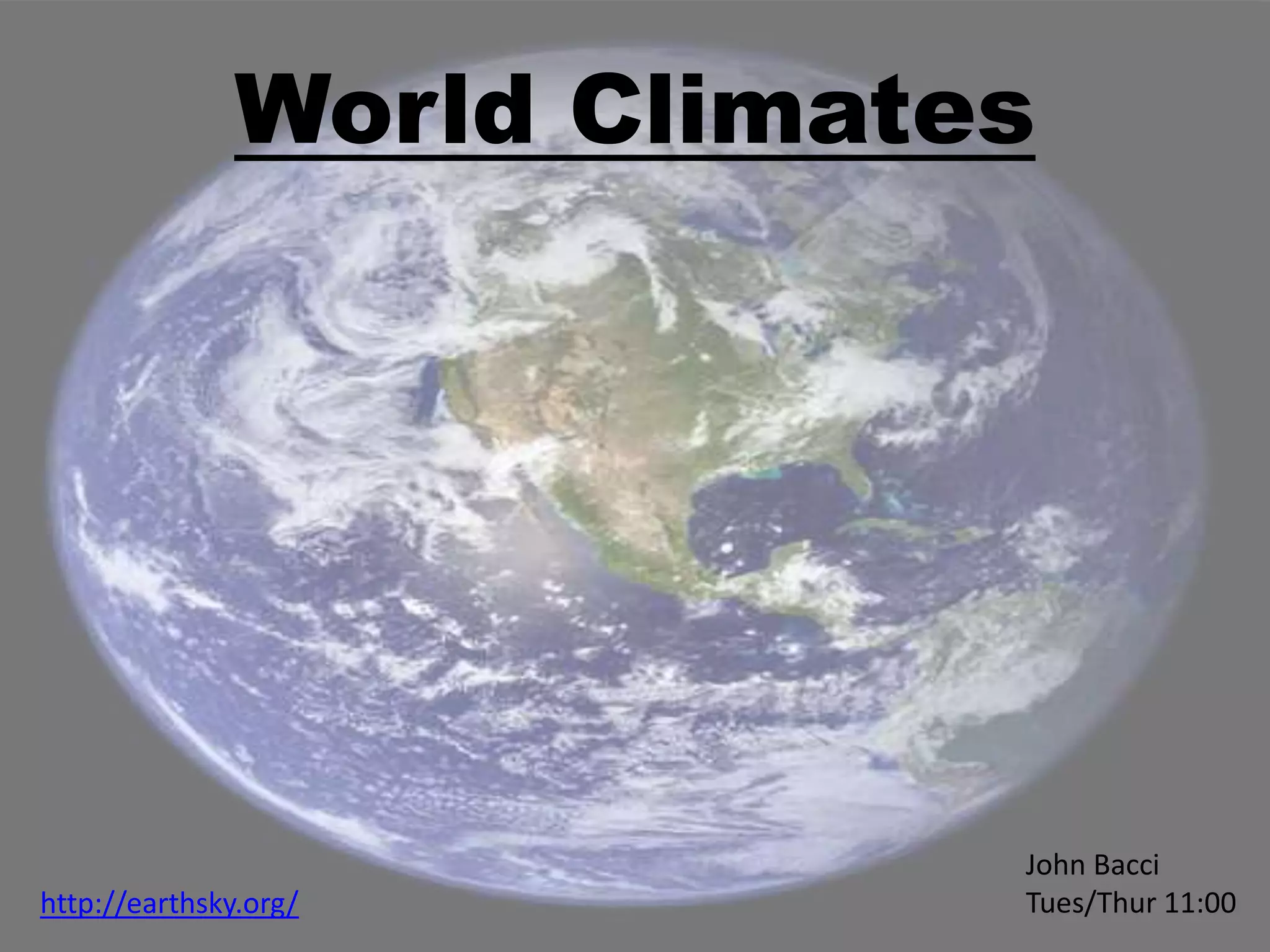
World Climates


                            John Bacci
http://earthsky.org/        Tues/Thur 11:00
Terms to Start
• Climate: The general weather conditions in an
  area over a long period of time. Focusing on
  Air temperature and average precipitation.
• Weather: Is the state of the atmosphere at a
given time and place. The variables would
pertain to immediate temperature, wind
velocity, and moisture…..
• How are Climate and Weather Alike?
They both deal with measuring conditions in the atmosphere
Ex: rainfall, wind, temperature….


• How are Climate and Weather Different?
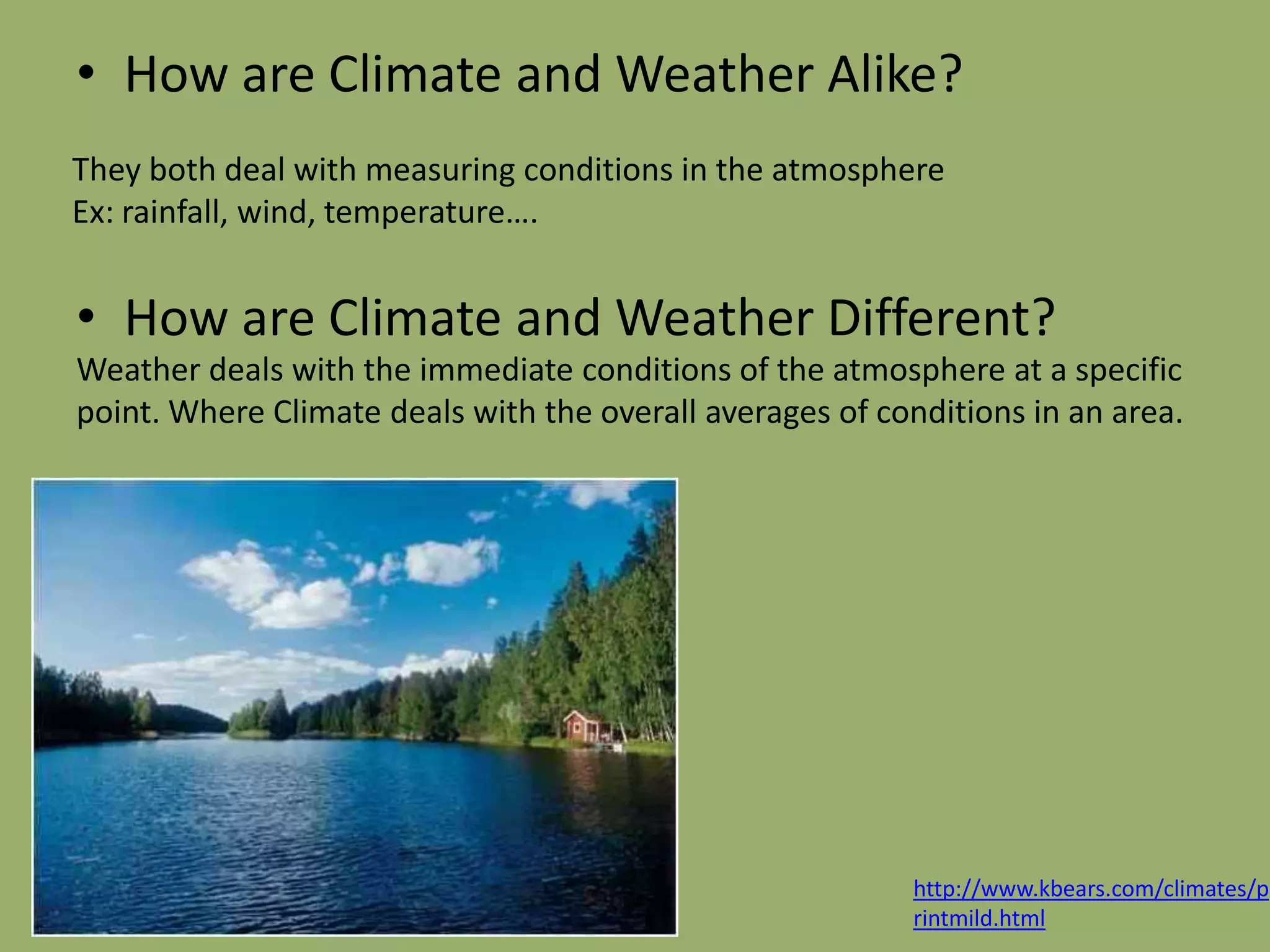
Weather deals with the immediate conditions of the atmosphere at a specific
point. Where Climate deals with the overall averages of conditions in an area.


                                                          http://www.kbears.com/climates/p
                                                          rintmild.html
Example of Climate vs. Weather


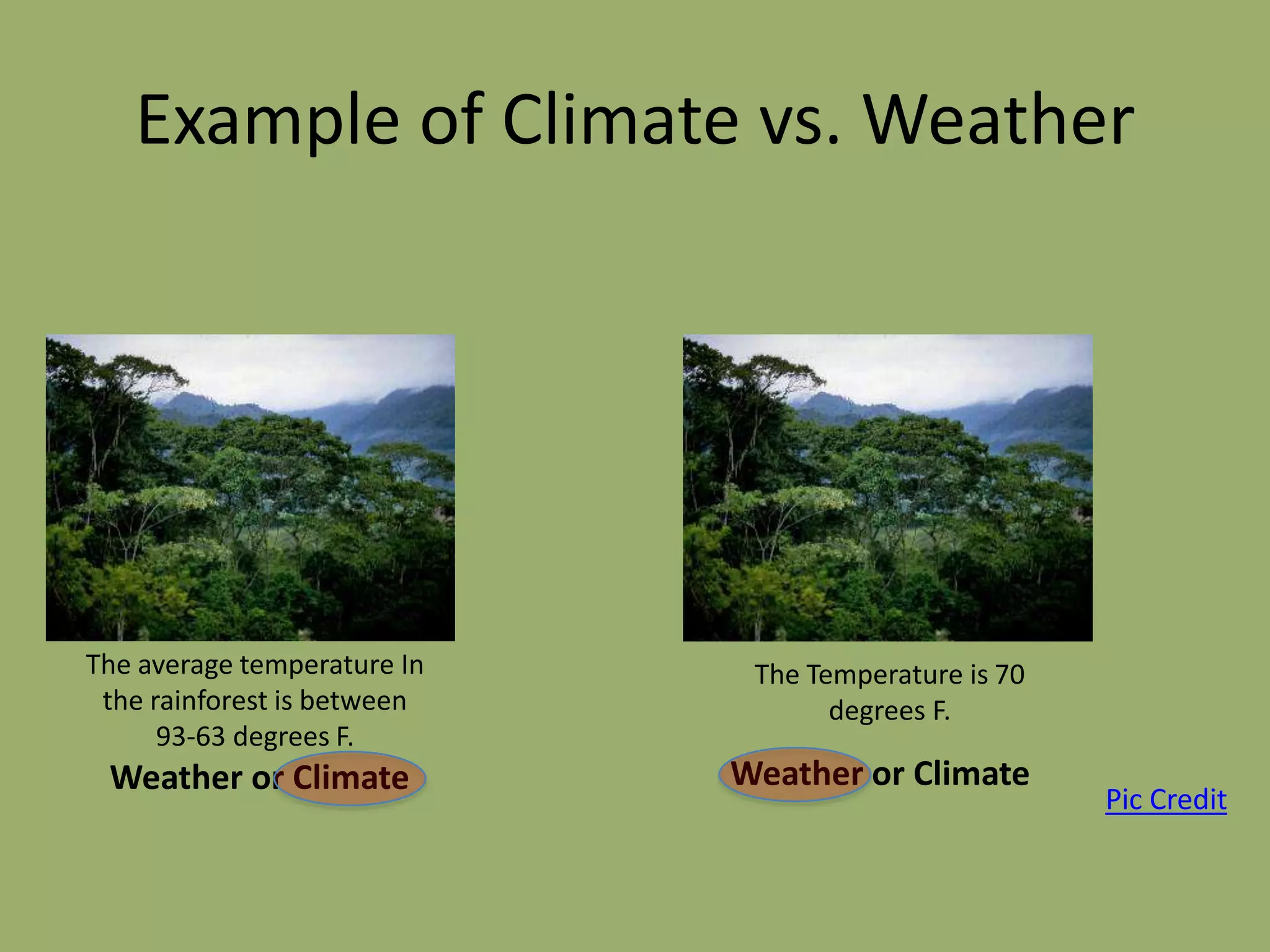
The average temperature In    The Temperature is 70
 the rainforest is between          degrees F.
      93-63 degrees F.
 Weather or Climate          Weather or Climate
                                                      Pic Credit
Earths Rotation & Tilt
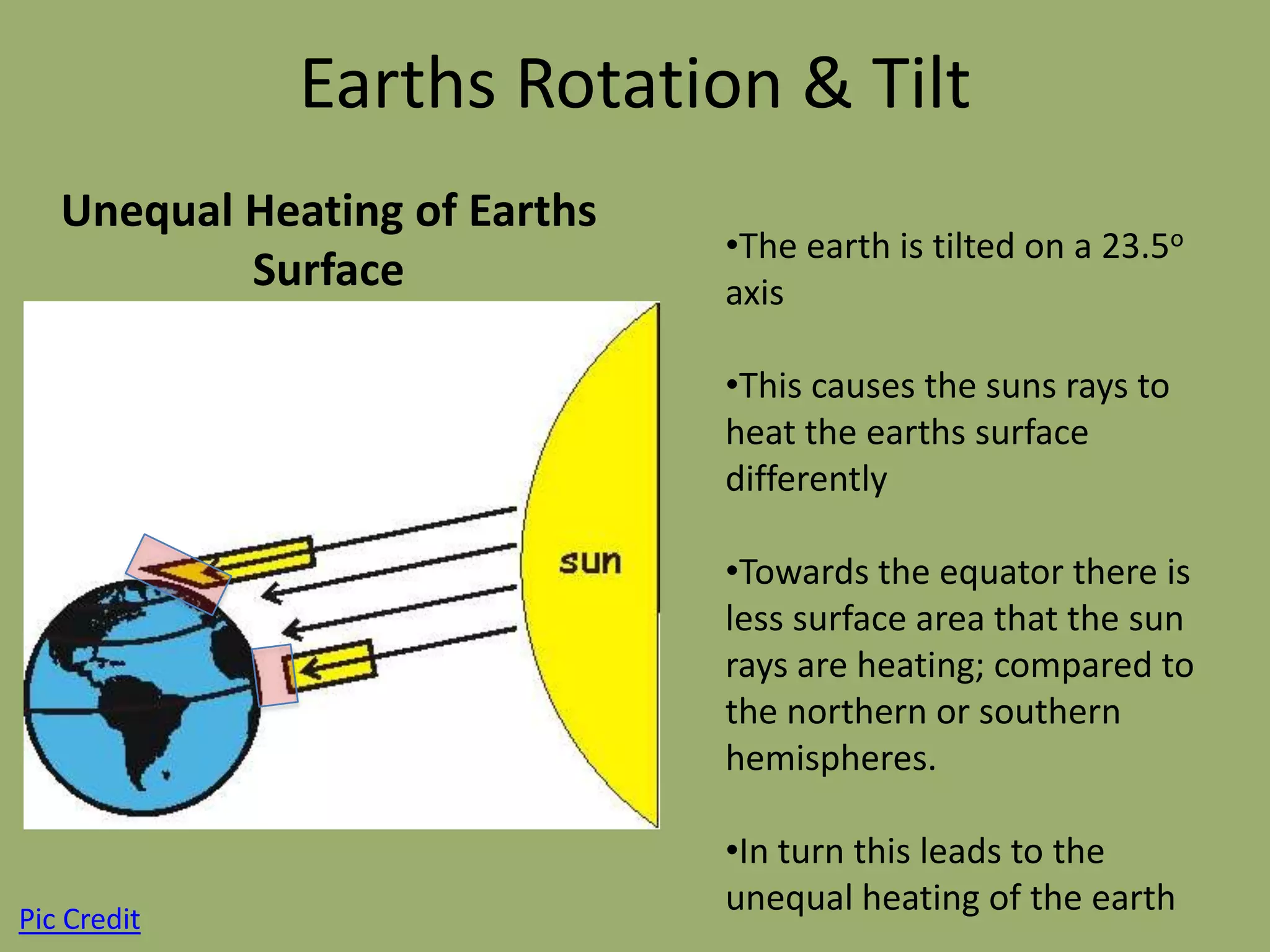
   Unequal Heating of Earths
                               •The earth is tilted on a 23.5o
           Surface             axis

                               •This causes the suns rays to
                               heat the earths surface
                               differently

                               •Towards the equator there is
                               less surface area that the sun
                               rays are heating; compared to
                               the northern or southern
                               hemispheres.

                               •In turn this leads to the
Pic Credit
                               unequal heating of the earth
Earths Rotation & Tilt
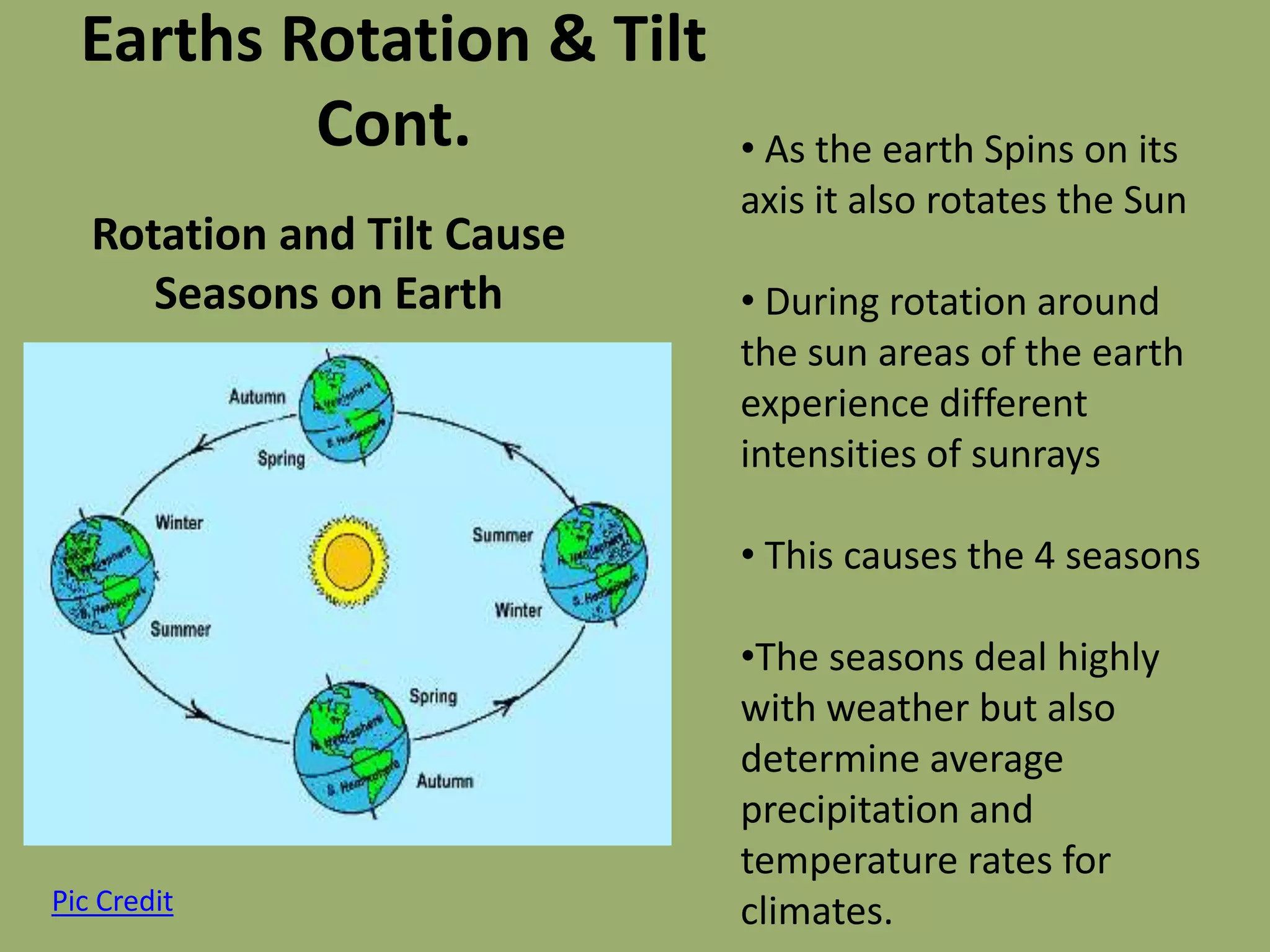
          Cont.              • As the earth Spins on its
                             axis it also rotates the Sun
   Rotation and Tilt Cause
      Seasons on Earth       • During rotation around
                             the sun areas of the earth
                             experience different
                             intensities of sunrays

                             • This causes the 4 seasons

                             •The seasons deal highly
                             with weather but also
                             determine average
                             precipitation and
                             temperature rates for
Pic Credit                   climates.
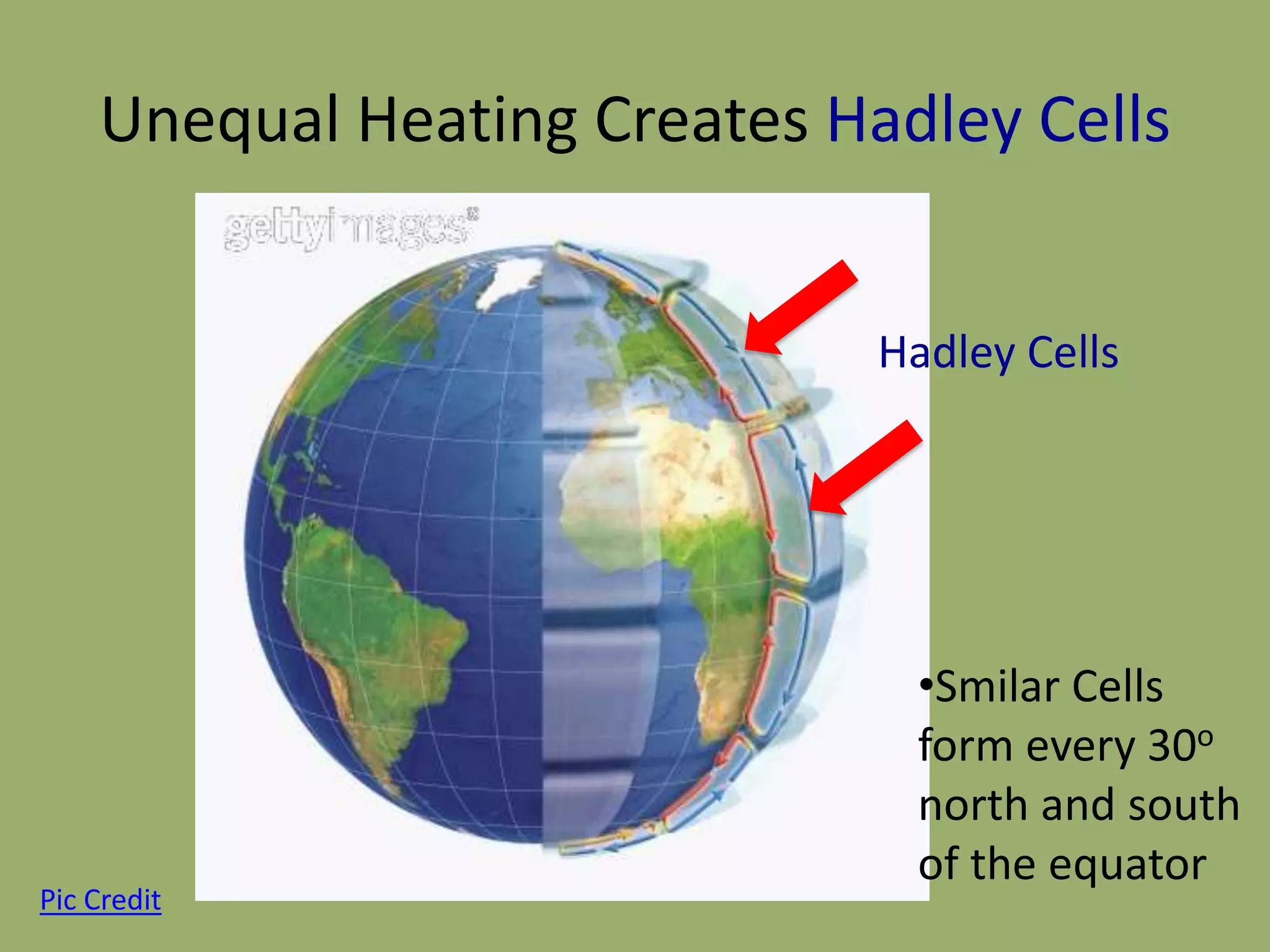
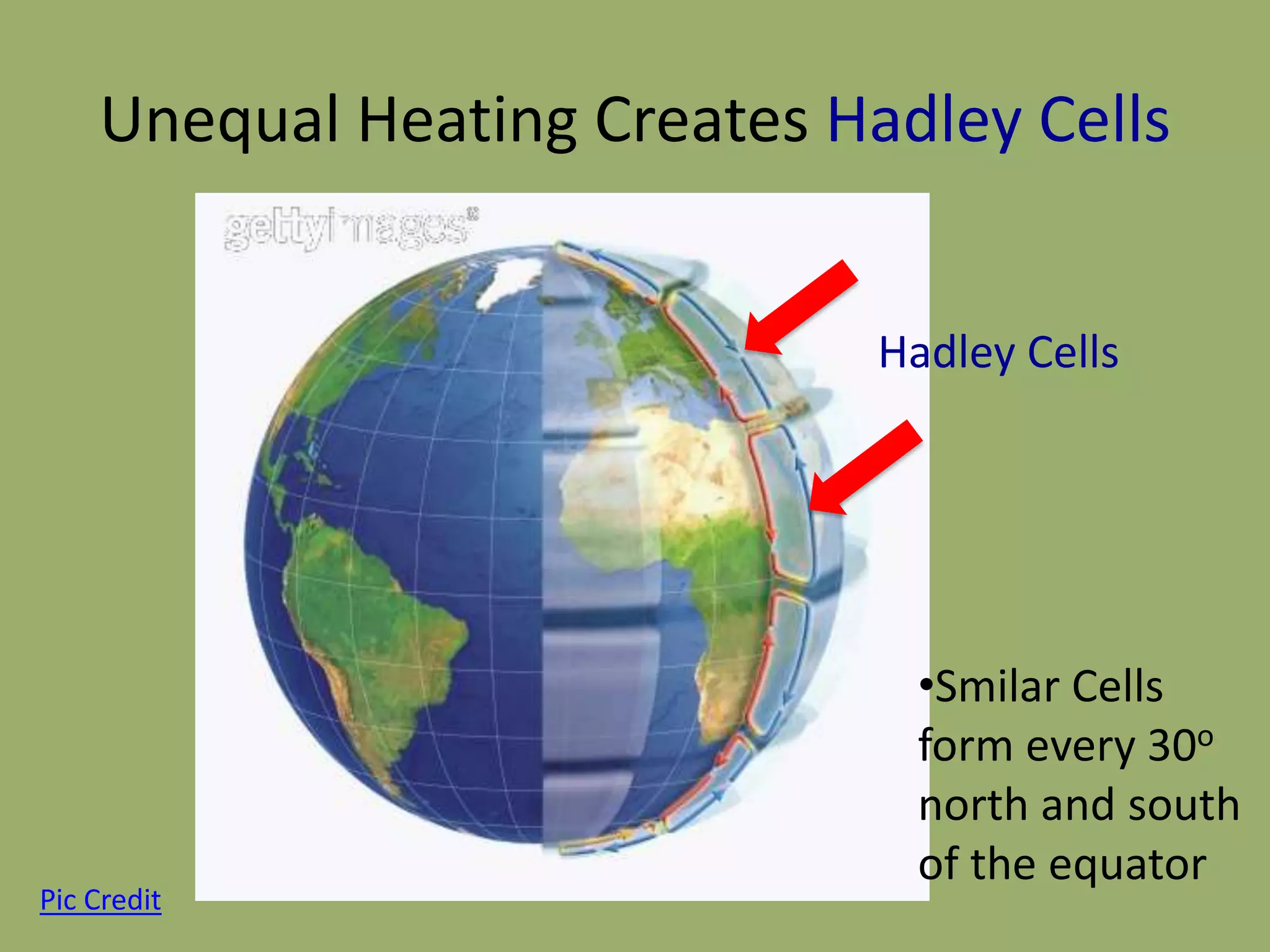
Unequal Heating Creates Hadley Cells


                              Hadley Cells


                               •Smilar Cells
                               form every 30o
                               north and south
                               of the equator
Pic Credit
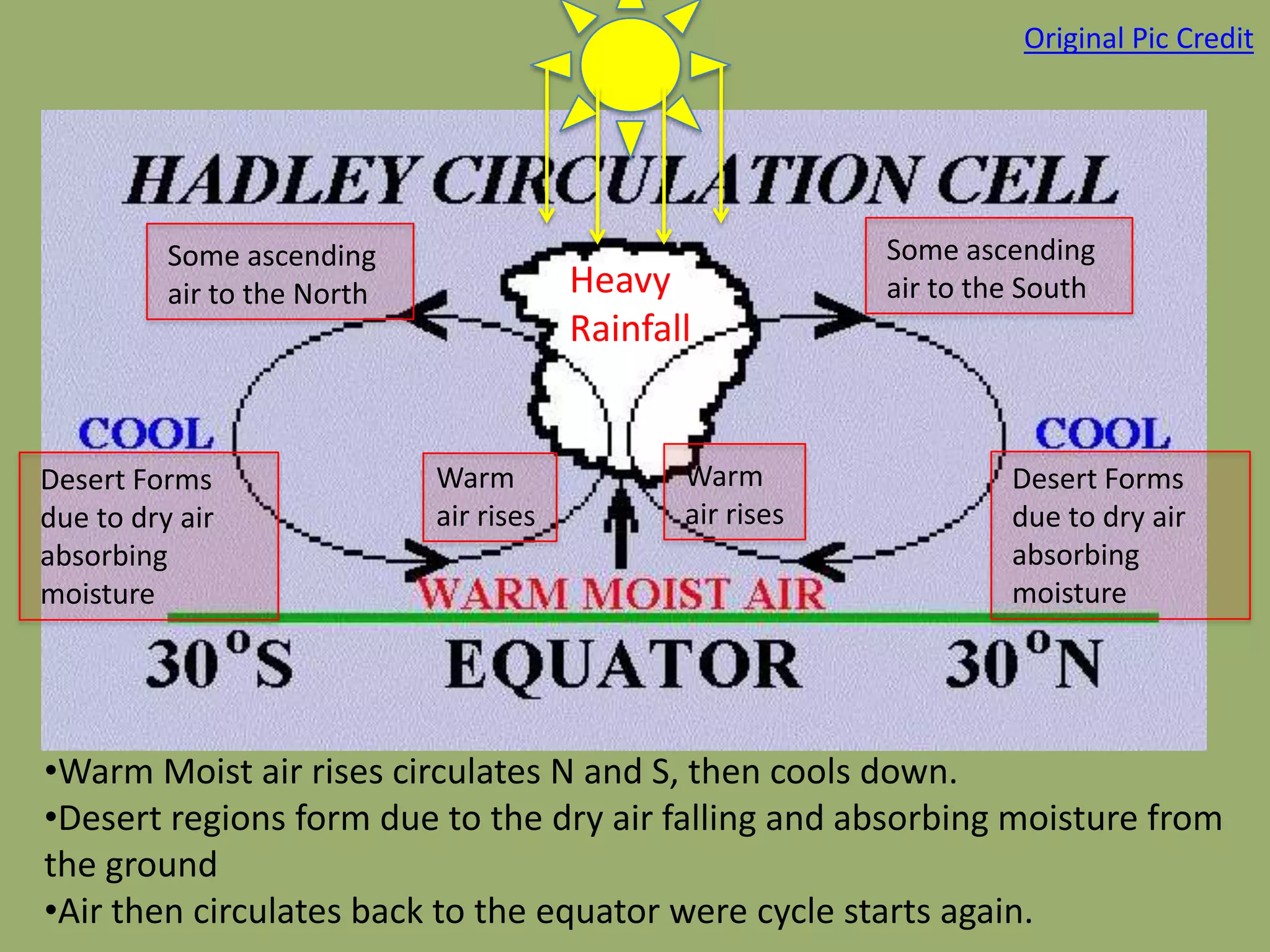
Hadley Cells
    Definition:
    1. Hadley Cells: a pattern of atmospheric circulation in which
       warm air rises near the equator, cools as it travelspole-ward
       at high altitude, sinks as cold air, and warms as it
       travelsequator-ward

    •These cells are formed every 30 degrees in both directions from
    the equator

    •The combination of Hadley cells,Trade winds and topography
    make up the Earths Climates.

http://www.merriam-
webster.com/dictionary/hadley%20cell
Original Pic Credit


          Some ascending                                    Some ascending
          air to the North               Heavy              air to the South
                                         Rainfall


Desert Forms                 Warm               Warm                 Desert Forms
due to dry air               air rises          air rises            due to dry air
absorbing                                                            absorbing
moisture                                                             moisture


•Warm Moist air rises circulates N and S, then cools down.
•Desert regions form due to the dry air falling and absorbing moisture from
the ground
•Air then circulates back to the equator were cycle starts again.
Unequal Heating Creates Hadley Cells


                              Hadley Cells


                               •Smilar Cells
                               form every 30o
                               north and south
                               of the equator
Pic Credit
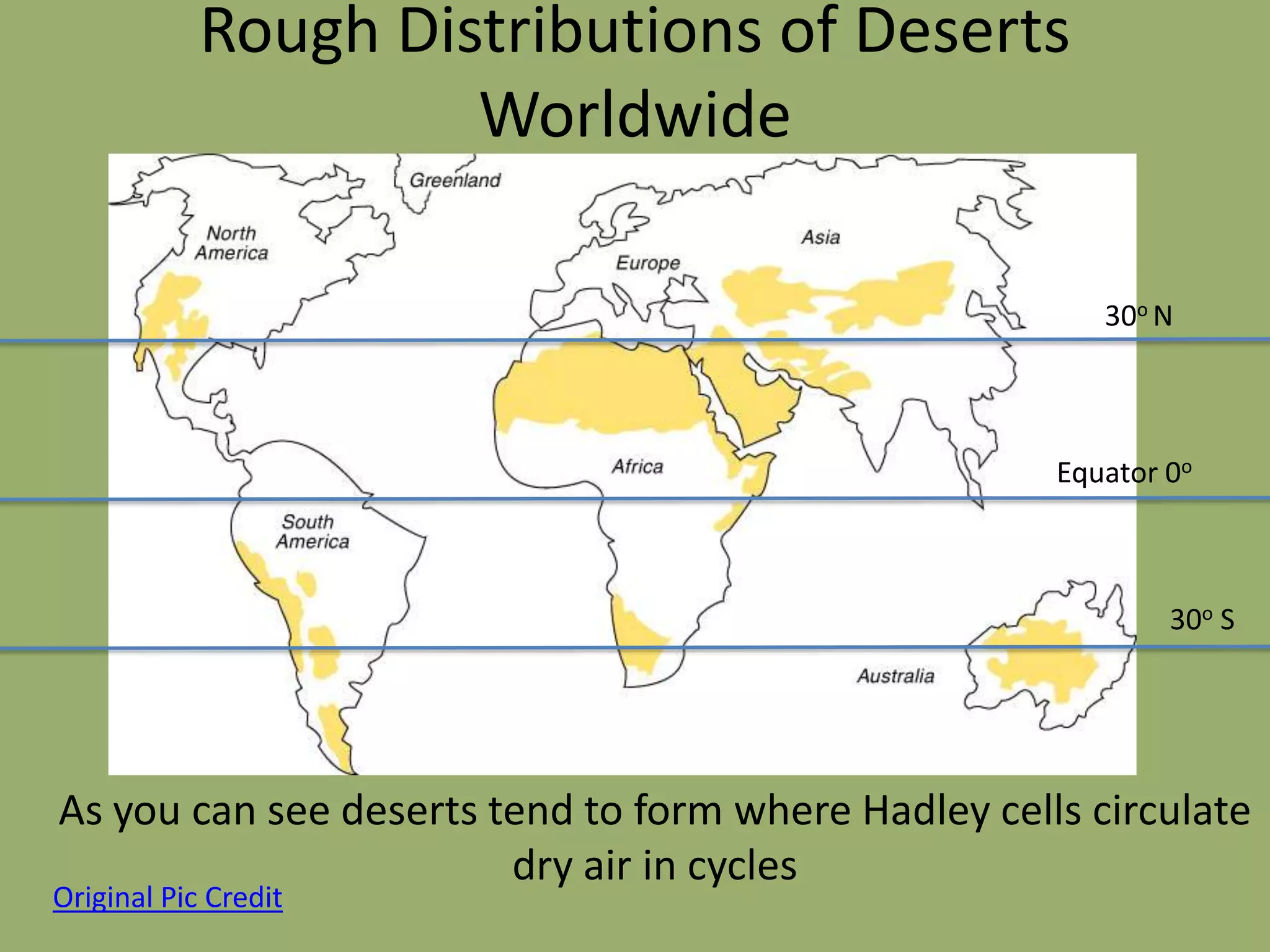
Rough Distributions of Deserts
                     Worldwide

                                                        30o N


                                                     Equator 0o


                                                             30o S


As you can see deserts tend to form where Hadley cells circulate
                        dry air in cycles
Original Pic Credit
All of These factors lead to the different
             types of climates that we see on earth today

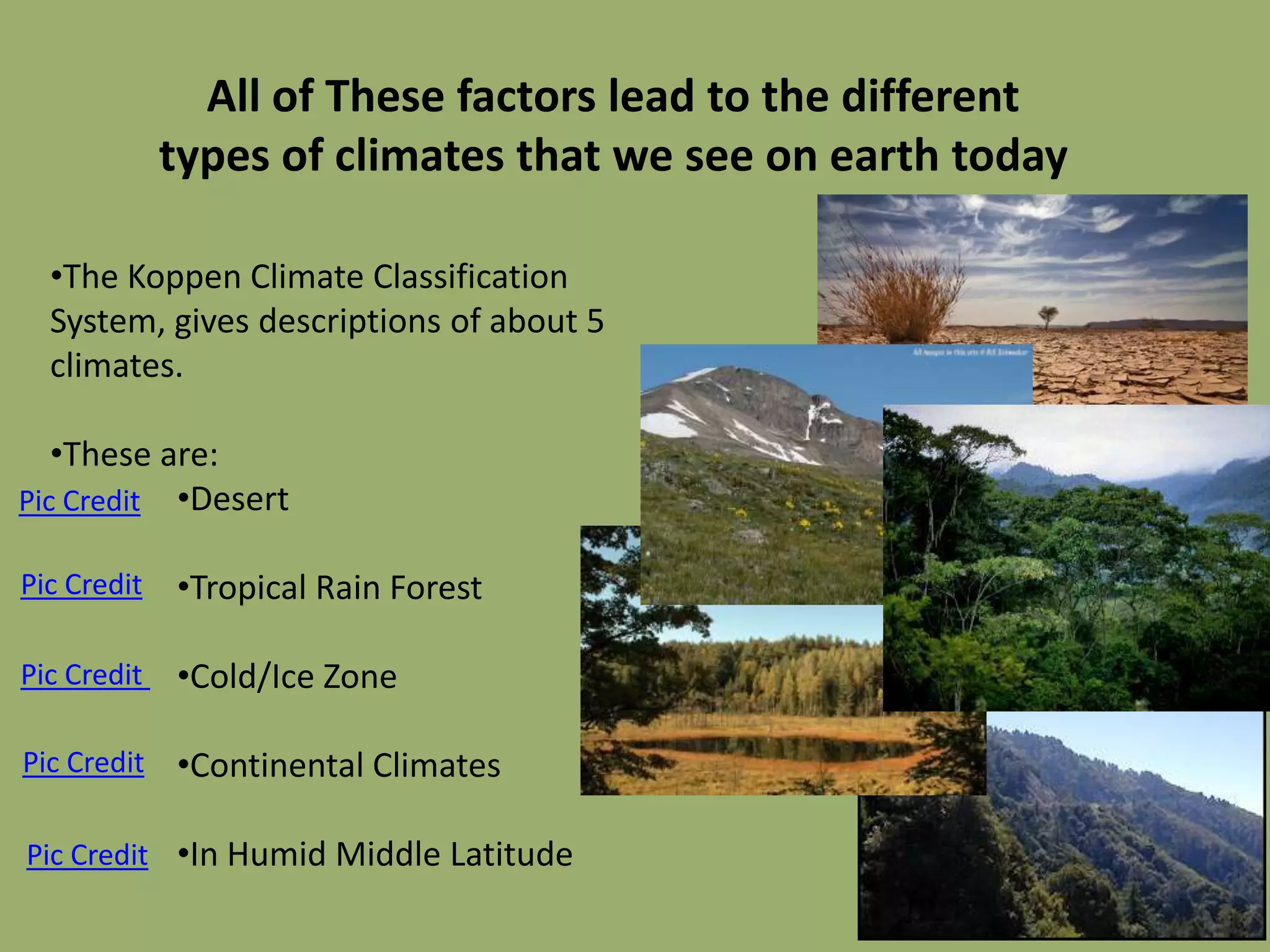
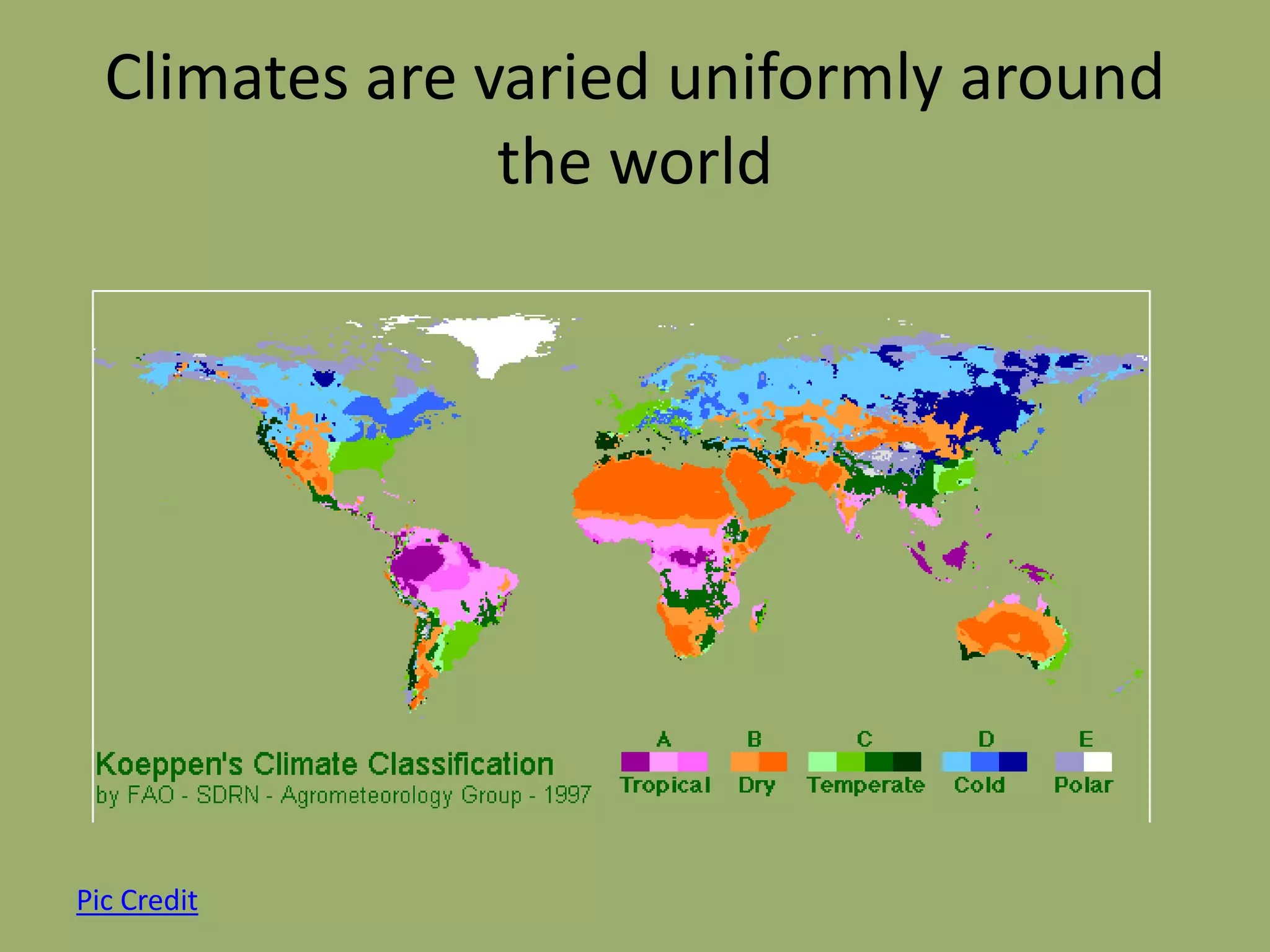
  •The Koppen Climate Classification
  System, gives descriptions of about 5
  climates.

   •These are:
Pic Credit •Desert

Pic Credit   •Tropical Rain Forest

Pic Credit   •Cold/Ice Zone

Pic Credit   •Continental Climates

Pic Credit •In Humid Middle Latitude
Climates are varied uniformly around
                the world


Pic Credit
Types of Climates
Desert: Generally very dry
  - Temperatures are very high during the day and fall real low during the night
  - Rainfall is very low

Tropical Rain Forest: Moist environments
- Temperature is very high
   - Rainfall is also high

Cold/Ice Zone: Permanent ice year-round
  -permafrost

Continental Climates: Moderate conditions
- temperatures very with the seasons
- rainfall is also generally not very high

In Humid Middle Latitude: Land/water play important roles on one another
  - warm dry summers with cool wet winters.
Climates Lead to Different Biomes
Definition

•Biomes: A large naturally occurring community of floral
occupying a major Habitat
(Tundra, Taiga, Temperate Deciduous Forest, Temperate
grasslands, Savanna Desert, and Tropical Rainforest. )

•Climates determine whether or not a species can live in that
area of the earth
               In the end climates control
                  life around the world
Sources
• http://www.blueplanetbiomes.org/climate.ht
  m

• http://www.merriam-
  webster.com/dictionary/hadley%20cell

Power point 1*

  • 1.
    World Climates John Bacci http://earthsky.org/ Tues/Thur 11:00
  • 2.
    Terms to Start •Climate: The general weather conditions in an area over a long period of time. Focusing on Air temperature and average precipitation. • Weather: Is the state of the atmosphere at a given time and place. The variables would pertain to immediate temperature, wind velocity, and moisture…..
  • 3.
    • How areClimate and Weather Alike? They both deal with measuring conditions in the atmosphere Ex: rainfall, wind, temperature…. • How are Climate and Weather Different? Weather deals with the immediate conditions of the atmosphere at a specific point. Where Climate deals with the overall averages of conditions in an area. http://www.kbears.com/climates/p rintmild.html
  • 4.
    Example of Climatevs. Weather The average temperature In The Temperature is 70 the rainforest is between degrees F. 93-63 degrees F. Weather or Climate Weather or Climate Pic Credit
  • 5.
    Earths Rotation &Tilt Unequal Heating of Earths •The earth is tilted on a 23.5o Surface axis •This causes the suns rays to heat the earths surface differently •Towards the equator there is less surface area that the sun rays are heating; compared to the northern or southern hemispheres. •In turn this leads to the Pic Credit unequal heating of the earth
  • 6.
    Earths Rotation &Tilt Cont. • As the earth Spins on its axis it also rotates the Sun Rotation and Tilt Cause Seasons on Earth • During rotation around the sun areas of the earth experience different intensities of sunrays • This causes the 4 seasons •The seasons deal highly with weather but also determine average precipitation and temperature rates for Pic Credit climates.
  • 7.
    Unequal Heating CreatesHadley Cells Hadley Cells •Smilar Cells form every 30o north and south of the equator Pic Credit
  • 8.
    Hadley Cells Definition: 1. Hadley Cells: a pattern of atmospheric circulation in which warm air rises near the equator, cools as it travelspole-ward at high altitude, sinks as cold air, and warms as it travelsequator-ward •These cells are formed every 30 degrees in both directions from the equator •The combination of Hadley cells,Trade winds and topography make up the Earths Climates. http://www.merriam- webster.com/dictionary/hadley%20cell
  • 9.
    Original Pic Credit Some ascending Some ascending air to the North Heavy air to the South Rainfall Desert Forms Warm Warm Desert Forms due to dry air air rises air rises due to dry air absorbing absorbing moisture moisture •Warm Moist air rises circulates N and S, then cools down. •Desert regions form due to the dry air falling and absorbing moisture from the ground •Air then circulates back to the equator were cycle starts again.
  • 10.
    Unequal Heating CreatesHadley Cells Hadley Cells •Smilar Cells form every 30o north and south of the equator Pic Credit
  • 11.
    Rough Distributions ofDeserts Worldwide 30o N Equator 0o 30o S As you can see deserts tend to form where Hadley cells circulate dry air in cycles Original Pic Credit
  • 12.
    All of Thesefactors lead to the different types of climates that we see on earth today •The Koppen Climate Classification System, gives descriptions of about 5 climates. •These are: Pic Credit •Desert Pic Credit •Tropical Rain Forest Pic Credit •Cold/Ice Zone Pic Credit •Continental Climates Pic Credit •In Humid Middle Latitude
  • 13.
    Climates are varieduniformly around the world Pic Credit
  • 14.
    Types of Climates Desert:Generally very dry - Temperatures are very high during the day and fall real low during the night - Rainfall is very low Tropical Rain Forest: Moist environments - Temperature is very high - Rainfall is also high Cold/Ice Zone: Permanent ice year-round -permafrost Continental Climates: Moderate conditions - temperatures very with the seasons - rainfall is also generally not very high In Humid Middle Latitude: Land/water play important roles on one another - warm dry summers with cool wet winters.
  • 15.
    Climates Lead toDifferent Biomes Definition •Biomes: A large naturally occurring community of floral occupying a major Habitat (Tundra, Taiga, Temperate Deciduous Forest, Temperate grasslands, Savanna Desert, and Tropical Rainforest. ) •Climates determine whether or not a species can live in that area of the earth In the end climates control life around the world
  • 16.
    Sources • http://www.blueplanetbiomes.org/climate.ht m • http://www.merriam- webster.com/dictionary/hadley%20cell