Power and Influence
Dr Dorota Joanna BourneDr Dorota Joanna Bourne
Learning Objectives
1. Describe forms of power originating from
position, personal characteristics, and
situational forces.
2. Differentiate among moral, immoral, and
amoral modes of handling power.
3. Describe the differences among four forms of
political manipulation: persuasion, inducement,
obligation, and coercion.
Power
Power has many definitions that imply the
same meaning
Is the potential or ability to influence decisions
and control resources.and control resources.
The ability to change the behavior of others to
perform actions that they might not otherwise
perform.
The ability of A to alter circumstances
impacting on B so that B does what A wants.
Influence
The ability to to alter another person’s
perceptions of the situation.
Process through which a person attempts toProcess through which a person attempts to
extract compliance from the other.
Resembles power, but tends to be more
subtle and indirect.
Power stems from specific sources or
foundations whereas influence relies on
tactics.
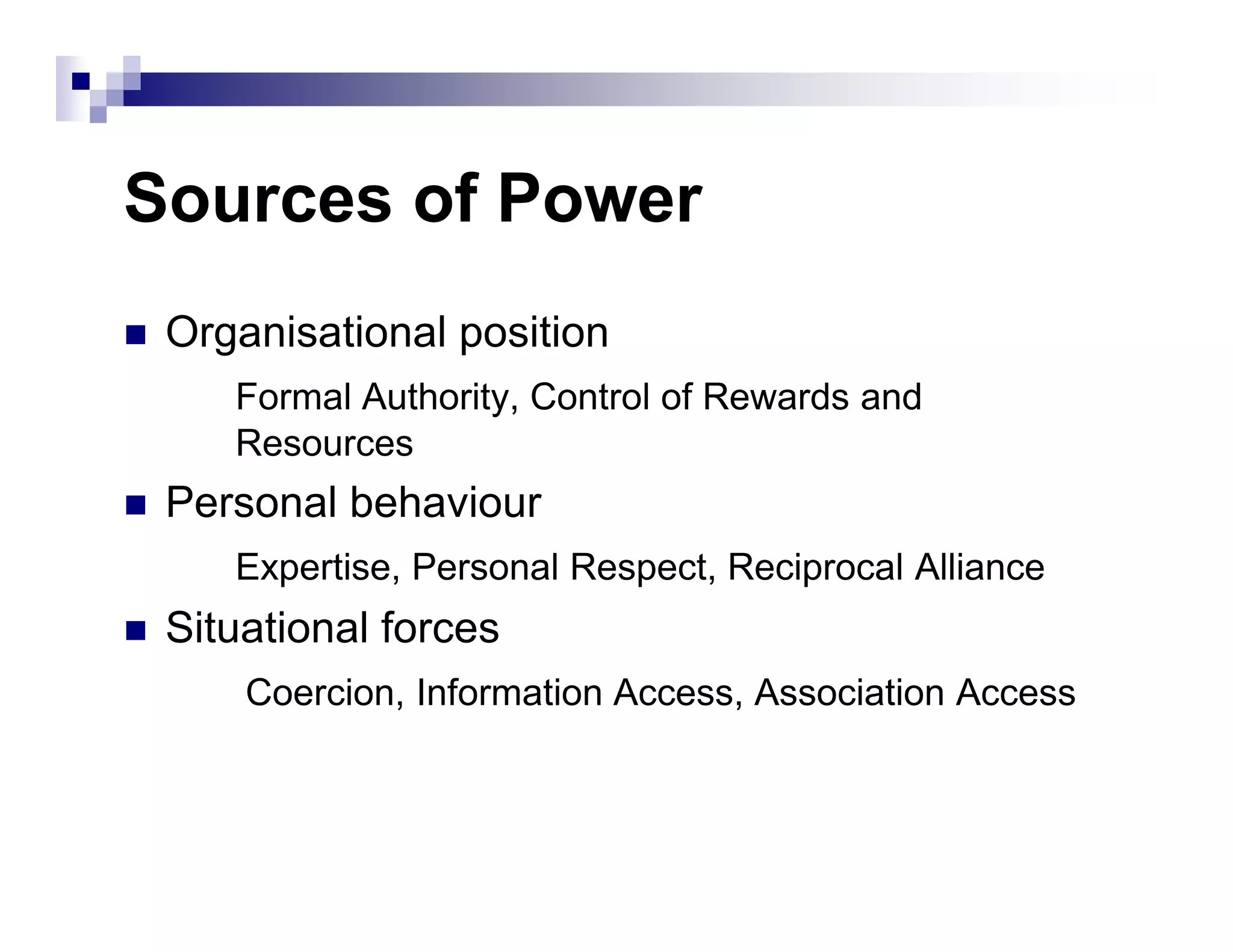
Sources of Power
Organisational position
Formal Authority, Control of Rewards and
Resources
Personal behaviour
Expertise, Personal Respect, Reciprocal Alliance
Situational forces
Coercion, Information Access, Association Access
Socialized versus Personalized
Power
Socialized power
Is the use of power to achieve constructive
ends.ends.
Personalized power
Is the use of power primarily for the sake of
personal gain.
Three Standards of Handling Power
Moral Management
Treat others fairly and comply with spirit as well as
letter of the law.
Amoral ManagementAmoral Management
Do not weigh ethical considerations in decisions, stay
close to the letter of the law.
Immoral Management
Actively oppose ethical principles, seek to get around
the law.
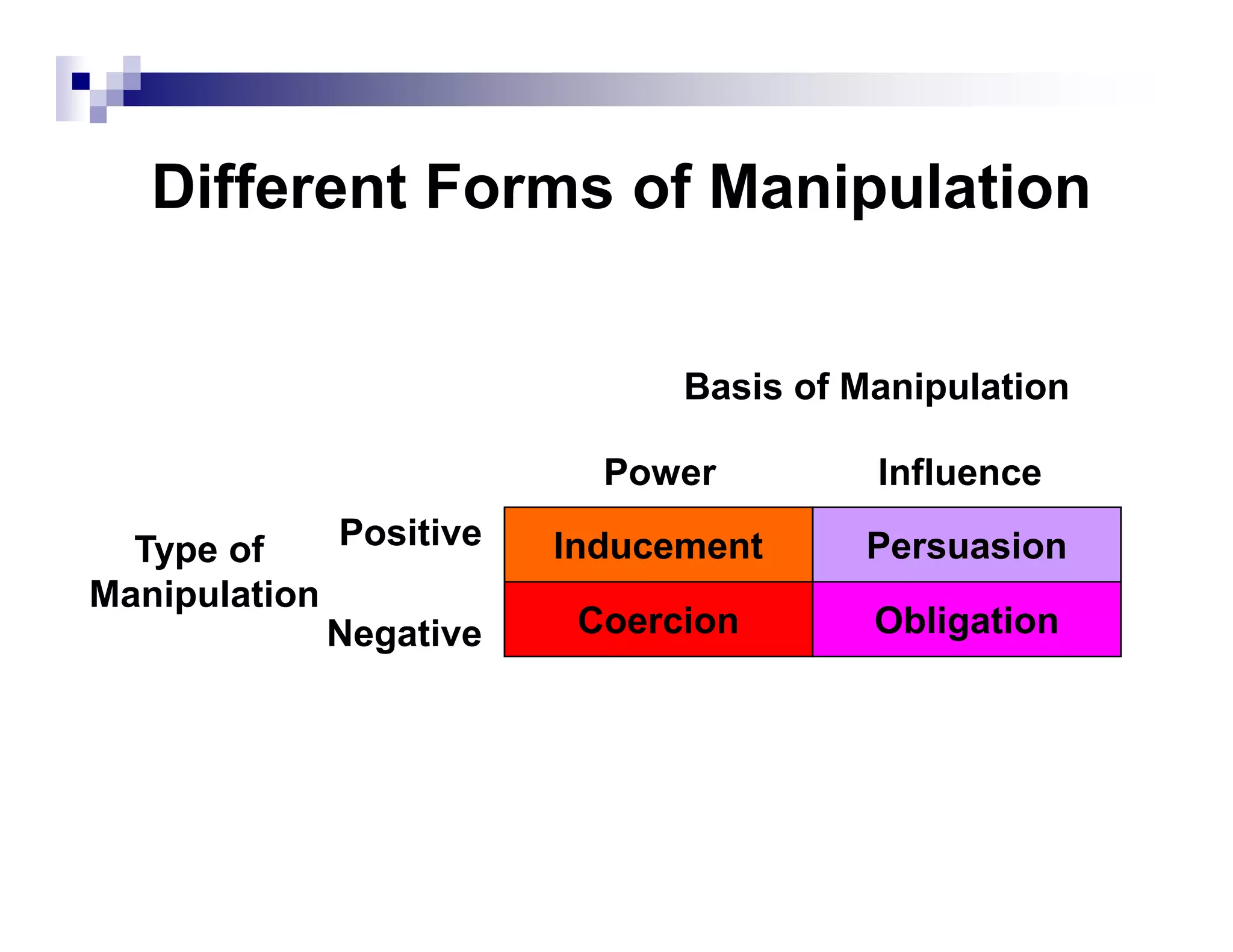
Different Forms of Manipulation
Basis of Manipulation
Power Influence
Inducement
Coercion
Persuasion
Obligation
Type of
Manipulation
Positive
Negative
Power Influence
Empowerment of Group Members
Empowerment
The process of sharing power with group
members, thereby enhancing their feelings ofmembers, thereby enhancing their feelings of
self-efficacy.
Strategic benefits of distributing power:
Improved productivity, quality, and satisfaction
Politics
The activities taken within an
organisation to acquire, develop, and
use power and other resources touse power and other resources to
obtain one’s preferred outcome in a
situation where there is uncertainty or
disagreement about choices.
Controlling Dysfunctional Politics
Excessive politics and influence tactics can harm
an organisation and its members.
Ways to control these activities:
Rely on objective measures of performance tied to proper
and significant goals for the organisation.
Align individual goals and objectives to be congruent with
those of the organisation.
Practice open communications to remove the political value
of information and to increase the overall understanding of
the organisation.

Power and Influence

  • 1.
    Power and Influence DrDorota Joanna BourneDr Dorota Joanna Bourne
  • 2.
    Learning Objectives 1. Describeforms of power originating from position, personal characteristics, and situational forces. 2. Differentiate among moral, immoral, and amoral modes of handling power. 3. Describe the differences among four forms of political manipulation: persuasion, inducement, obligation, and coercion.
  • 3.
    Power Power has manydefinitions that imply the same meaning Is the potential or ability to influence decisions and control resources.and control resources. The ability to change the behavior of others to perform actions that they might not otherwise perform. The ability of A to alter circumstances impacting on B so that B does what A wants.
  • 4.
    Influence The ability toto alter another person’s perceptions of the situation. Process through which a person attempts toProcess through which a person attempts to extract compliance from the other. Resembles power, but tends to be more subtle and indirect. Power stems from specific sources or foundations whereas influence relies on tactics.
  • 5.
    Sources of Power Organisationalposition Formal Authority, Control of Rewards and Resources Personal behaviour Expertise, Personal Respect, Reciprocal Alliance Situational forces Coercion, Information Access, Association Access
  • 6.
    Socialized versus Personalized Power Socializedpower Is the use of power to achieve constructive ends.ends. Personalized power Is the use of power primarily for the sake of personal gain.
  • 7.
    Three Standards ofHandling Power Moral Management Treat others fairly and comply with spirit as well as letter of the law. Amoral ManagementAmoral Management Do not weigh ethical considerations in decisions, stay close to the letter of the law. Immoral Management Actively oppose ethical principles, seek to get around the law.
  • 8.
    Different Forms ofManipulation Basis of Manipulation Power Influence Inducement Coercion Persuasion Obligation Type of Manipulation Positive Negative Power Influence
  • 9.
    Empowerment of GroupMembers Empowerment The process of sharing power with group members, thereby enhancing their feelings ofmembers, thereby enhancing their feelings of self-efficacy. Strategic benefits of distributing power: Improved productivity, quality, and satisfaction
  • 10.
    Politics The activities takenwithin an organisation to acquire, develop, and use power and other resources touse power and other resources to obtain one’s preferred outcome in a situation where there is uncertainty or disagreement about choices.
  • 11.
    Controlling Dysfunctional Politics Excessivepolitics and influence tactics can harm an organisation and its members. Ways to control these activities: Rely on objective measures of performance tied to proper and significant goals for the organisation. Align individual goals and objectives to be congruent with those of the organisation. Practice open communications to remove the political value of information and to increase the overall understanding of the organisation.