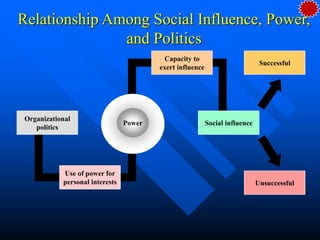
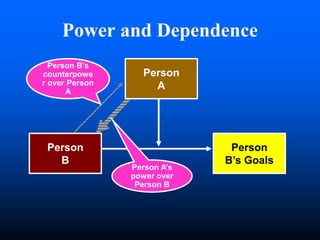
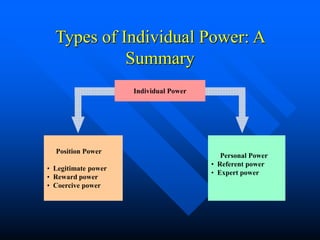
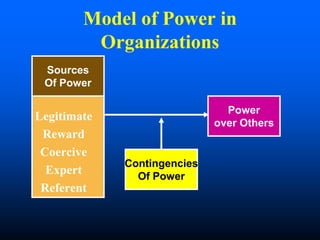
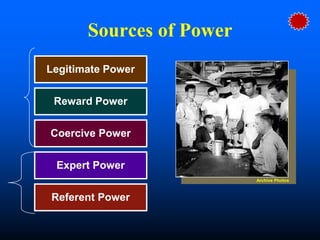
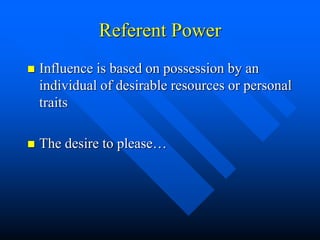
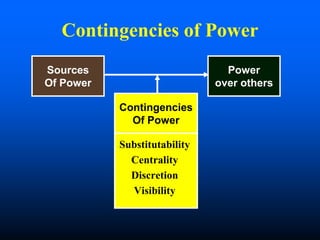
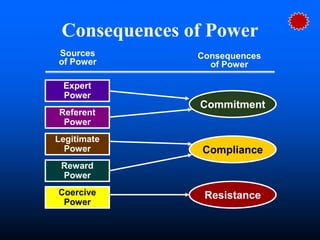
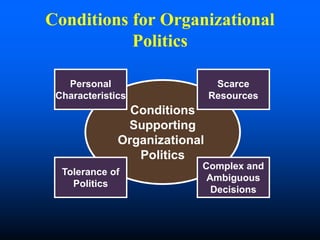
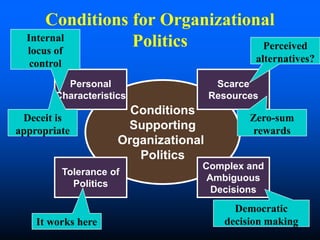
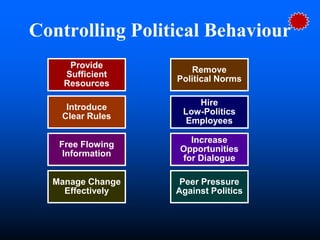
This document discusses organizational power and politics. It defines power as the capacity to influence others and notes that power requires one person's perception of dependence on another. Power in organizations can come from one's position, ability to reward or punish others, expertise, or personal likability. Power is used to overcome feelings of powerlessness or to influence outcomes in personal interests. Organizational politics involves discretionary behaviors to promote personal goals. Conditions like scarce resources, ambiguous decisions, and tolerance of politics can support political behaviors within organizations. Controlling such behaviors may involve peer pressure, transparency, clear rules, resources, and dialogue.