A Handbook on
Poultry Diseases
POULTRY DISEASES
HANDBOOK ON
TABLE OF CONTENTS
PREFACE 1
MANAGEMENT, NUTRITION AND BIOSECURITY......................... 2
1.0 INTRODUCTION ............................................................................... 3
2.0 ECONOMIC CONSIDERATIONS IN THE PREVENTION AND
CONTROL OF POULTRY DISEASES .............................................. 6
2.1 General Principles ................................................................... 6
2.2 Fixed and Variable Costs in Poultry Production ..................... 7
2.3 Gross Marginal Analysis......................................................... 8
3.0 HEALTH AND PERFORMANCE OF POULTRY IN TROPICAL
CLIMATES.......................................................................................... 13
3.1 Physiological Effects of High Ambient Temperature ............. 13
3.2 Design of Housing in Tropical Countries ............................... 13
3.3 Management of Flocks at High Temperature.......................... 15
4.0 PREVENTION OF DISEASE ............................................................ 21
4.1 Mechanisms of Disease Transmission .................................... 21
4.1.1 Transovarial Route ..................................................... 21
4.1.2 Transmission on the Egg Shell................................... 21
4.1.3 Direct Transmission ................................................... 21
4.1.4 Indirect Transmission ................................................. 22
4.1.5 Dissemination by Wind .............................................. 22
4.1.6 Biological Vectors ...................................................... 22
4.1.7 Feed ............................................................................ 22
4.1.8 Vaccines ..................................................................... 22
4.2 Biosecurity .............................................................................. 23
4.2.1 Conceptual Biosecurity .............................................. 23
4.2.2 Structural Biosecurity ................................................ 23
4.2.3 Operational Biosecurity ............................................. 24
4.3 Decontamination of Housing and Equipment......................... 26
4.3.1 Definitions.................................................................. 26
4.3.2 Decontamination ........................................................ 26
i
http://www.growelagrovet.com
https://www.facebook.com/growelagrovet
4.3.3 Disinfectants............................................................... 26
4.3.4 Public Health Considerations ..................................... 27
4.4 Disinfection of Poultry Houses............................................... 27
4.5 Control of Rodents.................................................................. 28
4.6 Control of Free-Living Birds .................................................. 29
4.7 Quality of Water...................................................................... 30
5.0 VACCINATION AND MEDICATION ............................................... 35
5.1 General Principles ................................................................... 35
5.2 Significance of Maternal Antibody
in Relation to Flock Protection ............................................... 35
5.3 Administration of Vaccines..................................................... 38
5.4 Medication .............................................................................. 38
6.0 SPECIAL PROCEDURES RELATING TO CONTROL OF
DISEASES IN POULTRY OPERATIONS ......................................... 46
6.1 Control of Disease in Multiplier Breeder Farms .................... 46
6.1.1 Structural Biosecurity ................................................ 46
6.1.2 Operational Biosecurity ............................................. 47
6.2 Control of Disease on Commercial Broiler Farms ................. 47
6.2.1 Structural Biosecurity ................................................ 47
6.2.2 Operational Biosecurity ............................................. 48
6.3 Control of Disease in Commercial Egg Production Units ...... 51
6.3.1 Operational Biosecurity ............................................. 51
6.4 Control of Disease in Hatcheries ............................................ 53
6.4.1 Structural Biosecurity ................................................ 53
6.4.2 Operational Biosecurity ............................................. 53
7.0 NUTRITION OF CHICKENS AND DIETARY DEFICIENCIES ..... 56
7.1 Establishing Nutritional Specifications .................................. 56
7.2 Nutrient Deficiencies .............................................................. 56
7.2.1 Causes of Nutrient Deficiencies................................. 56
7.2.2 Low Energy Intake ..................................................... 57
7.2.3 Deficiencies of Proteins or Amino Acids ................... 57
7.2.4 Fats ............................................................................. 57
7.2.5 Oxidative Rancidity ................................................... 58
ii
7.2.6 Vitamin Deficiencies..................................................... 58
7.3 Quality Control in Feed Manufacture ..................................... 62
IMMUNOSUPPRESSIVE DISEASES..................................................... 68
8.0 MAREK’S DISEASE.......................................................................... 69
8.1 Etiology................................................................................... 69
8.2 Occurrence and Economic Significance ................................. 69
8.3 Transmission ........................................................................... 69
8.4 Clinical Signs .......................................................................... 69
8.5 Pathology ................................................................................ 69
8.6 Diagnosis and Confirmation ................................................... 69
8.7 Prevention ............................................................................... 70
9.0 INFECTIOUS BURSAL DISEASE .................................................... 72
9.1 Etiology................................................................................... 72
9.2 Occurrence and Economic Significance ................................. 72
9.3 Transmission ........................................................................... 72
9.4 Clinical Signs .......................................................................... 72
9.5 Pathology ................................................................................ 73
9.6 Diagnosis ................................................................................ 73
9.7 Prevention ............................................................................... 73
10.0 CHICKEN ANEMIA........................................................................... 76
10.1 Etiology................................................................................... 76
10.2 Occurrence and Economic Significance ................................. 76
10.3 Transmission ........................................................................... 76
10.4 Clinical Signs .......................................................................... 76
10.5 Pathology ................................................................................ 76
10.6 Diagnosis ................................................................................ 76
10.7 Prevention ............................................................................... 76
RESPIRATORY DISEASES ..................................................................... 78
11.0 NEWCASTLE DISEASE ................................................................... 79
11.1 Etiology................................................................................... 79
11.2 Occurrence and Economic Significance ................................. 79
11.3 Transmission ........................................................................... 79
iii
11.4 Clinical signs........................................................................... 80
11.5 Pathology ................................................................................ 80
11.6 Diagnosis ................................................................................ 80
11.7 Prevention ............................................................................... 81
12.0 INFECTIOUS LARYNGOTRACHEITIS .......................................... 84
12.1 Etiology................................................................................... 84
12.2 Occurrence and Economic Significance ................................. 84
12.3 Transmission ........................................................................... 84
12.4 Clinical Signs .......................................................................... 84
12.5 Pathology ................................................................................ 84
12.6 Diagnosis ................................................................................ 84
12.7 Prevention ............................................................................... 85
13.0 AVIAN INFLUENZA ......................................................................... 87
13.1 Etiology................................................................................... 87
13.2 Occurrence and Economic Significance ................................. 87
13.3 Transmission ........................................................................... 87
13.4 Clinical Signs .......................................................................... 87
13.5 Pathology ................................................................................ 88
13.6 Diagnosis ................................................................................ 88
13.7 Control in Areas Where Exotic HPAI is Diagnosed ............... 88
13.8 Recent Outbreaks of H5N1 Avian Influenza .......................... 89
14.0 INFECTIOUS BRONCHITIS ............................................................. 93
14.1 Etiology................................................................................... 93
14.2 Occurrence and Economic Significance ................................. 93
14.3 Transmission ........................................................................... 93
14.4 Clinical Signs .......................................................................... 93
14.5 Pathology ................................................................................ 93
14.6 Diagnosis ................................................................................ 93
14.7 Prevention ............................................................................... 93
15.0 MYCOPLASMOSIS ........................................................................... 95
15. 1 Etiology................................................................................... 95
15.2 Occurrence and Economic Significance ................................. 95
15.3 Transmission ........................................................................... 95
15.4 Clinical Signs .......................................................................... 95
15.5 Pathology ................................................................................ 96
iv
15.6 Diagnosis ................................................................................ 96
15.7 Treatment ................................................................................ 96
15.8 Prevention ............................................................................... 96
16.0 CORYZA ............................................................................................. 99
16.1 Etiology................................................................................... 99
16.2 Occurrence .............................................................................. 99
16.3 Transmission ........................................................................... 99
16.4 Clinical Signs .......................................................................... 99
16.5 Pathology ................................................................................ 99
16.6 Diagnosis ................................................................................ 99
16.7 Treatment ................................................................................ 99
16.8 Prevention ............................................................................... 100
17.0 ASPERGILLOSIS ............................................................................... 101
17.1 Etiology................................................................................... 101
17.2 Occurrence and Economic Significance ................................. 101
17.3 Transmission ........................................................................... 101
17.4 Clinical Signs .......................................................................... 101
17.5 Pathology ................................................................................ 101
17.6 Diagnosis ................................................................................ 101
17.7 Prevention ............................................................................... 101
MULTIFACTORIAL CONDITIONS ....................................................... 104
18.0 SWOLLEN HEAD SYNDROME ...................................................... 105
18.1 Etiology................................................................................... 105
18.2 Occurrence and Economic Significance ................................. 105
18.3 Transmission ........................................................................... 105
18.4 Clinical Signs .......................................................................... 105
18.5 Pathology ................................................................................ 106
18.6 Diagnosis ................................................................................ 106
18.7 Treatment ................................................................................ 106
18.8 Prevention ............................................................................... 106
19.0 SEPTICEMIAAND AIRSACCULITIS.............................................. 108
19.1 Etiology................................................................................... 108
19.2 Occurrence and Economic Significance ................................. 108
19.3 Transmission ........................................................................... 108
v
19.4 Clinical Signs .......................................................................... 108
19.5 Pathology ................................................................................ 108
19.6 Diagnosis ................................................................................ 109
19.7 Treatment ................................................................................ 109
19.8 Prevention ............................................................................... 109
SYSTEMIC DISEASES ............................................................................. 111
20.0 SALMONELLOSIS-PULLORUM DISEASE ................................... 112
20.1 Etiology................................................................................... 112
20.2 Occurrence and Economic Significance ................................. 112
20.3 Transmission ........................................................................... 112
20.4 Clinical Appearance ................................................................ 112
20.5 Pathology ................................................................................ 112
20.6 Diagnosis ................................................................................ 112
20.7 Treatment ................................................................................ 113
20.8 Prevention ............................................................................... 113
21.0 SALMONELLOSIS-FOWL TYPHOID ............................................. 114
21.1 Etiology................................................................................... 114
21.2 Occurrence and Economic Significance ................................. 114
21.3 Transmission ........................................................................... 114
21.4 Clinical Signs .......................................................................... 114
21.5 Pathology ................................................................................ 114
21.6 Diagnosis ................................................................................ 114
21.7 Treatment ................................................................................ 114
21.8 Prevention ............................................................................... 115
22.0 SALMONELLOSIS-PARATYPHOID................................................ 116
22.1 Etiology................................................................................... 116
22.2 Occurrence .............................................................................. 116
22.3 Economic Significance ........................................................... 116
22.4 Transmission ........................................................................... 116
22.5 Clinical Signs .......................................................................... 116
22.6 Pathology ................................................................................ 116
22.7 Diagnosis ................................................................................ 117
22.8 Treatment ................................................................................ 117
22.9 Prevention ............................................................................... 117
vi
23.0 PASTEURELLOSIS ............................................................................ 120
23.1 Etiology................................................................................... 120
23.2 Occurrence and Economic Significance ................................. 120
23.3 Transmission ........................................................................... 120
23.4 Clinical Signs .......................................................................... 120
23.5 Pathology ................................................................................ 120
23.6 Diagnosis ................................................................................ 121
23.7 Treatment ................................................................................ 121
23.8 Prevention ............................................................................... 121
24.0 SPIROCHETOSIS ............................................................................... 124
24.1 Etiology................................................................................... 123
24.2 Occurrence and Economic Significance ................................. 123
24.3 Transmission ........................................................................... 123
24.4 Clinical Signs .......................................................................... 123
24.5 Pathology ................................................................................ 123
24.6 Diagnosis ................................................................................ 123
24.7 Treatment ................................................................................ 123
24.8 Prevention ............................................................................... 123
25.0 AVIAN ENCEPHALOMYELITIS ..................................................... 124
25.1 Etiology................................................................................... 124
25.2 Occurrence and Economic Significance ................................. 124
25.3 Transmission ........................................................................... 124
25.4 Clinical Signs .......................................................................... 124
25.5 Pathology ................................................................................ 124
25.6 Diagnosis ................................................................................ 124
25.7 Prevention ............................................................................... 124
26.0 ADENOVIRAL INFECTIONS ........................................................... 126
26.1 Etiology................................................................................... 126
26.2 Occurrence and Economic Significance ................................. 126
26.3 Transmission ........................................................................... 126
26.4 Adenoviral Respiratory Infection ........................................... 126
26.4.1 Clinical Signs ............................................................. 126
26.4.2 Pathology ................................................................... 126
26.4.3 Diagnosis.................................................................... 127
26.4.4 Prevention .................................................................. 127
26.5 Inclusion Body Hepatitis ........................................................ 128
vii
26.5.1 Clinical Signs ............................................................. 127
26.5.2 Lesions ....................................................................... 127
26.5.3 Diagnosis.................................................................... 127
26.5.4 Prevention .................................................................. 127
26.6 Egg Drop Syndrome ............................................................... 127
26.6.1 Clinical Signs ............................................................. 127
26.6.2 Lesions ....................................................................... 128
26.6.3 Diagnosis.................................................................... 128
26.6.4 Prevention .................................................................. 128
27.0 RUNTING SYNDROME.................................................................... 130
27.1 Etiology................................................................................... 130
27.2 Occurrence and Economic Significance ................................. 130
27.3 Transmission ........................................................................... 130
27.4 Clinical Signs .......................................................................... 130
27.5 Pathology ................................................................................ 131
27.6 Diagnosis ................................................................................ 131
27.7 Treatment ................................................................................ 131
27.8 Prevention ............................................................................... 132
ENTERIC DISEASES................................................................................ 133
28.0 COCCIDIOSIS .................................................................................... 134
28.1 Etiology................................................................................... 134
28.2 Occurrence and Economic Significance ................................. 134
28.3 Transmission ........................................................................... 134
28.4 Clinical Signs .......................................................................... 134
28.5 Lesions .................................................................................... 134
28.6 Diagnosis ................................................................................ 135
28.7 Treatment ................................................................................ 135
28.8 Prevention ............................................................................... 135
29.0 CLOSTRIDIAL ENTEROTOXEMIA ................................................ 138
29.1 Etiology................................................................................... 138
29.2 Occurrence and Economic Significance ................................. 138
29.3 Transmission ........................................................................... 138
29.4 Clinical Signs .......................................................................... 138
29.5 Pathology ................................................................................ 138
29.6 Diagnosis ................................................................................ 139
viii
29.7 Treatment ................................................................................ 139
29.8 Prevention ............................................................................... 139
30.0 ENDOPARASITES ............................................................................. 141
30.1 Capillariasis ............................................................................ 141
30.2 Ascaridiasis ............................................................................. 141
30.3 Cestodiasis .............................................................................. 141
LOCOMOTORY ABNORMALITIES ..................................................... 144
31.0 SKELETAL DEFORMITIES AND ARTHRITIS ............................... 145
31.1 Nutritional Etiology ................................................................ 145
31.2 Infectious etiology .................................................................. 146
31.2.1 Mycoplasmosis........................................................... 146
31.2.2 Reoviral Arthritis........................................................ 146
31.2.3 Staphylococcal Arthritis ............................................. 147
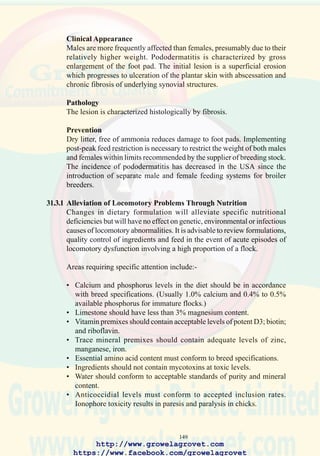
31.3 Pododermatitis ........................................................................ 148
31.3.1 Alleviation of Locomotory Problems Through
Nutrition ..................................................................... 149
31.4 Developmental Etiology ......................................................... 152
31.4.1 Twisted Legs .............................................................. 152
31.4.2 Rotated Tibia and Crooked Toes ................................ 152
INTEGUMENTARY CONDITIONS........................................................ 153
32.0 AVIAN POX ........................................................................................ 154
32.1 Etiology. .................................................................................. 154
32.2 Occurrence and Economic Significance ................................. 155
32.3 Transmission ........................................................................... 154
32.4 Clinical Signs .......................................................................... 154
32.5 Pathology ................................................................................ 154
32.6 Diagnosis ................................................................................ 154
32.7 Prevention ............................................................................... 154
33.0 ECTOPARASITES .............................................................................. 156
33.1 Mites ....................................................................................... 156
33.2 Argasid Ticks .......................................................................... 156
33.3 Scaly Leg Mites ...................................................................... 156
ix
33.4 Lice ......................................................................................... 156
33.5 Treatment ................................................................................ 156
34.0 DERMATOMYCOSIS ........................................................................ 160
34.1 Etiology................................................................................... 160
34.2 Occurrence and Economic Significance ................................. 160
34.3 Transmission ........................................................................... 160
34.4 Clinical Signs .......................................................................... 160
34.5 Diagnosis ................................................................................ 160
34.6 Treatment ................................................................................ 160
34.7 Prevention ............................................................................... 160
MISCELLANEOUS CONDITIONS ........................................................ 162
35.0 MYCOTOXICOSES ........................................................................... 163
36.0 LEUCOCYTOZOONOSIS ................................................................. 168
36.1 Etiology................................................................................... 168
36.2 Occurrence and Economic Significance ................................. 168
36.3 Transmission ........................................................................... 168
36.4 Clinical Signs .......................................................................... 168
36.5 Pathology ................................................................................ 168
36.6 Diagnosis ................................................................................ 168
36.7 Treatment ................................................................................ 168
37.8 Prevention ............................................................................... 168
DISEASES OF WATERFOWL ................................................................. 170
37.0 DUCK VIRAL ENTERITIS................................................................ 171
37.1 Etiology................................................................................... 171
37.2 Occurrence and Economic Significance ................................. 171
37.3 Transmission ........................................................................... 171
37.4 Clinical Signs .......................................................................... 171
37.5 Pathology ................................................................................ 171
37.6 Diagnosis ................................................................................ 172
37.7 Treatment ................................................................................ 172
37.8 Prevention ............................................................................... 172
x
38.0 DUCK VIRAL HEPATITIS ................................................................ 173
38.1 Etiology................................................................................... 173
38.2 Occurrence and Economic Significance ................................. 173
38.3 Transmission ........................................................................... 173
38.4 Clinical Signs .......................................................................... 173
38.5 Pathology ................................................................................ 173
38.6 Diagnosis ................................................................................ 173
38.7 Treatment ................................................................................ 174
38.8 Prevention ............................................................................... 174
39.0 DUCKLING SEPTICEMIA................................................................ 175
39.1 Etiology................................................................................... 175
39.2 Occurrence and Economic Significance ................................. 175
39.3 Transmission ........................................................................... 175
39.4 Clinical Signs .......................................................................... 175
39.5 Pathology ................................................................................ 175
39.6 Diagnosis ................................................................................ 175
39.7 Treatment ................................................................................ 175
39.8 Prevention ............................................................................... 175
40.0 CHLAMYDIOSIS ............................................................................... 176
40.1 Etiology................................................................................... 176
40.2 Occurrence and Economic Significance ................................. 176
40.3 Transmission ........................................................................... 176
40.4 Clinical Signs .......................................................................... 176
40.5 Pathology ................................................................................ 176
40.6 Diagnosis ................................................................................ 176
40.7 Treatment ................................................................................ 176
40.8 Prevention ............................................................................... 177
41.0 ANNEXURES ..................................................................................... 178
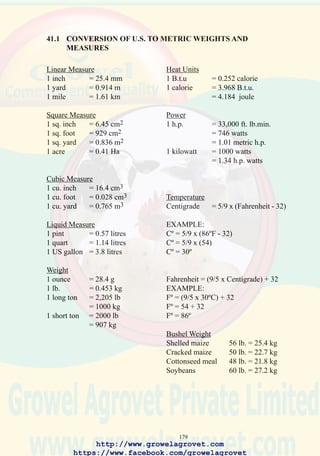
41.1 Conversion of U.S. Metric Weights and Measures ................. 179
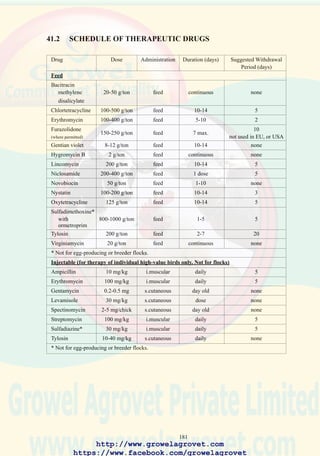
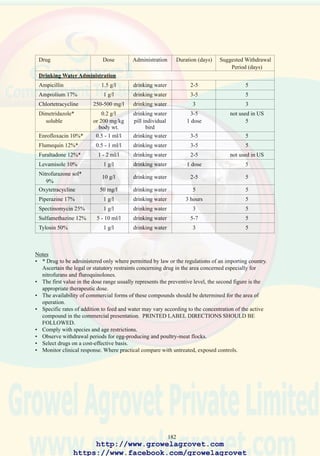
41.2 Schedule of Therapeutic Drugs............................................... 181
41.3 Differential Diagnoses of Avian Diseases............................... 183
41.4 Abbreviations.......................................................................... 187
xi
xii
LIST OF TABLES AND FIGURES
FIGURE 1.1 CYCLE OF MANAGEMENT ................................................ 5
FIGURE 1.2 HIERARCHY OF BIOSECURITY ........................................ 5
FIGURE 2.1 CONCEPTUAL RELATIONSHIP BETWEEN COST
AND REVENUE ................................................................... 10
FIGURE 2.2 GENERAL FORMAT FOR
GROSS MARGIN ANALYSIS.............................................. 10
FIGURE 2.3 FORMAT OF PAY-OFF TABLE CONSIDERING
ALTERNATIVE PREVENTIVE STRATEGIES ...................11
FIGURE 2.4 RELATIONSHIP BETWEEN EXPENDITURE
AND RETURN FROM DISEASE CONTROL .................... 12
TABLE 4.1 STANDARDS OF WATER QUALITY FOR POULTRY ..... 31
TABLE 4.2 PREPARATION OF SANITIZER SOLUTIONS
TO FLUSH WATER LINES SUPPLYING
NIPPLE & BELL DRINKERS.............................................. 31
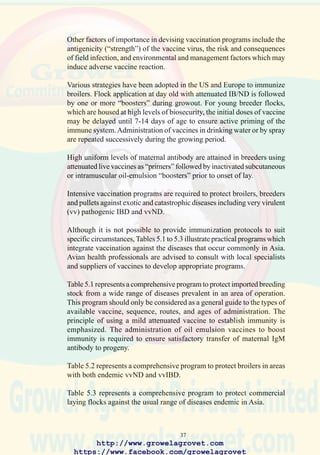
FIGURE 5.1 RELATIONSHIP OF MATERNAL ANTIBODY
AND VACCINATION........................................................... 36
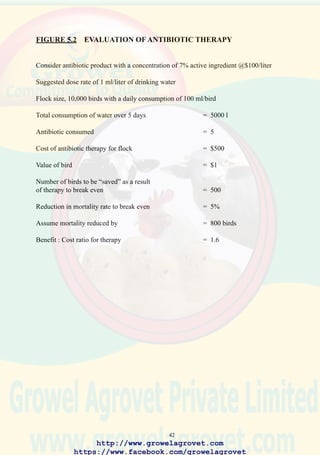
FIGURE 5.2 EVALUATION OF ANTIBIOTIC THERAPY ..................... 42
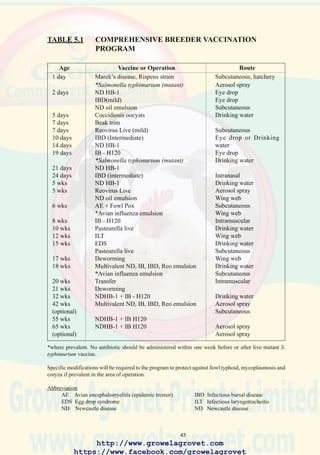
TABLE 5.1 COMPREHENSIVE BREEDER VACCINATION
PROGRAM ........................................................................... 43
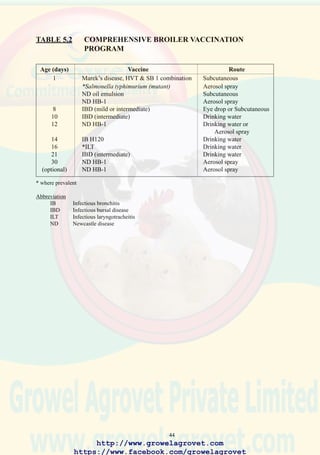
TABLE 5.2 COMPREHENSIVE BROILER VACCINATION
PROGRAM ........................................................................... 44
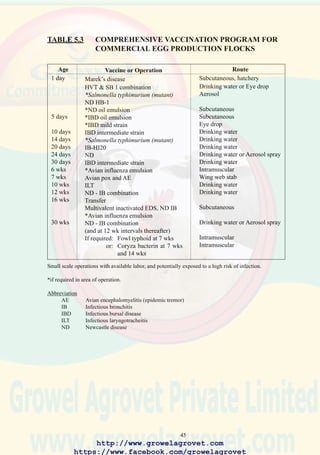
TABLE 5.3 COMPREHENSIVE VACCINATION PROGRAM FOR
COMMERCIAL EGG PRODUCTION FLOCKS ................ 46
xiii
LIST OF ANNEXES
41.1 CONVERSION OF U.S. METRIC WEIGHTS AND MEASURES .. 179
41.2 SCHEDULE OF THERAPEUTIC DRUGS ....................................... 181
41.3 DIFFERENTIAL DIAGNOSES OF AVIAN DISEASES .................. 183
41.4 ABBREVIATIONS ............................................................................. 187
http://www.growelagrovet.com
https://www.facebook.com/growelagrovet
1
2
MANAGEMENT, NUTRITION AND BIOSECURITY
1.0 INTRODUCTION
2.0 ECONOMIC CONSIDERATIONS IN THE
PREVENTION AND CONTROL OF POULTRY
DISEASES
3.0 HEALTH AND PERFORMANCE OF POULTRY IN
HOT CLIMATES
4.0 PREVENTION OF DISEASE
5.0 VACCINATION AND MEDICATION
6.0 SPECIAL PROCEDURES RELATING TO
CONTROL OF DISEASES IN POULTRY
OPERATIONS
7.0 NUTRITION OF CHICKENS AND DIETARY
DEFICIENCIES
3
1.0 INTRODUCTION
During the past two decades, primary breeders of broiler, egg and laying
strains have eliminated vertically-transmitted diseases from their elite and
great-grandparent generations. Unfortunately, infection of grandparent and
parent flocks occurs in many developing countries resulting in
dissemination of diseases including mycoplasmosis, salmonellosis and
reoviral infection.
Improved biosecurity and an awareness of the need for appropriate
vaccination programs, reduces the potential losses caused by both
catastrophic and erosive infections on commercial-scale farms, village
cooperatives and in integrated operations.
Angara disease, virulent infectious bursal disease, highly pathogenic
influenza, reoviral stunting syndrome and swollen head syndrome are
examples of emerging diseases affecting flocks in Asia, Africa, and Latin
America. In addition, chronic, low-intensity infections such as coryza,
pasteurellosis, and salmonellosis continue to erode profit margins.
Prevention of disease depends on a comprehensive program incorporating
a sequence of planning, implementing and control in a repetitive cycle
(Figure 1.1). Strategies to prevent infection are based on the purchase of
breeding stock free of vertically-transmitted disease. Vaccination of parent
flocks and progeny and appropriate levels of biosecurity represent the
components of disease prevention subject to direct managemental control.
The relative importance and contribution of these strategies can be
calculated using simulation studies. These should incorporate projections
of risk of infection and compare the production parameters and costs for
diseased and healthy flocks.
The components of biosecurity comprise a hierarchy with each of 3 levels
influencing the cost and effectiveness of the entire program (Figure 1.2):
The purpose of the Handbook on Poultry Diseases is to acquaint
veterinarians and poultry health professionals with current information
on the diagnosis and prevention of poultry disease in commercial broiler
and egg production flocks in emerging and established industries.
Productivity and profitability are enhanced by application of sound
principles of biosecurity, vaccination, and management. Improving
efficiency increases the availability of eggs and poultry meat to supply
the protein needs of populations in countries with expanding demand.
4
• Conceptual Biosecurity:The primary level represents the basis of all programs
to prevent disease. Conceptual biosecurity includes selecting the location of
a complex or operation in a specific area to separate different types of poultry,
reduce biodensity, and avoid contact with free-living birds. Siting of farms
in relation to public roads and service facilities such as hatcheries, feed mills,
and processing plants has a profound impact on the effectiveness of a program
to maintain optimal standards of production. Decisions concerning conceptual
biosecurity influence all subsequent activities relating to prevention and
control of disease. Generally, defects in conceptual biosecurity cannot be
changed in response to the emergence of new diseases which may result in
severe losses or even failure of an enterprise.
• Structural Biosecurity:The second level of biosecurity includes considerations
such as the layout of farms, erection of fences, construction of drainage, all-
weather roads, equipment for decontamination, bulk feed installations, change
rooms, exclusion of rodents and wild birds, and the interior finishes in houses.
Structural biosecurity can be enhanced in the intermediate term with
appropriate capital investment. Remedial action may often be too late to
respond to the emergence of a new disease or an epornitic of a catastrophic
infection such as highly pathogenic avian influenza.
• Operational Biosecurity: The third level comprises routine managemental
procedures intended to prevent introduction and spread of infection within a
complex or enterprise. These activities can be modified at short notice to
respond to disease emergencies. Constant review of procedures, participation
by all levels of management and labor and appropriate monitoring of the
health status and immunity of flocks contributes to effective operational
biosecurity.
5
FIGURE 1.1 CYCLE OF MANAGEMENT
FIGURE 1.2 HIERARCHY OF BIOSECURITY
STRUCTURAL
OPERATIONAL
CONCEPTUAL
Analysis & Review
of Production &
Financial
Performance
Evaluation of Risk & Consequences
of Disease Planning of Biosecurity
& Disease Prevention Strategies
Implementation of Biosecurity
& Vaccination
6
2.0 ECONOMIC CONSIDERATIONS IN THE PREVENTION AND
CONTROL OF POULTRY DISEASES
2.1 General Principles
The primary purpose of any enterprise is to maximize return on investment
over the long-term. It is therefore necessary to market poultry, meat
products, and eggs at a price which allows farmers or integrators to
maintain profitability in a competitive market. Cost-effective programs
of biosecurity and vaccination are required to prevent or limit the impact
of disease.
It is emphasized that the incremental return in the form of enhanced egg
production, hatchability, liveability, growth rate, and feed conversion
efficiency must exceed capital and operating expenditures on disease
prevention. There is considerable difficulty in predicting the potential loss
arising from a disease or projecting the probability of an outbreak. Risk
of exposure and consequences of infection, are the two significant variables
required to quantify the decline in production which may follow exposure
to a disease. The benefit-to-cost ratio can be used to relate expenditure on
resources and management efforts to the monetary value of improved
performance. Programs of emergency treatment and long-term prevention
are justified for severe diseases which have a profound impact on
production. Aggressive counter measures are required under conditions
which predispose to a high risk of infection, where the prevalence of
endemic diseases severely affects production efficiency or where the value
of eggs and meat is high in relation to expenditure on biosecurity and
vaccination.
It is necessary to invest capital in adequate poultry housing and ancillary
installations to attain a suitable level of biosecurity. Changing rooms,
fences and equipment to decontaminate hatcheries and housing are
examples of assets which reduce the probability of introducing disease.
A decision to invest in improvements which promote biosecurity should
be based on an anticipation of return within a defined, and preferably
short to intermediate time period. The future cash flows, derived from
improved performance attributed to the absence of disease, should be
calculated for a period corresponding to the operating life of the
investment. The net present value (NPV) of an investment in biosecurity
can be calculated from the annual cash flows, discounted by an
appropriate interest factor. If the NPV exceeds the cost of improvements,
the investment can be considered justifiable. The NPV method can be
used to select the most beneficial program to prevent disease from among
http://www.growelagrovet.com
https://www.facebook.com/growelagrovet
7
a range of alternatives. It is emphasized that the validity of any investment
decision is dependent on selecting an appropriate value for the risk of
infection and accurately projecting the consequences of disease, given
prevailing production costs and revenue.
2.2 Fixed and Variable Costs in Poultry Production
Costs relating to live bird production can be classified into fixed and
variable components. Fixed costs do not change as a result of an increase
in the volume of production and include depreciation, interest on fixed
capital, salaries, overhead, and lease payments.
Variable costs are proportional to the volume of production. Feed, labor,
packaging material, fuel, vaccines and medication, purchase of day-old
chicks and breeding stock, are examples of this category of production
costs. The concept of apportioning expenditure is important in projecting
the effects of disease on total production cost.Adecrease in broiler weight
delivered to a plant attributed to increased mortality or depressed growth
rate will adversely affect production cost and efficiency. Processing plants,
hatcheries, and feed mills operate at a break-even cost approximating 70%
to 80% of design capacity due to their relatively high proportion of fixed
costs.
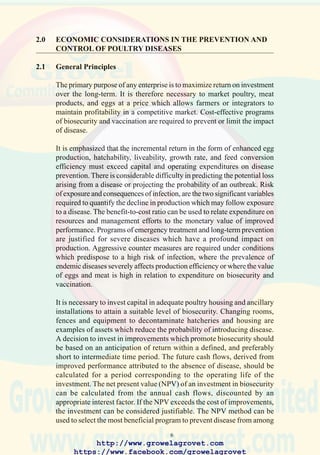
Figure 2.1 shows the relationship between total cost, volume of production
and profit. Fixed costs which are constant are illustrated by the line parallel
to the horizontal (quantity) axis. Total costs are represented by the area
which encompasses both fixed and variable costs. In this example, unit
selling price is considered constant over volume of throughput and
accordingly revenue is linear and proportional to the quantity produced.
At the break-even point (quantity Qo) total revenue is numerically equal
to total costs.At this level of production fixed costs represent approximately
half of the total cost. At a higher throughput, variable cost assumes a
greater proportion of total cost. Offsetting fixed costs by increasing
production level is the basis of efficiency through economy of scale, which
benefits progressive integrations and cooperatives in mature industries.
In the context of individual farms, there are limits to increasing production
volume. Altering stocking density from 20 to 25 birds/m2 increases
throughput by 25%. Delaying slaughter of a broiler flock to attain a higher
live mass (1.75 to 1.95 kg) may increase biomass by 11%. Reducing
intercrop interval from 10 to 5 days may result in an 8% increase in broiler
live mass over a year. Implementing these management changes will
increase the risk of disease and intensify the financial impact of infections.
The severity of viral respiratory diseases such as bronchitis or
http://www.growelagrovet.com
https://www.facebook.com/growelagrovet
8
laryngotracheitis is influenced by environmental and clinical stress. The
effect of intercurrent low-grade conditions such as pasteurellosis,
mycoplasmosis or coccidiosis may be exacerbated by increased biodensity.
Secondary infections such as E. coli septicemia will intensify losses in
proportion to increased biomass. Ventilation, capacity, feeding space,
drinking points and floor area represent the limiting health factors for
flocks when output is increased.
2.3 Gross Marginal Analysis
This analytical technique can be applied to relate expenditure on disease
prevention with output over a specific time period. Gross marginal analysis
allows producers to project the possible outcome of a program with
uncertain risks and consequences of infection. The technique evaluates
alternative methods of preventing disease in the context of prevailing costs
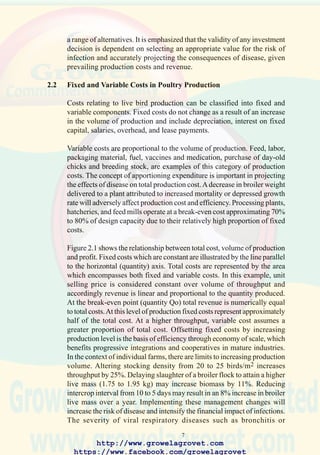
and revenue. The format table for gross marginal analysis is shown in
Figure 2.2. The inputs required to determine the gross margin attributable
to a specific program are listed for an ongoing poultry operation over a
specific time period. A series of analyses can be performed reflecting
alternative prevention strategies and probabilities of disease exposure.
The values calculated from the gross marginal analysis are entered into a
pay-off table which depicts the financial result of a selected option.
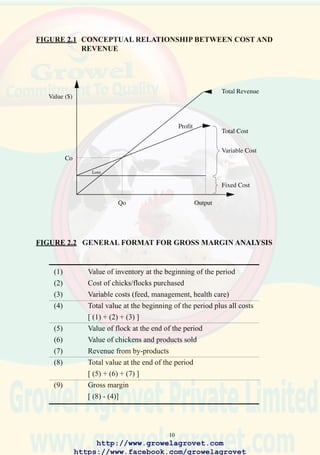
Figure 2.3 considers the effect of three alternative approaches to preventing
a disease which has a 0.6 probability of occurrence. The options available
to the producer include: no action (“base = 0”); biosecurity (#1) or
vaccination (#2). It is determined that the respective gross margins derived
from the flock under conditions of no action are $3,000 and $10,000 with
and without exposure to disease. The corresponding gross margins
generated when flocks are subjected to either biosecurity alone (strategy
#1) or vaccination alone (strategy #2) can be calculated and entered into a
pay-off table. The expected monetary value of each prevention strategy is
calculated by multiplying the probability factor with outcome as shown.
In the given example, vaccination costing $1,000 provides the highest of
$8,400, compared to $6,460 for increased biosecurity, costing $2,000 and
$5,800 for no action. Expected monetary values are influenced by changes
in variable costs, unit revenue, and the probability of infection.
Variability in the impact of a disease occurs due to change in the
pathogenicity of the causal organism, the presence of secondary agents,
immuno-suppression or environmental stress. Changes in these factors
influence the outcome of exposure of a flock to infection and requires
relaxation or intensification of the preventive strategy depending on the
http://www.growelagrovet.com
https://www.facebook.com/growelagrovet
9
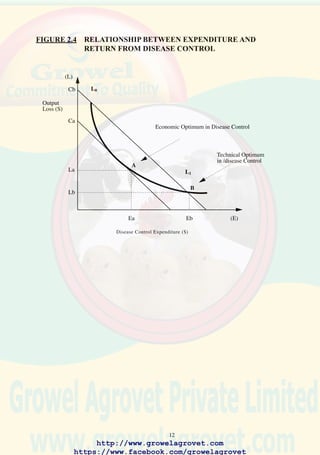
circumstances. Figure 2.4 depicting expenditure and return from control
of disease shows the relationship between expenditure on prevention and
control measures (horizontal axis) and the loss associated with introduction
of disease (vertical axis).As expenditure on control of velogenic Newcastle
disease (vvND) or highly pathogenic avian influenza (HPAI) by effective
vaccination is increased, the loss in output is reduced. The low cost of ND
and HPAI vaccination and the relative efficiency in improving liveability
and enhancing the growth rate or egg production in infected survivors
reduces losses associated with minimal expenditure as designated by the
curve LoL1. Increased outlay on disease prevention and control, such as
intensifying the vaccination program and implementing biosecurity will
result in an incremental reduction of losses. Eventually the economic
optimum is reached (point A) at which a monetary unit of expenditure on
control generates only a single unit of return. Additional prevention and
control activities will in fact reduce gross margin and generate a negative
benefit:cost ratio.
Under certain conditions, such as the need to eradicate a vertically
transmitted infection in breeding stock or to suppress a disease of zoonotic
significance, control measures are extended beyond the economic
optimum. Ultimately the technical optimum (B) is attained. At this point
additional efforts to prevent disease will not achieve any measurable
reduction in losses.
This sequence may be illustrated by the intensive programs to eradicate
mycoplasmosis by the primary broiler breeders during the 1960’s and
1970’s. Control measures included pressure-differential treatment of eggs
with antibiotics, and injection of embryos and chicks with
mycoplasmacidal drugs. These measures together with pre-incubation heat-
treatment of eggs to destroy Mycoplasma spp and enhanced biosecurity
and monitoring of pure-line flocks maintained in strictly-isolated small
groups eradicated the disease in elite lines.
http://www.growelagrovet.com
https://www.facebook.com/growelagrovet
10
FIGURE 2.1 CONCEPTUAL RELATIONSHIP BETWEEN COST AND
REVENUE
FIGURE 2.2 GENERAL FORMAT FOR GROSS MARGIN ANALYSIS
(1) Value of inventory at the beginning of the period
(2) Cost of chicks/flocks purchased
(3) Variable costs (feed, management, health care)
(4) Total value at the beginning of the period plus all costs
[ (1) + (2) + (3) ]
(5) Value of flock at the end of the period
(6) Value of chickens and products sold
(7) Revenue from by-products
(8) Total value at the end of the period
[ (5) + (6) + (7) ]
(9) Gross margin
[ (8) - (4)]
http://www.growelagrovet.com
https://www.facebook.com/growelagrovet
11
FIGURE 2.3 FORMAT OF PAY-OFF TABLE CONSIDERING
ALTERNATIVE PREVENTIVE STRATEGIES
Possible outcomes Probability Financial result of alternative
of strategies in designated
occurrence monetary unit ($)
no action biosecurity vaccination
#0 #1 #2
With disease X a b c
= 0.6 $3,000 $6,000 $8,000
Without disease (1 -X) d e f
= (1 - 0.6) = 0.4 $10,000 $7,000 $9,000
Expected monetary value associated with alternative strategies:
(Base #0) = (a x X) + [d x (1 - X)] = $5,800
$1,800 + $4,000
(Strategy #l) = (b x X) + [e x (1 - X)] = $6,400
$3,600 + $2,800
(Strategy #2) = (c x X) + [f x (1 - X)] = $8,400
$4,800 + $3,600
http://www.growelagrovet.com
https://www.facebook.com/growelagrovet
12
FIGURE 2.4 RELATIONSHIP BETWEEN EXPENDITURE AND
RETURN FROM DISEASE CONTROL
http://www.growelagrovet.com
https://www.facebook.com/growelagrovet
13
3.0 HEALTH AND PERFORMANCE OF POULTRY IN HOT
CLIMATES
3.1 Physiological Effects of High Ambient Temperature
Exposure of poultry flocks to ambient temperature above the zone of
minimum metabolism results in an increase in endogenous heat production.
Convective transfer of heat is the major thermo-regulatory mechanism of
chickens and depends on movement of air by natural or fan-powered
ventilation. An increase in convective heat transfer as a result of air
movement is proportional to air velocity of up to 100 m/minute, provided
ambient air temperature is below body temperature.
Hyperpnea (panting) occurs in mature chickens exposed to temperatures
exceeding 30ºC. Respiratory rate can increase from 22 breaths/minute
(bpm) to 200 bpm when ambient temperature is increased from 27ºC to
45ºC within 20 minutes. Panting facilitates evaporative cooling, and above
38ºC, chickens are almost entirely dependent on latent heat loss for thermo-
regulation. Prolonged hyperpnea results in excessive excretion of carbon
dioxide resulting in respiratory alkalosis. Exposure to high ambient
temperature has a profound economic impact on liveability, growth rate,
egg production, egg shell quality, and feed conversion efficiency.
Exposure to high environmental temperature for extended periods will
suppress the humoral immune response of chickens, reducing antibody
titer. It is presumed that a reduction in circulating antibody is associated
with a corticosteroid-induced change in serum ions. Cellular immunity is
also suppressed by prolonged exposure to temperatures in excess of 36ºC.
This effect is mediated through T-cell or regulatory amplifier cell response.
3.2 Design of Housing in Tropical Countries
Convection-ventilated housing is most frequently used in temperate
and tropical areas where moderately high seasonal temperatures occur.
Structures should be designed to permit passive airflow over the flock.
Size and siting of houses in relation to local topography are critical to
achieving satisfactory results. The significant design characteristics
for convection-ventilated houses relate to internal dimensions,
provision of adequate air inlets, and insulation. Convection houses
should not exceed 10 m in width to facilitate cross flow of air at low
velocity. Houses should be oriented in an east-west direction to limit
solar heat load, and the interior height at the apex should not be less
than 4 m to reduce air temperature at bird level. Roof overhang should
extend at least 0.8 m to limit solar gain through the side walls. The
lateral ventilation openings should comprise at least 60% of the side
http://www.growelagrovet.com
https://www.facebook.com/growelagrovet
14
wall area and should be fitted with impervious curtains. In modern
units, the area of the side opening can be controlled automatically by
a thermostatically activated motorized winch with an emergency high
temperature release mechanism in the event of power failure. General
recommendations for insulation in tropical countries include values
of 2.5m2 ºC/W (R = 14) and 1.2 m2 ºC/W (R = 7) for roof and wall
structures respectively. Fiberglass blanket insulation or polyurethane
panels should be coated with a reflective radiant barrier of aluminum
film on the exposed outer surface and should be provided with an
impervious plastic protective lining for the inner surface.
Convention-ventilated houses are economically justified in many warm-
climate areas with developing poultry industries.Although stocking density
is generally low (eight to ten broilers or pullets or two to three mature
breeders per square meter) compared with more advanced housing, the
relatively low capital and operating costs optimize profitability. Simple
mechanical and electrical installations and elementary technology for
management and maintenance favor the basic convection-ventilated unit
in tropical and subtropical areas.
To overcome high environmental temperatures, it is necessary to increase
the rate of air movement in a house. When daily ambient temperatures
exceed 30ºC with any frequency, mechanical ventilation is required. This
can be achieved either by installing fans in closed housing or by selecting
an appropriate configuration of air inlets in relation to the dimensions of
convection-ventilated units.
Air movement facilitates convective heat loss by the bird. The efficiency
of this process is proportional to the velocity of the air stream and the
temperature differential which exists between the bird and its surroundings.
Egg production, fertility, and feed conversion are improved in heat-stressed
flocks provided with a direct stream of air.
Evaporative cooling is used to reduce the severity of heat prostration in
areas where the maximum temperature exceeds 35ºC with seasonal
regularity.All systems function on the principle of adiabatic cooling from
a change of state of water from liquid to vapor. The physical relationship
between dry bulb temperature, relative humidity, and heat content of air
is depicted in psychometric charts. Generally, low humidity improves the
efficiency of adiabatic cooling at high ambient temperature, but evaporative
cooling can avert losses from heat prostration even in extremely hot and
humid areas.
http://www.growelagrovet.com
https://www.facebook.com/growelagrovet
15
Air at 45ºC and 15% RH could theoretically be cooled to 25ºC assuming
complete saturation. Due to restraints associated with the process of
evaporation, commercial equipment functions with an efficiency ranging
from 60 to 80%. Air at 45ºC and 15% RH could be cooled to a dry bulb
temperature of 30ºC with an elevation in relative humidity to 60%.
The simplest evaporative cooling system comprises fogger nozzles which
deliver up to 8 to 10 l/hr at a pressure of 5 to 8 bar. Nozzles are positioned
in close proximity to turbulence fans to provide one discharge point for
each 500 birds. This system is used in the U.S., where low cost is compatible
with existing convection-ventilated houses. The low-pressure fogger nozzle
produces a coarse spray. Although systems are capable of achieving a 5ºC
reductionintemperaturewithambientairof37ºCand30%RH,low-pressure
fogger nozzles are inefficient with respect to the cooling effect relative to
water consumed. Systems require frequent cleaning and descaling and litter
becomes saturated in the vicinity of the nozzles. The system should only be
operated when humidity is below 70% RH and with fans displacing 5 m3/
hr per broiler. Generally, the coarse-nozzle system is unsuitable in Middle
Eastern countries due to inefficient utilization of scarce water and blockage
of nozzles by mineral contaminants in artesian water.
Pad cooling systems are used extensively in Asia, the U.S.A. and Latin
America, where seasonally high temperatures are encountered. The
principal deficiency of the pad lies in the inherently lower efficiency of
evaporation compared with the ultra-high pressure fogger. Modern cooling
pads are composed of cellulose material in a honeycomb configuration to
increase surface area. Although this enhances cooling, the system is
susceptible to algae and mineral contamination in water. The efficiency
of cooling may be enhanced by spraying pads with water from suitably
placed nozzles.
3.3 Management of Flocks at High Temperature
The survival of birds at high temperature is strongly influenced by the
volume of water consumed. Cold water functions as a heat sink in the
intestinal tract and surface evaporation from the comb, wattles, and head
exerts a cooling effect. It is essential to provide additional watering points
to facilitate consumption in areas where ambient temperature exceeds
3º∫C for more than 2 hours per day. Recommendations include 1 suspended
drinker with a diameter of at least 40 cm, for 75 broilers or 50 breeders
and 1 cup or nipple per cage of up to 5 commercial layers. Insulation of
header tanks and supply piping is indicated if the temperature of water at
the point of consumption exceeds 25ºC.
http://www.growelagrovet.com
https://www.facebook.com/growelagrovet
16
Research on integrating lighting programs and operation of feeders for
broilers has been reported from Singapore. Performance was improved in
convection-ventilated housing using nocturnal illumination and feeding.
This reverse diurnal lighting program produced the highest live weight at
56 days, but feed conversion, mortality, and return were lower than with
other combinations examined. Various lighting and feeding programs were
investigated in Nigeria using medium-strain commercial layers. The use
of night feeding with a reversed lighting program (18:00 to 6:00) supported
a significantly higher level of egg production than conventional daytime
feeding, which was accompanied by exposure to high diurnal temperature.
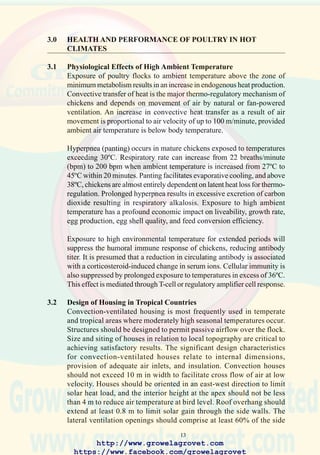
1. Exterior of breeder house
showing relative size of
sidewall ventilation
openings, drainage,
concrete apron, bulk-feed
installation and grassed
area surrounding the unit.
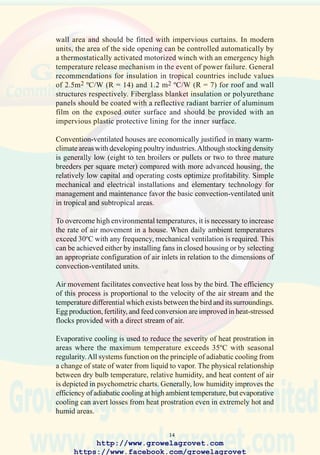
2. Convection ventilated
broiler house on an island
subject to hurricanes
necessitates concrete
construction. Note the
relative size of ventilation
http://www.growelagrovet.com
https://www.facebook.com/growelagrovet
17
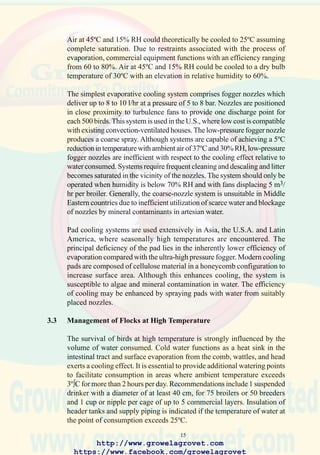
3. Interior of broiler house
showing 2 rows of pan
feeders and 4 rows of
suspended plastic drinkers.
Flock is uniform in size and
shows feathering and
pigmentation, consistent
with health.
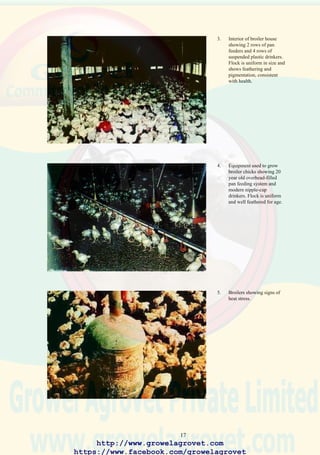
4. Equipment used to grow
broiler chicks showing 20
year old overhead-filled
pan feeding system and
modern nipple-cup
drinkers. Flock is uniform
and well feathered for age.
5. Broilers showing signs of
heat stress.
http://www.growelagrovet.com
https://www.facebook.com/growelagrovet
18
6. Chicks beneath a gas-fueled
pancake brooder show good
distribution consistent with
satisfactory growth and
feed conversion efficiency.
7. Uniformity in flocks is
achieved with adequate
feeding space and a supply
of clean water from a
closed system through
nipples or cups.
8. Modern high-density cage
installation with
mechanical feeding and egg
collection and fan-powered
ventilation controlled by
electronic systems.
http://www.growelagrovet.com
https://www.facebook.com/growelagrovet
19
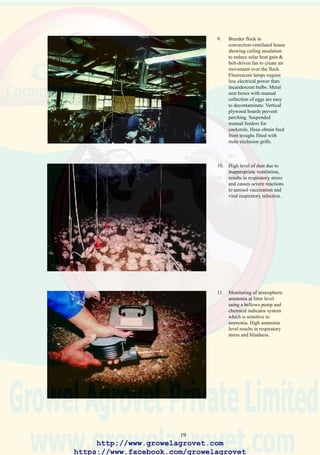
9. Breeder flock in
convection-ventilated house
showing ceiling insulation
to reduce solar heat gain &
belt-driven fan to create air
movement over the flock.
Fluorescent lamps require
less electrical power than
incandescent bulbs. Metal
nest boxes with manual
collection of eggs are easy
to decontaminate. Vertical
plywood boards prevent
perching. Suspended
manual feeders for
cockerels. Hens obtain feed
from troughs fitted with
male exclusion grills.
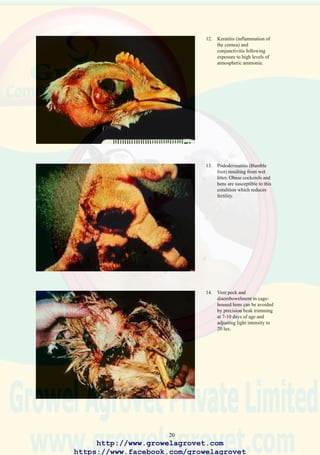
10. High level of dust due to
inappropriate ventilation,
results in respiratory stress
and causes severe reactions
to aerosol vaccination and
viral respiratory infection.
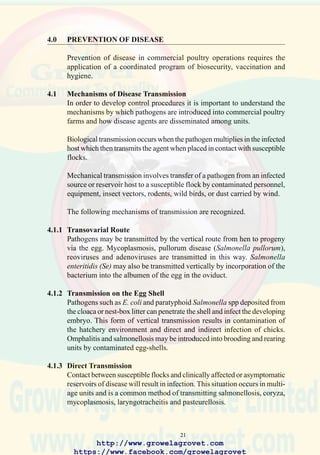
11. Monitoring of atmospheric
ammonia at litter level
using a bellows pump and
chemical indicator system
which is sensitive to
ammonia. High ammonia
level results in respiratory
stress and blindness.
http://www.growelagrovet.com
https://www.facebook.com/growelagrovet
20
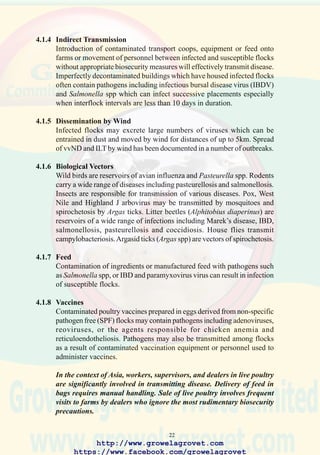
12. Keratitis (inflammation of
the cornea) and
conjunctivitis following
exposure to high levels of
atmospheric ammonia.
13. Pododermatitis (Bumble
foot) resulting from wet
litter. Obese cockerels and
hens are susceptible to this
condition which reduces
fertility.
14. Vent peck and
disembowelment in cage-
housed hens can be avoided
by precision beak trimming
at 7-10 days of age and
adjusting light intensity to
20 lux.
http://www.growelagrovet.com
https://www.facebook.com/growelagrovet
21
4.0 PREVENTION OF DISEASE
Prevention of disease in commercial poultry operations requires the
application of a coordinated program of biosecurity, vaccination and
hygiene.
4.1 Mechanisms of Disease Transmission
In order to develop control procedures it is important to understand the
mechanisms by which pathogens are introduced into commercial poultry
farms and how disease agents are disseminated among units.
Biological transmission occurs when the pathogen multiplies in the infected
host which then transmits the agent when placed in contact with susceptible
flocks.
Mechanical transmission involves transfer of a pathogen from an infected
source or reservoir host to a susceptible flock by contaminated personnel,
equipment, insect vectors, rodents, wild birds, or dust carried by wind.
The following mechanisms of transmission are recognized.
4.1.1 Transovarial Route
Pathogens may be transmitted by the vertical route from hen to progeny
via the egg. Mycoplasmosis, pullorum disease (Salmonella pullorum),
reoviruses and adenoviruses are transmitted in this way. Salmonella
enteritidis (Se) may also be transmitted vertically by incorporation of the
bacterium into the albumen of the egg in the oviduct.
4.1.2 Transmission on the Egg Shell
Pathogens such as E. coli and paratyphoid Salmonella spp deposited from
the cloaca or nest-box litter can penetrate the shell and infect the developing
embryo. This form of vertical transmission results in contamination of
the hatchery environment and direct and indirect infection of chicks.
Omphalitis and salmonellosis may be introduced into brooding and rearing
units by contaminated egg-shells.
4.1.3 Direct Transmission
Contact between susceptible flocks and clinically affected or asymptomatic
reservoirs of disease will result in infection. This situation occurs in multi-
age units and is a common method of transmitting salmonellosis, coryza,
mycoplasmosis, laryngotracheitis and pasteurellosis.
http://www.growelagrovet.com
https://www.facebook.com/growelagrovet
22
4.1.4 Indirect Transmission
Introduction of contaminated transport coops, equipment or feed onto
farms or movement of personnel between infected and susceptible flocks
without appropriate biosecurity measures will effectively transmit disease.
Imperfectly decontaminated buildings which have housed infected flocks
often contain pathogens including infectious bursal disease virus (IBDV)
and Salmonella spp which can infect successive placements especially
when interflock intervals are less than 10 days in duration.
4.1.5 Dissemination by Wind
Infected flocks may excrete large numbers of viruses which can be
entrained in dust and moved by wind for distances of up to 5km. Spread
of vvND and ILT by wind has been documented in a number of outbreaks.
4.1.6 Biological Vectors
Wild birds are reservoirs of avian influenza and Pasteurella spp. Rodents
carry a wide range of diseases including pasteurellosis and salmonellosis.
Insects are responsible for transmission of various diseases. Pox, West
Nile and Highland J arbovirus may be transmitted by mosquitoes and
spirochetosis by Argas ticks. Litter beetles (Alphitobius diaperinus) are
reservoirs of a wide range of infections including Marek’s disease, IBD,
salmonellosis, pasteurellosis and coccidiosis. House flies transmit
campylobacteriosis.Argasid ticks (Argas spp) are vectors of spirochetosis.
4.1.7 Feed
Contamination of ingredients or manufactured feed with pathogens such
as Salmonella spp, or IBD and paramyxovirus virus can result in infection
of susceptible flocks.
4.1.8 Vaccines
Contaminated poultry vaccines prepared in eggs derived from non-specific
pathogen free (SPF) flocks may contain pathogens including adenoviruses,
reoviruses, or the agents responsible for chicken anemia and
reticuloendotheliosis. Pathogens may also be transmitted among flocks
as a result of contaminated vaccination equipment or personnel used to
administer vaccines.
In the context of Asia, workers, supervisors, and dealers in live poultry
are significantly involved in transmitting disease. Delivery of feed in
bags requires manual handling. Sale of live poultry involves frequent
visits to farms by dealers who ignore the most rudimentary biosecurity
precautions.
http://www.growelagrovet.com
https://www.facebook.com/growelagrovet
23
4.2 Biosecurity
Evaluating the biosecurity of ongoing operations is important in developing
effective programs to prevent the introduction of disease into a complex
or to limit subsequent dissemination among farms.
A successful biosecurity program presumes an understanding of the
principles of epidemiology and economics and requires teamwork to
maximize benefits. Biosecurity programs require a structured approach
involving the following sequence:
• Planning and evaluation of programs.
• Locating resources and training of personnel.
• Implementing including erection of facilities.
• Control involving review of results and analytical procedures.
The following items should be considered in evaluating a comprehensive
biosecurity program for a breeder or growout complex:
4.2.1 Conceptual Biosecurity
• Location of the complex in relation to concentrations of poultry of the
same or different species.
• Distance among breeder and growout farms and facilities such as
hatcheries, feed mills, and processing plants or packing units.
• Location of major and minor roads and the movement of commercial
and backyard poultry in relation to company facilities.
• Proximity to large lakes or waterways or migratory flyways.
• For commercial egg production consider the implications of multi-age
on-line units or single-age, company-owned or contractor-operated
facilities.
4.2.2 Structural Biosecurity
• Fenced farm area with notices to prevent trespass.
• Fencing of house area, with secured gates.
• Water supply free of pathogenic bacteria, and chlorinated to a level of
2 ppm.
• Farm service module comprising an office, storage, and change room-
shower facilities.
• Concrete apron with a suitable water and power supply to permit
decontamination of vehicles entering the farm.
• All-weather roads within secured perimeter to facilitate cleaning and
to prevent dissemination of disease agents by vehicles and footwear.
• Appropriate location of bulk bins or secure, vermin-free storage areas
for bagged feed.
• Installations for disposal of dead birds (incinerators, composters, pits).
http://www.growelagrovet.com
https://www.facebook.com/growelagrovet
24
• Secure housing with appropriate bird and rodent proofing.
• Concrete floors for breeding stock at the grandparent level. In many
countries with endemic salmonellosis, concrete floors are required in
both rearing and laying housing for breeders.
• Correct positioning of extractor fans to prevent airborne transmission
of pathogens to flocks in adjacent houses.
• Impervious apron adjacent to the door of each house and installation
of drains.
• Feed, unused litter and cleaned equipment should be stored in a module
separated from the live-bird area of the house to prevent contamination
of flocks by delivery and maintenance workers.
4.2.3 Operational Biosecurity
• Operational manuals should be developed for routine procedures carried
out in feed mills, hatcheries, breeding and grow out facilities. Manuals
should incorporate contingency plans in the event of a deviation from
normal production parameters or outbreaks of disease on company
farms or in units located in close proximity to the operation. Manuals
should be developed for appropriate levels of management including
company veterinarians and health maintenance professionals, service
personnel, contractors, and employees.
• Standardized procedures should address specific aspects of operation
including:
o Decontamination and disinfection of units following depletion of
flocks.
o Storage, reconstitution and administration of vaccines according to
recommended route.
o Specific procedures on entering and leaving farms should be
designated for managers, supervisors, authorized visitors, work crews
and permanent and part-time employees.
o Controls required to prevent contact with exotic avian species, and
backyard poultry.
http://www.growelagrovet.com
https://www.facebook.com/growelagrovet
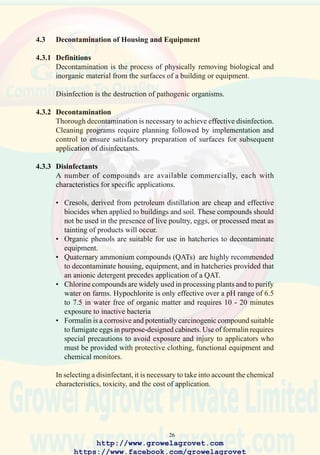
25
15. Clinical examination as part
of a disease investigation
requires evaluation of
representative birds from a
flock to determine the
organ systems which are
involved.
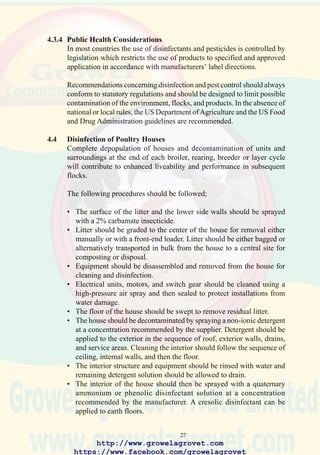
16. Structured post-mortem
examination is necessary to
determine the presence of
lesions characteristic of a
disease in the flock.
Pathologists should take
precautions to prevent
personal infection and
should exercise high
standards of biosecurity to
obviate transmission of
pathogens.
http://www.growelagrovet.com
https://www.facebook.com/growelagrovet
26
4.3 Decontamination of Housing and Equipment
4.3.1 Definitions
Decontamination is the process of physically removing biological and
inorganic material from the surfaces of a building or equipment.
Disinfection is the destruction of pathogenic organisms.
4.3.2 Decontamination
Thorough decontamination is necessary to achieve effective disinfection.
Cleaning programs require planning followed by implementation and
control to ensure satisfactory preparation of surfaces for subsequent
application of disinfectants.
4.3.3 Disinfectants
A number of compounds are available commercially, each with
characteristics for specific applications.
• Cresols, derived from petroleum distillation are cheap and effective
biocides when applied to buildings and soil. These compounds should
not be used in the presence of live poultry, eggs, or processed meat as
tainting of products will occur.
• Organic phenols are suitable for use in hatcheries to decontaminate
equipment.
• Quaternary ammonium compounds (QATs) are highly recommended
to decontaminate housing, equipment, and in hatcheries provided that
an anionic detergent precedes application of a QAT.
• Chlorine compounds are widely used in processing plants and to purify
water on farms. Hypochlorite is only effective over a pH range of 6.5
to 7.5 in water free of organic matter and requires 10 - 20 minutes
exposure to inactive bacteria
• Formalin is a corrosive and potentially carcinogenic compound suitable
to fumigate eggs in purpose-designed cabinets. Use of formalin requires
special precautions to avoid exposure and injury to applicators who
must be provided with protective clothing, functional equipment and
chemical monitors.
In selecting a disinfectant, it is necessary to take into account the chemical
characteristics, toxicity, and the cost of application.
http://www.growelagrovet.com
https://www.facebook.com/growelagrovet
27
4.3.4 Public Health Considerations
In most countries the use of disinfectants and pesticides is controlled by
legislation which restricts the use of products to specified and approved
application in accordance with manufacturers’ label directions.
Recommendations concerning disinfection and pest control should always
conform to statutory regulations and should be designed to limit possible
contamination of the environment, flocks, and products. In the absence of
national or local rules, the US Department ofAgriculture and the US Food
and Drug Administration guidelines are recommended.
4.4 Disinfection of Poultry Houses
Complete depopulation of houses and decontamination of units and
surroundings at the end of each broiler, rearing, breeder or layer cycle
will contribute to enhanced liveability and performance in subsequent
flocks.
The following procedures should be followed;
• The surface of the litter and the lower side walls should be sprayed
with a 2% carbamate insecticide.
• Litter should be graded to the center of the house for removal either
manually or with a front-end loader. Litter should be either bagged or
alternatively transported in bulk from the house to a central site for
composting or disposal.
• Equipment should be disassembled and removed from the house for
cleaning and disinfection.
• Electrical units, motors, and switch gear should be cleaned using a
high-pressure air spray and then sealed to protect installations from
water damage.
• The floor of the house should be swept to remove residual litter.
• The house should be decontaminated by spraying a non-ionic detergent
at a concentration recommended by the supplier. Detergent should be
applied to the exterior in the sequence of roof, exterior walls, drains,
and service areas. Cleaning the interior should follow the sequence of
ceiling, internal walls, and then the floor.
• The interior structure and equipment should be rinsed with water and
remaining detergent solution should be allowed to drain.
• The interior of the house should then be sprayed with a quaternary
ammonium or phenolic disinfectant solution at a concentration
recommended by the manufacturer. A cresolic disinfectant can be
applied to earth floors.
http://www.growelagrovet.com
https://www.facebook.com/growelagrovet
28
• A 2% carbamate insecticide solution should be sprayed on the ceiling,
walls, and floor to control litter beetles. (Alphitobius spp)
• Equipment should be reassembled and routine preventative maintenance
completed. A clean, dry substrate (wood shavings, groundnut hulls,
rice hulls, sawdust) should be spread to a depth of 3 - 10 cm, over the
floor area.
• Breeder houses should be sealed and fumigated with formalin generated
from heated paraformaldehyde or from a mixture of formaldehyde and
potassium permanganate.Afog generator can also be used to distribute
formalin in aerosol form through the house. It is emphasized that
formalin is a toxic compound and is potentially carcinogenic.
Appropriate protective clothing and respirators should be used and
workers should be trained to use the compound in accordance with
accepted procedures to protect health.
• Water lines and drinkers should be drained and cleaned. A quaternary
ammonium compound (1 - 2,000 dilution) or chlorine solution (1 liter
of 6% sodium hypochlorite per 8 liters of water as a stock solution,
proportioned at 1%) should be used to flush water lines.
• Rodent control measures should be implemented including sealing of
burrows and baiting. (See 4.5 below)
4.5 Control of Rodents
Rats and mice are significant pests in poultry facilities. They cause damage
to building structures, including foundations, water lines, electrical cables,
switch gear, and insulation.
Rodents are major vectors and reservoirs of poultry and zoonotic
pathogens, including Pasteurella multocida, Salmonella typhimurium and
S. enteritidis. Mice amplify environmental contamination and will infect
poultry and products. Rodents serve as mechanical transmitters of
infectious agents such as influenza and infectious bursal disease viruses
and Salmonella and Pasteurella spp.
Rodents are nocturnal and are active after lights have been turned off.
Rats and mice are seldom seen during the day unless infestation is very
heavy. Colonization can be detected by the presence of active nesting
sites in attics, in cracks in concrete slabs, under cages, in manure, in corners,
or in burrows around the foundation walls. Fresh droppings may be
observed around the inner perimeter of the poultry house. Outdoor burrows
may be closed by filling with soil and observed for reopening of entrances.
The frequency of catching rodents in traps may also be used to assess the
level of infestation.
http://www.growelagrovet.com
https://www.facebook.com/growelagrovet
29
A continuous integrated program to control rodents includes rodent-
proofing of buildings, elimination of nesting places, appropriate
management and sanitation, and chemical and nonchemical elimination.
Preventing access to feed, water, and shelter is an important part of a
rodent-control program.
Chemical methods to control rodents include bait and tracking powder.
All rodenticides are poisonous at various levels for poultry, livestock, and
humans. Caution in the use of rodenticides is required, and manufacturer’s
label instructions should be strictly followed.
Rodenticides are available for single- or multiple-dose application. A
single-dose rodenticide will kill rodents after one feeding if an adequate
amount is consumed. Most single-dose compounds are toxic to nontarget
animals and should be kept out of reach of children, pets, poultry, and
livestock. Only extreme situations call for the use of a single-dose
rodenticide with high toxicity.
Multiple-dose compounds have a cumulative effect and will kill rodents
after several feedings. Bait has to be available continuously, and other
feed sources must be removed. The rate of rodent kill depends on the type
of rodenticide and the dose consumed. Some products kill within 1 hour,
but most available anticoagulant rodenticides require 4 to 7 days after
ingestion.
Baits are available in dry or wet form, in powder mixed with grain, in
pellets, micro-encapsulated, in paste, in wax, or in water. For maximum
effectiveness, bait should be available in both feed and water. Bait should
be offered at stations located in the activity zone of rodents, in the routes
between the nesting site and the common food source, and at the entrance
to houses and near active burrows.
4.6 Control of Free-Living Birds
Free-living migratory and resident birds serve as reservoirs and
disseminators of numerous infections of commercial poultry.These include
Newcastle disease, avian influenza, duck viral enteritis, chlamydiosis,
salmonellosis, and pasteurellosis. The following precautions can be applied
to reduce the probability of infection:
• Water obtained from lakes or ponds on which waterfowl accumulate
must be filtered and treated with chlorine to a level of 2 ppm.
http://www.growelagrovet.com
https://www.facebook.com/growelagrovet
30
• Buildings housing flocks and warehouses should be bird-proofed. This
includes netting over air inlets, exhaust openings, and screen doors. A
commercial product, Avipel® (9,10-anthraquinone) can be applied as
a paint suspension to roof areas, gantries and structures where resident
pigeons and sparrows congregate.Avipel® will repel birds by a process
of aversion to the compound, which induces an irritation of the crop as
a result of ingestion of minute quantities following preening. Since
birds can differentiate between treated and non-treated surfaces by
visualizing the UV spectrum of 9,10-anthraquinone, resident
populations of potential reservoirs of infection are displaced from
critical areas in feed mills, farms and processing plants.
4.7 Quality of Water
Water supply for farms and hatcheries should be obtained from a municipal
source which is filtered and chlorinated or from a deep (+50m) cased well
or from a filtered and treated source from a dam or river. Water containing
mineral impurities can affect skeletal integrity, intestinal function and
detract from optimal growth and feed conversion efficiency.
Microbiological contamination including fecal coliforms and viable
Newcastle disease and avian influenza viruses can result in infection of
flocks. Standards for mineral and microbiological quality are shown in
Table 4.1.
Chlorine can be added to drinking water at a level of 2 ppm using either
sodium hypochloride or a gas chlorine installation. For effective treatment
the pH of water should be adjusted within the range of 6.5 to 7.5. Water
lines can be flushed and decontaminated with solutions as indicated in
Table 4.2.
http://www.growelagrovet.com
https://www.facebook.com/growelagrovet
31
Stock solution to be metered at a dilution rate of 1% into water system using a proportioner.
TABLE 4.1 STANDARDS OF WATER QUALITY FOR POULTRY
Component Average Level Maximum Acceptable Level
Bacteria
Total bacteria 0 CFU/ml 100 CFU/ml
Coliform bacteria 0 CFU/ml 10 CFU/ml
Acidity and hardness
pH 6.8 - 7.6 6.0 - 8.0
Total hardness 60 - 200 ppm 150 ppm
Naturally-occurring elements
Calcium 60 mg/l
Chloride 15 mg/l 250 mg/l
Copper 0.002 mg/l 0.6 mg/l
Iron 0.2 mg/l 0.3 mg/l
Lead 0 0.02 mg/l
Magnesium 15 mg/l 125 mg/l
Nitrate 10 mg/l 25 mg/l
Sulfate 125 mg/l 250 mg/l
Zinc 5 mg/l 1.5 mg/l
Sodium 30 mg/l 50 mg/l
Additive Concentration of Stock Solution
35% hydrogen peroxide 50 ml/10 l
20% sodium hypochlorite (commercial) 500 ml/10 l
6% sodium hypochlorite (domestic) 1500 ml/10 l
18% iodine complex 150 ml/10 l
TABLE 4.2 PREPARATION OF SANITIZER SOLUTIONS
TO FLUSH WATER LINES SUPPLYING
NIPPLE & BELL DRINKERS
http://www.growelagrovet.com
https://www.facebook.com/growelagrovet
32
17. Backyard poultry and
gamefowl serve as
reservoirs for a wide range
of infections which can
impact the health and
profitability of commercial
poultry.
18. Inadequate change room
facilities may contribute to
the introduction of infection
to farms and hatcheries.
19. Neglecting maintenance
will result in rodent
infestation.
http://www.growelagrovet.com
https://www.facebook.com/growelagrovet
33
20. Accumulation of debris and
discarded equipment
encourages breeding of
rodents.
21. Wet markets are a source of
infection and special
precautions should be taken
to avoid introduction of
disease onto farms by live
bird traders.
22. Bulk delivery of grain
reduces manual handling, is
cost efficient and consistent
with accepted standards of
biosecurity.
http://www.growelagrovet.com
https://www.facebook.com/growelagrovet
34
23. Manual handling of feed
bags by workers may result
in introduction of infection
onto farms.
http://www.growelagrovet.com
https://www.facebook.com/growelagrovet
35
5.0 VACCINATION AND MEDICATION
5.1 General Principles
Vaccination involves the administration of a specific antigen to stimulate
the immune system to produce homologous antibodies against viral,
bacterial, and protozoal diseases. Vaccination programs should be based
on the following considerations:
• Diseases prevalent in the area of operation.
• Risk of exposure.
• Immune status of parent-level stock in relation to maternal antibody
transfer.
• Cost of acquisition and administration of vaccines.
• Intensity and consequences of adverse vaccine reaction.
• Flock placement programs.
• Availability of specific vaccines.
• Cost to benefit ratio associated with vaccination taking into account
the risk of infection and financial loses from disease.
5.2 Significance of Maternal Antibody in Relation to Flock Protection
Maternal antibody (parental immunity) is stimulated in breeding stock in
response to exposure to pathogens (naturally acquired maternal antibody
transfer), or by vaccination (artificially acquired immunity).
Maternal antibodies (MABs) are transferred from the serum of the hen
via the yolk to the chick. Passively acquired maternal antibody may protect
progeny against post-hatch exposure to certain pathogens for up to 2 weeks.
Circulating antibodies derived from the hen increase from day 1 to day 3
as yolk is absorbed. A waning in titer occurs over the succeeding 1-3
weeks, according to a decay rate characteristic for the antibody.
High maternal antibody is reflected in uniform and proportionally elevated
antibody levels (titers) in progeny. Low and variable immunity in parent
flocks is associated with early susceptibility of chicks.
High levels of maternal immunity often inactivate mild attenuated vaccine
virus administered to chicks. This interference phenomenon is important
in timing the first “priming” dose of vaccine which stimulates immunity
against IBD, IB and ND. The dilemma facing poultry health professionals
in developing vaccination programs for chicks is to specify the age of
administration relative to the level of maternal immunity. If the initial
vaccine is administered too early in relation to the decline in maternal
http://www.growelagrovet.com
https://www.facebook.com/growelagrovet
36
FIGURE 5.1 RELATIONSHIP OF MATERNALANTIBODY AND
VACCINATION
antibody, the chick will not be protected. If the initial vaccination is
delayed, field challenge of susceptible birds will occur. (Figure 5.1)
A. Administration of mild IBD vaccine will be ineffective due to
interference by high maternal antibody (mab) level. At this age
exposure to vvIBD will result in infection due to the ability of
virulent field virus to overcome maternal antibody protection.
B. Administration of a mild IBD vaccine will stimulate immunity
due to waning of maternal antibody. Flock will be susceptible to
field IBD challenge at this time.
C. Subsequent administration of intermediate IBD vaccine will
reinforce immunity and raise circulating antibody level.
rise in titer
following
vaccination or
challenge
waning of mab
Antibody level
corresponding to
susceptibility to
field IBD
IBD
Antibody
Level
3000
2000
1000
0
A B C7 14 21 Age Days
http://www.growelagrovet.com
https://www.facebook.com/growelagrovet
37
Other factors of importance in devising vaccination programs include the
antigenicity (“strength”) of the vaccine virus, the risk and consequences
of field infection, and environmental and management factors which may
induce adverse vaccine reaction.
Various strategies have been adopted in the US and Europe to immunize
broilers. Flock application at day old with attenuated IB/ND is followed
by one or more “boosters” during growout. For young breeder flocks,
which are housed at high levels of biosecurity, the initial doses of vaccine
may be delayed until 7-14 days of age to ensure active priming of the
immune system.Administration of vaccines in drinking water or by spray
are repeated successively during the growing period.
High uniform levels of maternal antibody are attained in breeders using
attenuated live vaccines as “primers” followed by inactivated subcutaneous
or intramuscular oil-emulsion “boosters” prior to onset of lay.
Intensive vaccination programs are required to protect broilers, breeders
and pullets against exotic and catastrophic diseases including very virulent
(vv) pathogenic IBD and vvND.
Although it is not possible to provide immunization protocols to suit
specific circumstances, Tables 5.1 to 5.3 illustrate practical programs which
integrate vaccination against the diseases that occur commonly in Asia.
Avian health professionals are advised to consult with local specialists
and suppliers of vaccines to develop appropriate programs.
Table 5.1 represents a comprehensive program to protect imported breeding
stock from a wide range of diseases prevalent in an area of operation.
This program should only be considered as a general guide to the types of
available vaccine, sequence, routes, and ages of administration. The
principle of using a mild attenuated vaccine to establish immunity is
emphasized. The administration of oil emulsion vaccines to boost
immunity is required to ensure satisfactory transfer of maternal IgM
antibody to progeny.
Table 5.2 represents a comprehensive program to protect broilers in areas
with both endemic vvND and vvIBD.
Table 5.3 represents a comprehensive program to protect commercial
laying flocks against the usual range of diseases endemic in Asia.
http://www.growelagrovet.com
https://www.facebook.com/growelagrovet
38
5.3 Administration of Vaccines
Various methods of administering vaccines are used commercially,
including;
• In ovo vaccination at 18 days of incubation using the patented Embrex
InovoJect® system and alternatives.
• Post-hatch spray vaccination, in cabinets for mass-administration of
aerosol vaccines to day old chicks.
• Subcutaneous injection, using a manual or automatic syringe, to
administer either live or inactivated emulsion vaccines to chicks, rearing
stock and breeders.
• Intramuscular injection, to administer inactivated aqueous and emulsion
vaccines to replacement pullets or mature stock.
• Wing-web stab to administer live vaccines by the percutaneous route
directly to each bird.
• Eye drop and intranasal routes, requiring handling of individual chicks,
are applied in hatcheries and during brooding of chicks.
• Aerosol administration, using a knapsack or electric sprayer to deliver
vaccines to flocks as a coarse spray.
• Drinking water administration can be implemented at low cost but is
of limited effectiveness against some infections.
It is emphasized that appropriate control over the reconstitution of live
vaccines is required to ensure potency. The actual administration of
vaccines should be monitored by submission of serum specimens to a
diagnostic laboratory for titer assay using ELISA or other acceptable
technique.
5.4 Medication
Antibiotics and chemotherapeutic compounds are administered to flocks
to treat outbreaks of disease.
The administration of drugs is generally a last resort to salvage the value
of a flock and to reduce losses following infection. The availability of
drugs varies according to regulations in a specific country. Over-reliance
on medication is both expensive and has negative flock and public health
implications. Medication should be used only after implementing accepted
methods of prevention and control of disease.
Important considerations which contribute to effective medication include:
• The diagnosis should be established by isolation and identification of
the pathogen by microbiological or other laboratory procedures.
http://www.growelagrovet.com
https://www.facebook.com/growelagrovet
39
• Pathogens should be shown to be susceptible to the selected drug using
appropriate microbiological sensitivity assays.
• Medication should be administered in accordance with the
manufacturer’s dose recommendations and for the suggested duration
of treatment.
• Response to medication should be monitored in relation to clinical
improvement and, where possible, by assay of compounds in feed or
water.
• Medication should only be initiated in anticipation of a positive benefit
to cost ratio projection based on previous clinical response and a
projection of losses. (Figure 5.2)
• Statutory withdrawal periods should be followed before the sale of
live birds or processing to prevent drug residues in food products.
It is emphasized that if routine medication is required for successive flocks,
deficiencies in management, biosecurity or vaccination exist.Alternatively,
breeding stock may be infected with a vertically transmitted disease.
Frequent or continuous administration of medication will result in
emergence of drug resistant pathogens which will affect poultry, other
livestock and consumers.
A schedule of therapeutic drugs and appropriate dose rates is depicted in
Annex 41.2.
24. Hatchery vaccination using
an automatic injector.
http://www.growelagrovet.com
https://www.facebook.com/growelagrovet
40
25. Administration of an oil
emulsion vaccine using a
manual syringe. (Courtesy
Intervet)
26. Vaccination of immature
breeding stock with an oil
emulsion. (Courtesy
Intervet)
27. Vaccination by the wing-
web stab route using a
rotating carousel to hold
birds. (Courtesy Schering-
Plough)
http://www.growelagrovet.com
https://www.facebook.com/growelagrovet
41
28. Vaccination by the
intranasal route. (Courtesy
Intervet)
29. Cleaning of drinkers prior
to administration of vaccine
by the oral route.
http://www.growelagrovet.com
https://www.facebook.com/growelagrovet
42
Consider antibiotic product with a concentration of 7% active ingredient @$100/liter
Suggested dose rate of 1 ml/liter of drinking water
Flock size, 10,000 birds with a daily consumption of 100 ml/bird
Total consumption of water over 5 days = 5000 l
Antibiotic consumed = 5
Cost of antibiotic therapy for flock = $500
Value of bird = $1
Number of birds to be “saved” as a result
of therapy to break even = 500
Reduction in mortality rate to break even = 5%
Assume mortality reduced by = 800 birds
Benefit : Cost ratio for therapy = 1.6
FIGURE 5.2 EVALUATION OF ANTIBIOTIC THERAPY
http://www.growelagrovet.com
https://www.facebook.com/growelagrovet
43
TABLE 5.1 COMPREHENSIVE BREEDER VACCINATION
PROGRAM
*where prevalent. No antibiotic should be administered within one week before or after live mutant S.
typhimurium vaccine.
Specific modifications will be required to the program to protect against fowl typhoid, mycoplasmosis and
coryza if prevalent in the area of operation.
Abbreviation
AE Avian encephalomyelitis (epidemic tremor) IBD Infectious bursal disease
EDS Egg drop syndrome ILT Infectious laryngotracheitis
ND Newcastle disease ND Newcastle disease
Route
Subcutaneous, hatchery
Aerosol spray
Eye drop
Eye drop
Subcutaneous
Drinking water
Subcutaneous
Eye drop or Drinking
water
Eye drop
Drinking water
Intranasal
Drinking water
Aerosol spray
Wing web
Subcutaneous
Wing web
Intramuscular
Drinking water
Wing web
Drinking water
Subcutaneous
Wing web
Drinking water
Subcutaneous
Intramuscular
Drinking water
Aerosol spray
Subcutaneous
Aerosol spray
Aerosol spray
Age
1 day
2 days
5 days
7 days
7 days
10 days
14 days
19 days
21 days
24 days
5 wks
5 wks
6 wks
8 wks
10 wks
12 wks
15 wks
17 wks
18 wks
20 wks
21 wks
32 wks
42 wks
(optional)
55 wks
65 wks
(optional)
Vaccine or Operation
Marek’s disease, Rispens strain
*Salmonella typhimurium (mutant)
ND HB-1
IBD(mild)
ND oil emulsion
Coccidiosis oocysts
Beak trim
Reovirus Live (mild)
IBD (Intermediate)
ND HB-1
IB - H120
*Salmonella typhimurium (mutant)
ND HB-1
IBD (intermediate)
ND HB-1
Reovirus Live
ND oil emulsion
AE + Fowl Pox
*Avian influenza emulsion
IB - H120
Pasteurella live
ILT
EDS
Pasteurella live
Deworming
Multivalent ND, IB, IBD, Reo emulsion
*Avian influenza emulsion
Transfer
Deworming
NDHB-1 + IB - H120
Multivalent ND, IB, IBD, Reo emulsion
NDHB-1 + IB H120
NDHB-1 + IB H120
http://www.growelagrovet.com
https://www.facebook.com/growelagrovet
44
TABLE 5.2 COMPREHENSIVE BROILER VACCINATION
PROGRAM
* where prevalent
Abbreviation
IB Infectious bronchitis
IBD Infectious bursal disease
ILT Infectious laryngotracheitis
ND Newcastle disease
Route
Subcutaneous
Aerosol spray
Subcutaneous
Aerosol spray
Eye drop or Subcutaneous
Drinking water
Drinking water or
Aerosol spray
Drinking water
Drinking water
Drinking water
Aerosol spray
Aerosol spray
Age (days)
1
8
10
12
14
16
21
30
(optional)
Vaccine
Marek’s disease, HVT & SB 1 combination
*Salmonella typhimurium (mutant)
ND oil emulsion
ND HB-1
IBD (mild or intermediate)
IBD (intermediate)
ND HB-1
IB H120
*ILT
IBD (intermediate)
ND HB-1
ND HB-1
http://www.growelagrovet.com
https://www.facebook.com/growelagrovet
45
Small scale operations with available labor, and potentially exposed to a high risk of infection.
*if required in area of operation.
Abbreviation
AE Avian encephalomyelitis (epidemic tremor)
IB Infectious bronchitis
IBD Infectious bursal disease
ILT Infectious laryngotracheitis
ND Newcastle disease
TABLE 5.3 COMPREHENSIVE VACCINATION PROGRAM FOR
COMMERCIAL EGG PRODUCTION FLOCKS
Age
1 day
5 days
10 days
14 days
20 days
24 days
30 days
6 wks
7 wks
10 wks
12 wks
16 wks
30 wks
Vaccine or Operation
Marek’s disease
HVT & SB 1 combination
*Salmonella typhimurium (mutant)
ND HB-1
*ND oil emulsion
*IBD oil emulsion
*IBD mild strain
IBD intermediate strain
*Salmonella typhimurium (mutant)
IB-HI20
ND
IBD intermediate strain
*Avian influenza emulsion
Avian pox and AE
ILT
ND - IB combination
Transfer
Multivalent inactivated EDS, ND IB
*Avian influenza emulsion
ND - IB combination
(and at 12 wk intervals thereafter)
If required: Fowl typhoid at 7 wks
or: Coryza bacterin at 7 wks
and 14 wks
Route
Subcutaneous, hatchery
Drinking water or Eye drop
Aerosol
Subcutaneous
Subcutaneous
Eye drop
Drinking water
Drinking water
Drinking water
Drinking water or Aerosol spray
Drinking water
Intramuscular
Wing web stab
Drinking water
Drinking water
Subcutaneous
Drinking water or Aerosol spray
Intramuscular
Intramuscular
http://www.growelagrovet.com
https://www.facebook.com/growelagrovet
46
6.0 SPECIAL PROCEDURES RELATING TO CONTROL OF
DISEASES IN POULTRY OPERATIONS
6.1 Control of Disease in Multiplier Breeder Farms
Suppliers of breeding stock in the USA and Europe maintain flocks free
from salmonellosis, mycoplasmosis, and many other vertically transmitted
diseases including specific retroviruses. Deficiencies in biosecurity, at
the grandparent or parent level in the country of operation may lead to
infection of breeding flocks, resulting in suboptimal production and
transmission of disease to progeny.
Breeder farms should be operated on an all-in-all-out basis preferably
with absolute separation of rearing and laying flocks.
6.1.1 Structural Biosecurity
Multiplier breeder farms should be at least 3 km from any commercial or
backyard poultry. The facility must meet the following requirements:
• Perimeter of the site must be surrounded by a chain-link fence buried
to a depth of 0.3 m to exclude burrowing wildlife and should be topped
with barbed wire to prevent unauthorized entry.
• All openings in the perimeter fence must be secured.
• A 1 m wide strip on either side of the fence must be mowed so that any
rodent or vermin activity can be detected.
• A 3 m wide area around building perimeters must be kept free of all
vegetation other than mowed grass to inhibit rodent and wildlife activity.
• Entry of personnel into each single-age flock should be through a shower
module and require a complete change of clothing. Rigid separation of
the potentially “contaminated-outside” and the inner high security bird
area should be maintained.
• No vehicles or equipment should be allowed within the farm area from
the time of delivery of flock until depletion.
• Small tools and equipment for mowing, spraying, vaccination, and
weighing must remain inside the fence during the life of the flock.
• All equipment, such as feed bins, gas tanks, electric and water meters
and stand-by plants, requiring service by non-farm personnel must be
located adjacent to the perimeter fence.
• Buildings housing flocks must be constructed to allow complete
decontamination after depletion of flocks. Design features should
include:
http://www.growelagrovet.com
https://www.facebook.com/growelagrovet
47
• Perimeter walls, 70 cm high, should be constructed of concrete
blocks.
• Concrete floors should be smooth-troweled and sloped to lateral
drains.
• The interior surfaces of the building, including ceilings and side
walls should be cladded with an impervious material such as
galvanized steel or aluminum that can be easily cleaned and
disinfected.
• All openings into the building should be screened to prevent access
of free-flying birds, rodents, and other wildlife. Metal personnel
doors and installation of wire mesh screens over windows are
recommended.
6.1.2 Operational Biosecurity
Disease-surveillance procedures must be followed for all consumables
used or introduced onto the site. This requires examination of each load
of floor and nest litter for insects or foreign material. Feed ingredients,
and consignments of feed should be assayed monthly for bacterial and
fungal pathogens.
Some integrators operate placement programs which house flocks from
day old until the end of the egg-production cycle. This system has
disadvantages relating to capital cost and management. Split-cycle rearing
and laying is recommended. Moving flocks between farms can potentially
expose birds to disease. All equipment, such as ramps, nets, coops and
vehicles, must be thoroughly cleaned and disinfected after use. All
equipment should be visually inspected, and bacteriological cultures should
be performed to monitor the effectiveness of decontamination.
Movement of workers and crews among farms should be limited during
each working day. Complete decontamination of equipment, showering
of personnel, and provision of clean, site-clothing should be followed.
Ideally, supervisors or managers should visit only one production facility,
such as a farm or hatchery each day. If a production unit has birds of more
than one age, movement must proceed from the youngest to the oldest
flocks to limit cross-transmission of pathogens.
6.2 Control of Disease on Commercial Broiler Farms
6.2.1 Structural Biosecurity
The general considerations relating to construction of houses as outlined
for breeding facilities should be followed.
http://www.growelagrovet.com
https://www.facebook.com/growelagrovet
48
6.2.2 Operational Biosecurity
It is impossible to maintain adequate biosecurity when live birds are
marketed directly from growing farms. It is necessary to transport broilers
intended for sale to a remote site for selection and purchase by dealers.
This approach to live bird sales allows complete depopulation of farms
with realistic interflock intervals of at least 10 days.
The installation of bins (silos) for bulk-delivery of feed is strongly
recommended to reduce the risk of introduction of disease associated with
manual handling of feed bags.
Appropriate programs of disease detection and vaccination should be
implemented. These are adapted from the general biosecurity
recommendations and the management guidelines issued by breeders. The
intensity of disease prevention measures depends on the risks and
consequences of infection.
http://www.growelagrovet.com
https://www.facebook.com/growelagrovet
49
30. Isolated breeder farm in a
rural U.S. location remote
from nearest public road.
The entire farm is
surrounded by secure
fencing and a high level of
biosecurity is imposed to
prevent introduction of
disease which could be
spread vertically to
progeny. (Courtesy of Ross
Breeder Inc.)
31. Maintaining multi-age
farms or establishing units
in close proximity creates
problems relating to control
and eradication of chronic
diseases such as
mycoplasmosis and coryza.
32. Well-ventilated convection
house using indigenous
materials suitable for
broiler growing. Materials
used for construction are
incompatible with
disinfection.
http://www.growelagrovet.com
https://www.facebook.com/growelagrovet
50
33. Delivery vehicles should be
disinfected before entry to
farms to avoid introduction
of pathogens.
34. Installation of mechanical
washer to decontaminate
coops before return to
farms. Processing plant has
a throughput of 100,000
birds/week.
35. Litter beetles (Alphitobius
diaperinus) serve as
reservoirs of Marek’s
disease virus, Salmonella
spp., Pasteurella spp., and
other infectious agents.
http://www.growelagrovet.com
https://www.facebook.com/growelagrovet
51
6.3 Control of Disease in Commercial Egg Production Units
6.3.1 Operational Biosecurity
• It is suggested that small-scale egg-production units in Asia should be
operated on an all-in-all-out basis with separate rearing and laying units.
If this is not possible, pullets should be obtained from a source known
to be free of vertically transmitted infections or diseases characterized
by a permanent carrier state such as coryza, salmonellosis or
laryngotracheitis.
• Appropriate vaccination programs should be implemented to protect
flocks against challenge. Exposure to disease will lower egg production
and reduce quality following transfer to laying units. In view of the
high investment in facilities and flocks, it is recommended that
appropriate biosecurity procedures should be implemented. Movement
of personnel should be controlled, and where possible, bulk-delivered
feed is recommended to obviate manual handling and delivery in bags.
• Since rodents are reservoirs of salmonellosis, pasteurellosis and Marek’s
disease, effective programs to suppress vermin should be an integral
component of a disease prevention program.
• Care should be exercised in using recycled egg packing material,
especially when products are distributed through dealers. Plastic flats
should be used, which can be decontaminated at the point of entry to
the farm. Culled hens should be transferred from the production unit to
a remote site for sale to live-bird dealers.
• Routine disease monitoring is necessary. Procedures include post-
mortem examination of dead birds when mortality exceeds standard
levels and periodic serum antibody assays to determine the immune
status of flocks.
• Due to the low level of mechanization in laying units inAsia, relatively
large numbers of laborers are employed to feed flocks and collect eggs.
Change-room and shower facilities are required and protective clothing
should be provided to prevent introduction of disease onto farms by
workers. Laborers invariably have contact with backyard chickens
which are reservoirs of disease.
http://www.growelagrovet.com
https://www.facebook.com/growelagrovet
52
36. Well developed comb of a
healthy 25 week old
Leghorn hybrid hen.
37. The undeveloped comb of a
culled pullet.
38. Simple single-tier layer
cage installed in open-sided
house incorporating manual
feeding and a trough
drinker. These inexpensive
systems are extensively
used in Asia, but labor
input is high and the system
is associated with problems
of manure disposal and
houseflies.
http://www.growelagrovet.com
https://www.facebook.com/growelagrovet
53
6.4 Control of Disease in Hatcheries
6.4.1 Structural Biosecurity
• Access to the hatchery and any associated buildings should be restricted.
The facility should have a secure fence, and all entrances to the building
should be located inside the fenced area. Facilities should be provided
to disinfect all entering vehicles.
• Hatcheries should be designed with a floor plan, ventilation system
and interior finishes conforming to accepted standards of hygiene. Work
flow should permit separation of potentially contaminated and “clean”
areas. Hatchery design should allow for future expansion and
incorporate provision for drainage, disposal of waste, washing of chick
boxes and trays. The facility should be supplied with chlorinated water.
• Air intakes should never draw air from the vicinity of an exhaust duct.
To prevent movement of air from “dirty” to “clean” areas, positive
pressure should be maintained in egg setter bays, cold room for eggs,
and chick dispatch area. Potentially contaminated areas are the chick
takeoff, processing, and washing areas. Door seals should prevent cross-
contamination by air movement.
• Adequate laundry, shower, and change room facilities for staff and
visitors should be available and used routinely.
• Installations should be capable of adequately cleaning and disinfecting
all setter and hatching trays, chick boxes, and egg flats used in the
hatchery.
6.4.2 Operational Biosecurity
• A dedicated egg-collection vehicle should be used for fertile eggs, which
are graded and decontaminated by spray or fumigation on the breeder
site.Egg-deliveryvehiclesshouldbedecontaminatedandfumigateddaily.
• Reusable plastic egg trays can be used to collect commercial broiler
eggs but should be cleaned and disinfected after each use. To prevent
mold growth, all egg flats, trays, and metal boxes should be thoroughly
dried after disinfection. Since fiber trays and cardboard boxes cannot
be cleaned and disinfected, these should not be reused. Where possible,
plastic egg flats and packaging material should be color-coded to the
farm of origin.
• All vehicles should be disinfected before entering a hatchery. A log
book should be kept for entry of visitors or deliveries to the hatchery,
recording date and time and the previous farm or site visited. One central
point of entry adjacent to the change room should be designated.
• An appropriate cleaning and disinfection program should be followed,
in accordance with the recommendations of suppliers of chemicals and
equipment.
http://www.growelagrovet.com
https://www.facebook.com/growelagrovet
54
• Single-stage setters should be cleaned and disinfected after each transfer.
Broken eggs should be removed from setters daily, with appropriate
action to prevent cross-contamination. Setter rooms should be
disinfected daily under supervision and inspected to ensure compliance
with standard procedures. Setter racks should be cleaned and inspected
before return to the breeding farm.
• Hatchers and hatching equipment should be cleaned and disinfected
after each take-off.
• At the end of each hatching day, the chick-processing room should be
cleaned and disinfected, including all work surfaces and installations.
Vaccination equipment should receive special attention according to
manufacturers’ recommendations. Chick boxes should be cleaned on
return to the hatchery.
• Chick-delivery vehicles should be decontaminated daily. Routine
fogging or fumigation is necessary to prevent aspergillosis.
• The hatchery sanitation program should be incorporated into a hatchery
manual. Procedures should specify disinfectants, concentration, and
the method and frequency of application. Procedures should be reviewed
and updated as necessary. Only properly trained personnel should clean
and apply disinfectants.
• Routine monitoring of cleaning and disinfection should be carried out
and appropriate remedial action should be taken if the prevalence of
omphalitis or aspergillosis results in a 0.5% increase in first week
mortality.
• Quality control procedures include examination of hatchery fluff, agar
gel impression disks, exposure of media plates to air, centrifugal air
sampling, and surface swabs. Routine tests should include incoming
eggs, the egg room, setters, hatchers after disinfection, hatcher rooms,
setters rooms, chick-processing rooms, vehicles, exhaust ducts, and
the water supply. Correlations between the microbiological test results,
hatchability, and chick livability should guide the choice of disinfectants
and dilution rates.
http://www.growelagrovet.com
https://www.facebook.com/growelagrovet
55
39. Setter bay in small hatchery
showing high standards of
surface finishes consistent
with acceptable hygiene
and decontamination.
http://www.growelagrovet.com
https://www.facebook.com/growelagrovet
56
7.0 NUTRITION OF CHICKENS AND DIETARY DEFICIENCIES
7.1 Establishing Nutritional Specifications
Modern broiler, breeder and egg-production flocks require diets balanced
in essential nutrients to achieve optimal reproductive efficiency, feed
conversion, liveability, and immune response. Suppliers of stock provide
printed management guides incorporating nutrient specifications
appropriate to the various ages and types of poultry. Nutritionists satisfy
dietary requirements by blending available ingredients into diets on a least-
cost basis. Generally, linear programming is used to develop formulations
containing the most critical nutrients. These include;
• Energy
• Crude protein
• Essential amino acids with specific reference to,
- methionine
- cystine
- lysine
- tryptophan
- threonine
• Fats and essential fatty acids (linoleic acid)
• Macro Minerals
- sodium
- calcium
- magnesium
- potassium
- chlorine as chloride
- phosphorus as phosphate
- sulphur as sulfate
• Micro Elements
- copper
- cobalt
- manganese
- zinc
- selenium
- iron
- iodine as iodized salt
• Vitamins
7.2 Nutrient Deficiencies
7.2.1 Causes of Nutrient Deficiencies
• Diets may be erroneously formulated.
• Biological potency of specific vitamins or availability of minerals may
http://www.growelagrovet.com
https://www.facebook.com/growelagrovet
57
be sub-optimal.
• Deficiencies may occur due to deletion of specified ingredients or
supplements from rations.
• Destruction of nutrients can occur in feed due to oxidation.
• Chemical antagonists in feed may increase the nutritional requirements
of nutrients.
• The nutrient quality of ingredients may be depressed by excess moisture,
mold contamination or inappropriate processing.
Under commercial conditions multiple deficiencies often occur and signs
and lesions associated with suboptimal intake of a specific nutrient may
not be clearly defined.
7.2.2 Low Energy Intake
Most poultry will compensate for low energy density by consuming a
greater quantity of feed. Under conditions of feed restriction or extreme
competition, mature birds will lose weight and hens will show a decline
in both egg size and egg numbers. Male breeders will become infertile.
Growth rate of immature stock will be depressed. The effect of restricting
energy intake will be exacerbated by low environmental temperature or
improper management of brooding and ventilation systems during the
early growth phase. Flocks deprived of energy will show increased
susceptibility to infection.
7.2.3 Deficiencies of Proteins or Amino Acids
Low protein intake will depress growth rate, feed conversion efficiency,
immune response and reproductive efficiency.Adeficiency in lysine may
occur in wheat and maize-based diets and will result in depressed growth
rate and feed conversion efficiency in broilers. Methionine deficiency in
diets containing maize and soybean meal will result in a low growth rate.
In the case of mature flocks, both egg size and egg numbers will be reduced.
It is emphasized that suboptimal levels of essential amino acids will not
result in any specific clinical sign or lesion other than a failure to attain
accepted production standards. Deficiencies in energy and essential amino
acids will exacerbate the effects of viral malabsorption syndrome and
intestinal damage caused by coccidiosis or endoparasites.
7.2.4 Fats
Suboptimal levels of essential fatty acids including linoleic and linolenic
acid will depress egg size in high-producing hens. Under conditions of
elevated temperature, essential fatty acid deficiency will result in
http://www.growelagrovet.com
https://www.facebook.com/growelagrovet
58
degeneration of the liver and possibly rupture of the capsule, with
hemorrhage into the body cavity. (Fatty liver syndrome)
7.2.5 Oxidative Rancidity
Failure to stabilize ingredients such as fishmeal, carcass meal, rice bran,
vegetable oils and animal tallow will allow oxidative rancidity to occur.
Ingredients containing high levels of saturated fatty acids are susceptible
to this process which yields toxic peroxide free radicals which damage
cell membranes and overwhelm the inherent biological antioxidant systems
at the cellular level. The initiation of oxidative rancidity characterized by
free radical formation is stimulated by high ambient temperature,
prolonged storage of diets, and the presence of metal catalysts in storage
tanks. Autoxidation is prevented by supplements which chelate metallic
ions and scavenge and inactivate free radicals. Most commercial
antioxidant additives for feed use contain ethoxyquin, and/or butylated
hydroxy toluene. These compounds are combined with a chelator such as
citric acid, sodium bicarbonate as a buffer in a hydrated aluminum silicate
carrier. Antioxidant products are required for ingredients containing in
excess of 10% fat. Addition rates to diets at levels equivalent to 125 ppm
ethoxyquin are suggested. Antioxidants can also be added to specific
ingredients such as fishmeal or animal byproduct meal in liquid form
during manufacture.
7.2.6 Vitamin Deficiencies
Deficiencies of vitamins may occur following inappropriate formulation,
the use of impotent commercial preparations or destruction of nutrients in
feed by oxidation. The significant deficiencies encountered in commercial
poultry production include;
• AvitaminosisA
Chicks will show poor growth and feathering and in advanced cases,
ataxia (inability to stand), xerophthalmia (“dry eye”) and chronic
purulent conjunctivitis (accumulation of yellow caseous material
beneath the eyelids).
Laying hens subjected to avitaminosis A will show a deterioration in
internal egg quality and a high prevalence of blood spots. Fertility and
hatchability of breeders will be adversely affected. Since vitamin A is
concerned with the integrity of respiratory and gastrointestinal mucosa,
flocks subjected to avitaminosis A will show a high prevalence of E.
coli and other bacterial infections and will be more severely affected
by endoparasites and coccidiosis.
http://www.growelagrovet.com
https://www.facebook.com/growelagrovet
59
Diagnosis of avitaminosis A can be confirmed by microscopic
examination of the trachea and oral mucosa. The characteristic change
comprises squamous metaplasia, in which normal columnar epithelial
cells regress to multiple layers of flattened cells.
Both immature and adult flocks will show kidney degeneration and
the accumulation of urate in the ureters. In advanced cases urate deposit
on the viscera (visceral gout) is observed at postmortem examination.
• Vitamin D3 (Cholecalciferol) Deficiency
A deficiency in vitamin D3 will lead to rickets in immature flocks.
Affected birds aged 4 to 7 weeks show a disinclination to walk. Swelling
of the joints is noted together with depressed growth rate and poor
feathering. On post-mortem examination decreased skeletal density is
evident, costochondral (rib to spine) junctions are enlarged and the
end plates of the long bones are irregular due to defective mineral
deposition required for osteogenesis (bone formation). Vitamin D3
deficiency results in gross enlargement of the parathyroid glands.
Rickets can be confirmed by histological examination of the proximal
end plate of the tibia and parathyroid gland tissue.
In mature laying and breeding stock, a deficiency of vitamin D3 results
in osteomalacia characterized by decreased skeletal density. Affected
flocks show a gradual decrease in egg production and a marked
deterioration in shell quality. Ascending mortality is associated with
paresis and paralysis in caged hens which are unable to stand to feed
and drink.
• Vitamin E Deficiency
Vitamin E is required in complex biochemical functions. Three specific
conditions occur in young chickens.
Encephalomalacia occurs in chicks fed diets in which vitamin E has
been destroyed by oxidative rancidity. The presence of free radicals
will result in destruction of vitamin E both in the feed and in vivo.
Transudative diathesis occurs in chicks fed diets deficient in vitamin
E or containing free radicals. Transudative diathesis results from
degeneration of the endothelium (lining of the blood vessels) resulting
in leakage of plasma into surrounding tissues. Transudative diathesis
can be partly reversed by supplementation of diets with adequate
quantities of selenium. (0.1 to 0.3 ppm), preferably in the organic
http://www.growelagrovet.com
https://www.facebook.com/growelagrovet
60
(selenomethionine) form which is more available than inorganic
sodium selenite.
Muscular Dystrophy occurs in the skeletal muscles, the ventriculus
(gizzard) and myocardium (heart muscle). The effect of avitaminosis
E is exacerbated by concurrent deficiency of sulphur-containing amino
acids and selenium.
Encephalomalacia is the most commonly encountered condition
associated with avitaminosis E due to a deficiency or in vitro
destruction in tropical countries. Onset is at approximately 10 - 20
days of age and may result in the death of up to 10% of the flock.
Infected birds demonstrate ataxia, incoordination, and terminal
recumbency with cycling motions of the legs. The characteristic lesion
comprises punctate hemorrhages within the cerebellum and
occasionally the cerebrum. Malacia (softening) of the brain is evident.
The condition can be confirmed by histological examination of brain
tissue from affected birds.
The differential diagnosis of ataxia in chicks includes avitaminosis A,
avian encephalomyelitis (epidemic tremor), thiamine and pyridoxine
deficiencies. Recently, arenavirus infection has emerged which leads
to hypoglycemia which results in recumbency and tremors.
Organophosphate toxicity which causes incoordination and death
preceded by convulsions is usually peracute in onset and involves the
entire flock.
Flocks showing nutritional encephalomalacia will respond to
administration of water dispersable vitamin E and stabilization of
diets with antioxidants and supplementary vitamin E. Affected birds
do not recover.
• Vitamin K Deficiency
This condition occurs in caged flocks fed rations deficient in vitamin
K. Subcutaneous hemorrhages are noted on the head and beneath the
wings of affected birds. On post-mortem examination sub-serosal
hemorrhage is evident. The condition can be diagnosed by determining
the prothrombin time which is delayed from a normal 20 - 30 seconds
to values exceeding 5 minutes. Differential diagnoses for vitamin K
deficiency include hemorrhagic syndrome, mycotoxicoses, and
anticoagulant rodenticide toxicity.
http://www.growelagrovet.com
https://www.facebook.com/growelagrovet
61
• Vitamin B1 (Thiamine) Deficiency
Avitaminosis occurs as a result of failure to add thiamine to vitamin
premixes or occasionally as a result of excessive addition of the
anticoccidial, amprolium, to diets. The principal sign of thiamine
deficiency in 10 to 20 day old chicks comprises incoordination and an
abnormal retraction of the head (“star gazing”). There are no
macroscopic lesions associated with thiamine deficiency.
• Vitamin B2 (Riboflavin) Deficiency
This condition is characterized by rotation of the legs in chicks aged
10 - 30 days, and is referred to as “club foot” or “curled toe paralysis”.
Affected flocks will demonstrate low growth rate and poor feathering.
Breeding flocks fed diets deficient in riboflavin show low egg
production and hatchability. Chicks from deficient flocks have abnormal
development of down feathers. Histological examination of the major
peripheral nerve tracts will show myelin degeneration.
• Biotin Deficiency
Affected flocks demonstrate poor growth and feathering and elevated
mortality. The principal sign comprises dermatitis of the feet and of
the skin adjacent to the angle of the beak. These changes also occur
with pantothenic acid deficiency and reoviral malabsorbtion syndrome.
In breeding flocks, hatchability is lowered and embryonic
malformations of the feet are noted.
• Other Vitamin Deficiencies
Deficiencies of pantothenic acid, niacin, pyridoxine and folic acid can
be reproduced under experimental conditions. These avitaminoses are
seldom diagnosed as single entities in commercial poultry in tropical
countries but contribute to a general pattern of poor growth and
depressed reproductive efficiency in mature flocks.
• Calcium and Phosphorus Deficiency
In immature flocks a deficiency of either calcium or available
phosphorus or an imbalance in these nutrients will result in rickets. In
laying hens and breeders, osteomalacia may occur. Calcium and
phosphate deficiencies may be diagnosed by histological examination
of bones and the parathyroid gland, bone ash determinations, and
analyses of representative feed samples.
• Manganese Deficiency
Manganese deficiency leads to chondrodystrophy which results in
deformation of the distal tibiotarsus and proximal tarsometatarsus. In
http://www.growelagrovet.com
https://www.facebook.com/growelagrovet
62
extreme cases displacement of the gastrocnemius tendon occurs as
perosis (“slipped tendon”).
• Sodium and or Chloride Deficiency
Failure to add supplementary salt to poultry diets composed of maize
and soybean meal will result in depressed growth rate and decreased
egg production. Young chicks will show tail picking and cannibalism.
• Zinc Deficiency
Deletion of zinc from the mineral premix will result in decreased growth
rate and chondrodystrophy.
7.3 Quality Control in Feed Manufacture
It is necessary to implement a comprehensive quality control program to
monitor the nutritional value and composition of ingredients and to ensure
thorough mixing and correct identification of diets. Standard operating
procedures consistent with industry practice should be developed and a
quality control program implemented based on laboratory analysis and a
review of production records.Acommitment to the principle of total quality
management generates the following benefits:
• enhanced performance of flocks by obviating toxicity and deficiency
in diets.
• improving client and in-company acceptance of feeds.
• improved market share and profitability.
The direct and indirect benefits of comprehensive quality control invariably
outweigh the capital and operating costs involved.
The quality of soybean meal incorporated into poultry diets is an important
contributor to performance of broilers and mature stock. Routine assays
should include:
• moisture
• crude protein
• fat
• urease activity
• protein solubility in 0.02% potassium hydroxide
Information on analytical procedures, normal values, storage of soybean
meal and formulation is available from an ASA International Office.
http://www.growelagrovet.com
https://www.facebook.com/growelagrovet
63
40. Quality control is an
important component of
feed production and
requires trained technicians
and suitable equipment.
41. Purulent conjunctivitis due
to Avitaminosis A.
http://www.growelagrovet.com
https://www.facebook.com/growelagrovet
64
42. Avitaminosis A characterized
by nodular lesions in the
mucosa of the esophagus.
43. Chicks affected with rickets
show lowered skeletal
density. In this case,
decreased mineralization of
the mandible and maxilla
allows extensive lateral
movement of the beak.
44. The long bones of chicks
with rickets can be bent
without fracture.
http://www.growelagrovet.com
https://www.facebook.com/growelagrovet
65
45. Installation of a large
capacity black-painted
metal storage tank for feed-
grade blended oil in a
tropical area will lead to
rancidity with
consequential destruction
of fat-soluble vitamins.
Horizontal orientation
increases surface area and
oxidation.
46. Broiler chicks aged
approximately 14 days
showing lateral
recumbency associated
with nutritional
encephalomalacia.
47. Hemorrhage within the
cerebellum characteristic of
nutritional
encephalomalacia due to a
deficiency of Vitamin E or
destruction of this nutrient
by free radicals in oil
undergoing rancidity.
http://www.growelagrovet.com
https://www.facebook.com/growelagrovet
66
48. Hemorrhage and transudate
beneath the wing associated
with transudative diathesis
due to destruction of
Vitamin E following
oxidative rancidity.
49. Chicks showing edema of
the intermandibular region
due to transudative
diathesis.
50. Subcutaneous hemorrhage
beneath the wing of a cage-
housed pullet due to
Vitamin K deficiency.
http://www.growelagrovet.com
https://www.facebook.com/growelagrovet
67
51. Hyperkeratosis (thickening
of the skin) of the plantar
surface of the feet
associated with pantothenic
acid or biotin deficiency.
52. Hen showing sternal
recumbency due to
osteomalacia.
53. Fatty liver syndrome in a
mature hen results in
rupture and hemorrhage
into the body cavity. This
condition can be prevented
by lowering the energy
value of the feed and
ensuring that sulphur-
containing amino acids and
choline are at an
appropriate dietary
inclusion rate. Measures to
reduce heat stress are
required to minimize
losses.
http://www.growelagrovet.com
https://www.facebook.com/growelagrovet
68
IMMUNOSUPPRESSIVE DISEASES
8.0 MAREK’S DISEASE
9.0 INFECTIOUS BURSAL DISEASE
10.0 INFECTIOUS ANEMIA
http://www.growelagrovet.com
https://www.facebook.com/growelagrovet
69
8.0 MAREK’S DISEASE
8.1 Etiology
An oncogenic (tumor-inducing) herpesvirus
8.2 Occurrence and Economic Significance
Marek’s disease affects commercial chicken flocks from approximately 5
to 35 weeks of age in all areas of the world.
Highly pathogenic (vvMD) strains of the virus are responsible for acute
outbreaks of mortality which may attain 50% in exposed, non-immunized
flocks up to 60 weeks of age. Generally, erosive losses of up to 20%
occur in non-protected or inadequately vaccinated flocks. Marek’s disease
virus is responsible for neural and visceral tumors. Marek’s disease virus
is immunosuppressive and infected broiler and pullet replacement flocks
are susceptible to a wide range of viral and bacterial infections. Exposed
broilers show increased mortality and condemnation rates at processing.
8.3 Transmission
Exposure to MDV occurs by horizontal infection. The virus is resistant to
environmental exposure and can remain viable for long periods in houses
especially if units are not decontaminated between cycles. Infected birds
shed “dander” (feather dust) contaminated with virus which can be
distributed by wind, equipment, and personnel.
8.4 Clinical Signs
Involvement of the peripheral nerves results in paresis (weakness) of the
legs or wings which progresses to paralysis. Death occurs in both caged
and floor-housed birds as a result of dehydration and persecution.
8.5 Pathology
Enlargement of the feather follicles is observed on the skin of de-feathered
broilers and results in condemnation of carcasses in the USA, Canada,
and Europe.
The characteristic MD lesion comprises enlargement of the peripheral
nerves of the sciatic or brachial plexus. Occasionally visceral lesions are
observed and the kidney, eye, proventriculus, ovary or other organs may
be affected.
8.6 Diagnosis and Confirmation
The gross appearance of neural lesions is generally diagnostic. Histological
examination of nerve and visceral lesions will show characteristic
http://www.growelagrovet.com
https://www.facebook.com/growelagrovet
70
lymphocytic proliferation. The condition should be differentiated from
botulism and from “transient paralysis”, an emerging condition of unknown
etiology, but suspected to be an autoimmune response to vaccination in
specific strains of commercial laying hens.
The causal virus may be isolated and identified by submitting tissues to a
suitably equipped laboratory using specific tissue culture techniques.
8.7 Prevention
Vaccination of broiler embryos using in ovo administration on the 18th
day of incubation or by subcutaneous administration of vaccine to broiler,
breeder or replacement egg-strain chicks at day old.
Three types of vaccine are available:
Type 1: attenuated chicken strain (e.g. Rispen’s)
Type 2: apathogenic chicken strain (e.g. SB1)
Type 3: apathogenic turkey, strain (e.g. HVT)
Due to the interfering effect of maternal antibody on HVT it is advisable
to alternate vaccine types in successive generations. In countries where
highly pathogenic MDV occurs, parents should be vaccinated with
Rispen’s strain, allowing commercial progeny to be immunized using the
less expensive HVT strain alone or in combination with the potentiating
SB1 strain.
Cell-associated, frozen vaccines require special storage in a liquid nitrogen
canister. Careful reconstitution using the diluents supplied by the vaccine
manufacturer is necessary to maintain viability of the vaccine virus.
Improper vaccination technique may lead to defective immunization with
resulting “breaks”.
It is essential to place day old chicks in houses which have been thoroughly
decontaminated to allow vaccinated flocks to develop immunity. Rearing
farms and broiler growing units should be operated as single-age units
with all-in-all-out cycles.
http://www.growelagrovet.com
https://www.facebook.com/growelagrovet
71
54. Characteristic posture of an
immature chicken in sternal
recumbency with Marek’s
disease showing alternating
extension and retraction of
legs. (Courtesy AAAP)
55. Unilateral enlargement of
nerves of the sciatic plexus
is characteristic of Marek’s
disease. (Courtesy AAAP)
http://www.growelagrovet.com
https://www.facebook.com/growelagrovet
72
9.0 INFECTIOUS BURSAL DISEASE
synonyms IBD:Gumboro Disease
9.1 Etiology
Type 1 avibirnavirus strains
Type 1: Both classic and highly pathogenic (vvIBD) serotypes are
recognized. Pathogenic Delaware variants A through E
predominate in the USA and Central America. The vvIBD
strains occur frequently in the Middle East, Asia and Africa.
Type 2: Turkey strains are apathogenic to chickens.
9.2 Occurrence and Economic Significance
The disease affects immature chickens world wide.
Acute infection with classic mild or variant strains results in up to 5%
mortality. The variants are more immunosuppressive than the classic
strains. Very virulent (vvIBD) virus may kill up to 50% of susceptible
flocks.
Avibirnaviruses are immunosuppressive and predispose flocks to
intercurrent viral pathogens and secondary bacterial infection.
Infectious Bursal Disease is a major restraint to productivity and
profitability in the poultry industries of both industrialized and developing
nations.
9.3 Transmission
Direct contact of young birds with infected flocks in multi-age units results
in persistent “rolling” infection which is difficult to control. Indirect
infection with IBDV occurs within days of placing chicks as the agent
can survive in a contaminated environment for up to 3 months.
Contaminated equipment, non-pelleted feed containing inadequately heat-
treated poultry by-product meal, housing, and clothing of personnel are
frequently sources of infection.
9.4 Clinical Signs
Flocks are affected acutely and show variable morbidity (5-50%) and
rapidly ascending mortality (5-50%), depending upon the pathogenicity
of the IBDV strain and the susceptibility of the flock. Affected birds are
depressed and show recumbency, ruffled plumage and white diarrhea.
There are no characteristic signs specific to IBD.
http://www.growelagrovet.com
https://www.facebook.com/growelagrovet
73
9.5 Pathology
Dehydration and muscular hemorrhages are evident in dead birds. In
acute cases the characteristic lesion comprises enlargement of the bursa
of Fabricius which is often surrounded by gelatinous exudate. Sectioning
the organ may show hemorrhages. Recovered birds show bursal atrophy.
Airsacculitis and E. coli septicemia are frequent complications following
exposure to respiratory viruses especially with superimposed climatic or
environmental stress.
9.6 Diagnosis
Acute bursal changes are generally diagnostic. Histological examination
of bursas from broilers or pullets at various stages of the disease will
show edema progressing to atrophy. IBDV can be isolated in specific
pathogen free embryonated eggs or on tissue culture. Serotyping carried
out in reference laboratories using monoclonal antibodies, can identify
specific IBDV isolates.
Antibody response in vaccinated flocks should be routinely monitored
using ELISA serology.
9.7 Prevention
Parent flocks should be immunized with one or more attenuated live (mild
or intermediate) vaccines followed by an oil-emulsion booster. This
program will promote transfer of high and uniform levels of antibodies to
progeny. Broiler and replacement layer chicks should be vaccinated with
live-attenuated vaccine which primes the immune system. In North
America a mild live multivalent (classic and variant) vaccine is
administered by the in ovo route to provide initial stimulation of the
immune system. This is required if chicks are exposed to IBDV at the
time of placement. In areas of the world where relatively avirulent strains
of IBD virus occur, mild strain vaccines may be administered from day-
old to 14 days. Subsequent administration of intermediate strain vaccine
may be necessary depending on factors including:
• Risk of infection.
• Strains of virus prevalent in the area of operation.
• Intercurrent exposure to respiratory viral infections.
A combination of live IBD virus with corresponding antibody
(Bursaplex®) is available to be administered either in ovo or at day-old
by the subcutaneous route. This vaccine is effective in the presence of
high levels of maternal antibody.
http://www.growelagrovet.com
https://www.facebook.com/growelagrovet
74
The age of administration of live attenuated vaccines depends on the level
of maternal antibody and the risk of infection. In areas of the world where
the very virulent (vvIBD) strain occurs, intermediate-plus (“hot”) vaccines
are administered in drinking water. Selection of the age of vaccination is
determined by applying the following formula based on the results of
ELISA serology at day old. This formula relates the initial antibody level
to the rate of decline in maternal antibody to obtain the optimal age for
vaccination.
Age of vaccination:
where 22.36 is the square root of 500 ELISA units, (the threshold of
protection) and 2.82 is the mean half life (in days) of maternal antibody.
It is necessary to maintain strict levels of biosecurity and to operate flocks
on an all-in-all-out basis in areas where severe infectious bursal disease is
endemic.
56. Acute infectious bursal
disease showing chicken
with copious white
diarrhea. (Courtesy of Dr.
P.D. Lukert, AAAP Slide
Set)
ELISA titre - 22.36 / 2.82 (+1) days
http://www.growelagrovet.com
https://www.facebook.com/growelagrovet
75
57. Characteristic subcutaneous
and intramuscular
hemorrhages associated
with infectious bursal
disease. This condition
should be differentiated
from mycotoxicosis and
anti-coagulant toxicity.
(Courtesy of Dr. P.D.
Lukert, AAAP Slide Set)
58. Enlarged bursa of Fabricius
typical of acute infectious
bursal disease infection.
Note urate accumulation on
vent plumage and enlarged
kidneys.
59. Severe nephritis
characterized by pallor and
urate deposit may be
associated with
nephropathogenic strains of
infectious bronchitis virus,
infectious bursal disease or
water deprivation.
http://www.growelagrovet.com
https://www.facebook.com/growelagrovet
76
10.0 CHICKENANEMIA
10.1 Etiology
A non-enveloped icosohedral DNA-virus, classified as a circovirus.
10.2 Occurrence and Economic Significance
The infection is widespread in broiler and replacement parent and laying-
strain pullets.
Chicken infectious anemia virus (CAV) is immunosuppressive and is
responsible for mortality of up to 10% in affected broiler flocks. The virus
causes stunting and increased susceptibility to secondary viral and bacterial
infections including dermatitis which results in downgrading. The pathogen
is synergistic with IBDV, MDV and reticuloendotheliosis virus (REV) (a
retrovirus).
10.3 Transmission
Both vertical and horizontal routes of infection occur under commercial
conditions. Contaminated live vaccines prepared from infected embryos
are thought to have been responsible for widespread dissemination of CA
infection prior to recognition of the virus.
10.4 Clinical Signs
Morbidity is variable, with onset at 10 days. Primary CA mortality occurs
during the age period 15-20 days. Affected chicks are pale and stunted.
Gangrenous dermatitis of the extremities (“blue wing”) is noted. Marked
anemia may be observed with corresponding hematocrit values below 15%.
10.5 Pathology
Thymus and bone marrow atrophy and muscular hemorrhages are
characteristic. Septicemia and gangrenous dermatitis occur in older birds,
following secondary bacterial infection.
10.6 Diagnosis
ELISA and VN serology can confirm infection of flocks. The PCR
(polymerase chain reaction) assay can identify CAV T-cell and B-cell
lymphoblastoid cell line tissue cultures can be used to isolate the agent in
suitably equipped laboratories.
10.7 Prevention
Immunization of breeder flocks during the age period 12-15 weeks using
an attenuated vaccine. Either vaccination or natural exposure will confer
immunity to progeny through maternal antibody transfer.
http://www.growelagrovet.com
https://www.facebook.com/growelagrovet
77
Biosecurity procedures are required to prevent horizontal infection.
Appropriate management procedures can reduce the effects of primary
CA infection. Control of respiratory infections and other
immunosuppressive agents is essential to reduce the impact of CA.
60. Wing of 14-day old broiler
showing edema,
subcutaneous hemorrhage,
and transudate due to chick
anemia virus.
61. Pale bone marrow
indicating
immunosuppression
associated with chick
anemia virus or
mycotoxicosis.
http://www.growelagrovet.com
https://www.facebook.com/growelagrovet
78
RESPIRATORY DISEASES
11.0 NEWCASTLE DISEASE
12.0 INFECTIOUS LARYNGOTRACHEITIS
13.0 AVIAN INFLUENZA
14.0 INFECTIOUS BRONCHITIS
15.0 MYCOPLASMOSIS
16.0 CORYZA
17.0 ASPERGILLOSIS
http://www.growelagrovet.com
https://www.facebook.com/growelagrovet
79
11.0 NEWCASTLE DISEASE
11.1 Etiology
Antigenically related strains of Avian paramyxovirus, type 1.
11.2 Occurrence and Economic Significance
Three categories of viral pathogenicity result in different clinical forms
of the disease.
• Velogenic-viscerotropic virus (vvND) infection results in acute onset,
highly lethal disease.
• Mesogenic virus causes acute, moderately lethal disease with nervous
and respiratory signs.
• Lentogenic virus is responsible for mild respiratory infection.
Velogenic and mesogenic forms are exotic to the USA, Canada, the UK
and other European countries but are widespread inAsia,Africa, and Latin
America. The lentogenic form is encountered in most poultry-producing
areas including the USA. Severe losses from mortality, depressed egg
production and lowered feed conversion efficiency occur as a result of
exposure to vvND.
The lentogenic form is responsible for erosive losses in broilers including
lowered gain and feed conversion efficiency and elevated mortality and
condemnation. The severity and financial impact depends on climatic and
management stress and intercurrent exposure to pathogenic E. coli and
other viral respiratory disease and immunosuppressive agents.
The cost and consequences (respiratory stress) of vaccination are
significant, especially during winter and following immunosuppression.
Disruption of trade and the cost of eradication of vvND in non-endemic
countries imposes a significant burden on producers and the public sector
after outbreaks.
11.3 Transmission
ND virus is highly contagious. Infection occurs either by the inhalation of
virus in aerosol form or ingestion of contaminated feed or litter.
• Wind dispersal may occur over distances of 5 km.
• Direct and indirect contact with contaminated material (fomites) is
associated with deficiencies in biosecurity.
• Companion birds, backyard flocks and gamefowl serve as reservoirs.
http://www.growelagrovet.com
https://www.facebook.com/growelagrovet
80
11.4 Clinical Signs
Velogenic Viscerotropic Newcastle Disease
This form is characterized by acute onset with up to 100% flock morbidity
and rapidly ascending high mortality (20% in 2 days, 50% in 3 days, 80%
in 5 days) accompanied by respiratory and nervous signs. In susceptible
commercial egg production flocks and breeders, peracute cessation of
production occurs with the presence of shell-less eggs due to premature
oviposition. Exposure of immunized flocks results in variable decline in
production.
Mesogenic
Variable to high morbidity is evident in an exposed flock which will show
moderate mortality characterized by nervous and respiratory signs. An
acute drop in egg production occurs in susceptible mature flocks with the
presence of shell-less eggs.
Lentogenic
Acute onset with moderate to high morbidity. Mild to inapparent
respiratory signs are noted but negligible mortality occurs in uncomplicated
cases. Lentogenic ND may be responsible for asymptomatic drops in egg
production in incompletely immunized commercial layer or breeder flocks.
11.5 Pathology
Velogenic
Prominent hemorrhages occur throughout the digestive tract especially in
the mucosa of the proventriculus and gut-associated lymphoid tissue.
Severe tracheitis and pulmonary congestion are evident in acute cases.
These changes are not specific to vvND and may be observed with highly
pathogenic strains of avian influenza and vvIBD.
Lentogenic
Mild conjunctivitis and tracheitis are observed. Recovered flocks show
septicemia and airsacculitis due to secondary infection with E. coli.
11.6 Diagnosis
Isolation. The virus can be detected applying PCR technology to obtain a
provisional diagnosis within a working day. Identification and
characterization of the virus by a suitably equipped laboratory is the usual
confirmatory procedure.
http://www.growelagrovet.com
https://www.facebook.com/growelagrovet
81
Retrospective serology (ELISA, hemagglutination inhibition and serum-
virus neutralization) demonstrates the presence of antibodies which
indicates exposure to ND virus and the titer (level) can differentiate
between field infection and previous vaccination.
11.7 Prevention
Vaccination. Conventional programs:
• Lentogenic infection of broilers can be prevented by day old
administration of aerosol or eye drop vaccine using Hitchner B1 with
subsequent boosters in drinking water or by the aerosol route.
• Administration of a preparation comprising live virus with
complementary antibody (Newplex®) by the in ovo route at 18-days
of incubation is protective in countries where the vaccine is available.
• Recombinant pox and HVT-vector vaccines expressing the fusion (F)
protein of NDV are available for either in ovo or subcutaneous
vaccination.
• Lentogenic infection of breeders can be prevented by 10 day
administration of Hitchner B1, by the aerosol or eye drop route.
• Subsequent vaccinations include 24 day, and 8 week Hitchner B1 or
LaSota in non-chlorinated drinking water, followed by multivalent oil
inactivated emulsion at 18-20 weeks.An optional 45 week multivalent
oil inactivated emulsion may be administered to boost maternal antibody
transfer, depending on antibody titer of the flock, risk of exposure, and
other factors relating to the operation.
• In areas with a defective cold-chain the V-strain live thermostable
mutant ND can be distributed to subsistence and backyard flocks.
A variety of vaccination programs can be followed depending on the risk
of infection, virulence of agent, management system, and economic factors.
In countries with endemic vvND, rigorous programs are implemented,
incorporating day-old subcutaneous emulsion vaccine together with
attenuated live vaccine by the eye-drop route. Hitchner or LaSota vaccine
is administered to broilers by the aerosol route at 10 day intervals thereafter.
Breeders may be immunized with mesogenic-strain vaccines in some
countries. This expedient is only justified if birds have previously received
one or more live attenuated lentogenic vaccines.
http://www.growelagrovet.com
https://www.facebook.com/growelagrovet
82
62. The trachea yields virus for
PCR analysis and for
isolation and identification
of viral and bacterial
pathogens of the respiratory
tract.
63. Broiler flock showing high
morbidity and mortality due
to velogenic Newcastle
disease or HPAI. (Courtesy
University of Pennsylvania)
64. Torticollis in an immature
chicken infected with
velogenic Newcastle
disease.
http://www.growelagrovet.com
https://www.facebook.com/growelagrovet
83
65. Hemorrhage of the mucosa
of the proventriculitis due
to velogenic Newcastle
disease. (Courtesy of the
University of Georgia).
66. Acute onset of ocular
discharge accompanied by
high flock morbidity may
denote infectious
laryngotracheitis, infectious
bronchitis, coryza, or mild
avian influenza.
http://www.growelagrovet.com
https://www.facebook.com/growelagrovet
84
12.0 INFECTIOUS LARYNGOTRACHEITIS
Synonyms LT & ILT
12.1 Etiology
Gallid herpesvirus 1.
12.2 Occurrence and Economic Significance
Laryngotracheitis is distributed worldwide but is frequently regional in
prevalence or seasonal in incidence.
Mild LT results in lowered growth rate and feed conversion efficiency
and elevated mortality and condemnation in broilers. Decreased egg
production occurs following exposure of mature susceptible flocks.
Moderate to severe strains of LT result in proportionately higher morbidity
and mortality in both mature and rearing stock with losses approaching
50% with concurrent environmental stress and other infections.
12.3 Transmission
Direct contact with clinically affected chickens or recovered permanent
carriers. Indirect contact through dust-laden vehicles, or contaminated
personnel or equipment. Wind dispersal over 3 km has been documented.
12.4 Clinical Signs
The severity of LT is influenced by the strain of virus, immune status of
the flock and environmental conditions. Mild to severe cases show acute
onset with respiratory signs (snicking and gurgling), conjunctivitis and
swollen heads. In severe cases, birds show expectoration of blood
accompanied by cyanosis of the head due to dyspnoea.
12.5 Pathology
Hyperemia of the tracheal mucosa is present in most cases. Proportionally
more severe lesions occur with pathogenic virus strains which produce
severe hemorrhagic tracheitis with the presence of blood clots.
Aggregations of desquamated epithelium and blood clots may obstruct
the glottis resulting in asphyxiation.
12.6 Diagnosis
Histopathology usually reveals the presence of intranuclear inclusion
bodies in the epithelium (cell lining) of the trachea. The fluorescent
antibody technique may be used to demonstrate LT antigen in respiratory
mucosa. The LT virus can be isolated using SPF embryos or tissue culture
with identification applying immunofluorescence or serum-virus
http://www.growelagrovet.com
https://www.facebook.com/growelagrovet
85
neutralization. ELISA serology may be used to confirm infection by
demonstrating a significant rise in antibody in paired serum samples
obtained during the acute and recovery phases of infection.
12.7 Prevention
Strict biosecurity measures are justified in endemic areas. Effective
protection can be achieved using egg-embryo propagated vaccine
administered in drinking water to broilers, immature breeders and
commercial pullets at 14 - 20 days. The spray route is less effective
especially with tissue-culture propagated vaccines. Commercial egg pullets
and breeders are vaccinated at 6-10 weeks of age by administration of
tissue-culture origin modified live virus which has a lower potential for
reversion to virulence than chick-embryo origin vaccine virus. Since flocks
immunized with chick embryo origin virus serve as permanent carriers of
the vaccine virus, LT may be transmitted to susceptible flocks or to
unaffected areas following movement of vaccinates. New vaccine
candidates based on recombinant DNA technology should overcome the
problem of reversion associated with live modified vaccines.
67. Broiler with swollen face
and dyspnea due to
laryngotracheitis. It is
impossible to differentiate
among the causes of
respiratory diseases based
on clinical observation
only. Detailed laboratory
evaluation with
identification of pathogens
is required to confirm a
diagnosis. (Courtesy of the
University of Georgia)
http://www.growelagrovet.com
https://www.facebook.com/growelagrovet
86
68. Caseous cast in the
proximal trachea adjacent
to the glottis is
characteristic of
laryngotracheitis but should
be differentiated from
diphtheritic pox infection
and avian influenza.
(Courtesy of Dr. D. N.
Tripathy, AAAP slide set)
69. Severe hemorrhagic
tracheitis characteristic of
infectious laryngotracheitis.
70. Tracheitis which may be
due to a range of viral
agents including
laryngotracheitis, infectious
bronchitis, avian influenza
Newcastle disease or
adenovirus. Specific
laboratory procedures are
required to establish a
diagnosis.
http://www.growelagrovet.com
https://www.facebook.com/growelagrovet
87
13.0 AVIAN INFLUENZA
13.1 Etiology
Diverse Type-A orthomyxoviruses characterized by hemagglutinating
(HA) and neuraminidase (N) antigens occurring on the surface of the virus.
13.2 Occurrence and Economic Significance
Avian influenza is world-wide in distribution. Avian influenza viruses
vary in their pathogenicity and their effects range from a mild respiratory
disease (LPAI) to catastrophic losses associated with viscerotropic and
pansystemic infection (HPAI or “fowl plague”). Sporadic outbreaks of
HPAI result in severe losses in production, disruption in operations and
high costs for control and prevention.
Avian influenza of low pathogenicity is an erosive disease reducing
liveability and quality of either broilers or eggs and exacerbating secondary
bacterial infection. Influenza adversely affects the financial return from
flocks and a decline in quality of broiler carcasses or table-eggs following
infection.
13.3 Transmission
Wild birds serve as reservoirs and transmit infection to subsistence flocks
or commercial units which are operated with substandard biosecurity.
Rapid multiplication of HPAI virus occurs in susceptible subsistence and
commercial flocks, ultimately affecting all poultry operations in a region,
unless appropriate controls are implemented. The virus is relatively
resistant to environmental exposure and can infect birds placed in
imperfectly decontaminated units housing a previously infected flock.
Indirect infection can occur by moving flocks, equipment and personnel
and by wind dispersal of virus-laden dust and feathers. Direct infection
occurs following contact between infected carriers and susceptible flocks.
This situation is common in countries with extensive distribution of live
birds and where multi-age flocks are operated.
13.4 Clinical Signs
Highly pathogenic avian influenza (HPAI) results in an acute and
precipitous decline in egg production with rapidly ascending mortality
characterized by both respiratory and nervous signs.
Flock morbidity is apparent following exposure to AI virus but mortality
is variable depending on the pathogenicity of the strain of AIV and
intercurrent climatic and environmental conditions.
http://www.growelagrovet.com
https://www.facebook.com/growelagrovet
88
Mild strains (LPAI) result in low morbidity and mortality, and a decline
in egg production. Elevated mortality follows secondary E. coli infection
superimposed on flocks with a history of exposure to immunosuppressive
infections (IBD, CA) and with concurrent respiratory pathogens (MG/
MS, ND, ILT, IB).
13.5 Pathology
Highly pathogenic avian influenza is characterized by subcutaneous
hemorrhages and edema of the head. Vesicles may be present on the comb
and wattles. Hemorrhages are observed in the serosa of all viscera and in
the mucosa and lymphoid structures of the intestinal and respiratory tracts.
Mild influenza results in tracheitis, pulmonary edema and if secondary
bacterial infection occurs, airsacculitis is observed.
13.6 Diagnosis
Rapid presumptive diagnosis is based on solid-state antigen capture assay
(Directigen®) and confirmed by RT-PCR assay. An alternative but more
time-consuming approach involves isolation of a hemagglutinating virus
from tissues using specific pathogen free embryos or avian-cell tissue
culture systems.AI viruses are then identified and serotyped using serum-
virus neutralization followed by more advanced sero-immunologic
procedures conducted in suitably equipped laboratories.
The agar-gel immuno-diffusion test and the ELISA procedure are used to
demonstrate group specificAI antibody in serum, denoting either exposure
or vaccination.
13.7 Control in Areas Where Exotic HPAI is Diagnosed
Exotic outbreaks of HPAI are eradicated by implementing an intensive
program comprising rapid diagnosis, slaughter and disposal of affected
flocks, quarantine and concurrent surveillance with subsequent disposal
of flocks demonstrating antibodies to AI. Restriction on movement of
flocks and products from foci of infection should be imposed.
In areas where inadequate resources or extensive dissemination of infection
precludes absolute eradication, flocks are immunized using autogenous
inactivated vaccine or a recombinant vector product. Vaccination
suppresses clinical occurrence of disease but the virus persists in the poultry
population of the affected region, impeding exports.
Studies in industrialized nations have shown that strict biosecurity can
limit dissemination of avian influenza virus among commercial farms
http://www.growelagrovet.com
https://www.facebook.com/growelagrovet
89
and within integrations. Preventing the spread of virus is extremely difficult
in the context of industries in developing countries where feed is delivered
in bags, and eggs, culled hens and live broilers produced by small-scale
farmers are distributed through a network of dealers to regional markets.
Since 1997, the zootiotic potential of AI has been recognized. Human
fatalities associated with the 2004 outbreak of the H5N1 strain of AI in
SoutheastAsia has created international pressure for extensive vaccination
to suppress infection in regions and nations where HPAI has resisted
traditional eradication programs and has become endemic.
13.8 Recent Outbreaks of H5N1 Avian Influenza in Asia
The 2003/2004 outbreak of H5N1 strain highly pathogenic avian influenza
probably had its origins in China. Migratory waterfowl are considered to
have introduced LPAI infection into free-living resident birds including
sparrows and crows in the vicinity of feed mills and farms. These birds in
turn transmitted virus to domestic subsistence chickens maintained under
extensive management. Wild waterfowl may have also directly infected
free-roaming domestic ducks and geese. Extensive movement of live
domestic poultry to markets disseminated infection which eventually was
introduced into large commercial operations. The H5N1 virus underwent
mutation in large susceptible populations, resulting in a highly pathogenic
agent.
Spread of infection from China to Vietnam, Cambodia, Laos and Thailand
was associated with unrestricted cross-border movement of live poultry
including fighting cocks. Failure to recognize the infection and to
implement appropriate control measures including quarantines, depletion
of affected and contact flocks and vaccination has resulted in the
development of endemic HPAI status in most countries in Asia where the
disease has emerged.
In Japan, Taiwan, Malaysia and Korea, limited outbreaks of H5N1 infection
have been eradicated applying appropriate control measures for regions
where the disease is exotic. China and Indonesia have adopted vaccination
to suppress clinical outbreaks, recognizing this strategy to be the most
cost-effective control measure.
Asian outbreaks of H5N1AI have been characterized by limited infection
of humans following direct contact with diseased poultry.As of mid-2004
there have been no reports of direct human-to-human contact transmission.
It is possible that a recombinant event between avian H5N1 and human
influenza strains could occur in domestic swine or other animal species
http://www.growelagrovet.com
https://www.facebook.com/growelagrovet
90
yet to be identified in the chain of transmission. This could potentially
result in a more pathogenic virus affecting humans, justifying vigorous
suppression of infection in poultry populations and absolute separation of
swine and poultry.Alternative strategies to control HPAI in countries with
endemic infection should comprise detection and surveillance followed
by depletion of infected flocks with fair compensation, quarantines and
intensive vaccination appropriate to the circumstances.
In the event of extensive spread of HPAI in a region, administration of a
HA-homologous inactivated vaccine will reduce the proportion of
susceptible birds in a population. This will inhibit the multiplication and
dissemination of HPAI infection.The extent and severity of H5N1 infection
inAsia presumes persistence of virus in reservoir populations, requiring a
commitment to long-term vaccination and intensified biosecurity for
commercial farms.
http://www.growelagrovet.com
https://www.facebook.com/growelagrovet
91
71. Subcutaneous hemorrhage
characteristic of H5N2
strain of highly pathogenic
avian influenza. (Courtesy
of the University of
Pennsylvania).
72. Cyanosis of the head
observed in cases of H5N2
strain highly pathogenic
avian influenza. (Courtesy
of the University of
Pennsylvania).
73. Severe hemorrhagic
enteritis characteristic of
highly pathogenic avian
influenza or velogenic
Newcastle disease.
(Courtesy of the University
of Pennsylvania).
http://www.growelagrovet.com
https://www.facebook.com/growelagrovet
92
74. Vesicle formation on the
wattle of a bird infected
with highly pathogenic
influenza virus.
75. Visceral hemorrhages
associated with velogenic
viscerotropic Newcastle
disease. Similar lesions are
observed with highly
pathogenic avian influenza.
(Courtesy University of
Pennsylvania)
http://www.growelagrovet.com
https://www.facebook.com/growelagrovet
93
14.0 INFECTIOUS BRONCHITIS
14.1 Etiology
Specific strains of an avian coronavirus.
14.2 Occurrence and Economic Significance
Infectious bronchitis (IB) occurs world wide and is responsible for
depressed egg production and shell quality in susceptible commercial and
breeder flocks. Infection of immature chickens causes a mild respiratory
disease which may affect liveability and growth if exacerbated by adverse
managemental, climatic stress or intercurrent mycoplasmosis.
14.3 Transmission
The virus can be transmitted from clinically affected birds to susceptible
flocks either by direct contact or indirectly by fomites.
14.4 Clinical Signs
Moderate morbidity and low flock mortality associated with respiratory
rales (gurgling and snicking) and ocular discharge. Mature flocks show
reduced egg production with malformed shells.
14.5 Pathology
Hyperemia (red discoloration) of the trachea and accumulation of mucus
in the nasal cavity. Chronic cases, complicated by secondary E. coli
infection show airsacculitis.
14.6 Diagnosis
The diagnosis can be confirmed by immunofluorescence assay or isolation
and identification of the causal virus using egg inoculation or tissue culture
techniques. Where suitably equipped laboratory resources are available,
RT-PCR is used to rapidly diagnose IB.
Retrospective diagnosis is possible by demonstrating a significant rise in
circulating antibody in paired acute and recovery-phase sera applying
ELISA or SN assay.
14.7 Prevention
Immature breeders and commercial layer flocks are routinely vaccinated
with a mild attenuated product (H-120, Massachusetts, Connecticut strains
or their combination) at 7 days in drinking water or by aerosol. The
vaccination is repeated at 30-40 days. The initial live vaccine should always
be administered to susceptible breeder and layer flocks before 12 weeks
of age to avoid possible damage to the developing reproductive tract of
http://www.growelagrovet.com
https://www.facebook.com/growelagrovet
94
the pullet. Immunity in commercial layers can be boosted by administration
of live attenuated vaccine either in drinking water or as a coarse spray
during the production period. Potential breeder flocks receive inactivated
IB vaccine as a booster, usually in the form of an injectable multivalent
emulsion at the end of the rearing period and then at mid-cycle, as
considered necessary, to maintain adequate maternal antibody transfer to
progeny.
Broilers in endemic areas are vaccinated by aerosol at day-old or
subsequently by coarse spray or in drinking water at a suitable time (10-
20 days) depending on maternal antibody transfer or pattern of field
challenge.
In many areas specific IB vaccines are required to prevent clinical problems
attributed to variant strains.
http://www.growelagrovet.com
https://www.facebook.com/growelagrovet
95
15.0 MYCOPLASMOSIS
15. 1 Etiology
Mycoplasma gallisepticum and M. synoviae are the two significant species
affecting commercial chickens.
15.2 Occurrence and Economic Significance
Chronic respiratory disease caused by M. gallisepticum and synovitis and
airsacculitis due to M. synoviae infection, occur world-wide. These
conditionsareresponsibleforextensivelossesinbroileroperationsespecially
where flocks are exposed to concurrent viral respiratory diseases and
environmental stress. The economic impact of mycoplasmosis in broilers
includes severely depressed growth rate and feed conversion efficiency,
elevated mortality, and condemnation at processing. In commercial layers
and breeders, liveability and egg production are depressed.
15.3 Transmission
Mycoplasmosis is transmitted by the vertical route from infected parent
flocks to progeny.
Lateral transmission occurs by direct contact between clinically affected
or recovered carriers and susceptible flocks.
Indirect infection occurs through contact with contaminated equipment,
feed bags, and personnel.
Wild birds and rodents may transmit the disease to susceptible flocks.
Mycoplasmas do not survive outside the host for longer than 24 hours.
15.4 Clinical Signs
Mycoplasmosis is characterized by chronic respiratory signs including
ocular discharge, tracheal rales (“gurgling and snicking”), markedly
reduced growth rate and an increased susceptibility to intercurrent
respiratory diseases. Chronic cases are emaciated and show purulent nasal
discharge.
M. synoviae infection results in acute arthritis especially of the hock and
stifle joints.
http://www.growelagrovet.com
https://www.facebook.com/growelagrovet
96
15.5 Pathology
Affected birds show congestion of the upper respiratory tract, mild
tracheitis, and in chronic cases airsacculitis and colibacillosis.Acute cases
of M. synoviae infection show serous arthritis. In advanced cases, sero-
purulent exudate may be present in affected joints.
15.6 Diagnosis
Two to three weeks following infection, chickens demonstrate antibodies
which can be detected using the serum plate agglutination test or the
automated ELISAtechnique.These highly sensitive tests are used to screen
flocks. The hemagglutination inhibition test is applied to confirm the
provisional serologic diagnosis.
Mycoplasma spp can be isolated and identified by inoculating tracheal
swabs or serous joint exudate from acute cases onto special selective media.
This procedure may require up to 30 days and may be inconclusive due to
technical problems including contamination. The polymerase chain
reaction assay can be applied as a commercially available, sensitive and
specific test procedure. Kits are available for M. gallisepticum and/or M.
synoviae respectively.
15.7 Treatment
Clinical signs can be suppressed by administering tylosin or a
fluoroquinolone compound in drinking water. Chicks derived from known
infected parent flocks can be treated with a suitable antibiotic during the
first 48 hours after placement and re-treated subsequently at 20 to 24 days
of age for a 24 to 48 hour period. It is emphasized that treatment does not
eliminate the carrier state in infected flocks but will suppress excretion of
the organism in respiratory exudate and vertical transmission through eggs.
15.8 Prevention
The world’s primary breeders of broilers and commercial layers have
eliminated mycoplasmosis. Infection of grandparent and parent level
breeders occurs in developing industries due to deficiencies in biosecurity
on farms operated by multipliers. It is essential to purchase parent and
commercial stock from known mycoplasma-free breeder flocks.
Strict biosecurity will prevent lateral introduction of infection. Live M.
gallisepticum vaccines are available for immature egg-production flocks
which will be transferred to multi-age, infected layer farms. The live-
attenuated F-strain vaccine administered in drinking water has been largely
replaced in the USA by the milder TS-11 and 6/84 products. Inactivated
vaccines administered as oil emulsions are available commercially but
http://www.growelagrovet.com
https://www.facebook.com/growelagrovet
97
are of limited value. A pox-vectored recombinant Mg vaccine
(“Vectormune”) has recently been licenced for administration to immature
egg-production pullets in the USA. It is noted that vaccination will suppress
clinical signs of infection but will not eliminate the carrier state.
http://www.growelagrovet.com
https://www.facebook.com/growelagrovet
98
76. Acute foamy airsacculitis
due to Mycoplasma
gallisepticum infection.
77. Caseous airsacculitis
associated with
Mycoplasma gallisepticum
infection.
78. Positive Mycoplasma
gallisepticum Serum Plate
Agglutination Test on right
contrasted with negative
test on left.
http://www.growelagrovet.com
https://www.facebook.com/growelagrovet
99
16.0 CORYZA
16.1 Etiology
Three Haemophilus paragallinarum serotypes designated A, B and C are
recognized.
16.2 Occurrence
The disease is potentially encountered in any poultry-raising area but
frequently occurs in specific regions or countries as a chronic or seasonal
problem. Coryza results in decreased egg production in commercial multi-
age laying and breeder operations.
16.3 Transmission
Infection follows direct contact with clinically affected or asymptomatic
carriers or indirect contact with contaminated equipment or personnel.
The pathogen does not remain viable outside the host for periods exceeding
24 hours.
16.4 Clinical Signs
Flock morbidity varies from 1 to 20%. Mortality is negligible in
uncomplicated cases of coryza. Egg production in young commercial or
breeder flocks is reduced following infection.
Clinically affected birds show unilateral or bilateral ocular discharge
progressing to facial cellulitis and chronic sinusitis.
16.5 Pathology
Acute cases show severe conjunctivitis and inflammation of the periorbital
fascia. Chronic cases show serous to caseous sinusitis.
16.6 Diagnosis
Haemophilus paragallinarum can be isolated from sinus swabs in acutely
affected birds. Since the organism is susceptible to desiccation it is
recommended that acutely infected live birds should be submitted to a
diagnostic laboratory whenever possible. Alternatively, severed heads
packed on ice can be forwarded to a laboratory. Isolation involves semi-
aerobic culture on a blood agar medium streaked with Staphylococcus sp.
incubated in a candle jar. The condition should be differentiated from
pasteurellosis and viral infections including LPAI, and other respiratory
agents.
16.7 Treatment
Immature birds can be treated with water-soluble sulfonamides. These
http://www.growelagrovet.com
https://www.facebook.com/growelagrovet
100
drugs should not be administered to mature flocks due to residues in eggs
and the deleterious effect of sulfonamides on production and shell quality.
Combinations of tetracyclines are frequently used to treat coryza by
administration in water or injected directly by the intramuscular route.
Compulsory or recommended withdrawal periods before marketing eggs
should be followed after treatment of commercial flocks.
16.8 Prevention
Appropriate biosecurity measures will limit the possibility of introducing
infection on to breeding and commercial egg production farms.
Immature flocks can be partly protected by administration of inactivated
multivalent or homologous bacterins in aqueous suspension or oil
emulsion. Two doses of inactivated vaccine should be administered by
the subcutaneous or intramuscular route at four week intervals during the
rearing period, as recommended by the manufacturer.
79. Ocular discharge and
swelling of the nasal sinus
associated with Coryza.
Differential diagnosis
includes mycoplasmosis or
laryngotracheitis.
80. Accumulation of purulent
material in the infraorbital
sinus is characteristic of
coryza.
http://www.growelagrovet.com
https://www.facebook.com/growelagrovet
101
17.0 ASPERGILLOSIS
synonym Mycotic Pneumonia
17.1 Etiology
Various fungi including Aspergillus fumigatus.
17.2 Occurrence and Economic Significance
The disease is world-wide in distribution but cases are more frequently
diagnosed in tropical countries especially during warm and humid weather.
Severe outbreaks associated with hatchery contamination may result in
up to 15% chick mortality during the first two weeks. Decreased growth
rate and ascites complex are noted in affected survivors.
17.3 Transmission
Contamination of egg shells with Aspergillus spores results in colonization
of the air cell. This is followed by subsequent infection of the respiratory
tract of pipping embryos and hatching chicks. Horizontal transmission
can occur in the hatchery or during handling and delivery. Chicks older
than 48 hours are usually refractory to infection by inhalation of spores.
17.4 Clinical Signs
Morbidity may attain 10% of the flock with corresponding mortality during
the first 3–12 days. Affected chicks are disinclined to move and show
labored breathing with extension of the head, frequently accompanied by
a whistling rale.
Mycotic encephalitis (infection of the brain) results in lateral recumbency,
incoordination and coarse muscle tremors.
17.5 Pathology
Numerous 1mm diameter yellow to green nodules are observed in the
lungs and air sacs and occasionally in other organs including the brain
and eye.
17.6 Diagnosis
Characteristic lesions are highly suggestive of aspergillosis. Confirmation
of the diagnosis requires culture using an appropriate fungal medium
(Sabouraud’s dextrose agar). Histological examination of lungs will reveal
characteristic hyphae.
17.7 Prevention
Improving nest-box hygiene, increasing the frequency of collection of
http://www.growelagrovet.com
https://www.facebook.com/growelagrovet
102
eggs to four times daily and where possible, substituting plastic nest pads
for litter will reduce the prevalence of aspergillosis. Decontamination of
eggs by formalin fumigation or application of a QAT or phenolic
disinfectants is advised, but eggs should not be washed by immersion.
Decontamination of setters, hatchers, and air ducts is recommended
including the use of aerosol generators and medicated “candles.” The
efficacy of cleaning procedures can be monitored, using an appropriate
microbiological detection procedure such as an air sampler or exposed
petri-plates.
http://www.growelagrovet.com
https://www.facebook.com/growelagrovet
103
81. Multiple fungal
granulomata typical of
aspergillosis.
82. Diffuse airsacculitis of the
thoracic air sacs and focal
airsacculitis and peritonitis
due to aspergillosis in a
young chick.
83. Severe pulmonary
aspergillosis showing
numerous nodular foci and
confluent lesions.
http://www.growelagrovet.com
https://www.facebook.com/growelagrovet
104
MULTIFACTORIAL CONDITIONS
18.0 SWOLLEN HEAD SYNDROME
19.0 SEPTICEMIAAND AIRSACCULITIS
http://www.growelagrovet.com
https://www.facebook.com/growelagrovet
105
18.0 SWOLLEN HEAD SYNDROME
18.1 Etiology
Swollen Head Syndrome (SAS) is a multifactorial condition involving
the sequence of immune suppression (IBD, MD, CA) followed by exposure
to a respiratory virus (IB, TRT, ND) and terminating in E. coli cellulitis of
the subcutaneous tissues surrounding the eyes and of the head. Related
metapneumoviruses including turkey rhinotracheitis virus (TRT) causing
tracheitis and sinusitis in turkeys and a swollen head condition in broiler
breeders are accepted as a precipitating agent of SHS in broilers. Outbreaks
of facial cellulitis in chickens have been diagnosed in California without
evidence of metapneumovirus infection. Environmental stress (low
temperature and humidity, or high dust and ammonia levels) due to
inadequate ventilation or climatic extremes exacerbate the prevalence and
severity of SHS. Pathogenic E. coli strains, usually introduced through
contaminated drinking water are responsible for the subcutaneous facial
and occipital cellulitis which is characteristic of SHS.
18.2 Occurrence and Economic Significance
The condition occurs in southern Africa, the Middle East, Asia, and Latin
America, especially in high-density broiler growing areas. Regionally,
SHS often shows a seasonal (winter) occurrence. Losses due to primary
mortality may attain 10% to 20% of the flock. Subsequent bacterial
septicemia and airsacculitis which occur approximately 10 - 14 days after
the onset of acute facial cellulitis may result in additional flock mortality
of up to 20% of survivors of an acute outbreak.
18.3 Transmission
The immune suppressive and respiratory agents are transmitted by direct
and indirect contact and usually are associated with defects in biosecurity,
especially on multiple-age farms. Pathogenic E. coli or other opportunistic
pathogens including Ornithobacterium rhinotracheale (ORT) can be
introduced through contaminated water and litter.
18.4 Clinical Signs
Under commercial conditions SHS is characterized by acute onset of
morbidity involving up to 10% of the flock in broilers aged 14 - 30 days.
Affected birds show ocular discharge and conjunctivitis progressing to
periorbital swelling. Terminally, eyes are closed and enlargement of the
head is a prominent sign in severely depressed or recumbent broilers.
http://www.growelagrovet.com
https://www.facebook.com/growelagrovet
106
18.5 Pathology
Subcutaneous accumulation of viscous sero-purulent exudate, which
becomes caseous in chronic cases.
Acutely affected birds may show tracheal hyperaemia and pulmonary
congestion. Chronic cases show caseous airsacculitis, perihepatitis and
peritonitis. Bursal and thymic atrophy consistent with previous IBD or
CAV infection, respectively, may be apparent.
18.6 Diagnosis
The obvious gross lesion comprising subcutaneous cellulitis of the head
is highly suggestive of SHS.Attempts to isolate and identify primary viral
pathogens and secondary bacterial pathogens should be carried out.
Differential diagnoses include LPAI, ND, IB, coryza, pasteurellosis.
Serologic profiling of flocks is necessary to determine the pattern of
maternal IBD antibody decay and the response to either vaccination or
field challenge with a range of respiratory and immunosuppressive agents.
18.7 Treatment
Administration of water soluble antibiotics including fluoroquinolones
will produce a transitory decline in flock mortality. Losses frequently
resume after withdrawal of medication. Antibiotics should be used in
accordance with the manufacturer’s instructions and statutory restrictions
relating to the withholding period before slaughter should be observed.
Medication should be guided by anticipation of a positive benefit:cost
ratio. Improper or prolonged use of antibiotics will result in emergence of
drug-resistant E. coli. In small-scale operations acute cases can be salvaged
by transfer to small pens where food and water are available and birds can
be treated with parenteral antibiotic and protected from persecution by
the remainder of the flock.
18.8 Prevention
Chlorination of drinking water to 2 ppm and installation of closed (nipple)
drinking systems are recommended.
Alleviation of obvious managemental deficiencies and environmental
stress factors will reduce the intensity of respiratory stress.
Appropriate vaccination programs are required to prevent immuno-
suppressive and respiratory viral diseases.
http://www.growelagrovet.com
https://www.facebook.com/growelagrovet
107
84. Swollen Head Syndrome in
broiler showing cellulitis of
the face and head with
symblepharon (closed
eyes). (Courtesy of Dr. S.
Buys)
Breeders can be vaccinated with commercial metapneumovirus vaccines.
Attempts at immunization of broilers have not been successful. Control
of IBD, ND, IB by vaccination and improved flock management and
provision of chlorinated drinking water will reduce losses.
http://www.growelagrovet.com
https://www.facebook.com/growelagrovet
108
19.0 SEPTICEMIAAND AIRSACCULITIS
19.1 Etiology
Pathogenic strains of E. coli, superimposed on primary immunosuppressive
and respiratory viral infections.
19.2 Occurrence and Economic Significance
Septicemia and airsacculitis resulting from E. coli infection are responsible
for decreased growth rate and feed conversion efficiency, elevated flock
mortality, downgrading and condemnation of carcasses in processing
plants. Infection of commercial laying and breeding stock during the
rearing period may adversely affect subsequent performance.
Flocks infected with vertically transmitted or acquired mycoplasmosis
are extremely susceptible to E. coli airsacculitis.
Diets containing aflatoxins or free radicals evolved from peroxidation of
lipids will lead to immunosuppression with increased susceptibility to E.
coli infection.
19.3 Transmission
E. coli is introduced onto poultry farms through contaminated drinking
water. High levels of infection occur following deficiencies in routine
decontamination of housing, equipment and drinking systems.
Immunosuppressive and respiratory viruses which precipitate infection
are transmitted by direct and indirect contact especially on multi-age farms
or where biosecurity is defective.
19.4 Clinical Signs
Flock morbidity of up to 10% occurs during the 10 – 40 day period
accompanied by ascending mortality which may either plateau or decline
but usually persists until depletion of the flock. Total losses may attain
50% in immunosuppressed broiler flocks subjected to environmental stress
and previous exposure to viral respiratory pathogens and mycoplasmosis.
19.5 Pathology
Acute septicemia is characterized by pulmonary congestion, enlargement
of the spleen and liver, and generalized venous congestion. Most birds
which die of septicemia show perihepatitis, pericarditis and peritonitis.
Bursal atrophy indicating previous exposure to IBDV is often observed.
Birds surviving acute airsacculitis show stunted growth and develop a
caseous exudate in the air sacs often accompanied by peritonitis, resulting
in downgrading or condemnation at processing.
http://www.growelagrovet.com
https://www.facebook.com/growelagrovet
109
19.6 Diagnosis
Isolation, identification and serotyping of E. coli from heart blood,
perivisceral exudate, and liver tissue. Evaluation of the epidemiology of
immunosuppressive and respiratory infections by serology and isolation
is recommended.
19.7 Treatment
Mortality can be suppressed by administration of water soluble
furazolidone, sulfonamides, and fluoroquinolones where these drugs are
permitted. It is necessary to perform antibiograms to ensure that selected
drugs are effective. Medication should be administered in accordance with
statutory restrictions concerning withdrawal and must comply with the
manufacturer’s recommendations.
19.8 Prevention
Refer to 18.8, Swollen Head Syndrome.
85. Hand cleaning of hatching
eggs is an undesirable
practice and leads to
“exploders” in setters and
hatchers and omphalitis in
chicks due to bacterial
contamination.
86. Grossly enlarged yolk-sac
of a chick showing red-
tinged contents associated
with omphalitis.
http://www.growelagrovet.com
https://www.facebook.com/growelagrovet
110
87. Enlarged yellow yolk-sac,
typical of omphalitis in a 3
day old chick.
88. Pericarditis which is
usually associated with E.
coli infection.
89. Chronic salpingitis occurs
frequently in old breeder
hens and is probably due to
an ascending E. coli
infection of the oviduct.
http://www.growelagrovet.com
https://www.facebook.com/growelagrovet
111
SYSTEMIC DISEASES
20.0 SALMONELLOSIS - PULLORUM DISEASE
21.0 SALMONELLOSIS - FOWL TYPHOID
22.0 SALMONELLOSIS - PARATYPHOID
23.0 PASTEURELLOSIS
24.0 SPIROCHETOSIS
25.0 AVIAN ENCEPHALOMYELITIS
26.0 ADENOVIRUS INFECTIONS
– RESPIRATORY INFECTION
– INCLUSION BODY HEPATITIS
– ANGARA DISEASE
– EGG DROP SYNDROME
27.0 RUNTING SYNDROME
http://www.growelagrovet.com
https://www.facebook.com/growelagrovet
112
20.0 SALMONELLOSIS-PULLORUM DISEASE
20.1 Etiology: Salmonella pullorum
20.2 Occurrence and Economic Significance
Pullorum disease (or “bacillary white diarrhea”, BWD) is potentially
world-wide in distribution but in practice is confined to non-commercial
flocks in many countries. Infection results in high mortality in young
chicks.
20.3 Transmission
Vertical transmission occurs by the transovarial route.
Horizontal transmission takes place by direct contact between clinically
affected and recovered carriers and by indirect contact with contaminated
equipment, housing, litter, and clothing of personnel. The pathogen can
remain viable in soil for up to a year.
20.4 Clinical Appearance
Morbidity in affected batches of chicks often exceeds 40% with
corresponding mortality commencing at hatch and extending through 21
days.Affected chicks are depressed and anorexic and tend to huddle under
brooders. Birds may show copious white diarrhea and accumulation of
fecal material adherent to the plumage surrounding the vent.
From 14 days of age onwards affected birds show stunting, poor feathering
and frequently lameness due to arthritis.
20.5 Pathology
Chicks show enlargement of the spleen and liver. Omphalitis is often
present.
Chronic cases show abscessation of the viscera (heart, internal serosa,
lungs, liver) and chronic caseous typhlitis characterized by grey casts in
the ceca.
20.6 Diagnosis
Isolation and identification of S. pullorum from liver, intestine or yolk sac
using appropriate enrichment culture and standard microbiological
techniques. Recovered carriers can be identified using the rapid whole
blood plate agglutination test.
http://www.growelagrovet.com
https://www.facebook.com/growelagrovet
113
20.7 Treatment
None is recommended. Affected flocks should be depleted to eliminate
chronic carriers.
20.8 Prevention
Breeding stock and chicks should be purchased from suppliers and
hatcheries certified free of S. pullorum by a responsible government
agency.
Breeder flocks can be monitored using the rapid whole-blood plate
agglutination test.
Strict biosecurity should be enforced to prevent introduction of the
pathogen from backyard flocks which serve as reservoirs. Rodent
eradication is an important component of control.
http://www.growelagrovet.com
https://www.facebook.com/growelagrovet
114
21.0 SALMONELLOSIS-FOWL TYPHOID
21.1 Etiology: Salmonella gallinarum
21.2 Occurrence and Economic Significance
Potentially world-wide in distribution and frequently encountered in
subsistence or semi-commercial flocks. The disease is responsible for
serious economic losses in commercial units in organized poultry industries
in endemic areas. Producers in Latin America and Asia experience
mortality in both mature and immature flocks, loss of egg production and
increased costs incurred by prevention and treatment.
21.3 Transmission
Vertical and lateral transmission occurs as for S. pullorum.
21.4 Clinical Signs
Acute onset of fowl typhoid occurs in susceptible flocks which are exposed
to infection.Ascending morbidity and corresponding mortality may attain
5 - 10% within a week. No characteristic prodromal signs are noted.
Diarrhea, depression and a decline in egg production are observed in mature
flocks but these signs are not diagnostic.
21.5 Pathology
Gross enlargement of the spleen and liver are observed in affected cases.
Oophoritis (inflammation of the ovary) followed by ovarian regression is
noted in mature stock. Peritonitis may be present in chronic cases.
21.6 Diagnosis
Isolation and identification of S. gallinarium is required to confirm the
diagnosis. The rapid whole blood plate agglutination test will demonstrate
antibodies approximately 2 weeks after infection and can be used to screen
flocks for reactors.
21.7 Treatment
Treatment is inappropriate for breeding flocks, which should be depleted.
Commercial laying flocks may be salvaged under specific conditions by
administering furazolidone or tetracycline in feed at 400 g/ton, for two
weeks, where permitted. Eggs should not be marketed during medication
or the subsequent withdrawal period.
http://www.growelagrovet.com
https://www.facebook.com/growelagrovet
115
21.8 Prevention
Appropriate biosecurity measures should be implemented as for S.
pullorum infection, to prevent introduction of infection.
Administration of live 9R strain S. gallinarum vaccine during the rearing
period will eliminate outbreaks of clinical disease. Bacterins are generally
ineffective in preventing fowl typhoid.
http://www.growelagrovet.com
https://www.facebook.com/growelagrovet
116
22.0 SALMONELLOSIS-PARATYPHOID
22.1 Etiology
Salmonella spp other than S. pullorum and S. gallinarum.
22.2 Occurrence
A world-wide problem in integrated commercial-egg and broiler operations
and also on small-scale farms.
22.3 Economic Significance
Some Salmonella spp including S. enteritidis, phage type 4, may result in
high chick mortality consistent with S. Pullorum infection. Generally
paratyphoid Salmonella spp will result in up to 3% losses during the first
14 days. Paratyphoid Salmonella spp are responsible for food-borne
infection in consumers of eggs (S. Enteritidis) and poultry meat (S.
typhimurium, S. agona, S. heidelberg and possibly up to 50 other frequently
encountered serotypes).
22.4 Transmission
S. enteritidis is transmitted vertically by the trans-ovarial and trans-
oviductal routes. Other Salmonella spp may be transmitted mechanically
by fecal contamination of egg shells, or in cases of immunosuppressed
flocks, infrequently by the transovarial route.
Feed containing contaminated ingredients of animal-origin is often
responsible for introduction of paratyphoid salmonellosis into integrations
or entire countries. The condition can be perpetuated by recycling
contaminated by-product meal from infected broilers and commercial
laying flocks.
Rodents and litter beetles serve as reservoirs of infection. Paratyphoid
salmonellosis can be introduced by contaminated equipment, personnel
and wild birds.
22.5 Clinical Signs
Elevated chick mortality and unevenness in brooding flocks are observed.
No specific signs are associated with paratyphoid infection in mature
flocks. Vertically transmitted S. enteritidis pt 4 infection resembles
pullorum disease in chicks.
22.6 Pathology
Acute cases show enlargement of the spleen and liver and occasionally
enteritis and peritonitis. Chicks may show omphalitis.
http://www.growelagrovet.com
https://www.facebook.com/growelagrovet
117
22.7 Diagnosis
Confirmation is based on isolation and identification of Salmonella spp
from liver, spleen, intestine, or heart blood. Routine microbiological
screening of liver/spleen/intestinal pools from post mortem submissions
to laboratories is strongly recommended. Specific ELISA-based test kits
are available for assaying for S. enteritidis antibody.
22.8 Treatment
Furazolidone if allowed will suppress mortality but will not eliminate
infection.
22.9 Prevention
Reduction in prevalence in breeding flocks is possible (absolute elimination
of S. Enteritidis and progressively S. typhimurium carriers) by
implementing intensive programs of microbiological screening together
with appropriate biosecurity procedures.
Salmonella enteritidis is controlled in commercial level stock using live,
modified S. typhimurium vaccines alone or in combination with inactivated
S. enteritidis emulsion boosters at point of lay.
http://www.growelagrovet.com
https://www.facebook.com/growelagrovet
118
90. Accumulation of urate and
excreta in the vicinity of the
vent in chick with
Salmonella pullorum
infection, hence the
designation “Bacillary
White Diarrhea” (BWD) in
the British commonwealth.
91. Enlargement of the liver
with Salmonella gallinarum
(Fowl Typhoid). This
change is not characteristic
of salmonellosis but may be
observed with a number of
bacterial infections
including E. coli and
Pasteurella spp. (Courtesy
of the University of
Georgia)
92. Regression of the ovary in a
mature hen due to
Salmonella pullorum
infection.
http://www.growelagrovet.com
https://www.facebook.com/growelagrovet
119
93. Panophthalmitis in a turkey
poult is characteristic of
Salmonella arizona
infection, but may occur
with S. pullorum in chicks.
94. Multiple focal abcessation
of the liver and heart
following Salmonella
gallinarum infection. These
changes may also be seen
with S. pullorum.
http://www.growelagrovet.com
https://www.facebook.com/growelagrovet
120
23.0 PASTEURELLOSIS
synonym Fowl Cholera
23.1 Etiology
Pasteurella multocida serotypes (including 1, 3, & 4) which vary in
pathogenicity.
23.2 Occurrence and Economic Significance
World-wide in distribution, pasteurellosis is encountered as an endemic
infection in many intensive poultry producing areas and frequently persists
as an infection in specific integrations or farms. Mortality occurs in floor-
housed replacement commercial laying and breeding stock and extends
into mature flocks. Acute outbreaks associated with environmental or
managemental stress, may result in depression in egg production. In
breeders, reduced mating activity lowers fertility and depresses
productivity of flocks as measured by the number of chicks produced by
each hen placed.
23.3 Transmission
Infection occurs following direct contact between susceptible birds and
clinically affected or recovered carriers. Environmental contamination,
rodents, and wild birds are sources of indirect infection. Contaminated
feed bags, equipment, and the clothing of personnel may introduce
infection onto farms or into integrations. Intraflock transmission is
enhanced by handling birds for vaccination and weighing and by open
watering systems such as troughs and bell drinkers.
23.4 Clinical Signs
Morbidity and mortality rates depend on the pathogenicity of the strain
and the susceptibility of the flock. Newly introduced infections may result
in up to 10% mortality. Prodromal signs are not observed in peracute
cases. Chronic infection may be recognized by enlargement of the wattles,
lameness caused by arthritis and torticollis (twisted necks) due to otitis
interna (infection of the inner ear).
23.5 Pathology
Acute cases show enlargement of the spleen and liver with punctate
hemorrhages of the viscera including the heart. Subacute cases may show
gray granulomatous foci in the liver. Caseous cellulitis of the wattles and
seropurulent arthritis may be present in chronic cases.
http://www.growelagrovet.com
https://www.facebook.com/growelagrovet
121
23.6 Diagnosis
Laboratory examination is required to isolate and identify P. multocida
from specimens of heart blood, liver, and spleen. In acute cases,
characteristic bipolar organisms may be observed in Giemsa-stained
smears of heart blood.
23.7 Treatment
Tetracycline incorporated into feed at a level of 200 - 400 g/ton or in
water at 250 - 500 mg/l will suppress clinical signs and reduce mortality.
23.8 Prevention
Stringent biosecurity procedures are necessary to prevent introduction of
infection. Eradication of rodents is critical to reducing the exposure of
flocks to P. multocida.
Immunization of flocks in endemic areas is recommended. Routine
vaccination is essential on farms where previous cases have occurred.
Live-attenuated P. multocida vaccines (CU; PM-1; PM-9 strains) are
administered by wing-web stab twice during the rearing period, at
approximately 10 and 14 weeks of age. Breeder males or flocks subjected
to environmental stress may be vaccinated with the relatively milder PM-
1 and PM-9 strains in place of the CU strain to avoid adverse vaccine
reaction. Antibiotics should not be administered one week before and one
week after administration of a live attenuated vaccine.
Inactivated vaccines can be used to protect flocks if an undesirable reaction
to a live vaccine occurs. It is emphasized that for effective control of
pasteurellosis inactivated bacterins must be homologous with the endemic
strains of P. multocida. In some areas or integrations, autogenous,
inactivated vaccines are required.
http://www.growelagrovet.com
https://www.facebook.com/growelagrovet
122
95. Enlargement of the wattle
due to Pasteurella
multocida infection.
96. Characteristic bipolar
staining Pasteurella
multocida organisms in a
Giemsa-stained blood
smear.
97. Torticollis in a hen which
might be due to infection of
the inner ear by E. coli or
Pasteurella multocida. This
change is also observed in
flocks exposed to velogenic
Newcastle disease.
http://www.growelagrovet.com
https://www.facebook.com/growelagrovet
123
24.0 SPIROCHETOSIS
24.1 Etiology
A spirochete, Borrelia anserina.
24.2 Occurrence and Economic Significance
Spirochetosis is widespread in tropical countries due to the prevalence of
the soft-shell tick vector Argas spp. The condition is responsible for
sporadic losses in subsistence flocks and small scale commercial units.
24.3 Transmission
Ticks of the genus Argus are most frequently implicated in transmission
of spirochetosis. Studies have confirmed that mites including Dermanyssus
spp and Culex spp mosquitoes may also be involved in transmission.
24.4 Clinical Signs
Young birds are apparently more susceptible than older stock. Acutely
affected birds show depression with cyanosis (blue discoloration) of the
head. Mortality may attain 30% of the flock. In sub-acute and chronic
cases, birds show paresis (weakness) terminating in paralysis and death.
24.5 Pathology
A grossly enlarged spleen with mottling due to subcapsular hemorrhage
is the predominant lesion. Focal necrotic hepatitis may also be present.
24.6 Diagnosis
Demonstration of the organisms in Giemsa-stained blood smears. The
pathogen can be propagated from a spleen homogenate injected into the
yolk sac of embryonated eggs at the 6th day of incubation.
24.7 Treatment
Oxytetracycline by injection (1-2 mg/kg body weight) or chlortetracycline
in drinking water are effective.
24.8 Prevention
Eradication of vectors and dusting birds at frequent intervals with 5%
carbamate (Sevin®) powder. In some countries, locally prepared vaccines
are available but vary in efficacy.
http://www.growelagrovet.com
https://www.facebook.com/growelagrovet
124
25.0 AVIAN ENCEPHALOMYELITIS
synonyms Epidemic tremor, AE
25.1 Etiology: A picornavirus
25.2 Occurrence and Economic Significance
Avian encephalomyelitis (AE) occurs world-wide, resulting in an
asymptomatic egg production decline in commercial layers and breeders
and elevated mortality in vertically infected batches of chicks.
25.3 Transmission
Vertical transmission occurs by transviral passage of virus from viremic
hens to their progeny. Lateral spread from birds which shed AE virus in
feces results in direct and indirect infection of susceptible flocks.
25.4 Clinical Signs
Mortality occurs in chicks aged 3 - 20 days. Morbidity varies according
to transmission rate but seldom exceeds 5% under commercial conditions,
especially in areas whereAE vaccination is an accepted practice.Affected
chicks show depression progressing to prostration in lateral recumbency.
Terminally, chicks demonstrate fine muscular tremors of the head, neck,
and feet. Recovered birds may show lenticular opacity (cataracts).
Infection of susceptible breeder or commercial egg flocks results in an
asymptomatic decline in egg production.
25.5 Pathology
No gross lesions are observed. This is important in differentiating AE
from encephalomalacia.
25.6 Diagnosis
Histological examination of brain and spinal cord tissue reveals
perivascular cuffing and degeneration of neurons. Lymphoid aggregations
are observed in the proventriculus, pancreas and other organs.
Epidemic tremor virus can be isolated from brain tissue by inoculation of
embryonated SPF eggs. Commercial ELISA test kits are available to
monitor the antibody titer of flocks to determine susceptibility or following
vaccination or challenge.
25.7 Prevention
A live-attenuated vaccine can be administered to replacement commercial
laying and breeding stock during the 10 - 14 week period.
http://www.growelagrovet.com
https://www.facebook.com/growelagrovet
125
98. Incoordination and lateral
recumbency in a chick
which may be due to avian
encephalomyelitis,
avitaminosis A, nutritional
encephalomalacia or
arenavirus infection
(Spiking Mortality
Syndrome). Detailed
laboratory examination
including histopathology is
required to obtain an
accurate diagnosis.
(Courtesy AAAP)
Vaccines are available for administration in drinking water or as a
combination product with avian pox using the intradermal, wing-web stab
route.
Care should be taken to avoid introducing AE vaccine onto multi-age
breeder farms. Lateral spread of vaccine virus will result in a drop in egg
production in susceptible hens and mild outbreaks of epidemic tremor in
progeny. For the same reason, pullets should not be vaccinated after 12
weeks of age since intestinal shedding of vaccine virus can occur for at
least 4 weeks following vaccination.
http://www.growelagrovet.com
https://www.facebook.com/growelagrovet
126
26.0 ADENOVIRAL INFECTIONS
26.1 Etiology
Type 1 adenovirus: Different strains produce specific conditions
including mild respiratory infections, inclusion
body hepatitis and hydropericardium-hepatitis
syndrome (HHS) in chickens.
Type 2 adenovirus: Hemorrhagic enteritis of turkeys.
Type 3 adenovirus: Egg-drop syndrome in chickens.
26.2 Occurrence and Economic Significance
Egg drop syndrome in mature flocks occurs in Europe, Asia, Africa, and
Latin America. This infection has not been diagnosed in the USA and
Canada.
Inclusion body hepatitis and mild adenoviral respiratory infection may
occur in all areas where commercial chickens are reared.
Hydropericardium-Hepatitis syndrome is responsible for severe losses in
India (Lychee disease), Pakistan (Angara disease), and LatinAmerica and
is emerging as a significant restraint to production in areas where
intercurrent problems of immunosuppression due to vvIBD and vvMD
occur.
26.3 Transmission
All adenoviruses are potentially transmitted by the vertical route. Under
commercial conditions, direct transmission occurs from fecal shedders to
susceptible flocks. Indirect infection is possible on contaminated personnel,
equipment and housing.
Vaccines produced using infected, non-SPF embryos have been implicated
in outbreaks of EDS and HHS in Asia.
26.4 Adenoviral Respiratory Infection
26.4.1 Clinical Signs
Mild respiratory signs (moist rales) occur in a few birds in a flock following
infection. The condition is characterized by slow onset and spread within
and among flocks.
26.4.2 Pathology
Mild inflammation of the tracheal mucosa is observed following primary
infection.
http://www.growelagrovet.com
https://www.facebook.com/growelagrovet
127
26.4.3 Diagnosis
Isolation and identification of the causal agent using SPF eggs.
26.4.4 Prevention
No specific vaccine is available.
26.5 Inclusion Body Hepatitis
26.5.1 Clinical Signs
Moderate (5 - 20%) morbidity and slightly elevated mortality occur in
broilers and replacement rearing and breeding flocks aged 2 - 6 weeks. In
the presence of intercurrent immunosuppressive viruses, morbidity and
mortality may exceed 10%. No specific clinical signs are demonstrated.
Affected birds are depressed, with ruffled plumage and are disinclined to
move.
26.5.2 Lesions
Enlargement of the liver, with mottling due to petechial hemorrhages under
the capsule interspersed with areas of necrosis. Nephrosis, characterized
by enlargement of the kidneys and urate retention may be observed in
chronic cases. The more severe HHS infection is characterized by
hydropericardium and focal hepatic necrosis.
26.5.3 Diagnosis
Histological examination of affected livers often shows intranuclear
inclusions. Adenovirus can be isolated from the respiratory and digestive
tracts by inoculating embryonated SPF eggs.
26.5.4 Prevention
All-in-all-out placement programs and appropriate biosecurity procedures
are recommended. No specific vaccine is available. Effective control of
Marek’s disease and IBD together with early exposure of breeders to mild
prevalent adenoviral strains have contributed to a decline in the severity
of adenoviral inclusion body hepatitis in broiler flocks in the USA. Specific
inactivated oil-emulsion HHS vaccines are available for administration
in endemic areas.
26.6 Egg Drop Syndrome
26.6.1 Clinical Signs
Other than acute drop in egg production in mature flocks, no specific
clinical abnormalities can be detected following direct or indirect exposure
to EDS virus. Eggs produced by brown and tinted-shelled strains show
http://www.growelagrovet.com
https://www.facebook.com/growelagrovet
128
lack of pigment and shells have a “chalky” appearance. Failure to attain
peak production may be associated with activation of latent infection or
lateral introduction of infection at onset of sexual maturity.
26.6.2 Lesions
Examination of sacrificed, clinically unaffected birds will show regression
of the ovary. Histological changes in the oviduct occur following infection.
26.6.3 Diagnosis
Isolation of the causal virus in duck eggs or on liver cell tissue culture.
Confirmation of a diagnosis is based on demonstrating a rise in antibody
titer in paired sera applying VN or ELISA procedures.
26.6.4 Prevention
Vaccination of immature breeding and laying flocks with an inactivated
oil-emulsion vaccine is recommended before onset of production.
http://www.growelagrovet.com
https://www.facebook.com/growelagrovet
129
99. Characteristic
hydropericardium
associated with Angara
disease.
100. Characteristic mottled
appearance of liver
(subcapsular hemorrhage)
associated with Adenoviral
hepatitis infections
including HHS.
http://www.growelagrovet.com
https://www.facebook.com/growelagrovet
130
27.0 RUNTING SYNDROME
synonyms Malabsorption; Infectious Stunting Syndrome
27.1 Etiology:
The specific causal agents responsible for Stunting Syndrome have not
been identified, although most poultry health professionals accept that
specific reovirus strains (including 1733) are responsible for the condition,
possibly in association with as yet unidentified viruses or anaerobic bacteria
in the intestinal tract. It is noted that the condition can be reproduced by
infecting specific-pathogen free chicks with intestinal homogenates from
affected birds. It is not possible to reproduce the typical stunting syndrome
by administering reovirus isolates from field cases, suggesting a multi-
factorial etiology.
27.2 Occurrence and Economic Significance
The condition has been diagnosed in most broiler-raising areas and is
responsible for decreased growth rate and elevated mortality in broiler
chicks usually derived from young parent flocks. The severity and
prevalence of the condition generally abates within 1 to 2 years after initial
appearance in an area.
27.3 Transmission
The reovirus presumed to be responsible for the condition is transmitted
by the vertical route from infected hens to progeny in addition to lateral
infection among broiler chicks. It is known that reovirus infection can
remain latent in replacement pullets during the rearing stage with viremia
appearing at the onset of production and persisting for approximately 4 to
6 weeks thereafter.
27.4 Clinical Signs
Affected chicks show decreased growth rate which is evident by the 5th
to 7th day of brooding. Feather abnormalities are obvious in affected chicks
and include breakage of the shafts of the primary feathers of the wings
and persistence of yellow down on the head, through 30 days of age.
Abnormal wing feathering gives rise to the term “helicopter disease” since
the abnormal feathers resemble rotor blades. By 4 weeks of age, affected
chicks which may comprise up to 25% of the flock may weigh only 250 g
and are less than half the size of normal pen mates. Examination of the
orange-colored, loose droppings from infected birds shows the presence
of undigested grain particles. A high proportion of affected birds show a
disinclination to walk due to a rickets-like syndrome characterized by
osteopenia. In extreme cases fracture of the proximal epiphysis of the
http://www.growelagrovet.com
https://www.facebook.com/growelagrovet
131
femur occurs. Affected birds show decreased pigmentation of the skin
which is evident on the shanks and beak.
27.5 Pathology
Stunting syndrome attributed to malabsorption is characterized by a wide
range abnormalities including:
• A rickets-like syndrome involving decreased skeletal density, beading
of the ribs, osteopenia resulting in fracture of the proximal epiphysis
of the femur (incorrectly termed “femoral head necrosis”).
• Pale colored skin and feather abnormalities. These changes which are
observed clinically are confirmed on post-mortem examination. Despite
obvious malabsorption, enteritis is not a primary lesion although
affected birds may be concurrently infected with coccidiosis or may
undergo secondary bacterial infection. Enlargement of the pancreas
may be noted.
There are no characteristic gross or histological lesions associated with
the stunting syndrome.
27.6 Diagnosis
A diagnosis of stunting syndrome is based on the history of young parent
flocks producing affected chicks and the appearance of up to 20% stunting
in a flock with typical clinical presentation in affected birds ranging in
age from 7 to 35 days. A wide range of pathogens can be isolated from
affected flocks. Since the range of etiologic agents have not been identified,
there is no definitive laboratory diagnostic procedure.
27.7 Treatment
There is no specific treatment for stunting syndrome. Affected chicks can
be gathered from the flocks at approximately 10 days of age and placed in
a common pen where they can be provided with feed and water and
protected from competition from normal pen-mates. Stunted chicks will
grow slowly, and can be salvaged for live-bird sale or processing as low-
weight birds. Isolation of affected chicks may reduce the probability of
lateral transmission of virus.
Evaluation of dietary formulations is advised to ensure nutritional
adequacy. The following components should be considered:
• levels of methionine and lysine should attain or exceed breed
specifications
http://www.growelagrovet.com
https://www.facebook.com/growelagrovet
132
• selenium level should range from 0.1 to 0.3 ppm, with at least half of
this dietary contribution in the form of selenomethionine.
• vitamin E supplementation should conform to NRC levels for stressed
flocks (20 IU/kg)
All supplementary fats and animal byproducts should be stabilized with
300-600 ppm ethoxyquin or an equivalent compound.
27.8 Prevention
It is recommended that parent-level pullets receive an attenuated reoviral
arthritis vaccine at 7 days followed by a multivalent live vaccine during
the 14 to 30 day period consistent with the immunization program for the
area. Inactivated reoviral vaccines administered during the late rearing
period should contain antigenic components which are known to be
protective against the reovirus strains (1733) considered responsible for
stunting-malabsorption syndrome.
http://www.growelagrovet.com
https://www.facebook.com/growelagrovet
133
ENTERIC DISEASES
28.0 COCCIDIOSIS
29.0 CLOSTRIDIAL ENTEROTOXEMIA
30.0 ENDOPARASITES
30.1 CAPILLARIASIS
30.2 ASCARIDIASIS
30.3 CESTODIASIS
http://www.growelagrovet.com
https://www.facebook.com/growelagrovet
134
28.0 COCCIDIOSIS
28.1 Etiology
Various Eimeria spp which parasitize specific portions of the intestinal
tract of chickens.
28.2 Occurrence and Economic Significance
Coccidiosis occurs world-wide and is a major cause of mortality and
suboptimal growth and feed conversion efficiency in immature flocks
unless appropriate preventive measures are implemented. The cost of
anticoccidial feed additives and treatment is estimated to exceed $400
million annually in all poultry producing areas of the world.
28.3 Transmission
The sporulated oocyst is the infective stage of the life-cycle. Infected,
recovered chickens shed oocysts representing a problem in multi-age
operations. Oocysts can be transmitted mechanically on the clothing and
footwear of personnel, contaminated equipment, or in some cases, by wind
spreading poultry-house dust and litter over short distances.
Factors contributing to outbreaks of clinical coccidiosis include:-
• litter moisture content exceeding 30% due to ingress of rain or leaking
waterers.
• immunosuppression (Marek’s disease, IBD, mycotoxins)
• suboptimal inclusion of anticoccidials or incomplete distribution (poor
mixing) in feed.
• environmental and managemental stress such as overstocking,
inoperative feeding systems, inadequate ventilation.
28.4 Clinical Signs
Coccidiosis is generally acute in onset and is characterized by depression,
ruffled plumage, and diarrhea. Birds infected with E. tenella show pallor
of the comb and wattles and blood-stained cecal droppings.
28.5 Lesions
E. acervulina and E. mivati: 1-2mm areas of hemorrhage interspersed
with white foci visible through the serosa of the distal duodenum and
proximal jejunum.
E. necatrix: severe distention of the mid-jejunum with hemorrhages in
the mucosa and red-stained fluid in the lumen.
E. maxima: distention of the mid-jejunum with hemorrhages in the
mucosa.
E. tenella: hemorrhagic typhlitis (inflammation of the cecum).
http://www.growelagrovet.com
https://www.facebook.com/growelagrovet
135
E. brunetti: hemorrhages of the mucosa of the distal jejunum and colon.
Fibrinonecrotic enteritis may occur in chronic cases.
28.6 Diagnosis
Gross lesions of E. tenella, E. necatrix and E. brunetti are diagnostic.
Microscopic examination of intestinal and cecal scrapings reveals oocysts.
To confirm a diagnosis in a commercial operation the following specimens
should be submitted to a laboratory:
• Intestine from a sacrificed, affected bird preserved in 5% potassium
dichromate for culture and identification of Eimeria sp.
• Intestine showing gross lesions in 10% formalin for histological
examination.
• Representative feed samples for anticoccidial assay.
• Litter samples for oocyst counts.
28.7 Treatment
Administration of amprolium solution, 0.024% of the active ingredient in
drinking water for 3 - 5 days. Sulfonamides (sulfamethazines , 0.1% for 2
days, 0.05% for 4 days or commercial combinations of sulfa drugs) in
drinking water.
Administration of water dispersable vitamin A and K supplements may
enhance recovery.
28.8 Prevention
Management procedures which limit saturation of litter include:
• Appropriate installation and management of watering systems. Nipple
drinkers reduce spillage of water onto litter compared to bell and trough
drinkers.
• Acceptable ventilation rate.
• Maintaining recommended stocking density.
• Providing adequate feeding space.
• Inclusion of anticoccidials in diets at recommended levels will prevent
clinical infection.
• Chemical and ionophoric anticoccidials for broilers in shuttle programs.
• Synthetic coccidiostats for breeders and floor-reared commercial egg-
production flocks which allow the development of premunity.
Anticoccidial vaccines are appropriate for replacement breeding stock
and roasters. This approach is cost-effective but requires experienced and
http://www.growelagrovet.com
https://www.facebook.com/growelagrovet
136
diligent management and monitoring especially if the vaccine is applied
over feed. Intraocular administration by spray or the insertion of a gelatine
cylinder impregnated with oocysts in the chick delivery box contributes
to an even distribution of vaccine through the flock.
Future control measures will include in ovo vaccination of broiler embryos
with a highly purified oocyst suspension (Inovocox®).Administration of
a vaccine (Coxabic®) derived from gametocytes to replacement pullets
has been shown to confer immunity to progeny, obviating the need for
anticoccidials.
101. Careful examination of
intestinal tracts from at
least 5 clinically normal
sacrificed birds per flock is
necessary to monitor for
coccidiosis.
102. Severe Eimeria tenella
infection showing
hemorrhagic ceca.
(Courtesy AAAP)
http://www.growelagrovet.com
https://www.facebook.com/growelagrovet
137
103. Obvious distention and
hemorrhage of the ileum
(middle of the intestinal
tract) due to infection with
Eimeria necatrix. These
lesions should be
distinguished from the
changes caused by Eimeria
maxima. This condition is
associated with concurrent
Clostridium perfringens
enterotoxemia leading to
necrotic enteritis.
104. Lesions of either Eimeria
acervulina or E. mivati
infection showing white
foci visible through the
serosa of the duodenum.
105. Severe Eimeria brunetti
lesion in the intestine,
proximal and distal to the
cecal bifurcation. (Courtesy
of Dr. W. Malcolm Reid,
AAAP slide set).
http://www.growelagrovet.com
https://www.facebook.com/growelagrovet
138
29.0 CLOSTRIDIAL ENTEROTOXEMIA
29.1 Etiology
Clostridium perfringens is the principal pathogen responsible for necrotic
enteritis (NE) although the condition is multi-factorial in origin and is
usually preceded by mild intestinal coccidiosis. Necrotic enteritis is often
initiated by an alteration in the feeding program (commencing skip-a-day
feeding of replacement breeder pullets or accidental starvation)
environmental stress, overstocking, withdrawing anti-coccidial growth-
stimulating feed additives, vaccination, movement or weighing of flocks,
or saturation of litter. Clostridium botulinum is responsible for botulism,
an enterotoxemia resulting in progressive paralysis.
29.2 Occurrence and Economic Significance
Both NE and botulism can occur world-wide, in areas where chickens are
reared on litter. Successive flocks in some regions show frequent or
persistent outbreaks possibly due to high levels of Clostridium spp in soil
or the presence of drug-resistant strains. The economic significance of
clostridial enterotoxemia varies, but erosive losses of up to 4% can occur
in broiler and immature breeder flocks due to direct mortality or concurrent
infection with systemic bacteria.
29.3 Transmission
Clostridium perfringens and C. botulinum are ubiquitous soil contaminants.
Pathogenic strains of C. perfringens may be introduced onto farms by
deficiencies in hygiene and biosecurity. Ingestion of the vegetative form
of the organisms invariably result in colonization of the intestinal tract.
29.4 Clinical Signs
Mortality is acute with no specific prodromal or clinical signs. Chickens
affected with NE develop rigor (“stiffness”) within 1 hour of death.
Chickens with botulism show ascending paresis and then paralysis
extending craniad from the legs, impairing locomotion.Terminally affected
birds are in sternal recumbency with flaccid necks, ruffled plumage and
extension of the nictitating membrane over the cornea.
29.5 Pathology
The mucosa of the intestine shows changes ranging from focal hyperemia
(redness) to mucosal ulceration. In extreme cases NE is characterized by
extensive pseudomembranous enteritis which resembles a coarse yellow
coating. Focal hepatic necrosis may be observed. There are no
characteristic lesions associated with botulism.
http://www.growelagrovet.com
https://www.facebook.com/growelagrovet
139
29.6 Diagnosis
Histological examination of affected mucosa will demonstrate the presence
of characteristic clostridial organisms applying Gram stain. Cl. perfringens
can be isolated and identified by a suitably equipped laboratory using
anaerobic culture.
Botulinum toxin can be identified in the blood of severely affected broilers
by injecting 0.5 ml of serum into susceptible mice using the intraperitoneal
route. Toxin results in paralysis and death within 24 hours.
29.7 Treatment
Administration of flocks with water soluble zinc bacitracin, lincomycin ,
virginamycin or penicillin for 72 hours reduces morbidity and mortality.
Losses may reoccur following withdrawal of treatment.
29.8 Prevention
Addition of zinc bacitracin, lincomycin, or virginamycin to feed at levels
approved by local regulatory authorities will suppress the clinical
occurrence of clostridial infections.
Botulism and NE can be prevented by the management procedures
recommended to prevent coccidiosis.
http://www.growelagrovet.com
https://www.facebook.com/growelagrovet
140
106. Mucosa of the intestine
showing lesions
characteristic of necrotic
enteritis.
107. Focal ulceration
characteristic of clostridial
necrotic enteritis.
http://www.growelagrovet.com
https://www.facebook.com/growelagrovet
141
30.0 ENDOPARASITES
30.1 Capillariasis
Infection of the crop (Capillaria contorta) and the intestine (Capillaria
obsignata) will result in severe emaciation and mortality in both
immature and producing flocks. In floor-housed breeders and commercial
layers reduction in egg production occurs. Ingluvitis (inflammation of
the crop) is associated with C. contorta. Mucosal thickening and focal
enteritis occurs with C. obsignata. Parasitism can be diagnosed by
examination of mucosal scrapings and fecal flotation, which reveal
characteristic bi-operculated ova.
Treatment
Fenbendazole in feed or levamisole or ivermectin (where permitted) in
drinking water.
30.2 Ascaridiasis
Ascaridia galli occurs in the jejunum and Heterakis gallinarum in the
cecum. Extensive A. galli infection may reduce egg production in floor-
housed breeders and commercial layers. Death may occur due to intestinal
obstruction in birds which are immunosuppressed or are affected by an
intercurrent debilitating condition.
Other nematodes which may be encountered in subsistence or small-scale
flocks include:
Oxyspirum mansoni – a 1.5 cm ( ) nematode beneath the nictitating
membrane of the eye.
Syngamus trachea – a 2 cm ( ) nematode in the trachea.
Tetrameres americana – a 3 mm ( ) spherical nematode beneath the
mucosa of the proventriculus.
Cheilospirura hamulosa – a 2.5 cm nematode beneath the mucosa (koilin
layer) of the ventriculus.
Treatment
Piperazine, levamisole, or ivermectin (where permitted) in drinking water.
30.3 Cestodiasis
Numerous cestode species may occur in the intestinal tract and can be
diagnosed at postmortem or by examination of feces. Cestodiasis results
in emaciation in mature flocks, especially if severe infestation is
exacerbated by malnutrition or immunosuppression.
http://www.growelagrovet.com
https://www.facebook.com/growelagrovet
142
The most commonly diagnosed cestodes include:
Davainea proglottina - a 4 mm cestode located in the duodenum.
Choanotaenia infundibulum - a 25 cm cestode located in the distal
duodenum and jejunum.
Raillietina tetragona - a 25 cm cestode located in the distal jejunum.
Raillietina echinobothridia - a 30 cm cestode of the jejunum resulting in
nodular granulomas and catarrhal enteritis.
Treatment
Niclosamide in feed.
108. Microscopic examination of
intestinal scrapings is
necessary to determine the
presence of endoparasites.
109. Filarid parasites are
infrequently observed in the
body cavity of backyard
fowl and exotic birds at
post mortem examination.
http://www.growelagrovet.com
https://www.facebook.com/growelagrovet
143
110. Severe ascaridiasis may
cause obstruction of the
intestinal tract.
111. Severe cestode infestation
(Raillietina sp).
112. Presence of Syngamus
trachea parasites in the
trachea of an infected
backyard fowl.
http://www.growelagrovet.com
https://www.facebook.com/growelagrovet
144
LOCOMOTORY ABNORMALITIES
31.0 SKELETAL DEFORMITIES AND ARTHRITIS
31.1 NUTRITIONAL ETIOLOGY
31.2 INFECTIOUS ETIOLOGY
– MYCOPLASMOSIS
– REOVIRAL ARTHRITIS
– STAPHYLOCOCCAL ARTHRITIS
31.3 PODODERMATITIS
31.4 DEVELOPMENTAL ETIOLOGY
– TWISTED LEGS
– ROTATED TIBIA
http://www.growelagrovet.com
https://www.facebook.com/growelagrovet
145
31.0 SKELETAL DEFORMITIES AND ARTHRITIS
31.1 Nutritional Etiology
• Calcium or phosphorus deficiency or an imbalance in these nutrients
will result in rickets in immature birds or osteomalacia in mature
breeders and commercial egg-production flocks.
• Vitamin D3 (cholecalciferol) deficiency results in rickets in immature
flocks housed in controlled environment units.
• Thiamine (vitamin B1) deficiency results in an abnormal gait
progressing to recumbency and paralysis with hyperextension of the
neck.
• Riboflavin (vitamin B2) deficiency results in a deformity of the feet
termed “curled toe paralysis”.
• Pyridoxine (vitamin B6) deficiency results in abnormal gait and
convulsions. This condition can also occur following administration
of toxic levels of nitrofurans to immature flocks.
• Manganese deficiency results in chondrodystrophy. This occurs in
growing chicks due to decreased formation of bone below the growth
plates of the tibiotarsus and tarsometatarsus. Mildly affected chickens
show stunting and enlargement of the hock joint with reduction in the
length of the leg bones. The lesion progresses to severe deformation of
the hock joint culminating in displacement of the gastrocnemius
(Achilles) tendon (perosis). Chondrodystrophy is characterized by a
high prevalence in the flock, bilateral involvement of the hock joints
and reduction in length of the long bones. Confirmation of the diagnosis
requires analysis of feed to determine manganese content. Dietary level
should range from 80 to 120 ppm for optimal growth.
• Choline and pyridoxine deficiency may result in bilateral enlargement
of hock joints, sometimes with displacement of the gastrocnemius
tendon.
• Chondrodystrophy should be differentiated from valgus-varus
abnormality of genetic origin.
http://www.growelagrovet.com
https://www.facebook.com/growelagrovet
146
113. Lesions of rickets showing,
bending of the tibiotarsus,
distortion of the ribs and
enlargement of the costo-
condral junctions.
(Courtesy of Dr. C. Riddell,
AAAP slide set)
31.2 Infectious Etiology
31.2.1Mycoplasmosis
Mycoplasma synoviae results in serous arthritis. The condition can be
diagnosed by serology (ELISA or plate agglutination test for flock
screening, and hemagglutination inhibition for confirmation) or identifying
the organism in synovial fluid by culture or by applying PCR technology.
For information on diagnosis, treatment and control of M. synoviae, refer
to the mycoplasmosis section under respiratory diseases.
31.2.2Reoviral Arthritis
Specific serotypes (S1133 and WVU 2937) are responsible for arthritis
and tenosynovitis.
Occurrence and Economic Significance
Viral arthritis occurs world-wide and is responsible for losses in both
commercial broilers and replacement breeding stock.
Transmission
Vertical transmission is the principal route of infection. Lateral spread
from infected carrier chick occurs, especially during the first 48 hours
after hatch. Under commercial conditions, indirect transmission is possible
through contaminated equipment and from improperly cleaned housing.
Clinical Signs
Affected birds aged approximately 30 days onwards show an increasing
prevalence of lameness characterized by unilateral or bilateral arthritis of
http://www.growelagrovet.com
https://www.facebook.com/growelagrovet
147
the hock and stifle joints. Up to 10% of the flock may be affected and
lame birds generally die from dehydration or persecution.
Pathology
Both serous arthritis and teno-synovitis are observed, especially involving
the hock and gastrocnemius tendon. The extent of the lesion progresses from
acuteinflammationtochronicfibrosis.Ruptureofthetendonoccursinsevere
cases, and may be responsible for losses in hens at onset of sexual maturity.
Diagnosis
The causal organism can be isolated from synovial (joint and tendon)
fluid.
Histopathology of affected tissues shows lymphocytic infiltration and
reticular cell proliferation. Chronic cases show fibrosis of the tendon
sheaths which can be palpated in birds which have recovered from the
infection. Retrospective serological diagnosis is based on ELISA assay of
serum from acute phase and recovered flocks.
Prevention
Breeding stock and broilers should be obtained from parent flocks
immunized against reoviral arthritis.
High levels of biosecurity including operation of all-in all-out placement
programs will prevent lateral transmission.
Breeding flocks should be immunized at approximately 4-5 days of age
with a mild attenuated reoviral arthritis vaccine administered by the
parental route. This should be followed by a second dose of less-attenuated
vaccine at approximately 30 to 40 days of age. High levels of parental
immunity for breeders is stimulated by administration of an inactivated
emulsion vaccine prior to point of lay, and if required, at mid-cycle.
31.2.3 Staphylococcal Arthritis
Etiology
Staphylococcus aureus is a primary pathogen but often occurs as an
opportunist, following reoviral arthritis or mycoplasmosis.
Occurrence and Economic Significance
The condition occurs world-wide but is a problem in specific broiler
breeder flocks subject to immune suppression or previous exposure to
reoviral arthritis.
http://www.growelagrovet.com
https://www.facebook.com/growelagrovet
148
Transmission
Introduction of S. aureus occurs through skin abrasions and lacerations
and is often a consequence of parenteral vaccination with contaminated
needles or contact with improperly cleaned equipment used for weighing.
Clinical Appearance
Increasing incidence of lameness occurs from 8 to 16 weeks and losses
may attain 20% of the flock.Affected birds are characterized by unilateral
or bilateral hock arthritis and occasionally pododermatitis.Affected birds
invariably die of dehydration and persecution.
Pathology
Affected joints yield purulent, viscous yellow or green exudate.
Diagnosis
Diagnosis is based on isolation and identification of S. aureus. Concurrent
diagnostic procedure should include serology and culture to determine
the possibility of previous exposure to reovirus or M. synoviae.
Treatment
Parental administration of antibiotics to infected birds is only palliative,
and is not cost effective. Culling of crippled birds is recommended.
Prevention
Purchase of Ms-free stock and effective vaccination against reoviral
arthritis will reduce the occurrence S. aureus as a secondary infection.
Immunosuppressive disease should be controlled by appropriate
biosecurity including isolation of flocks and vaccination of breeders.
Acceptable biosecurity procedures including decontamination of houses
and equipment are recommended. Needles used to vaccinate flocks should
be sterilized before use and after administering vaccine to 50 consecutive
birds, to reduce the probability of direct inoculation with S. aureus.
31.3 Pododermatitis
Etiology
This condition which occurs in mature broiler breeders, is multi-factorial
in etiology. Predisposing factors include wet litter and obesity.
Occurrence and Economic Significance
Pododermatitis is responsible for lameness resulting in death and lowered
fertility in broiler breeder flocks, from 40 weeks of age onwards.
http://www.growelagrovet.com
https://www.facebook.com/growelagrovet
149
Clinical Appearance
Males are more frequently affected than females, presumably due to their
relatively higher weight. Pododermatitis is characterized by gross
enlargement of the foot pad. The initial lesion is a superficial erosion
which progresses to ulceration of the plantar skin with abscessation and
chronic fibrosis of underlying synovial structures.
Pathology
The lesion is characterized histologically by fibrosis.
Prevention
Dry litter, free of ammonia reduces damage to foot pads. Implementing
post-peak feed restriction is necessary to restrict the weight of both males
and females within limits recommended by the supplier of breeding stock.
The incidence of pododermatitis has decreased in the USA since the
introduction of separate male and female feeding systems for broiler
breeders.
31.3.1 Alleviation of Locomotory Problems Through Nutrition
Changes in dietary formulation will alleviate specific nutritional
deficiencies but will have no effect on genetic, environmental or infectious
causes of locomotory abnormalities. It is advisable to review formulations,
quality control of ingredients and feed in the event of acute episodes of
locomotory dysfunction involving a high proportion of a flock.
Areas requiring specific attention include:-
• Calcium and phosphorus levels in the diet should be in accordance
with breed specifications. (Usually 1.0% calcium and 0.4% to 0.5%
available phosphorus for immature flocks.)
• Limestone should have less than 3% magnesium content.
• Vitamin premixes should contain acceptable levels of potent D3; biotin;
and riboflavin.
• Trace mineral premixes should contain adequate levels of zinc,
manganese, iron.
• Essential amino acid content must conform to breed specifications.
• Ingredients should not contain mycotoxins at toxic levels.
• Water should conform to acceptable standards of purity and mineral
content.
• Anticoccidial levels must conform to accepted inclusion rates.
Ionophore toxicity results in paresis and paralysis in chicks.
http://www.growelagrovet.com
https://www.facebook.com/growelagrovet
150
114. Characteristic “hock-
sitting” posture of broiler
with Mycoplasma synoviae
arthritis. (Courtesy AAAP)
115. Enlargement of the hock
joint characteristic of the
arthritis caused by reoviral
infection or Mycoplasma
synoviae. (Courtesy AAAP)
116. Serous arthritis associated
with reoviral arthritis or
Mycoplasma synoviae
infection. (Courtesy AAAP)
http://www.growelagrovet.com
https://www.facebook.com/growelagrovet
151
117. Viral arthritis leads to
inflammation of the tendon
sheath characterized by the
presence of serous exudate
and hemorrhage.
118. Purulent arthritis attributed
to Staphylococcus aureus
infection.
119. Serous arthritis associated
with reoviral arthritis or
Mycoplasma synoviae
infection.
http://www.growelagrovet.com
https://www.facebook.com/growelagrovet
152
31.4 Developmental Etiology
31.4.1 Twisted Legs
Valgus (x-legged) and Varus (bow-legged) deformities occur in rapidly
growing broilers. The long bones (tibiotarsus and tarsometatarsus) show
obvious defects in 0.5% to 2% of broilers in otherwise normal flocks. The
condition can be detected at approximately 3 weeks of age and progresses
from angular deformation to displacement of the gastrocnemius (Achilles)
tendon. Valgus and varus deformities are genetic in origin but severity
may be influenced by intercurrent nutritional and managemental factors.
31.4.2 Rotated Tibia and Crooked Toes
These changes are observed in turkeys and heavy broilers and are probably
genetic in origin. Generally they are not regarded as a significant cause of
losses.
120. Tibial dyschondroplasia
lesion in the proximal end
plate of the tibiotarsus.
(Courtesy of Dr. C. Riddell,
AAAP slide set)
http://www.growelagrovet.com
https://www.facebook.com/growelagrovet
153
INTEGUMENTARY CONDITIONS
32.0 AVIAN POX
33.0 ECTOPARASITES
– LICE
– MITES
– ARGASID TICKS
– SCALY LEG MITES
34.0 DERMATOMYCOSIS
35.0 LEUCOCYTOZOONOSIS
http://www.growelagrovet.com
https://www.facebook.com/growelagrovet
154
32.0 AVIAN POX
32.1 Etiology: An avipoxvirus.
32.2 Occurrence and Economic Significance
The disease occurs in most countries with warm and humid climates.
Broilers are frequently affected by the diphtheritic form of the infection.
Losses are associated with a depression in growth rate and downgrading
due to dermatitis although avian pox does not result in primary mortality.
Infection of susceptible mature commercial-egg and breeder flocks results
in a decline in production.
32.3 Transmission
The virus is mosquito-borne. Direct intraflock transmission by contact
between infected and susceptible birds may occur.
32.4 Clinical Signs
Pink focal lesions occur on the comb and wattles and non-feathered
portions of the body. These foci enlarge to become 0.5 to 1.0 mm diameter,
black scab-like lesions, which persist for up to two weeks followed by
desquamation and healing. Broilers may show confluent and extensive
lesions of the back especially in the slow-feathering males of the auto-
sexing strains. Mild respiratory rales (sounds) may occur in broiler flocks
especially with suboptimal ventilation due to tracheitis.
32.5 Pathology
Histological examination shows characteristic intracytoplasmic inclusion
bodies in infected skin and tracheal mucosa.
The diphtheritic form is recognized by the presence of nodular hyperplasia
of the mucosa of the pharynx and trachea. Chickens which die of
diphtheritic pox may show a plug of desquamated epithelium which lodge
in the glottis resulting in asphyxiation.
32.6 Diagnosis
Cutaneous lesions are characteristic. Histological examination of affected
tissue will confirm the presence of intracytoplasmic inclusions (Bollinger
bodies) in the respiratory mucosa and skin.
32.7 Prevention
Immunization is recommended in endemic areas using a mild-attenuated
avipox, chicken-strain virus vaccine administered at approximately 8
weeks of age. In areas where early exposure occurs, the age of vaccination
http://www.growelagrovet.com
https://www.facebook.com/growelagrovet
155
can be advanced. In some areas, broilers are routinely vaccinated against
avian pox by subcutaneous injection at day-old. The efficacy of this
procedure is questionable based on demonstrated maternal antibody
interference.
In areas where flocks are affected with vertically transmitted
mycoplasmosis, adverse vaccine reaction from avian pox vaccine can be
prevented by administration of a pigeon-pox vaccine.
121. Focal lesion of avian pox
on the comb of a hen.
http://www.growelagrovet.com
https://www.facebook.com/growelagrovet
156
33.0 ECTOPARASITES
33.1 Mites
Ornithonyssus spp remain on chickens permanently. Dermanyssus mites
parasitize chickens nocturnally. Heavy mite infestation is characterized
by anemia and the appearance of black mite exoskeleton casts and excreta
and dermatitis in the vicinity of the vent.
33.2 Argasid Ticks
Soft-shelled ticks (Argas spp) occur in tropical areas and may affect cage-
housed laying flocks or birds maintained on litter. Argasid ticks are
nocturnal feeders and favor the soft unfeathered skin beneath the wings.
Parasitized birds show multiple hematomas associated with feeding sites.
Ticks transmit spirochetosis.
33.43 Scaly Leg Mites
Chronic infestation of the legs of free-roaming chickens with
Knemidocoptes mutans results in proliferation of scales overlying the
shanks and feet. The gross appearance of the lesion is pathognomonic.
The diagnosis may be confirmed by microscopic examination of detritus
from scales
33.4 Lice
Lice are frequently encountered in subsistence flocks. Lice are responsible
for irritation and damage to feathers. Mature adults are evident on
examination. Egg clusters (“nits”) are observed as spherical white
structures adherent to the shafts of feathers.
33.5 Treatment
Ectoparasites may be treated with a carbamate insecticide such as Sevin®,
applied as a 5% powder to birds at two week intervals. Cages and housing
can be treated with 2 - 7% carbamate suspension administered by spray.
Only approved insecticides should be applied to poultry or used in the
vicinity of housing to avoid contamination of the food chain. Insecticides
should be used in accordance with manufacturers’ label instructions.
http://www.growelagrovet.com
https://www.facebook.com/growelagrovet
157
122. Lice are frequently present
in backyard flocks and may
depress production if
infestation is severe.
123. Deposit of louse eggs
(“nits”) on the shafts of
feathers.
124. Blood-sucking
Ornithonyssus spp mite.
http://www.growelagrovet.com
https://www.facebook.com/growelagrovet
158
125. Severe infestation with
Ornithonyssus spp mites in
the region of the vent
showing eggs, feather
debris, and excreta.
126. Ticks of the genus Argus
are vectors of spirochetosis.
127. Subcutaneous hemorrhage
on de-feathered carcass due
to nocturnal feeding of
Argas spp ticks.
http://www.growelagrovet.com
https://www.facebook.com/growelagrovet
159
128. Scaly-leg mite.
(Knemidocoptes mutans)
129. Advanced dermatitis of the
feet (“scaly leg”) due to
Knemidocoptes mutans
infestation.
http://www.growelagrovet.com
https://www.facebook.com/growelagrovet
160
34.0 DERMATOMYCOSIS
synonyms Favus or “Ringworm”
34.1 Etiology: Fungi including Trichophyton spp.
34.2 Occurrence and Economic Significance
The condition occurs infrequently in commercial flocks but occurs mainly
in subsistence chickens.
34.3 Transmission
The fungus is spread by direct contact or by contaminated cages or transport
coops.
34.4 Clinical Signs
Grey to white scaly lesions appear on the comb and wattles, spreading
progressively, especially in young birds. Feather loss may occur if lesions
extend to the neck and body of the bird.
34.5 Diagnosis
The causal fungus can be cultured from lesions using Sabourauds dextrose
agar. Histological examination of Gridley-stained tissue will show
characteristic hyphae.
34.6 Treatment
Application of a 2% quaternary ammonium disinfectant, 1% tincture of
iodine, or 5% formalin will eliminate the infection.
34.7 Prevention
Biosecurity precautions should be implemented to avoid introducing
infected birds to the flock. Transport crates and other equipment should
be thoroughly decontaminated and disinfected to prevent lateral
transmission of the agent.
http://www.growelagrovet.com
https://www.facebook.com/growelagrovet
161
130. Dermatomycosis (favus or
ring worm) characterized
by gray scaly appearance of
the comb, wattles, and non-
feathered areas of the head.
(Courtesy of the University
of Georgia)
http://www.growelagrovet.com
https://www.facebook.com/growelagrovet
162
MISCELLANEOUS CONDITIONS
35.0 MYCOTOXICOSES
36.0 LEUCOCYTOZOONOSIS
http://www.growelagrovet.com
https://www.facebook.com/growelagrovet
163
35.0 MYCOTOXICOSES
Mycotoxicosis, a widespread problem in the poultry industry is caused
by ingestion of toxins produced by molds which contaminate cereals and
some oilseeds before and subsequent to harvest.
Mycotoxins are a diverse group of chemical compounds which adversely
affect liveability, growth rate, feed conversion, immune response, egg
production, and carcass quality. The acute and chronic effects of
mycotoxins depend on the type of compounds present, level of
contamination, and duration of ingestion.
Maize, wheat, rice, and peanut meal are most frequently implicated in
cases of mycotoxicosis.
Immature chickens and ducklings are most susceptible to mycotoxins,
but age, intercurrent health and environmental stress also influence the
response to various toxins in feed.
Aflatoxins, ochratoxins, trichothecenes, and rubratoxins may result in high
mortality if lethal levels of these compounds are present in feed. Low
levels produce economically significant reduction in growth rate and feed
conversion in broilers, and low egg production in breeders and commercial
egg flocks.
Specific mycotoxins may product characteristic lesions in affected flocks:
• Fusarium T-2 toxin is associated with stomatitis (ulceration of the
lining of the oral mucosa).
• Ochratoxin results in kidney degeneration.
• Chronic aflatoxicosis is responsible for cirrhosis of the liver and
ascites.
Generally, low-level mycotoxicoses are difficult to diagnose but should
always be considered in cases of a chronic decline in growth rate,
immunosuppression, suboptimal feed conversion, egg production or
hatchability.
Nutrient content of grain is degraded when mold growth occurs on
ingredients even in the absence of mycotoxins. Maize with moisture levels
over 13% may be contaminated with mycotoxins including aflatoxin.
Prevention is based on detection of contaminated ingredients and exclusion
from diets if this is practical or financially justified.
http://www.growelagrovet.com
https://www.facebook.com/growelagrovet
164
Correct storage of ingredients prevents post-harvest proliferation of
molds. Feed additive inhibitors such as propionate and gentian violet
will suppress proliferation of fungi and elaboration of toxins. Salvage
of feed contaminated with aflatoxin is possible using high temperature
ammoniation or adding commercial aluminosilicates to diets. Zeolite
compounds and extracts from the cell wall of Saccharomyces cerevisiae
(Mycosorb®) specifically bind aflatoxin in the intestine, inhibiting
absorbtion. Zeolites have limited ability to inactivate other mycotoxins
including the fusariotoxins. Charcoal and clay additives are generally
ineffective as mycotoxins binders. Clay compounds may be contaminated
with dioxins.
131. Contaminated corn
showing severe fungal
infection.
132. Pale liver of bird receiving
200 ppb aflatoxin in feed
(right) compared to liver of
bird receiving low level
http://www.growelagrovet.com
https://www.facebook.com/growelagrovet
165
133. Detailed examination of the
oropharynx as necessary to
exclude conditions such as
T2 fusariotoxicosis,
mycosis or avitaminosis A.
134. Stomatitis following
consumption of T2
fusariotoxin (courtesy of
Dr. Fred Hoerr)
135. Chick showing stomatitis
attributed to T2
fusariotoxicosis. (Courtesy
of Dr. Fred Hoerr)
http://www.growelagrovet.com
https://www.facebook.com/growelagrovet
166
136. Abnormal feather
formation (left) due to
fusariotoxicosis. Compare
with normal plumage on
right (Courtesy of Dr. Fred
Hoerr)
137. Diarrhea in chick fed
fusariotoxin (Courtesy of
Dr. Fred Hoerr)
138. Commercial test kits are
available to monitor for the
presence of mycotoxins.
http://www.growelagrovet.com
https://www.facebook.com/growelagrovet
167
139. Monitoring ingredients in
feed for the presence of
mycotoxins is a necessary
quality control procedure.
140. Water proportioner can be
used to distribute
antibiotics and other
medication through the
drinking system. Water
proportioners should be
calibrated and their
operation should be
monitored.
http://www.growelagrovet.com
https://www.facebook.com/growelagrovet
168
36.0 LEUCOCYTOZOONOSIS
36.1 Etiology
Protozoa of the genus Leucocytozoon. L. caulleryi occurs in chickens and
L. simondi in waterfowl in Asia.
36.2 Occurrence and Economic Significance
Leucocytozoonosis is frequently encountered in tropical countries
especially where farms are located near lakes or ponds. Affected flocks
show depressed growth rate and elevated mortality which may be
influenced by immuno-suppression and intercurrent primary viral and
secondary bacterial infection.
36.3 Transmission
Leucocytozoon is transmitted by dipterids of the genera Simulium and
Culicoides.
36.4 Clinical Signs
Flock morbidity may exceed 25% in broilers and replacement egg
production flocks. Batches of ducklings and goslings may show up to
35% mortality. Clinical signs include depression and decreased feed intake.
Muscular incoordination occurs in extremis. Introduction of infection into
a susceptible breeders or commercial egg-flocks may result in variable
reduction in egg production.
36.5 Pathology
Affected birds show anemia, splenomegaly and hepatomegaly.
36.6 Diagnosis
Identification of the gametocytes which occur as extra-erythrocytic
parasites in stained bloodsmear preparations. Gametocytes are elongated
structures with prominent nuclei. Schizonts may be observed in
preparations of kidney and liver tissue processed with Romanowski stain.
36.7 Treatment
Pyrimethamine in combination with sulfadimethoxine.
36.8 Prevention
Control of insect vectors should be attempted using approved insecticides
and draining of standing water. Exclusion of insect vectors in open-sided
houses is impossible.
http://www.growelagrovet.com
https://www.facebook.com/growelagrovet
169
Clopidol anticoccidial incorporated in feed at levels ranging from 125 to
250 ppm has been used in the USA to prevent leucocytozoonosis in turkeys.
NOTE: In many countries, leucocytozoonosis is referred to incorrectly
as “malaria.” Malaria caused by Hemaproteus spp are not associated with
clinical infections in commercial chickens.
141. Leucocytozoon parasite
visible as extra-erythrocytic
structure in Giemsa-stained
blood smear.
http://www.growelagrovet.com
https://www.facebook.com/growelagrovet
170
DISEASES OF WATERFOWL
37.0 DUCK VIRAL ENTERITIS
38.0 DUCK VIRUS HEPATITIS
39.0 DUCKLING SEPTICEMIA
40.0 CHLYMADIOSIS
http://www.growelagrovet.com
https://www.facebook.com/growelagrovet
171
37.0 DUCK VIRAL ENTERITIS
synonym “duck plague” DVE
37.1 Etiology
A herpes virus.
37.2 Occurrence and Economic Significance
Duck viral entertitis occurs in all areas where ducks and geese are raised.
The infection is responsible for severe losses in susceptible flocks.
37.3 Transmission
Duck viral enteritis is transmitted directly by contact of susceptible birds
with infected viremic ducks or recovered carriers. Concentration of ducks
in intensive production areas and common use of ponds by commercial
flocks and migratory and free-living resident waterfowl predisposes to
infection.
37.4 Clinical Signs
Morbidity varies according to the strain of virus and the susceptibility of
the flock and may range from 10% to 100% with a corresponding mortality
rate. Ducks are usually infected from three weeks onwards with an
incubation period of 5 to 7 days.
Mature breeding flocks show a precipitous decline in egg production
immediately preceding a significant rise in mortality.
Affected ducks demonstrate extreme depression, ruffled plumage, diarrhea
and photophobia.
Clinical signs in mature ducks composed paresis, flaccidity of the neck
and terminally, tremors of the head and limbs. These signs should be
differentiated from botulism. Highly pathogenic strains of the virus may
cause hemorrhages from the nares and cloaca.
37.5 Pathology
Characteristic lesions of duck viral enteritis include:
• Free blood in the body cavity.
• Hemorrhages of the ovary in mature ducks.
• Free blood in the lumen of the intestine.
• Hemorrhages of the serosa of the intestine, pericardium and capsule of
the liver which are evident as petechiae and ecchymoses.
http://www.growelagrovet.com
https://www.facebook.com/growelagrovet
172
Hemorrhagic changes are observed in all lymphoid tissues including the
thymus, bursa of Fabricius in ducklings and the annular lymphoid bands
(gut associated lymphoid tissue) of the intestine. Degenerative changes in
the intestinal tract extending from the esophagus to the cecum include
hemorrhagic areas in the early stages of the disease, progressing to
confluent maculae resembling a diphtheritic pseudomembrane reminiscent
of clostridial enteritis in chickens.
37.6 Diagnosis
Characteristic lesions are highly suggestive of the diagnosis. Histological
examination discloses the presence of intranuclear inclusion bodies in
hepatocytes.
The viral agent can be isolated in 10-day old embryonated duck eggs
inoculated by the chorioallantoic route. Retrospective diagnosis is based
on demonstrating a marked increase in neutralization titers comparing
sera from acute, newly infected and recovered ducks. It is important to
differentiate duck viral enteritis from highly pathogenic avian influenza,
botulism, pasteurellosis and duck viral hepatitis.
37.7 Treatment
None.
37.8 Prevention
A live attenuated chicken-embryo derived vaccine has been used in Europe
to prevent outbreaks. Where possible, commercial ducks should be isolated
from free-living waterfowl which are reservoirs of infection.
142. Hemorrhage from nares and
also from cloaca is
characteristic of DVE.
http://www.growelagrovet.com
https://www.facebook.com/growelagrovet
173
38.0 DUCK VIRUS HEPATITIS
38.1 Etiology
A picornavirus is responsible for duck virus hepatitis Types 1 and 3. This
agent is distinct from hepadnavirus (duck hepatitis B). An astrovirus-like
agent has been implicated in outbreaks of duck virus hepatitis Type 2 in
the UK.
38.2 Occurrence and Economic Significance
Duck virus hepatitis Types 1 and 3 occur in ducklings under 4 weeks of
age in all intensive duck-rearing areas of the world. Mortality results in
extensive losses especially with intercurrent bacterial infections including
chlamydiosis, Riemerella and E. coli infection, mycotoxicosis and
environmental stress.
38.3 Transmission
Free-living waterfowl introduce the virus. Rodents serve as reservoir hosts
on affected farms. Direct contact between infected and susceptible flocks
especially in multiage operations predisposes to disease.
38.4 Clinical Signs
Morbidity in susceptible flocks may range from 50% to 100%. Mortality
is dependent on the age of the flock, with losses of up to 90% in batches
under one week of age, declining in severity to under 10% at 4 weeks of
age. Mortality is exacerbated by intercurrent bacterial infections.
Ducklings demonstrate peracute mortality preceded by lateral recumbency
and occasionally, opisthotonos (hyperextension of the neck, “stargazing”).
38.5 Pathology
The significant lesion comprises enlargement of the liver with punctate
or ecchymotic hemorrhages. In the presence of chlamydiosis or Riemerella
spp infection, airsacculitis and peritonitis may be observed.
38.6 Diagnosis
The picoronaviruses responsible for duck virus hepatitis can be isolated
from livers using 9-day old embryonated SPF chickens inoculated by the
allantoic sac route. Serologic procedures include agar gel diffusion
precipitin test, virus neutralization in duck embryos and a plaque reduction
test to quantify neutralizing antibody.
http://www.growelagrovet.com
https://www.facebook.com/growelagrovet
174
38.7 Treatment
No specific treatment is available. Supportive therapy is recommended.
38.8 Prevention
Hyperimmune serum from flocks surviving duck viral hepatitis can be
administered to ducklings. An injection of 0.5 ml filtered serum is
recommended using the intramuscular route. Breeders can be immunized
with a live attenuated chicken-embryo origin vaccine. Some vaccines have
shown reversion to virulence when applied to large flocks. Where possible,
single-age isolated placement programs should be followed. Rodents
should be eradicated.
143. High mortality in newly
placed ducklings has a wide
differential diagnosis
including DVH.,
salmonellosis, E. coli, and
Riemerella infection,
aspergillosis and
mycotoxicosis.
http://www.growelagrovet.com
https://www.facebook.com/growelagrovet
175
39.0 DUCKLING SEPTICEMIA
39.1 Etiology
Riemerella anatipestifer is the principal pathogen responsible for duckling
septicemia. Concurrent infections include E. coli, septicemia, salmonellosis
and duck virus hepatitis.
39.2 Occurrence and Economic Significance
Duck septicemia occurs in all areas where ducklings are reared
commercially, resulting in variable morbidity and mortality during the
first two weeks of the brooding period.
39.3 Transmission
Direct contact of susceptible ducklings with a contaminated environment.
Footpad lesions from defective wire floors predispose to percutaneous
infection.
39.4 Clinical Signs
Affected ducklings show depression, ataxia, ocular and nasal discharge
and respiratory rales.
39.5 Pathology
Septicemic changes characterized by perihepatitis, pericarditis and fibrinous
airsacculitis, hepatomegaly and splenomegaly are observed. In some cases,
fibrinousmeningitisoccur,especiallyinducklingswhichdisplaynervoussigns.
39.6 Diagnosis
Diagnosis is based on isolation and identification of Rimerella anatipestifer
from heart blood, liver or brain tissue on either blood agar or trypticase
soy agar.
39.7 Treatment
Supportive therapy and administration of water soluble tetracycline may be
attempted. Enrofloxacin can be administered in drinking water at a level of
50 ppm for the first 2 days followed by 25 ppm for 4 subsequent days.
39.8 Prevention
Managemental interventions including effective sanitation between
placements, avoiding overcrowding and chilling should be implemented.
Multivalent or homologous bacterins have been prepared for administration
to ducklings at 1 to 2 weeks of age. A live attenuated vaccine against
serotypes 1, 2 and 5 has been developed, which is administered to ducklings
by the aerosol route or in drinking water at day-old.
http://www.growelagrovet.com
https://www.facebook.com/growelagrovet
176
40.0 CHLAMYDIOSIS
40.1 Etiology
Chlamydia psittaci, an obligatory intracellular organism.
40.2 Occurrence and Economic Significance
Outbreaks of chlamydiosis occur in poultry, including waterfowl,
throughout the world. This infection is transmitted to humans and is
regarded as an important zoonotic infection. Commercial transport and
handling of waterfowl previously in contact with ornamental and
companion species may result in outbreaks in distribution centers
associated with trade in live birds.
40.3 Transmission
The disease is transmitted by both acutely infected birds and latent carriers.
Infection requires inhalation of viable elementary bodies. Periodic
epornitics have been described in commercial operations, attributed to
transmission of virulent strains from indigenous or migratory bird species
by direct and indirect contact and presumably by insect vectors.
40.4 Clinical Signs
Acute infection in young ducks is characterized by ataxia, diarrhea,
purulent ocular and nasal discharge. Chronic cases show emaciation and
chronic respiratory involvement.
40.5 Pathology
Chlamydiosis should be suspected if the following lesions are observed
in waterfowl:
• Fibrinous pericarditis and perihepatitis
• Hepatomegaly and splenomegaly
• Airsacculitis
40.6 Diagnosis
Diagnosis is confirmed by isolation of the organism from homogenates
of organs obtained using sterile necropsy technique. Laboratory host
systems include embryonated eggs inoculated by the yolksac route and
mice inoculated by the intraperitoneal route. Laboratory techniques include
fluorescent antibody detection and retrospective diagnosis using the
complement fixation procedure.
40.7 Treatment
Commercial duck flocks can be treated by administration of
http://www.growelagrovet.com
https://www.facebook.com/growelagrovet
177
chlortetracycline in feed at a level of 400 grams per ton for a period of up
to two weeks. It is necessary to follow statutory requirements regarding
withdrawal periods following administration of antibiotic before sale or
slaughter of flocks, and obligatory reporting of outbreaks.
40.8 Prevention
Appropriate biosecurity procedures should be imposed to prevent
transmission from infected reservoirs including companion bird species,
free-living Psittacines and Colombibormes. It is virtually impossible to
control chlamydiosis in multiage flocks with the opportunity for direct
and indirect contact.
144. Chlamydiosis should be
considered in cases of
fibrinous peritonitis and
airsacculitis.
http://www.growelagrovet.com
https://www.facebook.com/growelagrovet
178
ANNEXURES
41.1 CONVERSION OF U.S. METRIC WEIGHTS AND
MEASURES
41.2 SCHEDULE OF THERAPEUTIC DRUGS
41.3 DIFFERENTIAL DIAGNOSES OF AVIAN
DISEASES
41.4 ABBREVIATIONS
http://www.growelagrovet.com
https://www.facebook.com/growelagrovet
179
Linear Measure Heat Units
1 inch = 25.4 mm 1 B.t.u = 0.252 calorie
1 yard = 0.914 m 1 calorie = 3.968 B.t.u.
1 mile = 1.61 km = 4.184 joule
Square Measure Power
1 sq. inch = 6.45 cm2 1 h.p. = 33,000 ft. lb.min.
1 sq. foot = 929 cm2 = 746 watts
1 sq. yard = 0.836 m2 = 1.01 metric h.p.
1 acre = 0.41 Ha 1 kilowatt = 1000 watts
= 1.34 h.p. watts
Cubic Measure
1 cu. inch = 16.4 cm3
1 cu. foot = 0.028 cm3 Temperature
1 cu. yard = 0.765 m3 Centigrade = 5/9 x (Fahrenheit - 32)
Liquid Measure EXAMPLE:
1 pint = 0.57 litres Cº = 5/9 x (86ºF - 32)
1 quart = 1.14 litres Cº = 5/9 x (54)
1 US gallon = 3.8 litres Cº = 30º
Weight
1 ounce = 28.4 g Fahrenheit = (9/5 x Centigrade) + 32
1 lb. = 0.453 kg EXAMPLE:
1 long ton = 2,205 lb Fº = (9/5 x 30ºC) + 32
= 1000 kg Fº = 54 + 32
1 short ton = 2000 lb Fº = 86º
= 907 kg
Bushel Weight
Shelled maize 56 lb. = 25.4 kg
Cracked maize 50 lb. = 22.7 kg
Cottonseed meal 48 lb. = 21.8 kg
Soybeans 60 lb. = 27.2 kg
41.1 CONVERSION OF U.S. TO METRIC WEIGHTS AND
MEASURES
http://www.growelagrovet.com
https://www.facebook.com/growelagrovet
180
Conversion Factors
To convert Into Multiply by Reciprocal
multiply by
B.t.u. Calories (kg) 0.250 3.968
B.t.u. per sq. ft. Calories (kg) per m2 2.712 0.369
Cu. ft. per minute m3 per second 2118 0.0004719
Cu. ft. per minute m3 per minute 0.02832 35.31
Cu. ft. per minute m3 per hour 1.699 0.5886
Ft. per minute Metres per minute 0.3048 3.281
Ft. per second Centimetres per second 30.48 0.03281
Horsepower Force de cheval 1.0139 0.9863
Inches water column Millimetres water column 25.40 0.03937
Pounds per sq. inch kg per cm2 0.07031 14.22
Pounds per sq. ft. kg per m2 4.883 0.2048
Pounds per cu. ft. kg per cm3 16.02 0.06243
http://www.growelagrovet.com
https://www.facebook.com/growelagrovet
181
Drug Dose Administration Duration (days) Suggested Withdrawal
Period (days)
Feed
Bacitracin
methylene 20-50 g/ton feed continuous none
disalicylate
Chlortetracycline 100-500 g/ton feed 10-14 5
Erythromycin 100-400 g/ton feed 5-10 2
Furazolidone
150-250 g/ton feed 7 max.
10
(where permitted) not used in EU, or USA
Gentian violet 8-12 g/ton feed 10-14 none
Hygromycin B 2 g/ton feed continuous none
Lincomycin 200 g/ton feed 10-14 5
Niclosamide 200-400 g/ton feed 1 dose 5
Novobiocin 50 g/ton feed 1-10 none
Nystatin 100-200 g/ton feed 10-14 3
Oxytetracycline 125 g/ton feed 10-14 5
Sulfadimethoxine*
with 800-1000 g/ton feed 1-5 5
ormetroprim
Tylosin 200 g/ton feed 2-7 20
Virginiamycin 20 g/ton feed continuous none
* Not for egg-producing or breeder flocks.
Injectable (for therapy of individual high-value birds only. Not for flocks)
Ampicillin 10 mg/kg i.muscular daily 5
Erythromycin 100 mg/kg i.muscular daily 5
Gentamycin 0.2-0.5 mg s.cutaneous day old none
Levamisole 30 mg/kg s.cutaneous dose none
Spectinomycin 2-5 mg/chick s.cutaneous day old none
Streptomycin 100 mg/kg i.muscular daily 5
Sulfadiazine* 30 mg/kg i.muscular daily 5
Tylosin 10-40 mg/kg s.cutaneous daily none
* Not for egg-producing or breeder flocks.
41.2 SCHEDULE OF THERAPEUTIC DRUGS
http://www.growelagrovet.com
https://www.facebook.com/growelagrovet
182
Notes
• * Drug to be administered only where permitted by law or the regulations of an importing country.
Ascertain the legal or statutory restraints concerning drug in the area concerned especially for
nitrofurans and fluroquinolones.
• The first value in the dose range usually represents the preventive level, the second figure is the
appropriate therapeutic dose.
• The availability of commercial forms of these compounds should be determined for the area of
operation.
• Specific rates of addition to feed and water may vary according to the concentration of the active
compound in the commercial presentation. PRINTED LABEL DIRECTIONS SHOULD BE
FOLLOWED.
• Comply with species and age restrictions.
• Observe withdrawal periods for egg-producing and poultry-meat flocks.
• Select drugs on a cost-effective basis.
• Monitor clinical response. Where practical compare with untreated, exposed controls.
Drug Dose Administration Duration (days) Suggested Withdrawal
Period (days)
Drinking Water Administration
Ampicillin 1.5 g/l drinking water 2-5 5
Amprolium 17% 1 g/l drinking water 3-5 5
Chlortetracycline 250-500 mg/l drinking water 3 3
Dimetridazole* 0.2 g/l drinking water 3-5 not used in US
soluble or 200 mg/kg pill individual 1 dose 5
body wt. bird
Enrofloxacin 10%* 0.5 - 1 ml/l drinking water 3-5 5
Flumequin 12%* 0.5 - 1 ml/l drinking water 3-5 5
Furaltadone 12%* 1 - 2 ml/l drinking water 2-5 not used in US
Levamisole 10% 1 g/l drinking water 1 dose 5
Nitrofurazone sol*
10 g/l drinking water 2-5 5
9%
Oxytetracycline 50 mg/l drinking water 5 5
Piperazine 17% 1 g/l drinking water 3 hours 5
Spectinomycin 25% 1 g/l drinking water 3 5
Sulfamethazine 12% 5 - 10 ml/l drinking water 5-7 5
Tylosin 50% 1 g/l drinking water 3 5
http://www.growelagrovet.com
https://www.facebook.com/growelagrovet
183
41.3 DIFFERENTIAL DIAGNOSES OF AVIAN DISEASES &
CONDITIONS ASSOCIATED WITH SPECIFIC AGE GROUPS
& TYPES OF COMMERCIAL POULTRY
Diseases & Conditions characterized by:-
1. Mortality in chicks day old - 10 days
Arenavirus infection Paratyphoid including
Aspergillosis Salmonella enteritidis
Avian encephalomyelitis Pullorum disease
Mismanagement: Smothering
(temperature, water, feed) Toxicity
Omphalitis
2. Mortality & morbidity in chicks 10 - 30 days with nervous signs
Argas persicus infestation Newcastle disease
Avian encephalomyelitis Pyridoxine deficiency
Encephalomalacia Thiamine deficiency
Infectious bursal disease Toxicity
Mycotoxicosis
3. Mortality & morbidity in chicks 20-50 days with locomotory abnormalities
Arthritis - Staphylococcus sp. Marek’s disease
Mycoplasma synovia Mechanical injury
Reovirus Niacin & choline deficiency
Botulism Phosphorus deficiency
Calcium deficiency Riboflavin deficiency
Cholecalciferol (D3) deficiency Spondylolisthesis
Congenital deformities Tibial dyschondroplasia
Manganese deficiency
4. Mortality & morbidity in chickens with respiratory signs
Adenovirus Type-1 Infectious laryngotracheitis
Avian infectious bronchitis Mycoplasmosis
Avian influenza Newcastle disease
Avian pox Pneumoviral, Swollen Head
Coli-septicemia Syndrome
Infectious coryza Vaccine reaction
http://www.growelagrovet.com
https://www.facebook.com/growelagrovet
184
5. Mortality & morbidity in broilers & pullets
(other than with locomotory, respiratory & nervous signs)
Adenoviral hydropericardium Liver & kidney syndrome
- Hepatitis syndrome Pasteurellosis
Ascites complex Salmonellosis
Coccidiosis Spirochetosis
Coli-septicemia Sudden death syndrome
Conjunctivitis (Right heart failure)
Histomoniasis Toxicity
Infectious bursal disease Ulcerative&necroticenteritis
6. Decline in egg production
Asymptomatic or with mild signs & low or inapparent mortality
Adenovirus Type-1 Newcastle disease
Avian encephalomyelitis Nutrititional (Ca; P; Na;
Avian influenza Cl deficiency)
Infectious bronchitis Water & feed deprivation
7. Decline in egg production with mortality & morbidity
Avian influenza Infectious laryngotracheitis
Avian pox Newcastle disease
Coryza Pasteurellosis
Infectious bronchitis Salmonellosis
8. Conditions resulting in mortality & morbidity encountered
predominantly in caged layers
Infectious conditions as above:-
(ILT, ND, IB, Salmonellosis, Coryza, Pasteurellosis,
Adenovirus, Avian encephalomyelitis)
Ectoparasitism Mycotoxicosis
Endoparasitism Nutritionaldeficiencies(Ca;P)
Fatty liver syndrome Vent peck
Leucosis complex Water deprivation
http://www.growelagrovet.com
https://www.facebook.com/growelagrovet
185
9. Conditions affecting the integument
Avian pox Ectoparasites
Avitaminosis A; Biotin; Gangrenous dermatitis/Staph.
E (Transudative diathesis); complex
Pantothenic acid deficiency Managemental factors
Cannibalism/trauma Marek’s disease
Dermatomycosis Pasteurellosis - wattle lesion
10. Conditions associated with subsistence & free-ranging flocks
Arthritis Mycotoxicosis
Avian pox Pasteurellosis
Candidiasis Pendulous crop
Cannibalism Pododermatitis
Coccidiosis Predator loss
Coli-septicemia Salmonellosis
Ectoparasites Spirochetosis
Emphysema (trauma) Thermal injury
Endoparasite Toxicity
Histomoniasis Traumatic ventriculitis
Lymphoid leucosis Tuberculosis
Marek’s disease Visceral gout
Mycoplasmosis
11. Conditions associated with waterfowl
Aspergillosis Coccidiosis
Avian influenza Ectoparasites
Botulism Endoparasite
Chlamydiosis Lead poisoning
Colibacillosis Mytotoxicosis
Duck viral enteritis Nutritional deficiencies
Duck virus hepatitis & Pasteurellosis
food-borne infections Salmonellosis
Erysipelas
http://www.growelagrovet.com
https://www.facebook.com/growelagrovet
186
12. Zoonoses & food-borne infections associated with avian species
* Significant disease
c – Companion species
p – Commercial poultry
w – Wild and free-ranging species
DISEASE TYPE OR SPECIES INVOLVED
* Avian influenza p
* Chlamydiosis c, p
Tuberculosis c, p
* Salmonellosis (food-borne) c, p
* Campylobacteriosis (food-borne)
* Arboviral encephalitides
(including West Nile disease)
p
Listeriosis (food-borne) p
* Erysipelothrix infection p
Aspergillosis p
Histoplasmosis z, w
Newcastle disease c, p
Sarcosporidiosis w
Toxoplasmosis c
Tularemia z, w
http://www.growelagrovet.com
https://www.facebook.com/growelagrovet
187
41.4 ABBREVIATIONS
AE Avian encephalomyelitis (epidemic tremor)
AI Avian influenza
bpm breaths per minute
DVE Duck viral enteritis
EDS Egg drop syndrome (Type 3 adenovirus infection)
ELISA Enzyme Linked Immunosorbent Assay
HHS Hydrophericardium-hepatitis syndrome
(Type 1 adenovirus infection)
HPAI highly pathogenic avian influenza
IBD Infectious bursal disease
ILT infectious laryngotracheitis
MD Marek’s disease
Mg Mycoplasma gallisepticum
Ms Mycoplasma synoviae
ND Newcastle disease
PCR Polymerase Chain Reaction
QAT Quaternary ammonium disinfectant
RT-PCR Reverse Transcriptase- Polymerase Chain Reaction
SPF specific pathogen free
VN Virus neutralization
vvIBD very virulent Infectious bursal disease
vvND velogenic viscerotropic Newcastle disease
http://www.growelagrovet.com
https://www.facebook.com/growelagrovet
188
A
A picornavirus • 124, 173
Adenoviral Infections • 126-128
administration of vaccines • 22, 24, 35, 37, 38, 70, 73,
74, 76, 81, 85, 88, 90, 93, 94, 96, 97, 100, 107, 115,
117, 121, 124, 125, 126, 128, 127, 132, 135-136,
147, 148, 154, 155, 172, 174, 175,
aflatoxins • 108, 163, 164
airsacculitis • 73, 80, 88, 93, 95, 96, 105, 106, 108, 173,
175, 176
all-in-all-out • 46, 51, 70, 74, 127
aluminosilicates • 164
ammonia • 105, 149
ammoniation • 164
amprolium • 61, 135
antibody titer • 13, 35, 81, 124, 128
Argas • 22, 123, 156
arthritis • 95, 96, 112, 120, 132, 145, 146-148
Ascaridia galli • 141
Ascaridiasis • 141
ascites • 101, 163
aspergillosis • 54, 101-102
Aspergillus fumigatus • 101
asphyxiation • 84, 154
ataxia • 58, 60, 175, 176
autoxidation • 58
avian coronavirus • 93
avian encephalomyelitis • 60, 124-125
avian influenza • 1, 4, 9, 22, 29, 30, 80, 87-90, 172
avian paramyxovirus • 22, 79
avian pox • 125, 154-155
Avibirnaviruses • 72
Avipoxvirus • 154
Avitaminosis • 58, 59, 60, 61
B
bacillary white diarrhea (BWD) • 72, 112
benefit-to-cost ratio • 6, 9, 35, 39, 106
biological potency • 56
biological transmission • 21
biosecurity • 3, 4, 5, 6, 8, 9, 21, 22, 23-24, 37, 39, 46, 47,
48, 51, 53, 74, 77, 79, 85, 87, 88, 90, 96, 100, 105,
108, 113, 115, 117, 121, 127, 138, 147, 148, 160,
177
blood plate agglutination test • 112, 113, 114,
blue wing • 76
Bollinger bodies • 154
Borrelia anserina • 123
break-even point • 7
bursa of Fabricius • 73, 172
bursal atrophy • 72, 108
bursal disease virus • 3, 22, 28, 72-74, 106
Bursaplex(r) • 73
butylated hydroxy toluene • 58
INDEX
C
C. obsignata • 141
cannibalism • 62
Capillaria contorta • 141
Capillariasis • 141
carbamate insecticide • 27, 28, 123, 156
caseous airsacculitis • 106, 108
Caseous cellulitis • 120
Caseous sinusitis • 99
caseous typhlitis • 112
cataracts • 124
cellulitis • 99, 105, 106, 120
cestodiasis • 141
chemical antagonists • 57
chicken anemia virus • 22, 76-77, 156, 168
chlorination • 106
chlorine • 26, 28, 29, 30, 56,
chlortetracycline • 123, 177
cholecalciferol • 59, 145
choline • 145
chondrodystrophy • 61, 62, 145
chronic sinusitis • 99
circulating antibodies • 35
clostridial enterotoxemia • 138-139, 172
Clostridium perfringens • 138
coccidiosis • 8, 22, 57, 58, 131, 134-136, 138, 139
colibacillosis • 96
conceptual biosecurity • see biosecurity
conjunctivitis • 58, 80, 84, 99, 105
Connecticut strain of vaccination • 93
convection-ventilated housing • 13, 14, 15, 16
cresols • 26,
crooked toes • 152
curled toe paralysis • 61, 145
cyanosis • 84, 123
D
dealers in live poultry • 22
decontamination • 4, 23, 24, 26-30, 46, 47, 102, 108, 148
decreased pigmentation • 131
deficiency • 15, 57, 59, 60, 61, 62, 145
Dermanyssus • 123, 156
dermatitis • 61, 76, 154, 156
dermatomycosis • 160
diarrhea • 72, 112, 114, 134, 171, 176
diphtheritic • 154, 172
disease-surveillance program • 47
disinfection • 24, 26, 27, 53, 54
drug resistant pathogens • 39
duck viral enteritis • 29, 171-172
dyspnoea • 84
http://www.growelagrovet.com
https://www.facebook.com/growelagrovet
189
E
Egg-drop syndrome • 126, 127-128
Eimeria • 134, 135
E. acervulina • 134
E brunetti • 135
E. coli • 8, 21, 58, 73, 79, 80, 88, 93, 105, 106, 108,
109, 173, 175
E maxima • 134
E. necatrix • 134
E. tenella • 134, 135
ELISA • 38, 73, 74, 76, 81, 85, 88, 93, 96, 117, 124, 128,
146, 147
encephalitis • 101
encephalomalacia • 59, 60, 124
endogenous heat production • 13
endothelium • 59
enteritis • 116, 126, 131, 135, 138, 141, 142, 171-172
epidemic tremor • 60, 124-125
epidemiology • 2, 3, 109
ethoxyquin • 58, 132
evaporative cooling • 13,14, 15
F
facial cellulitis • 99, 105, 106, 120
fatty liver syndrome • 58
Favus or “ringworm” • 160
fecal flotation • 141
femoral head necrosis • 131
fenbendazole • 141
fixed costs • 7-8
fluorescent antibody technique • 84, 176
fluoroquinolone • 96, 106, 109
fogger nozzles • 15
fomites • 79, 93
formalin • 26, 28, 102, 135, 160
fowl cholera • 120
fowl typhoid • 114-115
free radicals • 58, 59, 108
furazolidone • 109, 114, 117
G
gangrenous dermatitis • 76
gastrocnemius (Achilles) tendon • 62, 145, 147, 1527
gentian violet • 164
glottis • 84, 154
gross marginal analysis • 8
H
H-120 strain IB • 93
Haemophilus paragallinarum • 99
helicopter disease • 130
hemagglutination inhibition • 81, 87, 88, 96, 146
hemorrhagic syndrome • 60, 84, 126, 172
hemorrhagic tracheitis • 84
hemorrhagic typhlitis • 134
Heterakis gallinarum • 141
Highly pathogenic avian influenza (HPAI) • 3, 4, 9, 87,
88, 89, 172
Hitchner • 81
hydropericardium-hepatitis syndrome (HHS) • 126
hyperemia • 84, 93, 138
hyperpnea • 13
hyphae • 101, 160
I
inclusion body hepatitis • 126, 127
infectious bronchitis • 7, 93
infectious bursal disease virus (IBDV) • see bursal
disease
ingluvitis • 141
intracytoplasmic inclusion bodies • 154
intramuscular route • 37, 100, 174
intramuscular injection • 38
intranuclear inclusion bodies • 84, 127, 172
iodine • 56, 160
ivermectin • 141
J
jejunum • 134, 135, 141, 142
L
laryngotracheitis • 8, 21, 51, 84
LaSota • 81
lentogenic • 79, 80, 81
levamisole • 141
lice • 156
lincomycin • 139
linolenic acid • 56
lysine • 56, 57, 131
M
malacia • 60
manganese deficiency • 56, 61, 145, 149
Marek’s disease • 22, 43, 51, 69, 127, 134
Massachusetts strain • 93
maternal antibody • 35-36, 37, 70, 73, 74, 76, 81, 94,
106, 155
Mechanical transmission • 21, 28, 116, 134
mesogenic virus • 79, 80, 81
methionine deficiency • 56, 57, 131
mite infestation • 123, 156
mosquito • 22, 123, 154
mucosal scrapings • 138, 141
muscular dystrophy • 60
muscular tremors • 124
Mycoplasma gallisepticum • 95, 96
Mycoplasma synoviae • 95, 96, 146, 148
mycoplasmosis • 3, 8, 9, 21, 46, 93, 95, 96, 108, 146,
147, 155
mycotoxicosis • 163, 173
N
nephrosis • 127
net present value (NPV) • 6
neuraminidase • 87
http://www.growelagrovet.com
https://www.facebook.com/growelagrovet
190
Niclosamide • 142
Nipple drinkers • 106, 135
nitrofurans • 145
nits • 156
O
ochratoxins • 163
ocular discharge • 93, 95, 99, 105, 175, 176
omphalitis • 21, 54, 112, 116
oocyst • 134, 135, 136
oophoritis • 114
operational biosecurity • 4, 24, 47, 51, 53
organophosphate toxicity • 60
Ornithobacterium rhinotracheale • 105
Ornithonyssus • 156
orthomyxoviruses • 87
osteomalacia • 59, 61, 145
oxidative rancidity • 58, 59
oxytetracycline • 123
P
Pad cooling • 15
paralysis • 59, 61, 69, 70, 123, 138, 139, 145, 149
parathyroid glands • 59, 61
paratyphoid • 21, 116-117
paresis • 59, 69, 123, 138, 149, 171
Pasteurella multocida • 28, 120
pasteurellosis • 3, 8, 21, 22, 29, 51, 99, 106, 120, 121,
172
pathogens • 21, 22, 23, 24, 26, 28, 35, 38, 39, 47, 72, 76,
79, 80, 84, 88, 89, 90, 99, 105, 106, 108, 112, 113,
123, 130, 131, 138, 147, 171, 175
penicillin • 139
pericarditis • 108
perihepatitis • 106, 108
peritonitis • 106, 108, 114, 116, 173
perosis • 62
petechial hemorrhages • 127
phenols • 26
piperazine • 141
pododermatitis • 148-149
polymerase chain reaction • 76, 96
propionate • 164
prothrombin time • 60
proventriculus • 69, 80, 124, 141
pseudomembranous enteritis • 138
pullorum disease • 21, 112, 113, 114, 115, 116
pulmonary congestion • 80, 88, 106, 108
pyridoxine • 60, 61, 145
Q
Quaternary ammonium compounds • 26, 27, 28, 160
R
rales • 93, 95, 126, 154, 175
reovirus • 3, 21, 22, 130, 131, 148
riboflavin • 61, 145, 149
rickets • 59, 61, 130, 131, 145
rigor • 138
rodents • 4, 21, 22, 24, 28, 29, 46, 47, 51, 60, 95, 113,
116, 120, 121, 173, 174
rodenticides • 29
rotated Tibia • 59, 152
rubratoxins • 163
runting syndrome • 130
S
Sabouraud’s dextrose agar • 101, 160
Salmonella enteritidis • 21, 28, 117
Salmonella gallinarum • 114
Salmonella pullorum • 21, 112
Salmonella spp • 21, 22, 28, 116, 117
salmonella typhimurium • 28, 43
selenium • 56, 59, 60, 132
selenomethionine • 60, 132
septicemia • 8, 73, 76, 80, 105, 108, 175
seropurulent arthritis • 120
serous arthritis • 96, 146, 147
serums • 13, 35, 38, 51, 81, 84, 85, 88, 139, 147, 174
serum plate agglutination test • 96
serum-virus neutralization • 81, 84, 88
single-stage setters • 54
skip-a-day feeding • 138
slipped tendon • 62
spirochetosis • 22, 123, 156
split-cycle rearing and laying • 47
squamous metaplasia • 59
Staphylococcal arthritis • 147
Staphylococcus aureus • 147
star gazing • 61
stomatitis • 163
structural biosecurity • 4, 23, 46, 47, 53
stunting • 3, 76, 112, 130, 131, 132, 145
sulfamethazine • 135
sulfonamides • 99, 100, 109, 135
swollen head syndrome • 3, 84, 105-107
synovitis • 95
T
tarsometatarsus • 61, 145
tenosynovitis • 146, 147, 152
tetracycline • 100, 114, 121, 123, 175
thiamine • 60, 61, 145
tibiotarsus • 61, 145, 152
torticollis • 120
tracheitis • 80, 84, 88, 96, 105, 154
transudative diathesis • 59
Trichophyton • 160
turkey rhinotracheitis virus • 105
tylosin • 96
U
urate retention • 59, 127
http://www.growelagrovet.com
https://www.facebook.com/growelagrovet
191
V
vaccination • 3, 6, 8, 9, 21, 22, 35, 36, 37, 38, 39, 46, 48,
51, 54, 70, 74, 76, 79, 81, 88, 89, 90, 93, 97, 106,
107, 120, 121, 124, 128, 136, 138, 148, 154
valgus-varus abnormality • 145, 152
velogenic • 9, 79-80
very virulent (vv) pathogenic vvIBD • 37, 72
viral malabsorption syndrome • 57, 61, 130
virginamycin • 139
visceral gout • 59, 69
vitamin deficiency • 58, 59, 60, 61, 132, 135, 145, 149
W
wattles • 15, 88, 120, 134, 154, 160
white diarrhea • 72, 112
X
xerophthalmia • 58
Z
zinc bacitracin • 139
A Handbook of Poultry Diseases

A Handbook of Poultry Diseases

  • 1.
  • 2.
  • 3.
    TABLE OF CONTENTS PREFACE1 MANAGEMENT, NUTRITION AND BIOSECURITY......................... 2 1.0 INTRODUCTION ............................................................................... 3 2.0 ECONOMIC CONSIDERATIONS IN THE PREVENTION AND CONTROL OF POULTRY DISEASES .............................................. 6 2.1 General Principles ................................................................... 6 2.2 Fixed and Variable Costs in Poultry Production ..................... 7 2.3 Gross Marginal Analysis......................................................... 8 3.0 HEALTH AND PERFORMANCE OF POULTRY IN TROPICAL CLIMATES.......................................................................................... 13 3.1 Physiological Effects of High Ambient Temperature ............. 13 3.2 Design of Housing in Tropical Countries ............................... 13 3.3 Management of Flocks at High Temperature.......................... 15 4.0 PREVENTION OF DISEASE ............................................................ 21 4.1 Mechanisms of Disease Transmission .................................... 21 4.1.1 Transovarial Route ..................................................... 21 4.1.2 Transmission on the Egg Shell................................... 21 4.1.3 Direct Transmission ................................................... 21 4.1.4 Indirect Transmission ................................................. 22 4.1.5 Dissemination by Wind .............................................. 22 4.1.6 Biological Vectors ...................................................... 22 4.1.7 Feed ............................................................................ 22 4.1.8 Vaccines ..................................................................... 22 4.2 Biosecurity .............................................................................. 23 4.2.1 Conceptual Biosecurity .............................................. 23 4.2.2 Structural Biosecurity ................................................ 23 4.2.3 Operational Biosecurity ............................................. 24 4.3 Decontamination of Housing and Equipment......................... 26 4.3.1 Definitions.................................................................. 26 4.3.2 Decontamination ........................................................ 26 i http://www.growelagrovet.com https://www.facebook.com/growelagrovet
  • 4.
    4.3.3 Disinfectants............................................................... 26 4.3.4Public Health Considerations ..................................... 27 4.4 Disinfection of Poultry Houses............................................... 27 4.5 Control of Rodents.................................................................. 28 4.6 Control of Free-Living Birds .................................................. 29 4.7 Quality of Water...................................................................... 30 5.0 VACCINATION AND MEDICATION ............................................... 35 5.1 General Principles ................................................................... 35 5.2 Significance of Maternal Antibody in Relation to Flock Protection ............................................... 35 5.3 Administration of Vaccines..................................................... 38 5.4 Medication .............................................................................. 38 6.0 SPECIAL PROCEDURES RELATING TO CONTROL OF DISEASES IN POULTRY OPERATIONS ......................................... 46 6.1 Control of Disease in Multiplier Breeder Farms .................... 46 6.1.1 Structural Biosecurity ................................................ 46 6.1.2 Operational Biosecurity ............................................. 47 6.2 Control of Disease on Commercial Broiler Farms ................. 47 6.2.1 Structural Biosecurity ................................................ 47 6.2.2 Operational Biosecurity ............................................. 48 6.3 Control of Disease in Commercial Egg Production Units ...... 51 6.3.1 Operational Biosecurity ............................................. 51 6.4 Control of Disease in Hatcheries ............................................ 53 6.4.1 Structural Biosecurity ................................................ 53 6.4.2 Operational Biosecurity ............................................. 53 7.0 NUTRITION OF CHICKENS AND DIETARY DEFICIENCIES ..... 56 7.1 Establishing Nutritional Specifications .................................. 56 7.2 Nutrient Deficiencies .............................................................. 56 7.2.1 Causes of Nutrient Deficiencies................................. 56 7.2.2 Low Energy Intake ..................................................... 57 7.2.3 Deficiencies of Proteins or Amino Acids ................... 57 7.2.4 Fats ............................................................................. 57 7.2.5 Oxidative Rancidity ................................................... 58 ii
  • 5.
    7.2.6 Vitamin Deficiencies.....................................................58 7.3 Quality Control in Feed Manufacture ..................................... 62 IMMUNOSUPPRESSIVE DISEASES..................................................... 68 8.0 MAREK’S DISEASE.......................................................................... 69 8.1 Etiology................................................................................... 69 8.2 Occurrence and Economic Significance ................................. 69 8.3 Transmission ........................................................................... 69 8.4 Clinical Signs .......................................................................... 69 8.5 Pathology ................................................................................ 69 8.6 Diagnosis and Confirmation ................................................... 69 8.7 Prevention ............................................................................... 70 9.0 INFECTIOUS BURSAL DISEASE .................................................... 72 9.1 Etiology................................................................................... 72 9.2 Occurrence and Economic Significance ................................. 72 9.3 Transmission ........................................................................... 72 9.4 Clinical Signs .......................................................................... 72 9.5 Pathology ................................................................................ 73 9.6 Diagnosis ................................................................................ 73 9.7 Prevention ............................................................................... 73 10.0 CHICKEN ANEMIA........................................................................... 76 10.1 Etiology................................................................................... 76 10.2 Occurrence and Economic Significance ................................. 76 10.3 Transmission ........................................................................... 76 10.4 Clinical Signs .......................................................................... 76 10.5 Pathology ................................................................................ 76 10.6 Diagnosis ................................................................................ 76 10.7 Prevention ............................................................................... 76 RESPIRATORY DISEASES ..................................................................... 78 11.0 NEWCASTLE DISEASE ................................................................... 79 11.1 Etiology................................................................................... 79 11.2 Occurrence and Economic Significance ................................. 79 11.3 Transmission ........................................................................... 79 iii
  • 6.
    11.4 Clinical signs...........................................................................80 11.5 Pathology ................................................................................ 80 11.6 Diagnosis ................................................................................ 80 11.7 Prevention ............................................................................... 81 12.0 INFECTIOUS LARYNGOTRACHEITIS .......................................... 84 12.1 Etiology................................................................................... 84 12.2 Occurrence and Economic Significance ................................. 84 12.3 Transmission ........................................................................... 84 12.4 Clinical Signs .......................................................................... 84 12.5 Pathology ................................................................................ 84 12.6 Diagnosis ................................................................................ 84 12.7 Prevention ............................................................................... 85 13.0 AVIAN INFLUENZA ......................................................................... 87 13.1 Etiology................................................................................... 87 13.2 Occurrence and Economic Significance ................................. 87 13.3 Transmission ........................................................................... 87 13.4 Clinical Signs .......................................................................... 87 13.5 Pathology ................................................................................ 88 13.6 Diagnosis ................................................................................ 88 13.7 Control in Areas Where Exotic HPAI is Diagnosed ............... 88 13.8 Recent Outbreaks of H5N1 Avian Influenza .......................... 89 14.0 INFECTIOUS BRONCHITIS ............................................................. 93 14.1 Etiology................................................................................... 93 14.2 Occurrence and Economic Significance ................................. 93 14.3 Transmission ........................................................................... 93 14.4 Clinical Signs .......................................................................... 93 14.5 Pathology ................................................................................ 93 14.6 Diagnosis ................................................................................ 93 14.7 Prevention ............................................................................... 93 15.0 MYCOPLASMOSIS ........................................................................... 95 15. 1 Etiology................................................................................... 95 15.2 Occurrence and Economic Significance ................................. 95 15.3 Transmission ........................................................................... 95 15.4 Clinical Signs .......................................................................... 95 15.5 Pathology ................................................................................ 96 iv
  • 7.
    15.6 Diagnosis ................................................................................96 15.7 Treatment ................................................................................ 96 15.8 Prevention ............................................................................... 96 16.0 CORYZA ............................................................................................. 99 16.1 Etiology................................................................................... 99 16.2 Occurrence .............................................................................. 99 16.3 Transmission ........................................................................... 99 16.4 Clinical Signs .......................................................................... 99 16.5 Pathology ................................................................................ 99 16.6 Diagnosis ................................................................................ 99 16.7 Treatment ................................................................................ 99 16.8 Prevention ............................................................................... 100 17.0 ASPERGILLOSIS ............................................................................... 101 17.1 Etiology................................................................................... 101 17.2 Occurrence and Economic Significance ................................. 101 17.3 Transmission ........................................................................... 101 17.4 Clinical Signs .......................................................................... 101 17.5 Pathology ................................................................................ 101 17.6 Diagnosis ................................................................................ 101 17.7 Prevention ............................................................................... 101 MULTIFACTORIAL CONDITIONS ....................................................... 104 18.0 SWOLLEN HEAD SYNDROME ...................................................... 105 18.1 Etiology................................................................................... 105 18.2 Occurrence and Economic Significance ................................. 105 18.3 Transmission ........................................................................... 105 18.4 Clinical Signs .......................................................................... 105 18.5 Pathology ................................................................................ 106 18.6 Diagnosis ................................................................................ 106 18.7 Treatment ................................................................................ 106 18.8 Prevention ............................................................................... 106 19.0 SEPTICEMIAAND AIRSACCULITIS.............................................. 108 19.1 Etiology................................................................................... 108 19.2 Occurrence and Economic Significance ................................. 108 19.3 Transmission ........................................................................... 108 v
  • 8.
    19.4 Clinical Signs.......................................................................... 108 19.5 Pathology ................................................................................ 108 19.6 Diagnosis ................................................................................ 109 19.7 Treatment ................................................................................ 109 19.8 Prevention ............................................................................... 109 SYSTEMIC DISEASES ............................................................................. 111 20.0 SALMONELLOSIS-PULLORUM DISEASE ................................... 112 20.1 Etiology................................................................................... 112 20.2 Occurrence and Economic Significance ................................. 112 20.3 Transmission ........................................................................... 112 20.4 Clinical Appearance ................................................................ 112 20.5 Pathology ................................................................................ 112 20.6 Diagnosis ................................................................................ 112 20.7 Treatment ................................................................................ 113 20.8 Prevention ............................................................................... 113 21.0 SALMONELLOSIS-FOWL TYPHOID ............................................. 114 21.1 Etiology................................................................................... 114 21.2 Occurrence and Economic Significance ................................. 114 21.3 Transmission ........................................................................... 114 21.4 Clinical Signs .......................................................................... 114 21.5 Pathology ................................................................................ 114 21.6 Diagnosis ................................................................................ 114 21.7 Treatment ................................................................................ 114 21.8 Prevention ............................................................................... 115 22.0 SALMONELLOSIS-PARATYPHOID................................................ 116 22.1 Etiology................................................................................... 116 22.2 Occurrence .............................................................................. 116 22.3 Economic Significance ........................................................... 116 22.4 Transmission ........................................................................... 116 22.5 Clinical Signs .......................................................................... 116 22.6 Pathology ................................................................................ 116 22.7 Diagnosis ................................................................................ 117 22.8 Treatment ................................................................................ 117 22.9 Prevention ............................................................................... 117 vi
  • 9.
    23.0 PASTEURELLOSIS ............................................................................120 23.1 Etiology................................................................................... 120 23.2 Occurrence and Economic Significance ................................. 120 23.3 Transmission ........................................................................... 120 23.4 Clinical Signs .......................................................................... 120 23.5 Pathology ................................................................................ 120 23.6 Diagnosis ................................................................................ 121 23.7 Treatment ................................................................................ 121 23.8 Prevention ............................................................................... 121 24.0 SPIROCHETOSIS ............................................................................... 124 24.1 Etiology................................................................................... 123 24.2 Occurrence and Economic Significance ................................. 123 24.3 Transmission ........................................................................... 123 24.4 Clinical Signs .......................................................................... 123 24.5 Pathology ................................................................................ 123 24.6 Diagnosis ................................................................................ 123 24.7 Treatment ................................................................................ 123 24.8 Prevention ............................................................................... 123 25.0 AVIAN ENCEPHALOMYELITIS ..................................................... 124 25.1 Etiology................................................................................... 124 25.2 Occurrence and Economic Significance ................................. 124 25.3 Transmission ........................................................................... 124 25.4 Clinical Signs .......................................................................... 124 25.5 Pathology ................................................................................ 124 25.6 Diagnosis ................................................................................ 124 25.7 Prevention ............................................................................... 124 26.0 ADENOVIRAL INFECTIONS ........................................................... 126 26.1 Etiology................................................................................... 126 26.2 Occurrence and Economic Significance ................................. 126 26.3 Transmission ........................................................................... 126 26.4 Adenoviral Respiratory Infection ........................................... 126 26.4.1 Clinical Signs ............................................................. 126 26.4.2 Pathology ................................................................... 126 26.4.3 Diagnosis.................................................................... 127 26.4.4 Prevention .................................................................. 127 26.5 Inclusion Body Hepatitis ........................................................ 128 vii
  • 10.
    26.5.1 Clinical Signs............................................................. 127 26.5.2 Lesions ....................................................................... 127 26.5.3 Diagnosis.................................................................... 127 26.5.4 Prevention .................................................................. 127 26.6 Egg Drop Syndrome ............................................................... 127 26.6.1 Clinical Signs ............................................................. 127 26.6.2 Lesions ....................................................................... 128 26.6.3 Diagnosis.................................................................... 128 26.6.4 Prevention .................................................................. 128 27.0 RUNTING SYNDROME.................................................................... 130 27.1 Etiology................................................................................... 130 27.2 Occurrence and Economic Significance ................................. 130 27.3 Transmission ........................................................................... 130 27.4 Clinical Signs .......................................................................... 130 27.5 Pathology ................................................................................ 131 27.6 Diagnosis ................................................................................ 131 27.7 Treatment ................................................................................ 131 27.8 Prevention ............................................................................... 132 ENTERIC DISEASES................................................................................ 133 28.0 COCCIDIOSIS .................................................................................... 134 28.1 Etiology................................................................................... 134 28.2 Occurrence and Economic Significance ................................. 134 28.3 Transmission ........................................................................... 134 28.4 Clinical Signs .......................................................................... 134 28.5 Lesions .................................................................................... 134 28.6 Diagnosis ................................................................................ 135 28.7 Treatment ................................................................................ 135 28.8 Prevention ............................................................................... 135 29.0 CLOSTRIDIAL ENTEROTOXEMIA ................................................ 138 29.1 Etiology................................................................................... 138 29.2 Occurrence and Economic Significance ................................. 138 29.3 Transmission ........................................................................... 138 29.4 Clinical Signs .......................................................................... 138 29.5 Pathology ................................................................................ 138 29.6 Diagnosis ................................................................................ 139 viii
  • 11.
    29.7 Treatment ................................................................................139 29.8 Prevention ............................................................................... 139 30.0 ENDOPARASITES ............................................................................. 141 30.1 Capillariasis ............................................................................ 141 30.2 Ascaridiasis ............................................................................. 141 30.3 Cestodiasis .............................................................................. 141 LOCOMOTORY ABNORMALITIES ..................................................... 144 31.0 SKELETAL DEFORMITIES AND ARTHRITIS ............................... 145 31.1 Nutritional Etiology ................................................................ 145 31.2 Infectious etiology .................................................................. 146 31.2.1 Mycoplasmosis........................................................... 146 31.2.2 Reoviral Arthritis........................................................ 146 31.2.3 Staphylococcal Arthritis ............................................. 147 31.3 Pododermatitis ........................................................................ 148 31.3.1 Alleviation of Locomotory Problems Through Nutrition ..................................................................... 149 31.4 Developmental Etiology ......................................................... 152 31.4.1 Twisted Legs .............................................................. 152 31.4.2 Rotated Tibia and Crooked Toes ................................ 152 INTEGUMENTARY CONDITIONS........................................................ 153 32.0 AVIAN POX ........................................................................................ 154 32.1 Etiology. .................................................................................. 154 32.2 Occurrence and Economic Significance ................................. 155 32.3 Transmission ........................................................................... 154 32.4 Clinical Signs .......................................................................... 154 32.5 Pathology ................................................................................ 154 32.6 Diagnosis ................................................................................ 154 32.7 Prevention ............................................................................... 154 33.0 ECTOPARASITES .............................................................................. 156 33.1 Mites ....................................................................................... 156 33.2 Argasid Ticks .......................................................................... 156 33.3 Scaly Leg Mites ...................................................................... 156 ix
  • 12.
    33.4 Lice .........................................................................................156 33.5 Treatment ................................................................................ 156 34.0 DERMATOMYCOSIS ........................................................................ 160 34.1 Etiology................................................................................... 160 34.2 Occurrence and Economic Significance ................................. 160 34.3 Transmission ........................................................................... 160 34.4 Clinical Signs .......................................................................... 160 34.5 Diagnosis ................................................................................ 160 34.6 Treatment ................................................................................ 160 34.7 Prevention ............................................................................... 160 MISCELLANEOUS CONDITIONS ........................................................ 162 35.0 MYCOTOXICOSES ........................................................................... 163 36.0 LEUCOCYTOZOONOSIS ................................................................. 168 36.1 Etiology................................................................................... 168 36.2 Occurrence and Economic Significance ................................. 168 36.3 Transmission ........................................................................... 168 36.4 Clinical Signs .......................................................................... 168 36.5 Pathology ................................................................................ 168 36.6 Diagnosis ................................................................................ 168 36.7 Treatment ................................................................................ 168 37.8 Prevention ............................................................................... 168 DISEASES OF WATERFOWL ................................................................. 170 37.0 DUCK VIRAL ENTERITIS................................................................ 171 37.1 Etiology................................................................................... 171 37.2 Occurrence and Economic Significance ................................. 171 37.3 Transmission ........................................................................... 171 37.4 Clinical Signs .......................................................................... 171 37.5 Pathology ................................................................................ 171 37.6 Diagnosis ................................................................................ 172 37.7 Treatment ................................................................................ 172 37.8 Prevention ............................................................................... 172 x
  • 13.
    38.0 DUCK VIRALHEPATITIS ................................................................ 173 38.1 Etiology................................................................................... 173 38.2 Occurrence and Economic Significance ................................. 173 38.3 Transmission ........................................................................... 173 38.4 Clinical Signs .......................................................................... 173 38.5 Pathology ................................................................................ 173 38.6 Diagnosis ................................................................................ 173 38.7 Treatment ................................................................................ 174 38.8 Prevention ............................................................................... 174 39.0 DUCKLING SEPTICEMIA................................................................ 175 39.1 Etiology................................................................................... 175 39.2 Occurrence and Economic Significance ................................. 175 39.3 Transmission ........................................................................... 175 39.4 Clinical Signs .......................................................................... 175 39.5 Pathology ................................................................................ 175 39.6 Diagnosis ................................................................................ 175 39.7 Treatment ................................................................................ 175 39.8 Prevention ............................................................................... 175 40.0 CHLAMYDIOSIS ............................................................................... 176 40.1 Etiology................................................................................... 176 40.2 Occurrence and Economic Significance ................................. 176 40.3 Transmission ........................................................................... 176 40.4 Clinical Signs .......................................................................... 176 40.5 Pathology ................................................................................ 176 40.6 Diagnosis ................................................................................ 176 40.7 Treatment ................................................................................ 176 40.8 Prevention ............................................................................... 177 41.0 ANNEXURES ..................................................................................... 178 41.1 Conversion of U.S. Metric Weights and Measures ................. 179 41.2 Schedule of Therapeutic Drugs............................................... 181 41.3 Differential Diagnoses of Avian Diseases............................... 183 41.4 Abbreviations.......................................................................... 187 xi
  • 14.
    xii LIST OF TABLESAND FIGURES FIGURE 1.1 CYCLE OF MANAGEMENT ................................................ 5 FIGURE 1.2 HIERARCHY OF BIOSECURITY ........................................ 5 FIGURE 2.1 CONCEPTUAL RELATIONSHIP BETWEEN COST AND REVENUE ................................................................... 10 FIGURE 2.2 GENERAL FORMAT FOR GROSS MARGIN ANALYSIS.............................................. 10 FIGURE 2.3 FORMAT OF PAY-OFF TABLE CONSIDERING ALTERNATIVE PREVENTIVE STRATEGIES ...................11 FIGURE 2.4 RELATIONSHIP BETWEEN EXPENDITURE AND RETURN FROM DISEASE CONTROL .................... 12 TABLE 4.1 STANDARDS OF WATER QUALITY FOR POULTRY ..... 31 TABLE 4.2 PREPARATION OF SANITIZER SOLUTIONS TO FLUSH WATER LINES SUPPLYING NIPPLE & BELL DRINKERS.............................................. 31 FIGURE 5.1 RELATIONSHIP OF MATERNAL ANTIBODY AND VACCINATION........................................................... 36 FIGURE 5.2 EVALUATION OF ANTIBIOTIC THERAPY ..................... 42 TABLE 5.1 COMPREHENSIVE BREEDER VACCINATION PROGRAM ........................................................................... 43 TABLE 5.2 COMPREHENSIVE BROILER VACCINATION PROGRAM ........................................................................... 44 TABLE 5.3 COMPREHENSIVE VACCINATION PROGRAM FOR COMMERCIAL EGG PRODUCTION FLOCKS ................ 46
  • 15.
    xiii LIST OF ANNEXES 41.1CONVERSION OF U.S. METRIC WEIGHTS AND MEASURES .. 179 41.2 SCHEDULE OF THERAPEUTIC DRUGS ....................................... 181 41.3 DIFFERENTIAL DIAGNOSES OF AVIAN DISEASES .................. 183 41.4 ABBREVIATIONS ............................................................................. 187 http://www.growelagrovet.com https://www.facebook.com/growelagrovet
  • 16.
  • 17.
    2 MANAGEMENT, NUTRITION ANDBIOSECURITY 1.0 INTRODUCTION 2.0 ECONOMIC CONSIDERATIONS IN THE PREVENTION AND CONTROL OF POULTRY DISEASES 3.0 HEALTH AND PERFORMANCE OF POULTRY IN HOT CLIMATES 4.0 PREVENTION OF DISEASE 5.0 VACCINATION AND MEDICATION 6.0 SPECIAL PROCEDURES RELATING TO CONTROL OF DISEASES IN POULTRY OPERATIONS 7.0 NUTRITION OF CHICKENS AND DIETARY DEFICIENCIES
  • 18.
    3 1.0 INTRODUCTION During thepast two decades, primary breeders of broiler, egg and laying strains have eliminated vertically-transmitted diseases from their elite and great-grandparent generations. Unfortunately, infection of grandparent and parent flocks occurs in many developing countries resulting in dissemination of diseases including mycoplasmosis, salmonellosis and reoviral infection. Improved biosecurity and an awareness of the need for appropriate vaccination programs, reduces the potential losses caused by both catastrophic and erosive infections on commercial-scale farms, village cooperatives and in integrated operations. Angara disease, virulent infectious bursal disease, highly pathogenic influenza, reoviral stunting syndrome and swollen head syndrome are examples of emerging diseases affecting flocks in Asia, Africa, and Latin America. In addition, chronic, low-intensity infections such as coryza, pasteurellosis, and salmonellosis continue to erode profit margins. Prevention of disease depends on a comprehensive program incorporating a sequence of planning, implementing and control in a repetitive cycle (Figure 1.1). Strategies to prevent infection are based on the purchase of breeding stock free of vertically-transmitted disease. Vaccination of parent flocks and progeny and appropriate levels of biosecurity represent the components of disease prevention subject to direct managemental control. The relative importance and contribution of these strategies can be calculated using simulation studies. These should incorporate projections of risk of infection and compare the production parameters and costs for diseased and healthy flocks. The components of biosecurity comprise a hierarchy with each of 3 levels influencing the cost and effectiveness of the entire program (Figure 1.2): The purpose of the Handbook on Poultry Diseases is to acquaint veterinarians and poultry health professionals with current information on the diagnosis and prevention of poultry disease in commercial broiler and egg production flocks in emerging and established industries. Productivity and profitability are enhanced by application of sound principles of biosecurity, vaccination, and management. Improving efficiency increases the availability of eggs and poultry meat to supply the protein needs of populations in countries with expanding demand.
  • 19.
    4 • Conceptual Biosecurity:Theprimary level represents the basis of all programs to prevent disease. Conceptual biosecurity includes selecting the location of a complex or operation in a specific area to separate different types of poultry, reduce biodensity, and avoid contact with free-living birds. Siting of farms in relation to public roads and service facilities such as hatcheries, feed mills, and processing plants has a profound impact on the effectiveness of a program to maintain optimal standards of production. Decisions concerning conceptual biosecurity influence all subsequent activities relating to prevention and control of disease. Generally, defects in conceptual biosecurity cannot be changed in response to the emergence of new diseases which may result in severe losses or even failure of an enterprise. • Structural Biosecurity:The second level of biosecurity includes considerations such as the layout of farms, erection of fences, construction of drainage, all- weather roads, equipment for decontamination, bulk feed installations, change rooms, exclusion of rodents and wild birds, and the interior finishes in houses. Structural biosecurity can be enhanced in the intermediate term with appropriate capital investment. Remedial action may often be too late to respond to the emergence of a new disease or an epornitic of a catastrophic infection such as highly pathogenic avian influenza. • Operational Biosecurity: The third level comprises routine managemental procedures intended to prevent introduction and spread of infection within a complex or enterprise. These activities can be modified at short notice to respond to disease emergencies. Constant review of procedures, participation by all levels of management and labor and appropriate monitoring of the health status and immunity of flocks contributes to effective operational biosecurity.
  • 20.
    5 FIGURE 1.1 CYCLEOF MANAGEMENT FIGURE 1.2 HIERARCHY OF BIOSECURITY STRUCTURAL OPERATIONAL CONCEPTUAL Analysis & Review of Production & Financial Performance Evaluation of Risk & Consequences of Disease Planning of Biosecurity & Disease Prevention Strategies Implementation of Biosecurity & Vaccination
  • 21.
    6 2.0 ECONOMIC CONSIDERATIONSIN THE PREVENTION AND CONTROL OF POULTRY DISEASES 2.1 General Principles The primary purpose of any enterprise is to maximize return on investment over the long-term. It is therefore necessary to market poultry, meat products, and eggs at a price which allows farmers or integrators to maintain profitability in a competitive market. Cost-effective programs of biosecurity and vaccination are required to prevent or limit the impact of disease. It is emphasized that the incremental return in the form of enhanced egg production, hatchability, liveability, growth rate, and feed conversion efficiency must exceed capital and operating expenditures on disease prevention. There is considerable difficulty in predicting the potential loss arising from a disease or projecting the probability of an outbreak. Risk of exposure and consequences of infection, are the two significant variables required to quantify the decline in production which may follow exposure to a disease. The benefit-to-cost ratio can be used to relate expenditure on resources and management efforts to the monetary value of improved performance. Programs of emergency treatment and long-term prevention are justified for severe diseases which have a profound impact on production. Aggressive counter measures are required under conditions which predispose to a high risk of infection, where the prevalence of endemic diseases severely affects production efficiency or where the value of eggs and meat is high in relation to expenditure on biosecurity and vaccination. It is necessary to invest capital in adequate poultry housing and ancillary installations to attain a suitable level of biosecurity. Changing rooms, fences and equipment to decontaminate hatcheries and housing are examples of assets which reduce the probability of introducing disease. A decision to invest in improvements which promote biosecurity should be based on an anticipation of return within a defined, and preferably short to intermediate time period. The future cash flows, derived from improved performance attributed to the absence of disease, should be calculated for a period corresponding to the operating life of the investment. The net present value (NPV) of an investment in biosecurity can be calculated from the annual cash flows, discounted by an appropriate interest factor. If the NPV exceeds the cost of improvements, the investment can be considered justifiable. The NPV method can be used to select the most beneficial program to prevent disease from among http://www.growelagrovet.com https://www.facebook.com/growelagrovet
  • 22.
    7 a range ofalternatives. It is emphasized that the validity of any investment decision is dependent on selecting an appropriate value for the risk of infection and accurately projecting the consequences of disease, given prevailing production costs and revenue. 2.2 Fixed and Variable Costs in Poultry Production Costs relating to live bird production can be classified into fixed and variable components. Fixed costs do not change as a result of an increase in the volume of production and include depreciation, interest on fixed capital, salaries, overhead, and lease payments. Variable costs are proportional to the volume of production. Feed, labor, packaging material, fuel, vaccines and medication, purchase of day-old chicks and breeding stock, are examples of this category of production costs. The concept of apportioning expenditure is important in projecting the effects of disease on total production cost.Adecrease in broiler weight delivered to a plant attributed to increased mortality or depressed growth rate will adversely affect production cost and efficiency. Processing plants, hatcheries, and feed mills operate at a break-even cost approximating 70% to 80% of design capacity due to their relatively high proportion of fixed costs. Figure 2.1 shows the relationship between total cost, volume of production and profit. Fixed costs which are constant are illustrated by the line parallel to the horizontal (quantity) axis. Total costs are represented by the area which encompasses both fixed and variable costs. In this example, unit selling price is considered constant over volume of throughput and accordingly revenue is linear and proportional to the quantity produced. At the break-even point (quantity Qo) total revenue is numerically equal to total costs.At this level of production fixed costs represent approximately half of the total cost. At a higher throughput, variable cost assumes a greater proportion of total cost. Offsetting fixed costs by increasing production level is the basis of efficiency through economy of scale, which benefits progressive integrations and cooperatives in mature industries. In the context of individual farms, there are limits to increasing production volume. Altering stocking density from 20 to 25 birds/m2 increases throughput by 25%. Delaying slaughter of a broiler flock to attain a higher live mass (1.75 to 1.95 kg) may increase biomass by 11%. Reducing intercrop interval from 10 to 5 days may result in an 8% increase in broiler live mass over a year. Implementing these management changes will increase the risk of disease and intensify the financial impact of infections. The severity of viral respiratory diseases such as bronchitis or http://www.growelagrovet.com https://www.facebook.com/growelagrovet
  • 23.
    8 laryngotracheitis is influencedby environmental and clinical stress. The effect of intercurrent low-grade conditions such as pasteurellosis, mycoplasmosis or coccidiosis may be exacerbated by increased biodensity. Secondary infections such as E. coli septicemia will intensify losses in proportion to increased biomass. Ventilation, capacity, feeding space, drinking points and floor area represent the limiting health factors for flocks when output is increased. 2.3 Gross Marginal Analysis This analytical technique can be applied to relate expenditure on disease prevention with output over a specific time period. Gross marginal analysis allows producers to project the possible outcome of a program with uncertain risks and consequences of infection. The technique evaluates alternative methods of preventing disease in the context of prevailing costs and revenue. The format table for gross marginal analysis is shown in Figure 2.2. The inputs required to determine the gross margin attributable to a specific program are listed for an ongoing poultry operation over a specific time period. A series of analyses can be performed reflecting alternative prevention strategies and probabilities of disease exposure. The values calculated from the gross marginal analysis are entered into a pay-off table which depicts the financial result of a selected option. Figure 2.3 considers the effect of three alternative approaches to preventing a disease which has a 0.6 probability of occurrence. The options available to the producer include: no action (“base = 0”); biosecurity (#1) or vaccination (#2). It is determined that the respective gross margins derived from the flock under conditions of no action are $3,000 and $10,000 with and without exposure to disease. The corresponding gross margins generated when flocks are subjected to either biosecurity alone (strategy #1) or vaccination alone (strategy #2) can be calculated and entered into a pay-off table. The expected monetary value of each prevention strategy is calculated by multiplying the probability factor with outcome as shown. In the given example, vaccination costing $1,000 provides the highest of $8,400, compared to $6,460 for increased biosecurity, costing $2,000 and $5,800 for no action. Expected monetary values are influenced by changes in variable costs, unit revenue, and the probability of infection. Variability in the impact of a disease occurs due to change in the pathogenicity of the causal organism, the presence of secondary agents, immuno-suppression or environmental stress. Changes in these factors influence the outcome of exposure of a flock to infection and requires relaxation or intensification of the preventive strategy depending on the http://www.growelagrovet.com https://www.facebook.com/growelagrovet
  • 24.
    9 circumstances. Figure 2.4depicting expenditure and return from control of disease shows the relationship between expenditure on prevention and control measures (horizontal axis) and the loss associated with introduction of disease (vertical axis).As expenditure on control of velogenic Newcastle disease (vvND) or highly pathogenic avian influenza (HPAI) by effective vaccination is increased, the loss in output is reduced. The low cost of ND and HPAI vaccination and the relative efficiency in improving liveability and enhancing the growth rate or egg production in infected survivors reduces losses associated with minimal expenditure as designated by the curve LoL1. Increased outlay on disease prevention and control, such as intensifying the vaccination program and implementing biosecurity will result in an incremental reduction of losses. Eventually the economic optimum is reached (point A) at which a monetary unit of expenditure on control generates only a single unit of return. Additional prevention and control activities will in fact reduce gross margin and generate a negative benefit:cost ratio. Under certain conditions, such as the need to eradicate a vertically transmitted infection in breeding stock or to suppress a disease of zoonotic significance, control measures are extended beyond the economic optimum. Ultimately the technical optimum (B) is attained. At this point additional efforts to prevent disease will not achieve any measurable reduction in losses. This sequence may be illustrated by the intensive programs to eradicate mycoplasmosis by the primary broiler breeders during the 1960’s and 1970’s. Control measures included pressure-differential treatment of eggs with antibiotics, and injection of embryos and chicks with mycoplasmacidal drugs. These measures together with pre-incubation heat- treatment of eggs to destroy Mycoplasma spp and enhanced biosecurity and monitoring of pure-line flocks maintained in strictly-isolated small groups eradicated the disease in elite lines. http://www.growelagrovet.com https://www.facebook.com/growelagrovet
  • 25.
    10 FIGURE 2.1 CONCEPTUALRELATIONSHIP BETWEEN COST AND REVENUE FIGURE 2.2 GENERAL FORMAT FOR GROSS MARGIN ANALYSIS (1) Value of inventory at the beginning of the period (2) Cost of chicks/flocks purchased (3) Variable costs (feed, management, health care) (4) Total value at the beginning of the period plus all costs [ (1) + (2) + (3) ] (5) Value of flock at the end of the period (6) Value of chickens and products sold (7) Revenue from by-products (8) Total value at the end of the period [ (5) + (6) + (7) ] (9) Gross margin [ (8) - (4)] http://www.growelagrovet.com https://www.facebook.com/growelagrovet
  • 26.
    11 FIGURE 2.3 FORMATOF PAY-OFF TABLE CONSIDERING ALTERNATIVE PREVENTIVE STRATEGIES Possible outcomes Probability Financial result of alternative of strategies in designated occurrence monetary unit ($) no action biosecurity vaccination #0 #1 #2 With disease X a b c = 0.6 $3,000 $6,000 $8,000 Without disease (1 -X) d e f = (1 - 0.6) = 0.4 $10,000 $7,000 $9,000 Expected monetary value associated with alternative strategies: (Base #0) = (a x X) + [d x (1 - X)] = $5,800 $1,800 + $4,000 (Strategy #l) = (b x X) + [e x (1 - X)] = $6,400 $3,600 + $2,800 (Strategy #2) = (c x X) + [f x (1 - X)] = $8,400 $4,800 + $3,600 http://www.growelagrovet.com https://www.facebook.com/growelagrovet
  • 27.
    12 FIGURE 2.4 RELATIONSHIPBETWEEN EXPENDITURE AND RETURN FROM DISEASE CONTROL http://www.growelagrovet.com https://www.facebook.com/growelagrovet
  • 28.
    13 3.0 HEALTH ANDPERFORMANCE OF POULTRY IN HOT CLIMATES 3.1 Physiological Effects of High Ambient Temperature Exposure of poultry flocks to ambient temperature above the zone of minimum metabolism results in an increase in endogenous heat production. Convective transfer of heat is the major thermo-regulatory mechanism of chickens and depends on movement of air by natural or fan-powered ventilation. An increase in convective heat transfer as a result of air movement is proportional to air velocity of up to 100 m/minute, provided ambient air temperature is below body temperature. Hyperpnea (panting) occurs in mature chickens exposed to temperatures exceeding 30ºC. Respiratory rate can increase from 22 breaths/minute (bpm) to 200 bpm when ambient temperature is increased from 27ºC to 45ºC within 20 minutes. Panting facilitates evaporative cooling, and above 38ºC, chickens are almost entirely dependent on latent heat loss for thermo- regulation. Prolonged hyperpnea results in excessive excretion of carbon dioxide resulting in respiratory alkalosis. Exposure to high ambient temperature has a profound economic impact on liveability, growth rate, egg production, egg shell quality, and feed conversion efficiency. Exposure to high environmental temperature for extended periods will suppress the humoral immune response of chickens, reducing antibody titer. It is presumed that a reduction in circulating antibody is associated with a corticosteroid-induced change in serum ions. Cellular immunity is also suppressed by prolonged exposure to temperatures in excess of 36ºC. This effect is mediated through T-cell or regulatory amplifier cell response. 3.2 Design of Housing in Tropical Countries Convection-ventilated housing is most frequently used in temperate and tropical areas where moderately high seasonal temperatures occur. Structures should be designed to permit passive airflow over the flock. Size and siting of houses in relation to local topography are critical to achieving satisfactory results. The significant design characteristics for convection-ventilated houses relate to internal dimensions, provision of adequate air inlets, and insulation. Convection houses should not exceed 10 m in width to facilitate cross flow of air at low velocity. Houses should be oriented in an east-west direction to limit solar heat load, and the interior height at the apex should not be less than 4 m to reduce air temperature at bird level. Roof overhang should extend at least 0.8 m to limit solar gain through the side walls. The lateral ventilation openings should comprise at least 60% of the side http://www.growelagrovet.com https://www.facebook.com/growelagrovet
  • 29.
    14 wall area andshould be fitted with impervious curtains. In modern units, the area of the side opening can be controlled automatically by a thermostatically activated motorized winch with an emergency high temperature release mechanism in the event of power failure. General recommendations for insulation in tropical countries include values of 2.5m2 ºC/W (R = 14) and 1.2 m2 ºC/W (R = 7) for roof and wall structures respectively. Fiberglass blanket insulation or polyurethane panels should be coated with a reflective radiant barrier of aluminum film on the exposed outer surface and should be provided with an impervious plastic protective lining for the inner surface. Convention-ventilated houses are economically justified in many warm- climate areas with developing poultry industries.Although stocking density is generally low (eight to ten broilers or pullets or two to three mature breeders per square meter) compared with more advanced housing, the relatively low capital and operating costs optimize profitability. Simple mechanical and electrical installations and elementary technology for management and maintenance favor the basic convection-ventilated unit in tropical and subtropical areas. To overcome high environmental temperatures, it is necessary to increase the rate of air movement in a house. When daily ambient temperatures exceed 30ºC with any frequency, mechanical ventilation is required. This can be achieved either by installing fans in closed housing or by selecting an appropriate configuration of air inlets in relation to the dimensions of convection-ventilated units. Air movement facilitates convective heat loss by the bird. The efficiency of this process is proportional to the velocity of the air stream and the temperature differential which exists between the bird and its surroundings. Egg production, fertility, and feed conversion are improved in heat-stressed flocks provided with a direct stream of air. Evaporative cooling is used to reduce the severity of heat prostration in areas where the maximum temperature exceeds 35ºC with seasonal regularity.All systems function on the principle of adiabatic cooling from a change of state of water from liquid to vapor. The physical relationship between dry bulb temperature, relative humidity, and heat content of air is depicted in psychometric charts. Generally, low humidity improves the efficiency of adiabatic cooling at high ambient temperature, but evaporative cooling can avert losses from heat prostration even in extremely hot and humid areas. http://www.growelagrovet.com https://www.facebook.com/growelagrovet
  • 30.
    15 Air at 45ºCand 15% RH could theoretically be cooled to 25ºC assuming complete saturation. Due to restraints associated with the process of evaporation, commercial equipment functions with an efficiency ranging from 60 to 80%. Air at 45ºC and 15% RH could be cooled to a dry bulb temperature of 30ºC with an elevation in relative humidity to 60%. The simplest evaporative cooling system comprises fogger nozzles which deliver up to 8 to 10 l/hr at a pressure of 5 to 8 bar. Nozzles are positioned in close proximity to turbulence fans to provide one discharge point for each 500 birds. This system is used in the U.S., where low cost is compatible with existing convection-ventilated houses. The low-pressure fogger nozzle produces a coarse spray. Although systems are capable of achieving a 5ºC reductionintemperaturewithambientairof37ºCand30%RH,low-pressure fogger nozzles are inefficient with respect to the cooling effect relative to water consumed. Systems require frequent cleaning and descaling and litter becomes saturated in the vicinity of the nozzles. The system should only be operated when humidity is below 70% RH and with fans displacing 5 m3/ hr per broiler. Generally, the coarse-nozzle system is unsuitable in Middle Eastern countries due to inefficient utilization of scarce water and blockage of nozzles by mineral contaminants in artesian water. Pad cooling systems are used extensively in Asia, the U.S.A. and Latin America, where seasonally high temperatures are encountered. The principal deficiency of the pad lies in the inherently lower efficiency of evaporation compared with the ultra-high pressure fogger. Modern cooling pads are composed of cellulose material in a honeycomb configuration to increase surface area. Although this enhances cooling, the system is susceptible to algae and mineral contamination in water. The efficiency of cooling may be enhanced by spraying pads with water from suitably placed nozzles. 3.3 Management of Flocks at High Temperature The survival of birds at high temperature is strongly influenced by the volume of water consumed. Cold water functions as a heat sink in the intestinal tract and surface evaporation from the comb, wattles, and head exerts a cooling effect. It is essential to provide additional watering points to facilitate consumption in areas where ambient temperature exceeds 3º∫C for more than 2 hours per day. Recommendations include 1 suspended drinker with a diameter of at least 40 cm, for 75 broilers or 50 breeders and 1 cup or nipple per cage of up to 5 commercial layers. Insulation of header tanks and supply piping is indicated if the temperature of water at the point of consumption exceeds 25ºC. http://www.growelagrovet.com https://www.facebook.com/growelagrovet
  • 31.
    16 Research on integratinglighting programs and operation of feeders for broilers has been reported from Singapore. Performance was improved in convection-ventilated housing using nocturnal illumination and feeding. This reverse diurnal lighting program produced the highest live weight at 56 days, but feed conversion, mortality, and return were lower than with other combinations examined. Various lighting and feeding programs were investigated in Nigeria using medium-strain commercial layers. The use of night feeding with a reversed lighting program (18:00 to 6:00) supported a significantly higher level of egg production than conventional daytime feeding, which was accompanied by exposure to high diurnal temperature. 1. Exterior of breeder house showing relative size of sidewall ventilation openings, drainage, concrete apron, bulk-feed installation and grassed area surrounding the unit. 2. Convection ventilated broiler house on an island subject to hurricanes necessitates concrete construction. Note the relative size of ventilation http://www.growelagrovet.com https://www.facebook.com/growelagrovet
  • 32.
    17 3. Interior ofbroiler house showing 2 rows of pan feeders and 4 rows of suspended plastic drinkers. Flock is uniform in size and shows feathering and pigmentation, consistent with health. 4. Equipment used to grow broiler chicks showing 20 year old overhead-filled pan feeding system and modern nipple-cup drinkers. Flock is uniform and well feathered for age. 5. Broilers showing signs of heat stress. http://www.growelagrovet.com https://www.facebook.com/growelagrovet
  • 33.
    18 6. Chicks beneatha gas-fueled pancake brooder show good distribution consistent with satisfactory growth and feed conversion efficiency. 7. Uniformity in flocks is achieved with adequate feeding space and a supply of clean water from a closed system through nipples or cups. 8. Modern high-density cage installation with mechanical feeding and egg collection and fan-powered ventilation controlled by electronic systems. http://www.growelagrovet.com https://www.facebook.com/growelagrovet
  • 34.
    19 9. Breeder flockin convection-ventilated house showing ceiling insulation to reduce solar heat gain & belt-driven fan to create air movement over the flock. Fluorescent lamps require less electrical power than incandescent bulbs. Metal nest boxes with manual collection of eggs are easy to decontaminate. Vertical plywood boards prevent perching. Suspended manual feeders for cockerels. Hens obtain feed from troughs fitted with male exclusion grills. 10. High level of dust due to inappropriate ventilation, results in respiratory stress and causes severe reactions to aerosol vaccination and viral respiratory infection. 11. Monitoring of atmospheric ammonia at litter level using a bellows pump and chemical indicator system which is sensitive to ammonia. High ammonia level results in respiratory stress and blindness. http://www.growelagrovet.com https://www.facebook.com/growelagrovet
  • 35.
    20 12. Keratitis (inflammationof the cornea) and conjunctivitis following exposure to high levels of atmospheric ammonia. 13. Pododermatitis (Bumble foot) resulting from wet litter. Obese cockerels and hens are susceptible to this condition which reduces fertility. 14. Vent peck and disembowelment in cage- housed hens can be avoided by precision beak trimming at 7-10 days of age and adjusting light intensity to 20 lux. http://www.growelagrovet.com https://www.facebook.com/growelagrovet
  • 36.
    21 4.0 PREVENTION OFDISEASE Prevention of disease in commercial poultry operations requires the application of a coordinated program of biosecurity, vaccination and hygiene. 4.1 Mechanisms of Disease Transmission In order to develop control procedures it is important to understand the mechanisms by which pathogens are introduced into commercial poultry farms and how disease agents are disseminated among units. Biological transmission occurs when the pathogen multiplies in the infected host which then transmits the agent when placed in contact with susceptible flocks. Mechanical transmission involves transfer of a pathogen from an infected source or reservoir host to a susceptible flock by contaminated personnel, equipment, insect vectors, rodents, wild birds, or dust carried by wind. The following mechanisms of transmission are recognized. 4.1.1 Transovarial Route Pathogens may be transmitted by the vertical route from hen to progeny via the egg. Mycoplasmosis, pullorum disease (Salmonella pullorum), reoviruses and adenoviruses are transmitted in this way. Salmonella enteritidis (Se) may also be transmitted vertically by incorporation of the bacterium into the albumen of the egg in the oviduct. 4.1.2 Transmission on the Egg Shell Pathogens such as E. coli and paratyphoid Salmonella spp deposited from the cloaca or nest-box litter can penetrate the shell and infect the developing embryo. This form of vertical transmission results in contamination of the hatchery environment and direct and indirect infection of chicks. Omphalitis and salmonellosis may be introduced into brooding and rearing units by contaminated egg-shells. 4.1.3 Direct Transmission Contact between susceptible flocks and clinically affected or asymptomatic reservoirs of disease will result in infection. This situation occurs in multi- age units and is a common method of transmitting salmonellosis, coryza, mycoplasmosis, laryngotracheitis and pasteurellosis. http://www.growelagrovet.com https://www.facebook.com/growelagrovet
  • 37.
    22 4.1.4 Indirect Transmission Introductionof contaminated transport coops, equipment or feed onto farms or movement of personnel between infected and susceptible flocks without appropriate biosecurity measures will effectively transmit disease. Imperfectly decontaminated buildings which have housed infected flocks often contain pathogens including infectious bursal disease virus (IBDV) and Salmonella spp which can infect successive placements especially when interflock intervals are less than 10 days in duration. 4.1.5 Dissemination by Wind Infected flocks may excrete large numbers of viruses which can be entrained in dust and moved by wind for distances of up to 5km. Spread of vvND and ILT by wind has been documented in a number of outbreaks. 4.1.6 Biological Vectors Wild birds are reservoirs of avian influenza and Pasteurella spp. Rodents carry a wide range of diseases including pasteurellosis and salmonellosis. Insects are responsible for transmission of various diseases. Pox, West Nile and Highland J arbovirus may be transmitted by mosquitoes and spirochetosis by Argas ticks. Litter beetles (Alphitobius diaperinus) are reservoirs of a wide range of infections including Marek’s disease, IBD, salmonellosis, pasteurellosis and coccidiosis. House flies transmit campylobacteriosis.Argasid ticks (Argas spp) are vectors of spirochetosis. 4.1.7 Feed Contamination of ingredients or manufactured feed with pathogens such as Salmonella spp, or IBD and paramyxovirus virus can result in infection of susceptible flocks. 4.1.8 Vaccines Contaminated poultry vaccines prepared in eggs derived from non-specific pathogen free (SPF) flocks may contain pathogens including adenoviruses, reoviruses, or the agents responsible for chicken anemia and reticuloendotheliosis. Pathogens may also be transmitted among flocks as a result of contaminated vaccination equipment or personnel used to administer vaccines. In the context of Asia, workers, supervisors, and dealers in live poultry are significantly involved in transmitting disease. Delivery of feed in bags requires manual handling. Sale of live poultry involves frequent visits to farms by dealers who ignore the most rudimentary biosecurity precautions. http://www.growelagrovet.com https://www.facebook.com/growelagrovet
  • 38.
    23 4.2 Biosecurity Evaluating thebiosecurity of ongoing operations is important in developing effective programs to prevent the introduction of disease into a complex or to limit subsequent dissemination among farms. A successful biosecurity program presumes an understanding of the principles of epidemiology and economics and requires teamwork to maximize benefits. Biosecurity programs require a structured approach involving the following sequence: • Planning and evaluation of programs. • Locating resources and training of personnel. • Implementing including erection of facilities. • Control involving review of results and analytical procedures. The following items should be considered in evaluating a comprehensive biosecurity program for a breeder or growout complex: 4.2.1 Conceptual Biosecurity • Location of the complex in relation to concentrations of poultry of the same or different species. • Distance among breeder and growout farms and facilities such as hatcheries, feed mills, and processing plants or packing units. • Location of major and minor roads and the movement of commercial and backyard poultry in relation to company facilities. • Proximity to large lakes or waterways or migratory flyways. • For commercial egg production consider the implications of multi-age on-line units or single-age, company-owned or contractor-operated facilities. 4.2.2 Structural Biosecurity • Fenced farm area with notices to prevent trespass. • Fencing of house area, with secured gates. • Water supply free of pathogenic bacteria, and chlorinated to a level of 2 ppm. • Farm service module comprising an office, storage, and change room- shower facilities. • Concrete apron with a suitable water and power supply to permit decontamination of vehicles entering the farm. • All-weather roads within secured perimeter to facilitate cleaning and to prevent dissemination of disease agents by vehicles and footwear. • Appropriate location of bulk bins or secure, vermin-free storage areas for bagged feed. • Installations for disposal of dead birds (incinerators, composters, pits). http://www.growelagrovet.com https://www.facebook.com/growelagrovet
  • 39.
    24 • Secure housingwith appropriate bird and rodent proofing. • Concrete floors for breeding stock at the grandparent level. In many countries with endemic salmonellosis, concrete floors are required in both rearing and laying housing for breeders. • Correct positioning of extractor fans to prevent airborne transmission of pathogens to flocks in adjacent houses. • Impervious apron adjacent to the door of each house and installation of drains. • Feed, unused litter and cleaned equipment should be stored in a module separated from the live-bird area of the house to prevent contamination of flocks by delivery and maintenance workers. 4.2.3 Operational Biosecurity • Operational manuals should be developed for routine procedures carried out in feed mills, hatcheries, breeding and grow out facilities. Manuals should incorporate contingency plans in the event of a deviation from normal production parameters or outbreaks of disease on company farms or in units located in close proximity to the operation. Manuals should be developed for appropriate levels of management including company veterinarians and health maintenance professionals, service personnel, contractors, and employees. • Standardized procedures should address specific aspects of operation including: o Decontamination and disinfection of units following depletion of flocks. o Storage, reconstitution and administration of vaccines according to recommended route. o Specific procedures on entering and leaving farms should be designated for managers, supervisors, authorized visitors, work crews and permanent and part-time employees. o Controls required to prevent contact with exotic avian species, and backyard poultry. http://www.growelagrovet.com https://www.facebook.com/growelagrovet
  • 40.
    25 15. Clinical examinationas part of a disease investigation requires evaluation of representative birds from a flock to determine the organ systems which are involved. 16. Structured post-mortem examination is necessary to determine the presence of lesions characteristic of a disease in the flock. Pathologists should take precautions to prevent personal infection and should exercise high standards of biosecurity to obviate transmission of pathogens. http://www.growelagrovet.com https://www.facebook.com/growelagrovet
  • 41.
    26 4.3 Decontamination ofHousing and Equipment 4.3.1 Definitions Decontamination is the process of physically removing biological and inorganic material from the surfaces of a building or equipment. Disinfection is the destruction of pathogenic organisms. 4.3.2 Decontamination Thorough decontamination is necessary to achieve effective disinfection. Cleaning programs require planning followed by implementation and control to ensure satisfactory preparation of surfaces for subsequent application of disinfectants. 4.3.3 Disinfectants A number of compounds are available commercially, each with characteristics for specific applications. • Cresols, derived from petroleum distillation are cheap and effective biocides when applied to buildings and soil. These compounds should not be used in the presence of live poultry, eggs, or processed meat as tainting of products will occur. • Organic phenols are suitable for use in hatcheries to decontaminate equipment. • Quaternary ammonium compounds (QATs) are highly recommended to decontaminate housing, equipment, and in hatcheries provided that an anionic detergent precedes application of a QAT. • Chlorine compounds are widely used in processing plants and to purify water on farms. Hypochlorite is only effective over a pH range of 6.5 to 7.5 in water free of organic matter and requires 10 - 20 minutes exposure to inactive bacteria • Formalin is a corrosive and potentially carcinogenic compound suitable to fumigate eggs in purpose-designed cabinets. Use of formalin requires special precautions to avoid exposure and injury to applicators who must be provided with protective clothing, functional equipment and chemical monitors. In selecting a disinfectant, it is necessary to take into account the chemical characteristics, toxicity, and the cost of application. http://www.growelagrovet.com https://www.facebook.com/growelagrovet
  • 42.
    27 4.3.4 Public HealthConsiderations In most countries the use of disinfectants and pesticides is controlled by legislation which restricts the use of products to specified and approved application in accordance with manufacturers’ label directions. Recommendations concerning disinfection and pest control should always conform to statutory regulations and should be designed to limit possible contamination of the environment, flocks, and products. In the absence of national or local rules, the US Department ofAgriculture and the US Food and Drug Administration guidelines are recommended. 4.4 Disinfection of Poultry Houses Complete depopulation of houses and decontamination of units and surroundings at the end of each broiler, rearing, breeder or layer cycle will contribute to enhanced liveability and performance in subsequent flocks. The following procedures should be followed; • The surface of the litter and the lower side walls should be sprayed with a 2% carbamate insecticide. • Litter should be graded to the center of the house for removal either manually or with a front-end loader. Litter should be either bagged or alternatively transported in bulk from the house to a central site for composting or disposal. • Equipment should be disassembled and removed from the house for cleaning and disinfection. • Electrical units, motors, and switch gear should be cleaned using a high-pressure air spray and then sealed to protect installations from water damage. • The floor of the house should be swept to remove residual litter. • The house should be decontaminated by spraying a non-ionic detergent at a concentration recommended by the supplier. Detergent should be applied to the exterior in the sequence of roof, exterior walls, drains, and service areas. Cleaning the interior should follow the sequence of ceiling, internal walls, and then the floor. • The interior structure and equipment should be rinsed with water and remaining detergent solution should be allowed to drain. • The interior of the house should then be sprayed with a quaternary ammonium or phenolic disinfectant solution at a concentration recommended by the manufacturer. A cresolic disinfectant can be applied to earth floors. http://www.growelagrovet.com https://www.facebook.com/growelagrovet
  • 43.
    28 • A 2%carbamate insecticide solution should be sprayed on the ceiling, walls, and floor to control litter beetles. (Alphitobius spp) • Equipment should be reassembled and routine preventative maintenance completed. A clean, dry substrate (wood shavings, groundnut hulls, rice hulls, sawdust) should be spread to a depth of 3 - 10 cm, over the floor area. • Breeder houses should be sealed and fumigated with formalin generated from heated paraformaldehyde or from a mixture of formaldehyde and potassium permanganate.Afog generator can also be used to distribute formalin in aerosol form through the house. It is emphasized that formalin is a toxic compound and is potentially carcinogenic. Appropriate protective clothing and respirators should be used and workers should be trained to use the compound in accordance with accepted procedures to protect health. • Water lines and drinkers should be drained and cleaned. A quaternary ammonium compound (1 - 2,000 dilution) or chlorine solution (1 liter of 6% sodium hypochlorite per 8 liters of water as a stock solution, proportioned at 1%) should be used to flush water lines. • Rodent control measures should be implemented including sealing of burrows and baiting. (See 4.5 below) 4.5 Control of Rodents Rats and mice are significant pests in poultry facilities. They cause damage to building structures, including foundations, water lines, electrical cables, switch gear, and insulation. Rodents are major vectors and reservoirs of poultry and zoonotic pathogens, including Pasteurella multocida, Salmonella typhimurium and S. enteritidis. Mice amplify environmental contamination and will infect poultry and products. Rodents serve as mechanical transmitters of infectious agents such as influenza and infectious bursal disease viruses and Salmonella and Pasteurella spp. Rodents are nocturnal and are active after lights have been turned off. Rats and mice are seldom seen during the day unless infestation is very heavy. Colonization can be detected by the presence of active nesting sites in attics, in cracks in concrete slabs, under cages, in manure, in corners, or in burrows around the foundation walls. Fresh droppings may be observed around the inner perimeter of the poultry house. Outdoor burrows may be closed by filling with soil and observed for reopening of entrances. The frequency of catching rodents in traps may also be used to assess the level of infestation. http://www.growelagrovet.com https://www.facebook.com/growelagrovet
  • 44.
    29 A continuous integratedprogram to control rodents includes rodent- proofing of buildings, elimination of nesting places, appropriate management and sanitation, and chemical and nonchemical elimination. Preventing access to feed, water, and shelter is an important part of a rodent-control program. Chemical methods to control rodents include bait and tracking powder. All rodenticides are poisonous at various levels for poultry, livestock, and humans. Caution in the use of rodenticides is required, and manufacturer’s label instructions should be strictly followed. Rodenticides are available for single- or multiple-dose application. A single-dose rodenticide will kill rodents after one feeding if an adequate amount is consumed. Most single-dose compounds are toxic to nontarget animals and should be kept out of reach of children, pets, poultry, and livestock. Only extreme situations call for the use of a single-dose rodenticide with high toxicity. Multiple-dose compounds have a cumulative effect and will kill rodents after several feedings. Bait has to be available continuously, and other feed sources must be removed. The rate of rodent kill depends on the type of rodenticide and the dose consumed. Some products kill within 1 hour, but most available anticoagulant rodenticides require 4 to 7 days after ingestion. Baits are available in dry or wet form, in powder mixed with grain, in pellets, micro-encapsulated, in paste, in wax, or in water. For maximum effectiveness, bait should be available in both feed and water. Bait should be offered at stations located in the activity zone of rodents, in the routes between the nesting site and the common food source, and at the entrance to houses and near active burrows. 4.6 Control of Free-Living Birds Free-living migratory and resident birds serve as reservoirs and disseminators of numerous infections of commercial poultry.These include Newcastle disease, avian influenza, duck viral enteritis, chlamydiosis, salmonellosis, and pasteurellosis. The following precautions can be applied to reduce the probability of infection: • Water obtained from lakes or ponds on which waterfowl accumulate must be filtered and treated with chlorine to a level of 2 ppm. http://www.growelagrovet.com https://www.facebook.com/growelagrovet
  • 45.
    30 • Buildings housingflocks and warehouses should be bird-proofed. This includes netting over air inlets, exhaust openings, and screen doors. A commercial product, Avipel® (9,10-anthraquinone) can be applied as a paint suspension to roof areas, gantries and structures where resident pigeons and sparrows congregate.Avipel® will repel birds by a process of aversion to the compound, which induces an irritation of the crop as a result of ingestion of minute quantities following preening. Since birds can differentiate between treated and non-treated surfaces by visualizing the UV spectrum of 9,10-anthraquinone, resident populations of potential reservoirs of infection are displaced from critical areas in feed mills, farms and processing plants. 4.7 Quality of Water Water supply for farms and hatcheries should be obtained from a municipal source which is filtered and chlorinated or from a deep (+50m) cased well or from a filtered and treated source from a dam or river. Water containing mineral impurities can affect skeletal integrity, intestinal function and detract from optimal growth and feed conversion efficiency. Microbiological contamination including fecal coliforms and viable Newcastle disease and avian influenza viruses can result in infection of flocks. Standards for mineral and microbiological quality are shown in Table 4.1. Chlorine can be added to drinking water at a level of 2 ppm using either sodium hypochloride or a gas chlorine installation. For effective treatment the pH of water should be adjusted within the range of 6.5 to 7.5. Water lines can be flushed and decontaminated with solutions as indicated in Table 4.2. http://www.growelagrovet.com https://www.facebook.com/growelagrovet
  • 46.
    31 Stock solution tobe metered at a dilution rate of 1% into water system using a proportioner. TABLE 4.1 STANDARDS OF WATER QUALITY FOR POULTRY Component Average Level Maximum Acceptable Level Bacteria Total bacteria 0 CFU/ml 100 CFU/ml Coliform bacteria 0 CFU/ml 10 CFU/ml Acidity and hardness pH 6.8 - 7.6 6.0 - 8.0 Total hardness 60 - 200 ppm 150 ppm Naturally-occurring elements Calcium 60 mg/l Chloride 15 mg/l 250 mg/l Copper 0.002 mg/l 0.6 mg/l Iron 0.2 mg/l 0.3 mg/l Lead 0 0.02 mg/l Magnesium 15 mg/l 125 mg/l Nitrate 10 mg/l 25 mg/l Sulfate 125 mg/l 250 mg/l Zinc 5 mg/l 1.5 mg/l Sodium 30 mg/l 50 mg/l Additive Concentration of Stock Solution 35% hydrogen peroxide 50 ml/10 l 20% sodium hypochlorite (commercial) 500 ml/10 l 6% sodium hypochlorite (domestic) 1500 ml/10 l 18% iodine complex 150 ml/10 l TABLE 4.2 PREPARATION OF SANITIZER SOLUTIONS TO FLUSH WATER LINES SUPPLYING NIPPLE & BELL DRINKERS http://www.growelagrovet.com https://www.facebook.com/growelagrovet
  • 47.
    32 17. Backyard poultryand gamefowl serve as reservoirs for a wide range of infections which can impact the health and profitability of commercial poultry. 18. Inadequate change room facilities may contribute to the introduction of infection to farms and hatcheries. 19. Neglecting maintenance will result in rodent infestation. http://www.growelagrovet.com https://www.facebook.com/growelagrovet
  • 48.
    33 20. Accumulation ofdebris and discarded equipment encourages breeding of rodents. 21. Wet markets are a source of infection and special precautions should be taken to avoid introduction of disease onto farms by live bird traders. 22. Bulk delivery of grain reduces manual handling, is cost efficient and consistent with accepted standards of biosecurity. http://www.growelagrovet.com https://www.facebook.com/growelagrovet
  • 49.
    34 23. Manual handlingof feed bags by workers may result in introduction of infection onto farms. http://www.growelagrovet.com https://www.facebook.com/growelagrovet
  • 50.
    35 5.0 VACCINATION ANDMEDICATION 5.1 General Principles Vaccination involves the administration of a specific antigen to stimulate the immune system to produce homologous antibodies against viral, bacterial, and protozoal diseases. Vaccination programs should be based on the following considerations: • Diseases prevalent in the area of operation. • Risk of exposure. • Immune status of parent-level stock in relation to maternal antibody transfer. • Cost of acquisition and administration of vaccines. • Intensity and consequences of adverse vaccine reaction. • Flock placement programs. • Availability of specific vaccines. • Cost to benefit ratio associated with vaccination taking into account the risk of infection and financial loses from disease. 5.2 Significance of Maternal Antibody in Relation to Flock Protection Maternal antibody (parental immunity) is stimulated in breeding stock in response to exposure to pathogens (naturally acquired maternal antibody transfer), or by vaccination (artificially acquired immunity). Maternal antibodies (MABs) are transferred from the serum of the hen via the yolk to the chick. Passively acquired maternal antibody may protect progeny against post-hatch exposure to certain pathogens for up to 2 weeks. Circulating antibodies derived from the hen increase from day 1 to day 3 as yolk is absorbed. A waning in titer occurs over the succeeding 1-3 weeks, according to a decay rate characteristic for the antibody. High maternal antibody is reflected in uniform and proportionally elevated antibody levels (titers) in progeny. Low and variable immunity in parent flocks is associated with early susceptibility of chicks. High levels of maternal immunity often inactivate mild attenuated vaccine virus administered to chicks. This interference phenomenon is important in timing the first “priming” dose of vaccine which stimulates immunity against IBD, IB and ND. The dilemma facing poultry health professionals in developing vaccination programs for chicks is to specify the age of administration relative to the level of maternal immunity. If the initial vaccine is administered too early in relation to the decline in maternal http://www.growelagrovet.com https://www.facebook.com/growelagrovet
  • 51.
    36 FIGURE 5.1 RELATIONSHIPOF MATERNALANTIBODY AND VACCINATION antibody, the chick will not be protected. If the initial vaccination is delayed, field challenge of susceptible birds will occur. (Figure 5.1) A. Administration of mild IBD vaccine will be ineffective due to interference by high maternal antibody (mab) level. At this age exposure to vvIBD will result in infection due to the ability of virulent field virus to overcome maternal antibody protection. B. Administration of a mild IBD vaccine will stimulate immunity due to waning of maternal antibody. Flock will be susceptible to field IBD challenge at this time. C. Subsequent administration of intermediate IBD vaccine will reinforce immunity and raise circulating antibody level. rise in titer following vaccination or challenge waning of mab Antibody level corresponding to susceptibility to field IBD IBD Antibody Level 3000 2000 1000 0 A B C7 14 21 Age Days http://www.growelagrovet.com https://www.facebook.com/growelagrovet
  • 52.
    37 Other factors ofimportance in devising vaccination programs include the antigenicity (“strength”) of the vaccine virus, the risk and consequences of field infection, and environmental and management factors which may induce adverse vaccine reaction. Various strategies have been adopted in the US and Europe to immunize broilers. Flock application at day old with attenuated IB/ND is followed by one or more “boosters” during growout. For young breeder flocks, which are housed at high levels of biosecurity, the initial doses of vaccine may be delayed until 7-14 days of age to ensure active priming of the immune system.Administration of vaccines in drinking water or by spray are repeated successively during the growing period. High uniform levels of maternal antibody are attained in breeders using attenuated live vaccines as “primers” followed by inactivated subcutaneous or intramuscular oil-emulsion “boosters” prior to onset of lay. Intensive vaccination programs are required to protect broilers, breeders and pullets against exotic and catastrophic diseases including very virulent (vv) pathogenic IBD and vvND. Although it is not possible to provide immunization protocols to suit specific circumstances, Tables 5.1 to 5.3 illustrate practical programs which integrate vaccination against the diseases that occur commonly in Asia. Avian health professionals are advised to consult with local specialists and suppliers of vaccines to develop appropriate programs. Table 5.1 represents a comprehensive program to protect imported breeding stock from a wide range of diseases prevalent in an area of operation. This program should only be considered as a general guide to the types of available vaccine, sequence, routes, and ages of administration. The principle of using a mild attenuated vaccine to establish immunity is emphasized. The administration of oil emulsion vaccines to boost immunity is required to ensure satisfactory transfer of maternal IgM antibody to progeny. Table 5.2 represents a comprehensive program to protect broilers in areas with both endemic vvND and vvIBD. Table 5.3 represents a comprehensive program to protect commercial laying flocks against the usual range of diseases endemic in Asia. http://www.growelagrovet.com https://www.facebook.com/growelagrovet
  • 53.
    38 5.3 Administration ofVaccines Various methods of administering vaccines are used commercially, including; • In ovo vaccination at 18 days of incubation using the patented Embrex InovoJect® system and alternatives. • Post-hatch spray vaccination, in cabinets for mass-administration of aerosol vaccines to day old chicks. • Subcutaneous injection, using a manual or automatic syringe, to administer either live or inactivated emulsion vaccines to chicks, rearing stock and breeders. • Intramuscular injection, to administer inactivated aqueous and emulsion vaccines to replacement pullets or mature stock. • Wing-web stab to administer live vaccines by the percutaneous route directly to each bird. • Eye drop and intranasal routes, requiring handling of individual chicks, are applied in hatcheries and during brooding of chicks. • Aerosol administration, using a knapsack or electric sprayer to deliver vaccines to flocks as a coarse spray. • Drinking water administration can be implemented at low cost but is of limited effectiveness against some infections. It is emphasized that appropriate control over the reconstitution of live vaccines is required to ensure potency. The actual administration of vaccines should be monitored by submission of serum specimens to a diagnostic laboratory for titer assay using ELISA or other acceptable technique. 5.4 Medication Antibiotics and chemotherapeutic compounds are administered to flocks to treat outbreaks of disease. The administration of drugs is generally a last resort to salvage the value of a flock and to reduce losses following infection. The availability of drugs varies according to regulations in a specific country. Over-reliance on medication is both expensive and has negative flock and public health implications. Medication should be used only after implementing accepted methods of prevention and control of disease. Important considerations which contribute to effective medication include: • The diagnosis should be established by isolation and identification of the pathogen by microbiological or other laboratory procedures. http://www.growelagrovet.com https://www.facebook.com/growelagrovet
  • 54.
    39 • Pathogens shouldbe shown to be susceptible to the selected drug using appropriate microbiological sensitivity assays. • Medication should be administered in accordance with the manufacturer’s dose recommendations and for the suggested duration of treatment. • Response to medication should be monitored in relation to clinical improvement and, where possible, by assay of compounds in feed or water. • Medication should only be initiated in anticipation of a positive benefit to cost ratio projection based on previous clinical response and a projection of losses. (Figure 5.2) • Statutory withdrawal periods should be followed before the sale of live birds or processing to prevent drug residues in food products. It is emphasized that if routine medication is required for successive flocks, deficiencies in management, biosecurity or vaccination exist.Alternatively, breeding stock may be infected with a vertically transmitted disease. Frequent or continuous administration of medication will result in emergence of drug resistant pathogens which will affect poultry, other livestock and consumers. A schedule of therapeutic drugs and appropriate dose rates is depicted in Annex 41.2. 24. Hatchery vaccination using an automatic injector. http://www.growelagrovet.com https://www.facebook.com/growelagrovet
  • 55.
    40 25. Administration ofan oil emulsion vaccine using a manual syringe. (Courtesy Intervet) 26. Vaccination of immature breeding stock with an oil emulsion. (Courtesy Intervet) 27. Vaccination by the wing- web stab route using a rotating carousel to hold birds. (Courtesy Schering- Plough) http://www.growelagrovet.com https://www.facebook.com/growelagrovet
  • 56.
    41 28. Vaccination bythe intranasal route. (Courtesy Intervet) 29. Cleaning of drinkers prior to administration of vaccine by the oral route. http://www.growelagrovet.com https://www.facebook.com/growelagrovet
  • 57.
    42 Consider antibiotic productwith a concentration of 7% active ingredient @$100/liter Suggested dose rate of 1 ml/liter of drinking water Flock size, 10,000 birds with a daily consumption of 100 ml/bird Total consumption of water over 5 days = 5000 l Antibiotic consumed = 5 Cost of antibiotic therapy for flock = $500 Value of bird = $1 Number of birds to be “saved” as a result of therapy to break even = 500 Reduction in mortality rate to break even = 5% Assume mortality reduced by = 800 birds Benefit : Cost ratio for therapy = 1.6 FIGURE 5.2 EVALUATION OF ANTIBIOTIC THERAPY http://www.growelagrovet.com https://www.facebook.com/growelagrovet
  • 58.
    43 TABLE 5.1 COMPREHENSIVEBREEDER VACCINATION PROGRAM *where prevalent. No antibiotic should be administered within one week before or after live mutant S. typhimurium vaccine. Specific modifications will be required to the program to protect against fowl typhoid, mycoplasmosis and coryza if prevalent in the area of operation. Abbreviation AE Avian encephalomyelitis (epidemic tremor) IBD Infectious bursal disease EDS Egg drop syndrome ILT Infectious laryngotracheitis ND Newcastle disease ND Newcastle disease Route Subcutaneous, hatchery Aerosol spray Eye drop Eye drop Subcutaneous Drinking water Subcutaneous Eye drop or Drinking water Eye drop Drinking water Intranasal Drinking water Aerosol spray Wing web Subcutaneous Wing web Intramuscular Drinking water Wing web Drinking water Subcutaneous Wing web Drinking water Subcutaneous Intramuscular Drinking water Aerosol spray Subcutaneous Aerosol spray Aerosol spray Age 1 day 2 days 5 days 7 days 7 days 10 days 14 days 19 days 21 days 24 days 5 wks 5 wks 6 wks 8 wks 10 wks 12 wks 15 wks 17 wks 18 wks 20 wks 21 wks 32 wks 42 wks (optional) 55 wks 65 wks (optional) Vaccine or Operation Marek’s disease, Rispens strain *Salmonella typhimurium (mutant) ND HB-1 IBD(mild) ND oil emulsion Coccidiosis oocysts Beak trim Reovirus Live (mild) IBD (Intermediate) ND HB-1 IB - H120 *Salmonella typhimurium (mutant) ND HB-1 IBD (intermediate) ND HB-1 Reovirus Live ND oil emulsion AE + Fowl Pox *Avian influenza emulsion IB - H120 Pasteurella live ILT EDS Pasteurella live Deworming Multivalent ND, IB, IBD, Reo emulsion *Avian influenza emulsion Transfer Deworming NDHB-1 + IB - H120 Multivalent ND, IB, IBD, Reo emulsion NDHB-1 + IB H120 NDHB-1 + IB H120 http://www.growelagrovet.com https://www.facebook.com/growelagrovet
  • 59.
    44 TABLE 5.2 COMPREHENSIVEBROILER VACCINATION PROGRAM * where prevalent Abbreviation IB Infectious bronchitis IBD Infectious bursal disease ILT Infectious laryngotracheitis ND Newcastle disease Route Subcutaneous Aerosol spray Subcutaneous Aerosol spray Eye drop or Subcutaneous Drinking water Drinking water or Aerosol spray Drinking water Drinking water Drinking water Aerosol spray Aerosol spray Age (days) 1 8 10 12 14 16 21 30 (optional) Vaccine Marek’s disease, HVT & SB 1 combination *Salmonella typhimurium (mutant) ND oil emulsion ND HB-1 IBD (mild or intermediate) IBD (intermediate) ND HB-1 IB H120 *ILT IBD (intermediate) ND HB-1 ND HB-1 http://www.growelagrovet.com https://www.facebook.com/growelagrovet
  • 60.
    45 Small scale operationswith available labor, and potentially exposed to a high risk of infection. *if required in area of operation. Abbreviation AE Avian encephalomyelitis (epidemic tremor) IB Infectious bronchitis IBD Infectious bursal disease ILT Infectious laryngotracheitis ND Newcastle disease TABLE 5.3 COMPREHENSIVE VACCINATION PROGRAM FOR COMMERCIAL EGG PRODUCTION FLOCKS Age 1 day 5 days 10 days 14 days 20 days 24 days 30 days 6 wks 7 wks 10 wks 12 wks 16 wks 30 wks Vaccine or Operation Marek’s disease HVT & SB 1 combination *Salmonella typhimurium (mutant) ND HB-1 *ND oil emulsion *IBD oil emulsion *IBD mild strain IBD intermediate strain *Salmonella typhimurium (mutant) IB-HI20 ND IBD intermediate strain *Avian influenza emulsion Avian pox and AE ILT ND - IB combination Transfer Multivalent inactivated EDS, ND IB *Avian influenza emulsion ND - IB combination (and at 12 wk intervals thereafter) If required: Fowl typhoid at 7 wks or: Coryza bacterin at 7 wks and 14 wks Route Subcutaneous, hatchery Drinking water or Eye drop Aerosol Subcutaneous Subcutaneous Eye drop Drinking water Drinking water Drinking water Drinking water or Aerosol spray Drinking water Intramuscular Wing web stab Drinking water Drinking water Subcutaneous Drinking water or Aerosol spray Intramuscular Intramuscular http://www.growelagrovet.com https://www.facebook.com/growelagrovet
  • 61.
    46 6.0 SPECIAL PROCEDURESRELATING TO CONTROL OF DISEASES IN POULTRY OPERATIONS 6.1 Control of Disease in Multiplier Breeder Farms Suppliers of breeding stock in the USA and Europe maintain flocks free from salmonellosis, mycoplasmosis, and many other vertically transmitted diseases including specific retroviruses. Deficiencies in biosecurity, at the grandparent or parent level in the country of operation may lead to infection of breeding flocks, resulting in suboptimal production and transmission of disease to progeny. Breeder farms should be operated on an all-in-all-out basis preferably with absolute separation of rearing and laying flocks. 6.1.1 Structural Biosecurity Multiplier breeder farms should be at least 3 km from any commercial or backyard poultry. The facility must meet the following requirements: • Perimeter of the site must be surrounded by a chain-link fence buried to a depth of 0.3 m to exclude burrowing wildlife and should be topped with barbed wire to prevent unauthorized entry. • All openings in the perimeter fence must be secured. • A 1 m wide strip on either side of the fence must be mowed so that any rodent or vermin activity can be detected. • A 3 m wide area around building perimeters must be kept free of all vegetation other than mowed grass to inhibit rodent and wildlife activity. • Entry of personnel into each single-age flock should be through a shower module and require a complete change of clothing. Rigid separation of the potentially “contaminated-outside” and the inner high security bird area should be maintained. • No vehicles or equipment should be allowed within the farm area from the time of delivery of flock until depletion. • Small tools and equipment for mowing, spraying, vaccination, and weighing must remain inside the fence during the life of the flock. • All equipment, such as feed bins, gas tanks, electric and water meters and stand-by plants, requiring service by non-farm personnel must be located adjacent to the perimeter fence. • Buildings housing flocks must be constructed to allow complete decontamination after depletion of flocks. Design features should include: http://www.growelagrovet.com https://www.facebook.com/growelagrovet
  • 62.
    47 • Perimeter walls,70 cm high, should be constructed of concrete blocks. • Concrete floors should be smooth-troweled and sloped to lateral drains. • The interior surfaces of the building, including ceilings and side walls should be cladded with an impervious material such as galvanized steel or aluminum that can be easily cleaned and disinfected. • All openings into the building should be screened to prevent access of free-flying birds, rodents, and other wildlife. Metal personnel doors and installation of wire mesh screens over windows are recommended. 6.1.2 Operational Biosecurity Disease-surveillance procedures must be followed for all consumables used or introduced onto the site. This requires examination of each load of floor and nest litter for insects or foreign material. Feed ingredients, and consignments of feed should be assayed monthly for bacterial and fungal pathogens. Some integrators operate placement programs which house flocks from day old until the end of the egg-production cycle. This system has disadvantages relating to capital cost and management. Split-cycle rearing and laying is recommended. Moving flocks between farms can potentially expose birds to disease. All equipment, such as ramps, nets, coops and vehicles, must be thoroughly cleaned and disinfected after use. All equipment should be visually inspected, and bacteriological cultures should be performed to monitor the effectiveness of decontamination. Movement of workers and crews among farms should be limited during each working day. Complete decontamination of equipment, showering of personnel, and provision of clean, site-clothing should be followed. Ideally, supervisors or managers should visit only one production facility, such as a farm or hatchery each day. If a production unit has birds of more than one age, movement must proceed from the youngest to the oldest flocks to limit cross-transmission of pathogens. 6.2 Control of Disease on Commercial Broiler Farms 6.2.1 Structural Biosecurity The general considerations relating to construction of houses as outlined for breeding facilities should be followed. http://www.growelagrovet.com https://www.facebook.com/growelagrovet
  • 63.
    48 6.2.2 Operational Biosecurity Itis impossible to maintain adequate biosecurity when live birds are marketed directly from growing farms. It is necessary to transport broilers intended for sale to a remote site for selection and purchase by dealers. This approach to live bird sales allows complete depopulation of farms with realistic interflock intervals of at least 10 days. The installation of bins (silos) for bulk-delivery of feed is strongly recommended to reduce the risk of introduction of disease associated with manual handling of feed bags. Appropriate programs of disease detection and vaccination should be implemented. These are adapted from the general biosecurity recommendations and the management guidelines issued by breeders. The intensity of disease prevention measures depends on the risks and consequences of infection. http://www.growelagrovet.com https://www.facebook.com/growelagrovet
  • 64.
    49 30. Isolated breederfarm in a rural U.S. location remote from nearest public road. The entire farm is surrounded by secure fencing and a high level of biosecurity is imposed to prevent introduction of disease which could be spread vertically to progeny. (Courtesy of Ross Breeder Inc.) 31. Maintaining multi-age farms or establishing units in close proximity creates problems relating to control and eradication of chronic diseases such as mycoplasmosis and coryza. 32. Well-ventilated convection house using indigenous materials suitable for broiler growing. Materials used for construction are incompatible with disinfection. http://www.growelagrovet.com https://www.facebook.com/growelagrovet
  • 65.
    50 33. Delivery vehiclesshould be disinfected before entry to farms to avoid introduction of pathogens. 34. Installation of mechanical washer to decontaminate coops before return to farms. Processing plant has a throughput of 100,000 birds/week. 35. Litter beetles (Alphitobius diaperinus) serve as reservoirs of Marek’s disease virus, Salmonella spp., Pasteurella spp., and other infectious agents. http://www.growelagrovet.com https://www.facebook.com/growelagrovet
  • 66.
    51 6.3 Control ofDisease in Commercial Egg Production Units 6.3.1 Operational Biosecurity • It is suggested that small-scale egg-production units in Asia should be operated on an all-in-all-out basis with separate rearing and laying units. If this is not possible, pullets should be obtained from a source known to be free of vertically transmitted infections or diseases characterized by a permanent carrier state such as coryza, salmonellosis or laryngotracheitis. • Appropriate vaccination programs should be implemented to protect flocks against challenge. Exposure to disease will lower egg production and reduce quality following transfer to laying units. In view of the high investment in facilities and flocks, it is recommended that appropriate biosecurity procedures should be implemented. Movement of personnel should be controlled, and where possible, bulk-delivered feed is recommended to obviate manual handling and delivery in bags. • Since rodents are reservoirs of salmonellosis, pasteurellosis and Marek’s disease, effective programs to suppress vermin should be an integral component of a disease prevention program. • Care should be exercised in using recycled egg packing material, especially when products are distributed through dealers. Plastic flats should be used, which can be decontaminated at the point of entry to the farm. Culled hens should be transferred from the production unit to a remote site for sale to live-bird dealers. • Routine disease monitoring is necessary. Procedures include post- mortem examination of dead birds when mortality exceeds standard levels and periodic serum antibody assays to determine the immune status of flocks. • Due to the low level of mechanization in laying units inAsia, relatively large numbers of laborers are employed to feed flocks and collect eggs. Change-room and shower facilities are required and protective clothing should be provided to prevent introduction of disease onto farms by workers. Laborers invariably have contact with backyard chickens which are reservoirs of disease. http://www.growelagrovet.com https://www.facebook.com/growelagrovet
  • 67.
    52 36. Well developedcomb of a healthy 25 week old Leghorn hybrid hen. 37. The undeveloped comb of a culled pullet. 38. Simple single-tier layer cage installed in open-sided house incorporating manual feeding and a trough drinker. These inexpensive systems are extensively used in Asia, but labor input is high and the system is associated with problems of manure disposal and houseflies. http://www.growelagrovet.com https://www.facebook.com/growelagrovet
  • 68.
    53 6.4 Control ofDisease in Hatcheries 6.4.1 Structural Biosecurity • Access to the hatchery and any associated buildings should be restricted. The facility should have a secure fence, and all entrances to the building should be located inside the fenced area. Facilities should be provided to disinfect all entering vehicles. • Hatcheries should be designed with a floor plan, ventilation system and interior finishes conforming to accepted standards of hygiene. Work flow should permit separation of potentially contaminated and “clean” areas. Hatchery design should allow for future expansion and incorporate provision for drainage, disposal of waste, washing of chick boxes and trays. The facility should be supplied with chlorinated water. • Air intakes should never draw air from the vicinity of an exhaust duct. To prevent movement of air from “dirty” to “clean” areas, positive pressure should be maintained in egg setter bays, cold room for eggs, and chick dispatch area. Potentially contaminated areas are the chick takeoff, processing, and washing areas. Door seals should prevent cross- contamination by air movement. • Adequate laundry, shower, and change room facilities for staff and visitors should be available and used routinely. • Installations should be capable of adequately cleaning and disinfecting all setter and hatching trays, chick boxes, and egg flats used in the hatchery. 6.4.2 Operational Biosecurity • A dedicated egg-collection vehicle should be used for fertile eggs, which are graded and decontaminated by spray or fumigation on the breeder site.Egg-deliveryvehiclesshouldbedecontaminatedandfumigateddaily. • Reusable plastic egg trays can be used to collect commercial broiler eggs but should be cleaned and disinfected after each use. To prevent mold growth, all egg flats, trays, and metal boxes should be thoroughly dried after disinfection. Since fiber trays and cardboard boxes cannot be cleaned and disinfected, these should not be reused. Where possible, plastic egg flats and packaging material should be color-coded to the farm of origin. • All vehicles should be disinfected before entering a hatchery. A log book should be kept for entry of visitors or deliveries to the hatchery, recording date and time and the previous farm or site visited. One central point of entry adjacent to the change room should be designated. • An appropriate cleaning and disinfection program should be followed, in accordance with the recommendations of suppliers of chemicals and equipment. http://www.growelagrovet.com https://www.facebook.com/growelagrovet
  • 69.
    54 • Single-stage settersshould be cleaned and disinfected after each transfer. Broken eggs should be removed from setters daily, with appropriate action to prevent cross-contamination. Setter rooms should be disinfected daily under supervision and inspected to ensure compliance with standard procedures. Setter racks should be cleaned and inspected before return to the breeding farm. • Hatchers and hatching equipment should be cleaned and disinfected after each take-off. • At the end of each hatching day, the chick-processing room should be cleaned and disinfected, including all work surfaces and installations. Vaccination equipment should receive special attention according to manufacturers’ recommendations. Chick boxes should be cleaned on return to the hatchery. • Chick-delivery vehicles should be decontaminated daily. Routine fogging or fumigation is necessary to prevent aspergillosis. • The hatchery sanitation program should be incorporated into a hatchery manual. Procedures should specify disinfectants, concentration, and the method and frequency of application. Procedures should be reviewed and updated as necessary. Only properly trained personnel should clean and apply disinfectants. • Routine monitoring of cleaning and disinfection should be carried out and appropriate remedial action should be taken if the prevalence of omphalitis or aspergillosis results in a 0.5% increase in first week mortality. • Quality control procedures include examination of hatchery fluff, agar gel impression disks, exposure of media plates to air, centrifugal air sampling, and surface swabs. Routine tests should include incoming eggs, the egg room, setters, hatchers after disinfection, hatcher rooms, setters rooms, chick-processing rooms, vehicles, exhaust ducts, and the water supply. Correlations between the microbiological test results, hatchability, and chick livability should guide the choice of disinfectants and dilution rates. http://www.growelagrovet.com https://www.facebook.com/growelagrovet
  • 70.
    55 39. Setter bayin small hatchery showing high standards of surface finishes consistent with acceptable hygiene and decontamination. http://www.growelagrovet.com https://www.facebook.com/growelagrovet
  • 71.
    56 7.0 NUTRITION OFCHICKENS AND DIETARY DEFICIENCIES 7.1 Establishing Nutritional Specifications Modern broiler, breeder and egg-production flocks require diets balanced in essential nutrients to achieve optimal reproductive efficiency, feed conversion, liveability, and immune response. Suppliers of stock provide printed management guides incorporating nutrient specifications appropriate to the various ages and types of poultry. Nutritionists satisfy dietary requirements by blending available ingredients into diets on a least- cost basis. Generally, linear programming is used to develop formulations containing the most critical nutrients. These include; • Energy • Crude protein • Essential amino acids with specific reference to, - methionine - cystine - lysine - tryptophan - threonine • Fats and essential fatty acids (linoleic acid) • Macro Minerals - sodium - calcium - magnesium - potassium - chlorine as chloride - phosphorus as phosphate - sulphur as sulfate • Micro Elements - copper - cobalt - manganese - zinc - selenium - iron - iodine as iodized salt • Vitamins 7.2 Nutrient Deficiencies 7.2.1 Causes of Nutrient Deficiencies • Diets may be erroneously formulated. • Biological potency of specific vitamins or availability of minerals may http://www.growelagrovet.com https://www.facebook.com/growelagrovet
  • 72.
    57 be sub-optimal. • Deficienciesmay occur due to deletion of specified ingredients or supplements from rations. • Destruction of nutrients can occur in feed due to oxidation. • Chemical antagonists in feed may increase the nutritional requirements of nutrients. • The nutrient quality of ingredients may be depressed by excess moisture, mold contamination or inappropriate processing. Under commercial conditions multiple deficiencies often occur and signs and lesions associated with suboptimal intake of a specific nutrient may not be clearly defined. 7.2.2 Low Energy Intake Most poultry will compensate for low energy density by consuming a greater quantity of feed. Under conditions of feed restriction or extreme competition, mature birds will lose weight and hens will show a decline in both egg size and egg numbers. Male breeders will become infertile. Growth rate of immature stock will be depressed. The effect of restricting energy intake will be exacerbated by low environmental temperature or improper management of brooding and ventilation systems during the early growth phase. Flocks deprived of energy will show increased susceptibility to infection. 7.2.3 Deficiencies of Proteins or Amino Acids Low protein intake will depress growth rate, feed conversion efficiency, immune response and reproductive efficiency.Adeficiency in lysine may occur in wheat and maize-based diets and will result in depressed growth rate and feed conversion efficiency in broilers. Methionine deficiency in diets containing maize and soybean meal will result in a low growth rate. In the case of mature flocks, both egg size and egg numbers will be reduced. It is emphasized that suboptimal levels of essential amino acids will not result in any specific clinical sign or lesion other than a failure to attain accepted production standards. Deficiencies in energy and essential amino acids will exacerbate the effects of viral malabsorption syndrome and intestinal damage caused by coccidiosis or endoparasites. 7.2.4 Fats Suboptimal levels of essential fatty acids including linoleic and linolenic acid will depress egg size in high-producing hens. Under conditions of elevated temperature, essential fatty acid deficiency will result in http://www.growelagrovet.com https://www.facebook.com/growelagrovet
  • 73.
    58 degeneration of theliver and possibly rupture of the capsule, with hemorrhage into the body cavity. (Fatty liver syndrome) 7.2.5 Oxidative Rancidity Failure to stabilize ingredients such as fishmeal, carcass meal, rice bran, vegetable oils and animal tallow will allow oxidative rancidity to occur. Ingredients containing high levels of saturated fatty acids are susceptible to this process which yields toxic peroxide free radicals which damage cell membranes and overwhelm the inherent biological antioxidant systems at the cellular level. The initiation of oxidative rancidity characterized by free radical formation is stimulated by high ambient temperature, prolonged storage of diets, and the presence of metal catalysts in storage tanks. Autoxidation is prevented by supplements which chelate metallic ions and scavenge and inactivate free radicals. Most commercial antioxidant additives for feed use contain ethoxyquin, and/or butylated hydroxy toluene. These compounds are combined with a chelator such as citric acid, sodium bicarbonate as a buffer in a hydrated aluminum silicate carrier. Antioxidant products are required for ingredients containing in excess of 10% fat. Addition rates to diets at levels equivalent to 125 ppm ethoxyquin are suggested. Antioxidants can also be added to specific ingredients such as fishmeal or animal byproduct meal in liquid form during manufacture. 7.2.6 Vitamin Deficiencies Deficiencies of vitamins may occur following inappropriate formulation, the use of impotent commercial preparations or destruction of nutrients in feed by oxidation. The significant deficiencies encountered in commercial poultry production include; • AvitaminosisA Chicks will show poor growth and feathering and in advanced cases, ataxia (inability to stand), xerophthalmia (“dry eye”) and chronic purulent conjunctivitis (accumulation of yellow caseous material beneath the eyelids). Laying hens subjected to avitaminosis A will show a deterioration in internal egg quality and a high prevalence of blood spots. Fertility and hatchability of breeders will be adversely affected. Since vitamin A is concerned with the integrity of respiratory and gastrointestinal mucosa, flocks subjected to avitaminosis A will show a high prevalence of E. coli and other bacterial infections and will be more severely affected by endoparasites and coccidiosis. http://www.growelagrovet.com https://www.facebook.com/growelagrovet
  • 74.
    59 Diagnosis of avitaminosisA can be confirmed by microscopic examination of the trachea and oral mucosa. The characteristic change comprises squamous metaplasia, in which normal columnar epithelial cells regress to multiple layers of flattened cells. Both immature and adult flocks will show kidney degeneration and the accumulation of urate in the ureters. In advanced cases urate deposit on the viscera (visceral gout) is observed at postmortem examination. • Vitamin D3 (Cholecalciferol) Deficiency A deficiency in vitamin D3 will lead to rickets in immature flocks. Affected birds aged 4 to 7 weeks show a disinclination to walk. Swelling of the joints is noted together with depressed growth rate and poor feathering. On post-mortem examination decreased skeletal density is evident, costochondral (rib to spine) junctions are enlarged and the end plates of the long bones are irregular due to defective mineral deposition required for osteogenesis (bone formation). Vitamin D3 deficiency results in gross enlargement of the parathyroid glands. Rickets can be confirmed by histological examination of the proximal end plate of the tibia and parathyroid gland tissue. In mature laying and breeding stock, a deficiency of vitamin D3 results in osteomalacia characterized by decreased skeletal density. Affected flocks show a gradual decrease in egg production and a marked deterioration in shell quality. Ascending mortality is associated with paresis and paralysis in caged hens which are unable to stand to feed and drink. • Vitamin E Deficiency Vitamin E is required in complex biochemical functions. Three specific conditions occur in young chickens. Encephalomalacia occurs in chicks fed diets in which vitamin E has been destroyed by oxidative rancidity. The presence of free radicals will result in destruction of vitamin E both in the feed and in vivo. Transudative diathesis occurs in chicks fed diets deficient in vitamin E or containing free radicals. Transudative diathesis results from degeneration of the endothelium (lining of the blood vessels) resulting in leakage of plasma into surrounding tissues. Transudative diathesis can be partly reversed by supplementation of diets with adequate quantities of selenium. (0.1 to 0.3 ppm), preferably in the organic http://www.growelagrovet.com https://www.facebook.com/growelagrovet
  • 75.
    60 (selenomethionine) form whichis more available than inorganic sodium selenite. Muscular Dystrophy occurs in the skeletal muscles, the ventriculus (gizzard) and myocardium (heart muscle). The effect of avitaminosis E is exacerbated by concurrent deficiency of sulphur-containing amino acids and selenium. Encephalomalacia is the most commonly encountered condition associated with avitaminosis E due to a deficiency or in vitro destruction in tropical countries. Onset is at approximately 10 - 20 days of age and may result in the death of up to 10% of the flock. Infected birds demonstrate ataxia, incoordination, and terminal recumbency with cycling motions of the legs. The characteristic lesion comprises punctate hemorrhages within the cerebellum and occasionally the cerebrum. Malacia (softening) of the brain is evident. The condition can be confirmed by histological examination of brain tissue from affected birds. The differential diagnosis of ataxia in chicks includes avitaminosis A, avian encephalomyelitis (epidemic tremor), thiamine and pyridoxine deficiencies. Recently, arenavirus infection has emerged which leads to hypoglycemia which results in recumbency and tremors. Organophosphate toxicity which causes incoordination and death preceded by convulsions is usually peracute in onset and involves the entire flock. Flocks showing nutritional encephalomalacia will respond to administration of water dispersable vitamin E and stabilization of diets with antioxidants and supplementary vitamin E. Affected birds do not recover. • Vitamin K Deficiency This condition occurs in caged flocks fed rations deficient in vitamin K. Subcutaneous hemorrhages are noted on the head and beneath the wings of affected birds. On post-mortem examination sub-serosal hemorrhage is evident. The condition can be diagnosed by determining the prothrombin time which is delayed from a normal 20 - 30 seconds to values exceeding 5 minutes. Differential diagnoses for vitamin K deficiency include hemorrhagic syndrome, mycotoxicoses, and anticoagulant rodenticide toxicity. http://www.growelagrovet.com https://www.facebook.com/growelagrovet
  • 76.
    61 • Vitamin B1(Thiamine) Deficiency Avitaminosis occurs as a result of failure to add thiamine to vitamin premixes or occasionally as a result of excessive addition of the anticoccidial, amprolium, to diets. The principal sign of thiamine deficiency in 10 to 20 day old chicks comprises incoordination and an abnormal retraction of the head (“star gazing”). There are no macroscopic lesions associated with thiamine deficiency. • Vitamin B2 (Riboflavin) Deficiency This condition is characterized by rotation of the legs in chicks aged 10 - 30 days, and is referred to as “club foot” or “curled toe paralysis”. Affected flocks will demonstrate low growth rate and poor feathering. Breeding flocks fed diets deficient in riboflavin show low egg production and hatchability. Chicks from deficient flocks have abnormal development of down feathers. Histological examination of the major peripheral nerve tracts will show myelin degeneration. • Biotin Deficiency Affected flocks demonstrate poor growth and feathering and elevated mortality. The principal sign comprises dermatitis of the feet and of the skin adjacent to the angle of the beak. These changes also occur with pantothenic acid deficiency and reoviral malabsorbtion syndrome. In breeding flocks, hatchability is lowered and embryonic malformations of the feet are noted. • Other Vitamin Deficiencies Deficiencies of pantothenic acid, niacin, pyridoxine and folic acid can be reproduced under experimental conditions. These avitaminoses are seldom diagnosed as single entities in commercial poultry in tropical countries but contribute to a general pattern of poor growth and depressed reproductive efficiency in mature flocks. • Calcium and Phosphorus Deficiency In immature flocks a deficiency of either calcium or available phosphorus or an imbalance in these nutrients will result in rickets. In laying hens and breeders, osteomalacia may occur. Calcium and phosphate deficiencies may be diagnosed by histological examination of bones and the parathyroid gland, bone ash determinations, and analyses of representative feed samples. • Manganese Deficiency Manganese deficiency leads to chondrodystrophy which results in deformation of the distal tibiotarsus and proximal tarsometatarsus. In http://www.growelagrovet.com https://www.facebook.com/growelagrovet
  • 77.
    62 extreme cases displacementof the gastrocnemius tendon occurs as perosis (“slipped tendon”). • Sodium and or Chloride Deficiency Failure to add supplementary salt to poultry diets composed of maize and soybean meal will result in depressed growth rate and decreased egg production. Young chicks will show tail picking and cannibalism. • Zinc Deficiency Deletion of zinc from the mineral premix will result in decreased growth rate and chondrodystrophy. 7.3 Quality Control in Feed Manufacture It is necessary to implement a comprehensive quality control program to monitor the nutritional value and composition of ingredients and to ensure thorough mixing and correct identification of diets. Standard operating procedures consistent with industry practice should be developed and a quality control program implemented based on laboratory analysis and a review of production records.Acommitment to the principle of total quality management generates the following benefits: • enhanced performance of flocks by obviating toxicity and deficiency in diets. • improving client and in-company acceptance of feeds. • improved market share and profitability. The direct and indirect benefits of comprehensive quality control invariably outweigh the capital and operating costs involved. The quality of soybean meal incorporated into poultry diets is an important contributor to performance of broilers and mature stock. Routine assays should include: • moisture • crude protein • fat • urease activity • protein solubility in 0.02% potassium hydroxide Information on analytical procedures, normal values, storage of soybean meal and formulation is available from an ASA International Office. http://www.growelagrovet.com https://www.facebook.com/growelagrovet
  • 78.
    63 40. Quality controlis an important component of feed production and requires trained technicians and suitable equipment. 41. Purulent conjunctivitis due to Avitaminosis A. http://www.growelagrovet.com https://www.facebook.com/growelagrovet
  • 79.
    64 42. Avitaminosis Acharacterized by nodular lesions in the mucosa of the esophagus. 43. Chicks affected with rickets show lowered skeletal density. In this case, decreased mineralization of the mandible and maxilla allows extensive lateral movement of the beak. 44. The long bones of chicks with rickets can be bent without fracture. http://www.growelagrovet.com https://www.facebook.com/growelagrovet
  • 80.
    65 45. Installation ofa large capacity black-painted metal storage tank for feed- grade blended oil in a tropical area will lead to rancidity with consequential destruction of fat-soluble vitamins. Horizontal orientation increases surface area and oxidation. 46. Broiler chicks aged approximately 14 days showing lateral recumbency associated with nutritional encephalomalacia. 47. Hemorrhage within the cerebellum characteristic of nutritional encephalomalacia due to a deficiency of Vitamin E or destruction of this nutrient by free radicals in oil undergoing rancidity. http://www.growelagrovet.com https://www.facebook.com/growelagrovet
  • 81.
    66 48. Hemorrhage andtransudate beneath the wing associated with transudative diathesis due to destruction of Vitamin E following oxidative rancidity. 49. Chicks showing edema of the intermandibular region due to transudative diathesis. 50. Subcutaneous hemorrhage beneath the wing of a cage- housed pullet due to Vitamin K deficiency. http://www.growelagrovet.com https://www.facebook.com/growelagrovet
  • 82.
    67 51. Hyperkeratosis (thickening ofthe skin) of the plantar surface of the feet associated with pantothenic acid or biotin deficiency. 52. Hen showing sternal recumbency due to osteomalacia. 53. Fatty liver syndrome in a mature hen results in rupture and hemorrhage into the body cavity. This condition can be prevented by lowering the energy value of the feed and ensuring that sulphur- containing amino acids and choline are at an appropriate dietary inclusion rate. Measures to reduce heat stress are required to minimize losses. http://www.growelagrovet.com https://www.facebook.com/growelagrovet
  • 83.
    68 IMMUNOSUPPRESSIVE DISEASES 8.0 MAREK’SDISEASE 9.0 INFECTIOUS BURSAL DISEASE 10.0 INFECTIOUS ANEMIA http://www.growelagrovet.com https://www.facebook.com/growelagrovet
  • 84.
    69 8.0 MAREK’S DISEASE 8.1Etiology An oncogenic (tumor-inducing) herpesvirus 8.2 Occurrence and Economic Significance Marek’s disease affects commercial chicken flocks from approximately 5 to 35 weeks of age in all areas of the world. Highly pathogenic (vvMD) strains of the virus are responsible for acute outbreaks of mortality which may attain 50% in exposed, non-immunized flocks up to 60 weeks of age. Generally, erosive losses of up to 20% occur in non-protected or inadequately vaccinated flocks. Marek’s disease virus is responsible for neural and visceral tumors. Marek’s disease virus is immunosuppressive and infected broiler and pullet replacement flocks are susceptible to a wide range of viral and bacterial infections. Exposed broilers show increased mortality and condemnation rates at processing. 8.3 Transmission Exposure to MDV occurs by horizontal infection. The virus is resistant to environmental exposure and can remain viable for long periods in houses especially if units are not decontaminated between cycles. Infected birds shed “dander” (feather dust) contaminated with virus which can be distributed by wind, equipment, and personnel. 8.4 Clinical Signs Involvement of the peripheral nerves results in paresis (weakness) of the legs or wings which progresses to paralysis. Death occurs in both caged and floor-housed birds as a result of dehydration and persecution. 8.5 Pathology Enlargement of the feather follicles is observed on the skin of de-feathered broilers and results in condemnation of carcasses in the USA, Canada, and Europe. The characteristic MD lesion comprises enlargement of the peripheral nerves of the sciatic or brachial plexus. Occasionally visceral lesions are observed and the kidney, eye, proventriculus, ovary or other organs may be affected. 8.6 Diagnosis and Confirmation The gross appearance of neural lesions is generally diagnostic. Histological examination of nerve and visceral lesions will show characteristic http://www.growelagrovet.com https://www.facebook.com/growelagrovet
  • 85.
    70 lymphocytic proliferation. Thecondition should be differentiated from botulism and from “transient paralysis”, an emerging condition of unknown etiology, but suspected to be an autoimmune response to vaccination in specific strains of commercial laying hens. The causal virus may be isolated and identified by submitting tissues to a suitably equipped laboratory using specific tissue culture techniques. 8.7 Prevention Vaccination of broiler embryos using in ovo administration on the 18th day of incubation or by subcutaneous administration of vaccine to broiler, breeder or replacement egg-strain chicks at day old. Three types of vaccine are available: Type 1: attenuated chicken strain (e.g. Rispen’s) Type 2: apathogenic chicken strain (e.g. SB1) Type 3: apathogenic turkey, strain (e.g. HVT) Due to the interfering effect of maternal antibody on HVT it is advisable to alternate vaccine types in successive generations. In countries where highly pathogenic MDV occurs, parents should be vaccinated with Rispen’s strain, allowing commercial progeny to be immunized using the less expensive HVT strain alone or in combination with the potentiating SB1 strain. Cell-associated, frozen vaccines require special storage in a liquid nitrogen canister. Careful reconstitution using the diluents supplied by the vaccine manufacturer is necessary to maintain viability of the vaccine virus. Improper vaccination technique may lead to defective immunization with resulting “breaks”. It is essential to place day old chicks in houses which have been thoroughly decontaminated to allow vaccinated flocks to develop immunity. Rearing farms and broiler growing units should be operated as single-age units with all-in-all-out cycles. http://www.growelagrovet.com https://www.facebook.com/growelagrovet
  • 86.
    71 54. Characteristic postureof an immature chicken in sternal recumbency with Marek’s disease showing alternating extension and retraction of legs. (Courtesy AAAP) 55. Unilateral enlargement of nerves of the sciatic plexus is characteristic of Marek’s disease. (Courtesy AAAP) http://www.growelagrovet.com https://www.facebook.com/growelagrovet
  • 87.
    72 9.0 INFECTIOUS BURSALDISEASE synonyms IBD:Gumboro Disease 9.1 Etiology Type 1 avibirnavirus strains Type 1: Both classic and highly pathogenic (vvIBD) serotypes are recognized. Pathogenic Delaware variants A through E predominate in the USA and Central America. The vvIBD strains occur frequently in the Middle East, Asia and Africa. Type 2: Turkey strains are apathogenic to chickens. 9.2 Occurrence and Economic Significance The disease affects immature chickens world wide. Acute infection with classic mild or variant strains results in up to 5% mortality. The variants are more immunosuppressive than the classic strains. Very virulent (vvIBD) virus may kill up to 50% of susceptible flocks. Avibirnaviruses are immunosuppressive and predispose flocks to intercurrent viral pathogens and secondary bacterial infection. Infectious Bursal Disease is a major restraint to productivity and profitability in the poultry industries of both industrialized and developing nations. 9.3 Transmission Direct contact of young birds with infected flocks in multi-age units results in persistent “rolling” infection which is difficult to control. Indirect infection with IBDV occurs within days of placing chicks as the agent can survive in a contaminated environment for up to 3 months. Contaminated equipment, non-pelleted feed containing inadequately heat- treated poultry by-product meal, housing, and clothing of personnel are frequently sources of infection. 9.4 Clinical Signs Flocks are affected acutely and show variable morbidity (5-50%) and rapidly ascending mortality (5-50%), depending upon the pathogenicity of the IBDV strain and the susceptibility of the flock. Affected birds are depressed and show recumbency, ruffled plumage and white diarrhea. There are no characteristic signs specific to IBD. http://www.growelagrovet.com https://www.facebook.com/growelagrovet
  • 88.
    73 9.5 Pathology Dehydration andmuscular hemorrhages are evident in dead birds. In acute cases the characteristic lesion comprises enlargement of the bursa of Fabricius which is often surrounded by gelatinous exudate. Sectioning the organ may show hemorrhages. Recovered birds show bursal atrophy. Airsacculitis and E. coli septicemia are frequent complications following exposure to respiratory viruses especially with superimposed climatic or environmental stress. 9.6 Diagnosis Acute bursal changes are generally diagnostic. Histological examination of bursas from broilers or pullets at various stages of the disease will show edema progressing to atrophy. IBDV can be isolated in specific pathogen free embryonated eggs or on tissue culture. Serotyping carried out in reference laboratories using monoclonal antibodies, can identify specific IBDV isolates. Antibody response in vaccinated flocks should be routinely monitored using ELISA serology. 9.7 Prevention Parent flocks should be immunized with one or more attenuated live (mild or intermediate) vaccines followed by an oil-emulsion booster. This program will promote transfer of high and uniform levels of antibodies to progeny. Broiler and replacement layer chicks should be vaccinated with live-attenuated vaccine which primes the immune system. In North America a mild live multivalent (classic and variant) vaccine is administered by the in ovo route to provide initial stimulation of the immune system. This is required if chicks are exposed to IBDV at the time of placement. In areas of the world where relatively avirulent strains of IBD virus occur, mild strain vaccines may be administered from day- old to 14 days. Subsequent administration of intermediate strain vaccine may be necessary depending on factors including: • Risk of infection. • Strains of virus prevalent in the area of operation. • Intercurrent exposure to respiratory viral infections. A combination of live IBD virus with corresponding antibody (Bursaplex®) is available to be administered either in ovo or at day-old by the subcutaneous route. This vaccine is effective in the presence of high levels of maternal antibody. http://www.growelagrovet.com https://www.facebook.com/growelagrovet
  • 89.
    74 The age ofadministration of live attenuated vaccines depends on the level of maternal antibody and the risk of infection. In areas of the world where the very virulent (vvIBD) strain occurs, intermediate-plus (“hot”) vaccines are administered in drinking water. Selection of the age of vaccination is determined by applying the following formula based on the results of ELISA serology at day old. This formula relates the initial antibody level to the rate of decline in maternal antibody to obtain the optimal age for vaccination. Age of vaccination: where 22.36 is the square root of 500 ELISA units, (the threshold of protection) and 2.82 is the mean half life (in days) of maternal antibody. It is necessary to maintain strict levels of biosecurity and to operate flocks on an all-in-all-out basis in areas where severe infectious bursal disease is endemic. 56. Acute infectious bursal disease showing chicken with copious white diarrhea. (Courtesy of Dr. P.D. Lukert, AAAP Slide Set) ELISA titre - 22.36 / 2.82 (+1) days http://www.growelagrovet.com https://www.facebook.com/growelagrovet
  • 90.
    75 57. Characteristic subcutaneous andintramuscular hemorrhages associated with infectious bursal disease. This condition should be differentiated from mycotoxicosis and anti-coagulant toxicity. (Courtesy of Dr. P.D. Lukert, AAAP Slide Set) 58. Enlarged bursa of Fabricius typical of acute infectious bursal disease infection. Note urate accumulation on vent plumage and enlarged kidneys. 59. Severe nephritis characterized by pallor and urate deposit may be associated with nephropathogenic strains of infectious bronchitis virus, infectious bursal disease or water deprivation. http://www.growelagrovet.com https://www.facebook.com/growelagrovet
  • 91.
    76 10.0 CHICKENANEMIA 10.1 Etiology Anon-enveloped icosohedral DNA-virus, classified as a circovirus. 10.2 Occurrence and Economic Significance The infection is widespread in broiler and replacement parent and laying- strain pullets. Chicken infectious anemia virus (CAV) is immunosuppressive and is responsible for mortality of up to 10% in affected broiler flocks. The virus causes stunting and increased susceptibility to secondary viral and bacterial infections including dermatitis which results in downgrading. The pathogen is synergistic with IBDV, MDV and reticuloendotheliosis virus (REV) (a retrovirus). 10.3 Transmission Both vertical and horizontal routes of infection occur under commercial conditions. Contaminated live vaccines prepared from infected embryos are thought to have been responsible for widespread dissemination of CA infection prior to recognition of the virus. 10.4 Clinical Signs Morbidity is variable, with onset at 10 days. Primary CA mortality occurs during the age period 15-20 days. Affected chicks are pale and stunted. Gangrenous dermatitis of the extremities (“blue wing”) is noted. Marked anemia may be observed with corresponding hematocrit values below 15%. 10.5 Pathology Thymus and bone marrow atrophy and muscular hemorrhages are characteristic. Septicemia and gangrenous dermatitis occur in older birds, following secondary bacterial infection. 10.6 Diagnosis ELISA and VN serology can confirm infection of flocks. The PCR (polymerase chain reaction) assay can identify CAV T-cell and B-cell lymphoblastoid cell line tissue cultures can be used to isolate the agent in suitably equipped laboratories. 10.7 Prevention Immunization of breeder flocks during the age period 12-15 weeks using an attenuated vaccine. Either vaccination or natural exposure will confer immunity to progeny through maternal antibody transfer. http://www.growelagrovet.com https://www.facebook.com/growelagrovet
  • 92.
    77 Biosecurity procedures arerequired to prevent horizontal infection. Appropriate management procedures can reduce the effects of primary CA infection. Control of respiratory infections and other immunosuppressive agents is essential to reduce the impact of CA. 60. Wing of 14-day old broiler showing edema, subcutaneous hemorrhage, and transudate due to chick anemia virus. 61. Pale bone marrow indicating immunosuppression associated with chick anemia virus or mycotoxicosis. http://www.growelagrovet.com https://www.facebook.com/growelagrovet
  • 93.
    78 RESPIRATORY DISEASES 11.0 NEWCASTLEDISEASE 12.0 INFECTIOUS LARYNGOTRACHEITIS 13.0 AVIAN INFLUENZA 14.0 INFECTIOUS BRONCHITIS 15.0 MYCOPLASMOSIS 16.0 CORYZA 17.0 ASPERGILLOSIS http://www.growelagrovet.com https://www.facebook.com/growelagrovet
  • 94.
    79 11.0 NEWCASTLE DISEASE 11.1Etiology Antigenically related strains of Avian paramyxovirus, type 1. 11.2 Occurrence and Economic Significance Three categories of viral pathogenicity result in different clinical forms of the disease. • Velogenic-viscerotropic virus (vvND) infection results in acute onset, highly lethal disease. • Mesogenic virus causes acute, moderately lethal disease with nervous and respiratory signs. • Lentogenic virus is responsible for mild respiratory infection. Velogenic and mesogenic forms are exotic to the USA, Canada, the UK and other European countries but are widespread inAsia,Africa, and Latin America. The lentogenic form is encountered in most poultry-producing areas including the USA. Severe losses from mortality, depressed egg production and lowered feed conversion efficiency occur as a result of exposure to vvND. The lentogenic form is responsible for erosive losses in broilers including lowered gain and feed conversion efficiency and elevated mortality and condemnation. The severity and financial impact depends on climatic and management stress and intercurrent exposure to pathogenic E. coli and other viral respiratory disease and immunosuppressive agents. The cost and consequences (respiratory stress) of vaccination are significant, especially during winter and following immunosuppression. Disruption of trade and the cost of eradication of vvND in non-endemic countries imposes a significant burden on producers and the public sector after outbreaks. 11.3 Transmission ND virus is highly contagious. Infection occurs either by the inhalation of virus in aerosol form or ingestion of contaminated feed or litter. • Wind dispersal may occur over distances of 5 km. • Direct and indirect contact with contaminated material (fomites) is associated with deficiencies in biosecurity. • Companion birds, backyard flocks and gamefowl serve as reservoirs. http://www.growelagrovet.com https://www.facebook.com/growelagrovet
  • 95.
    80 11.4 Clinical Signs VelogenicViscerotropic Newcastle Disease This form is characterized by acute onset with up to 100% flock morbidity and rapidly ascending high mortality (20% in 2 days, 50% in 3 days, 80% in 5 days) accompanied by respiratory and nervous signs. In susceptible commercial egg production flocks and breeders, peracute cessation of production occurs with the presence of shell-less eggs due to premature oviposition. Exposure of immunized flocks results in variable decline in production. Mesogenic Variable to high morbidity is evident in an exposed flock which will show moderate mortality characterized by nervous and respiratory signs. An acute drop in egg production occurs in susceptible mature flocks with the presence of shell-less eggs. Lentogenic Acute onset with moderate to high morbidity. Mild to inapparent respiratory signs are noted but negligible mortality occurs in uncomplicated cases. Lentogenic ND may be responsible for asymptomatic drops in egg production in incompletely immunized commercial layer or breeder flocks. 11.5 Pathology Velogenic Prominent hemorrhages occur throughout the digestive tract especially in the mucosa of the proventriculus and gut-associated lymphoid tissue. Severe tracheitis and pulmonary congestion are evident in acute cases. These changes are not specific to vvND and may be observed with highly pathogenic strains of avian influenza and vvIBD. Lentogenic Mild conjunctivitis and tracheitis are observed. Recovered flocks show septicemia and airsacculitis due to secondary infection with E. coli. 11.6 Diagnosis Isolation. The virus can be detected applying PCR technology to obtain a provisional diagnosis within a working day. Identification and characterization of the virus by a suitably equipped laboratory is the usual confirmatory procedure. http://www.growelagrovet.com https://www.facebook.com/growelagrovet
  • 96.
    81 Retrospective serology (ELISA,hemagglutination inhibition and serum- virus neutralization) demonstrates the presence of antibodies which indicates exposure to ND virus and the titer (level) can differentiate between field infection and previous vaccination. 11.7 Prevention Vaccination. Conventional programs: • Lentogenic infection of broilers can be prevented by day old administration of aerosol or eye drop vaccine using Hitchner B1 with subsequent boosters in drinking water or by the aerosol route. • Administration of a preparation comprising live virus with complementary antibody (Newplex®) by the in ovo route at 18-days of incubation is protective in countries where the vaccine is available. • Recombinant pox and HVT-vector vaccines expressing the fusion (F) protein of NDV are available for either in ovo or subcutaneous vaccination. • Lentogenic infection of breeders can be prevented by 10 day administration of Hitchner B1, by the aerosol or eye drop route. • Subsequent vaccinations include 24 day, and 8 week Hitchner B1 or LaSota in non-chlorinated drinking water, followed by multivalent oil inactivated emulsion at 18-20 weeks.An optional 45 week multivalent oil inactivated emulsion may be administered to boost maternal antibody transfer, depending on antibody titer of the flock, risk of exposure, and other factors relating to the operation. • In areas with a defective cold-chain the V-strain live thermostable mutant ND can be distributed to subsistence and backyard flocks. A variety of vaccination programs can be followed depending on the risk of infection, virulence of agent, management system, and economic factors. In countries with endemic vvND, rigorous programs are implemented, incorporating day-old subcutaneous emulsion vaccine together with attenuated live vaccine by the eye-drop route. Hitchner or LaSota vaccine is administered to broilers by the aerosol route at 10 day intervals thereafter. Breeders may be immunized with mesogenic-strain vaccines in some countries. This expedient is only justified if birds have previously received one or more live attenuated lentogenic vaccines. http://www.growelagrovet.com https://www.facebook.com/growelagrovet
  • 97.
    82 62. The tracheayields virus for PCR analysis and for isolation and identification of viral and bacterial pathogens of the respiratory tract. 63. Broiler flock showing high morbidity and mortality due to velogenic Newcastle disease or HPAI. (Courtesy University of Pennsylvania) 64. Torticollis in an immature chicken infected with velogenic Newcastle disease. http://www.growelagrovet.com https://www.facebook.com/growelagrovet
  • 98.
    83 65. Hemorrhage ofthe mucosa of the proventriculitis due to velogenic Newcastle disease. (Courtesy of the University of Georgia). 66. Acute onset of ocular discharge accompanied by high flock morbidity may denote infectious laryngotracheitis, infectious bronchitis, coryza, or mild avian influenza. http://www.growelagrovet.com https://www.facebook.com/growelagrovet
  • 99.
    84 12.0 INFECTIOUS LARYNGOTRACHEITIS SynonymsLT & ILT 12.1 Etiology Gallid herpesvirus 1. 12.2 Occurrence and Economic Significance Laryngotracheitis is distributed worldwide but is frequently regional in prevalence or seasonal in incidence. Mild LT results in lowered growth rate and feed conversion efficiency and elevated mortality and condemnation in broilers. Decreased egg production occurs following exposure of mature susceptible flocks. Moderate to severe strains of LT result in proportionately higher morbidity and mortality in both mature and rearing stock with losses approaching 50% with concurrent environmental stress and other infections. 12.3 Transmission Direct contact with clinically affected chickens or recovered permanent carriers. Indirect contact through dust-laden vehicles, or contaminated personnel or equipment. Wind dispersal over 3 km has been documented. 12.4 Clinical Signs The severity of LT is influenced by the strain of virus, immune status of the flock and environmental conditions. Mild to severe cases show acute onset with respiratory signs (snicking and gurgling), conjunctivitis and swollen heads. In severe cases, birds show expectoration of blood accompanied by cyanosis of the head due to dyspnoea. 12.5 Pathology Hyperemia of the tracheal mucosa is present in most cases. Proportionally more severe lesions occur with pathogenic virus strains which produce severe hemorrhagic tracheitis with the presence of blood clots. Aggregations of desquamated epithelium and blood clots may obstruct the glottis resulting in asphyxiation. 12.6 Diagnosis Histopathology usually reveals the presence of intranuclear inclusion bodies in the epithelium (cell lining) of the trachea. The fluorescent antibody technique may be used to demonstrate LT antigen in respiratory mucosa. The LT virus can be isolated using SPF embryos or tissue culture with identification applying immunofluorescence or serum-virus http://www.growelagrovet.com https://www.facebook.com/growelagrovet
  • 100.
    85 neutralization. ELISA serologymay be used to confirm infection by demonstrating a significant rise in antibody in paired serum samples obtained during the acute and recovery phases of infection. 12.7 Prevention Strict biosecurity measures are justified in endemic areas. Effective protection can be achieved using egg-embryo propagated vaccine administered in drinking water to broilers, immature breeders and commercial pullets at 14 - 20 days. The spray route is less effective especially with tissue-culture propagated vaccines. Commercial egg pullets and breeders are vaccinated at 6-10 weeks of age by administration of tissue-culture origin modified live virus which has a lower potential for reversion to virulence than chick-embryo origin vaccine virus. Since flocks immunized with chick embryo origin virus serve as permanent carriers of the vaccine virus, LT may be transmitted to susceptible flocks or to unaffected areas following movement of vaccinates. New vaccine candidates based on recombinant DNA technology should overcome the problem of reversion associated with live modified vaccines. 67. Broiler with swollen face and dyspnea due to laryngotracheitis. It is impossible to differentiate among the causes of respiratory diseases based on clinical observation only. Detailed laboratory evaluation with identification of pathogens is required to confirm a diagnosis. (Courtesy of the University of Georgia) http://www.growelagrovet.com https://www.facebook.com/growelagrovet
  • 101.
    86 68. Caseous castin the proximal trachea adjacent to the glottis is characteristic of laryngotracheitis but should be differentiated from diphtheritic pox infection and avian influenza. (Courtesy of Dr. D. N. Tripathy, AAAP slide set) 69. Severe hemorrhagic tracheitis characteristic of infectious laryngotracheitis. 70. Tracheitis which may be due to a range of viral agents including laryngotracheitis, infectious bronchitis, avian influenza Newcastle disease or adenovirus. Specific laboratory procedures are required to establish a diagnosis. http://www.growelagrovet.com https://www.facebook.com/growelagrovet
  • 102.
    87 13.0 AVIAN INFLUENZA 13.1Etiology Diverse Type-A orthomyxoviruses characterized by hemagglutinating (HA) and neuraminidase (N) antigens occurring on the surface of the virus. 13.2 Occurrence and Economic Significance Avian influenza is world-wide in distribution. Avian influenza viruses vary in their pathogenicity and their effects range from a mild respiratory disease (LPAI) to catastrophic losses associated with viscerotropic and pansystemic infection (HPAI or “fowl plague”). Sporadic outbreaks of HPAI result in severe losses in production, disruption in operations and high costs for control and prevention. Avian influenza of low pathogenicity is an erosive disease reducing liveability and quality of either broilers or eggs and exacerbating secondary bacterial infection. Influenza adversely affects the financial return from flocks and a decline in quality of broiler carcasses or table-eggs following infection. 13.3 Transmission Wild birds serve as reservoirs and transmit infection to subsistence flocks or commercial units which are operated with substandard biosecurity. Rapid multiplication of HPAI virus occurs in susceptible subsistence and commercial flocks, ultimately affecting all poultry operations in a region, unless appropriate controls are implemented. The virus is relatively resistant to environmental exposure and can infect birds placed in imperfectly decontaminated units housing a previously infected flock. Indirect infection can occur by moving flocks, equipment and personnel and by wind dispersal of virus-laden dust and feathers. Direct infection occurs following contact between infected carriers and susceptible flocks. This situation is common in countries with extensive distribution of live birds and where multi-age flocks are operated. 13.4 Clinical Signs Highly pathogenic avian influenza (HPAI) results in an acute and precipitous decline in egg production with rapidly ascending mortality characterized by both respiratory and nervous signs. Flock morbidity is apparent following exposure to AI virus but mortality is variable depending on the pathogenicity of the strain of AIV and intercurrent climatic and environmental conditions. http://www.growelagrovet.com https://www.facebook.com/growelagrovet
  • 103.
    88 Mild strains (LPAI)result in low morbidity and mortality, and a decline in egg production. Elevated mortality follows secondary E. coli infection superimposed on flocks with a history of exposure to immunosuppressive infections (IBD, CA) and with concurrent respiratory pathogens (MG/ MS, ND, ILT, IB). 13.5 Pathology Highly pathogenic avian influenza is characterized by subcutaneous hemorrhages and edema of the head. Vesicles may be present on the comb and wattles. Hemorrhages are observed in the serosa of all viscera and in the mucosa and lymphoid structures of the intestinal and respiratory tracts. Mild influenza results in tracheitis, pulmonary edema and if secondary bacterial infection occurs, airsacculitis is observed. 13.6 Diagnosis Rapid presumptive diagnosis is based on solid-state antigen capture assay (Directigen®) and confirmed by RT-PCR assay. An alternative but more time-consuming approach involves isolation of a hemagglutinating virus from tissues using specific pathogen free embryos or avian-cell tissue culture systems.AI viruses are then identified and serotyped using serum- virus neutralization followed by more advanced sero-immunologic procedures conducted in suitably equipped laboratories. The agar-gel immuno-diffusion test and the ELISA procedure are used to demonstrate group specificAI antibody in serum, denoting either exposure or vaccination. 13.7 Control in Areas Where Exotic HPAI is Diagnosed Exotic outbreaks of HPAI are eradicated by implementing an intensive program comprising rapid diagnosis, slaughter and disposal of affected flocks, quarantine and concurrent surveillance with subsequent disposal of flocks demonstrating antibodies to AI. Restriction on movement of flocks and products from foci of infection should be imposed. In areas where inadequate resources or extensive dissemination of infection precludes absolute eradication, flocks are immunized using autogenous inactivated vaccine or a recombinant vector product. Vaccination suppresses clinical occurrence of disease but the virus persists in the poultry population of the affected region, impeding exports. Studies in industrialized nations have shown that strict biosecurity can limit dissemination of avian influenza virus among commercial farms http://www.growelagrovet.com https://www.facebook.com/growelagrovet
  • 104.
    89 and within integrations.Preventing the spread of virus is extremely difficult in the context of industries in developing countries where feed is delivered in bags, and eggs, culled hens and live broilers produced by small-scale farmers are distributed through a network of dealers to regional markets. Since 1997, the zootiotic potential of AI has been recognized. Human fatalities associated with the 2004 outbreak of the H5N1 strain of AI in SoutheastAsia has created international pressure for extensive vaccination to suppress infection in regions and nations where HPAI has resisted traditional eradication programs and has become endemic. 13.8 Recent Outbreaks of H5N1 Avian Influenza in Asia The 2003/2004 outbreak of H5N1 strain highly pathogenic avian influenza probably had its origins in China. Migratory waterfowl are considered to have introduced LPAI infection into free-living resident birds including sparrows and crows in the vicinity of feed mills and farms. These birds in turn transmitted virus to domestic subsistence chickens maintained under extensive management. Wild waterfowl may have also directly infected free-roaming domestic ducks and geese. Extensive movement of live domestic poultry to markets disseminated infection which eventually was introduced into large commercial operations. The H5N1 virus underwent mutation in large susceptible populations, resulting in a highly pathogenic agent. Spread of infection from China to Vietnam, Cambodia, Laos and Thailand was associated with unrestricted cross-border movement of live poultry including fighting cocks. Failure to recognize the infection and to implement appropriate control measures including quarantines, depletion of affected and contact flocks and vaccination has resulted in the development of endemic HPAI status in most countries in Asia where the disease has emerged. In Japan, Taiwan, Malaysia and Korea, limited outbreaks of H5N1 infection have been eradicated applying appropriate control measures for regions where the disease is exotic. China and Indonesia have adopted vaccination to suppress clinical outbreaks, recognizing this strategy to be the most cost-effective control measure. Asian outbreaks of H5N1AI have been characterized by limited infection of humans following direct contact with diseased poultry.As of mid-2004 there have been no reports of direct human-to-human contact transmission. It is possible that a recombinant event between avian H5N1 and human influenza strains could occur in domestic swine or other animal species http://www.growelagrovet.com https://www.facebook.com/growelagrovet
  • 105.
    90 yet to beidentified in the chain of transmission. This could potentially result in a more pathogenic virus affecting humans, justifying vigorous suppression of infection in poultry populations and absolute separation of swine and poultry.Alternative strategies to control HPAI in countries with endemic infection should comprise detection and surveillance followed by depletion of infected flocks with fair compensation, quarantines and intensive vaccination appropriate to the circumstances. In the event of extensive spread of HPAI in a region, administration of a HA-homologous inactivated vaccine will reduce the proportion of susceptible birds in a population. This will inhibit the multiplication and dissemination of HPAI infection.The extent and severity of H5N1 infection inAsia presumes persistence of virus in reservoir populations, requiring a commitment to long-term vaccination and intensified biosecurity for commercial farms. http://www.growelagrovet.com https://www.facebook.com/growelagrovet
  • 106.
    91 71. Subcutaneous hemorrhage characteristicof H5N2 strain of highly pathogenic avian influenza. (Courtesy of the University of Pennsylvania). 72. Cyanosis of the head observed in cases of H5N2 strain highly pathogenic avian influenza. (Courtesy of the University of Pennsylvania). 73. Severe hemorrhagic enteritis characteristic of highly pathogenic avian influenza or velogenic Newcastle disease. (Courtesy of the University of Pennsylvania). http://www.growelagrovet.com https://www.facebook.com/growelagrovet
  • 107.
    92 74. Vesicle formationon the wattle of a bird infected with highly pathogenic influenza virus. 75. Visceral hemorrhages associated with velogenic viscerotropic Newcastle disease. Similar lesions are observed with highly pathogenic avian influenza. (Courtesy University of Pennsylvania) http://www.growelagrovet.com https://www.facebook.com/growelagrovet
  • 108.
    93 14.0 INFECTIOUS BRONCHITIS 14.1Etiology Specific strains of an avian coronavirus. 14.2 Occurrence and Economic Significance Infectious bronchitis (IB) occurs world wide and is responsible for depressed egg production and shell quality in susceptible commercial and breeder flocks. Infection of immature chickens causes a mild respiratory disease which may affect liveability and growth if exacerbated by adverse managemental, climatic stress or intercurrent mycoplasmosis. 14.3 Transmission The virus can be transmitted from clinically affected birds to susceptible flocks either by direct contact or indirectly by fomites. 14.4 Clinical Signs Moderate morbidity and low flock mortality associated with respiratory rales (gurgling and snicking) and ocular discharge. Mature flocks show reduced egg production with malformed shells. 14.5 Pathology Hyperemia (red discoloration) of the trachea and accumulation of mucus in the nasal cavity. Chronic cases, complicated by secondary E. coli infection show airsacculitis. 14.6 Diagnosis The diagnosis can be confirmed by immunofluorescence assay or isolation and identification of the causal virus using egg inoculation or tissue culture techniques. Where suitably equipped laboratory resources are available, RT-PCR is used to rapidly diagnose IB. Retrospective diagnosis is possible by demonstrating a significant rise in circulating antibody in paired acute and recovery-phase sera applying ELISA or SN assay. 14.7 Prevention Immature breeders and commercial layer flocks are routinely vaccinated with a mild attenuated product (H-120, Massachusetts, Connecticut strains or their combination) at 7 days in drinking water or by aerosol. The vaccination is repeated at 30-40 days. The initial live vaccine should always be administered to susceptible breeder and layer flocks before 12 weeks of age to avoid possible damage to the developing reproductive tract of http://www.growelagrovet.com https://www.facebook.com/growelagrovet
  • 109.
    94 the pullet. Immunityin commercial layers can be boosted by administration of live attenuated vaccine either in drinking water or as a coarse spray during the production period. Potential breeder flocks receive inactivated IB vaccine as a booster, usually in the form of an injectable multivalent emulsion at the end of the rearing period and then at mid-cycle, as considered necessary, to maintain adequate maternal antibody transfer to progeny. Broilers in endemic areas are vaccinated by aerosol at day-old or subsequently by coarse spray or in drinking water at a suitable time (10- 20 days) depending on maternal antibody transfer or pattern of field challenge. In many areas specific IB vaccines are required to prevent clinical problems attributed to variant strains. http://www.growelagrovet.com https://www.facebook.com/growelagrovet
  • 110.
    95 15.0 MYCOPLASMOSIS 15. 1Etiology Mycoplasma gallisepticum and M. synoviae are the two significant species affecting commercial chickens. 15.2 Occurrence and Economic Significance Chronic respiratory disease caused by M. gallisepticum and synovitis and airsacculitis due to M. synoviae infection, occur world-wide. These conditionsareresponsibleforextensivelossesinbroileroperationsespecially where flocks are exposed to concurrent viral respiratory diseases and environmental stress. The economic impact of mycoplasmosis in broilers includes severely depressed growth rate and feed conversion efficiency, elevated mortality, and condemnation at processing. In commercial layers and breeders, liveability and egg production are depressed. 15.3 Transmission Mycoplasmosis is transmitted by the vertical route from infected parent flocks to progeny. Lateral transmission occurs by direct contact between clinically affected or recovered carriers and susceptible flocks. Indirect infection occurs through contact with contaminated equipment, feed bags, and personnel. Wild birds and rodents may transmit the disease to susceptible flocks. Mycoplasmas do not survive outside the host for longer than 24 hours. 15.4 Clinical Signs Mycoplasmosis is characterized by chronic respiratory signs including ocular discharge, tracheal rales (“gurgling and snicking”), markedly reduced growth rate and an increased susceptibility to intercurrent respiratory diseases. Chronic cases are emaciated and show purulent nasal discharge. M. synoviae infection results in acute arthritis especially of the hock and stifle joints. http://www.growelagrovet.com https://www.facebook.com/growelagrovet
  • 111.
    96 15.5 Pathology Affected birdsshow congestion of the upper respiratory tract, mild tracheitis, and in chronic cases airsacculitis and colibacillosis.Acute cases of M. synoviae infection show serous arthritis. In advanced cases, sero- purulent exudate may be present in affected joints. 15.6 Diagnosis Two to three weeks following infection, chickens demonstrate antibodies which can be detected using the serum plate agglutination test or the automated ELISAtechnique.These highly sensitive tests are used to screen flocks. The hemagglutination inhibition test is applied to confirm the provisional serologic diagnosis. Mycoplasma spp can be isolated and identified by inoculating tracheal swabs or serous joint exudate from acute cases onto special selective media. This procedure may require up to 30 days and may be inconclusive due to technical problems including contamination. The polymerase chain reaction assay can be applied as a commercially available, sensitive and specific test procedure. Kits are available for M. gallisepticum and/or M. synoviae respectively. 15.7 Treatment Clinical signs can be suppressed by administering tylosin or a fluoroquinolone compound in drinking water. Chicks derived from known infected parent flocks can be treated with a suitable antibiotic during the first 48 hours after placement and re-treated subsequently at 20 to 24 days of age for a 24 to 48 hour period. It is emphasized that treatment does not eliminate the carrier state in infected flocks but will suppress excretion of the organism in respiratory exudate and vertical transmission through eggs. 15.8 Prevention The world’s primary breeders of broilers and commercial layers have eliminated mycoplasmosis. Infection of grandparent and parent level breeders occurs in developing industries due to deficiencies in biosecurity on farms operated by multipliers. It is essential to purchase parent and commercial stock from known mycoplasma-free breeder flocks. Strict biosecurity will prevent lateral introduction of infection. Live M. gallisepticum vaccines are available for immature egg-production flocks which will be transferred to multi-age, infected layer farms. The live- attenuated F-strain vaccine administered in drinking water has been largely replaced in the USA by the milder TS-11 and 6/84 products. Inactivated vaccines administered as oil emulsions are available commercially but http://www.growelagrovet.com https://www.facebook.com/growelagrovet
  • 112.
    97 are of limitedvalue. A pox-vectored recombinant Mg vaccine (“Vectormune”) has recently been licenced for administration to immature egg-production pullets in the USA. It is noted that vaccination will suppress clinical signs of infection but will not eliminate the carrier state. http://www.growelagrovet.com https://www.facebook.com/growelagrovet
  • 113.
    98 76. Acute foamyairsacculitis due to Mycoplasma gallisepticum infection. 77. Caseous airsacculitis associated with Mycoplasma gallisepticum infection. 78. Positive Mycoplasma gallisepticum Serum Plate Agglutination Test on right contrasted with negative test on left. http://www.growelagrovet.com https://www.facebook.com/growelagrovet
  • 114.
    99 16.0 CORYZA 16.1 Etiology ThreeHaemophilus paragallinarum serotypes designated A, B and C are recognized. 16.2 Occurrence The disease is potentially encountered in any poultry-raising area but frequently occurs in specific regions or countries as a chronic or seasonal problem. Coryza results in decreased egg production in commercial multi- age laying and breeder operations. 16.3 Transmission Infection follows direct contact with clinically affected or asymptomatic carriers or indirect contact with contaminated equipment or personnel. The pathogen does not remain viable outside the host for periods exceeding 24 hours. 16.4 Clinical Signs Flock morbidity varies from 1 to 20%. Mortality is negligible in uncomplicated cases of coryza. Egg production in young commercial or breeder flocks is reduced following infection. Clinically affected birds show unilateral or bilateral ocular discharge progressing to facial cellulitis and chronic sinusitis. 16.5 Pathology Acute cases show severe conjunctivitis and inflammation of the periorbital fascia. Chronic cases show serous to caseous sinusitis. 16.6 Diagnosis Haemophilus paragallinarum can be isolated from sinus swabs in acutely affected birds. Since the organism is susceptible to desiccation it is recommended that acutely infected live birds should be submitted to a diagnostic laboratory whenever possible. Alternatively, severed heads packed on ice can be forwarded to a laboratory. Isolation involves semi- aerobic culture on a blood agar medium streaked with Staphylococcus sp. incubated in a candle jar. The condition should be differentiated from pasteurellosis and viral infections including LPAI, and other respiratory agents. 16.7 Treatment Immature birds can be treated with water-soluble sulfonamides. These http://www.growelagrovet.com https://www.facebook.com/growelagrovet
  • 115.
    100 drugs should notbe administered to mature flocks due to residues in eggs and the deleterious effect of sulfonamides on production and shell quality. Combinations of tetracyclines are frequently used to treat coryza by administration in water or injected directly by the intramuscular route. Compulsory or recommended withdrawal periods before marketing eggs should be followed after treatment of commercial flocks. 16.8 Prevention Appropriate biosecurity measures will limit the possibility of introducing infection on to breeding and commercial egg production farms. Immature flocks can be partly protected by administration of inactivated multivalent or homologous bacterins in aqueous suspension or oil emulsion. Two doses of inactivated vaccine should be administered by the subcutaneous or intramuscular route at four week intervals during the rearing period, as recommended by the manufacturer. 79. Ocular discharge and swelling of the nasal sinus associated with Coryza. Differential diagnosis includes mycoplasmosis or laryngotracheitis. 80. Accumulation of purulent material in the infraorbital sinus is characteristic of coryza. http://www.growelagrovet.com https://www.facebook.com/growelagrovet
  • 116.
    101 17.0 ASPERGILLOSIS synonym MycoticPneumonia 17.1 Etiology Various fungi including Aspergillus fumigatus. 17.2 Occurrence and Economic Significance The disease is world-wide in distribution but cases are more frequently diagnosed in tropical countries especially during warm and humid weather. Severe outbreaks associated with hatchery contamination may result in up to 15% chick mortality during the first two weeks. Decreased growth rate and ascites complex are noted in affected survivors. 17.3 Transmission Contamination of egg shells with Aspergillus spores results in colonization of the air cell. This is followed by subsequent infection of the respiratory tract of pipping embryos and hatching chicks. Horizontal transmission can occur in the hatchery or during handling and delivery. Chicks older than 48 hours are usually refractory to infection by inhalation of spores. 17.4 Clinical Signs Morbidity may attain 10% of the flock with corresponding mortality during the first 3–12 days. Affected chicks are disinclined to move and show labored breathing with extension of the head, frequently accompanied by a whistling rale. Mycotic encephalitis (infection of the brain) results in lateral recumbency, incoordination and coarse muscle tremors. 17.5 Pathology Numerous 1mm diameter yellow to green nodules are observed in the lungs and air sacs and occasionally in other organs including the brain and eye. 17.6 Diagnosis Characteristic lesions are highly suggestive of aspergillosis. Confirmation of the diagnosis requires culture using an appropriate fungal medium (Sabouraud’s dextrose agar). Histological examination of lungs will reveal characteristic hyphae. 17.7 Prevention Improving nest-box hygiene, increasing the frequency of collection of http://www.growelagrovet.com https://www.facebook.com/growelagrovet
  • 117.
    102 eggs to fourtimes daily and where possible, substituting plastic nest pads for litter will reduce the prevalence of aspergillosis. Decontamination of eggs by formalin fumigation or application of a QAT or phenolic disinfectants is advised, but eggs should not be washed by immersion. Decontamination of setters, hatchers, and air ducts is recommended including the use of aerosol generators and medicated “candles.” The efficacy of cleaning procedures can be monitored, using an appropriate microbiological detection procedure such as an air sampler or exposed petri-plates. http://www.growelagrovet.com https://www.facebook.com/growelagrovet
  • 118.
    103 81. Multiple fungal granulomatatypical of aspergillosis. 82. Diffuse airsacculitis of the thoracic air sacs and focal airsacculitis and peritonitis due to aspergillosis in a young chick. 83. Severe pulmonary aspergillosis showing numerous nodular foci and confluent lesions. http://www.growelagrovet.com https://www.facebook.com/growelagrovet
  • 119.
    104 MULTIFACTORIAL CONDITIONS 18.0 SWOLLENHEAD SYNDROME 19.0 SEPTICEMIAAND AIRSACCULITIS http://www.growelagrovet.com https://www.facebook.com/growelagrovet
  • 120.
    105 18.0 SWOLLEN HEADSYNDROME 18.1 Etiology Swollen Head Syndrome (SAS) is a multifactorial condition involving the sequence of immune suppression (IBD, MD, CA) followed by exposure to a respiratory virus (IB, TRT, ND) and terminating in E. coli cellulitis of the subcutaneous tissues surrounding the eyes and of the head. Related metapneumoviruses including turkey rhinotracheitis virus (TRT) causing tracheitis and sinusitis in turkeys and a swollen head condition in broiler breeders are accepted as a precipitating agent of SHS in broilers. Outbreaks of facial cellulitis in chickens have been diagnosed in California without evidence of metapneumovirus infection. Environmental stress (low temperature and humidity, or high dust and ammonia levels) due to inadequate ventilation or climatic extremes exacerbate the prevalence and severity of SHS. Pathogenic E. coli strains, usually introduced through contaminated drinking water are responsible for the subcutaneous facial and occipital cellulitis which is characteristic of SHS. 18.2 Occurrence and Economic Significance The condition occurs in southern Africa, the Middle East, Asia, and Latin America, especially in high-density broiler growing areas. Regionally, SHS often shows a seasonal (winter) occurrence. Losses due to primary mortality may attain 10% to 20% of the flock. Subsequent bacterial septicemia and airsacculitis which occur approximately 10 - 14 days after the onset of acute facial cellulitis may result in additional flock mortality of up to 20% of survivors of an acute outbreak. 18.3 Transmission The immune suppressive and respiratory agents are transmitted by direct and indirect contact and usually are associated with defects in biosecurity, especially on multiple-age farms. Pathogenic E. coli or other opportunistic pathogens including Ornithobacterium rhinotracheale (ORT) can be introduced through contaminated water and litter. 18.4 Clinical Signs Under commercial conditions SHS is characterized by acute onset of morbidity involving up to 10% of the flock in broilers aged 14 - 30 days. Affected birds show ocular discharge and conjunctivitis progressing to periorbital swelling. Terminally, eyes are closed and enlargement of the head is a prominent sign in severely depressed or recumbent broilers. http://www.growelagrovet.com https://www.facebook.com/growelagrovet
  • 121.
    106 18.5 Pathology Subcutaneous accumulationof viscous sero-purulent exudate, which becomes caseous in chronic cases. Acutely affected birds may show tracheal hyperaemia and pulmonary congestion. Chronic cases show caseous airsacculitis, perihepatitis and peritonitis. Bursal and thymic atrophy consistent with previous IBD or CAV infection, respectively, may be apparent. 18.6 Diagnosis The obvious gross lesion comprising subcutaneous cellulitis of the head is highly suggestive of SHS.Attempts to isolate and identify primary viral pathogens and secondary bacterial pathogens should be carried out. Differential diagnoses include LPAI, ND, IB, coryza, pasteurellosis. Serologic profiling of flocks is necessary to determine the pattern of maternal IBD antibody decay and the response to either vaccination or field challenge with a range of respiratory and immunosuppressive agents. 18.7 Treatment Administration of water soluble antibiotics including fluoroquinolones will produce a transitory decline in flock mortality. Losses frequently resume after withdrawal of medication. Antibiotics should be used in accordance with the manufacturer’s instructions and statutory restrictions relating to the withholding period before slaughter should be observed. Medication should be guided by anticipation of a positive benefit:cost ratio. Improper or prolonged use of antibiotics will result in emergence of drug-resistant E. coli. In small-scale operations acute cases can be salvaged by transfer to small pens where food and water are available and birds can be treated with parenteral antibiotic and protected from persecution by the remainder of the flock. 18.8 Prevention Chlorination of drinking water to 2 ppm and installation of closed (nipple) drinking systems are recommended. Alleviation of obvious managemental deficiencies and environmental stress factors will reduce the intensity of respiratory stress. Appropriate vaccination programs are required to prevent immuno- suppressive and respiratory viral diseases. http://www.growelagrovet.com https://www.facebook.com/growelagrovet
  • 122.
    107 84. Swollen HeadSyndrome in broiler showing cellulitis of the face and head with symblepharon (closed eyes). (Courtesy of Dr. S. Buys) Breeders can be vaccinated with commercial metapneumovirus vaccines. Attempts at immunization of broilers have not been successful. Control of IBD, ND, IB by vaccination and improved flock management and provision of chlorinated drinking water will reduce losses. http://www.growelagrovet.com https://www.facebook.com/growelagrovet
  • 123.
    108 19.0 SEPTICEMIAAND AIRSACCULITIS 19.1Etiology Pathogenic strains of E. coli, superimposed on primary immunosuppressive and respiratory viral infections. 19.2 Occurrence and Economic Significance Septicemia and airsacculitis resulting from E. coli infection are responsible for decreased growth rate and feed conversion efficiency, elevated flock mortality, downgrading and condemnation of carcasses in processing plants. Infection of commercial laying and breeding stock during the rearing period may adversely affect subsequent performance. Flocks infected with vertically transmitted or acquired mycoplasmosis are extremely susceptible to E. coli airsacculitis. Diets containing aflatoxins or free radicals evolved from peroxidation of lipids will lead to immunosuppression with increased susceptibility to E. coli infection. 19.3 Transmission E. coli is introduced onto poultry farms through contaminated drinking water. High levels of infection occur following deficiencies in routine decontamination of housing, equipment and drinking systems. Immunosuppressive and respiratory viruses which precipitate infection are transmitted by direct and indirect contact especially on multi-age farms or where biosecurity is defective. 19.4 Clinical Signs Flock morbidity of up to 10% occurs during the 10 – 40 day period accompanied by ascending mortality which may either plateau or decline but usually persists until depletion of the flock. Total losses may attain 50% in immunosuppressed broiler flocks subjected to environmental stress and previous exposure to viral respiratory pathogens and mycoplasmosis. 19.5 Pathology Acute septicemia is characterized by pulmonary congestion, enlargement of the spleen and liver, and generalized venous congestion. Most birds which die of septicemia show perihepatitis, pericarditis and peritonitis. Bursal atrophy indicating previous exposure to IBDV is often observed. Birds surviving acute airsacculitis show stunted growth and develop a caseous exudate in the air sacs often accompanied by peritonitis, resulting in downgrading or condemnation at processing. http://www.growelagrovet.com https://www.facebook.com/growelagrovet
  • 124.
    109 19.6 Diagnosis Isolation, identificationand serotyping of E. coli from heart blood, perivisceral exudate, and liver tissue. Evaluation of the epidemiology of immunosuppressive and respiratory infections by serology and isolation is recommended. 19.7 Treatment Mortality can be suppressed by administration of water soluble furazolidone, sulfonamides, and fluoroquinolones where these drugs are permitted. It is necessary to perform antibiograms to ensure that selected drugs are effective. Medication should be administered in accordance with statutory restrictions concerning withdrawal and must comply with the manufacturer’s recommendations. 19.8 Prevention Refer to 18.8, Swollen Head Syndrome. 85. Hand cleaning of hatching eggs is an undesirable practice and leads to “exploders” in setters and hatchers and omphalitis in chicks due to bacterial contamination. 86. Grossly enlarged yolk-sac of a chick showing red- tinged contents associated with omphalitis. http://www.growelagrovet.com https://www.facebook.com/growelagrovet
  • 125.
    110 87. Enlarged yellowyolk-sac, typical of omphalitis in a 3 day old chick. 88. Pericarditis which is usually associated with E. coli infection. 89. Chronic salpingitis occurs frequently in old breeder hens and is probably due to an ascending E. coli infection of the oviduct. http://www.growelagrovet.com https://www.facebook.com/growelagrovet
  • 126.
    111 SYSTEMIC DISEASES 20.0 SALMONELLOSIS- PULLORUM DISEASE 21.0 SALMONELLOSIS - FOWL TYPHOID 22.0 SALMONELLOSIS - PARATYPHOID 23.0 PASTEURELLOSIS 24.0 SPIROCHETOSIS 25.0 AVIAN ENCEPHALOMYELITIS 26.0 ADENOVIRUS INFECTIONS – RESPIRATORY INFECTION – INCLUSION BODY HEPATITIS – ANGARA DISEASE – EGG DROP SYNDROME 27.0 RUNTING SYNDROME http://www.growelagrovet.com https://www.facebook.com/growelagrovet
  • 127.
    112 20.0 SALMONELLOSIS-PULLORUM DISEASE 20.1Etiology: Salmonella pullorum 20.2 Occurrence and Economic Significance Pullorum disease (or “bacillary white diarrhea”, BWD) is potentially world-wide in distribution but in practice is confined to non-commercial flocks in many countries. Infection results in high mortality in young chicks. 20.3 Transmission Vertical transmission occurs by the transovarial route. Horizontal transmission takes place by direct contact between clinically affected and recovered carriers and by indirect contact with contaminated equipment, housing, litter, and clothing of personnel. The pathogen can remain viable in soil for up to a year. 20.4 Clinical Appearance Morbidity in affected batches of chicks often exceeds 40% with corresponding mortality commencing at hatch and extending through 21 days.Affected chicks are depressed and anorexic and tend to huddle under brooders. Birds may show copious white diarrhea and accumulation of fecal material adherent to the plumage surrounding the vent. From 14 days of age onwards affected birds show stunting, poor feathering and frequently lameness due to arthritis. 20.5 Pathology Chicks show enlargement of the spleen and liver. Omphalitis is often present. Chronic cases show abscessation of the viscera (heart, internal serosa, lungs, liver) and chronic caseous typhlitis characterized by grey casts in the ceca. 20.6 Diagnosis Isolation and identification of S. pullorum from liver, intestine or yolk sac using appropriate enrichment culture and standard microbiological techniques. Recovered carriers can be identified using the rapid whole blood plate agglutination test. http://www.growelagrovet.com https://www.facebook.com/growelagrovet
  • 128.
    113 20.7 Treatment None isrecommended. Affected flocks should be depleted to eliminate chronic carriers. 20.8 Prevention Breeding stock and chicks should be purchased from suppliers and hatcheries certified free of S. pullorum by a responsible government agency. Breeder flocks can be monitored using the rapid whole-blood plate agglutination test. Strict biosecurity should be enforced to prevent introduction of the pathogen from backyard flocks which serve as reservoirs. Rodent eradication is an important component of control. http://www.growelagrovet.com https://www.facebook.com/growelagrovet
  • 129.
    114 21.0 SALMONELLOSIS-FOWL TYPHOID 21.1Etiology: Salmonella gallinarum 21.2 Occurrence and Economic Significance Potentially world-wide in distribution and frequently encountered in subsistence or semi-commercial flocks. The disease is responsible for serious economic losses in commercial units in organized poultry industries in endemic areas. Producers in Latin America and Asia experience mortality in both mature and immature flocks, loss of egg production and increased costs incurred by prevention and treatment. 21.3 Transmission Vertical and lateral transmission occurs as for S. pullorum. 21.4 Clinical Signs Acute onset of fowl typhoid occurs in susceptible flocks which are exposed to infection.Ascending morbidity and corresponding mortality may attain 5 - 10% within a week. No characteristic prodromal signs are noted. Diarrhea, depression and a decline in egg production are observed in mature flocks but these signs are not diagnostic. 21.5 Pathology Gross enlargement of the spleen and liver are observed in affected cases. Oophoritis (inflammation of the ovary) followed by ovarian regression is noted in mature stock. Peritonitis may be present in chronic cases. 21.6 Diagnosis Isolation and identification of S. gallinarium is required to confirm the diagnosis. The rapid whole blood plate agglutination test will demonstrate antibodies approximately 2 weeks after infection and can be used to screen flocks for reactors. 21.7 Treatment Treatment is inappropriate for breeding flocks, which should be depleted. Commercial laying flocks may be salvaged under specific conditions by administering furazolidone or tetracycline in feed at 400 g/ton, for two weeks, where permitted. Eggs should not be marketed during medication or the subsequent withdrawal period. http://www.growelagrovet.com https://www.facebook.com/growelagrovet
  • 130.
    115 21.8 Prevention Appropriate biosecuritymeasures should be implemented as for S. pullorum infection, to prevent introduction of infection. Administration of live 9R strain S. gallinarum vaccine during the rearing period will eliminate outbreaks of clinical disease. Bacterins are generally ineffective in preventing fowl typhoid. http://www.growelagrovet.com https://www.facebook.com/growelagrovet
  • 131.
    116 22.0 SALMONELLOSIS-PARATYPHOID 22.1 Etiology Salmonellaspp other than S. pullorum and S. gallinarum. 22.2 Occurrence A world-wide problem in integrated commercial-egg and broiler operations and also on small-scale farms. 22.3 Economic Significance Some Salmonella spp including S. enteritidis, phage type 4, may result in high chick mortality consistent with S. Pullorum infection. Generally paratyphoid Salmonella spp will result in up to 3% losses during the first 14 days. Paratyphoid Salmonella spp are responsible for food-borne infection in consumers of eggs (S. Enteritidis) and poultry meat (S. typhimurium, S. agona, S. heidelberg and possibly up to 50 other frequently encountered serotypes). 22.4 Transmission S. enteritidis is transmitted vertically by the trans-ovarial and trans- oviductal routes. Other Salmonella spp may be transmitted mechanically by fecal contamination of egg shells, or in cases of immunosuppressed flocks, infrequently by the transovarial route. Feed containing contaminated ingredients of animal-origin is often responsible for introduction of paratyphoid salmonellosis into integrations or entire countries. The condition can be perpetuated by recycling contaminated by-product meal from infected broilers and commercial laying flocks. Rodents and litter beetles serve as reservoirs of infection. Paratyphoid salmonellosis can be introduced by contaminated equipment, personnel and wild birds. 22.5 Clinical Signs Elevated chick mortality and unevenness in brooding flocks are observed. No specific signs are associated with paratyphoid infection in mature flocks. Vertically transmitted S. enteritidis pt 4 infection resembles pullorum disease in chicks. 22.6 Pathology Acute cases show enlargement of the spleen and liver and occasionally enteritis and peritonitis. Chicks may show omphalitis. http://www.growelagrovet.com https://www.facebook.com/growelagrovet
  • 132.
    117 22.7 Diagnosis Confirmation isbased on isolation and identification of Salmonella spp from liver, spleen, intestine, or heart blood. Routine microbiological screening of liver/spleen/intestinal pools from post mortem submissions to laboratories is strongly recommended. Specific ELISA-based test kits are available for assaying for S. enteritidis antibody. 22.8 Treatment Furazolidone if allowed will suppress mortality but will not eliminate infection. 22.9 Prevention Reduction in prevalence in breeding flocks is possible (absolute elimination of S. Enteritidis and progressively S. typhimurium carriers) by implementing intensive programs of microbiological screening together with appropriate biosecurity procedures. Salmonella enteritidis is controlled in commercial level stock using live, modified S. typhimurium vaccines alone or in combination with inactivated S. enteritidis emulsion boosters at point of lay. http://www.growelagrovet.com https://www.facebook.com/growelagrovet
  • 133.
    118 90. Accumulation ofurate and excreta in the vicinity of the vent in chick with Salmonella pullorum infection, hence the designation “Bacillary White Diarrhea” (BWD) in the British commonwealth. 91. Enlargement of the liver with Salmonella gallinarum (Fowl Typhoid). This change is not characteristic of salmonellosis but may be observed with a number of bacterial infections including E. coli and Pasteurella spp. (Courtesy of the University of Georgia) 92. Regression of the ovary in a mature hen due to Salmonella pullorum infection. http://www.growelagrovet.com https://www.facebook.com/growelagrovet
  • 134.
    119 93. Panophthalmitis ina turkey poult is characteristic of Salmonella arizona infection, but may occur with S. pullorum in chicks. 94. Multiple focal abcessation of the liver and heart following Salmonella gallinarum infection. These changes may also be seen with S. pullorum. http://www.growelagrovet.com https://www.facebook.com/growelagrovet
  • 135.
    120 23.0 PASTEURELLOSIS synonym FowlCholera 23.1 Etiology Pasteurella multocida serotypes (including 1, 3, & 4) which vary in pathogenicity. 23.2 Occurrence and Economic Significance World-wide in distribution, pasteurellosis is encountered as an endemic infection in many intensive poultry producing areas and frequently persists as an infection in specific integrations or farms. Mortality occurs in floor- housed replacement commercial laying and breeding stock and extends into mature flocks. Acute outbreaks associated with environmental or managemental stress, may result in depression in egg production. In breeders, reduced mating activity lowers fertility and depresses productivity of flocks as measured by the number of chicks produced by each hen placed. 23.3 Transmission Infection occurs following direct contact between susceptible birds and clinically affected or recovered carriers. Environmental contamination, rodents, and wild birds are sources of indirect infection. Contaminated feed bags, equipment, and the clothing of personnel may introduce infection onto farms or into integrations. Intraflock transmission is enhanced by handling birds for vaccination and weighing and by open watering systems such as troughs and bell drinkers. 23.4 Clinical Signs Morbidity and mortality rates depend on the pathogenicity of the strain and the susceptibility of the flock. Newly introduced infections may result in up to 10% mortality. Prodromal signs are not observed in peracute cases. Chronic infection may be recognized by enlargement of the wattles, lameness caused by arthritis and torticollis (twisted necks) due to otitis interna (infection of the inner ear). 23.5 Pathology Acute cases show enlargement of the spleen and liver with punctate hemorrhages of the viscera including the heart. Subacute cases may show gray granulomatous foci in the liver. Caseous cellulitis of the wattles and seropurulent arthritis may be present in chronic cases. http://www.growelagrovet.com https://www.facebook.com/growelagrovet
  • 136.
    121 23.6 Diagnosis Laboratory examinationis required to isolate and identify P. multocida from specimens of heart blood, liver, and spleen. In acute cases, characteristic bipolar organisms may be observed in Giemsa-stained smears of heart blood. 23.7 Treatment Tetracycline incorporated into feed at a level of 200 - 400 g/ton or in water at 250 - 500 mg/l will suppress clinical signs and reduce mortality. 23.8 Prevention Stringent biosecurity procedures are necessary to prevent introduction of infection. Eradication of rodents is critical to reducing the exposure of flocks to P. multocida. Immunization of flocks in endemic areas is recommended. Routine vaccination is essential on farms where previous cases have occurred. Live-attenuated P. multocida vaccines (CU; PM-1; PM-9 strains) are administered by wing-web stab twice during the rearing period, at approximately 10 and 14 weeks of age. Breeder males or flocks subjected to environmental stress may be vaccinated with the relatively milder PM- 1 and PM-9 strains in place of the CU strain to avoid adverse vaccine reaction. Antibiotics should not be administered one week before and one week after administration of a live attenuated vaccine. Inactivated vaccines can be used to protect flocks if an undesirable reaction to a live vaccine occurs. It is emphasized that for effective control of pasteurellosis inactivated bacterins must be homologous with the endemic strains of P. multocida. In some areas or integrations, autogenous, inactivated vaccines are required. http://www.growelagrovet.com https://www.facebook.com/growelagrovet
  • 137.
    122 95. Enlargement ofthe wattle due to Pasteurella multocida infection. 96. Characteristic bipolar staining Pasteurella multocida organisms in a Giemsa-stained blood smear. 97. Torticollis in a hen which might be due to infection of the inner ear by E. coli or Pasteurella multocida. This change is also observed in flocks exposed to velogenic Newcastle disease. http://www.growelagrovet.com https://www.facebook.com/growelagrovet
  • 138.
    123 24.0 SPIROCHETOSIS 24.1 Etiology Aspirochete, Borrelia anserina. 24.2 Occurrence and Economic Significance Spirochetosis is widespread in tropical countries due to the prevalence of the soft-shell tick vector Argas spp. The condition is responsible for sporadic losses in subsistence flocks and small scale commercial units. 24.3 Transmission Ticks of the genus Argus are most frequently implicated in transmission of spirochetosis. Studies have confirmed that mites including Dermanyssus spp and Culex spp mosquitoes may also be involved in transmission. 24.4 Clinical Signs Young birds are apparently more susceptible than older stock. Acutely affected birds show depression with cyanosis (blue discoloration) of the head. Mortality may attain 30% of the flock. In sub-acute and chronic cases, birds show paresis (weakness) terminating in paralysis and death. 24.5 Pathology A grossly enlarged spleen with mottling due to subcapsular hemorrhage is the predominant lesion. Focal necrotic hepatitis may also be present. 24.6 Diagnosis Demonstration of the organisms in Giemsa-stained blood smears. The pathogen can be propagated from a spleen homogenate injected into the yolk sac of embryonated eggs at the 6th day of incubation. 24.7 Treatment Oxytetracycline by injection (1-2 mg/kg body weight) or chlortetracycline in drinking water are effective. 24.8 Prevention Eradication of vectors and dusting birds at frequent intervals with 5% carbamate (Sevin®) powder. In some countries, locally prepared vaccines are available but vary in efficacy. http://www.growelagrovet.com https://www.facebook.com/growelagrovet
  • 139.
    124 25.0 AVIAN ENCEPHALOMYELITIS synonymsEpidemic tremor, AE 25.1 Etiology: A picornavirus 25.2 Occurrence and Economic Significance Avian encephalomyelitis (AE) occurs world-wide, resulting in an asymptomatic egg production decline in commercial layers and breeders and elevated mortality in vertically infected batches of chicks. 25.3 Transmission Vertical transmission occurs by transviral passage of virus from viremic hens to their progeny. Lateral spread from birds which shed AE virus in feces results in direct and indirect infection of susceptible flocks. 25.4 Clinical Signs Mortality occurs in chicks aged 3 - 20 days. Morbidity varies according to transmission rate but seldom exceeds 5% under commercial conditions, especially in areas whereAE vaccination is an accepted practice.Affected chicks show depression progressing to prostration in lateral recumbency. Terminally, chicks demonstrate fine muscular tremors of the head, neck, and feet. Recovered birds may show lenticular opacity (cataracts). Infection of susceptible breeder or commercial egg flocks results in an asymptomatic decline in egg production. 25.5 Pathology No gross lesions are observed. This is important in differentiating AE from encephalomalacia. 25.6 Diagnosis Histological examination of brain and spinal cord tissue reveals perivascular cuffing and degeneration of neurons. Lymphoid aggregations are observed in the proventriculus, pancreas and other organs. Epidemic tremor virus can be isolated from brain tissue by inoculation of embryonated SPF eggs. Commercial ELISA test kits are available to monitor the antibody titer of flocks to determine susceptibility or following vaccination or challenge. 25.7 Prevention A live-attenuated vaccine can be administered to replacement commercial laying and breeding stock during the 10 - 14 week period. http://www.growelagrovet.com https://www.facebook.com/growelagrovet
  • 140.
    125 98. Incoordination andlateral recumbency in a chick which may be due to avian encephalomyelitis, avitaminosis A, nutritional encephalomalacia or arenavirus infection (Spiking Mortality Syndrome). Detailed laboratory examination including histopathology is required to obtain an accurate diagnosis. (Courtesy AAAP) Vaccines are available for administration in drinking water or as a combination product with avian pox using the intradermal, wing-web stab route. Care should be taken to avoid introducing AE vaccine onto multi-age breeder farms. Lateral spread of vaccine virus will result in a drop in egg production in susceptible hens and mild outbreaks of epidemic tremor in progeny. For the same reason, pullets should not be vaccinated after 12 weeks of age since intestinal shedding of vaccine virus can occur for at least 4 weeks following vaccination. http://www.growelagrovet.com https://www.facebook.com/growelagrovet
  • 141.
    126 26.0 ADENOVIRAL INFECTIONS 26.1Etiology Type 1 adenovirus: Different strains produce specific conditions including mild respiratory infections, inclusion body hepatitis and hydropericardium-hepatitis syndrome (HHS) in chickens. Type 2 adenovirus: Hemorrhagic enteritis of turkeys. Type 3 adenovirus: Egg-drop syndrome in chickens. 26.2 Occurrence and Economic Significance Egg drop syndrome in mature flocks occurs in Europe, Asia, Africa, and Latin America. This infection has not been diagnosed in the USA and Canada. Inclusion body hepatitis and mild adenoviral respiratory infection may occur in all areas where commercial chickens are reared. Hydropericardium-Hepatitis syndrome is responsible for severe losses in India (Lychee disease), Pakistan (Angara disease), and LatinAmerica and is emerging as a significant restraint to production in areas where intercurrent problems of immunosuppression due to vvIBD and vvMD occur. 26.3 Transmission All adenoviruses are potentially transmitted by the vertical route. Under commercial conditions, direct transmission occurs from fecal shedders to susceptible flocks. Indirect infection is possible on contaminated personnel, equipment and housing. Vaccines produced using infected, non-SPF embryos have been implicated in outbreaks of EDS and HHS in Asia. 26.4 Adenoviral Respiratory Infection 26.4.1 Clinical Signs Mild respiratory signs (moist rales) occur in a few birds in a flock following infection. The condition is characterized by slow onset and spread within and among flocks. 26.4.2 Pathology Mild inflammation of the tracheal mucosa is observed following primary infection. http://www.growelagrovet.com https://www.facebook.com/growelagrovet
  • 142.
    127 26.4.3 Diagnosis Isolation andidentification of the causal agent using SPF eggs. 26.4.4 Prevention No specific vaccine is available. 26.5 Inclusion Body Hepatitis 26.5.1 Clinical Signs Moderate (5 - 20%) morbidity and slightly elevated mortality occur in broilers and replacement rearing and breeding flocks aged 2 - 6 weeks. In the presence of intercurrent immunosuppressive viruses, morbidity and mortality may exceed 10%. No specific clinical signs are demonstrated. Affected birds are depressed, with ruffled plumage and are disinclined to move. 26.5.2 Lesions Enlargement of the liver, with mottling due to petechial hemorrhages under the capsule interspersed with areas of necrosis. Nephrosis, characterized by enlargement of the kidneys and urate retention may be observed in chronic cases. The more severe HHS infection is characterized by hydropericardium and focal hepatic necrosis. 26.5.3 Diagnosis Histological examination of affected livers often shows intranuclear inclusions. Adenovirus can be isolated from the respiratory and digestive tracts by inoculating embryonated SPF eggs. 26.5.4 Prevention All-in-all-out placement programs and appropriate biosecurity procedures are recommended. No specific vaccine is available. Effective control of Marek’s disease and IBD together with early exposure of breeders to mild prevalent adenoviral strains have contributed to a decline in the severity of adenoviral inclusion body hepatitis in broiler flocks in the USA. Specific inactivated oil-emulsion HHS vaccines are available for administration in endemic areas. 26.6 Egg Drop Syndrome 26.6.1 Clinical Signs Other than acute drop in egg production in mature flocks, no specific clinical abnormalities can be detected following direct or indirect exposure to EDS virus. Eggs produced by brown and tinted-shelled strains show http://www.growelagrovet.com https://www.facebook.com/growelagrovet
  • 143.
    128 lack of pigmentand shells have a “chalky” appearance. Failure to attain peak production may be associated with activation of latent infection or lateral introduction of infection at onset of sexual maturity. 26.6.2 Lesions Examination of sacrificed, clinically unaffected birds will show regression of the ovary. Histological changes in the oviduct occur following infection. 26.6.3 Diagnosis Isolation of the causal virus in duck eggs or on liver cell tissue culture. Confirmation of a diagnosis is based on demonstrating a rise in antibody titer in paired sera applying VN or ELISA procedures. 26.6.4 Prevention Vaccination of immature breeding and laying flocks with an inactivated oil-emulsion vaccine is recommended before onset of production. http://www.growelagrovet.com https://www.facebook.com/growelagrovet
  • 144.
    129 99. Characteristic hydropericardium associated withAngara disease. 100. Characteristic mottled appearance of liver (subcapsular hemorrhage) associated with Adenoviral hepatitis infections including HHS. http://www.growelagrovet.com https://www.facebook.com/growelagrovet
  • 145.
    130 27.0 RUNTING SYNDROME synonymsMalabsorption; Infectious Stunting Syndrome 27.1 Etiology: The specific causal agents responsible for Stunting Syndrome have not been identified, although most poultry health professionals accept that specific reovirus strains (including 1733) are responsible for the condition, possibly in association with as yet unidentified viruses or anaerobic bacteria in the intestinal tract. It is noted that the condition can be reproduced by infecting specific-pathogen free chicks with intestinal homogenates from affected birds. It is not possible to reproduce the typical stunting syndrome by administering reovirus isolates from field cases, suggesting a multi- factorial etiology. 27.2 Occurrence and Economic Significance The condition has been diagnosed in most broiler-raising areas and is responsible for decreased growth rate and elevated mortality in broiler chicks usually derived from young parent flocks. The severity and prevalence of the condition generally abates within 1 to 2 years after initial appearance in an area. 27.3 Transmission The reovirus presumed to be responsible for the condition is transmitted by the vertical route from infected hens to progeny in addition to lateral infection among broiler chicks. It is known that reovirus infection can remain latent in replacement pullets during the rearing stage with viremia appearing at the onset of production and persisting for approximately 4 to 6 weeks thereafter. 27.4 Clinical Signs Affected chicks show decreased growth rate which is evident by the 5th to 7th day of brooding. Feather abnormalities are obvious in affected chicks and include breakage of the shafts of the primary feathers of the wings and persistence of yellow down on the head, through 30 days of age. Abnormal wing feathering gives rise to the term “helicopter disease” since the abnormal feathers resemble rotor blades. By 4 weeks of age, affected chicks which may comprise up to 25% of the flock may weigh only 250 g and are less than half the size of normal pen mates. Examination of the orange-colored, loose droppings from infected birds shows the presence of undigested grain particles. A high proportion of affected birds show a disinclination to walk due to a rickets-like syndrome characterized by osteopenia. In extreme cases fracture of the proximal epiphysis of the http://www.growelagrovet.com https://www.facebook.com/growelagrovet
  • 146.
    131 femur occurs. Affectedbirds show decreased pigmentation of the skin which is evident on the shanks and beak. 27.5 Pathology Stunting syndrome attributed to malabsorption is characterized by a wide range abnormalities including: • A rickets-like syndrome involving decreased skeletal density, beading of the ribs, osteopenia resulting in fracture of the proximal epiphysis of the femur (incorrectly termed “femoral head necrosis”). • Pale colored skin and feather abnormalities. These changes which are observed clinically are confirmed on post-mortem examination. Despite obvious malabsorption, enteritis is not a primary lesion although affected birds may be concurrently infected with coccidiosis or may undergo secondary bacterial infection. Enlargement of the pancreas may be noted. There are no characteristic gross or histological lesions associated with the stunting syndrome. 27.6 Diagnosis A diagnosis of stunting syndrome is based on the history of young parent flocks producing affected chicks and the appearance of up to 20% stunting in a flock with typical clinical presentation in affected birds ranging in age from 7 to 35 days. A wide range of pathogens can be isolated from affected flocks. Since the range of etiologic agents have not been identified, there is no definitive laboratory diagnostic procedure. 27.7 Treatment There is no specific treatment for stunting syndrome. Affected chicks can be gathered from the flocks at approximately 10 days of age and placed in a common pen where they can be provided with feed and water and protected from competition from normal pen-mates. Stunted chicks will grow slowly, and can be salvaged for live-bird sale or processing as low- weight birds. Isolation of affected chicks may reduce the probability of lateral transmission of virus. Evaluation of dietary formulations is advised to ensure nutritional adequacy. The following components should be considered: • levels of methionine and lysine should attain or exceed breed specifications http://www.growelagrovet.com https://www.facebook.com/growelagrovet
  • 147.
    132 • selenium levelshould range from 0.1 to 0.3 ppm, with at least half of this dietary contribution in the form of selenomethionine. • vitamin E supplementation should conform to NRC levels for stressed flocks (20 IU/kg) All supplementary fats and animal byproducts should be stabilized with 300-600 ppm ethoxyquin or an equivalent compound. 27.8 Prevention It is recommended that parent-level pullets receive an attenuated reoviral arthritis vaccine at 7 days followed by a multivalent live vaccine during the 14 to 30 day period consistent with the immunization program for the area. Inactivated reoviral vaccines administered during the late rearing period should contain antigenic components which are known to be protective against the reovirus strains (1733) considered responsible for stunting-malabsorption syndrome. http://www.growelagrovet.com https://www.facebook.com/growelagrovet
  • 148.
    133 ENTERIC DISEASES 28.0 COCCIDIOSIS 29.0CLOSTRIDIAL ENTEROTOXEMIA 30.0 ENDOPARASITES 30.1 CAPILLARIASIS 30.2 ASCARIDIASIS 30.3 CESTODIASIS http://www.growelagrovet.com https://www.facebook.com/growelagrovet
  • 149.
    134 28.0 COCCIDIOSIS 28.1 Etiology VariousEimeria spp which parasitize specific portions of the intestinal tract of chickens. 28.2 Occurrence and Economic Significance Coccidiosis occurs world-wide and is a major cause of mortality and suboptimal growth and feed conversion efficiency in immature flocks unless appropriate preventive measures are implemented. The cost of anticoccidial feed additives and treatment is estimated to exceed $400 million annually in all poultry producing areas of the world. 28.3 Transmission The sporulated oocyst is the infective stage of the life-cycle. Infected, recovered chickens shed oocysts representing a problem in multi-age operations. Oocysts can be transmitted mechanically on the clothing and footwear of personnel, contaminated equipment, or in some cases, by wind spreading poultry-house dust and litter over short distances. Factors contributing to outbreaks of clinical coccidiosis include:- • litter moisture content exceeding 30% due to ingress of rain or leaking waterers. • immunosuppression (Marek’s disease, IBD, mycotoxins) • suboptimal inclusion of anticoccidials or incomplete distribution (poor mixing) in feed. • environmental and managemental stress such as overstocking, inoperative feeding systems, inadequate ventilation. 28.4 Clinical Signs Coccidiosis is generally acute in onset and is characterized by depression, ruffled plumage, and diarrhea. Birds infected with E. tenella show pallor of the comb and wattles and blood-stained cecal droppings. 28.5 Lesions E. acervulina and E. mivati: 1-2mm areas of hemorrhage interspersed with white foci visible through the serosa of the distal duodenum and proximal jejunum. E. necatrix: severe distention of the mid-jejunum with hemorrhages in the mucosa and red-stained fluid in the lumen. E. maxima: distention of the mid-jejunum with hemorrhages in the mucosa. E. tenella: hemorrhagic typhlitis (inflammation of the cecum). http://www.growelagrovet.com https://www.facebook.com/growelagrovet
  • 150.
    135 E. brunetti: hemorrhagesof the mucosa of the distal jejunum and colon. Fibrinonecrotic enteritis may occur in chronic cases. 28.6 Diagnosis Gross lesions of E. tenella, E. necatrix and E. brunetti are diagnostic. Microscopic examination of intestinal and cecal scrapings reveals oocysts. To confirm a diagnosis in a commercial operation the following specimens should be submitted to a laboratory: • Intestine from a sacrificed, affected bird preserved in 5% potassium dichromate for culture and identification of Eimeria sp. • Intestine showing gross lesions in 10% formalin for histological examination. • Representative feed samples for anticoccidial assay. • Litter samples for oocyst counts. 28.7 Treatment Administration of amprolium solution, 0.024% of the active ingredient in drinking water for 3 - 5 days. Sulfonamides (sulfamethazines , 0.1% for 2 days, 0.05% for 4 days or commercial combinations of sulfa drugs) in drinking water. Administration of water dispersable vitamin A and K supplements may enhance recovery. 28.8 Prevention Management procedures which limit saturation of litter include: • Appropriate installation and management of watering systems. Nipple drinkers reduce spillage of water onto litter compared to bell and trough drinkers. • Acceptable ventilation rate. • Maintaining recommended stocking density. • Providing adequate feeding space. • Inclusion of anticoccidials in diets at recommended levels will prevent clinical infection. • Chemical and ionophoric anticoccidials for broilers in shuttle programs. • Synthetic coccidiostats for breeders and floor-reared commercial egg- production flocks which allow the development of premunity. Anticoccidial vaccines are appropriate for replacement breeding stock and roasters. This approach is cost-effective but requires experienced and http://www.growelagrovet.com https://www.facebook.com/growelagrovet
  • 151.
    136 diligent management andmonitoring especially if the vaccine is applied over feed. Intraocular administration by spray or the insertion of a gelatine cylinder impregnated with oocysts in the chick delivery box contributes to an even distribution of vaccine through the flock. Future control measures will include in ovo vaccination of broiler embryos with a highly purified oocyst suspension (Inovocox®).Administration of a vaccine (Coxabic®) derived from gametocytes to replacement pullets has been shown to confer immunity to progeny, obviating the need for anticoccidials. 101. Careful examination of intestinal tracts from at least 5 clinically normal sacrificed birds per flock is necessary to monitor for coccidiosis. 102. Severe Eimeria tenella infection showing hemorrhagic ceca. (Courtesy AAAP) http://www.growelagrovet.com https://www.facebook.com/growelagrovet
  • 152.
    137 103. Obvious distentionand hemorrhage of the ileum (middle of the intestinal tract) due to infection with Eimeria necatrix. These lesions should be distinguished from the changes caused by Eimeria maxima. This condition is associated with concurrent Clostridium perfringens enterotoxemia leading to necrotic enteritis. 104. Lesions of either Eimeria acervulina or E. mivati infection showing white foci visible through the serosa of the duodenum. 105. Severe Eimeria brunetti lesion in the intestine, proximal and distal to the cecal bifurcation. (Courtesy of Dr. W. Malcolm Reid, AAAP slide set). http://www.growelagrovet.com https://www.facebook.com/growelagrovet
  • 153.
    138 29.0 CLOSTRIDIAL ENTEROTOXEMIA 29.1Etiology Clostridium perfringens is the principal pathogen responsible for necrotic enteritis (NE) although the condition is multi-factorial in origin and is usually preceded by mild intestinal coccidiosis. Necrotic enteritis is often initiated by an alteration in the feeding program (commencing skip-a-day feeding of replacement breeder pullets or accidental starvation) environmental stress, overstocking, withdrawing anti-coccidial growth- stimulating feed additives, vaccination, movement or weighing of flocks, or saturation of litter. Clostridium botulinum is responsible for botulism, an enterotoxemia resulting in progressive paralysis. 29.2 Occurrence and Economic Significance Both NE and botulism can occur world-wide, in areas where chickens are reared on litter. Successive flocks in some regions show frequent or persistent outbreaks possibly due to high levels of Clostridium spp in soil or the presence of drug-resistant strains. The economic significance of clostridial enterotoxemia varies, but erosive losses of up to 4% can occur in broiler and immature breeder flocks due to direct mortality or concurrent infection with systemic bacteria. 29.3 Transmission Clostridium perfringens and C. botulinum are ubiquitous soil contaminants. Pathogenic strains of C. perfringens may be introduced onto farms by deficiencies in hygiene and biosecurity. Ingestion of the vegetative form of the organisms invariably result in colonization of the intestinal tract. 29.4 Clinical Signs Mortality is acute with no specific prodromal or clinical signs. Chickens affected with NE develop rigor (“stiffness”) within 1 hour of death. Chickens with botulism show ascending paresis and then paralysis extending craniad from the legs, impairing locomotion.Terminally affected birds are in sternal recumbency with flaccid necks, ruffled plumage and extension of the nictitating membrane over the cornea. 29.5 Pathology The mucosa of the intestine shows changes ranging from focal hyperemia (redness) to mucosal ulceration. In extreme cases NE is characterized by extensive pseudomembranous enteritis which resembles a coarse yellow coating. Focal hepatic necrosis may be observed. There are no characteristic lesions associated with botulism. http://www.growelagrovet.com https://www.facebook.com/growelagrovet
  • 154.
    139 29.6 Diagnosis Histological examinationof affected mucosa will demonstrate the presence of characteristic clostridial organisms applying Gram stain. Cl. perfringens can be isolated and identified by a suitably equipped laboratory using anaerobic culture. Botulinum toxin can be identified in the blood of severely affected broilers by injecting 0.5 ml of serum into susceptible mice using the intraperitoneal route. Toxin results in paralysis and death within 24 hours. 29.7 Treatment Administration of flocks with water soluble zinc bacitracin, lincomycin , virginamycin or penicillin for 72 hours reduces morbidity and mortality. Losses may reoccur following withdrawal of treatment. 29.8 Prevention Addition of zinc bacitracin, lincomycin, or virginamycin to feed at levels approved by local regulatory authorities will suppress the clinical occurrence of clostridial infections. Botulism and NE can be prevented by the management procedures recommended to prevent coccidiosis. http://www.growelagrovet.com https://www.facebook.com/growelagrovet
  • 155.
    140 106. Mucosa ofthe intestine showing lesions characteristic of necrotic enteritis. 107. Focal ulceration characteristic of clostridial necrotic enteritis. http://www.growelagrovet.com https://www.facebook.com/growelagrovet
  • 156.
    141 30.0 ENDOPARASITES 30.1 Capillariasis Infectionof the crop (Capillaria contorta) and the intestine (Capillaria obsignata) will result in severe emaciation and mortality in both immature and producing flocks. In floor-housed breeders and commercial layers reduction in egg production occurs. Ingluvitis (inflammation of the crop) is associated with C. contorta. Mucosal thickening and focal enteritis occurs with C. obsignata. Parasitism can be diagnosed by examination of mucosal scrapings and fecal flotation, which reveal characteristic bi-operculated ova. Treatment Fenbendazole in feed or levamisole or ivermectin (where permitted) in drinking water. 30.2 Ascaridiasis Ascaridia galli occurs in the jejunum and Heterakis gallinarum in the cecum. Extensive A. galli infection may reduce egg production in floor- housed breeders and commercial layers. Death may occur due to intestinal obstruction in birds which are immunosuppressed or are affected by an intercurrent debilitating condition. Other nematodes which may be encountered in subsistence or small-scale flocks include: Oxyspirum mansoni – a 1.5 cm ( ) nematode beneath the nictitating membrane of the eye. Syngamus trachea – a 2 cm ( ) nematode in the trachea. Tetrameres americana – a 3 mm ( ) spherical nematode beneath the mucosa of the proventriculus. Cheilospirura hamulosa – a 2.5 cm nematode beneath the mucosa (koilin layer) of the ventriculus. Treatment Piperazine, levamisole, or ivermectin (where permitted) in drinking water. 30.3 Cestodiasis Numerous cestode species may occur in the intestinal tract and can be diagnosed at postmortem or by examination of feces. Cestodiasis results in emaciation in mature flocks, especially if severe infestation is exacerbated by malnutrition or immunosuppression. http://www.growelagrovet.com https://www.facebook.com/growelagrovet
  • 157.
    142 The most commonlydiagnosed cestodes include: Davainea proglottina - a 4 mm cestode located in the duodenum. Choanotaenia infundibulum - a 25 cm cestode located in the distal duodenum and jejunum. Raillietina tetragona - a 25 cm cestode located in the distal jejunum. Raillietina echinobothridia - a 30 cm cestode of the jejunum resulting in nodular granulomas and catarrhal enteritis. Treatment Niclosamide in feed. 108. Microscopic examination of intestinal scrapings is necessary to determine the presence of endoparasites. 109. Filarid parasites are infrequently observed in the body cavity of backyard fowl and exotic birds at post mortem examination. http://www.growelagrovet.com https://www.facebook.com/growelagrovet
  • 158.
    143 110. Severe ascaridiasismay cause obstruction of the intestinal tract. 111. Severe cestode infestation (Raillietina sp). 112. Presence of Syngamus trachea parasites in the trachea of an infected backyard fowl. http://www.growelagrovet.com https://www.facebook.com/growelagrovet
  • 159.
    144 LOCOMOTORY ABNORMALITIES 31.0 SKELETALDEFORMITIES AND ARTHRITIS 31.1 NUTRITIONAL ETIOLOGY 31.2 INFECTIOUS ETIOLOGY – MYCOPLASMOSIS – REOVIRAL ARTHRITIS – STAPHYLOCOCCAL ARTHRITIS 31.3 PODODERMATITIS 31.4 DEVELOPMENTAL ETIOLOGY – TWISTED LEGS – ROTATED TIBIA http://www.growelagrovet.com https://www.facebook.com/growelagrovet
  • 160.
    145 31.0 SKELETAL DEFORMITIESAND ARTHRITIS 31.1 Nutritional Etiology • Calcium or phosphorus deficiency or an imbalance in these nutrients will result in rickets in immature birds or osteomalacia in mature breeders and commercial egg-production flocks. • Vitamin D3 (cholecalciferol) deficiency results in rickets in immature flocks housed in controlled environment units. • Thiamine (vitamin B1) deficiency results in an abnormal gait progressing to recumbency and paralysis with hyperextension of the neck. • Riboflavin (vitamin B2) deficiency results in a deformity of the feet termed “curled toe paralysis”. • Pyridoxine (vitamin B6) deficiency results in abnormal gait and convulsions. This condition can also occur following administration of toxic levels of nitrofurans to immature flocks. • Manganese deficiency results in chondrodystrophy. This occurs in growing chicks due to decreased formation of bone below the growth plates of the tibiotarsus and tarsometatarsus. Mildly affected chickens show stunting and enlargement of the hock joint with reduction in the length of the leg bones. The lesion progresses to severe deformation of the hock joint culminating in displacement of the gastrocnemius (Achilles) tendon (perosis). Chondrodystrophy is characterized by a high prevalence in the flock, bilateral involvement of the hock joints and reduction in length of the long bones. Confirmation of the diagnosis requires analysis of feed to determine manganese content. Dietary level should range from 80 to 120 ppm for optimal growth. • Choline and pyridoxine deficiency may result in bilateral enlargement of hock joints, sometimes with displacement of the gastrocnemius tendon. • Chondrodystrophy should be differentiated from valgus-varus abnormality of genetic origin. http://www.growelagrovet.com https://www.facebook.com/growelagrovet
  • 161.
    146 113. Lesions ofrickets showing, bending of the tibiotarsus, distortion of the ribs and enlargement of the costo- condral junctions. (Courtesy of Dr. C. Riddell, AAAP slide set) 31.2 Infectious Etiology 31.2.1Mycoplasmosis Mycoplasma synoviae results in serous arthritis. The condition can be diagnosed by serology (ELISA or plate agglutination test for flock screening, and hemagglutination inhibition for confirmation) or identifying the organism in synovial fluid by culture or by applying PCR technology. For information on diagnosis, treatment and control of M. synoviae, refer to the mycoplasmosis section under respiratory diseases. 31.2.2Reoviral Arthritis Specific serotypes (S1133 and WVU 2937) are responsible for arthritis and tenosynovitis. Occurrence and Economic Significance Viral arthritis occurs world-wide and is responsible for losses in both commercial broilers and replacement breeding stock. Transmission Vertical transmission is the principal route of infection. Lateral spread from infected carrier chick occurs, especially during the first 48 hours after hatch. Under commercial conditions, indirect transmission is possible through contaminated equipment and from improperly cleaned housing. Clinical Signs Affected birds aged approximately 30 days onwards show an increasing prevalence of lameness characterized by unilateral or bilateral arthritis of http://www.growelagrovet.com https://www.facebook.com/growelagrovet
  • 162.
    147 the hock andstifle joints. Up to 10% of the flock may be affected and lame birds generally die from dehydration or persecution. Pathology Both serous arthritis and teno-synovitis are observed, especially involving the hock and gastrocnemius tendon. The extent of the lesion progresses from acuteinflammationtochronicfibrosis.Ruptureofthetendonoccursinsevere cases, and may be responsible for losses in hens at onset of sexual maturity. Diagnosis The causal organism can be isolated from synovial (joint and tendon) fluid. Histopathology of affected tissues shows lymphocytic infiltration and reticular cell proliferation. Chronic cases show fibrosis of the tendon sheaths which can be palpated in birds which have recovered from the infection. Retrospective serological diagnosis is based on ELISA assay of serum from acute phase and recovered flocks. Prevention Breeding stock and broilers should be obtained from parent flocks immunized against reoviral arthritis. High levels of biosecurity including operation of all-in all-out placement programs will prevent lateral transmission. Breeding flocks should be immunized at approximately 4-5 days of age with a mild attenuated reoviral arthritis vaccine administered by the parental route. This should be followed by a second dose of less-attenuated vaccine at approximately 30 to 40 days of age. High levels of parental immunity for breeders is stimulated by administration of an inactivated emulsion vaccine prior to point of lay, and if required, at mid-cycle. 31.2.3 Staphylococcal Arthritis Etiology Staphylococcus aureus is a primary pathogen but often occurs as an opportunist, following reoviral arthritis or mycoplasmosis. Occurrence and Economic Significance The condition occurs world-wide but is a problem in specific broiler breeder flocks subject to immune suppression or previous exposure to reoviral arthritis. http://www.growelagrovet.com https://www.facebook.com/growelagrovet
  • 163.
    148 Transmission Introduction of S.aureus occurs through skin abrasions and lacerations and is often a consequence of parenteral vaccination with contaminated needles or contact with improperly cleaned equipment used for weighing. Clinical Appearance Increasing incidence of lameness occurs from 8 to 16 weeks and losses may attain 20% of the flock.Affected birds are characterized by unilateral or bilateral hock arthritis and occasionally pododermatitis.Affected birds invariably die of dehydration and persecution. Pathology Affected joints yield purulent, viscous yellow or green exudate. Diagnosis Diagnosis is based on isolation and identification of S. aureus. Concurrent diagnostic procedure should include serology and culture to determine the possibility of previous exposure to reovirus or M. synoviae. Treatment Parental administration of antibiotics to infected birds is only palliative, and is not cost effective. Culling of crippled birds is recommended. Prevention Purchase of Ms-free stock and effective vaccination against reoviral arthritis will reduce the occurrence S. aureus as a secondary infection. Immunosuppressive disease should be controlled by appropriate biosecurity including isolation of flocks and vaccination of breeders. Acceptable biosecurity procedures including decontamination of houses and equipment are recommended. Needles used to vaccinate flocks should be sterilized before use and after administering vaccine to 50 consecutive birds, to reduce the probability of direct inoculation with S. aureus. 31.3 Pododermatitis Etiology This condition which occurs in mature broiler breeders, is multi-factorial in etiology. Predisposing factors include wet litter and obesity. Occurrence and Economic Significance Pododermatitis is responsible for lameness resulting in death and lowered fertility in broiler breeder flocks, from 40 weeks of age onwards. http://www.growelagrovet.com https://www.facebook.com/growelagrovet
  • 164.
    149 Clinical Appearance Males aremore frequently affected than females, presumably due to their relatively higher weight. Pododermatitis is characterized by gross enlargement of the foot pad. The initial lesion is a superficial erosion which progresses to ulceration of the plantar skin with abscessation and chronic fibrosis of underlying synovial structures. Pathology The lesion is characterized histologically by fibrosis. Prevention Dry litter, free of ammonia reduces damage to foot pads. Implementing post-peak feed restriction is necessary to restrict the weight of both males and females within limits recommended by the supplier of breeding stock. The incidence of pododermatitis has decreased in the USA since the introduction of separate male and female feeding systems for broiler breeders. 31.3.1 Alleviation of Locomotory Problems Through Nutrition Changes in dietary formulation will alleviate specific nutritional deficiencies but will have no effect on genetic, environmental or infectious causes of locomotory abnormalities. It is advisable to review formulations, quality control of ingredients and feed in the event of acute episodes of locomotory dysfunction involving a high proportion of a flock. Areas requiring specific attention include:- • Calcium and phosphorus levels in the diet should be in accordance with breed specifications. (Usually 1.0% calcium and 0.4% to 0.5% available phosphorus for immature flocks.) • Limestone should have less than 3% magnesium content. • Vitamin premixes should contain acceptable levels of potent D3; biotin; and riboflavin. • Trace mineral premixes should contain adequate levels of zinc, manganese, iron. • Essential amino acid content must conform to breed specifications. • Ingredients should not contain mycotoxins at toxic levels. • Water should conform to acceptable standards of purity and mineral content. • Anticoccidial levels must conform to accepted inclusion rates. Ionophore toxicity results in paresis and paralysis in chicks. http://www.growelagrovet.com https://www.facebook.com/growelagrovet
  • 165.
    150 114. Characteristic “hock- sitting”posture of broiler with Mycoplasma synoviae arthritis. (Courtesy AAAP) 115. Enlargement of the hock joint characteristic of the arthritis caused by reoviral infection or Mycoplasma synoviae. (Courtesy AAAP) 116. Serous arthritis associated with reoviral arthritis or Mycoplasma synoviae infection. (Courtesy AAAP) http://www.growelagrovet.com https://www.facebook.com/growelagrovet
  • 166.
    151 117. Viral arthritisleads to inflammation of the tendon sheath characterized by the presence of serous exudate and hemorrhage. 118. Purulent arthritis attributed to Staphylococcus aureus infection. 119. Serous arthritis associated with reoviral arthritis or Mycoplasma synoviae infection. http://www.growelagrovet.com https://www.facebook.com/growelagrovet
  • 167.
    152 31.4 Developmental Etiology 31.4.1Twisted Legs Valgus (x-legged) and Varus (bow-legged) deformities occur in rapidly growing broilers. The long bones (tibiotarsus and tarsometatarsus) show obvious defects in 0.5% to 2% of broilers in otherwise normal flocks. The condition can be detected at approximately 3 weeks of age and progresses from angular deformation to displacement of the gastrocnemius (Achilles) tendon. Valgus and varus deformities are genetic in origin but severity may be influenced by intercurrent nutritional and managemental factors. 31.4.2 Rotated Tibia and Crooked Toes These changes are observed in turkeys and heavy broilers and are probably genetic in origin. Generally they are not regarded as a significant cause of losses. 120. Tibial dyschondroplasia lesion in the proximal end plate of the tibiotarsus. (Courtesy of Dr. C. Riddell, AAAP slide set) http://www.growelagrovet.com https://www.facebook.com/growelagrovet
  • 168.
    153 INTEGUMENTARY CONDITIONS 32.0 AVIANPOX 33.0 ECTOPARASITES – LICE – MITES – ARGASID TICKS – SCALY LEG MITES 34.0 DERMATOMYCOSIS 35.0 LEUCOCYTOZOONOSIS http://www.growelagrovet.com https://www.facebook.com/growelagrovet
  • 169.
    154 32.0 AVIAN POX 32.1Etiology: An avipoxvirus. 32.2 Occurrence and Economic Significance The disease occurs in most countries with warm and humid climates. Broilers are frequently affected by the diphtheritic form of the infection. Losses are associated with a depression in growth rate and downgrading due to dermatitis although avian pox does not result in primary mortality. Infection of susceptible mature commercial-egg and breeder flocks results in a decline in production. 32.3 Transmission The virus is mosquito-borne. Direct intraflock transmission by contact between infected and susceptible birds may occur. 32.4 Clinical Signs Pink focal lesions occur on the comb and wattles and non-feathered portions of the body. These foci enlarge to become 0.5 to 1.0 mm diameter, black scab-like lesions, which persist for up to two weeks followed by desquamation and healing. Broilers may show confluent and extensive lesions of the back especially in the slow-feathering males of the auto- sexing strains. Mild respiratory rales (sounds) may occur in broiler flocks especially with suboptimal ventilation due to tracheitis. 32.5 Pathology Histological examination shows characteristic intracytoplasmic inclusion bodies in infected skin and tracheal mucosa. The diphtheritic form is recognized by the presence of nodular hyperplasia of the mucosa of the pharynx and trachea. Chickens which die of diphtheritic pox may show a plug of desquamated epithelium which lodge in the glottis resulting in asphyxiation. 32.6 Diagnosis Cutaneous lesions are characteristic. Histological examination of affected tissue will confirm the presence of intracytoplasmic inclusions (Bollinger bodies) in the respiratory mucosa and skin. 32.7 Prevention Immunization is recommended in endemic areas using a mild-attenuated avipox, chicken-strain virus vaccine administered at approximately 8 weeks of age. In areas where early exposure occurs, the age of vaccination http://www.growelagrovet.com https://www.facebook.com/growelagrovet
  • 170.
    155 can be advanced.In some areas, broilers are routinely vaccinated against avian pox by subcutaneous injection at day-old. The efficacy of this procedure is questionable based on demonstrated maternal antibody interference. In areas where flocks are affected with vertically transmitted mycoplasmosis, adverse vaccine reaction from avian pox vaccine can be prevented by administration of a pigeon-pox vaccine. 121. Focal lesion of avian pox on the comb of a hen. http://www.growelagrovet.com https://www.facebook.com/growelagrovet
  • 171.
    156 33.0 ECTOPARASITES 33.1 Mites Ornithonyssusspp remain on chickens permanently. Dermanyssus mites parasitize chickens nocturnally. Heavy mite infestation is characterized by anemia and the appearance of black mite exoskeleton casts and excreta and dermatitis in the vicinity of the vent. 33.2 Argasid Ticks Soft-shelled ticks (Argas spp) occur in tropical areas and may affect cage- housed laying flocks or birds maintained on litter. Argasid ticks are nocturnal feeders and favor the soft unfeathered skin beneath the wings. Parasitized birds show multiple hematomas associated with feeding sites. Ticks transmit spirochetosis. 33.43 Scaly Leg Mites Chronic infestation of the legs of free-roaming chickens with Knemidocoptes mutans results in proliferation of scales overlying the shanks and feet. The gross appearance of the lesion is pathognomonic. The diagnosis may be confirmed by microscopic examination of detritus from scales 33.4 Lice Lice are frequently encountered in subsistence flocks. Lice are responsible for irritation and damage to feathers. Mature adults are evident on examination. Egg clusters (“nits”) are observed as spherical white structures adherent to the shafts of feathers. 33.5 Treatment Ectoparasites may be treated with a carbamate insecticide such as Sevin®, applied as a 5% powder to birds at two week intervals. Cages and housing can be treated with 2 - 7% carbamate suspension administered by spray. Only approved insecticides should be applied to poultry or used in the vicinity of housing to avoid contamination of the food chain. Insecticides should be used in accordance with manufacturers’ label instructions. http://www.growelagrovet.com https://www.facebook.com/growelagrovet
  • 172.
    157 122. Lice arefrequently present in backyard flocks and may depress production if infestation is severe. 123. Deposit of louse eggs (“nits”) on the shafts of feathers. 124. Blood-sucking Ornithonyssus spp mite. http://www.growelagrovet.com https://www.facebook.com/growelagrovet
  • 173.
    158 125. Severe infestationwith Ornithonyssus spp mites in the region of the vent showing eggs, feather debris, and excreta. 126. Ticks of the genus Argus are vectors of spirochetosis. 127. Subcutaneous hemorrhage on de-feathered carcass due to nocturnal feeding of Argas spp ticks. http://www.growelagrovet.com https://www.facebook.com/growelagrovet
  • 174.
    159 128. Scaly-leg mite. (Knemidocoptesmutans) 129. Advanced dermatitis of the feet (“scaly leg”) due to Knemidocoptes mutans infestation. http://www.growelagrovet.com https://www.facebook.com/growelagrovet
  • 175.
    160 34.0 DERMATOMYCOSIS synonyms Favusor “Ringworm” 34.1 Etiology: Fungi including Trichophyton spp. 34.2 Occurrence and Economic Significance The condition occurs infrequently in commercial flocks but occurs mainly in subsistence chickens. 34.3 Transmission The fungus is spread by direct contact or by contaminated cages or transport coops. 34.4 Clinical Signs Grey to white scaly lesions appear on the comb and wattles, spreading progressively, especially in young birds. Feather loss may occur if lesions extend to the neck and body of the bird. 34.5 Diagnosis The causal fungus can be cultured from lesions using Sabourauds dextrose agar. Histological examination of Gridley-stained tissue will show characteristic hyphae. 34.6 Treatment Application of a 2% quaternary ammonium disinfectant, 1% tincture of iodine, or 5% formalin will eliminate the infection. 34.7 Prevention Biosecurity precautions should be implemented to avoid introducing infected birds to the flock. Transport crates and other equipment should be thoroughly decontaminated and disinfected to prevent lateral transmission of the agent. http://www.growelagrovet.com https://www.facebook.com/growelagrovet
  • 176.
    161 130. Dermatomycosis (favusor ring worm) characterized by gray scaly appearance of the comb, wattles, and non- feathered areas of the head. (Courtesy of the University of Georgia) http://www.growelagrovet.com https://www.facebook.com/growelagrovet
  • 177.
    162 MISCELLANEOUS CONDITIONS 35.0 MYCOTOXICOSES 36.0LEUCOCYTOZOONOSIS http://www.growelagrovet.com https://www.facebook.com/growelagrovet
  • 178.
    163 35.0 MYCOTOXICOSES Mycotoxicosis, awidespread problem in the poultry industry is caused by ingestion of toxins produced by molds which contaminate cereals and some oilseeds before and subsequent to harvest. Mycotoxins are a diverse group of chemical compounds which adversely affect liveability, growth rate, feed conversion, immune response, egg production, and carcass quality. The acute and chronic effects of mycotoxins depend on the type of compounds present, level of contamination, and duration of ingestion. Maize, wheat, rice, and peanut meal are most frequently implicated in cases of mycotoxicosis. Immature chickens and ducklings are most susceptible to mycotoxins, but age, intercurrent health and environmental stress also influence the response to various toxins in feed. Aflatoxins, ochratoxins, trichothecenes, and rubratoxins may result in high mortality if lethal levels of these compounds are present in feed. Low levels produce economically significant reduction in growth rate and feed conversion in broilers, and low egg production in breeders and commercial egg flocks. Specific mycotoxins may product characteristic lesions in affected flocks: • Fusarium T-2 toxin is associated with stomatitis (ulceration of the lining of the oral mucosa). • Ochratoxin results in kidney degeneration. • Chronic aflatoxicosis is responsible for cirrhosis of the liver and ascites. Generally, low-level mycotoxicoses are difficult to diagnose but should always be considered in cases of a chronic decline in growth rate, immunosuppression, suboptimal feed conversion, egg production or hatchability. Nutrient content of grain is degraded when mold growth occurs on ingredients even in the absence of mycotoxins. Maize with moisture levels over 13% may be contaminated with mycotoxins including aflatoxin. Prevention is based on detection of contaminated ingredients and exclusion from diets if this is practical or financially justified. http://www.growelagrovet.com https://www.facebook.com/growelagrovet
  • 179.
    164 Correct storage ofingredients prevents post-harvest proliferation of molds. Feed additive inhibitors such as propionate and gentian violet will suppress proliferation of fungi and elaboration of toxins. Salvage of feed contaminated with aflatoxin is possible using high temperature ammoniation or adding commercial aluminosilicates to diets. Zeolite compounds and extracts from the cell wall of Saccharomyces cerevisiae (Mycosorb®) specifically bind aflatoxin in the intestine, inhibiting absorbtion. Zeolites have limited ability to inactivate other mycotoxins including the fusariotoxins. Charcoal and clay additives are generally ineffective as mycotoxins binders. Clay compounds may be contaminated with dioxins. 131. Contaminated corn showing severe fungal infection. 132. Pale liver of bird receiving 200 ppb aflatoxin in feed (right) compared to liver of bird receiving low level http://www.growelagrovet.com https://www.facebook.com/growelagrovet
  • 180.
    165 133. Detailed examinationof the oropharynx as necessary to exclude conditions such as T2 fusariotoxicosis, mycosis or avitaminosis A. 134. Stomatitis following consumption of T2 fusariotoxin (courtesy of Dr. Fred Hoerr) 135. Chick showing stomatitis attributed to T2 fusariotoxicosis. (Courtesy of Dr. Fred Hoerr) http://www.growelagrovet.com https://www.facebook.com/growelagrovet
  • 181.
    166 136. Abnormal feather formation(left) due to fusariotoxicosis. Compare with normal plumage on right (Courtesy of Dr. Fred Hoerr) 137. Diarrhea in chick fed fusariotoxin (Courtesy of Dr. Fred Hoerr) 138. Commercial test kits are available to monitor for the presence of mycotoxins. http://www.growelagrovet.com https://www.facebook.com/growelagrovet
  • 182.
    167 139. Monitoring ingredientsin feed for the presence of mycotoxins is a necessary quality control procedure. 140. Water proportioner can be used to distribute antibiotics and other medication through the drinking system. Water proportioners should be calibrated and their operation should be monitored. http://www.growelagrovet.com https://www.facebook.com/growelagrovet
  • 183.
    168 36.0 LEUCOCYTOZOONOSIS 36.1 Etiology Protozoaof the genus Leucocytozoon. L. caulleryi occurs in chickens and L. simondi in waterfowl in Asia. 36.2 Occurrence and Economic Significance Leucocytozoonosis is frequently encountered in tropical countries especially where farms are located near lakes or ponds. Affected flocks show depressed growth rate and elevated mortality which may be influenced by immuno-suppression and intercurrent primary viral and secondary bacterial infection. 36.3 Transmission Leucocytozoon is transmitted by dipterids of the genera Simulium and Culicoides. 36.4 Clinical Signs Flock morbidity may exceed 25% in broilers and replacement egg production flocks. Batches of ducklings and goslings may show up to 35% mortality. Clinical signs include depression and decreased feed intake. Muscular incoordination occurs in extremis. Introduction of infection into a susceptible breeders or commercial egg-flocks may result in variable reduction in egg production. 36.5 Pathology Affected birds show anemia, splenomegaly and hepatomegaly. 36.6 Diagnosis Identification of the gametocytes which occur as extra-erythrocytic parasites in stained bloodsmear preparations. Gametocytes are elongated structures with prominent nuclei. Schizonts may be observed in preparations of kidney and liver tissue processed with Romanowski stain. 36.7 Treatment Pyrimethamine in combination with sulfadimethoxine. 36.8 Prevention Control of insect vectors should be attempted using approved insecticides and draining of standing water. Exclusion of insect vectors in open-sided houses is impossible. http://www.growelagrovet.com https://www.facebook.com/growelagrovet
  • 184.
    169 Clopidol anticoccidial incorporatedin feed at levels ranging from 125 to 250 ppm has been used in the USA to prevent leucocytozoonosis in turkeys. NOTE: In many countries, leucocytozoonosis is referred to incorrectly as “malaria.” Malaria caused by Hemaproteus spp are not associated with clinical infections in commercial chickens. 141. Leucocytozoon parasite visible as extra-erythrocytic structure in Giemsa-stained blood smear. http://www.growelagrovet.com https://www.facebook.com/growelagrovet
  • 185.
    170 DISEASES OF WATERFOWL 37.0DUCK VIRAL ENTERITIS 38.0 DUCK VIRUS HEPATITIS 39.0 DUCKLING SEPTICEMIA 40.0 CHLYMADIOSIS http://www.growelagrovet.com https://www.facebook.com/growelagrovet
  • 186.
    171 37.0 DUCK VIRALENTERITIS synonym “duck plague” DVE 37.1 Etiology A herpes virus. 37.2 Occurrence and Economic Significance Duck viral entertitis occurs in all areas where ducks and geese are raised. The infection is responsible for severe losses in susceptible flocks. 37.3 Transmission Duck viral enteritis is transmitted directly by contact of susceptible birds with infected viremic ducks or recovered carriers. Concentration of ducks in intensive production areas and common use of ponds by commercial flocks and migratory and free-living resident waterfowl predisposes to infection. 37.4 Clinical Signs Morbidity varies according to the strain of virus and the susceptibility of the flock and may range from 10% to 100% with a corresponding mortality rate. Ducks are usually infected from three weeks onwards with an incubation period of 5 to 7 days. Mature breeding flocks show a precipitous decline in egg production immediately preceding a significant rise in mortality. Affected ducks demonstrate extreme depression, ruffled plumage, diarrhea and photophobia. Clinical signs in mature ducks composed paresis, flaccidity of the neck and terminally, tremors of the head and limbs. These signs should be differentiated from botulism. Highly pathogenic strains of the virus may cause hemorrhages from the nares and cloaca. 37.5 Pathology Characteristic lesions of duck viral enteritis include: • Free blood in the body cavity. • Hemorrhages of the ovary in mature ducks. • Free blood in the lumen of the intestine. • Hemorrhages of the serosa of the intestine, pericardium and capsule of the liver which are evident as petechiae and ecchymoses. http://www.growelagrovet.com https://www.facebook.com/growelagrovet
  • 187.
    172 Hemorrhagic changes areobserved in all lymphoid tissues including the thymus, bursa of Fabricius in ducklings and the annular lymphoid bands (gut associated lymphoid tissue) of the intestine. Degenerative changes in the intestinal tract extending from the esophagus to the cecum include hemorrhagic areas in the early stages of the disease, progressing to confluent maculae resembling a diphtheritic pseudomembrane reminiscent of clostridial enteritis in chickens. 37.6 Diagnosis Characteristic lesions are highly suggestive of the diagnosis. Histological examination discloses the presence of intranuclear inclusion bodies in hepatocytes. The viral agent can be isolated in 10-day old embryonated duck eggs inoculated by the chorioallantoic route. Retrospective diagnosis is based on demonstrating a marked increase in neutralization titers comparing sera from acute, newly infected and recovered ducks. It is important to differentiate duck viral enteritis from highly pathogenic avian influenza, botulism, pasteurellosis and duck viral hepatitis. 37.7 Treatment None. 37.8 Prevention A live attenuated chicken-embryo derived vaccine has been used in Europe to prevent outbreaks. Where possible, commercial ducks should be isolated from free-living waterfowl which are reservoirs of infection. 142. Hemorrhage from nares and also from cloaca is characteristic of DVE. http://www.growelagrovet.com https://www.facebook.com/growelagrovet
  • 188.
    173 38.0 DUCK VIRUSHEPATITIS 38.1 Etiology A picornavirus is responsible for duck virus hepatitis Types 1 and 3. This agent is distinct from hepadnavirus (duck hepatitis B). An astrovirus-like agent has been implicated in outbreaks of duck virus hepatitis Type 2 in the UK. 38.2 Occurrence and Economic Significance Duck virus hepatitis Types 1 and 3 occur in ducklings under 4 weeks of age in all intensive duck-rearing areas of the world. Mortality results in extensive losses especially with intercurrent bacterial infections including chlamydiosis, Riemerella and E. coli infection, mycotoxicosis and environmental stress. 38.3 Transmission Free-living waterfowl introduce the virus. Rodents serve as reservoir hosts on affected farms. Direct contact between infected and susceptible flocks especially in multiage operations predisposes to disease. 38.4 Clinical Signs Morbidity in susceptible flocks may range from 50% to 100%. Mortality is dependent on the age of the flock, with losses of up to 90% in batches under one week of age, declining in severity to under 10% at 4 weeks of age. Mortality is exacerbated by intercurrent bacterial infections. Ducklings demonstrate peracute mortality preceded by lateral recumbency and occasionally, opisthotonos (hyperextension of the neck, “stargazing”). 38.5 Pathology The significant lesion comprises enlargement of the liver with punctate or ecchymotic hemorrhages. In the presence of chlamydiosis or Riemerella spp infection, airsacculitis and peritonitis may be observed. 38.6 Diagnosis The picoronaviruses responsible for duck virus hepatitis can be isolated from livers using 9-day old embryonated SPF chickens inoculated by the allantoic sac route. Serologic procedures include agar gel diffusion precipitin test, virus neutralization in duck embryos and a plaque reduction test to quantify neutralizing antibody. http://www.growelagrovet.com https://www.facebook.com/growelagrovet
  • 189.
    174 38.7 Treatment No specifictreatment is available. Supportive therapy is recommended. 38.8 Prevention Hyperimmune serum from flocks surviving duck viral hepatitis can be administered to ducklings. An injection of 0.5 ml filtered serum is recommended using the intramuscular route. Breeders can be immunized with a live attenuated chicken-embryo origin vaccine. Some vaccines have shown reversion to virulence when applied to large flocks. Where possible, single-age isolated placement programs should be followed. Rodents should be eradicated. 143. High mortality in newly placed ducklings has a wide differential diagnosis including DVH., salmonellosis, E. coli, and Riemerella infection, aspergillosis and mycotoxicosis. http://www.growelagrovet.com https://www.facebook.com/growelagrovet
  • 190.
    175 39.0 DUCKLING SEPTICEMIA 39.1Etiology Riemerella anatipestifer is the principal pathogen responsible for duckling septicemia. Concurrent infections include E. coli, septicemia, salmonellosis and duck virus hepatitis. 39.2 Occurrence and Economic Significance Duck septicemia occurs in all areas where ducklings are reared commercially, resulting in variable morbidity and mortality during the first two weeks of the brooding period. 39.3 Transmission Direct contact of susceptible ducklings with a contaminated environment. Footpad lesions from defective wire floors predispose to percutaneous infection. 39.4 Clinical Signs Affected ducklings show depression, ataxia, ocular and nasal discharge and respiratory rales. 39.5 Pathology Septicemic changes characterized by perihepatitis, pericarditis and fibrinous airsacculitis, hepatomegaly and splenomegaly are observed. In some cases, fibrinousmeningitisoccur,especiallyinducklingswhichdisplaynervoussigns. 39.6 Diagnosis Diagnosis is based on isolation and identification of Rimerella anatipestifer from heart blood, liver or brain tissue on either blood agar or trypticase soy agar. 39.7 Treatment Supportive therapy and administration of water soluble tetracycline may be attempted. Enrofloxacin can be administered in drinking water at a level of 50 ppm for the first 2 days followed by 25 ppm for 4 subsequent days. 39.8 Prevention Managemental interventions including effective sanitation between placements, avoiding overcrowding and chilling should be implemented. Multivalent or homologous bacterins have been prepared for administration to ducklings at 1 to 2 weeks of age. A live attenuated vaccine against serotypes 1, 2 and 5 has been developed, which is administered to ducklings by the aerosol route or in drinking water at day-old. http://www.growelagrovet.com https://www.facebook.com/growelagrovet
  • 191.
    176 40.0 CHLAMYDIOSIS 40.1 Etiology Chlamydiapsittaci, an obligatory intracellular organism. 40.2 Occurrence and Economic Significance Outbreaks of chlamydiosis occur in poultry, including waterfowl, throughout the world. This infection is transmitted to humans and is regarded as an important zoonotic infection. Commercial transport and handling of waterfowl previously in contact with ornamental and companion species may result in outbreaks in distribution centers associated with trade in live birds. 40.3 Transmission The disease is transmitted by both acutely infected birds and latent carriers. Infection requires inhalation of viable elementary bodies. Periodic epornitics have been described in commercial operations, attributed to transmission of virulent strains from indigenous or migratory bird species by direct and indirect contact and presumably by insect vectors. 40.4 Clinical Signs Acute infection in young ducks is characterized by ataxia, diarrhea, purulent ocular and nasal discharge. Chronic cases show emaciation and chronic respiratory involvement. 40.5 Pathology Chlamydiosis should be suspected if the following lesions are observed in waterfowl: • Fibrinous pericarditis and perihepatitis • Hepatomegaly and splenomegaly • Airsacculitis 40.6 Diagnosis Diagnosis is confirmed by isolation of the organism from homogenates of organs obtained using sterile necropsy technique. Laboratory host systems include embryonated eggs inoculated by the yolksac route and mice inoculated by the intraperitoneal route. Laboratory techniques include fluorescent antibody detection and retrospective diagnosis using the complement fixation procedure. 40.7 Treatment Commercial duck flocks can be treated by administration of http://www.growelagrovet.com https://www.facebook.com/growelagrovet
  • 192.
    177 chlortetracycline in feedat a level of 400 grams per ton for a period of up to two weeks. It is necessary to follow statutory requirements regarding withdrawal periods following administration of antibiotic before sale or slaughter of flocks, and obligatory reporting of outbreaks. 40.8 Prevention Appropriate biosecurity procedures should be imposed to prevent transmission from infected reservoirs including companion bird species, free-living Psittacines and Colombibormes. It is virtually impossible to control chlamydiosis in multiage flocks with the opportunity for direct and indirect contact. 144. Chlamydiosis should be considered in cases of fibrinous peritonitis and airsacculitis. http://www.growelagrovet.com https://www.facebook.com/growelagrovet
  • 193.
    178 ANNEXURES 41.1 CONVERSION OFU.S. METRIC WEIGHTS AND MEASURES 41.2 SCHEDULE OF THERAPEUTIC DRUGS 41.3 DIFFERENTIAL DIAGNOSES OF AVIAN DISEASES 41.4 ABBREVIATIONS http://www.growelagrovet.com https://www.facebook.com/growelagrovet
  • 194.
    179 Linear Measure HeatUnits 1 inch = 25.4 mm 1 B.t.u = 0.252 calorie 1 yard = 0.914 m 1 calorie = 3.968 B.t.u. 1 mile = 1.61 km = 4.184 joule Square Measure Power 1 sq. inch = 6.45 cm2 1 h.p. = 33,000 ft. lb.min. 1 sq. foot = 929 cm2 = 746 watts 1 sq. yard = 0.836 m2 = 1.01 metric h.p. 1 acre = 0.41 Ha 1 kilowatt = 1000 watts = 1.34 h.p. watts Cubic Measure 1 cu. inch = 16.4 cm3 1 cu. foot = 0.028 cm3 Temperature 1 cu. yard = 0.765 m3 Centigrade = 5/9 x (Fahrenheit - 32) Liquid Measure EXAMPLE: 1 pint = 0.57 litres Cº = 5/9 x (86ºF - 32) 1 quart = 1.14 litres Cº = 5/9 x (54) 1 US gallon = 3.8 litres Cº = 30º Weight 1 ounce = 28.4 g Fahrenheit = (9/5 x Centigrade) + 32 1 lb. = 0.453 kg EXAMPLE: 1 long ton = 2,205 lb Fº = (9/5 x 30ºC) + 32 = 1000 kg Fº = 54 + 32 1 short ton = 2000 lb Fº = 86º = 907 kg Bushel Weight Shelled maize 56 lb. = 25.4 kg Cracked maize 50 lb. = 22.7 kg Cottonseed meal 48 lb. = 21.8 kg Soybeans 60 lb. = 27.2 kg 41.1 CONVERSION OF U.S. TO METRIC WEIGHTS AND MEASURES http://www.growelagrovet.com https://www.facebook.com/growelagrovet
  • 195.
    180 Conversion Factors To convertInto Multiply by Reciprocal multiply by B.t.u. Calories (kg) 0.250 3.968 B.t.u. per sq. ft. Calories (kg) per m2 2.712 0.369 Cu. ft. per minute m3 per second 2118 0.0004719 Cu. ft. per minute m3 per minute 0.02832 35.31 Cu. ft. per minute m3 per hour 1.699 0.5886 Ft. per minute Metres per minute 0.3048 3.281 Ft. per second Centimetres per second 30.48 0.03281 Horsepower Force de cheval 1.0139 0.9863 Inches water column Millimetres water column 25.40 0.03937 Pounds per sq. inch kg per cm2 0.07031 14.22 Pounds per sq. ft. kg per m2 4.883 0.2048 Pounds per cu. ft. kg per cm3 16.02 0.06243 http://www.growelagrovet.com https://www.facebook.com/growelagrovet
  • 196.
    181 Drug Dose AdministrationDuration (days) Suggested Withdrawal Period (days) Feed Bacitracin methylene 20-50 g/ton feed continuous none disalicylate Chlortetracycline 100-500 g/ton feed 10-14 5 Erythromycin 100-400 g/ton feed 5-10 2 Furazolidone 150-250 g/ton feed 7 max. 10 (where permitted) not used in EU, or USA Gentian violet 8-12 g/ton feed 10-14 none Hygromycin B 2 g/ton feed continuous none Lincomycin 200 g/ton feed 10-14 5 Niclosamide 200-400 g/ton feed 1 dose 5 Novobiocin 50 g/ton feed 1-10 none Nystatin 100-200 g/ton feed 10-14 3 Oxytetracycline 125 g/ton feed 10-14 5 Sulfadimethoxine* with 800-1000 g/ton feed 1-5 5 ormetroprim Tylosin 200 g/ton feed 2-7 20 Virginiamycin 20 g/ton feed continuous none * Not for egg-producing or breeder flocks. Injectable (for therapy of individual high-value birds only. Not for flocks) Ampicillin 10 mg/kg i.muscular daily 5 Erythromycin 100 mg/kg i.muscular daily 5 Gentamycin 0.2-0.5 mg s.cutaneous day old none Levamisole 30 mg/kg s.cutaneous dose none Spectinomycin 2-5 mg/chick s.cutaneous day old none Streptomycin 100 mg/kg i.muscular daily 5 Sulfadiazine* 30 mg/kg i.muscular daily 5 Tylosin 10-40 mg/kg s.cutaneous daily none * Not for egg-producing or breeder flocks. 41.2 SCHEDULE OF THERAPEUTIC DRUGS http://www.growelagrovet.com https://www.facebook.com/growelagrovet
  • 197.
    182 Notes • * Drugto be administered only where permitted by law or the regulations of an importing country. Ascertain the legal or statutory restraints concerning drug in the area concerned especially for nitrofurans and fluroquinolones. • The first value in the dose range usually represents the preventive level, the second figure is the appropriate therapeutic dose. • The availability of commercial forms of these compounds should be determined for the area of operation. • Specific rates of addition to feed and water may vary according to the concentration of the active compound in the commercial presentation. PRINTED LABEL DIRECTIONS SHOULD BE FOLLOWED. • Comply with species and age restrictions. • Observe withdrawal periods for egg-producing and poultry-meat flocks. • Select drugs on a cost-effective basis. • Monitor clinical response. Where practical compare with untreated, exposed controls. Drug Dose Administration Duration (days) Suggested Withdrawal Period (days) Drinking Water Administration Ampicillin 1.5 g/l drinking water 2-5 5 Amprolium 17% 1 g/l drinking water 3-5 5 Chlortetracycline 250-500 mg/l drinking water 3 3 Dimetridazole* 0.2 g/l drinking water 3-5 not used in US soluble or 200 mg/kg pill individual 1 dose 5 body wt. bird Enrofloxacin 10%* 0.5 - 1 ml/l drinking water 3-5 5 Flumequin 12%* 0.5 - 1 ml/l drinking water 3-5 5 Furaltadone 12%* 1 - 2 ml/l drinking water 2-5 not used in US Levamisole 10% 1 g/l drinking water 1 dose 5 Nitrofurazone sol* 10 g/l drinking water 2-5 5 9% Oxytetracycline 50 mg/l drinking water 5 5 Piperazine 17% 1 g/l drinking water 3 hours 5 Spectinomycin 25% 1 g/l drinking water 3 5 Sulfamethazine 12% 5 - 10 ml/l drinking water 5-7 5 Tylosin 50% 1 g/l drinking water 3 5 http://www.growelagrovet.com https://www.facebook.com/growelagrovet
  • 198.
    183 41.3 DIFFERENTIAL DIAGNOSESOF AVIAN DISEASES & CONDITIONS ASSOCIATED WITH SPECIFIC AGE GROUPS & TYPES OF COMMERCIAL POULTRY Diseases & Conditions characterized by:- 1. Mortality in chicks day old - 10 days Arenavirus infection Paratyphoid including Aspergillosis Salmonella enteritidis Avian encephalomyelitis Pullorum disease Mismanagement: Smothering (temperature, water, feed) Toxicity Omphalitis 2. Mortality & morbidity in chicks 10 - 30 days with nervous signs Argas persicus infestation Newcastle disease Avian encephalomyelitis Pyridoxine deficiency Encephalomalacia Thiamine deficiency Infectious bursal disease Toxicity Mycotoxicosis 3. Mortality & morbidity in chicks 20-50 days with locomotory abnormalities Arthritis - Staphylococcus sp. Marek’s disease Mycoplasma synovia Mechanical injury Reovirus Niacin & choline deficiency Botulism Phosphorus deficiency Calcium deficiency Riboflavin deficiency Cholecalciferol (D3) deficiency Spondylolisthesis Congenital deformities Tibial dyschondroplasia Manganese deficiency 4. Mortality & morbidity in chickens with respiratory signs Adenovirus Type-1 Infectious laryngotracheitis Avian infectious bronchitis Mycoplasmosis Avian influenza Newcastle disease Avian pox Pneumoviral, Swollen Head Coli-septicemia Syndrome Infectious coryza Vaccine reaction http://www.growelagrovet.com https://www.facebook.com/growelagrovet
  • 199.
    184 5. Mortality &morbidity in broilers & pullets (other than with locomotory, respiratory & nervous signs) Adenoviral hydropericardium Liver & kidney syndrome - Hepatitis syndrome Pasteurellosis Ascites complex Salmonellosis Coccidiosis Spirochetosis Coli-septicemia Sudden death syndrome Conjunctivitis (Right heart failure) Histomoniasis Toxicity Infectious bursal disease Ulcerative&necroticenteritis 6. Decline in egg production Asymptomatic or with mild signs & low or inapparent mortality Adenovirus Type-1 Newcastle disease Avian encephalomyelitis Nutrititional (Ca; P; Na; Avian influenza Cl deficiency) Infectious bronchitis Water & feed deprivation 7. Decline in egg production with mortality & morbidity Avian influenza Infectious laryngotracheitis Avian pox Newcastle disease Coryza Pasteurellosis Infectious bronchitis Salmonellosis 8. Conditions resulting in mortality & morbidity encountered predominantly in caged layers Infectious conditions as above:- (ILT, ND, IB, Salmonellosis, Coryza, Pasteurellosis, Adenovirus, Avian encephalomyelitis) Ectoparasitism Mycotoxicosis Endoparasitism Nutritionaldeficiencies(Ca;P) Fatty liver syndrome Vent peck Leucosis complex Water deprivation http://www.growelagrovet.com https://www.facebook.com/growelagrovet
  • 200.
    185 9. Conditions affectingthe integument Avian pox Ectoparasites Avitaminosis A; Biotin; Gangrenous dermatitis/Staph. E (Transudative diathesis); complex Pantothenic acid deficiency Managemental factors Cannibalism/trauma Marek’s disease Dermatomycosis Pasteurellosis - wattle lesion 10. Conditions associated with subsistence & free-ranging flocks Arthritis Mycotoxicosis Avian pox Pasteurellosis Candidiasis Pendulous crop Cannibalism Pododermatitis Coccidiosis Predator loss Coli-septicemia Salmonellosis Ectoparasites Spirochetosis Emphysema (trauma) Thermal injury Endoparasite Toxicity Histomoniasis Traumatic ventriculitis Lymphoid leucosis Tuberculosis Marek’s disease Visceral gout Mycoplasmosis 11. Conditions associated with waterfowl Aspergillosis Coccidiosis Avian influenza Ectoparasites Botulism Endoparasite Chlamydiosis Lead poisoning Colibacillosis Mytotoxicosis Duck viral enteritis Nutritional deficiencies Duck virus hepatitis & Pasteurellosis food-borne infections Salmonellosis Erysipelas http://www.growelagrovet.com https://www.facebook.com/growelagrovet
  • 201.
    186 12. Zoonoses &food-borne infections associated with avian species * Significant disease c – Companion species p – Commercial poultry w – Wild and free-ranging species DISEASE TYPE OR SPECIES INVOLVED * Avian influenza p * Chlamydiosis c, p Tuberculosis c, p * Salmonellosis (food-borne) c, p * Campylobacteriosis (food-borne) * Arboviral encephalitides (including West Nile disease) p Listeriosis (food-borne) p * Erysipelothrix infection p Aspergillosis p Histoplasmosis z, w Newcastle disease c, p Sarcosporidiosis w Toxoplasmosis c Tularemia z, w http://www.growelagrovet.com https://www.facebook.com/growelagrovet
  • 202.
    187 41.4 ABBREVIATIONS AE Avianencephalomyelitis (epidemic tremor) AI Avian influenza bpm breaths per minute DVE Duck viral enteritis EDS Egg drop syndrome (Type 3 adenovirus infection) ELISA Enzyme Linked Immunosorbent Assay HHS Hydrophericardium-hepatitis syndrome (Type 1 adenovirus infection) HPAI highly pathogenic avian influenza IBD Infectious bursal disease ILT infectious laryngotracheitis MD Marek’s disease Mg Mycoplasma gallisepticum Ms Mycoplasma synoviae ND Newcastle disease PCR Polymerase Chain Reaction QAT Quaternary ammonium disinfectant RT-PCR Reverse Transcriptase- Polymerase Chain Reaction SPF specific pathogen free VN Virus neutralization vvIBD very virulent Infectious bursal disease vvND velogenic viscerotropic Newcastle disease http://www.growelagrovet.com https://www.facebook.com/growelagrovet
  • 203.
    188 A A picornavirus •124, 173 Adenoviral Infections • 126-128 administration of vaccines • 22, 24, 35, 37, 38, 70, 73, 74, 76, 81, 85, 88, 90, 93, 94, 96, 97, 100, 107, 115, 117, 121, 124, 125, 126, 128, 127, 132, 135-136, 147, 148, 154, 155, 172, 174, 175, aflatoxins • 108, 163, 164 airsacculitis • 73, 80, 88, 93, 95, 96, 105, 106, 108, 173, 175, 176 all-in-all-out • 46, 51, 70, 74, 127 aluminosilicates • 164 ammonia • 105, 149 ammoniation • 164 amprolium • 61, 135 antibody titer • 13, 35, 81, 124, 128 Argas • 22, 123, 156 arthritis • 95, 96, 112, 120, 132, 145, 146-148 Ascaridia galli • 141 Ascaridiasis • 141 ascites • 101, 163 aspergillosis • 54, 101-102 Aspergillus fumigatus • 101 asphyxiation • 84, 154 ataxia • 58, 60, 175, 176 autoxidation • 58 avian coronavirus • 93 avian encephalomyelitis • 60, 124-125 avian influenza • 1, 4, 9, 22, 29, 30, 80, 87-90, 172 avian paramyxovirus • 22, 79 avian pox • 125, 154-155 Avibirnaviruses • 72 Avipoxvirus • 154 Avitaminosis • 58, 59, 60, 61 B bacillary white diarrhea (BWD) • 72, 112 benefit-to-cost ratio • 6, 9, 35, 39, 106 biological potency • 56 biological transmission • 21 biosecurity • 3, 4, 5, 6, 8, 9, 21, 22, 23-24, 37, 39, 46, 47, 48, 51, 53, 74, 77, 79, 85, 87, 88, 90, 96, 100, 105, 108, 113, 115, 117, 121, 127, 138, 147, 148, 160, 177 blood plate agglutination test • 112, 113, 114, blue wing • 76 Bollinger bodies • 154 Borrelia anserina • 123 break-even point • 7 bursa of Fabricius • 73, 172 bursal atrophy • 72, 108 bursal disease virus • 3, 22, 28, 72-74, 106 Bursaplex(r) • 73 butylated hydroxy toluene • 58 INDEX C C. obsignata • 141 cannibalism • 62 Capillaria contorta • 141 Capillariasis • 141 carbamate insecticide • 27, 28, 123, 156 caseous airsacculitis • 106, 108 Caseous cellulitis • 120 Caseous sinusitis • 99 caseous typhlitis • 112 cataracts • 124 cellulitis • 99, 105, 106, 120 cestodiasis • 141 chemical antagonists • 57 chicken anemia virus • 22, 76-77, 156, 168 chlorination • 106 chlorine • 26, 28, 29, 30, 56, chlortetracycline • 123, 177 cholecalciferol • 59, 145 choline • 145 chondrodystrophy • 61, 62, 145 chronic sinusitis • 99 circulating antibodies • 35 clostridial enterotoxemia • 138-139, 172 Clostridium perfringens • 138 coccidiosis • 8, 22, 57, 58, 131, 134-136, 138, 139 colibacillosis • 96 conceptual biosecurity • see biosecurity conjunctivitis • 58, 80, 84, 99, 105 Connecticut strain of vaccination • 93 convection-ventilated housing • 13, 14, 15, 16 cresols • 26, crooked toes • 152 curled toe paralysis • 61, 145 cyanosis • 84, 123 D dealers in live poultry • 22 decontamination • 4, 23, 24, 26-30, 46, 47, 102, 108, 148 decreased pigmentation • 131 deficiency • 15, 57, 59, 60, 61, 62, 145 Dermanyssus • 123, 156 dermatitis • 61, 76, 154, 156 dermatomycosis • 160 diarrhea • 72, 112, 114, 134, 171, 176 diphtheritic • 154, 172 disease-surveillance program • 47 disinfection • 24, 26, 27, 53, 54 drug resistant pathogens • 39 duck viral enteritis • 29, 171-172 dyspnoea • 84 http://www.growelagrovet.com https://www.facebook.com/growelagrovet
  • 204.
    189 E Egg-drop syndrome •126, 127-128 Eimeria • 134, 135 E. acervulina • 134 E brunetti • 135 E. coli • 8, 21, 58, 73, 79, 80, 88, 93, 105, 106, 108, 109, 173, 175 E maxima • 134 E. necatrix • 134 E. tenella • 134, 135 ELISA • 38, 73, 74, 76, 81, 85, 88, 93, 96, 117, 124, 128, 146, 147 encephalitis • 101 encephalomalacia • 59, 60, 124 endogenous heat production • 13 endothelium • 59 enteritis • 116, 126, 131, 135, 138, 141, 142, 171-172 epidemic tremor • 60, 124-125 epidemiology • 2, 3, 109 ethoxyquin • 58, 132 evaporative cooling • 13,14, 15 F facial cellulitis • 99, 105, 106, 120 fatty liver syndrome • 58 Favus or “ringworm” • 160 fecal flotation • 141 femoral head necrosis • 131 fenbendazole • 141 fixed costs • 7-8 fluorescent antibody technique • 84, 176 fluoroquinolone • 96, 106, 109 fogger nozzles • 15 fomites • 79, 93 formalin • 26, 28, 102, 135, 160 fowl cholera • 120 fowl typhoid • 114-115 free radicals • 58, 59, 108 furazolidone • 109, 114, 117 G gangrenous dermatitis • 76 gastrocnemius (Achilles) tendon • 62, 145, 147, 1527 gentian violet • 164 glottis • 84, 154 gross marginal analysis • 8 H H-120 strain IB • 93 Haemophilus paragallinarum • 99 helicopter disease • 130 hemagglutination inhibition • 81, 87, 88, 96, 146 hemorrhagic syndrome • 60, 84, 126, 172 hemorrhagic tracheitis • 84 hemorrhagic typhlitis • 134 Heterakis gallinarum • 141 Highly pathogenic avian influenza (HPAI) • 3, 4, 9, 87, 88, 89, 172 Hitchner • 81 hydropericardium-hepatitis syndrome (HHS) • 126 hyperemia • 84, 93, 138 hyperpnea • 13 hyphae • 101, 160 I inclusion body hepatitis • 126, 127 infectious bronchitis • 7, 93 infectious bursal disease virus (IBDV) • see bursal disease ingluvitis • 141 intracytoplasmic inclusion bodies • 154 intramuscular route • 37, 100, 174 intramuscular injection • 38 intranuclear inclusion bodies • 84, 127, 172 iodine • 56, 160 ivermectin • 141 J jejunum • 134, 135, 141, 142 L laryngotracheitis • 8, 21, 51, 84 LaSota • 81 lentogenic • 79, 80, 81 levamisole • 141 lice • 156 lincomycin • 139 linolenic acid • 56 lysine • 56, 57, 131 M malacia • 60 manganese deficiency • 56, 61, 145, 149 Marek’s disease • 22, 43, 51, 69, 127, 134 Massachusetts strain • 93 maternal antibody • 35-36, 37, 70, 73, 74, 76, 81, 94, 106, 155 Mechanical transmission • 21, 28, 116, 134 mesogenic virus • 79, 80, 81 methionine deficiency • 56, 57, 131 mite infestation • 123, 156 mosquito • 22, 123, 154 mucosal scrapings • 138, 141 muscular dystrophy • 60 muscular tremors • 124 Mycoplasma gallisepticum • 95, 96 Mycoplasma synoviae • 95, 96, 146, 148 mycoplasmosis • 3, 8, 9, 21, 46, 93, 95, 96, 108, 146, 147, 155 mycotoxicosis • 163, 173 N nephrosis • 127 net present value (NPV) • 6 neuraminidase • 87 http://www.growelagrovet.com https://www.facebook.com/growelagrovet
  • 205.
    190 Niclosamide • 142 Nippledrinkers • 106, 135 nitrofurans • 145 nits • 156 O ochratoxins • 163 ocular discharge • 93, 95, 99, 105, 175, 176 omphalitis • 21, 54, 112, 116 oocyst • 134, 135, 136 oophoritis • 114 operational biosecurity • 4, 24, 47, 51, 53 organophosphate toxicity • 60 Ornithobacterium rhinotracheale • 105 Ornithonyssus • 156 orthomyxoviruses • 87 osteomalacia • 59, 61, 145 oxidative rancidity • 58, 59 oxytetracycline • 123 P Pad cooling • 15 paralysis • 59, 61, 69, 70, 123, 138, 139, 145, 149 parathyroid glands • 59, 61 paratyphoid • 21, 116-117 paresis • 59, 69, 123, 138, 149, 171 Pasteurella multocida • 28, 120 pasteurellosis • 3, 8, 21, 22, 29, 51, 99, 106, 120, 121, 172 pathogens • 21, 22, 23, 24, 26, 28, 35, 38, 39, 47, 72, 76, 79, 80, 84, 88, 89, 90, 99, 105, 106, 108, 112, 113, 123, 130, 131, 138, 147, 171, 175 penicillin • 139 pericarditis • 108 perihepatitis • 106, 108 peritonitis • 106, 108, 114, 116, 173 perosis • 62 petechial hemorrhages • 127 phenols • 26 piperazine • 141 pododermatitis • 148-149 polymerase chain reaction • 76, 96 propionate • 164 prothrombin time • 60 proventriculus • 69, 80, 124, 141 pseudomembranous enteritis • 138 pullorum disease • 21, 112, 113, 114, 115, 116 pulmonary congestion • 80, 88, 106, 108 pyridoxine • 60, 61, 145 Q Quaternary ammonium compounds • 26, 27, 28, 160 R rales • 93, 95, 126, 154, 175 reovirus • 3, 21, 22, 130, 131, 148 riboflavin • 61, 145, 149 rickets • 59, 61, 130, 131, 145 rigor • 138 rodents • 4, 21, 22, 24, 28, 29, 46, 47, 51, 60, 95, 113, 116, 120, 121, 173, 174 rodenticides • 29 rotated Tibia • 59, 152 rubratoxins • 163 runting syndrome • 130 S Sabouraud’s dextrose agar • 101, 160 Salmonella enteritidis • 21, 28, 117 Salmonella gallinarum • 114 Salmonella pullorum • 21, 112 Salmonella spp • 21, 22, 28, 116, 117 salmonella typhimurium • 28, 43 selenium • 56, 59, 60, 132 selenomethionine • 60, 132 septicemia • 8, 73, 76, 80, 105, 108, 175 seropurulent arthritis • 120 serous arthritis • 96, 146, 147 serums • 13, 35, 38, 51, 81, 84, 85, 88, 139, 147, 174 serum plate agglutination test • 96 serum-virus neutralization • 81, 84, 88 single-stage setters • 54 skip-a-day feeding • 138 slipped tendon • 62 spirochetosis • 22, 123, 156 split-cycle rearing and laying • 47 squamous metaplasia • 59 Staphylococcal arthritis • 147 Staphylococcus aureus • 147 star gazing • 61 stomatitis • 163 structural biosecurity • 4, 23, 46, 47, 53 stunting • 3, 76, 112, 130, 131, 132, 145 sulfamethazine • 135 sulfonamides • 99, 100, 109, 135 swollen head syndrome • 3, 84, 105-107 synovitis • 95 T tarsometatarsus • 61, 145 tenosynovitis • 146, 147, 152 tetracycline • 100, 114, 121, 123, 175 thiamine • 60, 61, 145 tibiotarsus • 61, 145, 152 torticollis • 120 tracheitis • 80, 84, 88, 96, 105, 154 transudative diathesis • 59 Trichophyton • 160 turkey rhinotracheitis virus • 105 tylosin • 96 U urate retention • 59, 127 http://www.growelagrovet.com https://www.facebook.com/growelagrovet
  • 206.
    191 V vaccination • 3,6, 8, 9, 21, 22, 35, 36, 37, 38, 39, 46, 48, 51, 54, 70, 74, 76, 79, 81, 88, 89, 90, 93, 97, 106, 107, 120, 121, 124, 128, 136, 138, 148, 154 valgus-varus abnormality • 145, 152 velogenic • 9, 79-80 very virulent (vv) pathogenic vvIBD • 37, 72 viral malabsorption syndrome • 57, 61, 130 virginamycin • 139 visceral gout • 59, 69 vitamin deficiency • 58, 59, 60, 61, 132, 135, 145, 149 W wattles • 15, 88, 120, 134, 154, 160 white diarrhea • 72, 112 X xerophthalmia • 58 Z zinc bacitracin • 139