Poultry Health and
Biosecurity
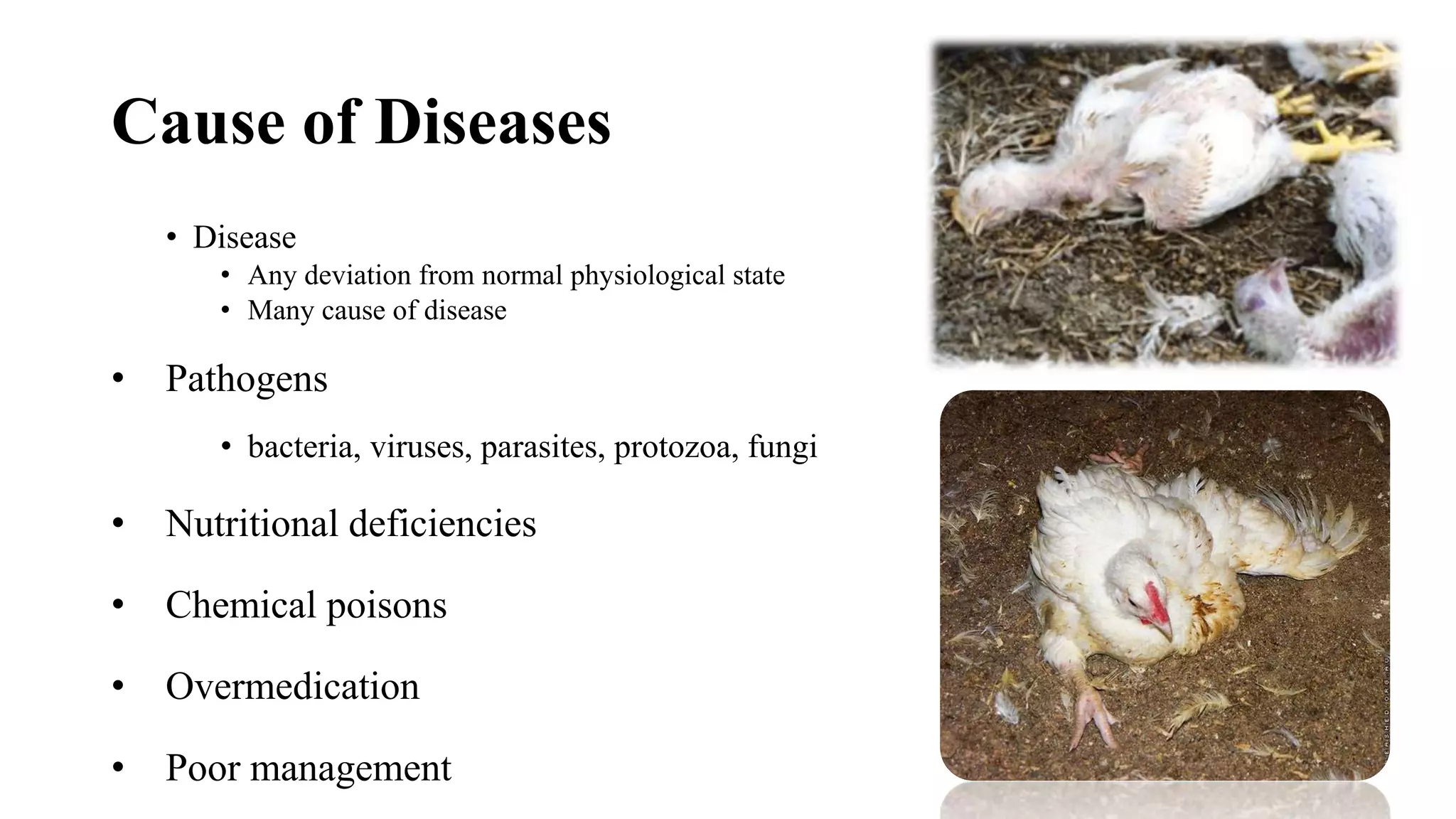
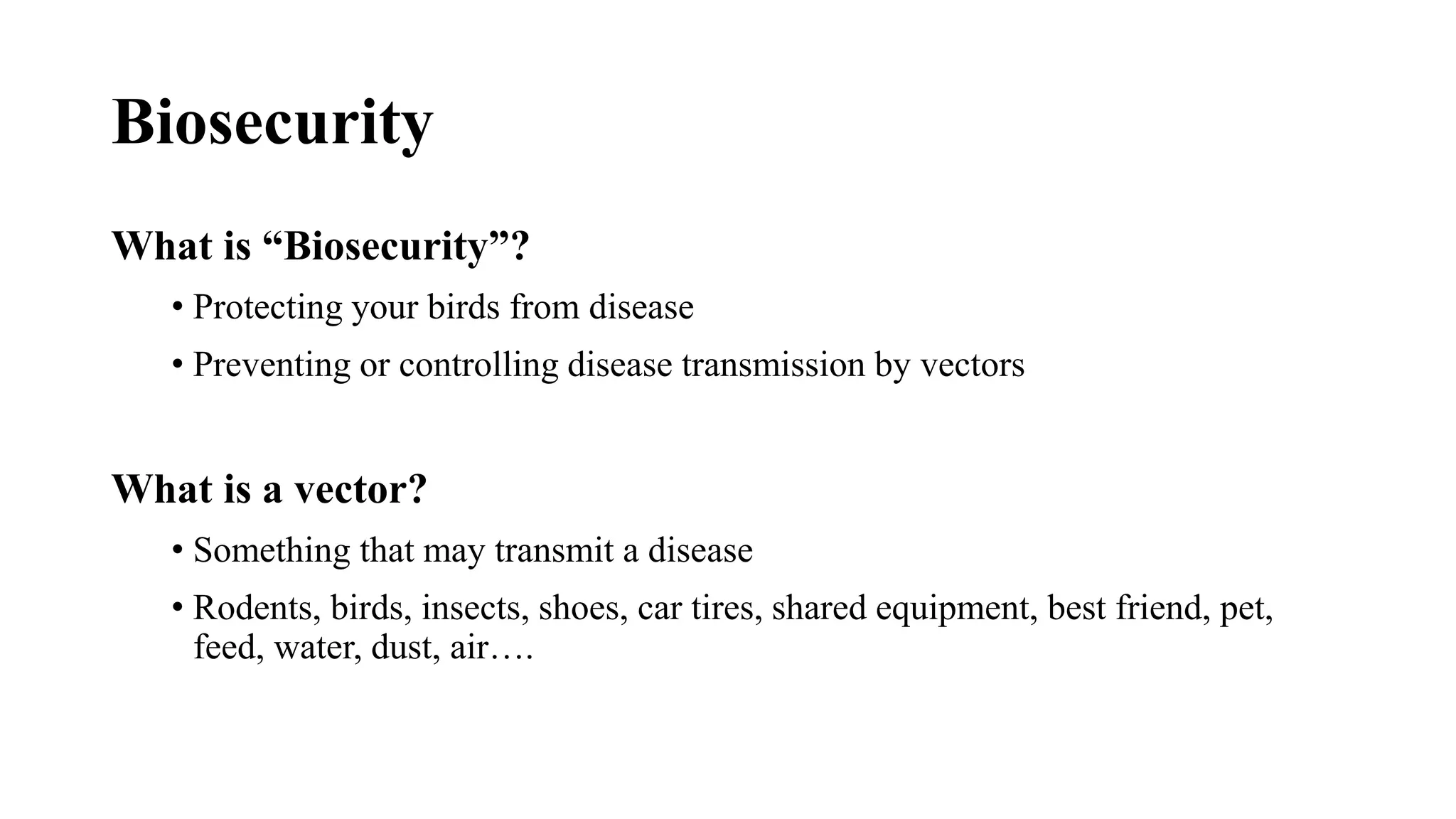
Cause of Diseases
• Disease
• Any deviation from normal physiological state
• Many cause of disease
• Pathogens
• bacteria, viruses, parasites, protozoa, fungi
• Nutritional deficiencies
• Chemical poisons
• Overmedication
• Poor management
Disease Prevention
• Two Types of disease in poultry
• Diseases that affect bird health
• Diseases that affect human health
Biosecurity
What is “Biosecurity”?
• Protecting your birds from disease
• Preventing or controlling disease transmission by vectors
What is a vector?
• Something that may transmit a disease
• Rodents, birds, insects, shoes, car tires, shared equipment, best friend, pet,
feed, water, dust, air….
Biosecurity
• Preventative strategies to control disease causing organisms and their
carriers (vectors).
• Protection of poultry flocks from any type of infectious agent.
• Control transmission of disease from flock to flock.
• Biosecurity is the cheapest, most effective means of disease control
available.
Why should I be concerned about
biosecurity?
• Because of what might happen:
• Disease and high mortality in flocks
• Infected flocks euthanized
• Loss of income for producers
• Higher prices of poultry meat and eggs
• Quarantines and restricted movement/sale of birds
• Cancellation of poultry shows
Biosecurity Monitoring Points
• Humans
• Equipment
• Environment
• Animals
• Contaminated eggs and chicks
• Contaminated feed
Environmental Routes of Disease
Transmission
• Environmental contaminants:
• wind
• water
• dust
• feathers
• manure
• Drying and sunlight are very effective at killing many disease causing
organisms.
Good Biosecurity Practices
•Keep pets, wild birds and animals and other livestock away
from the flock
•No trading or purchase of untested birds – quarantine new
birds
•Use dedicated footwear/clothing or disposable coveralls and
boot covers when checking your birds
•Hand washing before and after handling birds, manure, coops,
eggs, etc.
isolation Measures
• Confine flocks to controlled environment
• Screen houses to protect flock from wild birds
• Avoid contact with migratory waterfowl and other birds
• Restrict visitors
• Do not share equipment, coops or leftover feed
Reduce exposure Risks
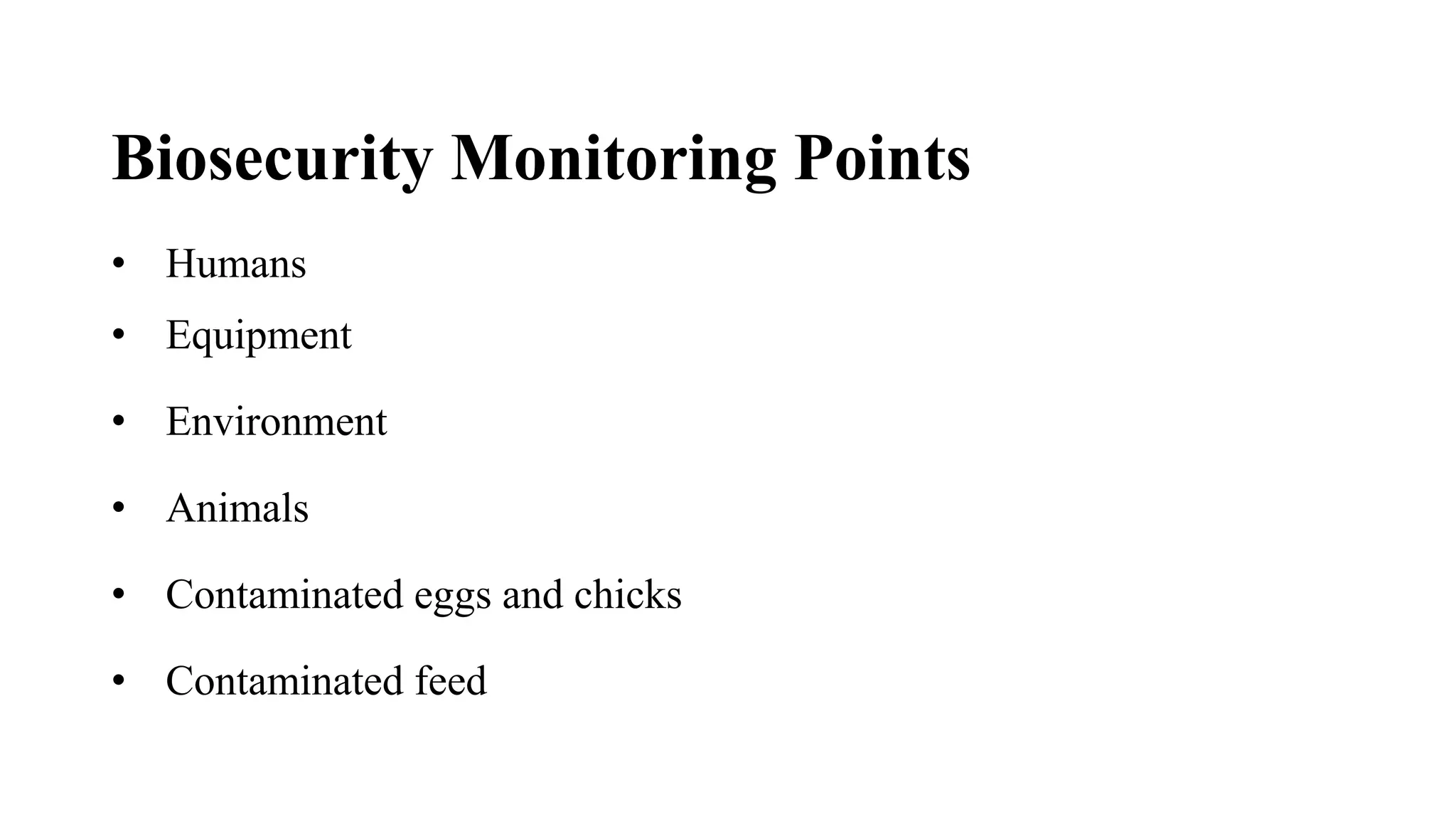
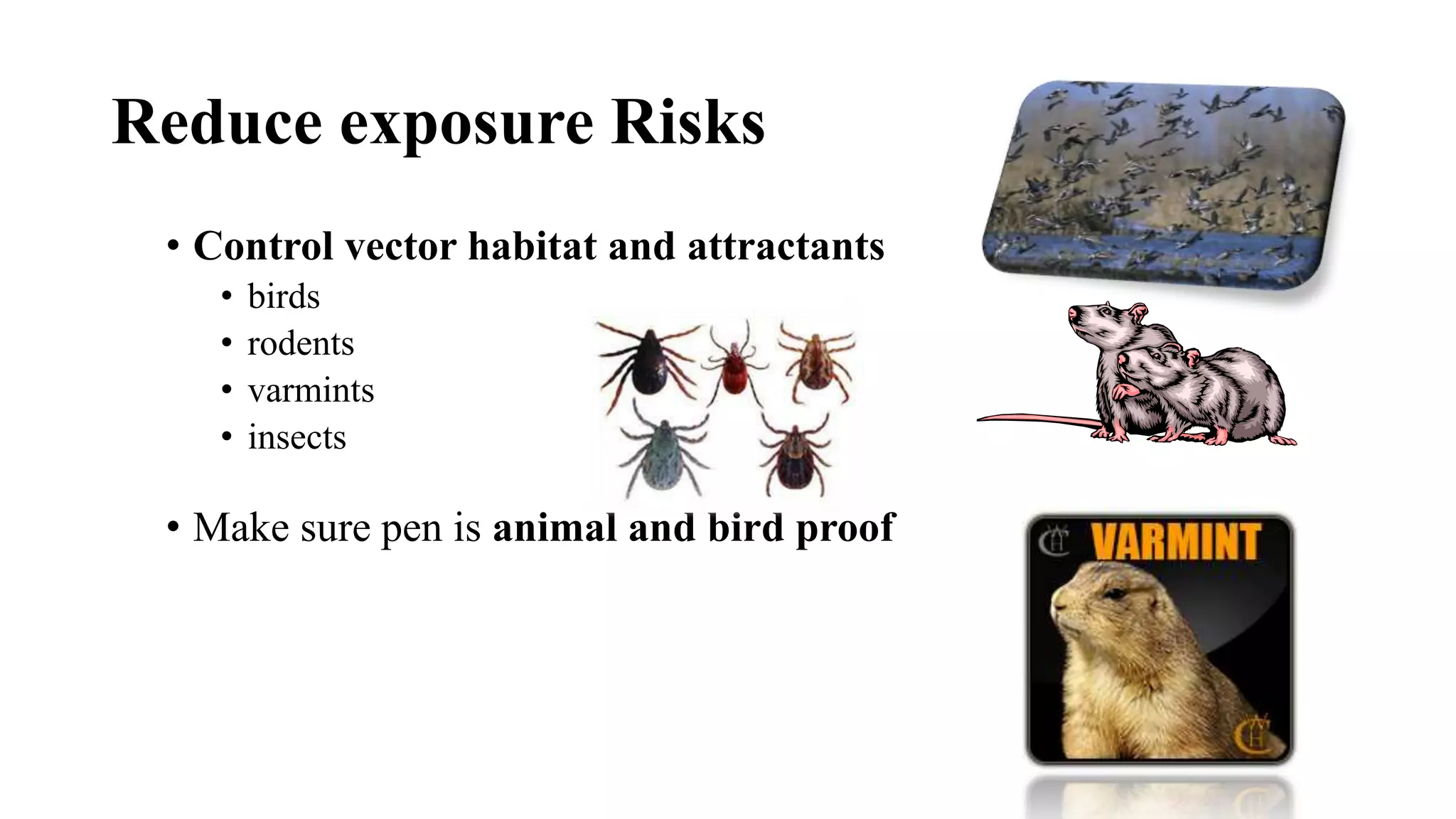
• Control vector habitat and attractants
• birds
• rodents
• varmints
• insects
• Make sure pen is animal and bird proof
Maintain Flock health
• Minimize stressors to prevent increased susceptibility to disease
• Fresh feed
• Clean water
• Clean, dry litter
• Good ventilation
• Provide an overall comfortable environment
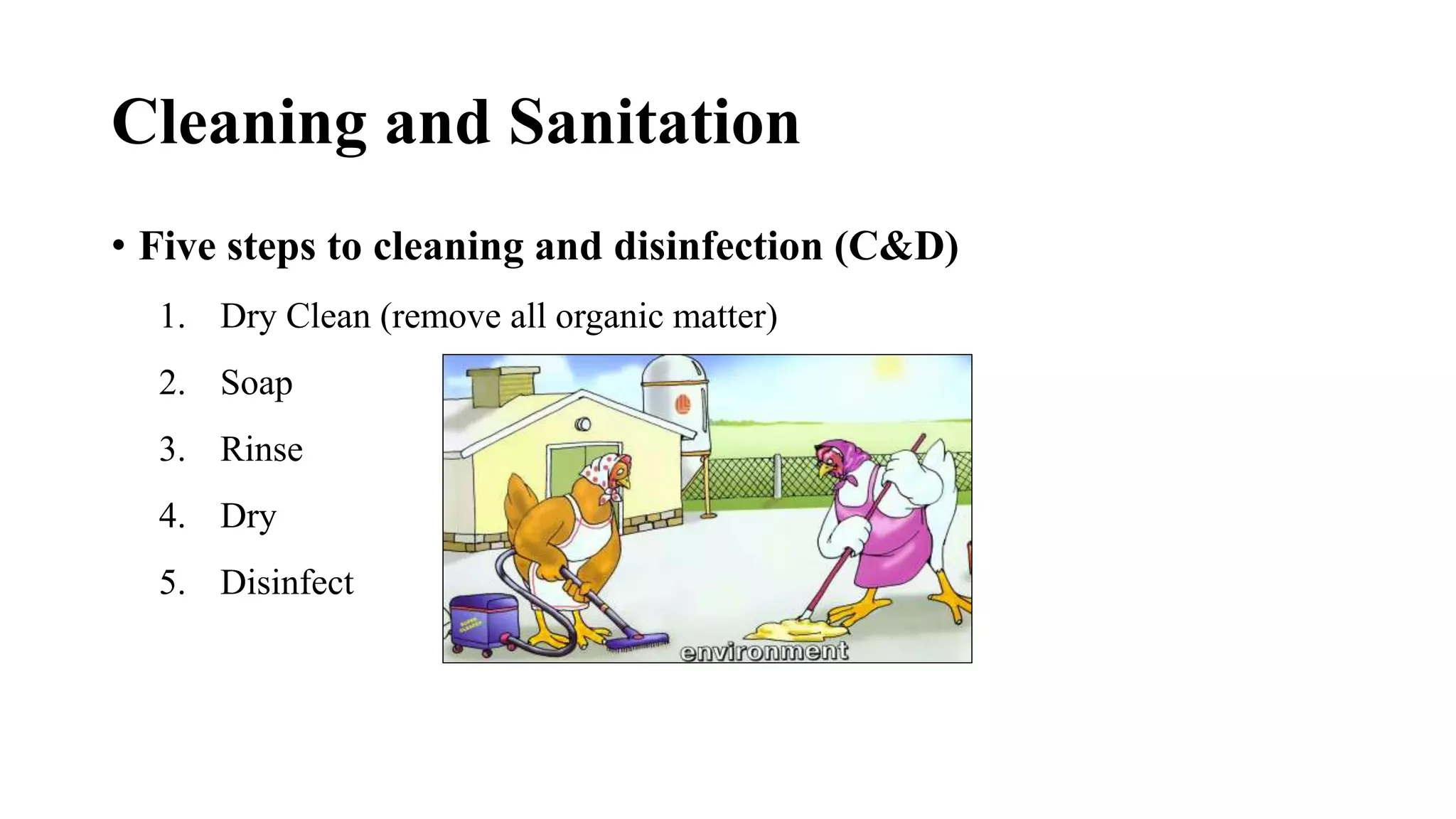
Cleaning and Sanitation
• Five steps to cleaning and disinfection (C&D)
1. Dry Clean (remove all organic matter)
2. Soap
3. Rinse
4. Dry
5. Disinfect
Disease/Health Checks
• Watch for symptoms such as:
• Coughing, sneezing, watery eyes, ruffled feathers, loss of feathers, excessive
picking, labored breathing and sudden drops in production and feed or water
consumption
• Eliminate unhealthy or nonproductive birds
• Check birds periodically for lice, mites, and worms
Vaccination
Vaccination program (Design)
• Program must be based on veterinary advice tailored to specific local
challenges based on health of birds
• Single or combined vaccines must be selected according to age and health
status of flock
Vaccine Administration
• Follow manufacture recommendations for product handling & methods of
administration
• Properly trained vaccinators should be allowed to vaccinate the birds
• Maintain vaccination records
Poultry health and biosecurity

Poultry health and biosecurity

  • 1.
  • 2.
    Cause of Diseases •Disease • Any deviation from normal physiological state • Many cause of disease • Pathogens • bacteria, viruses, parasites, protozoa, fungi • Nutritional deficiencies • Chemical poisons • Overmedication • Poor management
  • 3.
    Disease Prevention • TwoTypes of disease in poultry • Diseases that affect bird health • Diseases that affect human health
  • 4.
    Biosecurity What is “Biosecurity”? •Protecting your birds from disease • Preventing or controlling disease transmission by vectors What is a vector? • Something that may transmit a disease • Rodents, birds, insects, shoes, car tires, shared equipment, best friend, pet, feed, water, dust, air….
  • 5.
    Biosecurity • Preventative strategiesto control disease causing organisms and their carriers (vectors). • Protection of poultry flocks from any type of infectious agent. • Control transmission of disease from flock to flock. • Biosecurity is the cheapest, most effective means of disease control available.
  • 6.
    Why should Ibe concerned about biosecurity? • Because of what might happen: • Disease and high mortality in flocks • Infected flocks euthanized • Loss of income for producers • Higher prices of poultry meat and eggs • Quarantines and restricted movement/sale of birds • Cancellation of poultry shows
  • 7.
    Biosecurity Monitoring Points •Humans • Equipment • Environment • Animals • Contaminated eggs and chicks • Contaminated feed
  • 8.
    Environmental Routes ofDisease Transmission • Environmental contaminants: • wind • water • dust • feathers • manure • Drying and sunlight are very effective at killing many disease causing organisms.
  • 9.
    Good Biosecurity Practices •Keeppets, wild birds and animals and other livestock away from the flock •No trading or purchase of untested birds – quarantine new birds •Use dedicated footwear/clothing or disposable coveralls and boot covers when checking your birds •Hand washing before and after handling birds, manure, coops, eggs, etc.
  • 10.
    isolation Measures • Confineflocks to controlled environment • Screen houses to protect flock from wild birds • Avoid contact with migratory waterfowl and other birds • Restrict visitors • Do not share equipment, coops or leftover feed
  • 11.
    Reduce exposure Risks •Control vector habitat and attractants • birds • rodents • varmints • insects • Make sure pen is animal and bird proof
  • 12.
    Maintain Flock health •Minimize stressors to prevent increased susceptibility to disease • Fresh feed • Clean water • Clean, dry litter • Good ventilation • Provide an overall comfortable environment
  • 13.
    Cleaning and Sanitation •Five steps to cleaning and disinfection (C&D) 1. Dry Clean (remove all organic matter) 2. Soap 3. Rinse 4. Dry 5. Disinfect
  • 14.
    Disease/Health Checks • Watchfor symptoms such as: • Coughing, sneezing, watery eyes, ruffled feathers, loss of feathers, excessive picking, labored breathing and sudden drops in production and feed or water consumption • Eliminate unhealthy or nonproductive birds • Check birds periodically for lice, mites, and worms
  • 15.
    Vaccination Vaccination program (Design) •Program must be based on veterinary advice tailored to specific local challenges based on health of birds • Single or combined vaccines must be selected according to age and health status of flock Vaccine Administration • Follow manufacture recommendations for product handling & methods of administration • Properly trained vaccinators should be allowed to vaccinate the birds • Maintain vaccination records