POTENTIAL HAZARDS
Safety Equiptment
IN HOUSEKEEPING
1
Housekeeping Safety
• Safety with Sharp Objects
• Preventing Slips, Trips and Falls
• Safe Lifting/Material Handling
• Safety with Chemicals
• Fire Extinguisher Use
Content
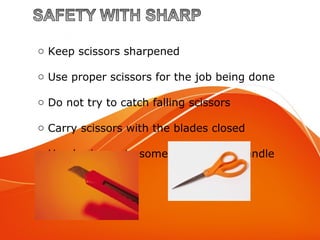
o Keep scissors sharpened
o Use proper scissors for the job being done
o Do not try to catch falling scissors
o Carry scissors with the blades closed
o Hand scissors to someone with the handle
facing them
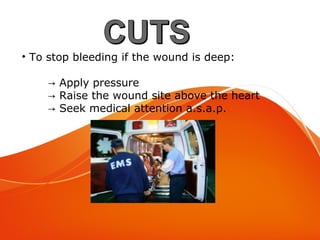
Cuts
• To stop bleeding if the wound is deep:
→ Apply pressure
→ Raise the wound site above the heart
→ Seek medical attention a.s.a.p.
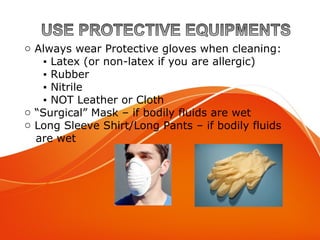
o Always wear Protective gloves when cleaning:
▪ Latex (or non-latex if you are allergic)
▪ Rubber
▪ Nitrile
▪ NOT Leather or Cloth
o “Surgical” Mask – if bodily fluids are wet
o Long Sleeve Shirt/Long Pants – if bodily fluids
are wet
PPT-069-01
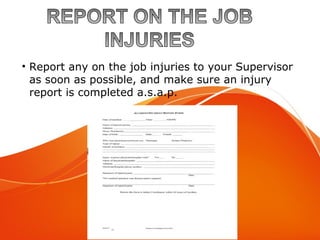
• Report any on the job injuries to your Supervisor
as soon as possible, and make sure an injury
report is completed a.s.a.p.
PPT-069-01 15
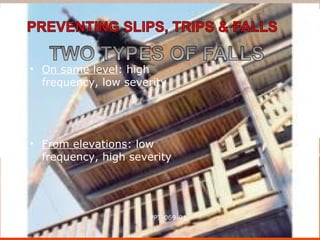
• On same level: high
frequency, low severity
• From elevations: low
frequency, high severity
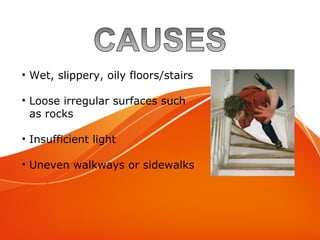
Causes
• Wet, slippery, oily floors/stairs
• Loose irregular surfaces such
as rocks
• Insufficient light
• Uneven walkways or sidewalks
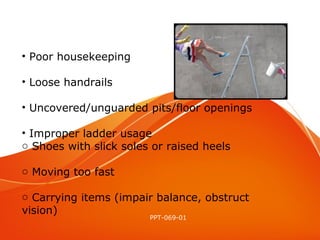
Causes
PPT-069-01
• Poor housekeeping
• Loose handrails
• Uncovered/unguarded pits/floor openings
• Improper ladder usage
o Shoes with slick soles or raised heels
o Moving too fast
o Carrying items (impair balance, obstruct
vision)
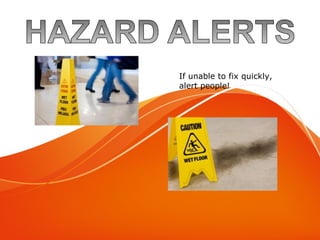
Hazard Alert
If unable to fix quickly,
alert people!
Material Handling Tips
Check the object before you attempt to lift it.
▪ Test every load before lifting = pushing object
lightly with hands or feet to see how easily it
moves (good indication as to how heavy it is)
▪ Remember, a small size does not always mean
a light load!
Make sure the load you are lifting is packed correctly.
▪ Employees packing boxes should make sure weight
is balanced and packed so it won’t move around
▪ Loose pieces inside a box can cause accidents if
Food Service Chemicals
PPT-069-01
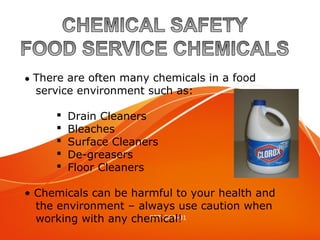
● There are often many chemicals in a food
service environment such as:
 Drain Cleaners
 Bleaches
 Surface Cleaners
 De-greasers
 Floor Cleaners
• Chemicals can be harmful to your health and
the environment – always use caution when
working with any chemical!
Chemical Safety
• NEVER MIX CHEMICALS TOGETHER! A violent
reaction could occur causing injury/damage
• Store flammable chemicals in cabinets designed
for safe storage
• If chemicals are stored in the kitchen, store on
shelves below foodstuffs so if they leak they will
not contaminate food
• Wear appropriate PPE when using chemicals
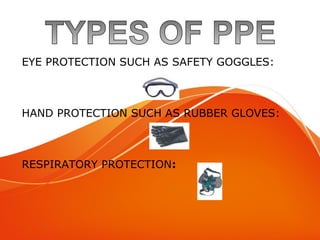
Types of PPE
EYE PROTECTION SUCH AS SAFETY GOGGLES:
HAND PROTECTION SUCH AS RUBBER GLOVES:
RESPIRATORY PROTECTION:
Review
• Never mix chemicals!
• Read warning labels and SDS’s
• Wear appropriate PPE
• Ensure chemicals are properly labeled
• Store chemicals safely
• Clean up spills immediately
• Notify your Supervisor if injured
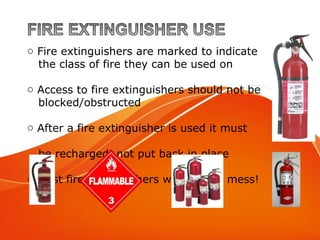
o Fire extinguishers are marked to indicate
the class of fire they can be used on
o Access to fire extinguishers should not be
blocked/obstructed
o After a fire extinguisher is used it must
be recharged, not put back in place
o Most fire extinguishers will make a mess!
Used Extinguisher
Never put a fire extinguisher that’s been used
back in place (even if it still feels heavy)
Even a short burst can cause the extinguisher
to leak pressure after use
Putting a used extinguisher back in place can
mean it won’t work in the future
Have used extinguishers checked and recharged
by a reputable dealer
THANK YOU

Potential Hazards Safety Equiptment in Housekeeping

  • 1.
  • 2.
  • 3.
    • Safety withSharp Objects • Preventing Slips, Trips and Falls • Safe Lifting/Material Handling • Safety with Chemicals • Fire Extinguisher Use Content
  • 4.
    o Keep scissorssharpened o Use proper scissors for the job being done o Do not try to catch falling scissors o Carry scissors with the blades closed o Hand scissors to someone with the handle facing them
  • 5.
    Cuts • To stopbleeding if the wound is deep: → Apply pressure → Raise the wound site above the heart → Seek medical attention a.s.a.p.
  • 6.
    o Always wearProtective gloves when cleaning: ▪ Latex (or non-latex if you are allergic) ▪ Rubber ▪ Nitrile ▪ NOT Leather or Cloth o “Surgical” Mask – if bodily fluids are wet o Long Sleeve Shirt/Long Pants – if bodily fluids are wet
  • 7.
    PPT-069-01 • Report anyon the job injuries to your Supervisor as soon as possible, and make sure an injury report is completed a.s.a.p.
  • 8.
    PPT-069-01 15 • Onsame level: high frequency, low severity • From elevations: low frequency, high severity
  • 9.
    Causes • Wet, slippery,oily floors/stairs • Loose irregular surfaces such as rocks • Insufficient light • Uneven walkways or sidewalks
  • 10.
    Causes PPT-069-01 • Poor housekeeping •Loose handrails • Uncovered/unguarded pits/floor openings • Improper ladder usage o Shoes with slick soles or raised heels o Moving too fast o Carrying items (impair balance, obstruct vision)
  • 11.
    Hazard Alert If unableto fix quickly, alert people!
  • 12.
    Material Handling Tips Checkthe object before you attempt to lift it. ▪ Test every load before lifting = pushing object lightly with hands or feet to see how easily it moves (good indication as to how heavy it is) ▪ Remember, a small size does not always mean a light load! Make sure the load you are lifting is packed correctly. ▪ Employees packing boxes should make sure weight is balanced and packed so it won’t move around ▪ Loose pieces inside a box can cause accidents if
  • 13.
    Food Service Chemicals PPT-069-01 ●There are often many chemicals in a food service environment such as:  Drain Cleaners  Bleaches  Surface Cleaners  De-greasers  Floor Cleaners • Chemicals can be harmful to your health and the environment – always use caution when working with any chemical!
  • 14.
    Chemical Safety • NEVERMIX CHEMICALS TOGETHER! A violent reaction could occur causing injury/damage • Store flammable chemicals in cabinets designed for safe storage • If chemicals are stored in the kitchen, store on shelves below foodstuffs so if they leak they will not contaminate food • Wear appropriate PPE when using chemicals
  • 15.
    Types of PPE EYEPROTECTION SUCH AS SAFETY GOGGLES: HAND PROTECTION SUCH AS RUBBER GLOVES: RESPIRATORY PROTECTION:
  • 16.
    Review • Never mixchemicals! • Read warning labels and SDS’s • Wear appropriate PPE • Ensure chemicals are properly labeled • Store chemicals safely • Clean up spills immediately • Notify your Supervisor if injured
  • 17.
    o Fire extinguishersare marked to indicate the class of fire they can be used on o Access to fire extinguishers should not be blocked/obstructed o After a fire extinguisher is used it must be recharged, not put back in place o Most fire extinguishers will make a mess!
  • 18.
    Used Extinguisher Never puta fire extinguisher that’s been used back in place (even if it still feels heavy) Even a short burst can cause the extinguisher to leak pressure after use Putting a used extinguisher back in place can mean it won’t work in the future Have used extinguishers checked and recharged by a reputable dealer
  • 19.