Housekeeping
Safety
SOFIA MAE M. PALCONIT
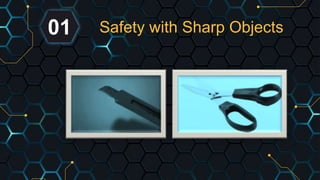
Safety with Sharp
Objects
01
Safety with Sharp Objects
01
Safety with Sharp Objects
01
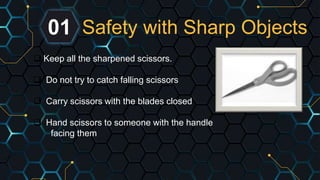
 Keep all the sharpened scissors.
 Do not try to catch falling scissors
 Carry scissors with the blades closed
 Hand scissors to someone with the handle
facing them
Safety with Sharp Objects
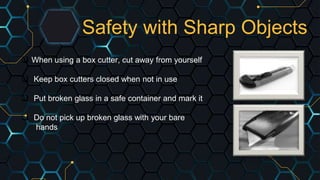
 When using a box cutter, cut away from yourself
 Keep box cutters closed when not in use
 Put broken glass in a safe container and mark it
 Do not pick up broken glass with your bare
hands
Cut
 If you cut yourself, wash the wound thoroughly
under cold water
 If the wound is shallow and the bleeding stops,
dry the skin around it with a paper towel/clean
cloth
 If available, put an “infection prevention”
cream/spray on the wound
 Cover the wound with a sterile bandage to keep
the wound shielded and clean
Use Protective Equipment
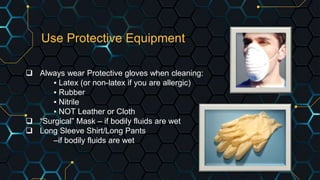
 Always wear Protective gloves when cleaning:
▪ Latex (or non-latex if you are allergic)
▪ Rubber
▪ Nitrile
▪ NOT Leather or Cloth
 “Surgical” Mask – if bodily fluids are wet
 Long Sleeve Shirt/Long Pants
–if bodily fluids are wet
Preventing Slips, Trips &
Falls
02
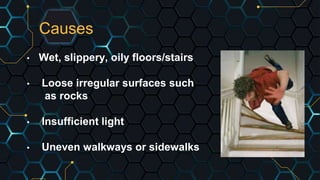
Causes
• Wet, slippery, oily floors/stairs
• Loose irregular surfaces such
as rocks
• Insufficient light
• Uneven walkways or sidewalks
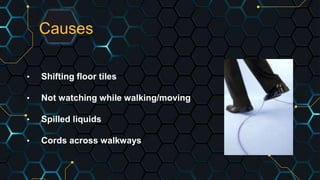
Causes
• Shifting floor tiles
• Not watching while walking/moving
• Spilled liquids
• Cords across walkways
What to Do?
20
Prevent!
Prevent!
Prevent!
Prevent!
Prevention - What to Do
21
Four Steps:
(1) Find the problem/hazard
(2) Check it out
(3) Fix it
(4) Look at it again
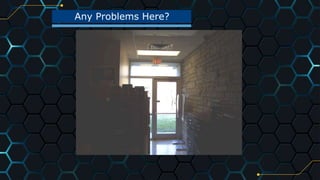
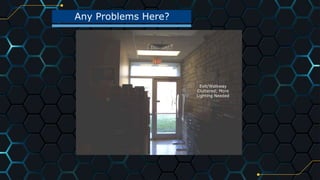
Any Problems Here?
23
Any Problems Here?
23
Exit/Walkway
Cluttered; More
Lighting Needed
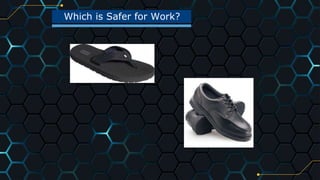
Which is Safer for Work?
27
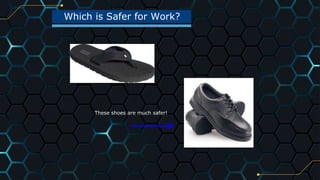
Which is Safer for Work?
27
These shoes are much safer!
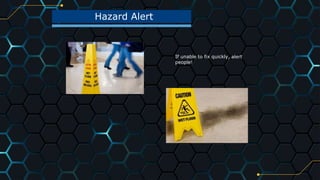
Hazard Alert
30
If unable to fix quickly, alert
people!
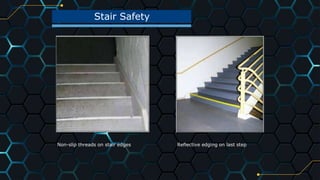
Stair Safety
33
Non-slip threads on stair edges Reflective edging on last step
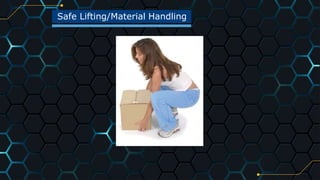
Safe Lifting/Material Handling
40
41
Material Handling Tips
Check the object before you attempt to lift it.
▪ Test every load before lifting = pushing object
lightly with hands or feet to see how easily it
moves (good indication as to how heavy it is)
▪ Remember, a small size does not always mean
a light load!
Make sure the load you are lifting is packed
correctly.
▪ Employees packing boxes should make sure
weight is balanced and packed so it won’t move
around
▪ Loose pieces inside a box can cause accidents if
the box becomes unbalanced
Tips
42
Make sure the load is easy to reach.
▪ Don’t arch your back when lifting a load over
your head
▪ Use a ladder instead of lifting something over your
head
Here’s the best way to pick up an object:
▪ Use slow and smooth movements (hurried, jerky
movements can strain the muscles in your back)
▪ Keep your body facing the object while you lift it
(twisting while lifting can injure your back)
Is this Safe?
54
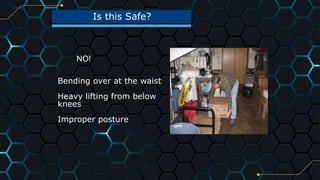
Is this Safe?
54
NO!
Bending over at the waist
Heavy lifting from below
knees
Improper posture
THANK
YOU!

HOUSEKEEPING-SAFETY (1).pptx

  • 1.
  • 2.
  • 3.
  • 4.
    Safety with SharpObjects 01  Keep all the sharpened scissors.  Do not try to catch falling scissors  Carry scissors with the blades closed  Hand scissors to someone with the handle facing them
  • 5.
    Safety with SharpObjects  When using a box cutter, cut away from yourself  Keep box cutters closed when not in use  Put broken glass in a safe container and mark it  Do not pick up broken glass with your bare hands
  • 6.
    Cut  If youcut yourself, wash the wound thoroughly under cold water  If the wound is shallow and the bleeding stops, dry the skin around it with a paper towel/clean cloth  If available, put an “infection prevention” cream/spray on the wound  Cover the wound with a sterile bandage to keep the wound shielded and clean
  • 7.
    Use Protective Equipment Always wear Protective gloves when cleaning: ▪ Latex (or non-latex if you are allergic) ▪ Rubber ▪ Nitrile ▪ NOT Leather or Cloth  “Surgical” Mask – if bodily fluids are wet  Long Sleeve Shirt/Long Pants –if bodily fluids are wet
  • 8.
  • 9.
    Causes • Wet, slippery,oily floors/stairs • Loose irregular surfaces such as rocks • Insufficient light • Uneven walkways or sidewalks
  • 10.
    Causes • Shifting floortiles • Not watching while walking/moving • Spilled liquids • Cords across walkways
  • 11.
  • 12.
    Prevention - Whatto Do 21 Four Steps: (1) Find the problem/hazard (2) Check it out (3) Fix it (4) Look at it again
  • 13.
  • 14.
  • 15.
    Which is Saferfor Work? 27
  • 16.
    Which is Saferfor Work? 27 These shoes are much safer!
  • 17.
    Hazard Alert 30 If unableto fix quickly, alert people!
  • 18.
    Stair Safety 33 Non-slip threadson stair edges Reflective edging on last step
  • 19.
  • 20.
    41 Material Handling Tips Checkthe object before you attempt to lift it. ▪ Test every load before lifting = pushing object lightly with hands or feet to see how easily it moves (good indication as to how heavy it is) ▪ Remember, a small size does not always mean a light load! Make sure the load you are lifting is packed correctly. ▪ Employees packing boxes should make sure weight is balanced and packed so it won’t move around ▪ Loose pieces inside a box can cause accidents if the box becomes unbalanced
  • 21.
    Tips 42 Make sure theload is easy to reach. ▪ Don’t arch your back when lifting a load over your head ▪ Use a ladder instead of lifting something over your head Here’s the best way to pick up an object: ▪ Use slow and smooth movements (hurried, jerky movements can strain the muscles in your back) ▪ Keep your body facing the object while you lift it (twisting while lifting can injure your back)
  • 22.
  • 23.
    Is this Safe? 54 NO! Bendingover at the waist Heavy lifting from below knees Improper posture
  • 24.