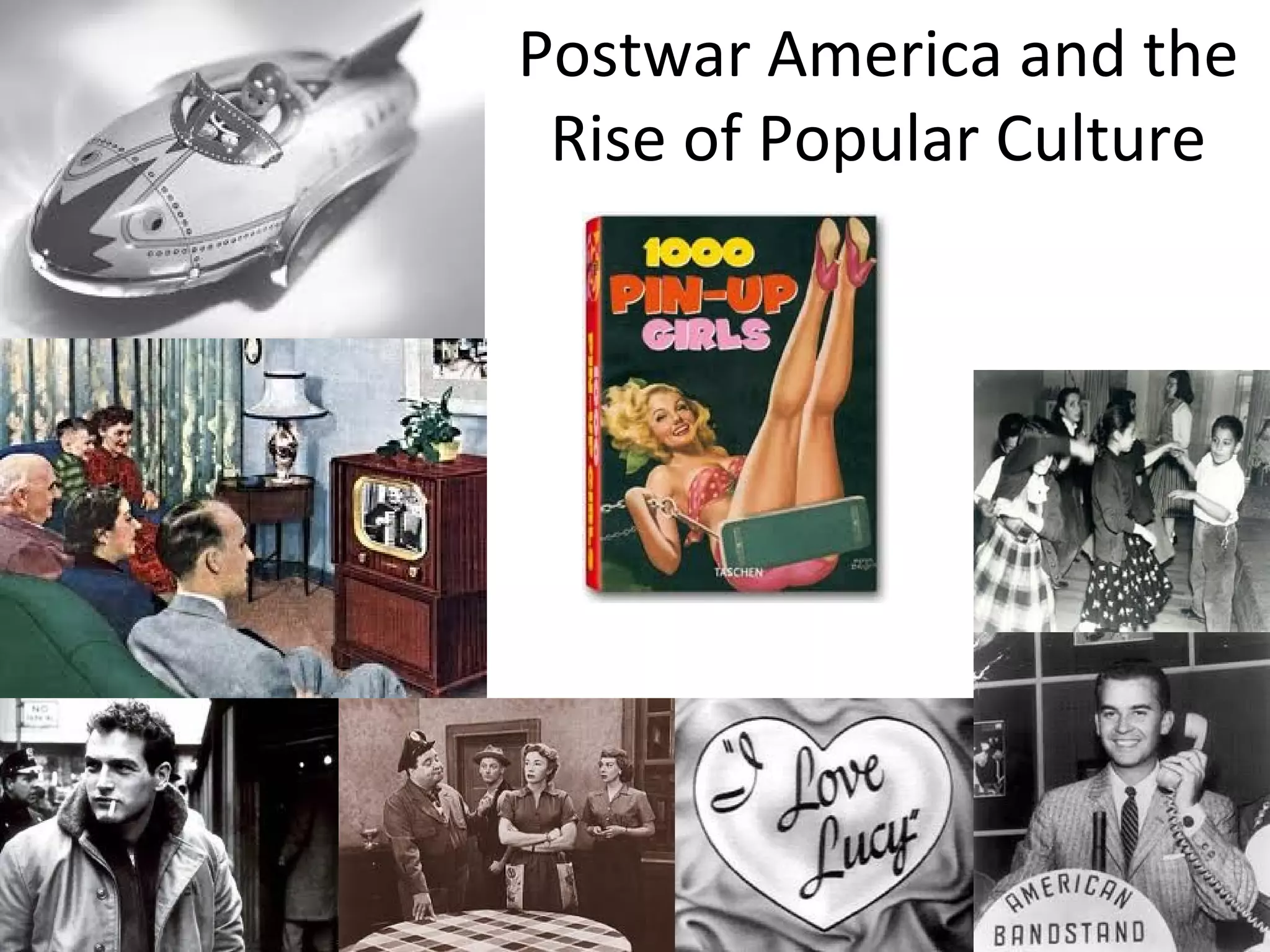
The GI Bill after WWII provided education and housing benefits to veterans, encouraging many to move to new suburban developments built by Levitt and others. Affordable new homes in the suburbs led to mass migration and "white flight" from cities in the 1950s. During this postwar period of economic growth, consumerism and car culture rose along with leisure activities. The baby boom also swelled the population as more focused on domestic life. Television and new forms of media and music further influenced popular culture trends.


![1950s americanculture[1] history 1950's notes](https://cdn.slidesharecdn.com/ss_thumbnails/1950samericanculture1-140519203726-phpapp01-thumbnail.jpg?width=640&height=640&fit=bounds)


