POSTOPERATIVE COGNITIVE
DYSFUNCTION IN ELDERLY PATIENTS
Presented by Sumesh
Kassie
Date: 23/09/24
INTRODUCTION TO POCD
What is POCD?
- Cognitive decline after surgery.
- Affects memory, attention, and problem-solving abilities.
Why it’s important:
- Common in elderly patients.
- Can impact recovery, quality of life, and increase healthcare costs.
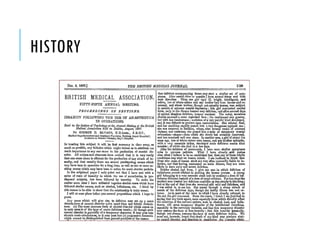
HISTORY
PREVALENCE OF POCD
Higher incidence in patients over 60 years old.
Frequently seen after major surgeries, such as:
- Abdomino-pelvic surgery.
- Orthopedic surgeries (e.g., hip replacement).
- Cardiac Surgery – Highest incidence.
PATHOPHYSIOLOGY OF POCD
Neuroinflammation: Surgery can trigger an inflammatory response
that affects the brain.
Effects of anesthesia: Both general and regional anesthesia impact
brain function.
Oxidative stress: Surgery may cause oxidative damage, especially in
elderly patients.
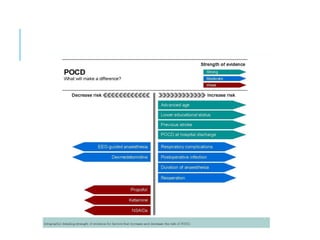
RISK FACTORS FOR POCD
Patient-specific factors:
- Age (especially 60+)
- Pre-existing conditions (dementia, diabetes, hypertension)
Surgery-related factors:
- Major surgeries (cardiac, orthopedic, vascular)
- Prolonged surgical time
Anesthesia-related factors:
- General anesthesia may carry higher risks than regional anesthesia.
SIGNS AND SYMPTOMS OF POCD
Cognitive domains affected:
- Memory loss
- Difficulty concentrating
- Impaired problem-solving and executive function
Onset: Typically occurs days to weeks post-surgery.
Duration: Can persist for weeks to months, sometimes longer.
POCD VS DELIRIUM
Delirium:
- Acute onset, fluctuating symptoms, often resolves quickly.
POCD:
- Subtle cognitive decline, with more stable and long-lasting
symptoms.
DIAGNOSIS AND ASSESSMENT
Screening Tools:
- Mini-Mental State Examination (MMSE)
- Montreal Cognitive Assessment (MoCA)
Family and caregiver reports: Families often notice cognitive changes
before the clinical team.
Importance of preoperative cognitive screening: Identifies high-risk
patients for POCD.
PREVENTION STRATEGIES
Preoperative:
- Cognitive screening and optimizing medical management (e.g.,
managing hypertension and diabetes).
Intraoperative:
- Choice of anesthetic: Regional anesthesia may reduce risk.
- Monitoring depth of anesthesia: Avoid deep sedation when possible.
Postoperative:
- Early mobilization
- Effective pain management
- Avoiding polypharmacy
MANAGEMENT OF POCD
Post-surgical care:
- Cognitive rehabilitation exercises (e.g., memory tasks, mental
exercises).
Multidisciplinary approach: Collaboration between doctors, nurses,
and therapists.
Family support: Educate families about the condition and offer
guidance on how to assist during recovery.
ROLE OF NURSES AND DOCTORS
Monitoring: Close observation for changes in cognitive function post-
surgery.
Early detection: Quick identification of cognitive decline can lead to
better management.
Communication with family: Engage families and encourage them to
report any cognitive changes in the patient.
Multidisciplinary collaboration: Coordination between doctors, nurses,
and therapists.
CONCLUSION
Key Takeaways:
- POCD is common and underdiagnosed in elderly patients.
- Early detection and preventative strategies are crucial.
- Multidisciplinary teams improve outcomes for patients with POCD.
QUESTIONS AND DISCUSSION

POCD_Presentation Postop Cognitive Dysfunction.pptx

  • 1.
    POSTOPERATIVE COGNITIVE DYSFUNCTION INELDERLY PATIENTS Presented by Sumesh Kassie Date: 23/09/24
  • 2.
    INTRODUCTION TO POCD Whatis POCD? - Cognitive decline after surgery. - Affects memory, attention, and problem-solving abilities. Why it’s important: - Common in elderly patients. - Can impact recovery, quality of life, and increase healthcare costs.
  • 3.
  • 4.
    PREVALENCE OF POCD Higherincidence in patients over 60 years old. Frequently seen after major surgeries, such as: - Abdomino-pelvic surgery. - Orthopedic surgeries (e.g., hip replacement). - Cardiac Surgery – Highest incidence.
  • 5.
    PATHOPHYSIOLOGY OF POCD Neuroinflammation:Surgery can trigger an inflammatory response that affects the brain. Effects of anesthesia: Both general and regional anesthesia impact brain function. Oxidative stress: Surgery may cause oxidative damage, especially in elderly patients.
  • 6.
    RISK FACTORS FORPOCD Patient-specific factors: - Age (especially 60+) - Pre-existing conditions (dementia, diabetes, hypertension) Surgery-related factors: - Major surgeries (cardiac, orthopedic, vascular) - Prolonged surgical time Anesthesia-related factors: - General anesthesia may carry higher risks than regional anesthesia.
  • 7.
    SIGNS AND SYMPTOMSOF POCD Cognitive domains affected: - Memory loss - Difficulty concentrating - Impaired problem-solving and executive function Onset: Typically occurs days to weeks post-surgery. Duration: Can persist for weeks to months, sometimes longer.
  • 8.
    POCD VS DELIRIUM Delirium: -Acute onset, fluctuating symptoms, often resolves quickly. POCD: - Subtle cognitive decline, with more stable and long-lasting symptoms.
  • 9.
    DIAGNOSIS AND ASSESSMENT ScreeningTools: - Mini-Mental State Examination (MMSE) - Montreal Cognitive Assessment (MoCA) Family and caregiver reports: Families often notice cognitive changes before the clinical team. Importance of preoperative cognitive screening: Identifies high-risk patients for POCD.
  • 10.
    PREVENTION STRATEGIES Preoperative: - Cognitivescreening and optimizing medical management (e.g., managing hypertension and diabetes). Intraoperative: - Choice of anesthetic: Regional anesthesia may reduce risk. - Monitoring depth of anesthesia: Avoid deep sedation when possible. Postoperative: - Early mobilization - Effective pain management - Avoiding polypharmacy
  • 12.
    MANAGEMENT OF POCD Post-surgicalcare: - Cognitive rehabilitation exercises (e.g., memory tasks, mental exercises). Multidisciplinary approach: Collaboration between doctors, nurses, and therapists. Family support: Educate families about the condition and offer guidance on how to assist during recovery.
  • 13.
    ROLE OF NURSESAND DOCTORS Monitoring: Close observation for changes in cognitive function post- surgery. Early detection: Quick identification of cognitive decline can lead to better management. Communication with family: Engage families and encourage them to report any cognitive changes in the patient. Multidisciplinary collaboration: Coordination between doctors, nurses, and therapists.
  • 14.
    CONCLUSION Key Takeaways: - POCDis common and underdiagnosed in elderly patients. - Early detection and preventative strategies are crucial. - Multidisciplinary teams improve outcomes for patients with POCD.
  • 15.