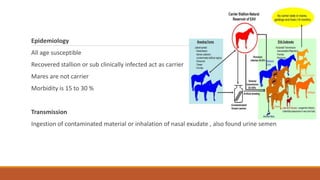
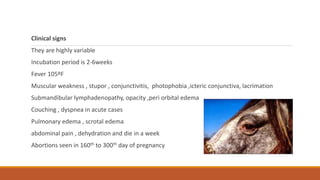
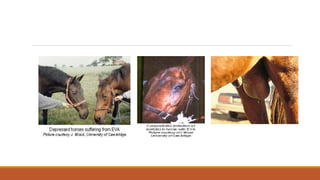
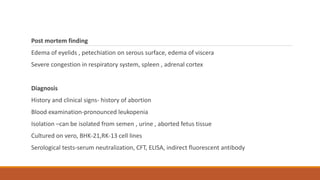
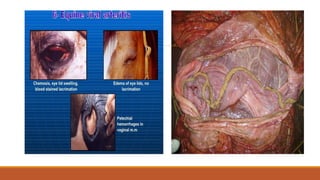
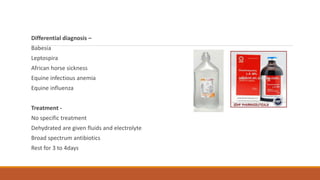
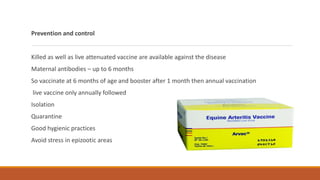
Equine viral arteritis is a highly contagious disease of horses characterized by conjunctivitis and upper respiratory inflammation. It is caused by the arterivirus, which is an RNA virus that loses infectivity when heated but can be stored by freezing or inactivated by magnesium chloride. Stallions can act as carriers even after recovering from the disease or experiencing subclinical infection. Clinical signs include fever, weakness, conjunctivitis, coughing, and abortions in pregnant mares. Diagnosis involves clinical history, leukopenia, virus isolation from body fluids or aborted fetuses, and serological tests. There is no specific treatment, but supportive care is given. Vaccination is the main prevention and control method