Possibility,Preference
And Choices
INTRODUCTION:
2
1. Household consumption possibilities , preferences and
choices.
a. Budget line.
b. Indifference curve.
c. Predicting consumer behavior.
d. Work-leisure choices.
1.
Budget line:
budget line shows the combination of two
products that a consumer can afford to buy with
a given income
Two things determine budget line:
1. Income of household.
2. Price of goods.
3
4
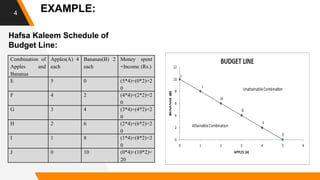
Combination of
Apples and
Bananas
Apples(A) 4
each
Bananas(B) 2
each
Money spent
=Income (Rs.)
E 5 0 (5*4)+(0*2)=2
0
F 4 2 (4*4)+(2*2)=2
0
G 3 4 (3*4)+(4*2)=2
0
H 2 6 (2*4)+(6*2)=2
0
I 1 8 (1*4)+(8*2)=2
0
J 0 10 (0*4)+(10*2)=
20
Hafsa Kaleem Schedule of
Budget Line:
EXAMPLE:
“DIVISIBLE GOODS:
Some goods that can be bought in any quantity desired are divisible goods.
INDIVISIBLE GOODS:
Those goods which can be sold in discrete quantities are indivisible goods.
6
BUDGET EQUATION:
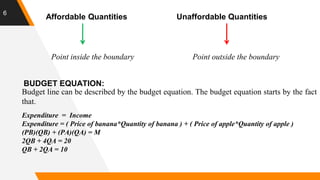
Budget line can be described by the budget equation. The budget equation starts by the fact
that.
Expenditure = Income
Expenditure = ( Price of banana*Quantity of banana ) + ( Price of apple*Quantity of apple )
(PB)(QB) + (PA)(QA) = M
2QB + 4QA = 20
QB + 2QA = 10
Affordable Quantities Unaffordable Quantities
Point inside the boundary Point outside the boundary
7
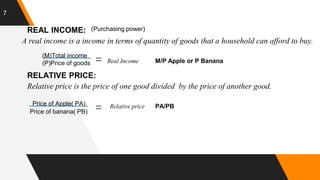
REAL INCOME: (Purchasing power)
A real income is a income in terms of quantity of goods that a household can afford to buy.
(M)Total income
(P)Price of goods Real Income M/P Apple or P Banana
RELATIVE PRICE:
Relative price is the price of one good divided by the price of another good.
Price of Apple( PA)
Price of banana( PB)
Relative price PA/PB
8
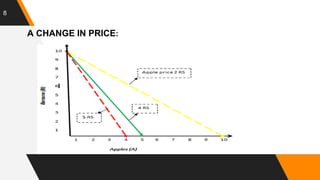
A CHANGE IN PRICE:
9
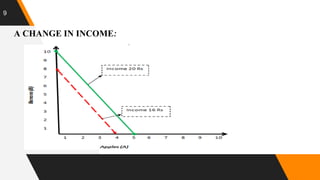
A CHANGE IN INCOME:
Preferences And
Indifference Curve:
2.
11
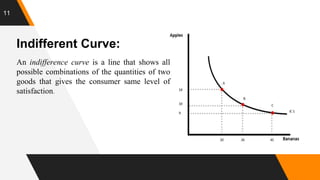
Indifferent Curve:
An indifference curve is a line that shows all
possible combinations of the quantities of two
goods that gives the consumer same level of
satisfaction.
12
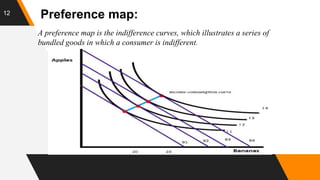
Preference map:
A preference map is the indifference curves, which illustrates a series of
bundled goods in which a consumer is indifferent.
13
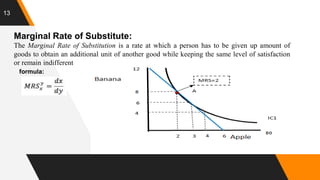
Marginal Rate of Substitute:
The Marginal Rate of Substitution is a rate at which a person has to be given up amount of
goods to obtain an additional unit of another good while keeping the same level of satisfaction
or remain indifferent
formula:
14
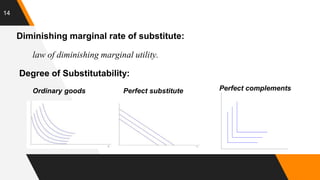
Diminishing marginal rate of substitute:
law of diminishing marginal utility.
Degree of Substitutability:
Ordinary goods Perfect substitute Perfect complements
Predicting
Consumer Choice
Consumer choice and maximum utility can be
predicted through utilizing these major economic
tools;
•Budget line
•Indifference curve
•Marginal substitute rate(MRS)
3.
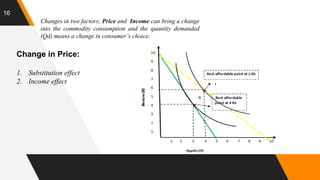
16
Changes in two factors; Price and Income can bring a change
into the commodity consumption and the quantity demanded
(Qd) means a change in consumer’s choice.
Change in Price:
1. Substitution effect
2. Income effect
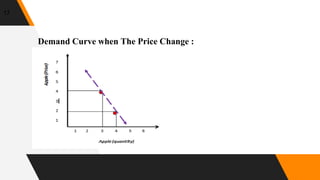
17
Demand Curve when The Price Change :
18
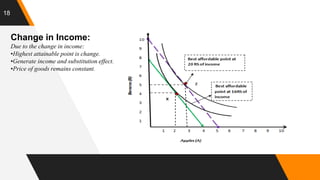
Change in Income:
Due to the change in income:
•Highest attainable point is change.
•Generate income and substitution effect.
•Price of goods remains constant.
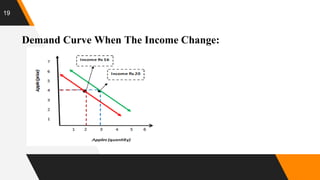
19
Demand Curve When The Income Change:
Work Leisure
Choices
4.
21
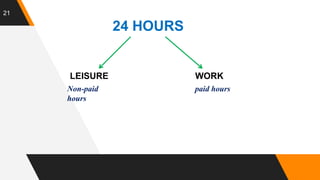
24 HOURS
LEISURE WORK
Non-paid
hours
paid hours
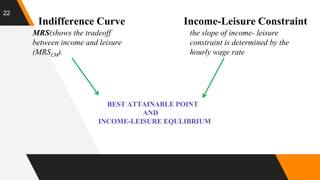
22
Indifference Curve Income-Leisure Constraint
MRS(shows the tradeoff
between income and leisure
(MRSLM).
the slope of income- leisure
constraint is determined by the
hourly wage rate
BEST ATTAINABLE POINT
AND
INCOME-LEISURE EQULIBRIUM
23
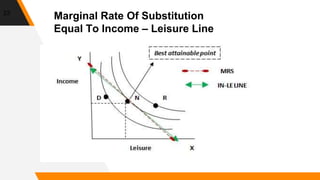
Marginal Rate Of Substitution
Equal To Income – Leisure Line
24
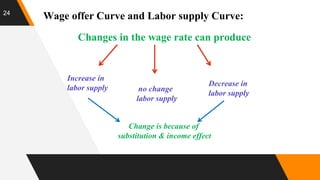
Wage offer Curve and Labor supply Curve:
Changes in the wage rate can produce
Increase in
labor supply
Decrease in
labor supply
no change
labor supply
Change is because of
substitution & income effect
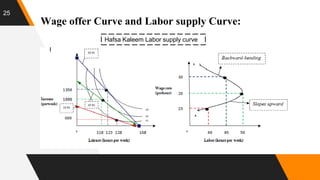
25
Wage offer Curve and Labor supply Curve:
Hafsa Kaleem Labor supply curve
26
SHIFT IN LABOUR SUPPLY:
1. Change in preference
2. Change in income (that can be labor income or non-
labor income)
3. Change in climate
4. Change in population.
27
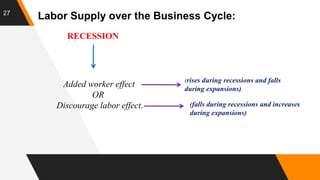
Labor Supply over the Business Cycle:
Added worker effect
OR
Discourage labor effect.
RECESSION
(rises during recessions and falls
during expansions)
(falls during recessions and increases
during expansions)
28
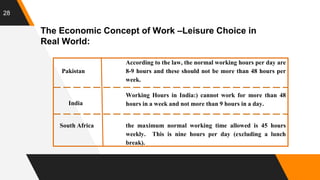
The Economic Concept of Work –Leisure Choice in
Real World:
Pakistan
According to the law, the normal working hours per day are
8-9 hours and these should not be more than 48 hours per
week.
India
Working Hours in India:) cannot work for more than 48
hours in a week and not more than 9 hours in a day.
South Africa the maximum normal working time allowed is 45 hours
weekly. This is nine hours per day (excluding a lunch
break).
“THANK YOU&
ANY QUESTIONS?

possibility, preference and choices (microeconomic)

  • 1.
  • 2.
    INTRODUCTION: 2 1. Household consumptionpossibilities , preferences and choices. a. Budget line. b. Indifference curve. c. Predicting consumer behavior. d. Work-leisure choices.
  • 3.
    1. Budget line: budget lineshows the combination of two products that a consumer can afford to buy with a given income Two things determine budget line: 1. Income of household. 2. Price of goods. 3
  • 4.
    4 Combination of Apples and Bananas Apples(A)4 each Bananas(B) 2 each Money spent =Income (Rs.) E 5 0 (5*4)+(0*2)=2 0 F 4 2 (4*4)+(2*2)=2 0 G 3 4 (3*4)+(4*2)=2 0 H 2 6 (2*4)+(6*2)=2 0 I 1 8 (1*4)+(8*2)=2 0 J 0 10 (0*4)+(10*2)= 20 Hafsa Kaleem Schedule of Budget Line: EXAMPLE:
  • 5.
    “DIVISIBLE GOODS: Some goodsthat can be bought in any quantity desired are divisible goods. INDIVISIBLE GOODS: Those goods which can be sold in discrete quantities are indivisible goods.
  • 6.
    6 BUDGET EQUATION: Budget linecan be described by the budget equation. The budget equation starts by the fact that. Expenditure = Income Expenditure = ( Price of banana*Quantity of banana ) + ( Price of apple*Quantity of apple ) (PB)(QB) + (PA)(QA) = M 2QB + 4QA = 20 QB + 2QA = 10 Affordable Quantities Unaffordable Quantities Point inside the boundary Point outside the boundary
  • 7.
    7 REAL INCOME: (Purchasingpower) A real income is a income in terms of quantity of goods that a household can afford to buy. (M)Total income (P)Price of goods Real Income M/P Apple or P Banana RELATIVE PRICE: Relative price is the price of one good divided by the price of another good. Price of Apple( PA) Price of banana( PB) Relative price PA/PB
  • 8.
  • 9.
  • 10.
  • 11.
    11 Indifferent Curve: An indifferencecurve is a line that shows all possible combinations of the quantities of two goods that gives the consumer same level of satisfaction.
  • 12.
    12 Preference map: A preferencemap is the indifference curves, which illustrates a series of bundled goods in which a consumer is indifferent.
  • 13.
    13 Marginal Rate ofSubstitute: The Marginal Rate of Substitution is a rate at which a person has to be given up amount of goods to obtain an additional unit of another good while keeping the same level of satisfaction or remain indifferent formula:
  • 14.
    14 Diminishing marginal rateof substitute: law of diminishing marginal utility. Degree of Substitutability: Ordinary goods Perfect substitute Perfect complements
  • 15.
    Predicting Consumer Choice Consumer choiceand maximum utility can be predicted through utilizing these major economic tools; •Budget line •Indifference curve •Marginal substitute rate(MRS) 3.
  • 16.
    16 Changes in twofactors; Price and Income can bring a change into the commodity consumption and the quantity demanded (Qd) means a change in consumer’s choice. Change in Price: 1. Substitution effect 2. Income effect
  • 17.
    17 Demand Curve whenThe Price Change :
  • 18.
    18 Change in Income: Dueto the change in income: •Highest attainable point is change. •Generate income and substitution effect. •Price of goods remains constant.
  • 19.
    19 Demand Curve WhenThe Income Change:
  • 20.
  • 21.
  • 22.
    22 Indifference Curve Income-LeisureConstraint MRS(shows the tradeoff between income and leisure (MRSLM). the slope of income- leisure constraint is determined by the hourly wage rate BEST ATTAINABLE POINT AND INCOME-LEISURE EQULIBRIUM
  • 23.
    23 Marginal Rate OfSubstitution Equal To Income – Leisure Line
  • 24.
    24 Wage offer Curveand Labor supply Curve: Changes in the wage rate can produce Increase in labor supply Decrease in labor supply no change labor supply Change is because of substitution & income effect
  • 25.
    25 Wage offer Curveand Labor supply Curve: Hafsa Kaleem Labor supply curve
  • 26.
    26 SHIFT IN LABOURSUPPLY: 1. Change in preference 2. Change in income (that can be labor income or non- labor income) 3. Change in climate 4. Change in population.
  • 27.
    27 Labor Supply overthe Business Cycle: Added worker effect OR Discourage labor effect. RECESSION (rises during recessions and falls during expansions) (falls during recessions and increases during expansions)
  • 28.
    28 The Economic Conceptof Work –Leisure Choice in Real World: Pakistan According to the law, the normal working hours per day are 8-9 hours and these should not be more than 48 hours per week. India Working Hours in India:) cannot work for more than 48 hours in a week and not more than 9 hours in a day. South Africa the maximum normal working time allowed is 45 hours weekly. This is nine hours per day (excluding a lunch break).
  • 29.