BY,
ANNA VARGHESE, BATCH -B
KEY PLAYERS
TYPES:

1. ATHLETIC SHOES
2.BOOT SHOES
3.DRESS AND CASUAL SHOES
4. DANCING SHOES
5.ORTHOPEDIC SHOES
Source: Packaged Facts
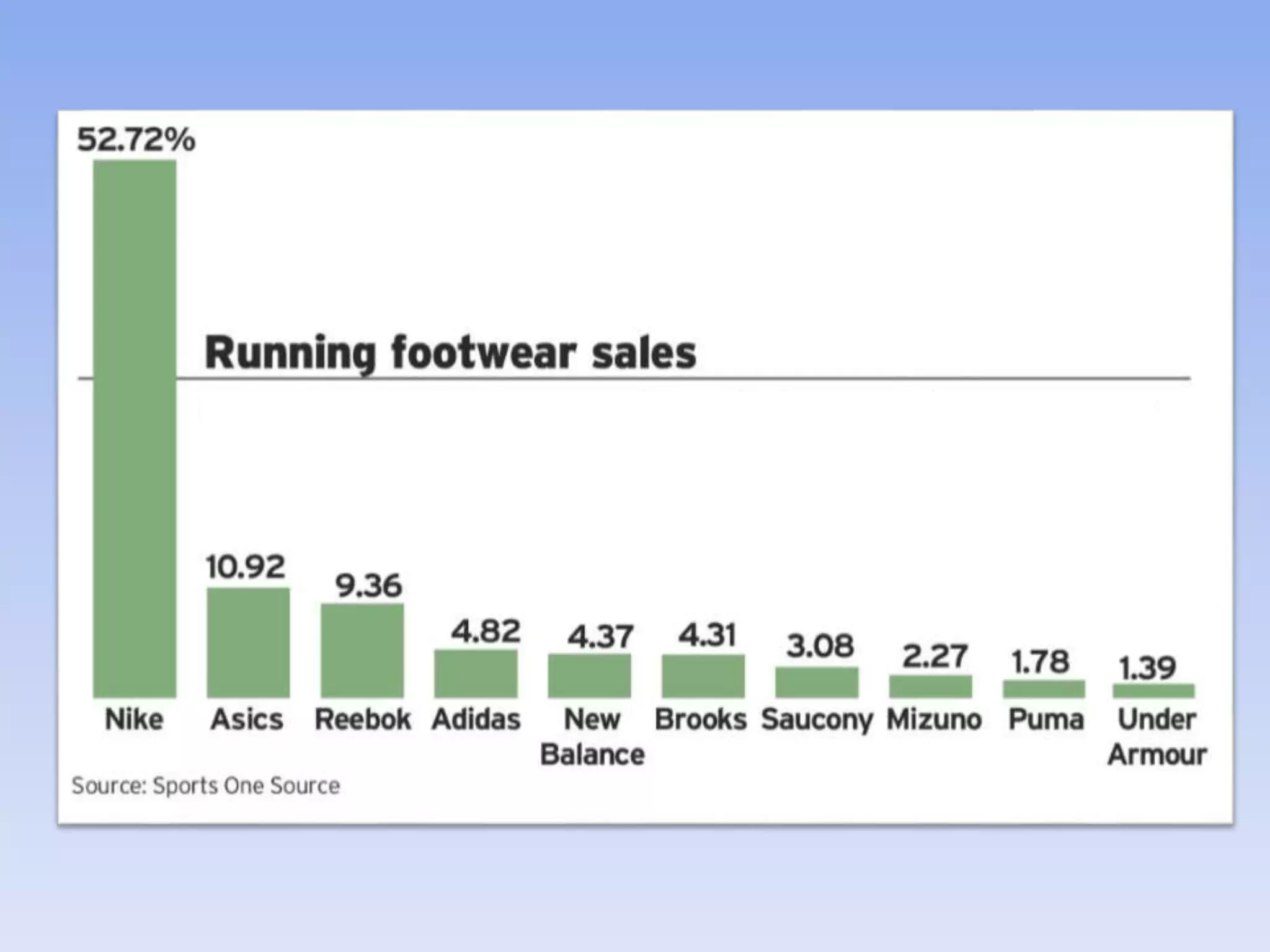
Top ten footwear consumption all over the world
BARRIERS TO ENTRY
• Access to inputs - Access to inputs is easy
• Access to distribution opportunities is
limited because of the top brands which
have already recognized in market
• Switching costs are low

• Government policies –permitting
and licenses are not that strict.
• Intellectual property – Patents and other
types of proprietary intellectual property are
effective in limiting industry entry.
• Capital requirement- With regard to start up
capital, it may be little costly because start up
is labour and capital intensive.
• Brand Identity- dominated by branded
products and strong brand loyalty.

HIGH !
BUYER POWER
• Brand identity-High end brands and Large
companies in the industry set price points for
their products.
• Substitutes Available- Except
athletic,orthopedic,dancing shoes
all other types can be
substituted by normal sandals.
• Product Differentiation –Low
Buyer’s
Incentives –
Seasonal
sales offered
by reputed
brands and
stores
• Buyer concentration vs. industry- Buyers are
less concentrated, reduces buying power.
• Buyer Volume-Don’t buy in large quantities.
• Price sensitivity-Buyer’s are more sensitive to
price.

LOW!
SUPPLIER POWER
• Major firms can switch suppliers quickly
without worry of a significant decrease in
quality.
• Threat of forward integration –Low due to
high entry barriers
• Supplier concentration- Fragmented
• Any supplier that meets quality standards for
the company will be able to supply these
commodity goods.

LOW !
THREAT OF SUBSTITITES
• Can be
substituted
except for
athletic shoes by
normal sandals
• Switching costs
are low

MODERATE
RIVALRY WITHIN INDUSTRY
• More of an emphasis on non-price
competition.
• Firms instead try to increase their range of
products to capture more of the market.
• Brand image and customer loyalty is huge in
this industry, which leads to the brands
competing in advertising.
• Some
companies
acquire other brands;
mergers.
Ex; Adida’s acquisition
of Reebok may help
it challenge
Nike.

HIGH
Analysis on shoe industry based on Porters 5 force model

Analysis on shoe industry based on Porters 5 force model

  • 1.
  • 2.
  • 3.
    TYPES: 1. ATHLETIC SHOES 2.BOOTSHOES 3.DRESS AND CASUAL SHOES 4. DANCING SHOES 5.ORTHOPEDIC SHOES
  • 4.
  • 5.
    Top ten footwearconsumption all over the world
  • 8.
    BARRIERS TO ENTRY •Access to inputs - Access to inputs is easy • Access to distribution opportunities is limited because of the top brands which have already recognized in market • Switching costs are low • Government policies –permitting and licenses are not that strict.
  • 9.
    • Intellectual property– Patents and other types of proprietary intellectual property are effective in limiting industry entry. • Capital requirement- With regard to start up capital, it may be little costly because start up is labour and capital intensive. • Brand Identity- dominated by branded products and strong brand loyalty. HIGH !
  • 10.
    BUYER POWER • Brandidentity-High end brands and Large companies in the industry set price points for their products. • Substitutes Available- Except athletic,orthopedic,dancing shoes all other types can be substituted by normal sandals. • Product Differentiation –Low
  • 11.
  • 12.
    • Buyer concentrationvs. industry- Buyers are less concentrated, reduces buying power. • Buyer Volume-Don’t buy in large quantities. • Price sensitivity-Buyer’s are more sensitive to price. LOW!
  • 13.
    SUPPLIER POWER • Majorfirms can switch suppliers quickly without worry of a significant decrease in quality. • Threat of forward integration –Low due to high entry barriers • Supplier concentration- Fragmented • Any supplier that meets quality standards for the company will be able to supply these commodity goods. LOW !
  • 14.
    THREAT OF SUBSTITITES •Can be substituted except for athletic shoes by normal sandals • Switching costs are low MODERATE
  • 15.
    RIVALRY WITHIN INDUSTRY •More of an emphasis on non-price competition. • Firms instead try to increase their range of products to capture more of the market. • Brand image and customer loyalty is huge in this industry, which leads to the brands competing in advertising.
  • 17.
    • Some companies acquire otherbrands; mergers. Ex; Adida’s acquisition of Reebok may help it challenge Nike. HIGH