Speaker: Abhay Kumar Gaurav
IARI, New Delhi
Pomegranate Flower Morphology
Introduction
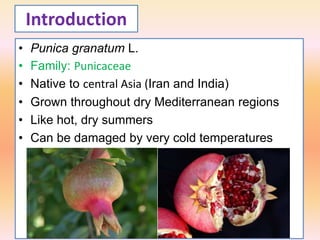
• Punica granatum L.
• Family: Punicaceae
• Native to central Asia (Iran and India)
• Grown throughout dry Mediterranean regions
• Like hot, dry summers
• Can be damaged by very cold temperatures
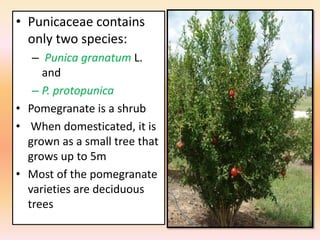
• Punicaceae contains
only two species:
– Punica granatum L.
and
– P. protopunica
• Pomegranate is a shrub
• When domesticated, it is
grown as a small tree that
grows up to 5m
• Most of the pomegranate
varieties are deciduous
trees
The Flower
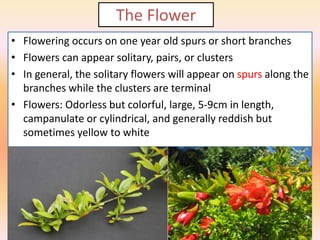
• Flowering occurs on one year old spurs or short branches
• Flowers can appear solitary, pairs, or clusters
• In general, the solitary flowers will appear on spurs along the
branches while the clusters are terminal
• Flowers: Odorless but colorful, large, 5-9cm in length,
campanulate or cylindrical, and generally reddish but
sometimes yellow to white
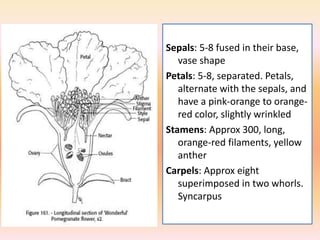
Sepals: 5-8 fused in their base,
vase shape
Petals: 5-8, separated. Petals,
alternate with the sepals, and
have a pink-orange to orange-
red color, slightly wrinkled
Stamens: Approx 300, long,
orange-red filaments, yellow
anther
Carpels: Approx eight
superimposed in two whorls.
Syncarpus
Types of flower
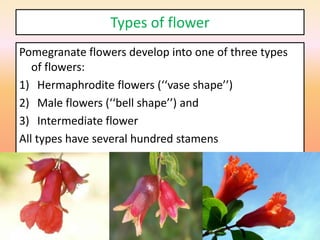
Pomegranate flowers develop into one of three types
of flowers:
1) Hermaphrodite flowers (‘‘vase shape’’)
2) Male flowers (‘‘bell shape’’) and
3) Intermediate flower
All types have several hundred stamens
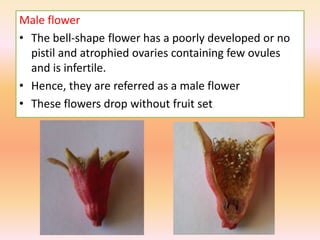
Male flower
• The bell-shape flower has a poorly developed or no
pistil and atrophied ovaries containing few ovules
and is infertile.
• Hence, they are referred as a male flower
• These flowers drop without fruit set
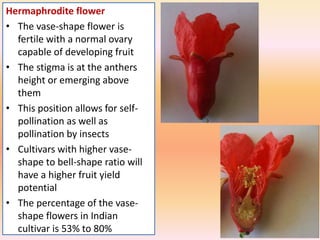
Hermaphrodite flower
• The vase-shape flower is
fertile with a normal ovary
capable of developing fruit
• The stigma is at the anthers
height or emerging above
them
• This position allows for self-
pollination as well as
pollination by insects
• Cultivars with higher vase-
shape to bell-shape ratio will
have a higher fruit yield
potential
• The percentage of the vase-
shape flowers in Indian
cultivar is 53% to 80%
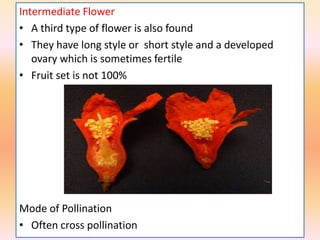
Intermediate Flower
• A third type of flower is also found
• They have long style or short style and a developed
ovary which is sometimes fertile
• Fruit set is not 100%
Mode of Pollination
• Often cross pollination
Pomegranate flower drop
Reason:
 Pollination: Male pomegranate flowers
fall off naturally as do un-fertilized female
blooms while fertilized flower set fruit
 Pests: Insect infestation such
as whitefly, scale or mealybugs
 Disease: Another possible reason may be
due to a fungal disease or root rot
 Environmental: Flowers may be drop due
to cold temp as well
 Water stress: Too less water
Pomegranate Flower Morphology

Pomegranate Flower Morphology

  • 1.
    Speaker: Abhay KumarGaurav IARI, New Delhi Pomegranate Flower Morphology
  • 2.
    Introduction • Punica granatumL. • Family: Punicaceae • Native to central Asia (Iran and India) • Grown throughout dry Mediterranean regions • Like hot, dry summers • Can be damaged by very cold temperatures
  • 3.
    • Punicaceae contains onlytwo species: – Punica granatum L. and – P. protopunica • Pomegranate is a shrub • When domesticated, it is grown as a small tree that grows up to 5m • Most of the pomegranate varieties are deciduous trees
  • 4.
    The Flower • Floweringoccurs on one year old spurs or short branches • Flowers can appear solitary, pairs, or clusters • In general, the solitary flowers will appear on spurs along the branches while the clusters are terminal • Flowers: Odorless but colorful, large, 5-9cm in length, campanulate or cylindrical, and generally reddish but sometimes yellow to white
  • 5.
    Sepals: 5-8 fusedin their base, vase shape Petals: 5-8, separated. Petals, alternate with the sepals, and have a pink-orange to orange- red color, slightly wrinkled Stamens: Approx 300, long, orange-red filaments, yellow anther Carpels: Approx eight superimposed in two whorls. Syncarpus
  • 6.
    Types of flower Pomegranateflowers develop into one of three types of flowers: 1) Hermaphrodite flowers (‘‘vase shape’’) 2) Male flowers (‘‘bell shape’’) and 3) Intermediate flower All types have several hundred stamens
  • 7.
    Male flower • Thebell-shape flower has a poorly developed or no pistil and atrophied ovaries containing few ovules and is infertile. • Hence, they are referred as a male flower • These flowers drop without fruit set
  • 8.
    Hermaphrodite flower • Thevase-shape flower is fertile with a normal ovary capable of developing fruit • The stigma is at the anthers height or emerging above them • This position allows for self- pollination as well as pollination by insects • Cultivars with higher vase- shape to bell-shape ratio will have a higher fruit yield potential • The percentage of the vase- shape flowers in Indian cultivar is 53% to 80%
  • 9.
    Intermediate Flower • Athird type of flower is also found • They have long style or short style and a developed ovary which is sometimes fertile • Fruit set is not 100% Mode of Pollination • Often cross pollination
  • 10.
    Pomegranate flower drop Reason: Pollination: Male pomegranate flowers fall off naturally as do un-fertilized female blooms while fertilized flower set fruit  Pests: Insect infestation such as whitefly, scale or mealybugs  Disease: Another possible reason may be due to a fungal disease or root rot  Environmental: Flowers may be drop due to cold temp as well  Water stress: Too less water