Polymer
Sarah Zahirah bt Ahmad Zakri 2K3
“
A polymer is a long chain molecule that is made from a
combination of many repeating base units
Natural and Synthetic Polymers
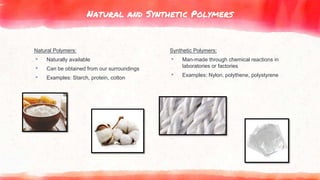
Natural Polymers:
▸ Naturally available
▸ Can be obtained from our surroundings
▸ Examples: Starch, protein, cotton
Synthetic Polymers:
▸ Man-made through chemical reactions in
laboratories or factories
▸ Examples: Nylon, polythene, polystyrene
Types of Polymers
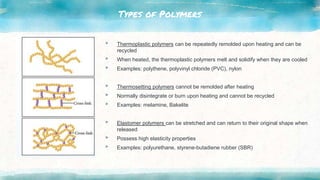
▸ Thermoplastic polymers can be repeatedly remolded upon heating and can be
recycled
▸ When heated, the thermoplastic polymers melt and solidify when they are cooled
▸ Examples: polythene, polyvinyl chloride (PVC), nylon
▸ Thermosetting polymers cannot be remolded after heating
▸ Normally disintegrate or burn upon heating and cannot be recycled
▸ Examples: melamine, Bakelite
▸ Elastomer polymers can be stretched and can return to their original shape when
released
▸ Possess high elasticity properties
▸ Examples: polyurethane, styrene-butadiene rubber (SBR)
Polymerization
There are two types of polymerization reactions;
addition polymerization and condensation
polymerization
Addition Polymerization
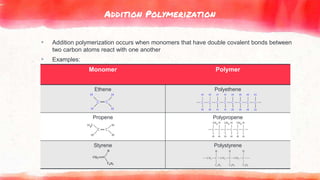
▸ Addition polymerization occurs when monomers that have double covalent bonds between
two carbon atoms react with one another
▸ Examples:
Monomer Polymer
Ethene Polyethene
Propene Polypropene
Styrene Polystyrene
Condensation Polymerization
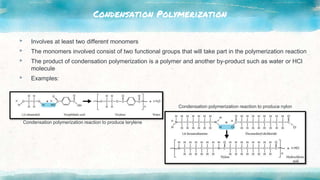
▸ Involves at least two different monomers
▸ The monomers involved consist of two functional groups that will take part in the polymerization reaction
▸ The product of condensation polymerization is a polymer and another by-product such as water or HCl
molecule
▸ Examples:
Condensation polymerization reaction to produce terylene
Condensation polymerization reaction to produce nylon
Uses of Polymers
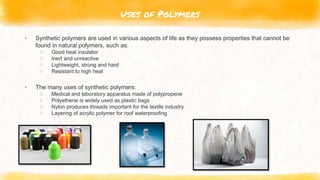
▸ Synthetic polymers are used in various aspects of life as they possess properties that cannot be
found in natural polymers, such as:
○ Good heat insulator
○ Inert and unreactive
○ Lightweight, strong and hard
○ Resistant to high heat
▸ The many uses of synthetic polymers:
○ Medical and laboratory apparatus made of polypropene
○ Polyethene is widely used as plastic bags
○ Nylon produces threads important for the textile industry
○ Layering of acrylic polymer for roof waterproofing
Natural Rubber
Natural Rubber
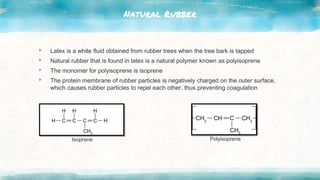
▸ Latex is a white fluid obtained from rubber trees when the tree bark is tapped
▸ Natural rubber that is found in latex is a natural polymer known as polyisoprene
▸ The monomer for polyisoprene is isoprene
▸ The protein membrane of rubber particles is negatively charged on the outer surface,
which causes rubber particles to repel each other, thus preventing coagulation
Isoprene Polyisoprene
Characteristics of Natural Rubber
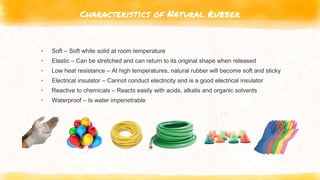
▸ Soft – Soft white solid at room temperature
▸ Elastic – Can be stretched and can return to its original shape when released
▸ Low heat resistance – At high temperatures, natural rubber will become soft and sticky
▸ Electrical insulator – Cannot conduct electricity and is a good electrical insulator
▸ Reactive to chemicals – Reacts easily with acids, alkalis and organic solvents
▸ Waterproof – Is water impenetrable
Coagulation of Latex
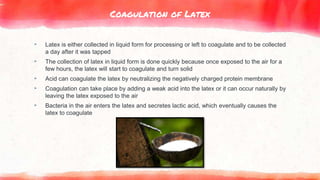
▸ Latex is either collected in liquid form for processing or left to coagulate and to be collected
a day after it was tapped
▸ The collection of latex in liquid form is done quickly because once exposed to the air for a
few hours, the latex will start to coagulate and turn solid
▸ Acid can coagulate the latex by neutralizing the negatively charged protein membrane
▸ Coagulation can take place by adding a weak acid into the latex or it can occur naturally by
leaving the latex exposed to the air
▸ Bacteria in the air enters the latex and secretes lactic acid, which eventually causes the
latex to coagulate
Latex Coagulation Prevention
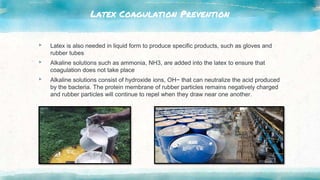
▸ Latex is also needed in liquid form to produce specific products, such as gloves and
rubber tubes
▸ Alkaline solutions such as ammonia, NH3, are added into the latex to ensure that
coagulation does not take place
▸ Alkaline solutions consist of hydroxide ions, OH− that can neutralize the acid produced
by the bacteria. The protein membrane of rubber particles remains negatively charged
and rubber particles will continue to repel when they draw near one another.
Vulcanization of Rubber
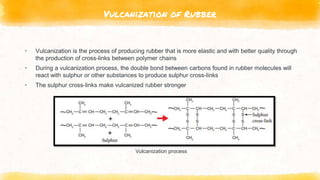
▸ Vulcanization is the process of producing rubber that is more elastic and with better quality through
the production of cross-links between polymer chains
▸ During a vulcanization process, the double bond between carbons found in rubber molecules will
react with sulphur or other substances to produce sulphur cross-links
▸ The sulphur cross-links make vulcanized rubber stronger
Vulcanization process
Alternative Vulcanization Methods
▸ Vulcanization using sulphur is the main method to produce vulcanized rubber
▸ However, this method cannot be used for certain types of rubber
▸ One such example is synthetic rubber, which does not contain C=C
▸ There are a few alternative vulcanization methods that do not use sulphur, such as:
○ Irridiation
○ Peroxide
○ Metal Oxide
▸ Vulcanized rubber produced using the above methods are free from sulphur and more
environmentally friendly
Properties of Vulcanized Rubber
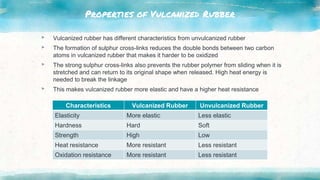
▸ Vulcanized rubber has different characteristics from unvulcanized rubber
▸ The formation of sulphur cross-links reduces the double bonds between two carbon
atoms in vulcanized rubber that makes it harder to be oxidized
▸ The strong sulphur cross-links also prevents the rubber polymer from sliding when it is
stretched and can return to its original shape when released. High heat energy is
needed to break the linkage
▸ This makes vulcanized rubber more elastic and have a higher heat resistance
Characteristics Vulcanized Rubber Unvulcanized Rubber
Elasticity More elastic Less elastic
Hardness Hard Soft
Strength High Low
Heat resistance More resistant Less resistant
Oxidation resistance More resistant Less resistant
Synthetic Rubber
Synthetic Rubber
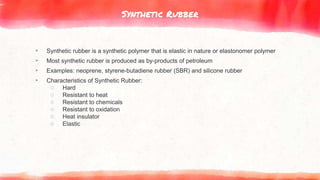
▸ Synthetic rubber is a synthetic polymer that is elastic in nature or elastonomer polymer
▸ Most synthetic rubber is produced as by-products of petroleum
▸ Examples: neoprene, styrene-butadiene rubber (SBR) and silicone rubber
▸ Characteristics of Synthetic Rubber:
○ Hard
○ Resistant to heat
○ Resistant to chemicals
○ Resistant to oxidation
○ Heat insulator
○ Elastic
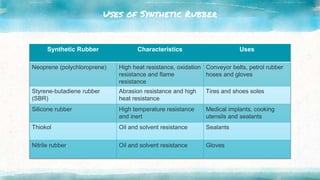
Uses of Synthetic Rubber
Synthetic Rubber Characteristics Uses
Neoprene (polychloroprene) High heat resistance, oxidation
resistance and flame
resistance
Conveyor belts, petrol rubber
hoses and gloves
Styrene-butadiene rubber
(SBR)
Abrasion resistance and high
heat resistance
Tires and shoes soles
Silicone rubber High temperature resistance
and inert
Medical implants, cooking
utensils and sealants
Thiokol Oil and solvent resistance Sealants
Nitrile rubber Oil and solvent resistance Gloves
Rubber and the Environment
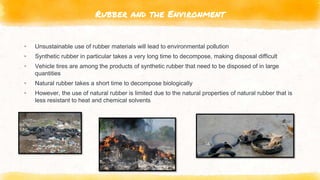
▸ Unsustainable use of rubber materials will lead to environmental pollution
▸ Synthetic rubber in particular takes a very long time to decompose, making disposal difficult
▸ Vehicle tires are among the products of synthetic rubber that need to be disposed of in large
quantities
▸ Natural rubber takes a short time to decompose biologically
▸ However, the use of natural rubber is limited due to the natural properties of natural rubber that is
less resistant to heat and chemical solvents
Thank You

Polymer

  • 1.
    Polymer Sarah Zahirah btAhmad Zakri 2K3
  • 2.
    “ A polymer isa long chain molecule that is made from a combination of many repeating base units
  • 3.
    Natural and SyntheticPolymers Natural Polymers: ▸ Naturally available ▸ Can be obtained from our surroundings ▸ Examples: Starch, protein, cotton Synthetic Polymers: ▸ Man-made through chemical reactions in laboratories or factories ▸ Examples: Nylon, polythene, polystyrene
  • 4.
    Types of Polymers ▸Thermoplastic polymers can be repeatedly remolded upon heating and can be recycled ▸ When heated, the thermoplastic polymers melt and solidify when they are cooled ▸ Examples: polythene, polyvinyl chloride (PVC), nylon ▸ Thermosetting polymers cannot be remolded after heating ▸ Normally disintegrate or burn upon heating and cannot be recycled ▸ Examples: melamine, Bakelite ▸ Elastomer polymers can be stretched and can return to their original shape when released ▸ Possess high elasticity properties ▸ Examples: polyurethane, styrene-butadiene rubber (SBR)
  • 5.
    Polymerization There are twotypes of polymerization reactions; addition polymerization and condensation polymerization
  • 6.
    Addition Polymerization ▸ Additionpolymerization occurs when monomers that have double covalent bonds between two carbon atoms react with one another ▸ Examples: Monomer Polymer Ethene Polyethene Propene Polypropene Styrene Polystyrene
  • 7.
    Condensation Polymerization ▸ Involvesat least two different monomers ▸ The monomers involved consist of two functional groups that will take part in the polymerization reaction ▸ The product of condensation polymerization is a polymer and another by-product such as water or HCl molecule ▸ Examples: Condensation polymerization reaction to produce terylene Condensation polymerization reaction to produce nylon
  • 8.
    Uses of Polymers ▸Synthetic polymers are used in various aspects of life as they possess properties that cannot be found in natural polymers, such as: ○ Good heat insulator ○ Inert and unreactive ○ Lightweight, strong and hard ○ Resistant to high heat ▸ The many uses of synthetic polymers: ○ Medical and laboratory apparatus made of polypropene ○ Polyethene is widely used as plastic bags ○ Nylon produces threads important for the textile industry ○ Layering of acrylic polymer for roof waterproofing
  • 9.
  • 10.
    Natural Rubber ▸ Latexis a white fluid obtained from rubber trees when the tree bark is tapped ▸ Natural rubber that is found in latex is a natural polymer known as polyisoprene ▸ The monomer for polyisoprene is isoprene ▸ The protein membrane of rubber particles is negatively charged on the outer surface, which causes rubber particles to repel each other, thus preventing coagulation Isoprene Polyisoprene
  • 11.
    Characteristics of NaturalRubber ▸ Soft – Soft white solid at room temperature ▸ Elastic – Can be stretched and can return to its original shape when released ▸ Low heat resistance – At high temperatures, natural rubber will become soft and sticky ▸ Electrical insulator – Cannot conduct electricity and is a good electrical insulator ▸ Reactive to chemicals – Reacts easily with acids, alkalis and organic solvents ▸ Waterproof – Is water impenetrable
  • 12.
    Coagulation of Latex ▸Latex is either collected in liquid form for processing or left to coagulate and to be collected a day after it was tapped ▸ The collection of latex in liquid form is done quickly because once exposed to the air for a few hours, the latex will start to coagulate and turn solid ▸ Acid can coagulate the latex by neutralizing the negatively charged protein membrane ▸ Coagulation can take place by adding a weak acid into the latex or it can occur naturally by leaving the latex exposed to the air ▸ Bacteria in the air enters the latex and secretes lactic acid, which eventually causes the latex to coagulate
  • 13.
    Latex Coagulation Prevention ▸Latex is also needed in liquid form to produce specific products, such as gloves and rubber tubes ▸ Alkaline solutions such as ammonia, NH3, are added into the latex to ensure that coagulation does not take place ▸ Alkaline solutions consist of hydroxide ions, OH− that can neutralize the acid produced by the bacteria. The protein membrane of rubber particles remains negatively charged and rubber particles will continue to repel when they draw near one another.
  • 14.
    Vulcanization of Rubber ▸Vulcanization is the process of producing rubber that is more elastic and with better quality through the production of cross-links between polymer chains ▸ During a vulcanization process, the double bond between carbons found in rubber molecules will react with sulphur or other substances to produce sulphur cross-links ▸ The sulphur cross-links make vulcanized rubber stronger Vulcanization process
  • 15.
    Alternative Vulcanization Methods ▸Vulcanization using sulphur is the main method to produce vulcanized rubber ▸ However, this method cannot be used for certain types of rubber ▸ One such example is synthetic rubber, which does not contain C=C ▸ There are a few alternative vulcanization methods that do not use sulphur, such as: ○ Irridiation ○ Peroxide ○ Metal Oxide ▸ Vulcanized rubber produced using the above methods are free from sulphur and more environmentally friendly
  • 16.
    Properties of VulcanizedRubber ▸ Vulcanized rubber has different characteristics from unvulcanized rubber ▸ The formation of sulphur cross-links reduces the double bonds between two carbon atoms in vulcanized rubber that makes it harder to be oxidized ▸ The strong sulphur cross-links also prevents the rubber polymer from sliding when it is stretched and can return to its original shape when released. High heat energy is needed to break the linkage ▸ This makes vulcanized rubber more elastic and have a higher heat resistance Characteristics Vulcanized Rubber Unvulcanized Rubber Elasticity More elastic Less elastic Hardness Hard Soft Strength High Low Heat resistance More resistant Less resistant Oxidation resistance More resistant Less resistant
  • 17.
  • 18.
    Synthetic Rubber ▸ Syntheticrubber is a synthetic polymer that is elastic in nature or elastonomer polymer ▸ Most synthetic rubber is produced as by-products of petroleum ▸ Examples: neoprene, styrene-butadiene rubber (SBR) and silicone rubber ▸ Characteristics of Synthetic Rubber: ○ Hard ○ Resistant to heat ○ Resistant to chemicals ○ Resistant to oxidation ○ Heat insulator ○ Elastic
  • 19.
    Uses of SyntheticRubber Synthetic Rubber Characteristics Uses Neoprene (polychloroprene) High heat resistance, oxidation resistance and flame resistance Conveyor belts, petrol rubber hoses and gloves Styrene-butadiene rubber (SBR) Abrasion resistance and high heat resistance Tires and shoes soles Silicone rubber High temperature resistance and inert Medical implants, cooking utensils and sealants Thiokol Oil and solvent resistance Sealants Nitrile rubber Oil and solvent resistance Gloves
  • 20.
    Rubber and theEnvironment ▸ Unsustainable use of rubber materials will lead to environmental pollution ▸ Synthetic rubber in particular takes a very long time to decompose, making disposal difficult ▸ Vehicle tires are among the products of synthetic rubber that need to be disposed of in large quantities ▸ Natural rubber takes a short time to decompose biologically ▸ However, the use of natural rubber is limited due to the natural properties of natural rubber that is less resistant to heat and chemical solvents
  • 21.