By: Haneen Emeir
IT Department
*
*
*
*
โ€ข to establish consistent treatment
โ€ข to guide repeat situations
โ€ข to establish standards & regulations
โ€ข if employee actions indicate confusion
โ€ข to comply with legislation
โ€ข guides program design & service delivery
โ€ข principles that guide day-to-day actions
โ€ข GOVERN A BUSINESS PROCESS
*
โ€ข Governing/Administrative policies
โ€ข Operational policies
*
It is a predetermined course of action
established as a guide toward accepted
organizational strategies & objectives
They are the guidelines on what needs to be
done.
โ€ข Translates vision to action
โ€ข A functional framework for staff actions
*
A method by which a policy can be
accomplished. It provides the
instructions to carry put a policy
statement
Procedures are expressed as a series of
operational activities or series of steps
that should executed. They are written
in a directional fashion to achieve a
desired objective. It indicates โ€œ the
how โ€œpolicies should be implemented
*
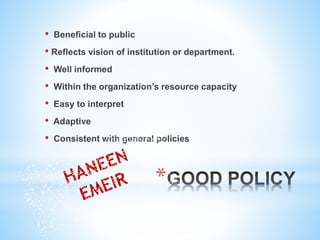
โ€ข Beneficial to public
โ€ข Reflects vision of institution or department.
โ€ข Well informed
โ€ข Within the organizationโ€™s resource capacity
โ€ข Easy to interpret
โ€ข Adaptive
โ€ข Consistent with general policies
*
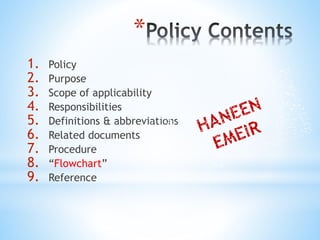
1. Policy
2. Purpose
3. Scope of applicability
4. Responsibilities
5. Definitions & abbreviations
6. Related documents
7. Procedure
8. โ€œFlowchartโ€
9. Reference
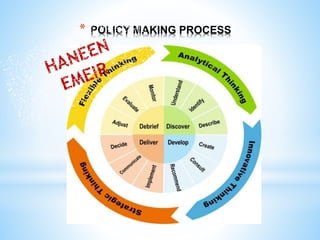
* POLICY MAKING PROCESS
*
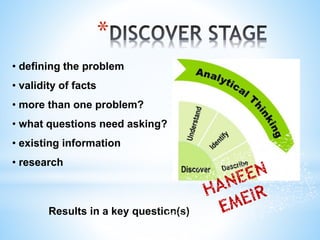
โ€ข defining the problem
โ€ข validity of facts
โ€ข more than one problem?
โ€ข what questions need asking?
โ€ข existing information
โ€ข research
Results in a key question(s)
*
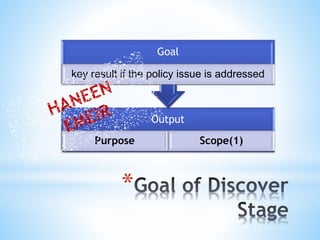
Output
Purpose Scope(1)
Goal
key result if the policy issue is addressed
*
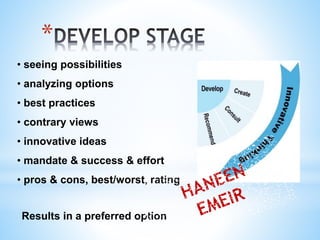
โ€ข seeing possibilities
โ€ข analyzing options
โ€ข best practices
โ€ข contrary views
โ€ข innovative ideas
โ€ข mandate & success & effort
โ€ข pros & cons, best/worst, rating
Results in a preferred option
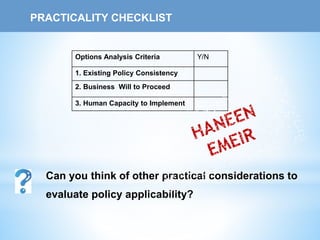
PRACTICALITY CHECKLIST
Can you think of other practical considerations to
evaluate policy applicability?
Options Analysis Criteria Y/N
1. Existing Policy Consistency
2. Business Will to Proceed
3. Human Capacity to Implement
*
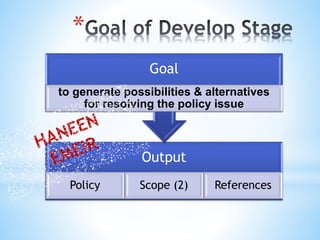
Output
Policy Scope (2) References
Goal
to generate possibilities & alternatives
for resolving the policy issue
*
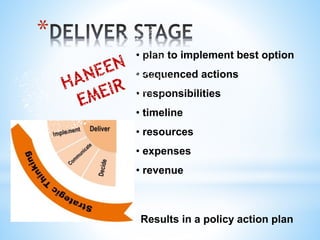
โ€ข plan to implement best option
โ€ข sequenced actions
โ€ข responsibilities
โ€ข timeline
โ€ข resources
โ€ข expenses
โ€ข revenue
Results in a policy action plan
*
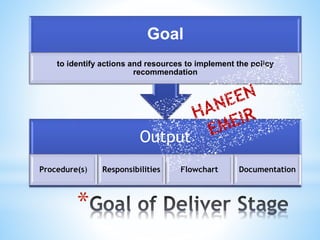
Output
Procedure(s) Responsibilities Flowchart Documentation
Goal
to identify actions and resources to implement the policy
recommendation
*
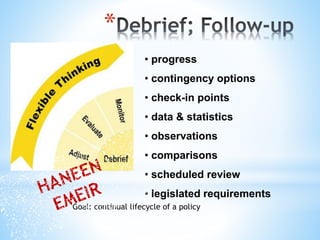
Goal: continual lifecycle of a policy
โ€ข progress
โ€ข contingency options
โ€ข check-in points
โ€ข data & statistics
โ€ข observations
โ€ข comparisons
โ€ข scheduled review
โ€ข legislated requirements
*
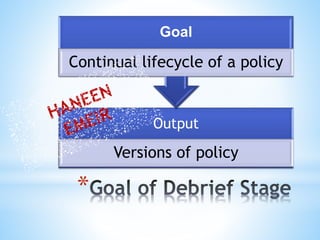
Output
Versions of policy
Goal
Continual lifecycle of a policy
*G
*
Confidential business policy

Writing operational policies

  • 1.
    By: Haneen Emeir ITDepartment *
  • 2.
  • 3.
  • 4.
    * โ€ข to establishconsistent treatment โ€ข to guide repeat situations โ€ข to establish standards & regulations โ€ข if employee actions indicate confusion โ€ข to comply with legislation โ€ข guides program design & service delivery โ€ข principles that guide day-to-day actions โ€ข GOVERN A BUSINESS PROCESS
  • 5.
  • 6.
    * It is apredetermined course of action established as a guide toward accepted organizational strategies & objectives They are the guidelines on what needs to be done. โ€ข Translates vision to action โ€ข A functional framework for staff actions
  • 7.
    * A method bywhich a policy can be accomplished. It provides the instructions to carry put a policy statement Procedures are expressed as a series of operational activities or series of steps that should executed. They are written in a directional fashion to achieve a desired objective. It indicates โ€œ the how โ€œpolicies should be implemented
  • 8.
    * โ€ข Beneficial topublic โ€ข Reflects vision of institution or department. โ€ข Well informed โ€ข Within the organizationโ€™s resource capacity โ€ข Easy to interpret โ€ข Adaptive โ€ข Consistent with general policies
  • 9.
    * 1. Policy 2. Purpose 3.Scope of applicability 4. Responsibilities 5. Definitions & abbreviations 6. Related documents 7. Procedure 8. โ€œFlowchartโ€ 9. Reference
  • 10.
  • 11.
    * โ€ข defining theproblem โ€ข validity of facts โ€ข more than one problem? โ€ข what questions need asking? โ€ข existing information โ€ข research Results in a key question(s)
  • 12.
    * Output Purpose Scope(1) Goal key resultif the policy issue is addressed
  • 13.
    * โ€ข seeing possibilities โ€ขanalyzing options โ€ข best practices โ€ข contrary views โ€ข innovative ideas โ€ข mandate & success & effort โ€ข pros & cons, best/worst, rating Results in a preferred option
  • 14.
    PRACTICALITY CHECKLIST Can youthink of other practical considerations to evaluate policy applicability? Options Analysis Criteria Y/N 1. Existing Policy Consistency 2. Business Will to Proceed 3. Human Capacity to Implement
  • 15.
    * Output Policy Scope (2)References Goal to generate possibilities & alternatives for resolving the policy issue
  • 16.
    * โ€ข plan toimplement best option โ€ข sequenced actions โ€ข responsibilities โ€ข timeline โ€ข resources โ€ข expenses โ€ข revenue Results in a policy action plan
  • 17.
    * Output Procedure(s) Responsibilities FlowchartDocumentation Goal to identify actions and resources to implement the policy recommendation
  • 18.
    * Goal: continual lifecycleof a policy โ€ข progress โ€ข contingency options โ€ข check-in points โ€ข data & statistics โ€ข observations โ€ข comparisons โ€ข scheduled review โ€ข legislated requirements
  • 19.
  • 20.