POLARIZATION BY
DOUBLE REFRACTION
Peer Team
Santhoshkumar. R
Suryaa. E
Refraction
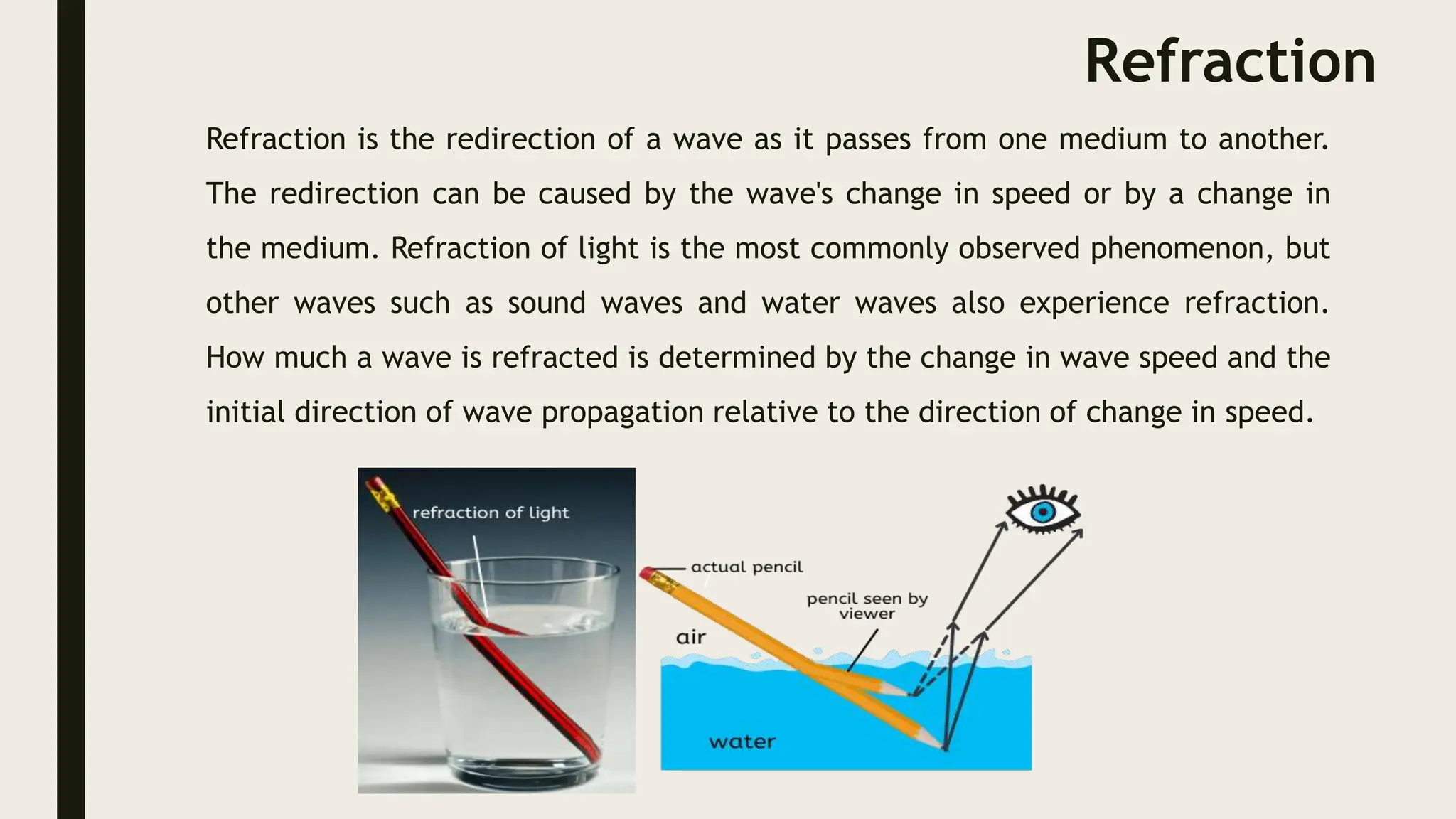
Refraction is the redirection of a wave as it passes from one medium to another.
The redirection can be caused by the wave's change in speed or by a change in
the medium. Refraction of light is the most commonly observed phenomenon, but
other waves such as sound waves and water waves also experience refraction.
How much a wave is refracted is determined by the change in wave speed and the
initial direction of wave propagation relative to the direction of change in speed.
Polarization
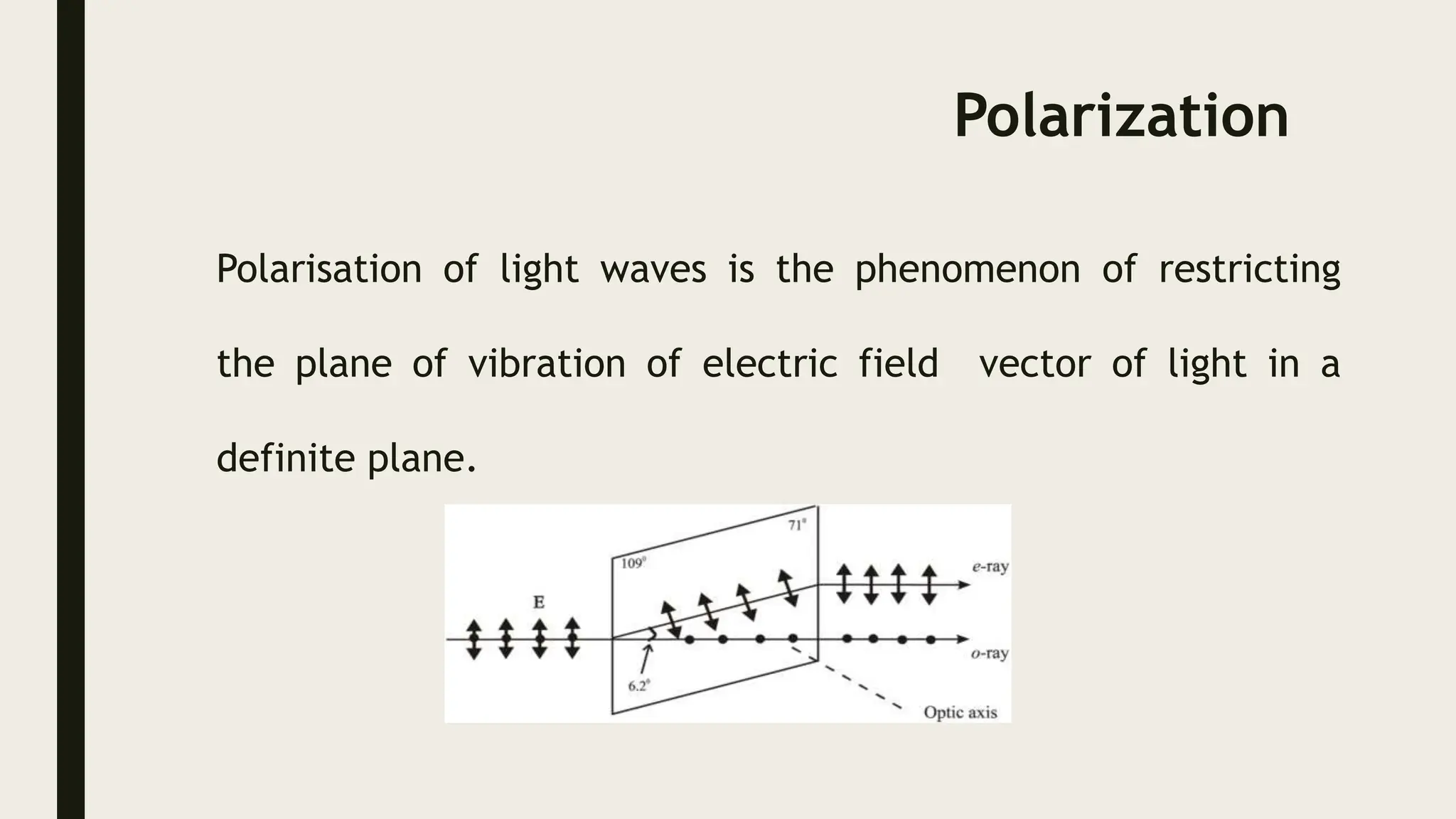
Polarisation of light waves is the phenomenon of restricting
the plane of vibration of electric field vector of light in a
definite plane.
Types of polarized light
• Plane polarized light
• Circularly polarized light
• Elliptically polarized light
Double refraction
Light passing through a calcite crystal is split into two rays. This process, first
reported by Erasmus Bartholinus in 1669, is called double refraction. The two rays
of light are each plane polarized by the calcite such that the planes of
polarization are mutually perpendicular. For normal incidence (a Snell’s law angle
of 0°), the two planes of polarization are also perpendicular to the plane of
incidence.
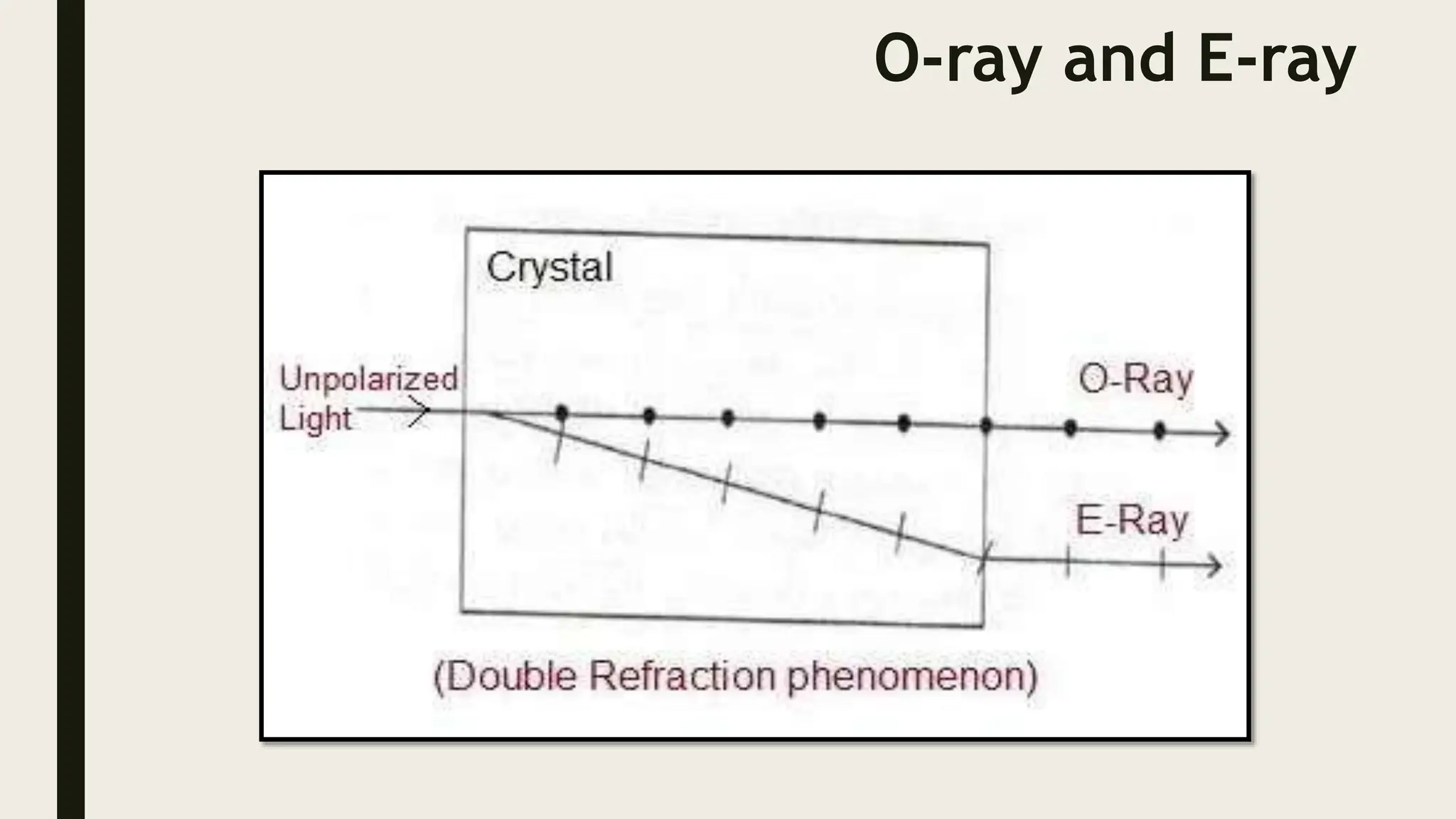
O-ray and E-ray
■ For normal incidence (a 0° angle of incidence), Snell’s law predicts that
the angle of refraction will be 0°. In the case of double refraction of a
normally incident ray of light, at least one of the two rays must violate
Snell’s Law as we know it. For calcite, one of the two rays does indeed
obey Snell’s Law; this ray is called the ordinary ray . The other ray is an
extraordinary ray.
■ For ordinary rays the vibration direction, indicated by the electric vectors
in our illustrations, is perpendicular to the ray path. For extraordinary
rays, the vibration direction is not perpendicular to the ray path. The
direction perpendicular to the vibration direction is called the wave
normal. Although Snell’s Law is not satisfied by the ray path for
extraordinary rays, it is satisfied by the wave normal of extraordinary rays.
In other words, the wave normal direction for the refracted ray is related
O-ray and E-ray
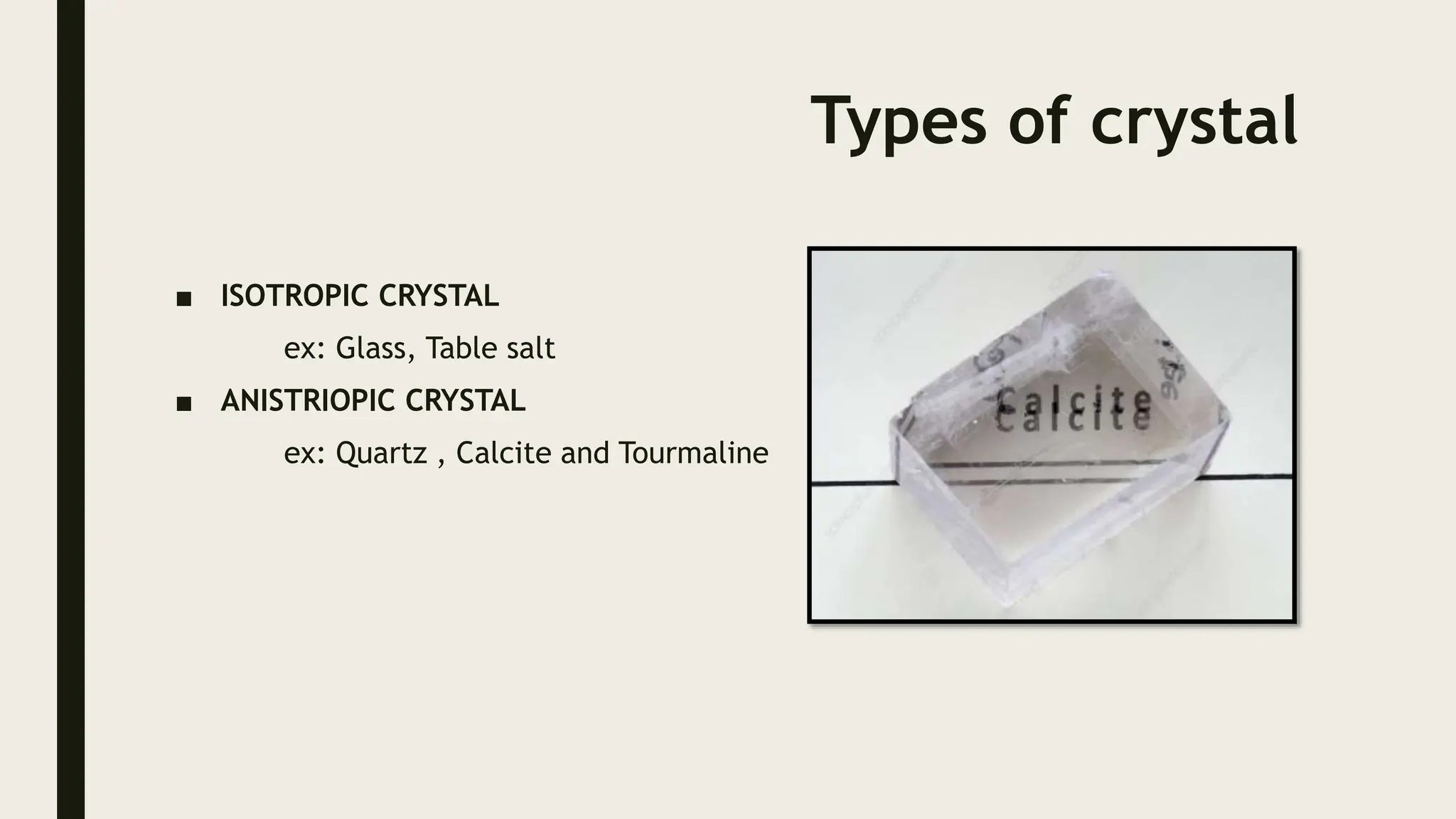
Types of crystal
■ ISOTROPIC CRYSTAL
ex: Glass, Table salt
■ ANISTRIOPIC CRYSTAL
ex: Quartz , Calcite and Tourmaline
Huygen's principle
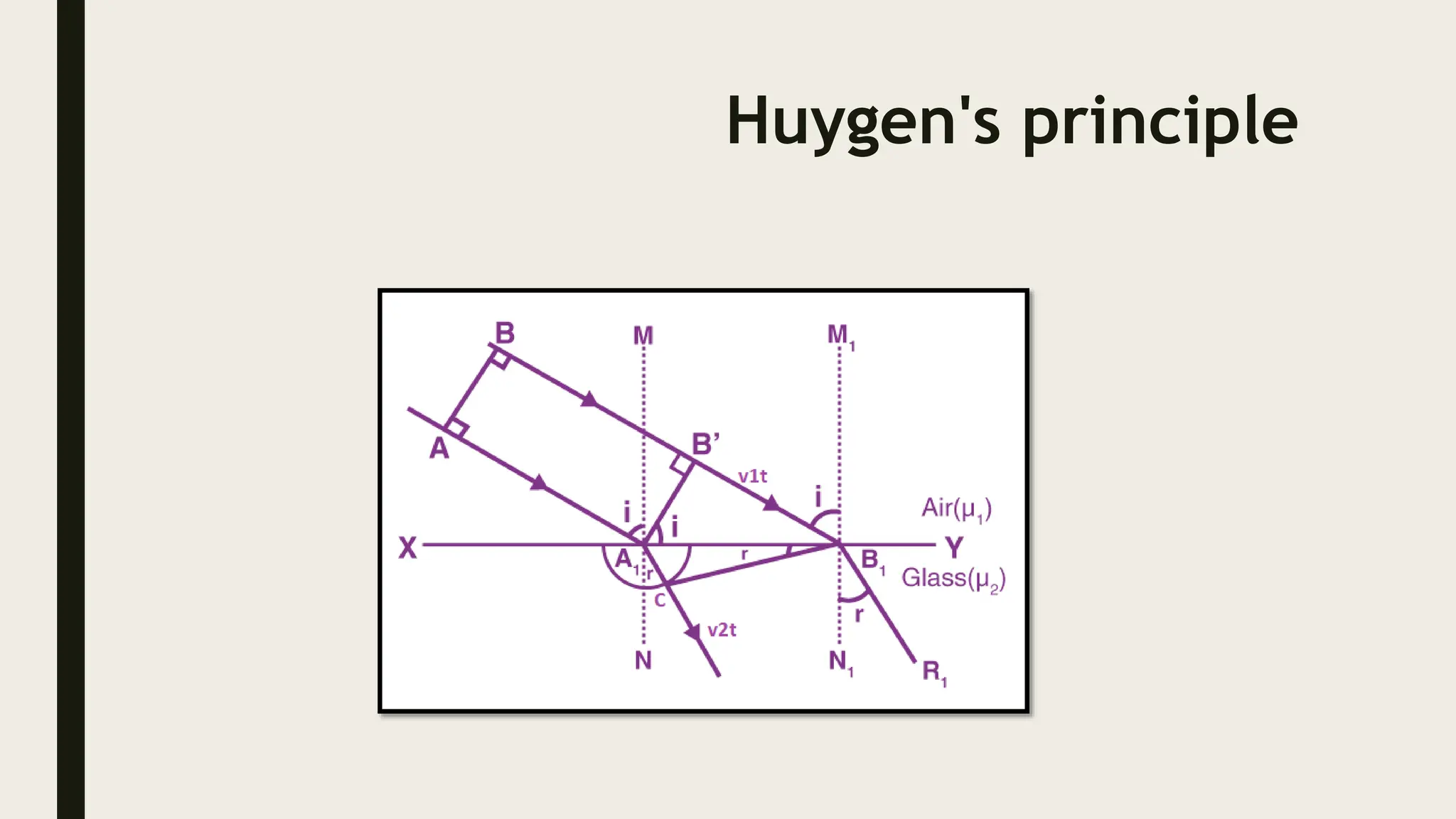
■ While the Huygens' principle of double refraction explains the phenomenon of
double refraction in an optically anisotropic medium, the Huygens–Fresnel
principle pertains to the propagation of waves in an optically isotropic medium.
According to the Huygens–Fresnel principle, each point on a wavefront can be
considered a secondary point source of waves, so a new wavefront is formed
after the secondary wavelets have travelled for a period equal to one vibration
cycle. This new wavefront can be described as an envelope or tangent surface
to these secondary wavelets. Understanding and forecasting the classical wave
propagation of light is based on the Huygens-Fresnel principle.
Huygen's principle
“When you talk, you are only
repeating what you already know.
But if you listen, you may learn
something new”
-Dalai lama

Polarisation by double refraction in Advanced optics .pptx

  • 1.
    POLARIZATION BY DOUBLE REFRACTION PeerTeam Santhoshkumar. R Suryaa. E
  • 2.
    Refraction Refraction is theredirection of a wave as it passes from one medium to another. The redirection can be caused by the wave's change in speed or by a change in the medium. Refraction of light is the most commonly observed phenomenon, but other waves such as sound waves and water waves also experience refraction. How much a wave is refracted is determined by the change in wave speed and the initial direction of wave propagation relative to the direction of change in speed.
  • 3.
    Polarization Polarisation of lightwaves is the phenomenon of restricting the plane of vibration of electric field vector of light in a definite plane.
  • 4.
    Types of polarizedlight • Plane polarized light • Circularly polarized light • Elliptically polarized light
  • 5.
    Double refraction Light passingthrough a calcite crystal is split into two rays. This process, first reported by Erasmus Bartholinus in 1669, is called double refraction. The two rays of light are each plane polarized by the calcite such that the planes of polarization are mutually perpendicular. For normal incidence (a Snell’s law angle of 0°), the two planes of polarization are also perpendicular to the plane of incidence.
  • 6.
    O-ray and E-ray ■For normal incidence (a 0° angle of incidence), Snell’s law predicts that the angle of refraction will be 0°. In the case of double refraction of a normally incident ray of light, at least one of the two rays must violate Snell’s Law as we know it. For calcite, one of the two rays does indeed obey Snell’s Law; this ray is called the ordinary ray . The other ray is an extraordinary ray. ■ For ordinary rays the vibration direction, indicated by the electric vectors in our illustrations, is perpendicular to the ray path. For extraordinary rays, the vibration direction is not perpendicular to the ray path. The direction perpendicular to the vibration direction is called the wave normal. Although Snell’s Law is not satisfied by the ray path for extraordinary rays, it is satisfied by the wave normal of extraordinary rays. In other words, the wave normal direction for the refracted ray is related
  • 7.
  • 8.
    Types of crystal ■ISOTROPIC CRYSTAL ex: Glass, Table salt ■ ANISTRIOPIC CRYSTAL ex: Quartz , Calcite and Tourmaline
  • 9.
    Huygen's principle ■ Whilethe Huygens' principle of double refraction explains the phenomenon of double refraction in an optically anisotropic medium, the Huygens–Fresnel principle pertains to the propagation of waves in an optically isotropic medium. According to the Huygens–Fresnel principle, each point on a wavefront can be considered a secondary point source of waves, so a new wavefront is formed after the secondary wavelets have travelled for a period equal to one vibration cycle. This new wavefront can be described as an envelope or tangent surface to these secondary wavelets. Understanding and forecasting the classical wave propagation of light is based on the Huygens-Fresnel principle.
  • 10.
  • 11.
    “When you talk,you are only repeating what you already know. But if you listen, you may learn something new” -Dalai lama