The Actors:
New Media Experts and Old Pedagogues?

 D r A l b i n Wa l l a c e
 Executive Director of Research and Development
“The Education Fellowship (TEF) was founded by
Sir Ewan Harper CBE and Johnson Kane to
deliver an excellent education to children of all
backgrounds. We aim to create excellence in
every area: an excellence flowing from our
underlying ethos and values. An ethos that
„goes beyond the expected‟ and which is
based on unremitting service to young people.”
How is the role of educators being affected by
social media?
How can educators be authentic models for
(so-called) “digital natives”?
What skills do they need?
How can they be supported by their institutions?
Is it all individual commitment?
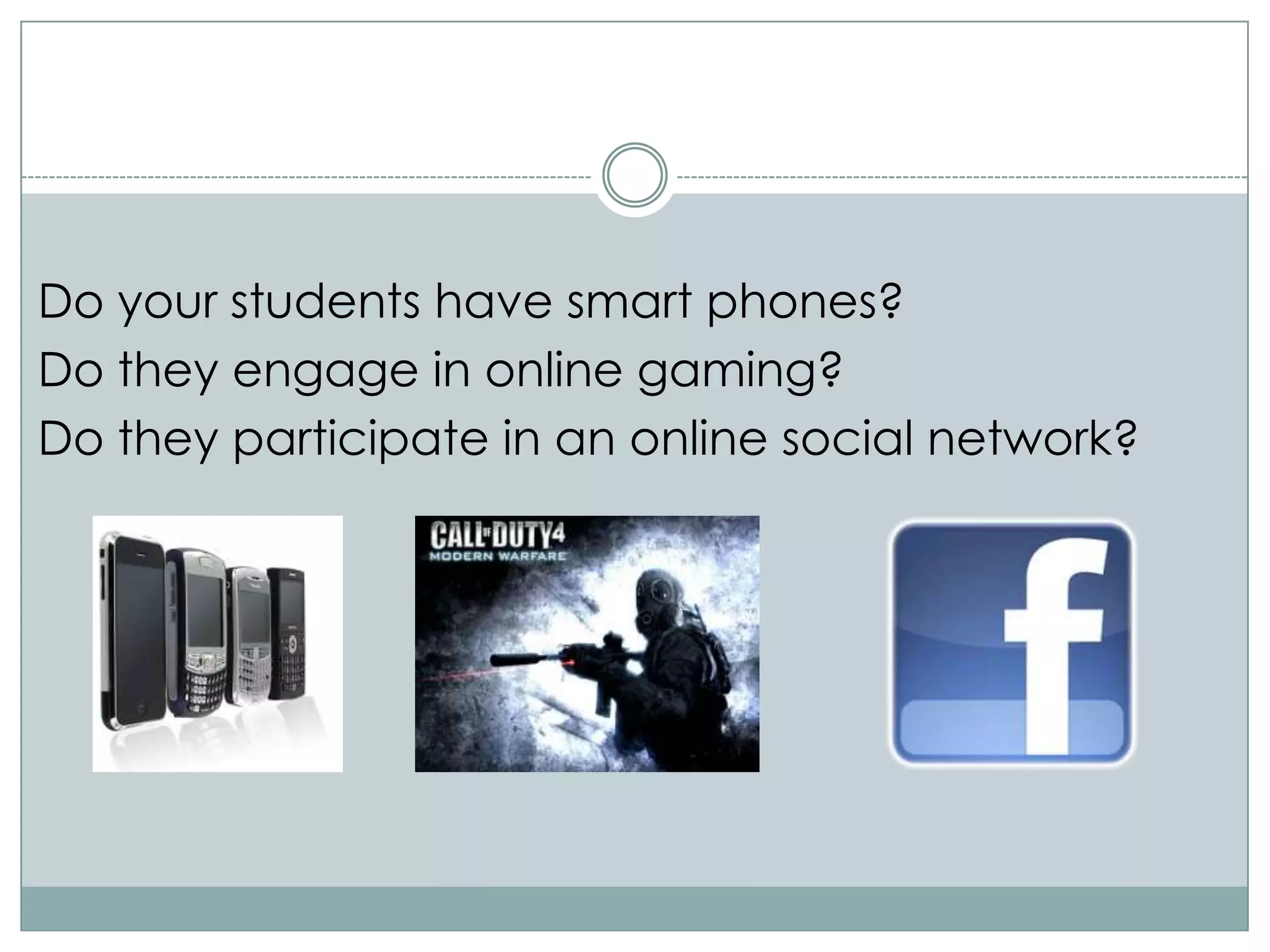
Do your students have smart phones?
Do they engage in online gaming?
Do they participate in an online social network?
Yes, they do…
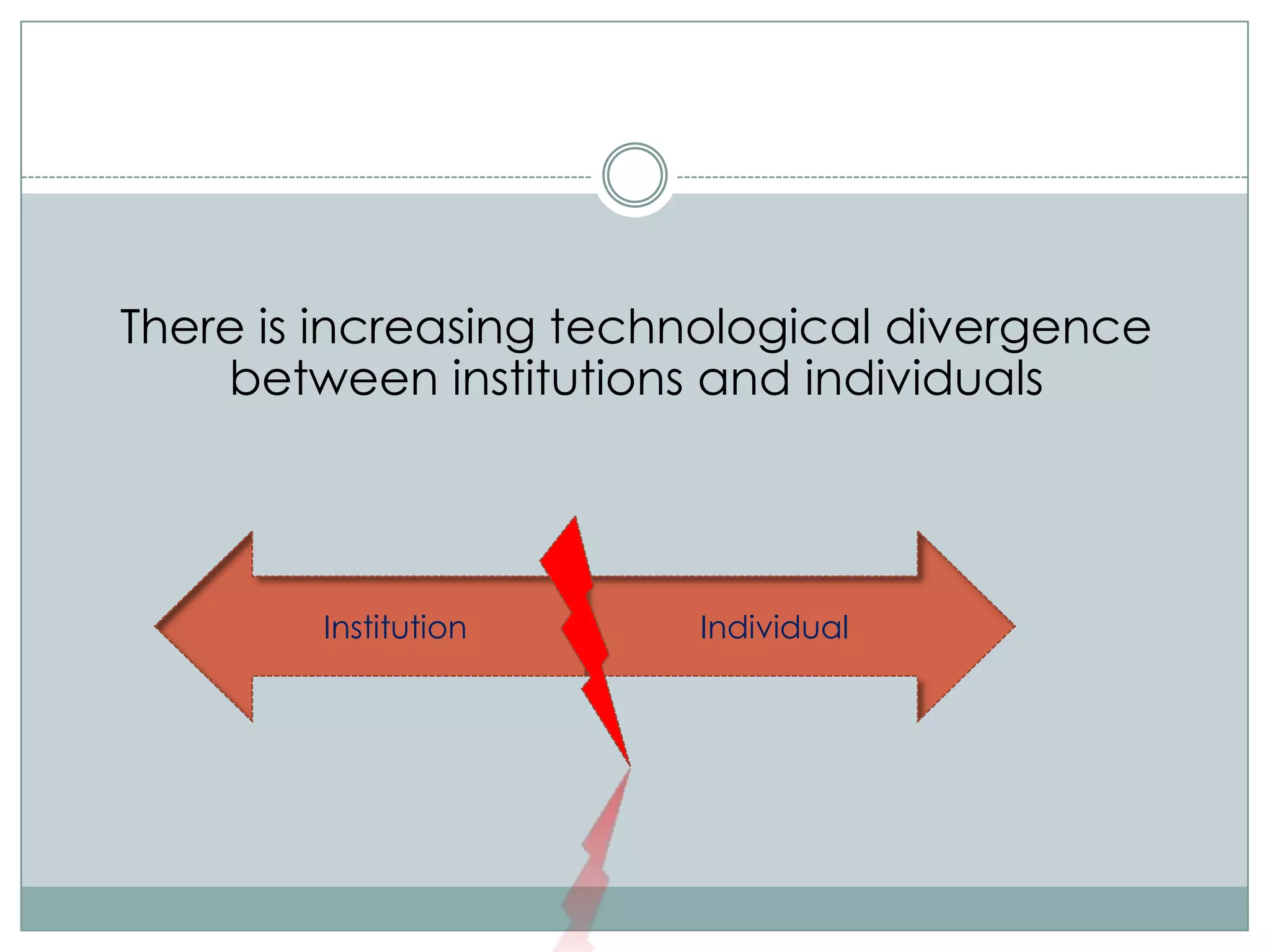
There is increasing technological divergence
    between institutions and individuals


        Institution     Individual
Does this mean that students know everything
and we know nothing?
Paul Howard-Jones: Neuroscience


   “internet use can be problematic when it
regularly interferes with normal daily living and is
                difficult to control”
“excessive use of computers/internet
access/gaming interferes with psychosocial
wellbeing, attentional and vision problems”
Sherry Turkle: Social Media


“…it is an illusion that technology will give us
                     control”
…”there is no intimacy or democracy without
                   privacy”
“…the more you multitask, the worse you perform”
“…in solitude, there are new pretended
               intimacies”
“…we use Facebook to bail and go to somewhere
                  easier”
Eli Pariser: The Filter Bubble


“Filters based on simplification (e.g. „like‟ button) means
information junk food can appear to be the only option
                         on offer.”
“The fact that 'like' is the only choice on Facebook
    creates a distortion problem - we don't like
         everything we think is important”
"We love to be right. This is why sites want to serve
you more tailored content. It makes you feel right
                   more often.”
"You don't necessarily choose what gets into your
   filter bubble, the algorithms choose for you"
Ofsted: Managing Risk


  “Institutions should manage the transition from
locked-down systems to more managed systems
    to help students learn how to manage risk”.
Stephen Carrick-Davies


“For most young people, the primary gateway to
     the internet is now their mobile phone”
Increasing focus on the intellectual, creative,
     social, emotional and ethical use of
                technologies.
Bring students‟ online personal, ethical and
social behaviours in line with their perceived
                technical skills.
Diana Laurillard


“This is not rocket science. It is far more
         complicated than that.”
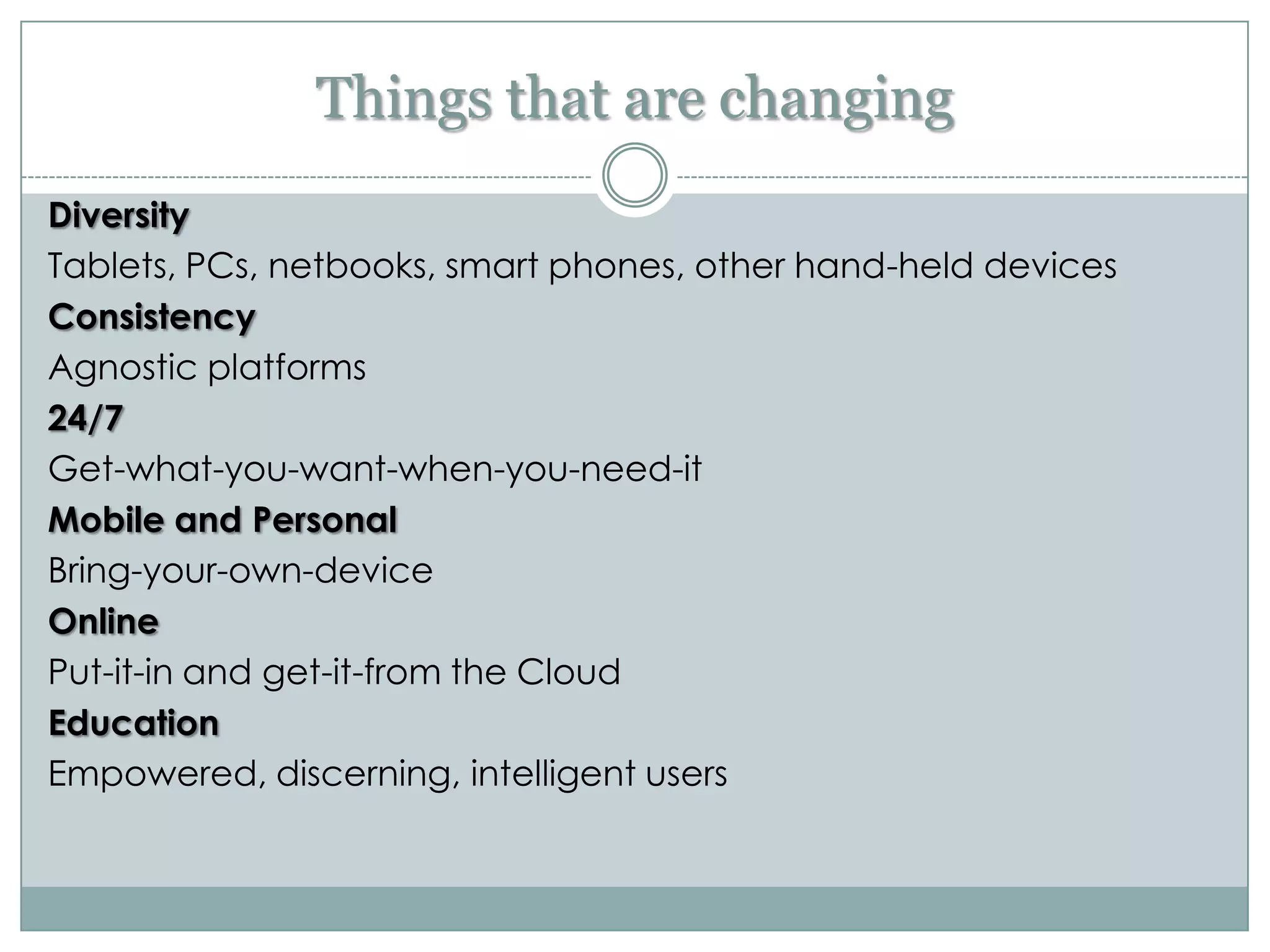
Things that are changing
Diversity
Tablets, PCs, netbooks, smart phones, other hand-held devices
Consistency
Agnostic platforms
24/7
Get-what-you-want-when-you-need-it
Mobile and Personal
Bring-your-own-device
Online
Put-it-in and get-it-from the Cloud
Education
Empowered, discerning, intelligent users
So, is technology good or bad?
It is neither.
Nor is it neutral.
Workshop 1…..
Jane McGonigal

What do you think? Do you agree?
Can gaming improve students‟ learning?
What could the benefits be?
What are your concerns?
Workshop 2
Eli Pariser

What do you think? Do you agree?
What are the implications of the filter bubble in
students‟ lives?
What can we learn from this?
Workshop 3
Sherry Turkle

What do you think? Do you agree?
Is social networking making us less human?
How do we respond to this in educational
institutions and in our private lives?
Workshop 4
Mike Matas

What do you think? Do you agree?
Is this just a gimmick?
What should the balance be between printed
books and digital books?
Some institutional considerations from The
Education Fellowship…
Education is becoming…

Smarter,
Faster,
More flexible,
More connected,
Less restrictive,
More discerning
Access
Inexpensive networked, portable, personal
devices…

…including the ones they bring in

An institutional response is needed but
acknowledge spontaneity, chaos, privacy, affinity
spaces, communities of practice
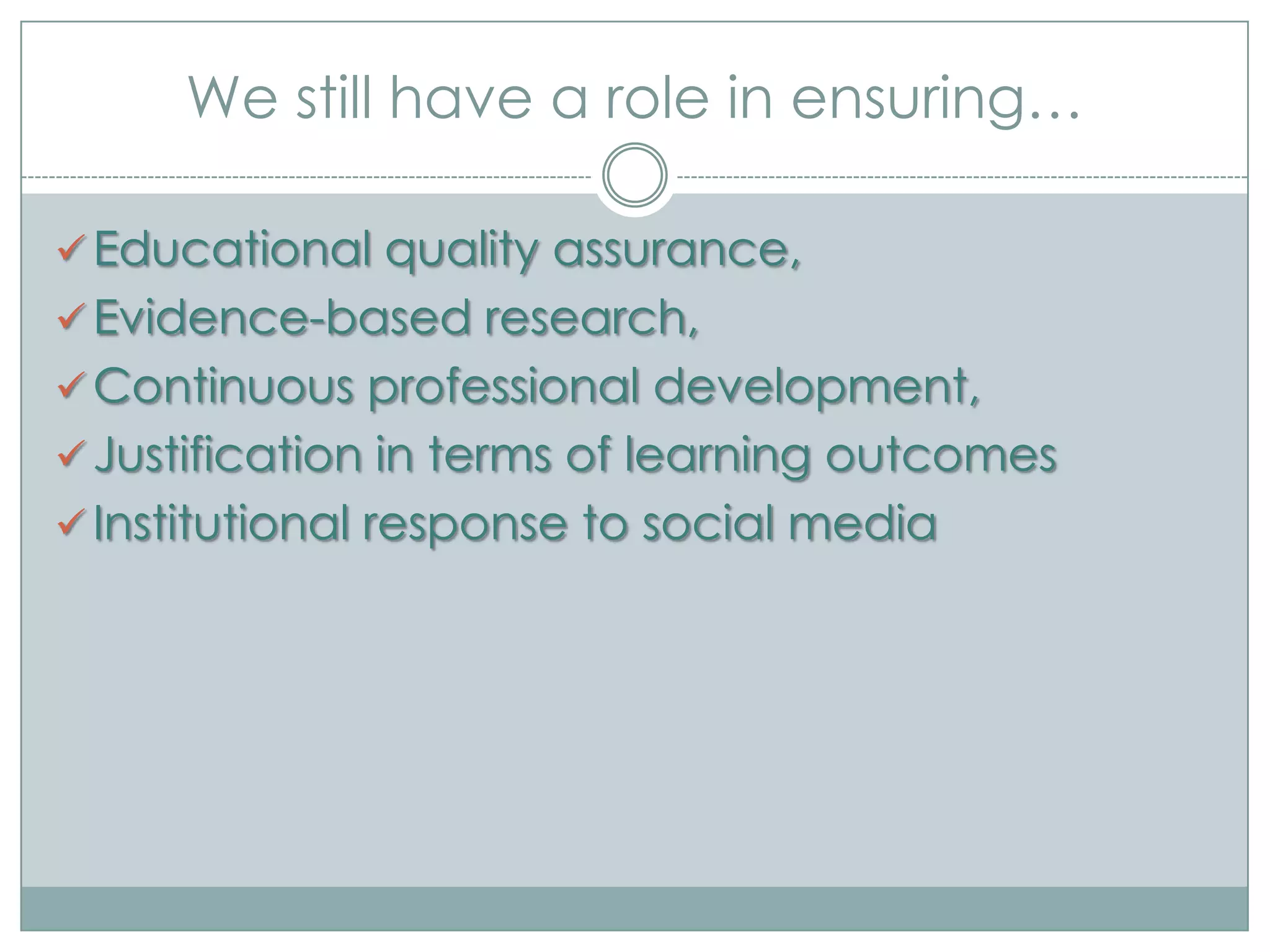
We still have a role in ensuring…

 Educational quality assurance,
 Evidence-based research,
 Continuous professional development,
 Justification in terms of learning outcomes
 Institutional response to social media
Dr Albin Wallace

albinwallace@educationfellowship.net
     www.educationfellowship.net

         @albinwallace
     aewallace.wordpress.com

'Albin Wallace Technucation

  • 1.
    The Actors: New MediaExperts and Old Pedagogues? D r A l b i n Wa l l a c e Executive Director of Research and Development
  • 2.
    “The Education Fellowship(TEF) was founded by Sir Ewan Harper CBE and Johnson Kane to deliver an excellent education to children of all backgrounds. We aim to create excellence in every area: an excellence flowing from our underlying ethos and values. An ethos that „goes beyond the expected‟ and which is based on unremitting service to young people.”
  • 4.
    How is therole of educators being affected by social media? How can educators be authentic models for (so-called) “digital natives”? What skills do they need? How can they be supported by their institutions? Is it all individual commitment?
  • 9.
    Do your studentshave smart phones? Do they engage in online gaming? Do they participate in an online social network?
  • 10.
  • 11.
    There is increasingtechnological divergence between institutions and individuals Institution Individual
  • 12.
    Does this meanthat students know everything and we know nothing?
  • 13.
    Paul Howard-Jones: Neuroscience “internet use can be problematic when it regularly interferes with normal daily living and is difficult to control”
  • 14.
    “excessive use ofcomputers/internet access/gaming interferes with psychosocial wellbeing, attentional and vision problems”
  • 15.
    Sherry Turkle: SocialMedia “…it is an illusion that technology will give us control”
  • 16.
    …”there is nointimacy or democracy without privacy”
  • 17.
    “…the more youmultitask, the worse you perform”
  • 18.
    “…in solitude, thereare new pretended intimacies”
  • 19.
    “…we use Facebookto bail and go to somewhere easier”
  • 20.
    Eli Pariser: TheFilter Bubble “Filters based on simplification (e.g. „like‟ button) means information junk food can appear to be the only option on offer.”
  • 21.
    “The fact that'like' is the only choice on Facebook creates a distortion problem - we don't like everything we think is important”
  • 22.
    "We love tobe right. This is why sites want to serve you more tailored content. It makes you feel right more often.”
  • 23.
    "You don't necessarilychoose what gets into your filter bubble, the algorithms choose for you"
  • 24.
    Ofsted: Managing Risk “Institutions should manage the transition from locked-down systems to more managed systems to help students learn how to manage risk”.
  • 25.
    Stephen Carrick-Davies “For mostyoung people, the primary gateway to the internet is now their mobile phone”
  • 26.
    Increasing focus onthe intellectual, creative, social, emotional and ethical use of technologies.
  • 27.
    Bring students‟ onlinepersonal, ethical and social behaviours in line with their perceived technical skills.
  • 28.
    Diana Laurillard “This isnot rocket science. It is far more complicated than that.”
  • 29.
    Things that arechanging Diversity Tablets, PCs, netbooks, smart phones, other hand-held devices Consistency Agnostic platforms 24/7 Get-what-you-want-when-you-need-it Mobile and Personal Bring-your-own-device Online Put-it-in and get-it-from the Cloud Education Empowered, discerning, intelligent users
  • 30.
    So, is technologygood or bad?
  • 31.
  • 32.
    Nor is itneutral.
  • 33.
    Workshop 1….. Jane McGonigal Whatdo you think? Do you agree? Can gaming improve students‟ learning? What could the benefits be? What are your concerns?
  • 34.
    Workshop 2 Eli Pariser Whatdo you think? Do you agree? What are the implications of the filter bubble in students‟ lives? What can we learn from this?
  • 35.
    Workshop 3 Sherry Turkle Whatdo you think? Do you agree? Is social networking making us less human? How do we respond to this in educational institutions and in our private lives?
  • 36.
    Workshop 4 Mike Matas Whatdo you think? Do you agree? Is this just a gimmick? What should the balance be between printed books and digital books?
  • 37.
    Some institutional considerationsfrom The Education Fellowship…
  • 40.
    Education is becoming… Smarter, Faster, Moreflexible, More connected, Less restrictive, More discerning
  • 41.
  • 42.
    Inexpensive networked, portable,personal devices… …including the ones they bring in An institutional response is needed but acknowledge spontaneity, chaos, privacy, affinity spaces, communities of practice
  • 43.
    We still havea role in ensuring…  Educational quality assurance,  Evidence-based research,  Continuous professional development,  Justification in terms of learning outcomes  Institutional response to social media
  • 46.
    Dr Albin Wallace albinwallace@educationfellowship.net www.educationfellowship.net @albinwallace aewallace.wordpress.com