
Realizing Article 24:
The rights of children with
disabilities to be included in
quality learning
4th Central Asian Republics Forum
Dushanbe, 2013
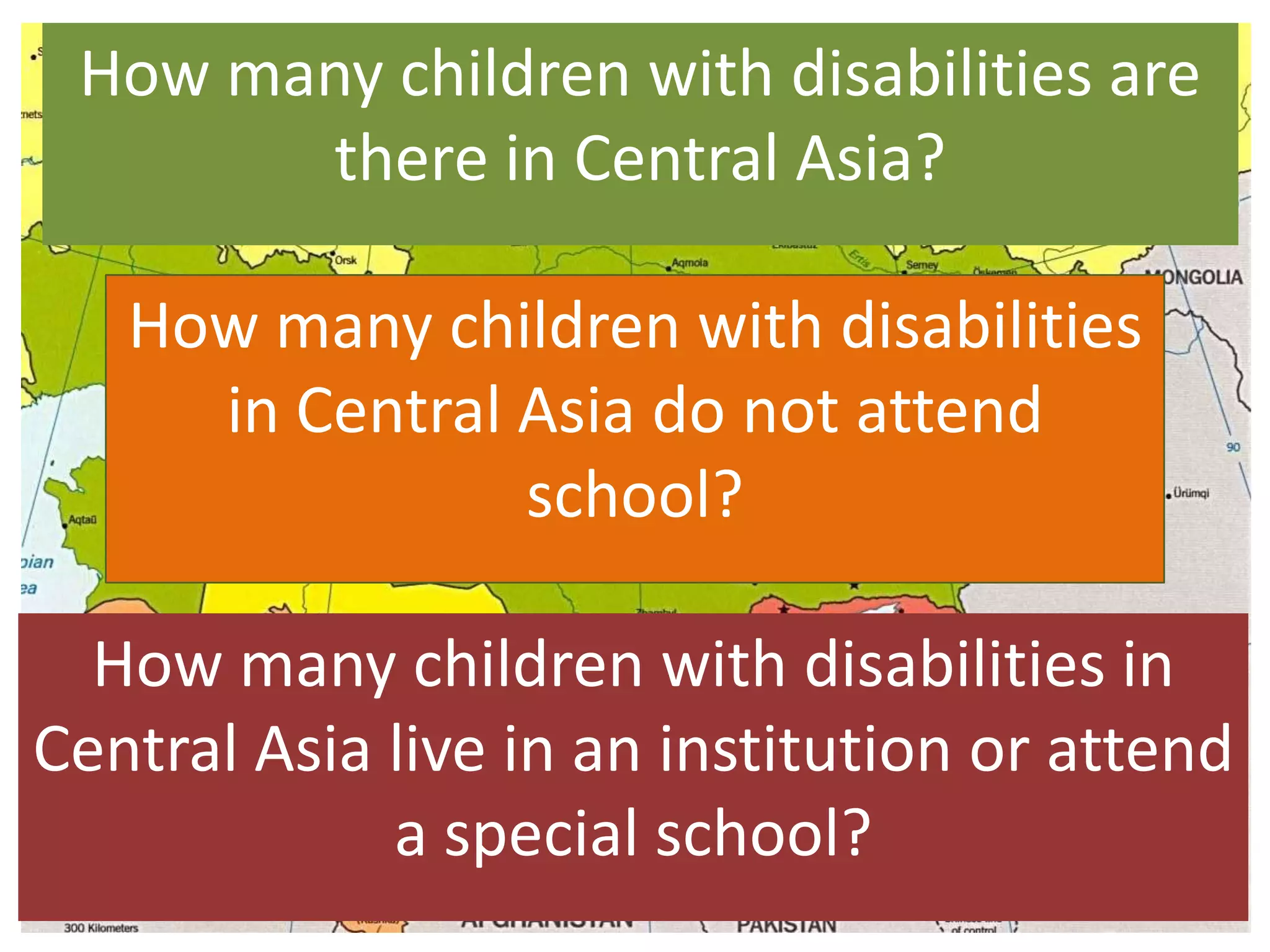
How many children with disabilities are
there in Central Asia?
How many children with disabilities
in Central Asia do not attend
school?
How many children with disabilities in
Central Asia live in an institution or attend
a special school?
ALL
CHILDREN, includi
ng children with
disabilities have
the right to
quality
education, provid
ed in an inclusive
The CRC and CRPD
make explicit the
obligation towards
ALL
CHILDREN, without
exception
UNICEF PROMOTES:
Access for EVERY child
Inclusive Education as the
main vehicle towards social
inclusion
Demonstrated good practices
COMMITMENTS
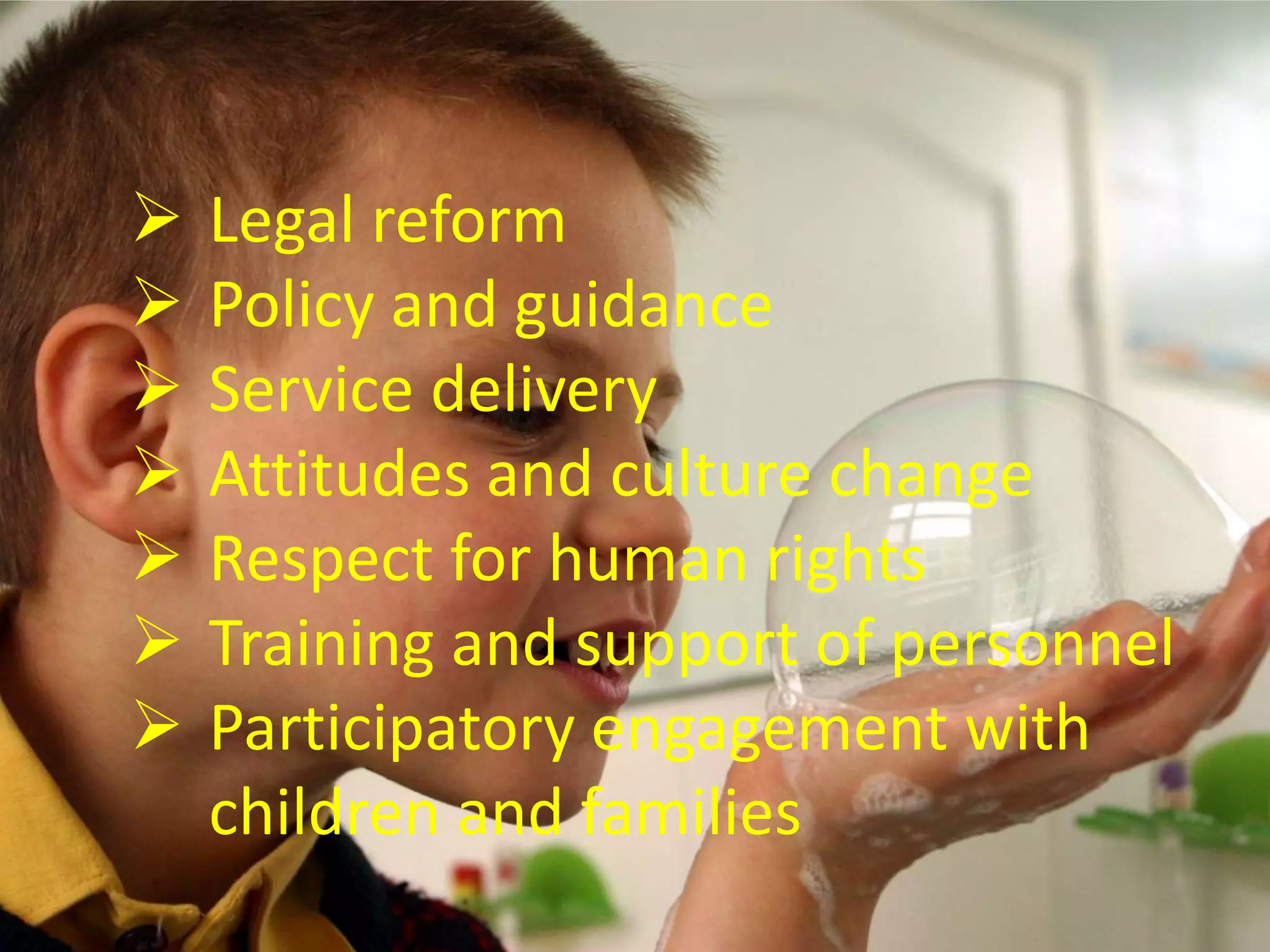
 Legal reform
 Policy and guidance
 Service delivery
 Attitudes and culture change
 Respect for human rights
 Training and support of personnel
 Participatory engagement with
children and families
STRUCTURES
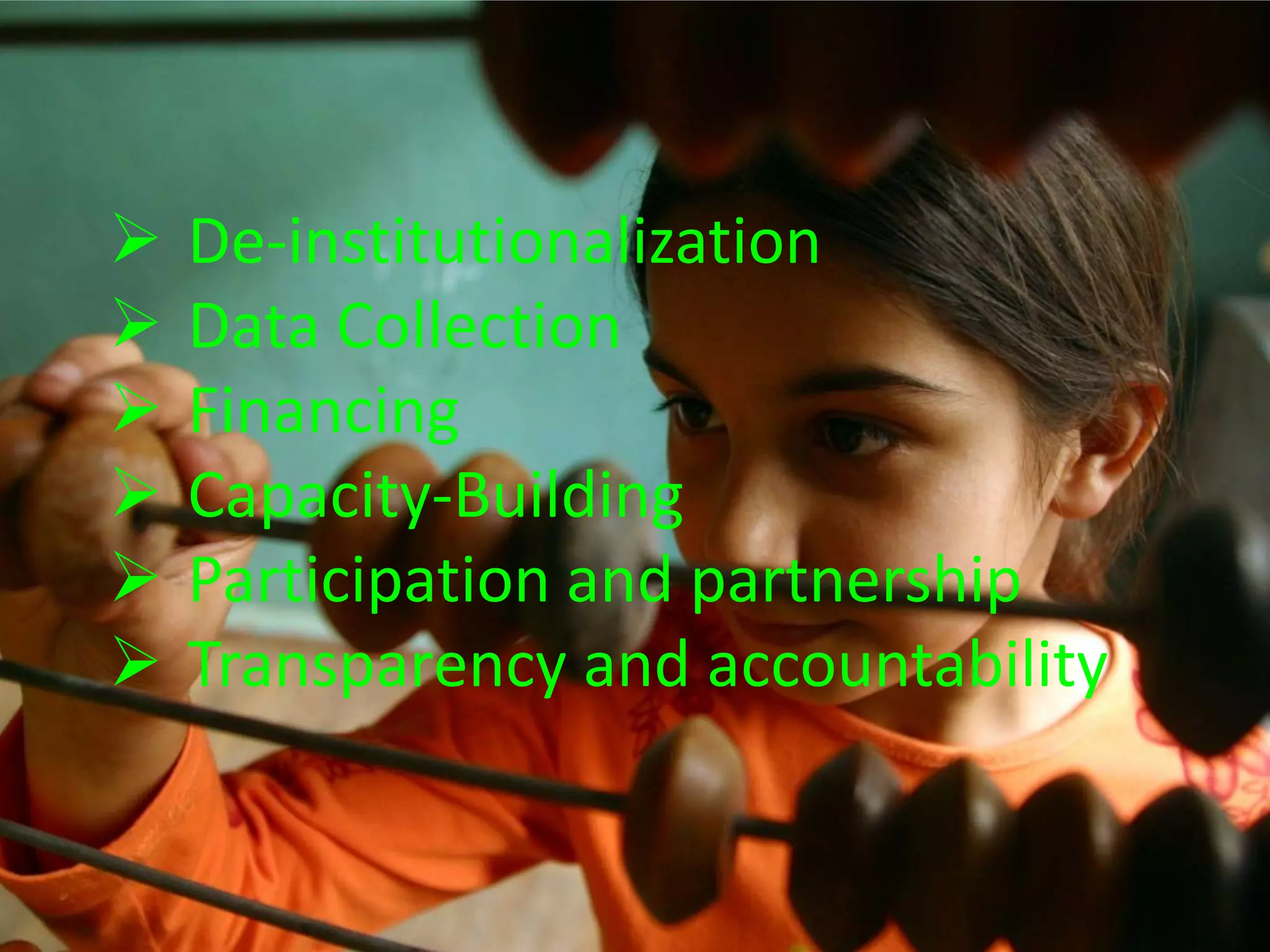
COMMITMENTS
 De-institutionalization
 Data Collection
 Financing
 Capacity-Building
 Participation and partnership
 Transparency and accountability
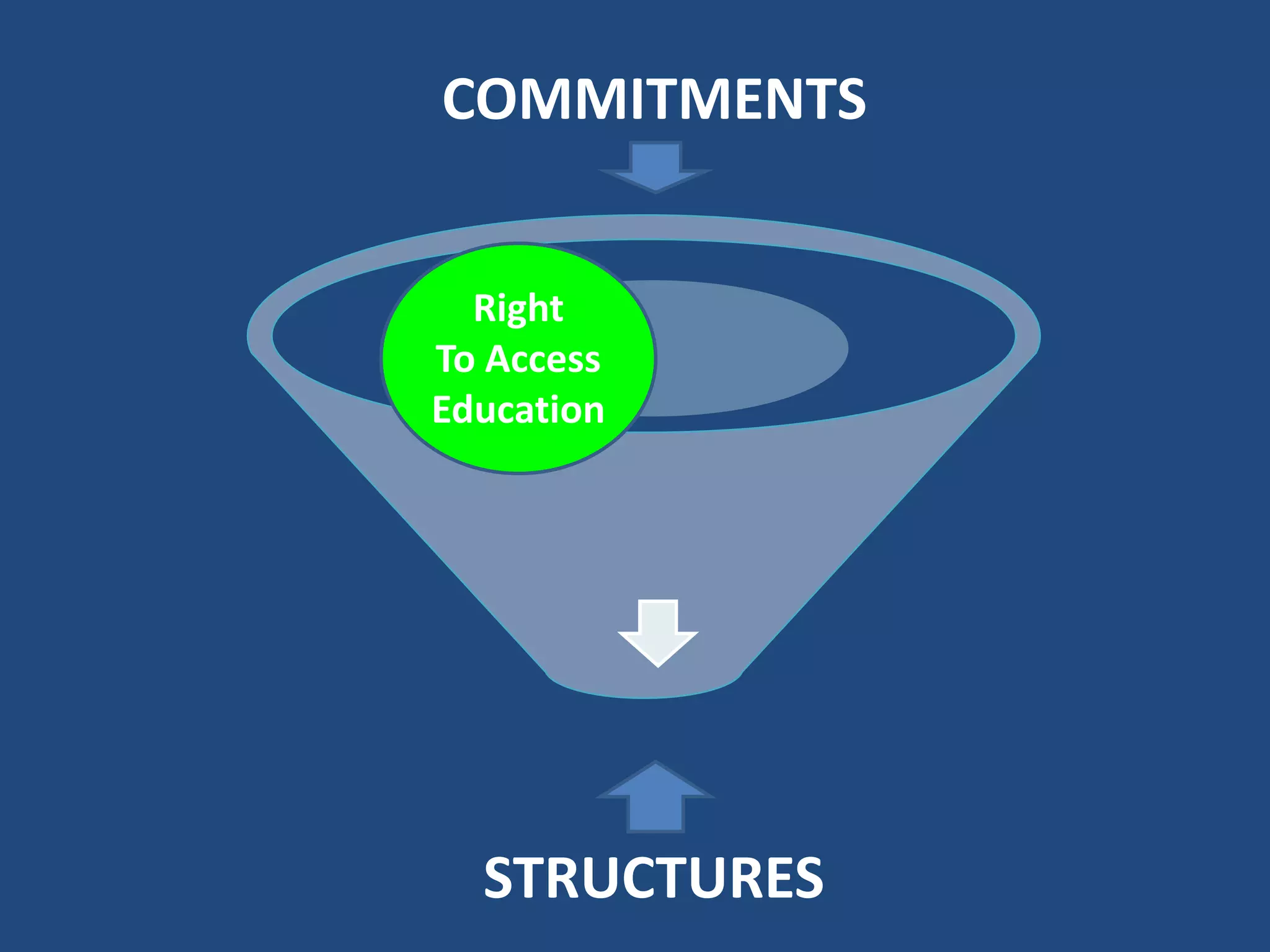
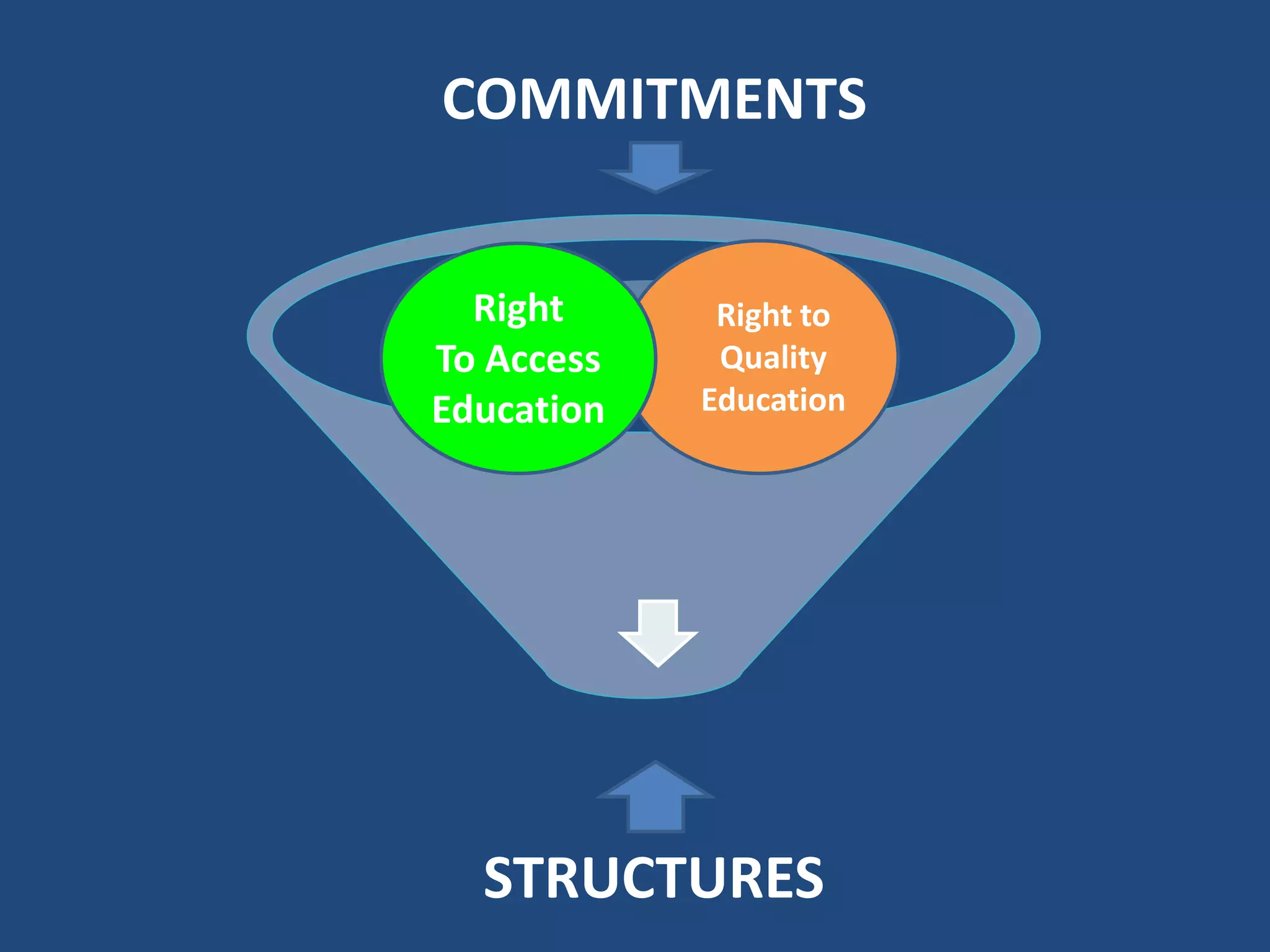
COMMITMENTS
STRUCTURES
Right
To Access
Education
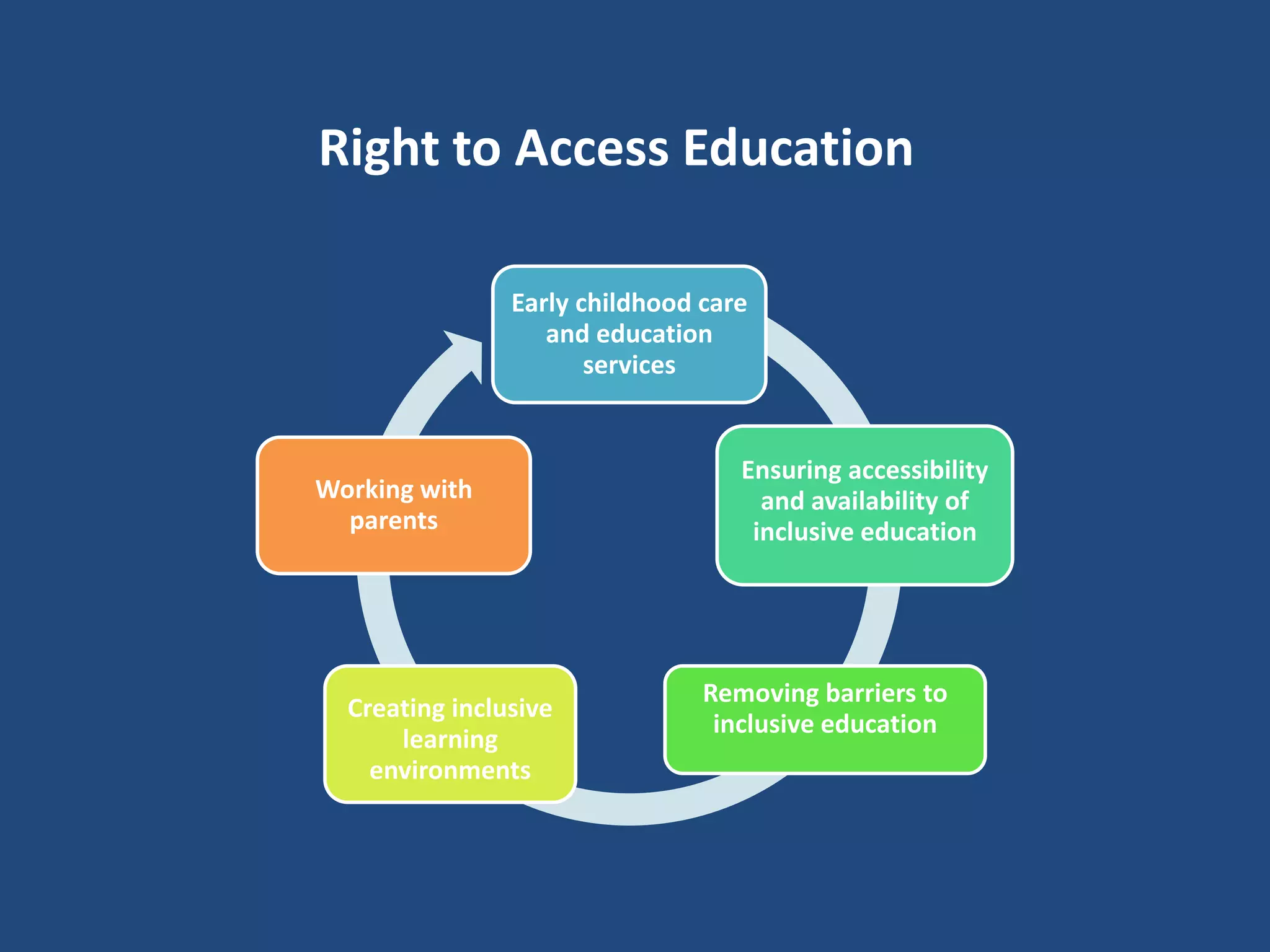
Right to Access Education
Early childhood care
and education
services
Ensuring accessibility
and availability of
inclusive education
Removing barriers to
inclusive education
Creating inclusive
learning
environments
Working with
parents
COMMITMENTS
STRUCTURES
Right to
Quality
Education
Right
To Access
Education
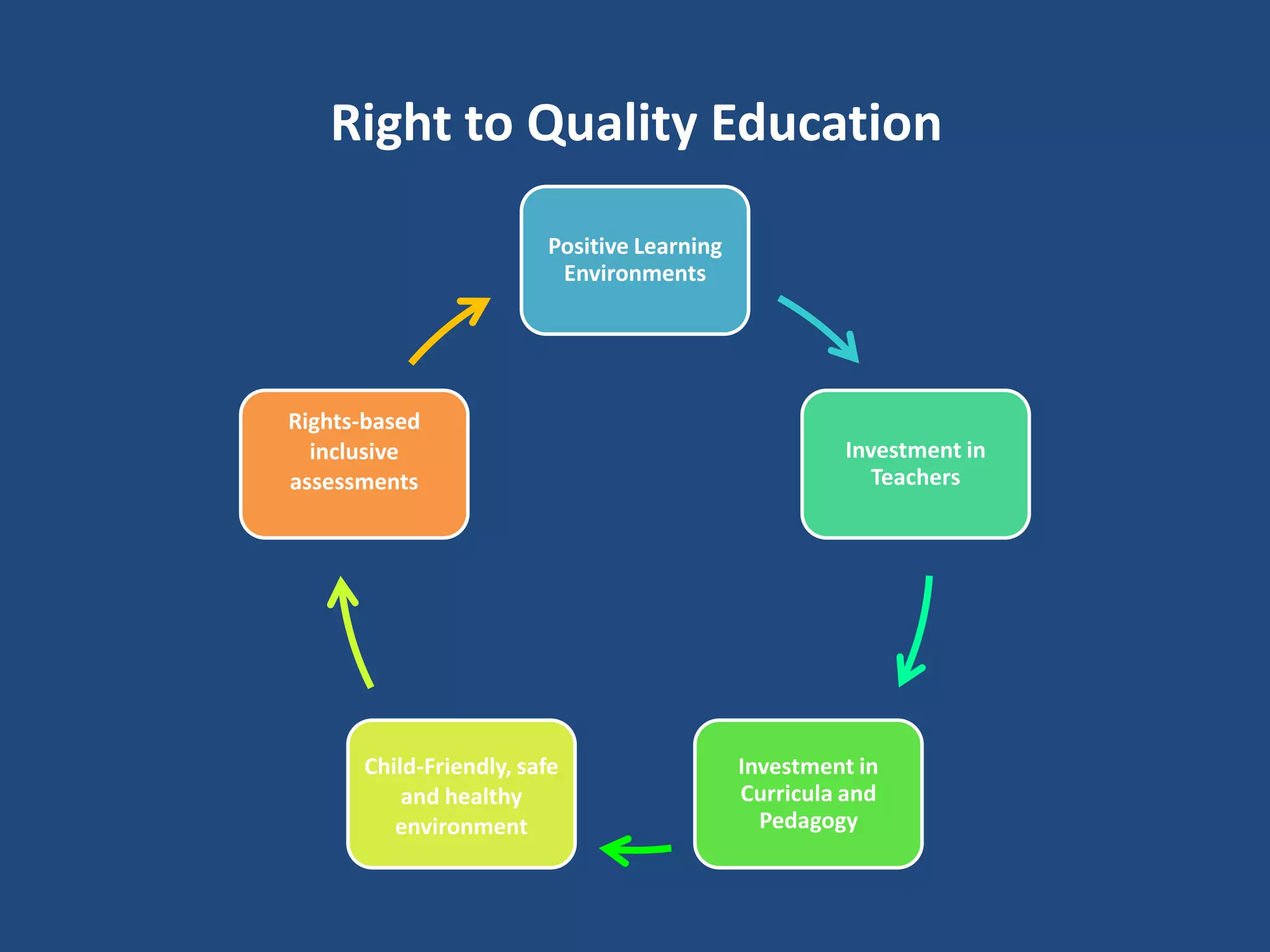
Right to Quality Education
Positive Learning
Environments
Investment in
Teachers
Investment in
Curricula and
Pedagogy
Child-Friendly, safe
and healthy
environment
Rights-based
inclusive
assessments
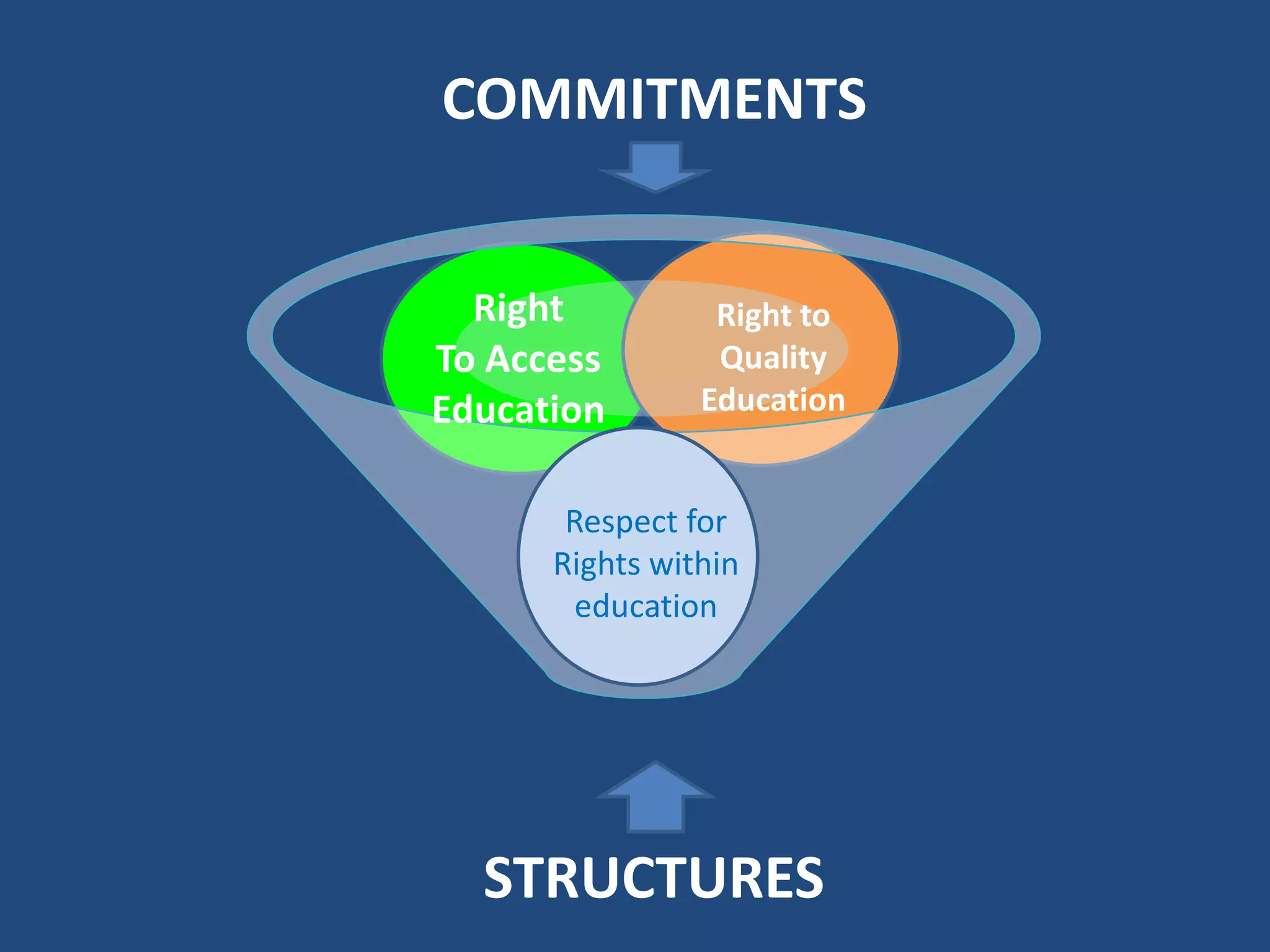
COMMITMENTS
STRUCTURES
Respect for
Rights within
education
Right
To Access
Education
Right to
Quality
Education
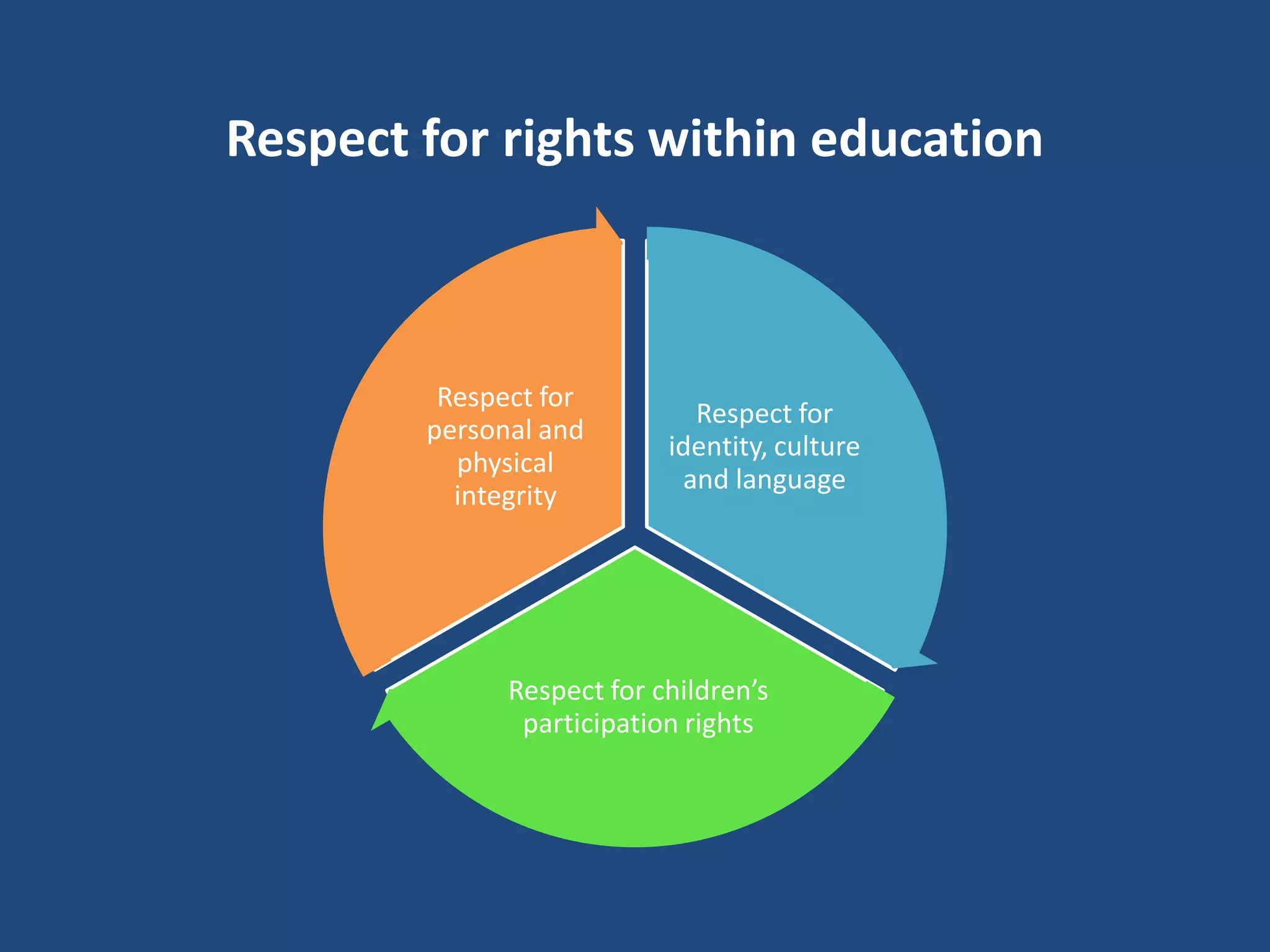
Respect for rights within education
Respect for
identity, culture
and language
Respect for children’s
participation rights
Respect for
personal and
physical
integrity
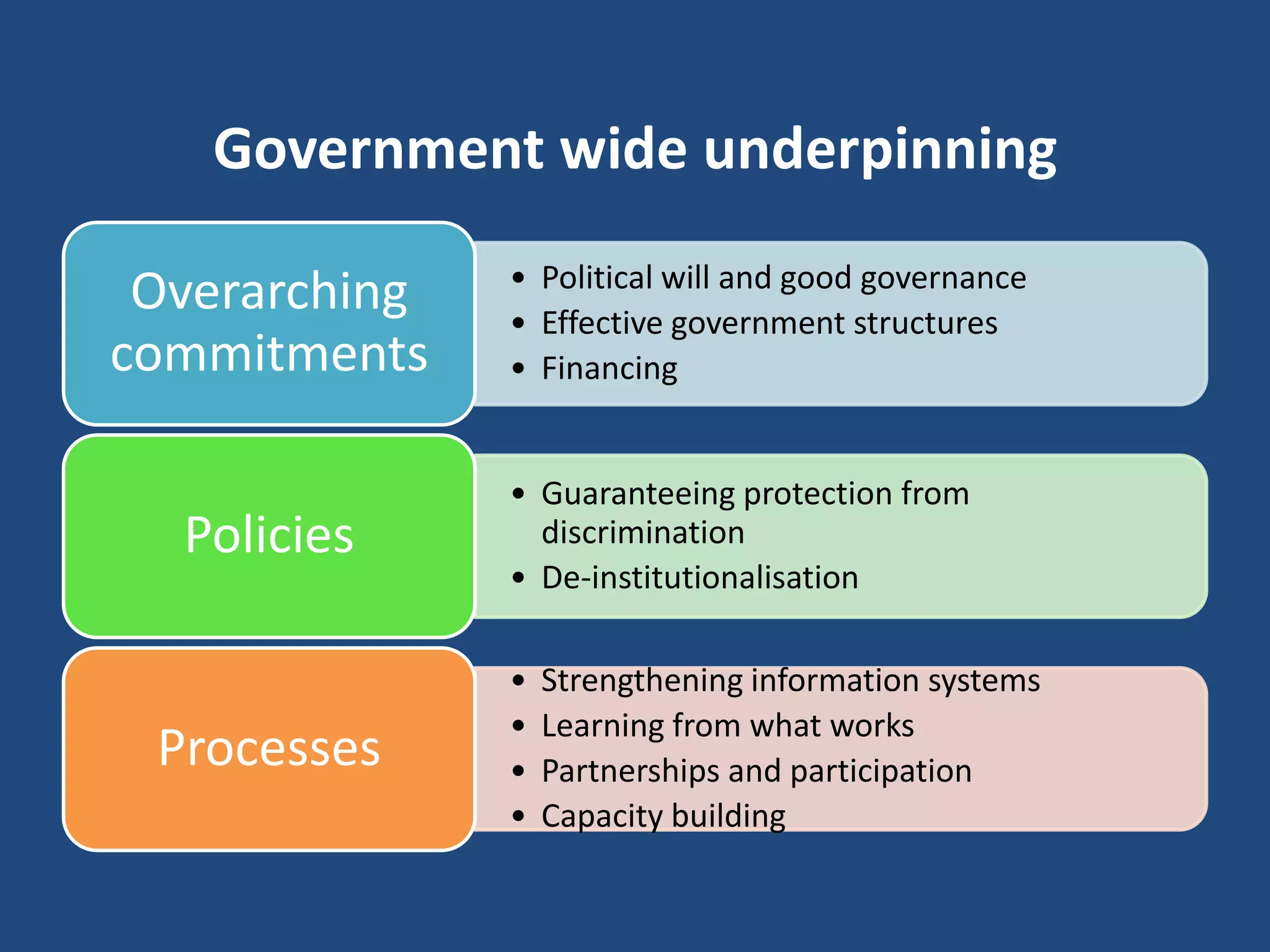
Government wide underpinning
• Political will and good governance
• Effective government structures
• Financing
Overarching
commitments
• Guaranteeing protection from
discrimination
• De-institutionalisation
Policies
• Strengthening information systems
• Learning from what works
• Partnerships and participation
• Capacity building
Processes
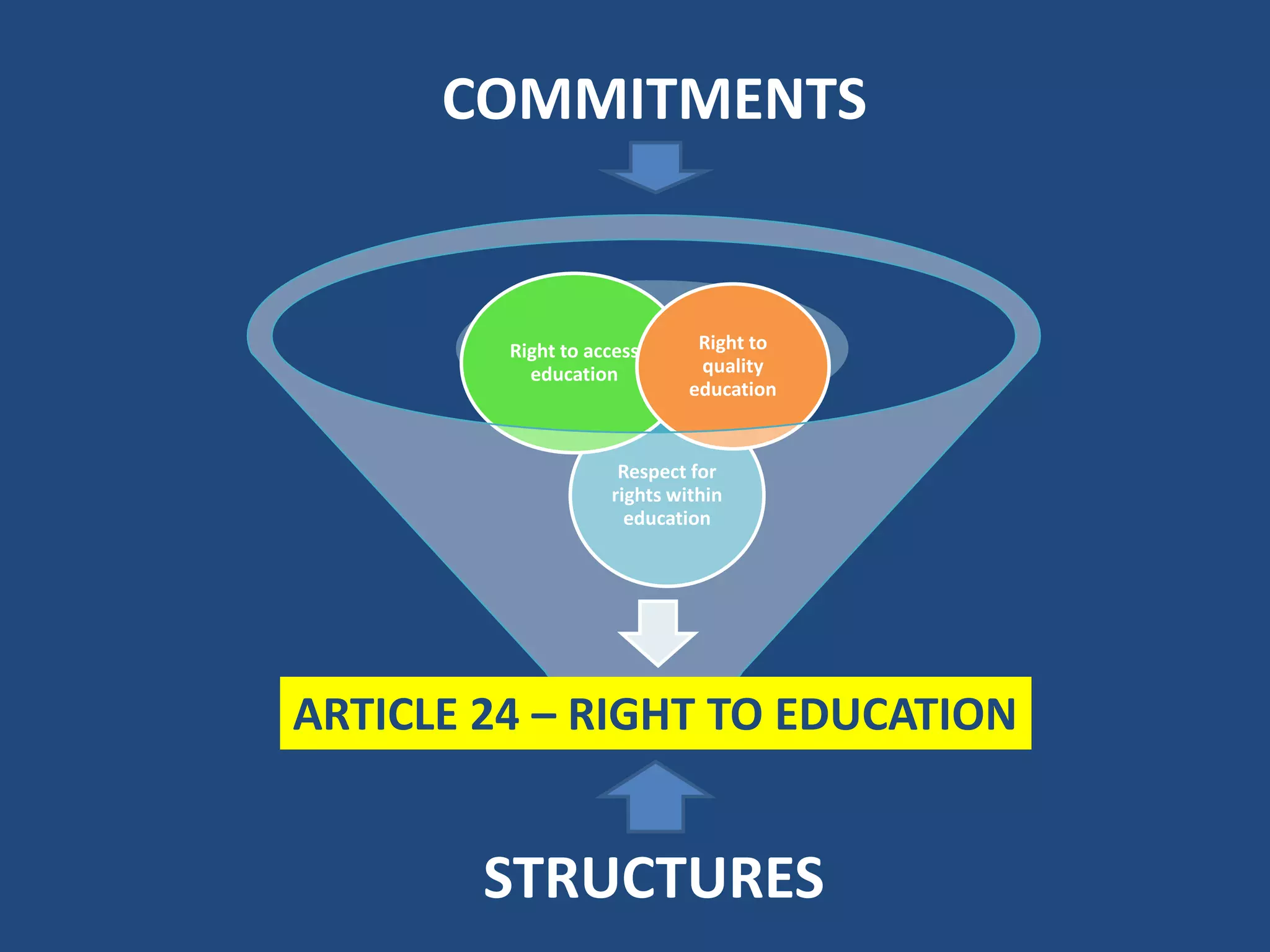
Respect for
rights within
education
Right to access
education
Right to
quality
education
COMMITMENTS
STRUCTURES
ARTICLE 24 – RIGHT TO EDUCATION
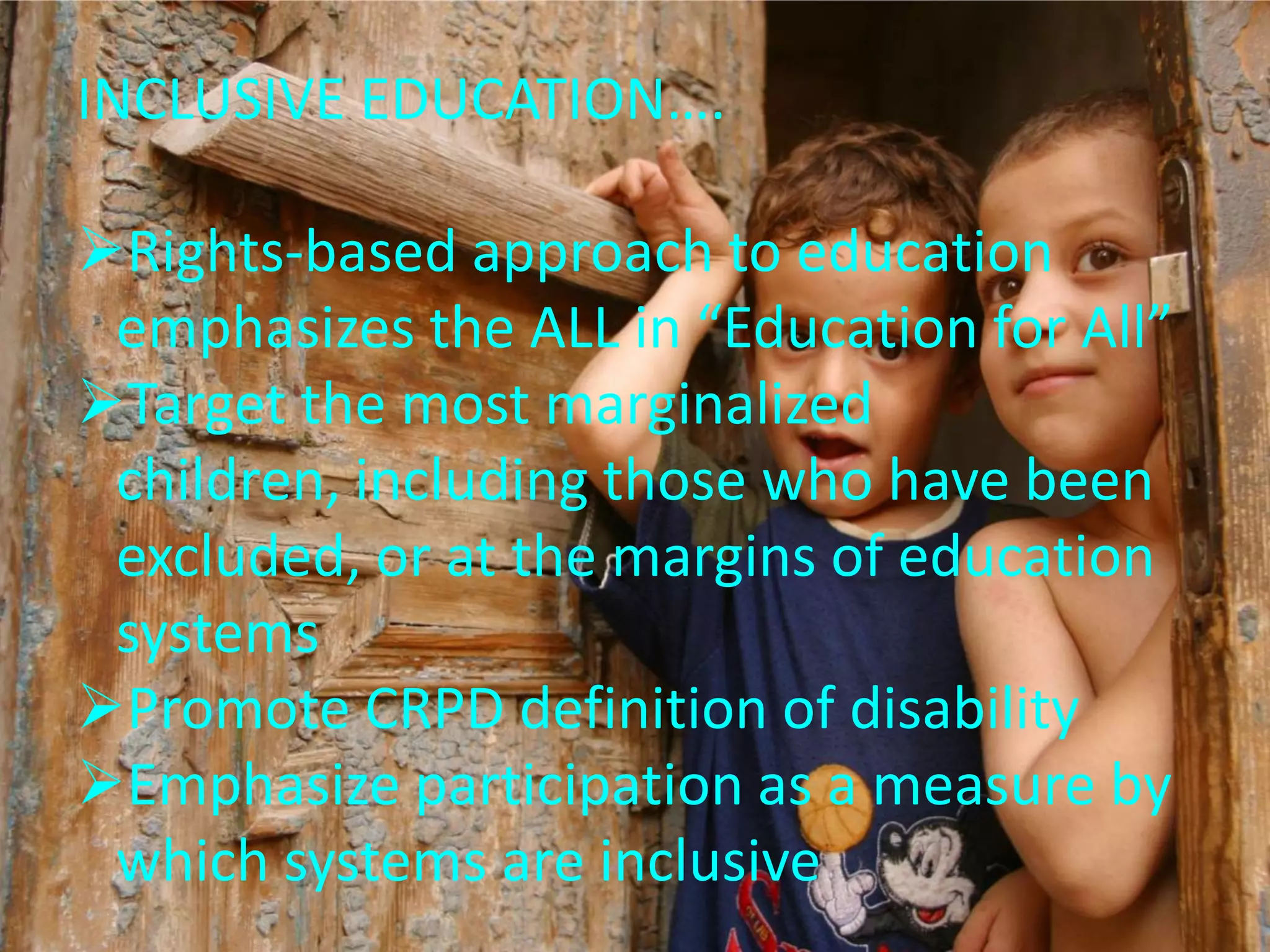
INCLUSIVE EDUCATION….
Rights-based approach to education
emphasizes the ALL in “Education for All”
Target the most marginalized
children, including those who have been
excluded, or at the margins of education
systems
Promote CRPD definition of disability
Emphasize participation as a measure by
which systems are inclusive
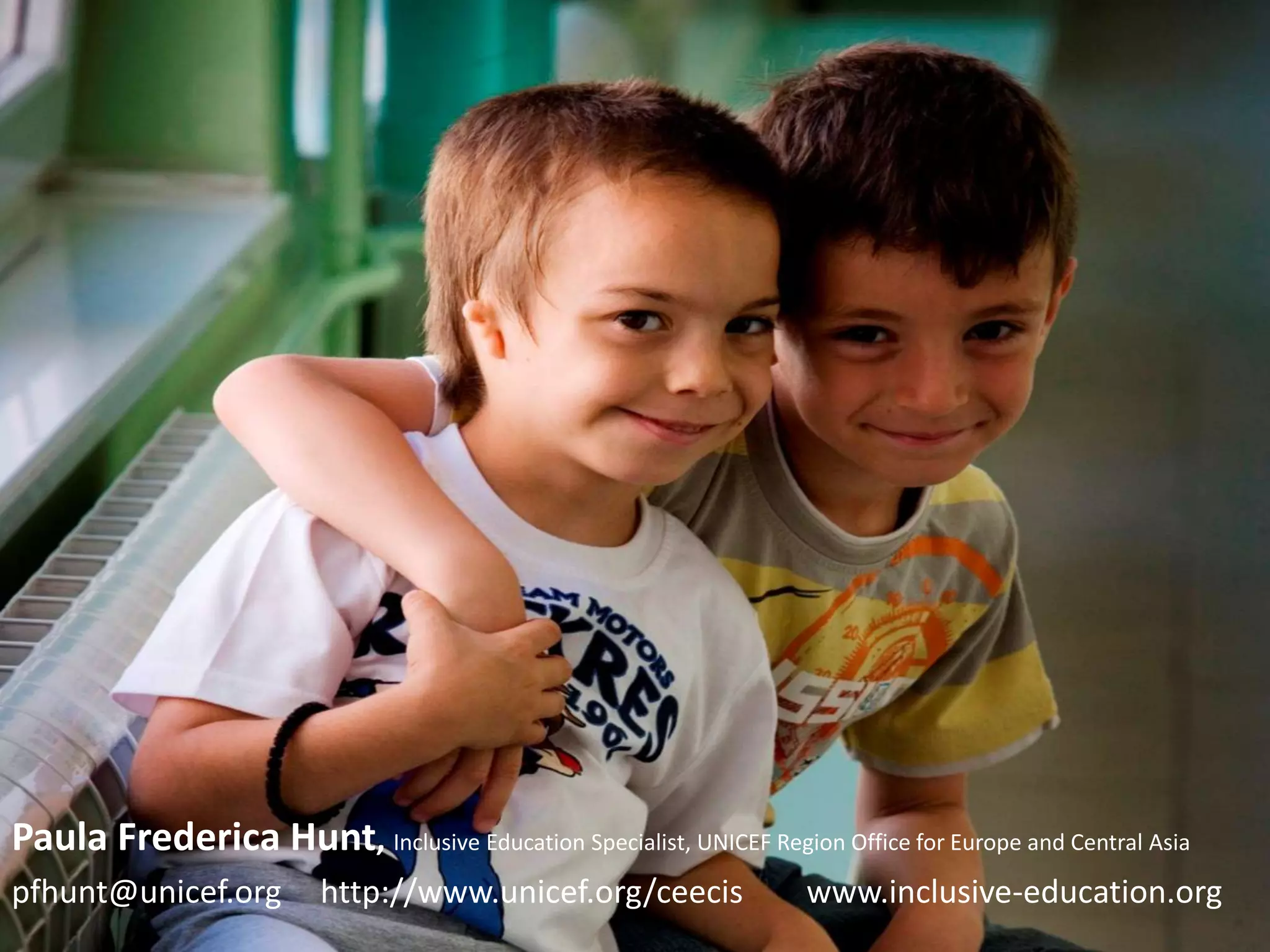
Paula Frederica Hunt, Inclusive Education Specialist, UNICEF Region Office for Europe and Central Asia
pfhunt@unicef.org http://www.unicef.org/ceecis www.inclusive-education.org

Presentation by Ms. Paula Hunt, Specialist, Inclusive Education, UNICEF Regional Office for CEE/CIS

  • 1.
    Realizing Article 24: Therights of children with disabilities to be included in quality learning 4th Central Asian Republics Forum Dushanbe, 2013
  • 2.
    How many childrenwith disabilities are there in Central Asia? How many children with disabilities in Central Asia do not attend school? How many children with disabilities in Central Asia live in an institution or attend a special school?
  • 3.
    ALL CHILDREN, includi ng childrenwith disabilities have the right to quality education, provid ed in an inclusive The CRC and CRPD make explicit the obligation towards ALL CHILDREN, without exception
  • 4.
    UNICEF PROMOTES: Access forEVERY child Inclusive Education as the main vehicle towards social inclusion Demonstrated good practices
  • 5.
  • 6.
     Legal reform Policy and guidance  Service delivery  Attitudes and culture change  Respect for human rights  Training and support of personnel  Participatory engagement with children and families
  • 7.
  • 8.
     De-institutionalization  DataCollection  Financing  Capacity-Building  Participation and partnership  Transparency and accountability
  • 9.
  • 10.
    Right to AccessEducation Early childhood care and education services Ensuring accessibility and availability of inclusive education Removing barriers to inclusive education Creating inclusive learning environments Working with parents
  • 11.
  • 12.
    Right to QualityEducation Positive Learning Environments Investment in Teachers Investment in Curricula and Pedagogy Child-Friendly, safe and healthy environment Rights-based inclusive assessments
  • 13.
  • 14.
    Respect for rightswithin education Respect for identity, culture and language Respect for children’s participation rights Respect for personal and physical integrity
  • 15.
    Government wide underpinning •Political will and good governance • Effective government structures • Financing Overarching commitments • Guaranteeing protection from discrimination • De-institutionalisation Policies • Strengthening information systems • Learning from what works • Partnerships and participation • Capacity building Processes
  • 16.
    Respect for rights within education Rightto access education Right to quality education COMMITMENTS STRUCTURES ARTICLE 24 – RIGHT TO EDUCATION
  • 17.
    INCLUSIVE EDUCATION…. Rights-based approachto education emphasizes the ALL in “Education for All” Target the most marginalized children, including those who have been excluded, or at the margins of education systems Promote CRPD definition of disability Emphasize participation as a measure by which systems are inclusive
  • 18.
    Paula Frederica Hunt,Inclusive Education Specialist, UNICEF Region Office for Europe and Central Asia pfhunt@unicef.org http://www.unicef.org/ceecis www.inclusive-education.org