• Therigid lithosphericslabs or rigid and solid
crustal layers are technicallycalledPLATES
• Thestudy ofwholemechanism of evolution,
nature, and motions of plates, deformation
within plates and interactions ofplate margins
with each other is collectively called asPLATE
TECTONICS
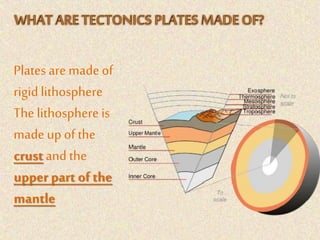
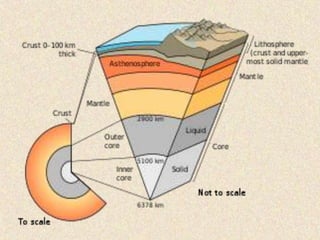
Plates are made of
rigidlithosphere
The lithosphere is
made up of the
crust and the
upper part of the
mantle
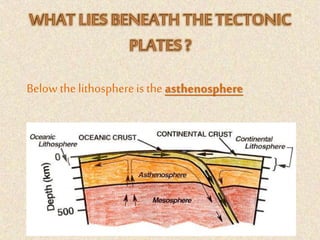
Below the lithosphereis the asthenosphere
• The term PLATE was firstused by Canadiangeophysicist
J. TUZO WILSON in 1965
• MACKENZIE and PARKER discussedin detailthe
mechanism of plate motionson the basis of Euler’s
geometricaltheoremin 1967
• They postulateda ‘pavingstonehypothesis’
• W.J. MORGAN andLE PICHON elaboratedthe various
aspects of plate tectonicsin 1968
• Earth’s lithosphere is broken intodistinct plates which are
floating over asthenosphere
• Lithosphere= Crust + Top mantle thickness
• Oceanic crusts- 5-100km;continental areas- 200km
• Oceanic plates- Simatic crusts (thin); continental crusts-
Sialic crusts (thick)
• Lithospheric plates- Minor, Major, Continental, Oceanic,
combination of continental and oceanic plates
• Movement of plates= formation of various landforms
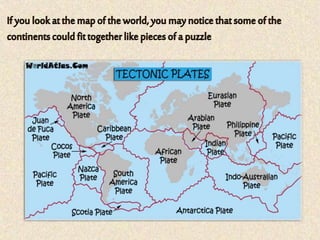
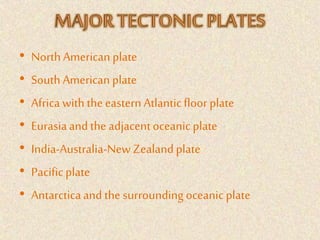
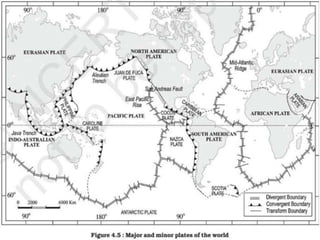
• North American plate
• South American plate
• Africa with the eastern Atlanticfloor plate
• Eurasiaand the adjacentoceanic plate
• India-Australia-NewZealandplate
• Pacificplate
• Antarcticaand the surrounding oceanic plate
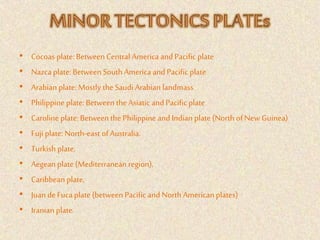
• Cocoas plate: BetweenCentral America and Pacific plate
• Nazcaplate: Between South America and Pacific plate
• Arabian plate: Mostly the Saudi Arabian landmass
• Philippine plate: Between the Asiatic and Pacific plate
• Caroline plate: Between the Philippine and Indian plate (North ofNew Guinea)
• Fuji plate: North-east of Australia.
• Turkish plate,
• Aegean plate (Mediterranean region),
• Caribbean plate,
• Juan de Fuca plate (betweenPacific and North American plates)
• Iranian plate.
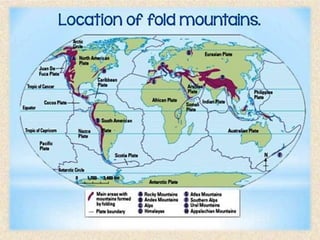
• Major geomorphological features such as fold
and block mountains, mid-oceanic ridges,
trenches, volcanism, earthquakes etc. are a
direct consequence of interaction between
various lithospheric plates.
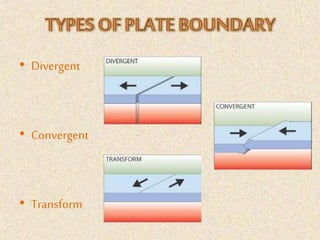
• There are three ways in whichthe plates
interact with each other.
• Divergent
• Convergent
• Transform
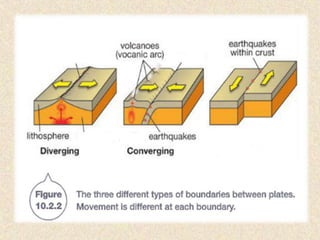
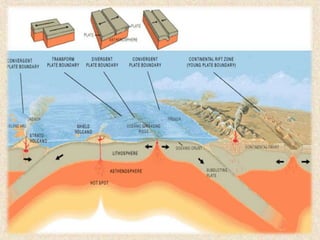
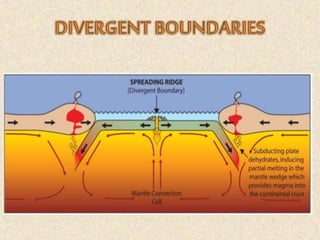
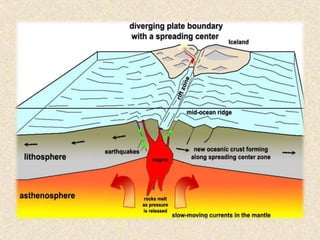
• The platesdiverge [move away from each other].
• Mid-oceanicridgesare formed due to this kind of
interaction.
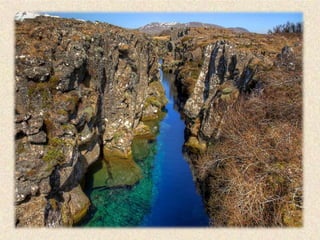
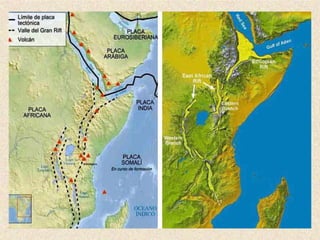
• On continents,East African Rift Valley is the most
importantgeomorphologicalfeature formed due to
divergence of Africanand Somaliplates.
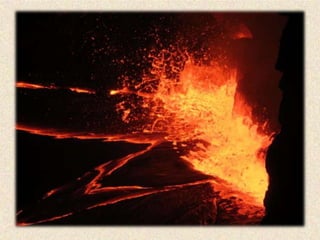
• Suchedges are sites ofearth crust formation(hence
constructive) andvolcanicearth forms are common
alongsuch edges.
• Earthquakes(shallowfocus)are common along
divergent edges.
• The siteswhere the platesmove awayfrom each
other are calledspreadingsites.
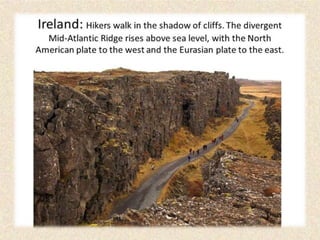
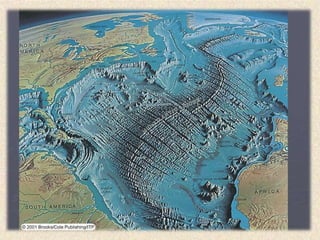
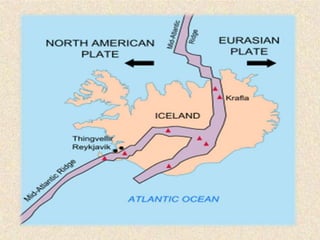
• The best-known exampleof divergent boundariesis
the Mid-Atlantic Ridge. At the mid-oceanic ridge in
Atlanticocean, the American Plate(s)is/are separated
from the Eurasianand AfricanPlates.
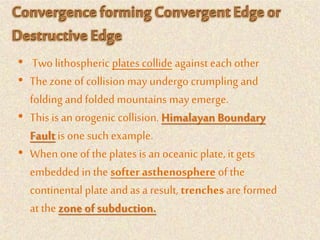
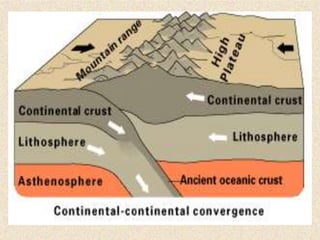
• Twolithospheric plates collide against each other
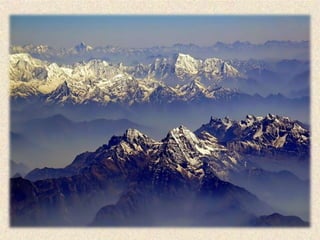
• The zone of collision may undergo crumpling and
folding andfolded mountains may emerge.
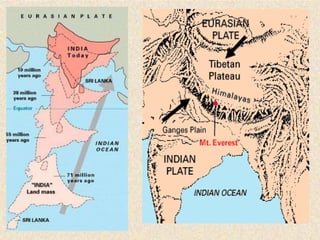
• This is an orogenic collision. Himalayan Boundary
Fault is one such example.
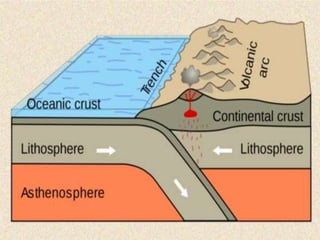
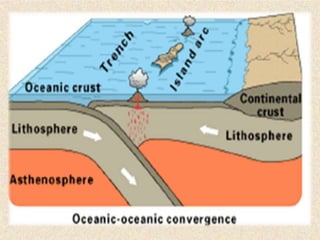
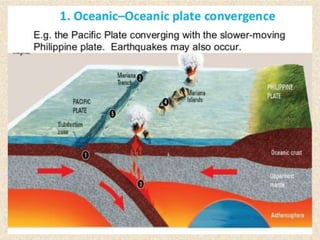
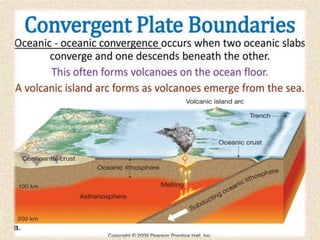
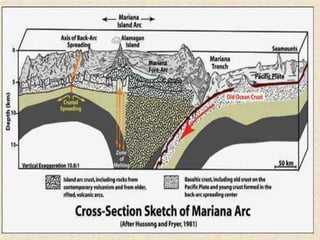
• When one of the plates is an oceanic plate, it gets
embedded in the softer asthenosphere of the
continental plate andas a result, trenches are formed
at the zone of subduction.
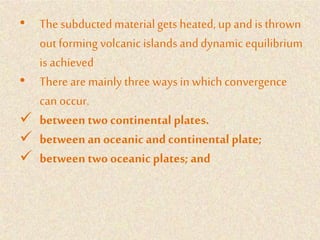
• The subductedmaterialgets heated, up andis thrown
outforming volcanicislandsanddynamic equilibrium
is achieved
• There are mainly three waysin which convergence
can occur.
 between two continental plates.
 betweenan oceanicandcontinental plate;
 between two oceanicplates; and
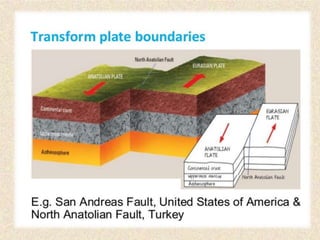
• Formed when two plates move past each other.
• In thiskindof interaction,two plates grind againsteach
other andthere isno creationor destructionof landform
butonly deformationof the existinglandform.[Crust is
neither produced nor destroyedas the platesslide
horizontallypast each other].
• In oceans, transform faultsare the planes of separation
generally perpendicularto the mid-oceanicridges.
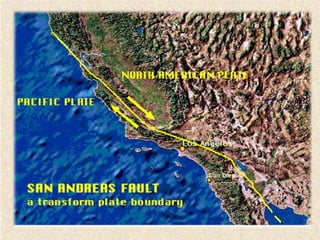
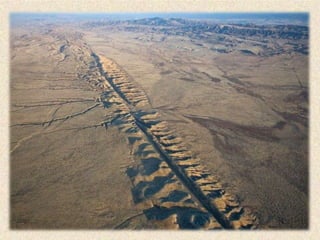
• San Andreas Fault alongthe western coastof USA is
the best examplefor a trans current edge on continents.
Plate tectonics ma
Plate tectonics ma
Plate tectonics ma
Plate tectonics ma

Plate tectonics ma

  • 2.
    • Therigid lithosphericslabsor rigid and solid crustal layers are technicallycalledPLATES • Thestudy ofwholemechanism of evolution, nature, and motions of plates, deformation within plates and interactions ofplate margins with each other is collectively called asPLATE TECTONICS
  • 3.
    Plates are madeof rigidlithosphere The lithosphere is made up of the crust and the upper part of the mantle
  • 4.
    Below the lithosphereisthe asthenosphere
  • 6.
    • The termPLATE was firstused by Canadiangeophysicist J. TUZO WILSON in 1965 • MACKENZIE and PARKER discussedin detailthe mechanism of plate motionson the basis of Euler’s geometricaltheoremin 1967 • They postulateda ‘pavingstonehypothesis’ • W.J. MORGAN andLE PICHON elaboratedthe various aspects of plate tectonicsin 1968
  • 8.
    • Earth’s lithosphereis broken intodistinct plates which are floating over asthenosphere • Lithosphere= Crust + Top mantle thickness • Oceanic crusts- 5-100km;continental areas- 200km • Oceanic plates- Simatic crusts (thin); continental crusts- Sialic crusts (thick) • Lithospheric plates- Minor, Major, Continental, Oceanic, combination of continental and oceanic plates • Movement of plates= formation of various landforms
  • 9.
    • North Americanplate • South American plate • Africa with the eastern Atlanticfloor plate • Eurasiaand the adjacentoceanic plate • India-Australia-NewZealandplate • Pacificplate • Antarcticaand the surrounding oceanic plate
  • 10.
    • Cocoas plate:BetweenCentral America and Pacific plate • Nazcaplate: Between South America and Pacific plate • Arabian plate: Mostly the Saudi Arabian landmass • Philippine plate: Between the Asiatic and Pacific plate • Caroline plate: Between the Philippine and Indian plate (North ofNew Guinea) • Fuji plate: North-east of Australia. • Turkish plate, • Aegean plate (Mediterranean region), • Caribbean plate, • Juan de Fuca plate (betweenPacific and North American plates) • Iranian plate.
  • 13.
    • Major geomorphologicalfeatures such as fold and block mountains, mid-oceanic ridges, trenches, volcanism, earthquakes etc. are a direct consequence of interaction between various lithospheric plates. • There are three ways in whichthe plates interact with each other.
  • 14.
  • 17.
    • The platesdiverge[move away from each other]. • Mid-oceanicridgesare formed due to this kind of interaction. • On continents,East African Rift Valley is the most importantgeomorphologicalfeature formed due to divergence of Africanand Somaliplates.
  • 18.
    • Suchedges aresites ofearth crust formation(hence constructive) andvolcanicearth forms are common alongsuch edges. • Earthquakes(shallowfocus)are common along divergent edges. • The siteswhere the platesmove awayfrom each other are calledspreadingsites. • The best-known exampleof divergent boundariesis the Mid-Atlantic Ridge. At the mid-oceanic ridge in Atlanticocean, the American Plate(s)is/are separated from the Eurasianand AfricanPlates.
  • 28.
    • Twolithospheric platescollide against each other • The zone of collision may undergo crumpling and folding andfolded mountains may emerge. • This is an orogenic collision. Himalayan Boundary Fault is one such example. • When one of the plates is an oceanic plate, it gets embedded in the softer asthenosphere of the continental plate andas a result, trenches are formed at the zone of subduction.
  • 29.
    • The subductedmaterialgetsheated, up andis thrown outforming volcanicislandsanddynamic equilibrium is achieved • There are mainly three waysin which convergence can occur.  between two continental plates.  betweenan oceanicandcontinental plate;  between two oceanicplates; and
  • 43.
    • Formed whentwo plates move past each other. • In thiskindof interaction,two plates grind againsteach other andthere isno creationor destructionof landform butonly deformationof the existinglandform.[Crust is neither produced nor destroyedas the platesslide horizontallypast each other].
  • 44.
    • In oceans,transform faultsare the planes of separation generally perpendicularto the mid-oceanicridges. • San Andreas Fault alongthe western coastof USA is the best examplefor a trans current edge on continents.