WHAT IS
THE PLASMID ?
Abdulmuez Abdumalek
WHAT IS THE PLASMID ?
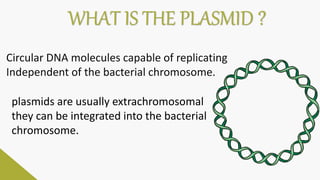
Circular DNA molecules capable of replicating
Independent of the bacterial chromosome.
plasmids are usually extrachromosomal
they can be integrated into the bacterial
chromosome.
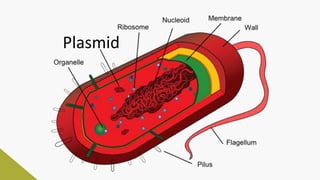
Plasmid
Clinical importance
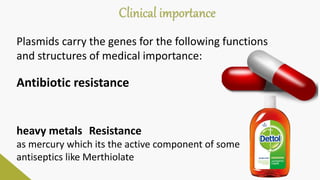
heavy metals Resistance
as mercury which its the active component of some
antiseptics like Merthiolate
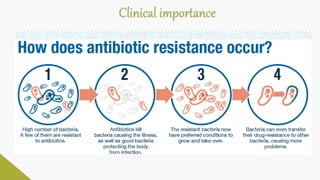
Plasmids carry the genes for the following functions
and structures of medical importance:
Antibiotic resistance
Clinical importance
Clinical importance
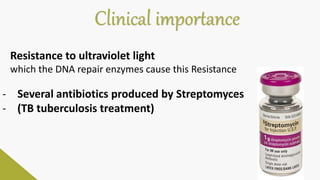
Resistance to ultraviolet light
which the DNA repair enzymes cause this Resistance
- Several antibiotics produced by Streptomyces
- (TB tuberculosis treatment)
Clinical importance
-Bacteriocins
useful in treating infections caused by antibiotic-resistant
bacteria
-Exotoxins , including several enterotoxins.
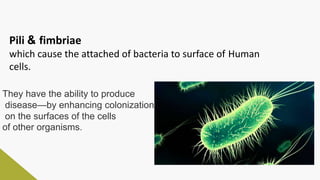
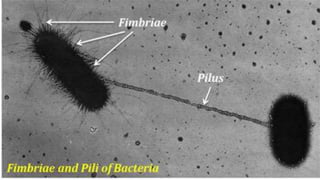
Pili & fimbriae
which cause the attached of bacteria to surface of Human
cells.
They have the ability to produce
disease—by enhancing colonization
on the surfaces of the cells
of other organisms.
Clinical importance
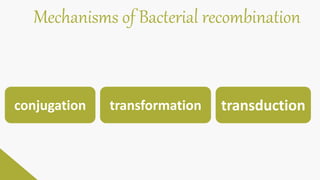
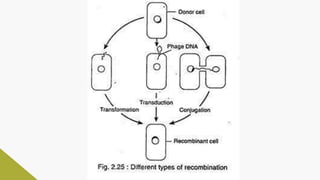
Mechanisms of Bacterial recombination
conjugation transformation transduction
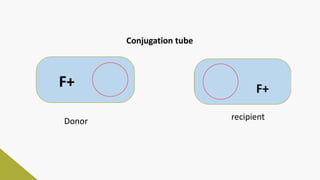
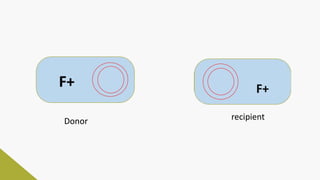
conjugation
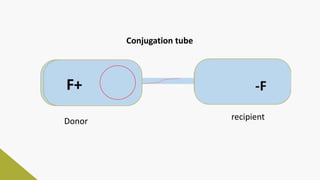
the exchange of genetic material takes place through
a conjugation tube between the two cells of bacteria
There are two mating types of bacteria,
1- male or donor cell ( +F )
2- female or recipient cell (-F )
Donor recipient
Conjugation tube
Donor recipient
Conjugation tube
F+
Donor recipient
F+
Transformation
‫ا‬
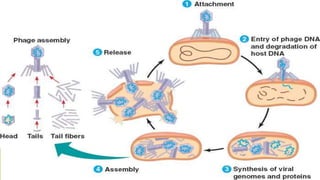
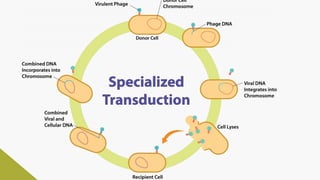
-Transfer of Segment DNA From one Bacteria to
another by use Bacteriophage
-Two Types : generalized and specialized
Transformation
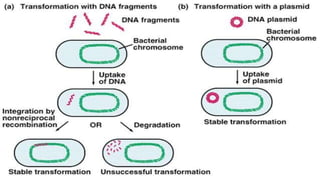
Direct uptake of donor DNA by recipient cells depends on their
competence for transformation. Natural occurrence of this
property is unusual among bacteria, and some of these strains
are transformable only in the presence of competence factors,
produced only at a specific point in the growth cycle. Other
strains readily undergo natural transformation, and these
organisms offer promise for genetic engineering because of the
ease with which they incorporate modified DNA into their
chromosomes. Naturally competent transformable bacteria are
found in several genera and include Bacillus subtilis,
Haemophilus influenzae, Neisseria gonorrhoeae, and
Streptococcus pneumoniae. DNA fragments containing genes
from such organisms can be readily identified on the basis of
their ability to transform mutant cells to the wild type. These
techniques represent a substantial advance over the laborious
procedures used by Avery and his associates to demonstrate
that the pneumococcus transforming principle was DNA.
Natural transformation is an active process demanding specific
Reference’s
Review of Medical Microbiology and immunology 11th edition
https://microbeonline.com/bacterial-pili-fimbriae-characteristics-types
Jawetz, Melnick, & Adelberg's Medical Microbiology, 24th Edition

Plasmid and genetic recombination

  • 1.
    WHAT IS THE PLASMID? Abdulmuez Abdumalek
  • 2.
    WHAT IS THEPLASMID ? Circular DNA molecules capable of replicating Independent of the bacterial chromosome. plasmids are usually extrachromosomal they can be integrated into the bacterial chromosome.
  • 3.
  • 4.
    Clinical importance heavy metalsResistance as mercury which its the active component of some antiseptics like Merthiolate Plasmids carry the genes for the following functions and structures of medical importance: Antibiotic resistance
  • 5.
  • 6.
    Clinical importance Resistance toultraviolet light which the DNA repair enzymes cause this Resistance - Several antibiotics produced by Streptomyces - (TB tuberculosis treatment)
  • 7.
    Clinical importance -Bacteriocins useful intreating infections caused by antibiotic-resistant bacteria -Exotoxins , including several enterotoxins.
  • 8.
    Pili & fimbriae whichcause the attached of bacteria to surface of Human cells. They have the ability to produce disease—by enhancing colonization on the surfaces of the cells of other organisms.
  • 9.
  • 10.
    Mechanisms of Bacterialrecombination conjugation transformation transduction
  • 11.
    conjugation the exchange ofgenetic material takes place through a conjugation tube between the two cells of bacteria There are two mating types of bacteria, 1- male or donor cell ( +F ) 2- female or recipient cell (-F )
  • 12.
  • 13.
  • 14.
  • 15.
    Transformation ‫ا‬ -Transfer of SegmentDNA From one Bacteria to another by use Bacteriophage -Two Types : generalized and specialized
  • 18.
    Transformation Direct uptake ofdonor DNA by recipient cells depends on their competence for transformation. Natural occurrence of this property is unusual among bacteria, and some of these strains are transformable only in the presence of competence factors, produced only at a specific point in the growth cycle. Other strains readily undergo natural transformation, and these organisms offer promise for genetic engineering because of the ease with which they incorporate modified DNA into their chromosomes. Naturally competent transformable bacteria are found in several genera and include Bacillus subtilis, Haemophilus influenzae, Neisseria gonorrhoeae, and Streptococcus pneumoniae. DNA fragments containing genes from such organisms can be readily identified on the basis of their ability to transform mutant cells to the wild type. These techniques represent a substantial advance over the laborious procedures used by Avery and his associates to demonstrate that the pneumococcus transforming principle was DNA. Natural transformation is an active process demanding specific
  • 20.
    Reference’s Review of MedicalMicrobiology and immunology 11th edition https://microbeonline.com/bacterial-pili-fimbriae-characteristics-types Jawetz, Melnick, & Adelberg's Medical Microbiology, 24th Edition