Asian University For Women
BIOL/ENVS 3003: ECOLOGY (Lab)
Fall 2022
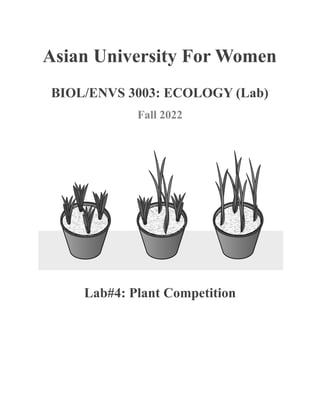
Lab#4: Plant Competition
Introduction
The theory of natural selection assumes that living organisms compete for limited resources.
Those individuals with phenotypes that allow them to more efficiently gather those limited
resources and turn them into viable offspring are favored over time and are selected for. In the
case of plants, competition between neighbors for sunlight, water, and nutrients influence
patterns of growth and reproduction (Harper 1977). In other words, nearby competitors of the
same or other species reduce the amount of resources available to an individual, which may
then suffer reductions in growth, reproduction, germination, and survival. In addition, competition
may affect how plants allocate resources to above-ground or below-ground growth and
reproductive structures (such as flowers) (Harper 1961).
In this experiment, individuals compete only with members of their same species; we call this
intraspecific competition. When individuals of one species compete against individuals of
another species, we call this interspecific competition. These competitive interactions shape
the evolution of populations, the growth and ultimate size of populations, and factors controlling
the reproductive success of individuals within a population.
Plants have developed mechanisms to deal with competition. Competition for light results
from shading by the leaves and stems of neighboring plants. To compensate for the reduced
light availability caused by their neighbors, plants may change leaf morphology to capture more
of the available sunlight. Competition for water and nutrients occurs belowground. Plants
have evolved root structures to access water in different parts of the soil column (such as on the
surface or deeper down), allowing some plants to grow a little closer together without
experiencing quite as much competition. And some plants may even excrete chemicals into
the soil that inhibit the growth of nearby plants (known as allelopathy), effectively reducing
the competition experienced by the allelopathic plant (Mahall and Callaway 1992). Competition
also contributes to the development of plant communities.
Objective
● To study how intraspecific and interspecific competition affect seedling growth.
● To practice using different measures of interspecific competition.
Hypotheses
1. There will be lower survivorship as densities increase, and
2. The plants will grow larger at lower densities, creating a negative relationship between plant
mass and density.
Materials
● Planting trays
● Potting soil
● Plant seeds (Seeds of study species A and species B)
● Scissors or knife to cut stems
● Balance
● Rulers
Planting Methods
1. Set up the pots in the trays.
2. Mix the potting soil.
3. Fill each pot with an equal amount of soil.
4. Label pot stakes with the treatment.
5. Lay the correct number of seeds out for each pot. Add extra seeds to make sure that if not all
seeds germinate that we will still have the correct number of plants. After germination, we will
randomly prune the seedlings down to the correct treatment level.
6. Push the seeds no more than ¼ inch into the soil and cover with a small amount of soil.
7. Lightly spray the top of the soil with water and fill the tray up to about 1 inch deep with water.
8. Note the observations in every for week (till week 5)
Procedure for the Inspection of Intraspecific and Interspecific Competition
The following is just an example. We can follow different combinations.
Plant seeds in the following different configurations:
A = Chinese cabbage
B = Kolmi (Water spinach)
Treatment A1 A2 A3 B1 B2 B3 AB1 AB2 AB3
Seeds (n=10) (n=15) (n=20) (n=10) (n=15) (n=20) (A=5) (B=5) (A=10) (B=10) (A=15) (B=15)
Plants will be grown under full sun conditions for three/four weeks. Take weekly note of the
following observations in a worksheet:
● Avg. Height (cm)
● Survival
● Survival (%)
● Avg. Weight (g) after Week 5
Answer the following questions at the end of the Lab#4:
Q1. Was competition greater in the more-crowded pots? Justify your answer.
Q2. Which species was more affected by interspecific competition? Explain.
Q3. Did competition more noticeably affect the number of individuals or the biomass of each
individual? Explain your answer.
Q4. What other characteristics of competing plants might you measure for an extended
experiment? Explain your answer.
Lab#4: Plant Competition
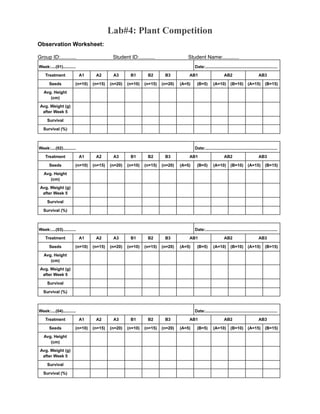
Observation Worksheet:
Group ID:........... Student ID:........... Student Name:...........
Week:....(01)........... Date:..............................................................
Treatment A1 A2 A3 B1 B2 B3 AB1 AB2 AB3
Seeds (n=10) (n=15) (n=20) (n=10) (n=15) (n=20) (A=5) (B=5) (A=10) (B=10) (A=15) (B=15)
Avg. Height
(cm)
Avg. Weight (g)
after Week 5
Survival
Survival (%)
Week:....(02)........... Date:..............................................................
Treatment A1 A2 A3 B1 B2 B3 AB1 AB2 AB3
Seeds (n=10) (n=15) (n=20) (n=10) (n=15) (n=20) (A=5) (B=5) (A=10) (B=10) (A=15) (B=15)
Avg. Height
(cm)
Avg. Weight (g)
after Week 5
Survival
Survival (%)
Week:....(03)........... Date:..............................................................
Treatment A1 A2 A3 B1 B2 B3 AB1 AB2 AB3
Seeds (n=10) (n=15) (n=20) (n=10) (n=15) (n=20) (A=5) (B=5) (A=10) (B=10) (A=15) (B=15)
Avg. Height
(cm)
Avg. Weight (g)
after Week 5
Survival
Survival (%)
Week:....(04)........... Date:..............................................................
Treatment A1 A2 A3 B1 B2 B3 AB1 AB2 AB3
Seeds (n=10) (n=15) (n=20) (n=10) (n=15) (n=20) (A=5) (B=5) (A=10) (B=10) (A=15) (B=15)
Avg. Height
(cm)
Avg. Weight (g)
after Week 5
Survival
Survival (%)
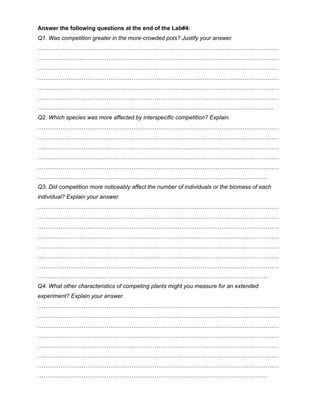
Answer the following questions at the end of the Lab#4:
Q1. Was competition greater in the more-crowded pots? Justify your answer.
………………………………………………………………………………………………………………
………………………………………………………………………………………………………………
………………………………………………………………………………………………………………
………………………………………………………………………………………………………………
………………………………………………………………………………………………………………
………………………………………………………………………………………………………………
……………………………………………………………………………………………………………
Q2. Which species was more affected by interspecific competition? Explain.
………………………………………………………………………………………………………………
………………………………………………………………………………………………………………
………………………………………………………………………………………………………………
………………………………………………………………………………………………………………
………………………………………………………………………………………………………………
…………………………………………………………………………………………………………
Q3. Did competition more noticeably affect the number of individuals or the biomass of each
individual? Explain your answer.
………………………………………………………………………………………………………………
………………………………………………………………………………………………………………
………………………………………………………………………………………………………………
………………………………………………………………………………………………………………
………………………………………………………………………………………………………………
………………………………………………………………………………………………………………
………………………………………………………………………………………………………………
…………………………………………………………………………………………………………
Q4. What other characteristics of competing plants might you measure for an extended
experiment? Explain your answer.
………………………………………………………………………………………………………………
………………………………………………………………………………………………………………
………………………………………………………………………………………………………………
………………………………………………………………………………………………………………
………………………………………………………………………………………………………………
………………………………………………………………………………………………………………
………………………………………………………………………………………………………………
…………………………………………………………………………………………………………

Plant Competition

  • 1.
    Asian University ForWomen BIOL/ENVS 3003: ECOLOGY (Lab) Fall 2022 Lab#4: Plant Competition
  • 2.
    Lab#4: Plant Competition Introduction Thetheory of natural selection assumes that living organisms compete for limited resources. Those individuals with phenotypes that allow them to more efficiently gather those limited resources and turn them into viable offspring are favored over time and are selected for. In the case of plants, competition between neighbors for sunlight, water, and nutrients influence patterns of growth and reproduction (Harper 1977). In other words, nearby competitors of the same or other species reduce the amount of resources available to an individual, which may then suffer reductions in growth, reproduction, germination, and survival. In addition, competition may affect how plants allocate resources to above-ground or below-ground growth and reproductive structures (such as flowers) (Harper 1961). In this experiment, individuals compete only with members of their same species; we call this intraspecific competition. When individuals of one species compete against individuals of another species, we call this interspecific competition. These competitive interactions shape the evolution of populations, the growth and ultimate size of populations, and factors controlling the reproductive success of individuals within a population. Plants have developed mechanisms to deal with competition. Competition for light results from shading by the leaves and stems of neighboring plants. To compensate for the reduced light availability caused by their neighbors, plants may change leaf morphology to capture more of the available sunlight. Competition for water and nutrients occurs belowground. Plants have evolved root structures to access water in different parts of the soil column (such as on the surface or deeper down), allowing some plants to grow a little closer together without experiencing quite as much competition. And some plants may even excrete chemicals into the soil that inhibit the growth of nearby plants (known as allelopathy), effectively reducing the competition experienced by the allelopathic plant (Mahall and Callaway 1992). Competition also contributes to the development of plant communities.
  • 3.
    Objective ● To studyhow intraspecific and interspecific competition affect seedling growth. ● To practice using different measures of interspecific competition. Hypotheses 1. There will be lower survivorship as densities increase, and 2. The plants will grow larger at lower densities, creating a negative relationship between plant mass and density. Materials ● Planting trays ● Potting soil ● Plant seeds (Seeds of study species A and species B) ● Scissors or knife to cut stems ● Balance ● Rulers Planting Methods 1. Set up the pots in the trays. 2. Mix the potting soil. 3. Fill each pot with an equal amount of soil. 4. Label pot stakes with the treatment. 5. Lay the correct number of seeds out for each pot. Add extra seeds to make sure that if not all seeds germinate that we will still have the correct number of plants. After germination, we will randomly prune the seedlings down to the correct treatment level. 6. Push the seeds no more than ¼ inch into the soil and cover with a small amount of soil. 7. Lightly spray the top of the soil with water and fill the tray up to about 1 inch deep with water. 8. Note the observations in every for week (till week 5)
  • 4.
    Procedure for theInspection of Intraspecific and Interspecific Competition The following is just an example. We can follow different combinations. Plant seeds in the following different configurations: A = Chinese cabbage B = Kolmi (Water spinach) Treatment A1 A2 A3 B1 B2 B3 AB1 AB2 AB3 Seeds (n=10) (n=15) (n=20) (n=10) (n=15) (n=20) (A=5) (B=5) (A=10) (B=10) (A=15) (B=15) Plants will be grown under full sun conditions for three/four weeks. Take weekly note of the following observations in a worksheet: ● Avg. Height (cm) ● Survival ● Survival (%) ● Avg. Weight (g) after Week 5 Answer the following questions at the end of the Lab#4: Q1. Was competition greater in the more-crowded pots? Justify your answer. Q2. Which species was more affected by interspecific competition? Explain. Q3. Did competition more noticeably affect the number of individuals or the biomass of each individual? Explain your answer. Q4. What other characteristics of competing plants might you measure for an extended experiment? Explain your answer.
  • 5.
    Lab#4: Plant Competition ObservationWorksheet: Group ID:........... Student ID:........... Student Name:........... Week:....(01)........... Date:.............................................................. Treatment A1 A2 A3 B1 B2 B3 AB1 AB2 AB3 Seeds (n=10) (n=15) (n=20) (n=10) (n=15) (n=20) (A=5) (B=5) (A=10) (B=10) (A=15) (B=15) Avg. Height (cm) Avg. Weight (g) after Week 5 Survival Survival (%) Week:....(02)........... Date:.............................................................. Treatment A1 A2 A3 B1 B2 B3 AB1 AB2 AB3 Seeds (n=10) (n=15) (n=20) (n=10) (n=15) (n=20) (A=5) (B=5) (A=10) (B=10) (A=15) (B=15) Avg. Height (cm) Avg. Weight (g) after Week 5 Survival Survival (%) Week:....(03)........... Date:.............................................................. Treatment A1 A2 A3 B1 B2 B3 AB1 AB2 AB3 Seeds (n=10) (n=15) (n=20) (n=10) (n=15) (n=20) (A=5) (B=5) (A=10) (B=10) (A=15) (B=15) Avg. Height (cm) Avg. Weight (g) after Week 5 Survival Survival (%) Week:....(04)........... Date:.............................................................. Treatment A1 A2 A3 B1 B2 B3 AB1 AB2 AB3 Seeds (n=10) (n=15) (n=20) (n=10) (n=15) (n=20) (A=5) (B=5) (A=10) (B=10) (A=15) (B=15) Avg. Height (cm) Avg. Weight (g) after Week 5 Survival Survival (%)
  • 6.
    Answer the followingquestions at the end of the Lab#4: Q1. Was competition greater in the more-crowded pots? Justify your answer. ……………………………………………………………………………………………………………… ……………………………………………………………………………………………………………… ……………………………………………………………………………………………………………… ……………………………………………………………………………………………………………… ……………………………………………………………………………………………………………… ……………………………………………………………………………………………………………… …………………………………………………………………………………………………………… Q2. Which species was more affected by interspecific competition? Explain. ……………………………………………………………………………………………………………… ……………………………………………………………………………………………………………… ……………………………………………………………………………………………………………… ……………………………………………………………………………………………………………… ……………………………………………………………………………………………………………… ………………………………………………………………………………………………………… Q3. Did competition more noticeably affect the number of individuals or the biomass of each individual? Explain your answer. ……………………………………………………………………………………………………………… ……………………………………………………………………………………………………………… ……………………………………………………………………………………………………………… ……………………………………………………………………………………………………………… ……………………………………………………………………………………………………………… ……………………………………………………………………………………………………………… ……………………………………………………………………………………………………………… ………………………………………………………………………………………………………… Q4. What other characteristics of competing plants might you measure for an extended experiment? Explain your answer. ……………………………………………………………………………………………………………… ……………………………………………………………………………………………………………… ……………………………………………………………………………………………………………… ……………………………………………………………………………………………………………… ……………………………………………………………………………………………………………… ……………………………………………………………………………………………………………… ……………………………………………………………………………………………………………… …………………………………………………………………………………………………………