Planning and implementing
climate change adaptation and DRR good
practice options in field projects
Outline
Damage and Loss to Agriculture from extreme events
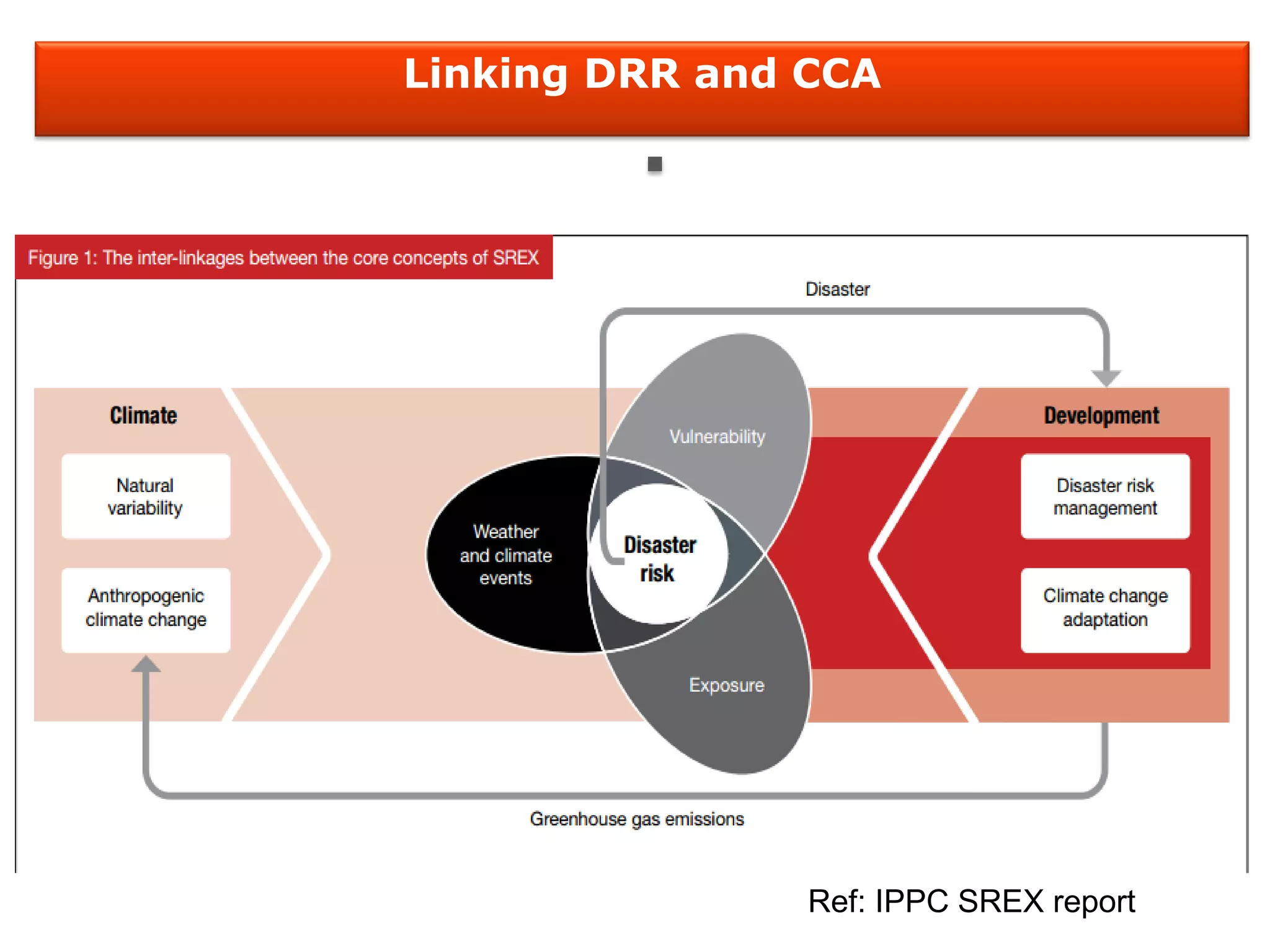
Linking DRR and CCA
DRR and Resilience: application of DRR/M CCA integrated approach in Philippines
project context
Planning and Implementing DRR and CCA GPOs
Getting evidence-based lessons from the field into sectoral/multi-sectoral planning
Addressing governance challenges under evolving socio-institutional contexts
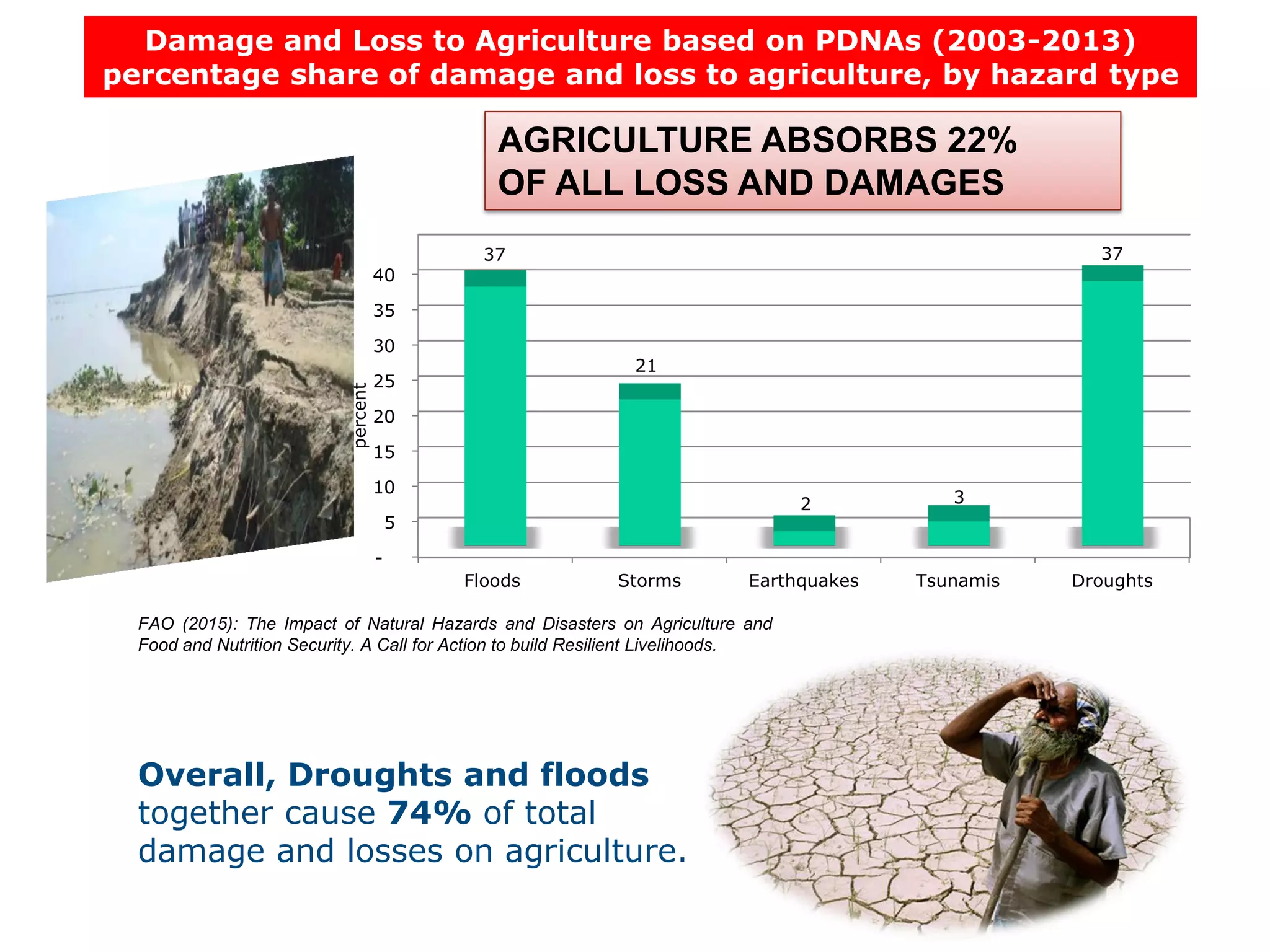
Overall, Droughts and floods
together cause 74% of total
damage and losses on agriculture.
-
5
10
15
20
25
30
35
40
Floods Storms Earthquakes Tsunamis Droughts
37
21
2 3
37
percent
FAO (2015): The Impact of Natural Hazards and Disasters on Agriculture and
Food and Nutrition Security. A Call for Action to build Resilient Livelihoods.
AGRICULTURE ABSORBS 22%
OF ALL LOSS AND DAMAGES
Damage and Loss to Agriculture based on PDNAs (2003-2013)
percentage share of damage and loss to agriculture, by hazard type
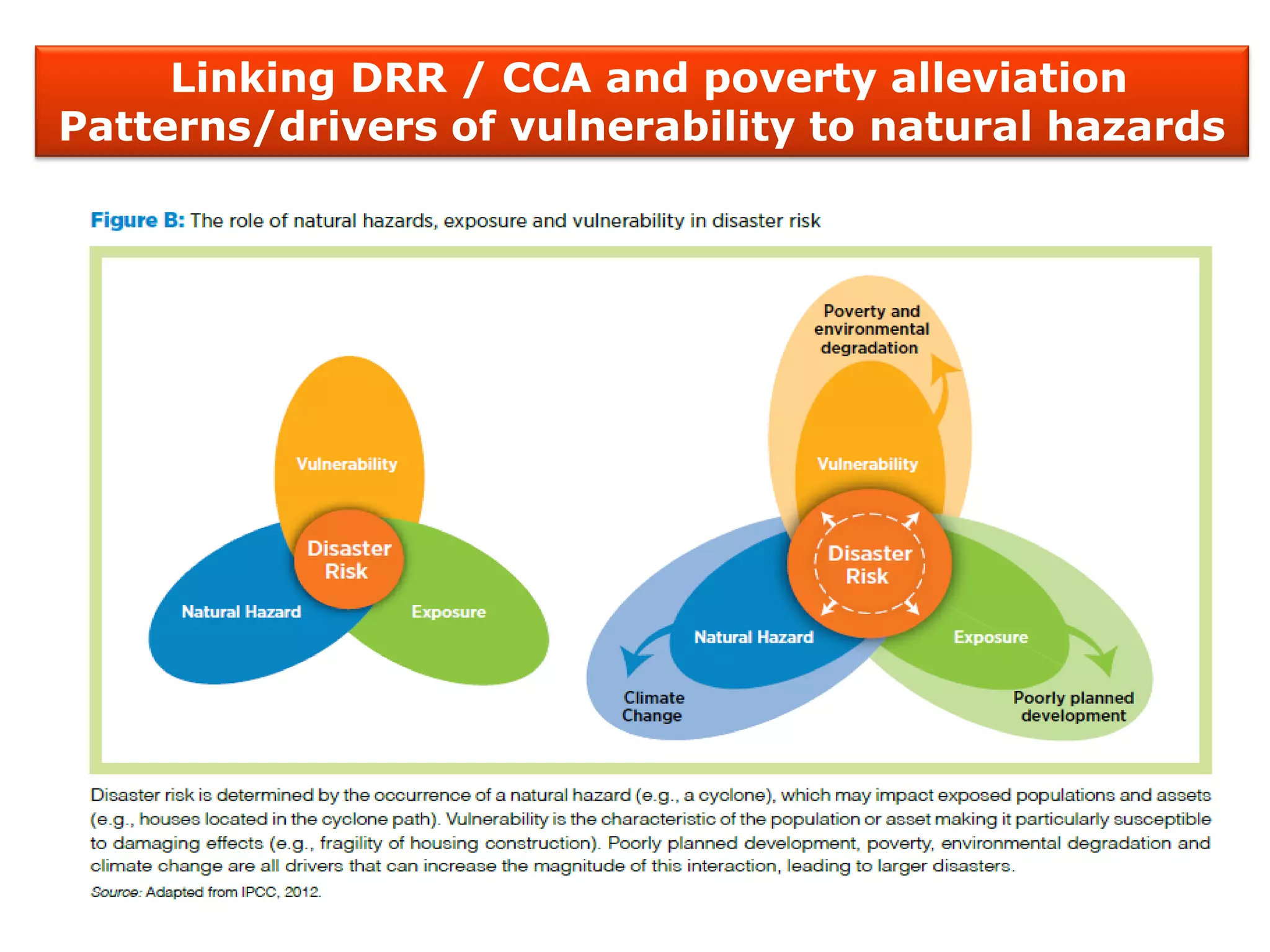
Linking DRR / CCA and poverty alleviation
Patterns/drivers of vulnerability to natural hazards
Linking DRR and CCA
.
Ref: IPPC SREX report
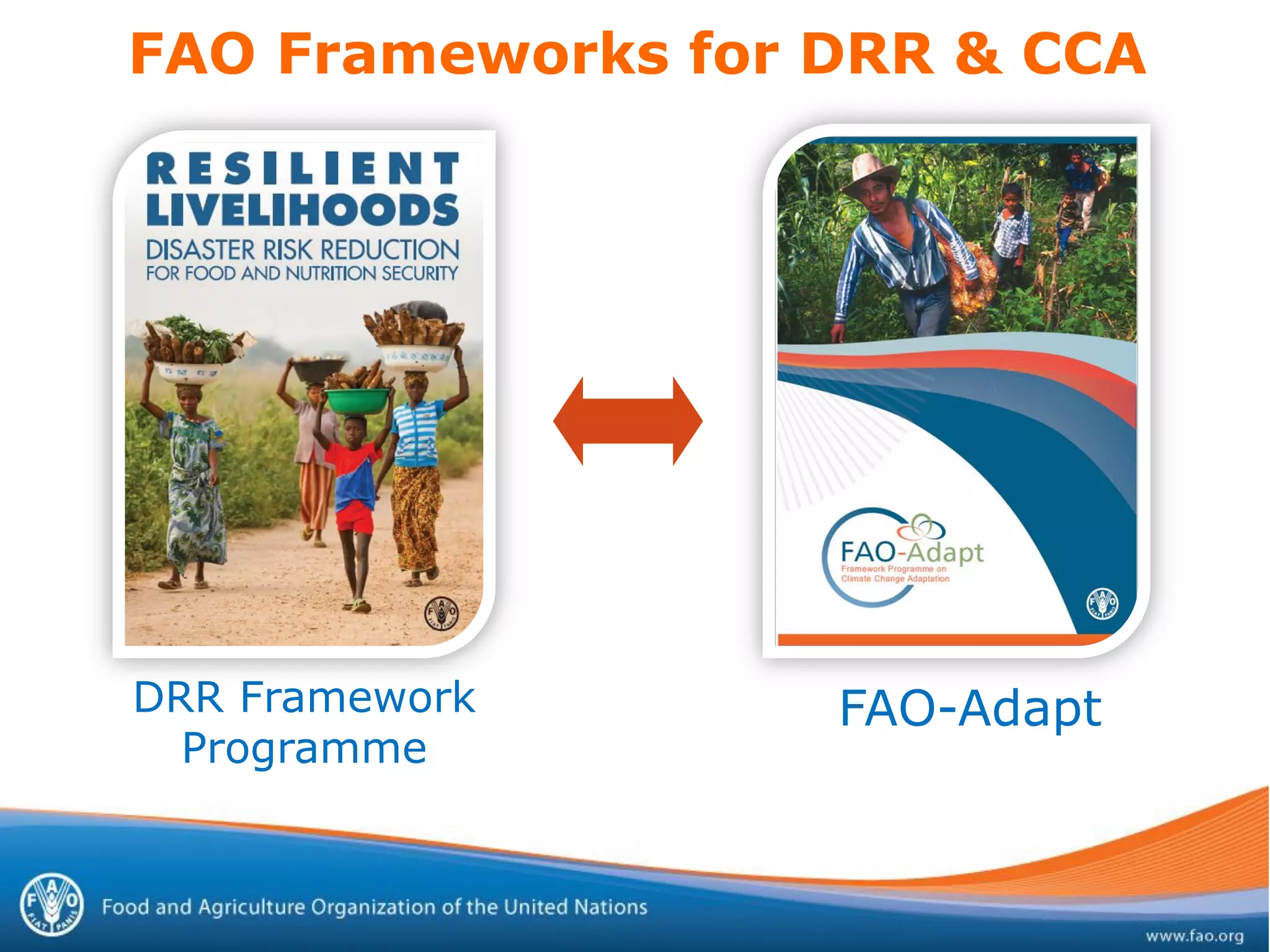
FAO-Adapt
FAO Frameworks for DRR & CCA
DRR Framework
Programme
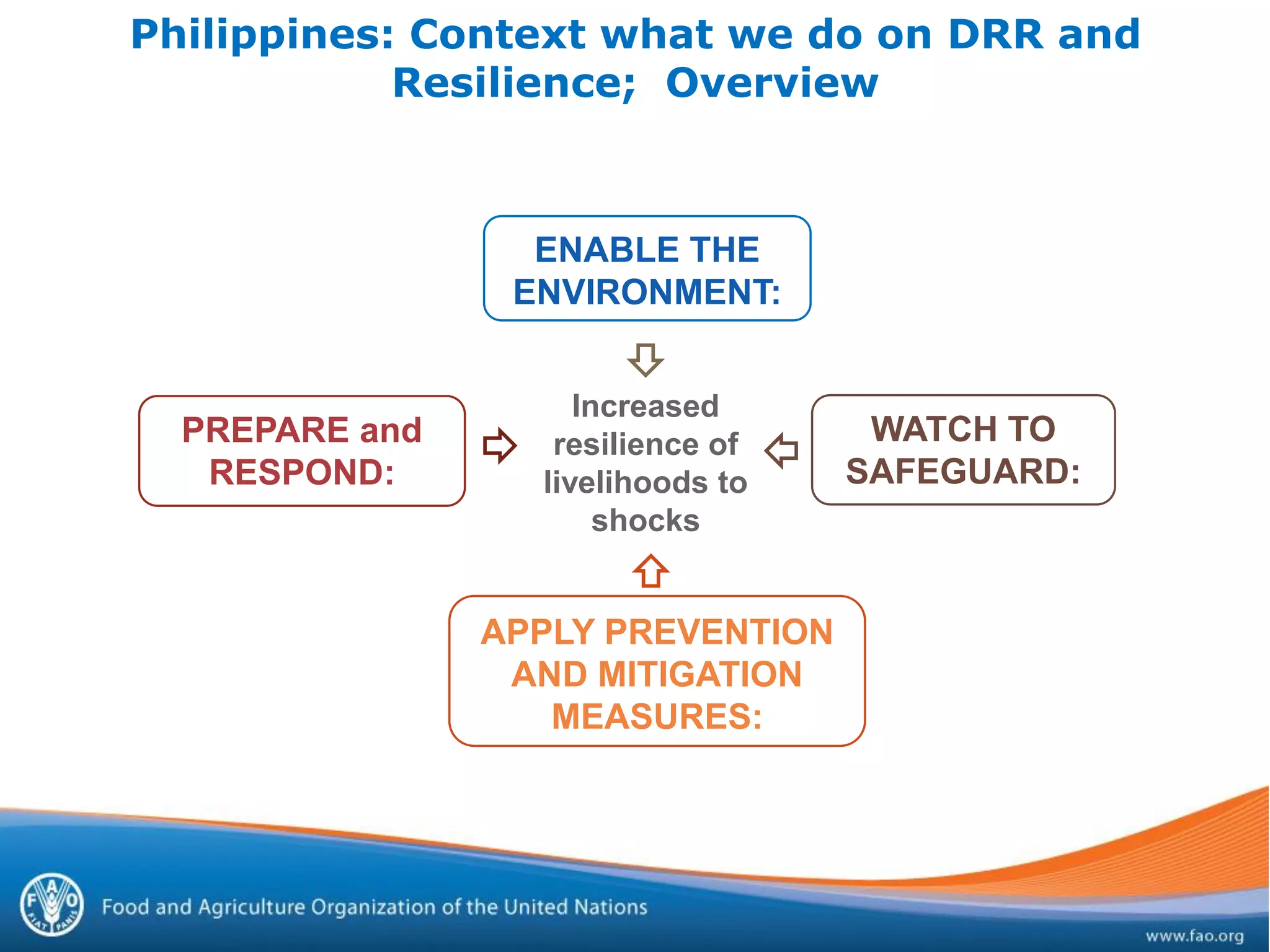
Philippines: Context what we do on DRR and
Resilience; Overview
Increased
resilience of
livelihoods to
shocks
APPLY PREVENTION
AND MITIGATION
MEASURES:
WATCH TO
SAFEGUARD:
ENABLE THE
ENVIRONMENT:
PREPARE and
RESPOND:
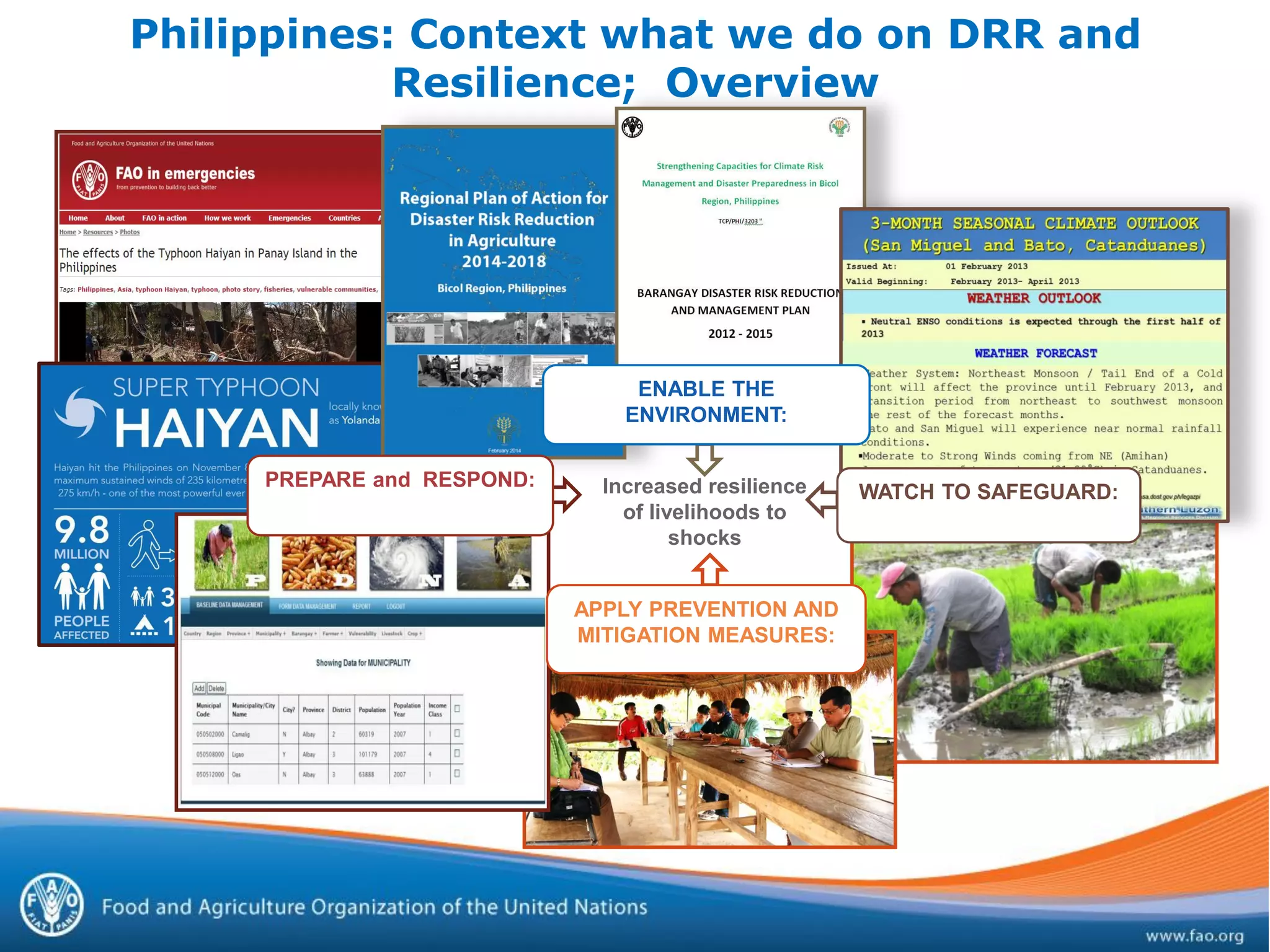
Philippines: Context what we do on DRR and
Resilience; Overview
Increased resilience
of livelihoods to
shocks
APPLY PREVENTION AND
MITIGATION MEASURES:
WATCH TO SAFEGUARD:
ENABLE THE
ENVIRONMENT:
PREPARE and RESPOND:
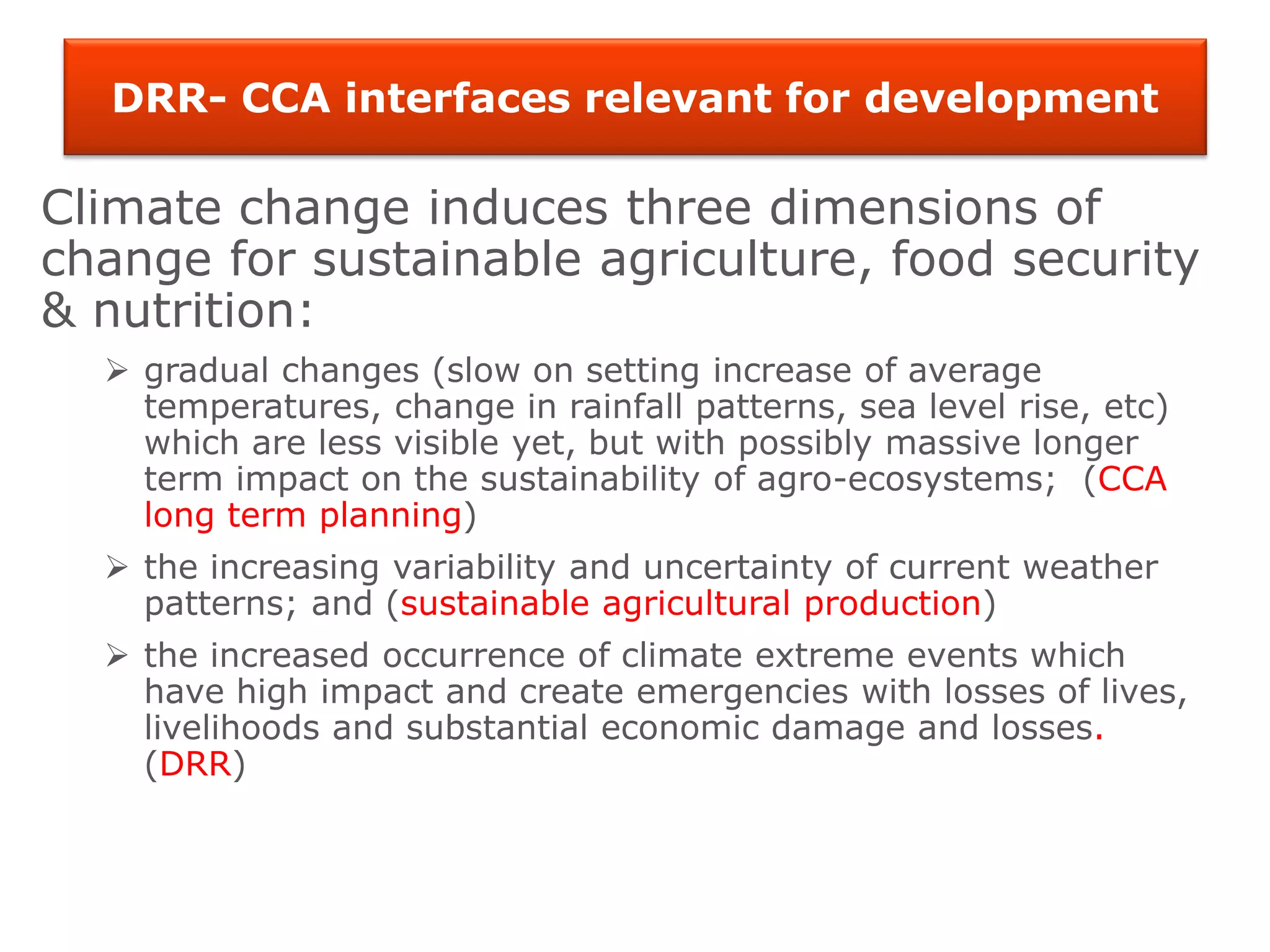
DRR- CCA interfaces relevant for development
Climate change induces three dimensions of
change for sustainable agriculture, food security
& nutrition:
 gradual changes (slow on setting increase of average
temperatures, change in rainfall patterns, sea level rise, etc)
which are less visible yet, but with possibly massive longer
term impact on the sustainability of agro-ecosystems; (CCA
long term planning)
 the increasing variability and uncertainty of current weather
patterns; and (sustainable agricultural production)
 the increased occurrence of climate extreme events which
have high impact and create emergencies with losses of lives,
livelihoods and substantial economic damage and losses.
(DRR)
Planning and implementing
DRR and CCA good practice options in
field projects
Examples from the Philippines
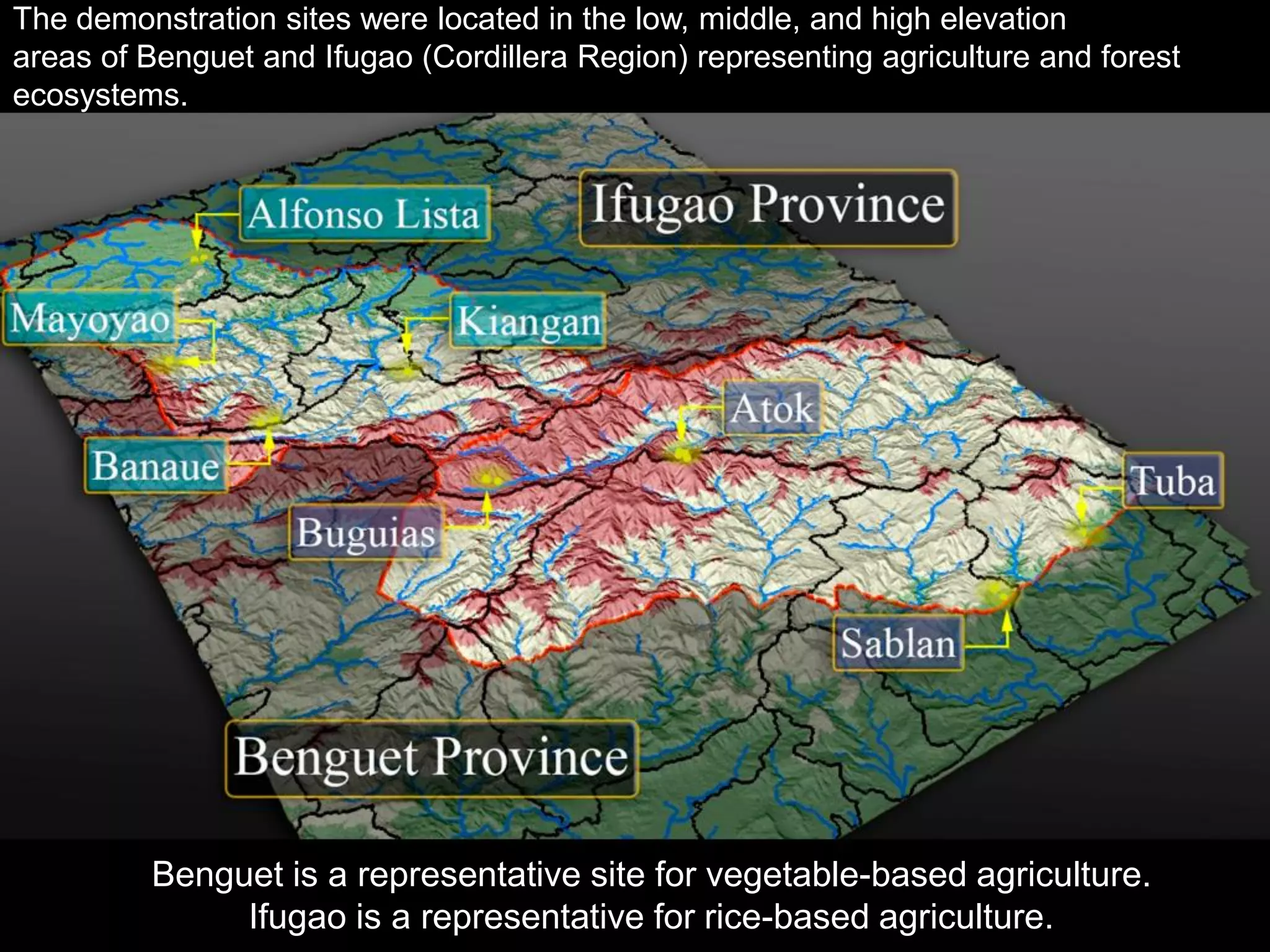
The demonstration sites were located in the low, middle, and high elevation
areas of Benguet and Ifugao (Cordillera Region) representing agriculture and forest
ecosystems.
Benguet is a representative site for vegetable-based agriculture.
Ifugao is a representative for rice-based agriculture.
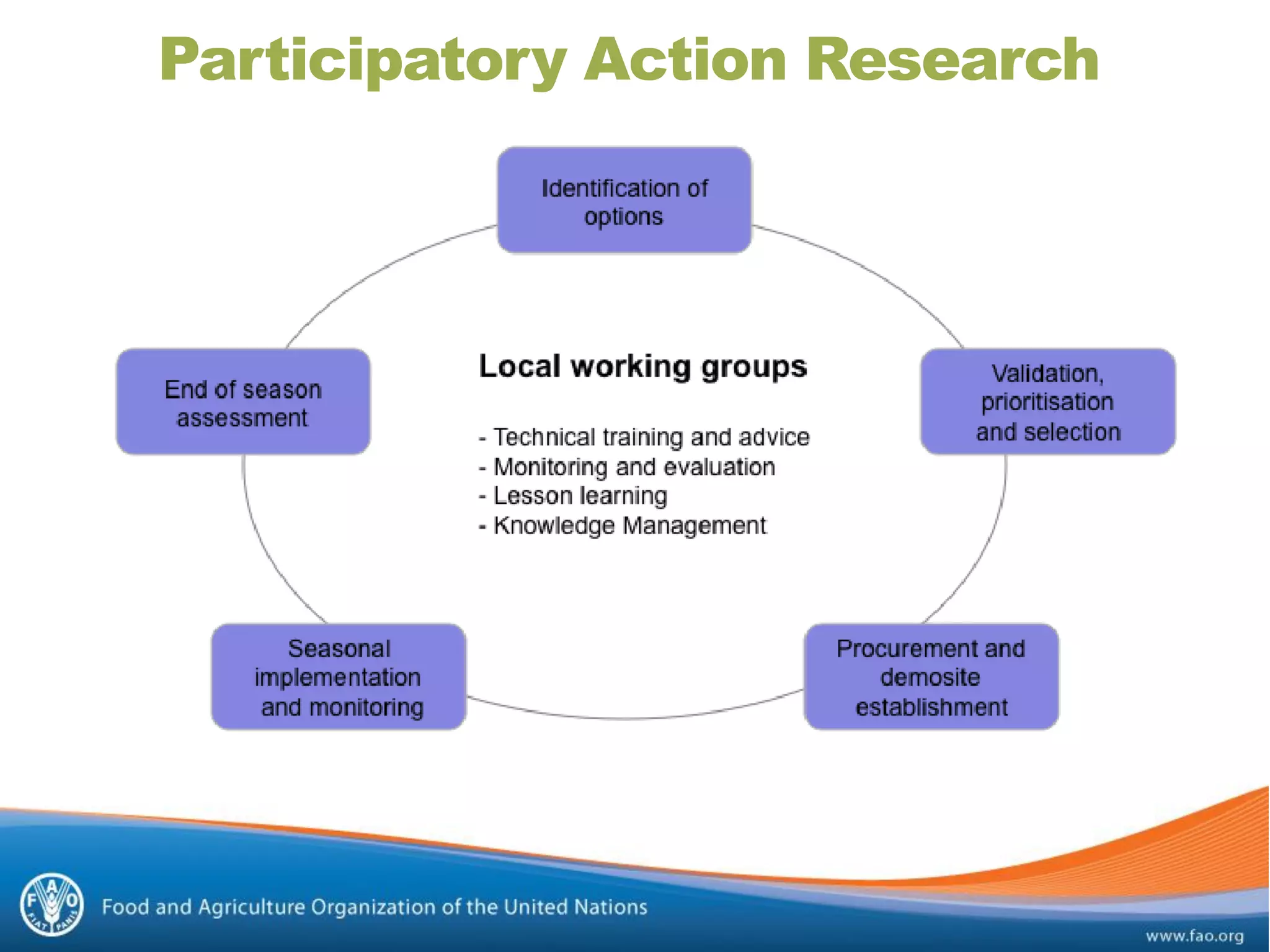
Participatory Action Research
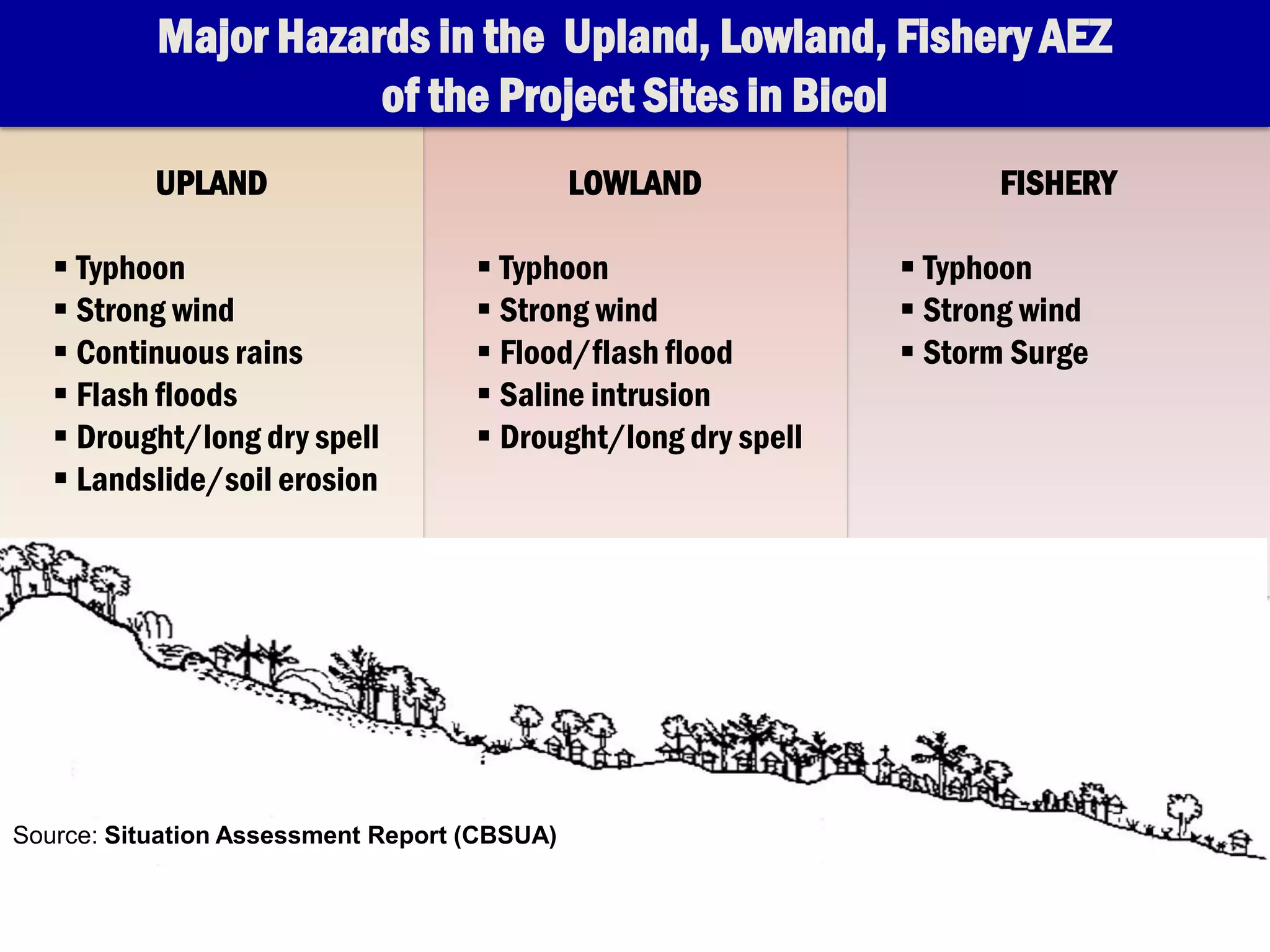
FISHERY
 Typhoon
 Strong wind
 Storm Surge
LOWLAND
 Typhoon
 Strong wind
 Flood/flash flood
 Saline intrusion
 Drought/long dry spell
UPLAND
 Typhoon
 Strong wind
 Continuous rains
 Flash floods
 Drought/long dry spell
 Landslide/soil erosion
Major Hazards in the Upland, Lowland, Fishery AEZ
of the Project Sites in Bicol
Source: Situation Assessment Report (CBSUA)
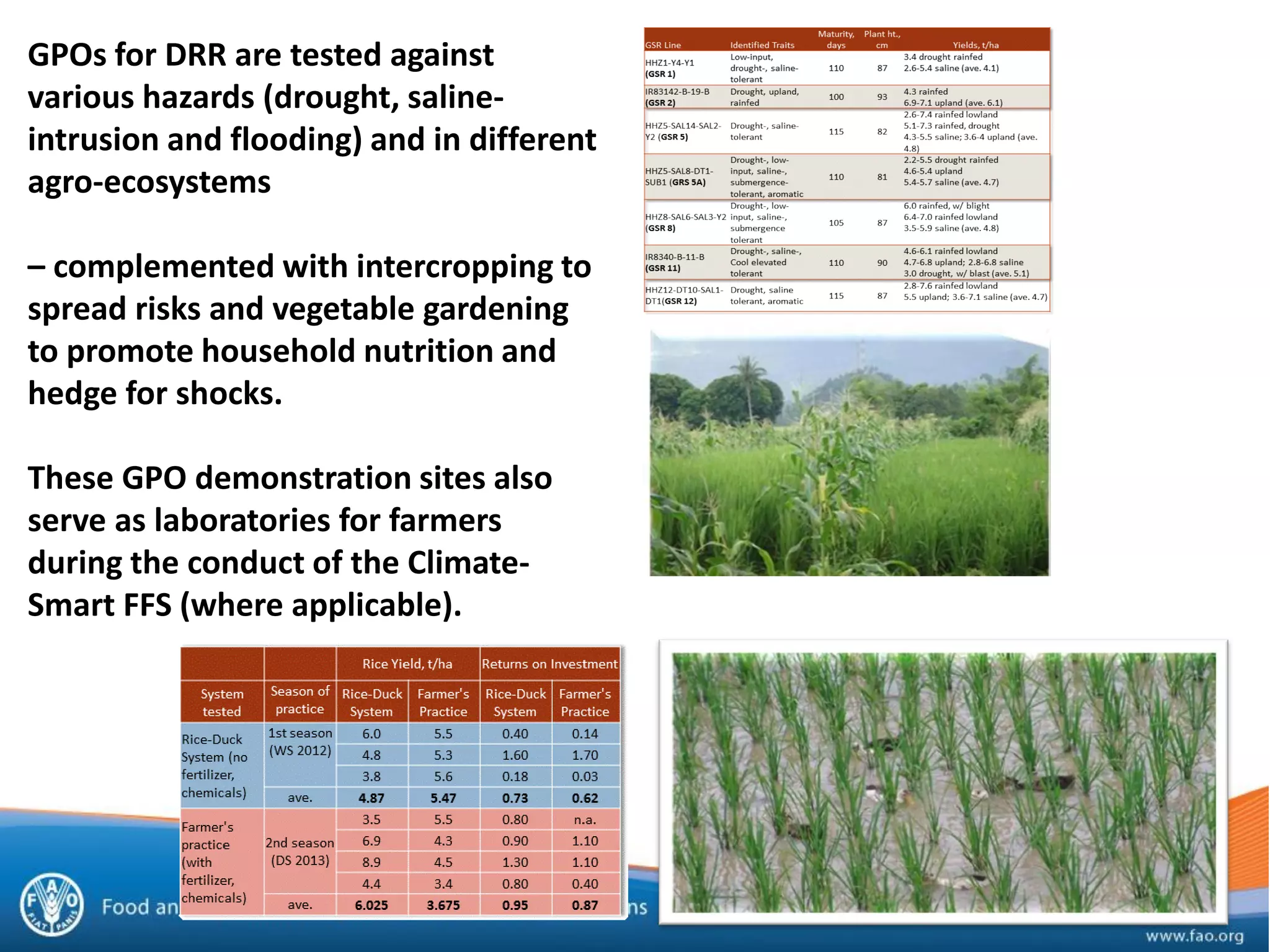
GPOs for DRR are tested against
various hazards (drought, saline-
intrusion and flooding) and in different
agro-ecosystems
– complemented with intercropping to
spread risks and vegetable gardening
to promote household nutrition and
hedge for shocks.
These GPO demonstration sites also
serve as laboratories for farmers
during the conduct of the Climate-
Smart FFS (where applicable).
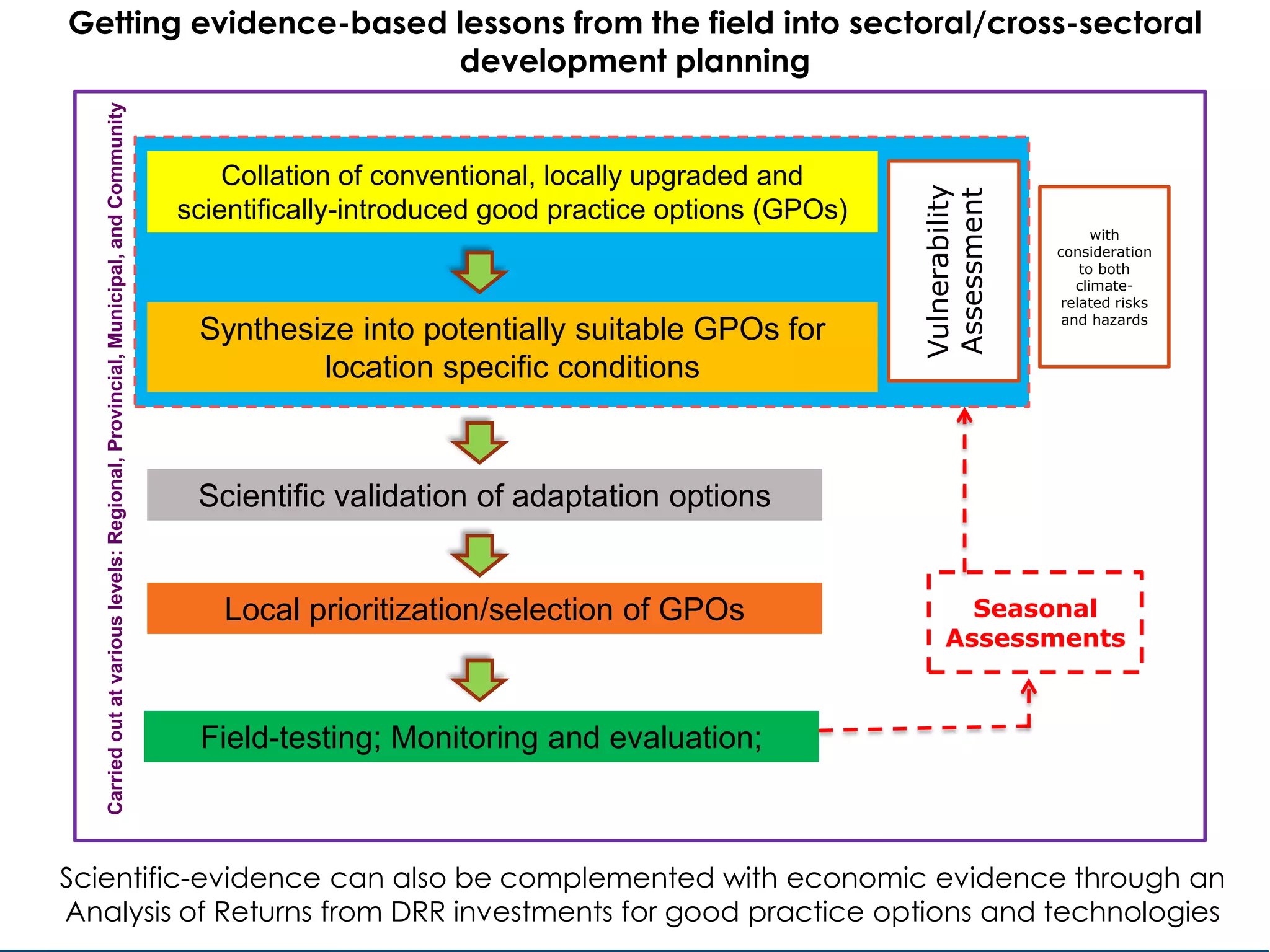
Getting evidence-based lessons from the field into sectoral/cross-sectoral
development planning
Collation of conventional, locally upgraded and
scientifically-introduced good practice options (GPOs)
Synthesize into potentially suitable GPOs for
location specific conditions
Scientific validation of adaptation options
Local prioritization/selection of GPOs
Vulnerability
Assessment
Field-testing; Monitoring and evaluation;
with
consideration
to both
climate-
related risks
and hazards
Seasonal
Assessments
Carriedoutatvariouslevels:Regional,Provincial,Municipal,andCommunity
Scientific-evidence can also be complemented with economic evidence through an
Analysis of Returns from DRR investments for good practice options and technologies
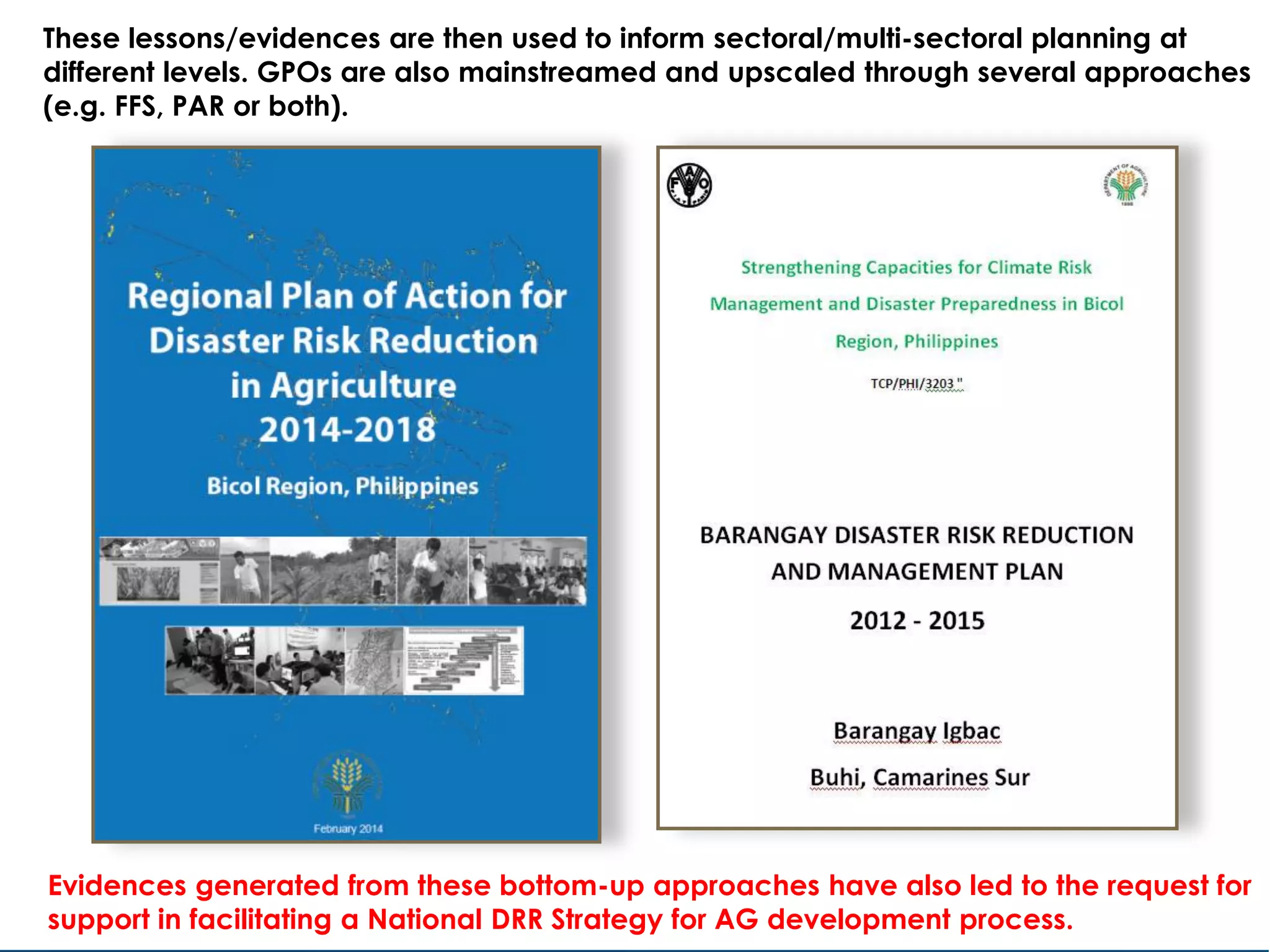
These lessons/evidences are then used to inform sectoral/multi-sectoral planning at
different levels. GPOs are also mainstreamed and upscaled through several approaches
(e.g. FFS, PAR or both).
Evidences generated from these bottom-up approaches have also led to the request for
support in facilitating a National DRR Strategy for AG development process.
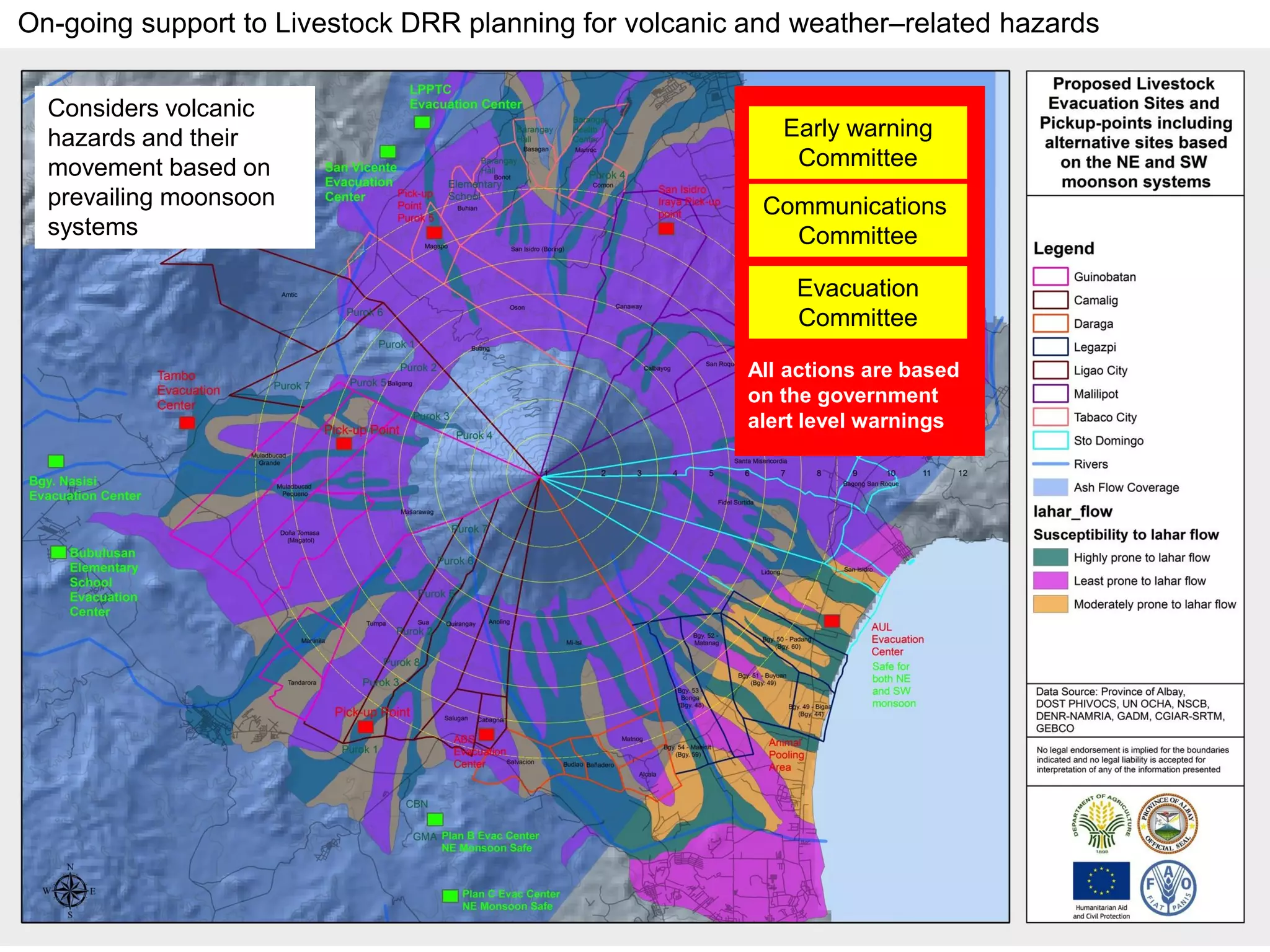
Early warning
Committee
Communications
Committee
Evacuation
Committee
All actions are based
on the government
alert level warnings
Considers volcanic
hazards and their
movement based on
prevailing moonsoon
systems
On-going support to Livestock DRR planning for volcanic and weather–related hazards
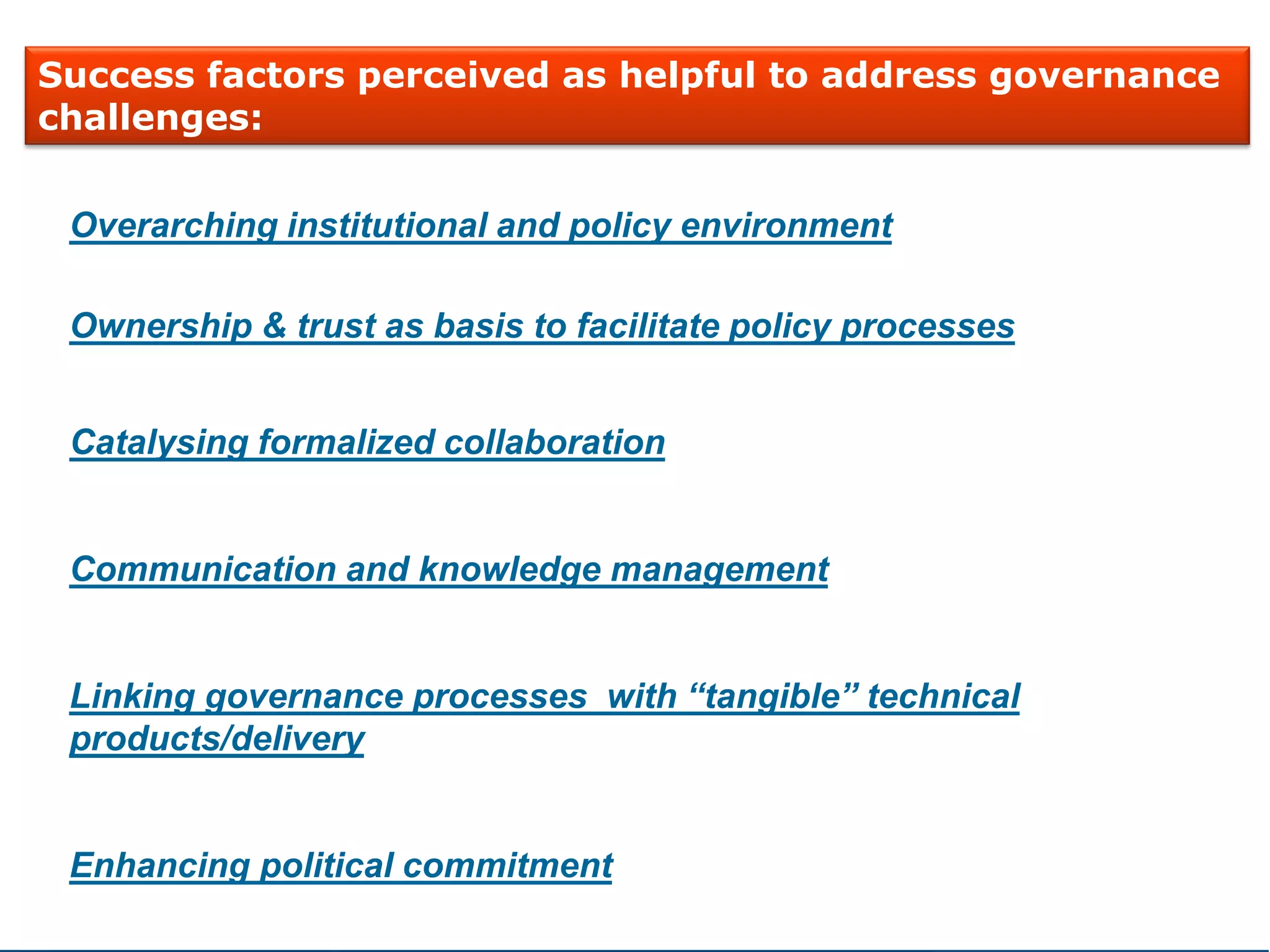
Overarching institutional and policy environment
Ownership & trust as basis to facilitate policy processes
Catalysing formalized collaboration
Communication and knowledge management
Linking governance processes with “tangible” technical
products/delivery
Enhancing political commitment
Success factors perceived as helpful to address governance
challenges:

Planning and implementing climate change adaptation (CCA) and Disaster Risk Reduction (DRR) good practice options in field projects

  • 1.
    Planning and implementing climatechange adaptation and DRR good practice options in field projects
  • 2.
    Outline Damage and Lossto Agriculture from extreme events Linking DRR and CCA DRR and Resilience: application of DRR/M CCA integrated approach in Philippines project context Planning and Implementing DRR and CCA GPOs Getting evidence-based lessons from the field into sectoral/multi-sectoral planning Addressing governance challenges under evolving socio-institutional contexts
  • 3.
    Overall, Droughts andfloods together cause 74% of total damage and losses on agriculture. - 5 10 15 20 25 30 35 40 Floods Storms Earthquakes Tsunamis Droughts 37 21 2 3 37 percent FAO (2015): The Impact of Natural Hazards and Disasters on Agriculture and Food and Nutrition Security. A Call for Action to build Resilient Livelihoods. AGRICULTURE ABSORBS 22% OF ALL LOSS AND DAMAGES Damage and Loss to Agriculture based on PDNAs (2003-2013) percentage share of damage and loss to agriculture, by hazard type
  • 4.
    Linking DRR /CCA and poverty alleviation Patterns/drivers of vulnerability to natural hazards
  • 5.
    Linking DRR andCCA . Ref: IPPC SREX report
  • 6.
    FAO-Adapt FAO Frameworks forDRR & CCA DRR Framework Programme
  • 7.
    Philippines: Context whatwe do on DRR and Resilience; Overview Increased resilience of livelihoods to shocks APPLY PREVENTION AND MITIGATION MEASURES: WATCH TO SAFEGUARD: ENABLE THE ENVIRONMENT: PREPARE and RESPOND:
  • 8.
    Philippines: Context whatwe do on DRR and Resilience; Overview Increased resilience of livelihoods to shocks APPLY PREVENTION AND MITIGATION MEASURES: WATCH TO SAFEGUARD: ENABLE THE ENVIRONMENT: PREPARE and RESPOND:
  • 9.
    DRR- CCA interfacesrelevant for development Climate change induces three dimensions of change for sustainable agriculture, food security & nutrition:  gradual changes (slow on setting increase of average temperatures, change in rainfall patterns, sea level rise, etc) which are less visible yet, but with possibly massive longer term impact on the sustainability of agro-ecosystems; (CCA long term planning)  the increasing variability and uncertainty of current weather patterns; and (sustainable agricultural production)  the increased occurrence of climate extreme events which have high impact and create emergencies with losses of lives, livelihoods and substantial economic damage and losses. (DRR)
  • 10.
    Planning and implementing DRRand CCA good practice options in field projects Examples from the Philippines
  • 11.
    The demonstration siteswere located in the low, middle, and high elevation areas of Benguet and Ifugao (Cordillera Region) representing agriculture and forest ecosystems. Benguet is a representative site for vegetable-based agriculture. Ifugao is a representative for rice-based agriculture.
  • 12.
  • 16.
    FISHERY  Typhoon  Strongwind  Storm Surge LOWLAND  Typhoon  Strong wind  Flood/flash flood  Saline intrusion  Drought/long dry spell UPLAND  Typhoon  Strong wind  Continuous rains  Flash floods  Drought/long dry spell  Landslide/soil erosion Major Hazards in the Upland, Lowland, Fishery AEZ of the Project Sites in Bicol Source: Situation Assessment Report (CBSUA)
  • 17.
    GPOs for DRRare tested against various hazards (drought, saline- intrusion and flooding) and in different agro-ecosystems – complemented with intercropping to spread risks and vegetable gardening to promote household nutrition and hedge for shocks. These GPO demonstration sites also serve as laboratories for farmers during the conduct of the Climate- Smart FFS (where applicable).
  • 18.
    Getting evidence-based lessonsfrom the field into sectoral/cross-sectoral development planning Collation of conventional, locally upgraded and scientifically-introduced good practice options (GPOs) Synthesize into potentially suitable GPOs for location specific conditions Scientific validation of adaptation options Local prioritization/selection of GPOs Vulnerability Assessment Field-testing; Monitoring and evaluation; with consideration to both climate- related risks and hazards Seasonal Assessments Carriedoutatvariouslevels:Regional,Provincial,Municipal,andCommunity Scientific-evidence can also be complemented with economic evidence through an Analysis of Returns from DRR investments for good practice options and technologies
  • 19.
    These lessons/evidences arethen used to inform sectoral/multi-sectoral planning at different levels. GPOs are also mainstreamed and upscaled through several approaches (e.g. FFS, PAR or both). Evidences generated from these bottom-up approaches have also led to the request for support in facilitating a National DRR Strategy for AG development process.
  • 20.
    Early warning Committee Communications Committee Evacuation Committee All actionsare based on the government alert level warnings Considers volcanic hazards and their movement based on prevailing moonsoon systems On-going support to Livestock DRR planning for volcanic and weather–related hazards
  • 21.
    Overarching institutional andpolicy environment Ownership & trust as basis to facilitate policy processes Catalysing formalized collaboration Communication and knowledge management Linking governance processes with “tangible” technical products/delivery Enhancing political commitment Success factors perceived as helpful to address governance challenges: