ENVIRONET
Implementing Agenda 2030 and the Paris
Agreement on climate change
March 2nd, 2016
Gisela Campillo and Tara Shine
OECD DAC Secretariat
Outline
Post 2015 development landscape: an
overview1
Opportunities and challenges2
Guiding questions3
• More ambitious agenda - larger number of
issues to engage with;
• Environmental sustainability part of every
SDG;
• More resources needed and more finance
to flow from a wide range of sources.
• 2015-agreements call for country-led
action;
• “leave no one behind“
Implications of SDGs for development co-
operation1
• Climate finance and development finance
need to target the most vulnerable;
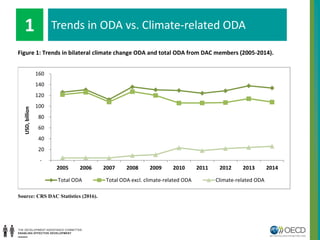
• ODA is stalling and climate-related ODA is
increasing;
• LDCs are very dependent on ODA, but ODA to
poorest countries is falling as their
vulnerability to climate change increases;
Synergies between climate finance and
development finance (I)1
InTrends in ODA vs. Climate-related ODA1
Figure 1: Trends in bilateral climate change ODA and total ODA from DAC members (2005-2014).
Source: CRS DAC Statistics (2016).
-
20
40
60
80
100
120
140
160
2005 2006 2007 2008 2009 2010 2011 2012 2013 2014
USD,billion
Total ODA Total ODA excl. climate-related ODA Climate-related ODA
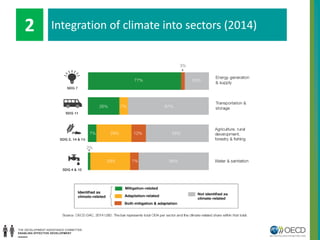
• Climate-related ODA is 18% of total bilateral ODA
in 2013-2014;
• 63% of climate-related ODA for mitigation only,
25% for adaptation only and 12% for both
• More gender mainstreaming in adaptation than
mitigation: opportunities exist for greater
women’s participation in CC decision making
Need for coordination to maximise
effectiveness!
Synergies between climate finance and
development finance (II)1
• Country ownership to enhance
coherence and effectiveness;
• Smarter use of ODA to catalyse
investment;
• Greater mainstreaming of environment
and climate in development co-
operation.
Opportunities2
InIntegration of climate into sectors (2014)2
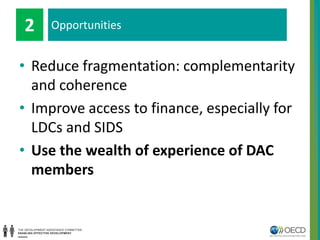
• Reduce fragmentation: complementarity
and coherence
• Improve access to finance, especially for
LDCs and SIDS
• Use the wealth of experience of DAC
members
Opportunities2
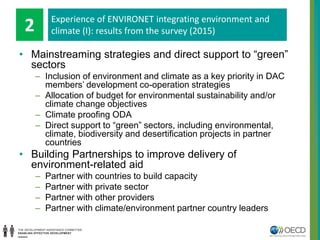
• Mainstreaming strategies and direct support to “green”
sectors
– Inclusion of environment and climate as a key priority in DAC
members’ development co-operation strategies
– Allocation of budget for environmental sustainability and/or
climate change objectives
– Climate proofing ODA
– Direct support to “green” sectors, including environmental,
climate, biodiversity and desertification projects in partner
countries
• Building Partnerships to improve delivery of
environment-related aid
– Partner with countries to build capacity
– Partner with private sector
– Partner with other providers
– Partner with climate/environment partner country leaders
Experience of ENVIRONET integrating environment and
climate (I): results from the survey (2015)2
Experience of ENVIRONET integrating
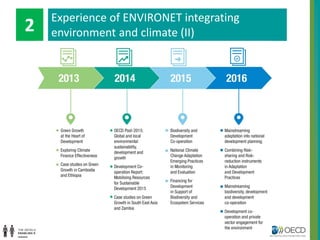
environment and climate (II)2
leiem
• Defining climate finance and increasing
transparency
– Role of UNFCCC
– Role of OECD DAC
• Increased need for resources and pressure on
ODA
– Multiple demands – more resources – capacity
requirements
– Balancing adaptation and mitigation
– Paris decision para 44 - banks to report on how dev and
climate finance are climate proofed / resilient
Challenges (I)2
• Predictability of support
– 0.7% and the $100 billion
– Paris Agreement article 9.5 – biennial reports with
projected levels of public financial resources
– DAC donors forward spending plans
• Competition between climate ODA and ODA
for other purposes
– Global picture inconclusive
– Need for country level analysis
– The ‘new and additional’ dilemma
Challenges (II)2
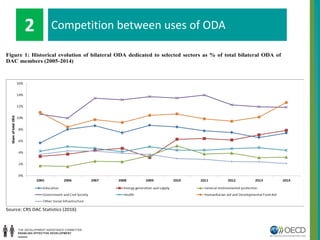
Figure 1: Historical evolution of bilateral ODA dedicated to selected sectors as % of total bilateral ODA of
DAC members (2005-2014)
Source: CRS DAC Statistics (2016)
Competition between uses of ODA2
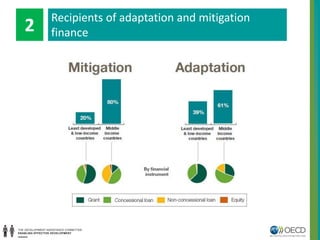
• Prioritising public international climate finance
for particularly vulnerable countries and people
• Addis, Action 2030 and Paris – all highlight particularly
vulnerable countries (LDCs and SIDS) and people
• But majority of climate related development finance goes
to MICs and ODA to LDCs is declining
• DAC ODA modernisation
• Changing the trend? More public finance to LDCs / SIDS for
adaptation - different role or ODA for mitigation in MICs…
• Don’t forget the people - Gender mainstreaming, pro-poor
and rights based approaches
Challenges (III)2
Recipients of adaptation and mitigation
finance2
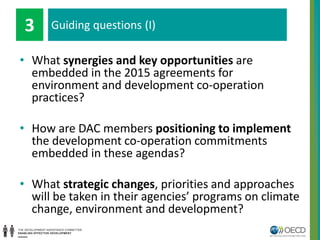
Guiding questions (I)
• What synergies and key opportunities are
embedded in the 2015 agreements for
environment and development co-operation
practices?
• How are DAC members positioning to implement
the development co-operation commitments
embedded in these agendas?
• What strategic changes, priorities and approaches
will be taken in their agencies’ programs on climate
change, environment and development?
Guiding questions (I)3
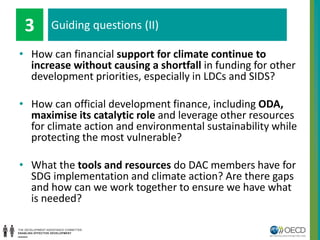
• How can financial support for climate continue to
increase without causing a shortfall in funding for other
development priorities, especially in LDCs and SIDS?
• How can official development finance, including ODA,
maximise its catalytic role and leverage other resources
for climate action and environmental sustainability while
protecting the most vulnerable?
• What the tools and resources do DAC members have for
SDG implementation and climate action? Are there gaps
and how can we work together to ensure we have what
is needed?
Guiding questions (II)3
Thank you.
Questions? Comments?
Gisela.campillo@oecd.org

2.1 campillo&shine

  • 1.
    ENVIRONET Implementing Agenda 2030and the Paris Agreement on climate change March 2nd, 2016 Gisela Campillo and Tara Shine OECD DAC Secretariat
  • 2.
    Outline Post 2015 developmentlandscape: an overview1 Opportunities and challenges2 Guiding questions3
  • 3.
    • More ambitiousagenda - larger number of issues to engage with; • Environmental sustainability part of every SDG; • More resources needed and more finance to flow from a wide range of sources. • 2015-agreements call for country-led action; • “leave no one behind“ Implications of SDGs for development co- operation1
  • 4.
    • Climate financeand development finance need to target the most vulnerable; • ODA is stalling and climate-related ODA is increasing; • LDCs are very dependent on ODA, but ODA to poorest countries is falling as their vulnerability to climate change increases; Synergies between climate finance and development finance (I)1
  • 5.
    InTrends in ODAvs. Climate-related ODA1 Figure 1: Trends in bilateral climate change ODA and total ODA from DAC members (2005-2014). Source: CRS DAC Statistics (2016). - 20 40 60 80 100 120 140 160 2005 2006 2007 2008 2009 2010 2011 2012 2013 2014 USD,billion Total ODA Total ODA excl. climate-related ODA Climate-related ODA
  • 6.
    • Climate-related ODAis 18% of total bilateral ODA in 2013-2014; • 63% of climate-related ODA for mitigation only, 25% for adaptation only and 12% for both • More gender mainstreaming in adaptation than mitigation: opportunities exist for greater women’s participation in CC decision making Need for coordination to maximise effectiveness! Synergies between climate finance and development finance (II)1
  • 7.
    • Country ownershipto enhance coherence and effectiveness; • Smarter use of ODA to catalyse investment; • Greater mainstreaming of environment and climate in development co- operation. Opportunities2
  • 8.
    InIntegration of climateinto sectors (2014)2
  • 9.
    • Reduce fragmentation:complementarity and coherence • Improve access to finance, especially for LDCs and SIDS • Use the wealth of experience of DAC members Opportunities2
  • 10.
    • Mainstreaming strategiesand direct support to “green” sectors – Inclusion of environment and climate as a key priority in DAC members’ development co-operation strategies – Allocation of budget for environmental sustainability and/or climate change objectives – Climate proofing ODA – Direct support to “green” sectors, including environmental, climate, biodiversity and desertification projects in partner countries • Building Partnerships to improve delivery of environment-related aid – Partner with countries to build capacity – Partner with private sector – Partner with other providers – Partner with climate/environment partner country leaders Experience of ENVIRONET integrating environment and climate (I): results from the survey (2015)2
  • 11.
    Experience of ENVIRONETintegrating environment and climate (II)2
  • 12.
    leiem • Defining climatefinance and increasing transparency – Role of UNFCCC – Role of OECD DAC • Increased need for resources and pressure on ODA – Multiple demands – more resources – capacity requirements – Balancing adaptation and mitigation – Paris decision para 44 - banks to report on how dev and climate finance are climate proofed / resilient Challenges (I)2
  • 13.
    • Predictability ofsupport – 0.7% and the $100 billion – Paris Agreement article 9.5 – biennial reports with projected levels of public financial resources – DAC donors forward spending plans • Competition between climate ODA and ODA for other purposes – Global picture inconclusive – Need for country level analysis – The ‘new and additional’ dilemma Challenges (II)2
  • 14.
    Figure 1: Historicalevolution of bilateral ODA dedicated to selected sectors as % of total bilateral ODA of DAC members (2005-2014) Source: CRS DAC Statistics (2016) Competition between uses of ODA2
  • 15.
    • Prioritising publicinternational climate finance for particularly vulnerable countries and people • Addis, Action 2030 and Paris – all highlight particularly vulnerable countries (LDCs and SIDS) and people • But majority of climate related development finance goes to MICs and ODA to LDCs is declining • DAC ODA modernisation • Changing the trend? More public finance to LDCs / SIDS for adaptation - different role or ODA for mitigation in MICs… • Don’t forget the people - Gender mainstreaming, pro-poor and rights based approaches Challenges (III)2
  • 16.
    Recipients of adaptationand mitigation finance2
  • 17.
    Guiding questions (I) •What synergies and key opportunities are embedded in the 2015 agreements for environment and development co-operation practices? • How are DAC members positioning to implement the development co-operation commitments embedded in these agendas? • What strategic changes, priorities and approaches will be taken in their agencies’ programs on climate change, environment and development? Guiding questions (I)3
  • 18.
    • How canfinancial support for climate continue to increase without causing a shortfall in funding for other development priorities, especially in LDCs and SIDS? • How can official development finance, including ODA, maximise its catalytic role and leverage other resources for climate action and environmental sustainability while protecting the most vulnerable? • What the tools and resources do DAC members have for SDG implementation and climate action? Are there gaps and how can we work together to ensure we have what is needed? Guiding questions (II)3
  • 19.