
PLANNING AND
CONCEPTUALIZING AN ESP
PROGRAM
I. G. A. OKA CAHYA DEWI (1201305054)
I. G. A. TRIANA RAKANITA (1201305055)
A. A. PUTU RINA DEWI (1201305056)
Conceptualizing
THE PROCESS OF
WHICH INVOLVE :

CONCEPTUALIZING

IS

MULTIFACETED,



Thinking about what your students to learn, given who they are, their
needs and the purpose of the course.



Making decisions about what to include and emphasize.



Organizing the content in a way that will help you to see the
relationship among various elements, so that you can make decisions
about objectives, materials, sequence and evaluation.
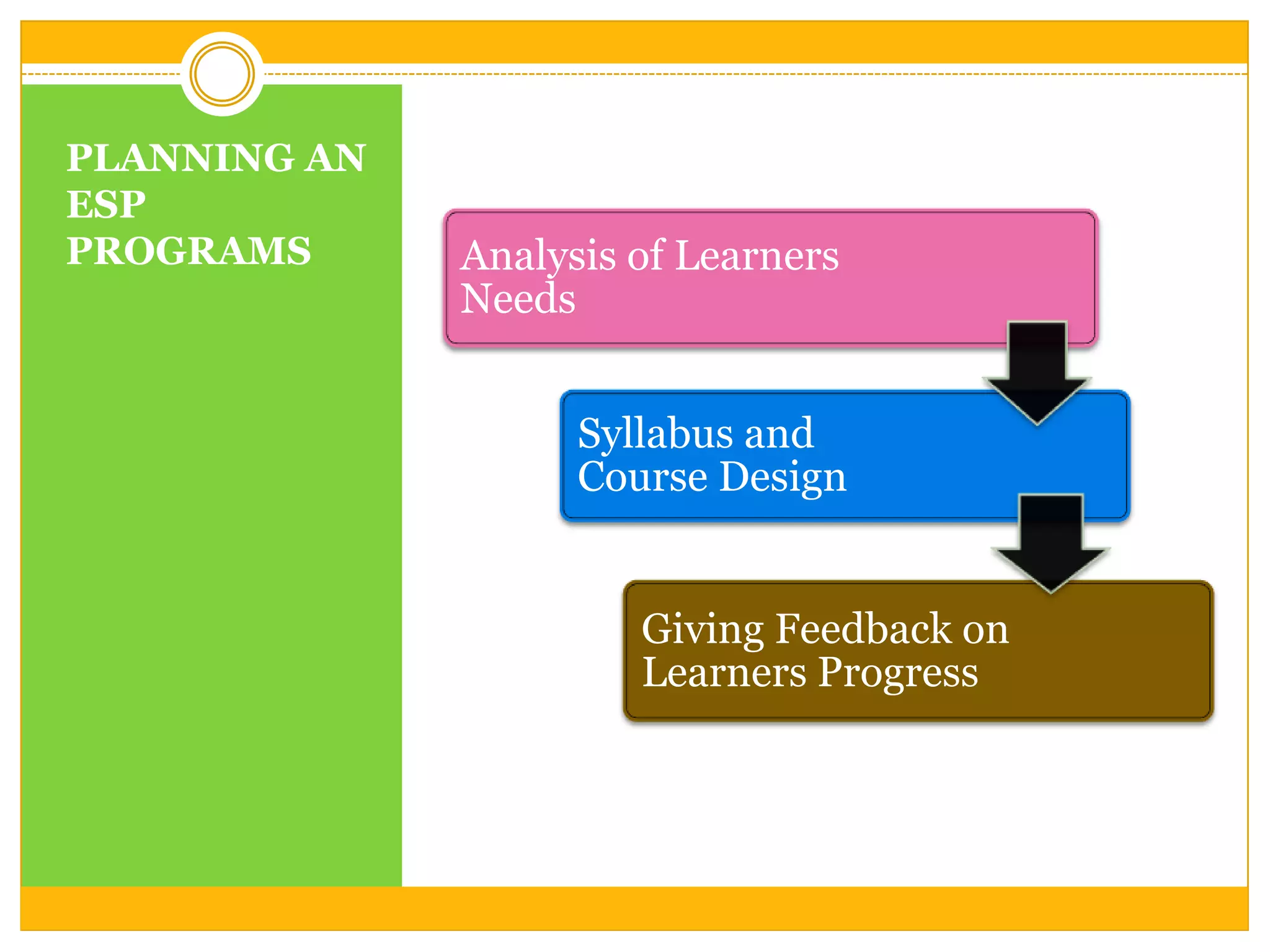
PLANNING AN
ESP
PROGRAMS

Analysis of Learners
Needs
Syllabus and
Course Design
Giving Feedback on
Learners Progress
Analysis of Learners Needs
 Process of getting information on learners ‘language

needs’, which will help in drawing up a profile to
establish coherent objectives, and take subsequent
decisions on course content because learners is at the
heart of any teaching program.
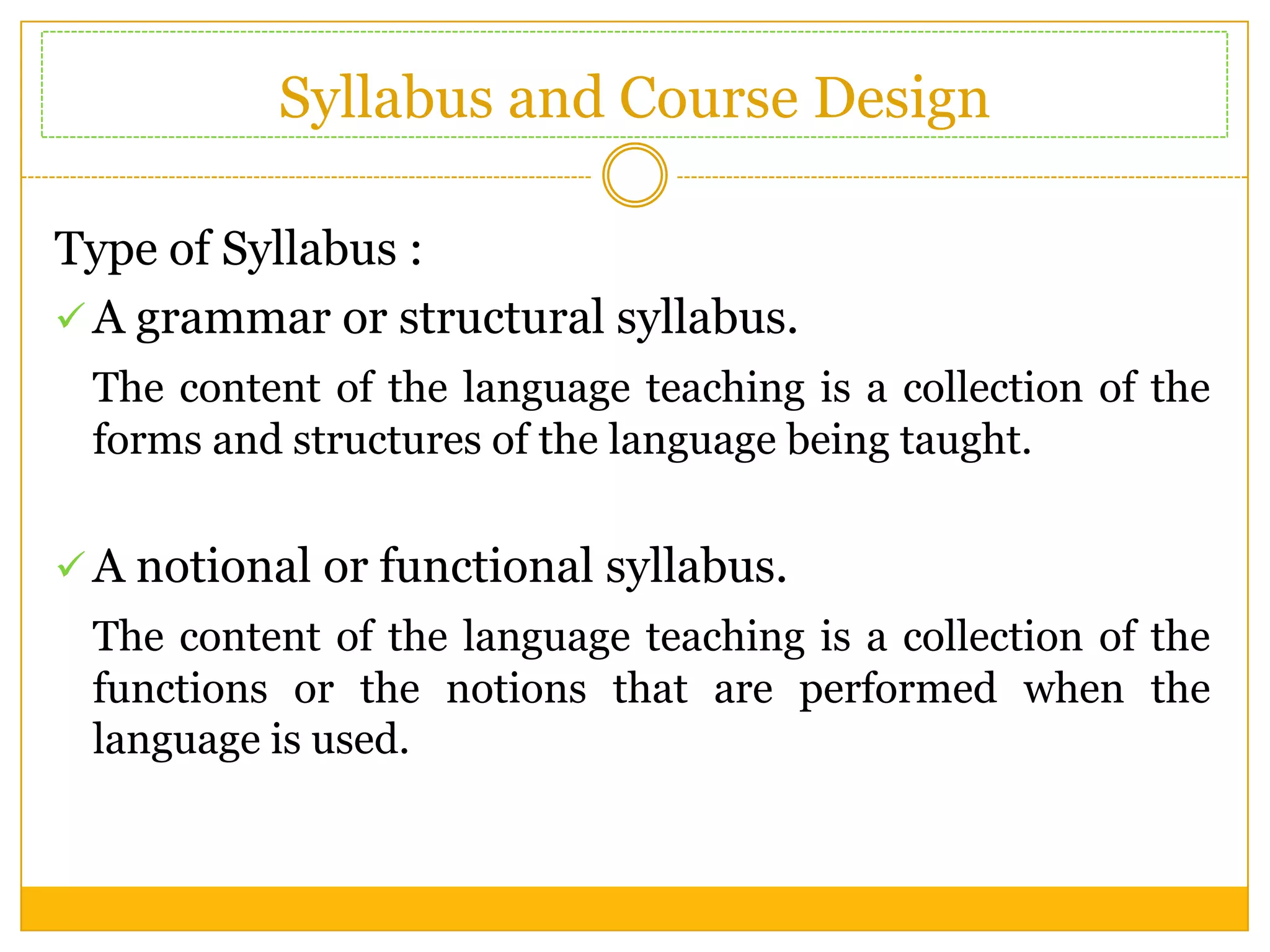
Syllabus and Course Design
Type of Syllabus :
 A grammar or structural syllabus.
The content of the language teaching is a collection of the
forms and structures of the language being taught.
 A notional or functional syllabus.

The content of the language teaching is a collection of the
functions or the notions that are performed when the
language is used.
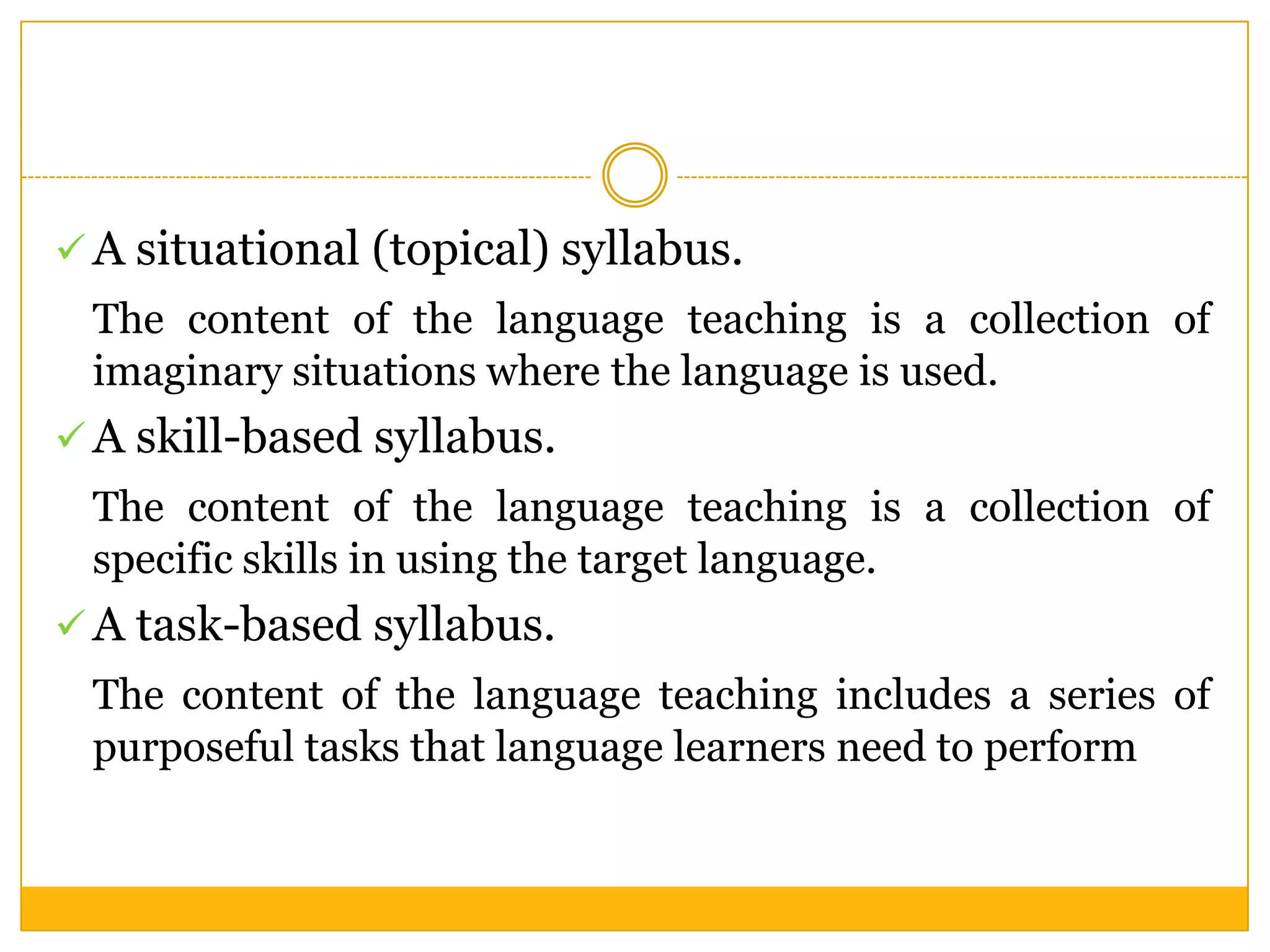
 A situational (topical) syllabus.

The content of the language teaching is a collection of
imaginary situations where the language is used.
 A skill-based syllabus.

The content of the language teaching is a collection of
specific skills in using the target language.
 A task-based syllabus.

The content of the language teaching includes a series of
purposeful tasks that language learners need to perform
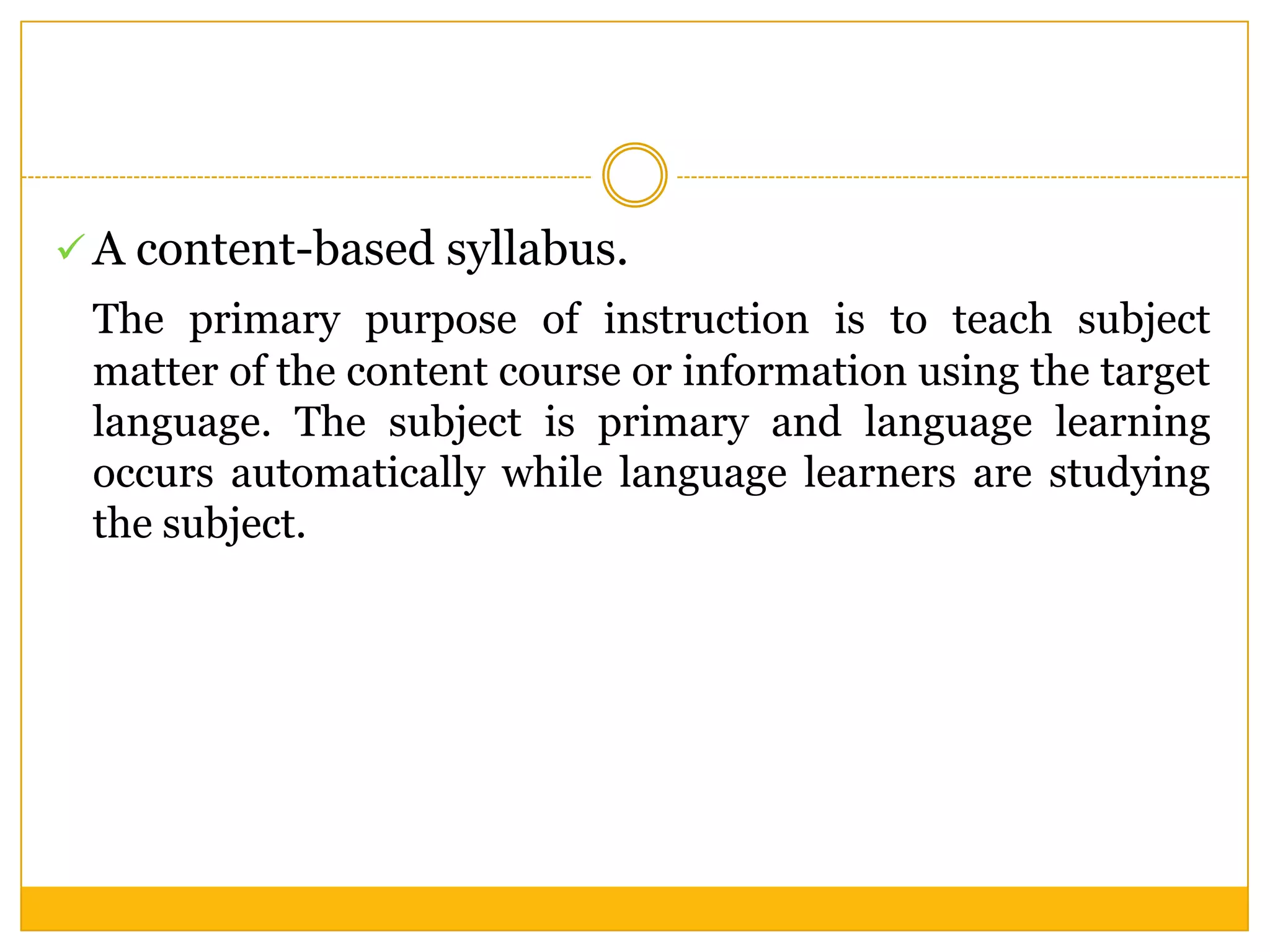
 A content-based syllabus.

The primary purpose of instruction is to teach subject
matter of the content course or information using the target
language. The subject is primary and language learning
occurs automatically while language learners are studying
the subject.
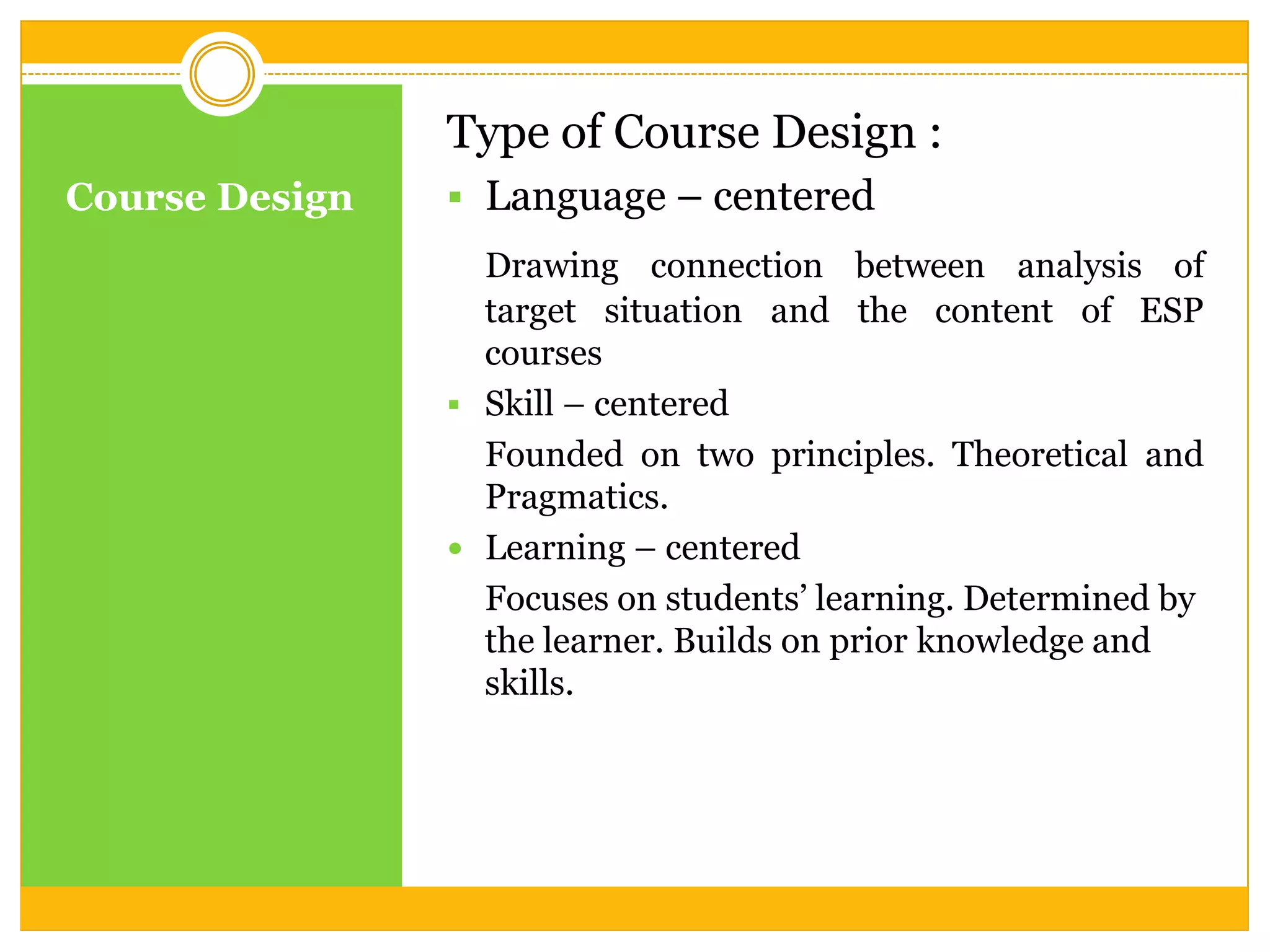
Type of Course Design :
Course Design

 Language – centered
Drawing connection between analysis of
target situation and the content of ESP
courses
 Skill – centered
Founded on two principles. Theoretical and
Pragmatics.
 Learning – centered
Focuses on students’ learning. Determined by
the learner. Builds on prior knowledge and
skills.
Giving Feedback on Learners Progress
 Suggest follow – up work and references
 Suggest specific ways to improve the assignment
 Balance negative with positive comments
 Offer the opportunity to discuss the assignment and

your comments
Planning and conceptualizing an esp program

Planning and conceptualizing an esp program

  • 1.
    PLANNING AND CONCEPTUALIZING ANESP PROGRAM I. G. A. OKA CAHYA DEWI (1201305054) I. G. A. TRIANA RAKANITA (1201305055) A. A. PUTU RINA DEWI (1201305056)
  • 2.
    Conceptualizing THE PROCESS OF WHICHINVOLVE : CONCEPTUALIZING IS MULTIFACETED,  Thinking about what your students to learn, given who they are, their needs and the purpose of the course.  Making decisions about what to include and emphasize.  Organizing the content in a way that will help you to see the relationship among various elements, so that you can make decisions about objectives, materials, sequence and evaluation.
  • 3.
    PLANNING AN ESP PROGRAMS Analysis ofLearners Needs Syllabus and Course Design Giving Feedback on Learners Progress
  • 4.
    Analysis of LearnersNeeds  Process of getting information on learners ‘language needs’, which will help in drawing up a profile to establish coherent objectives, and take subsequent decisions on course content because learners is at the heart of any teaching program.
  • 5.
    Syllabus and CourseDesign Type of Syllabus :  A grammar or structural syllabus. The content of the language teaching is a collection of the forms and structures of the language being taught.  A notional or functional syllabus. The content of the language teaching is a collection of the functions or the notions that are performed when the language is used.
  • 6.
     A situational(topical) syllabus. The content of the language teaching is a collection of imaginary situations where the language is used.  A skill-based syllabus. The content of the language teaching is a collection of specific skills in using the target language.  A task-based syllabus. The content of the language teaching includes a series of purposeful tasks that language learners need to perform
  • 7.
     A content-basedsyllabus. The primary purpose of instruction is to teach subject matter of the content course or information using the target language. The subject is primary and language learning occurs automatically while language learners are studying the subject.
  • 8.
    Type of CourseDesign : Course Design  Language – centered Drawing connection between analysis of target situation and the content of ESP courses  Skill – centered Founded on two principles. Theoretical and Pragmatics.  Learning – centered Focuses on students’ learning. Determined by the learner. Builds on prior knowledge and skills.
  • 9.
    Giving Feedback onLearners Progress  Suggest follow – up work and references  Suggest specific ways to improve the assignment  Balance negative with positive comments  Offer the opportunity to discuss the assignment and your comments