Plagiarism and Academic Integrity :
Problems and Solutions
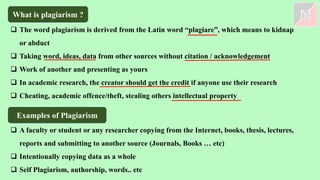
What is plagiarism ?
❑ The word plagiarism is derived from the Latin word “plagiare”, which means to kidnap
or abduct
❑ Taking word, ideas, data from other sources without citation / acknowledgement
❑ Work of another and presenting as yours
❑ In academic research, the creator should get the credit if anyone use their research
❑ Cheating, academic offence/theft, stealing others intellectual property
Examples of Plagiarism
❑ A faculty or student or any researcher copying from the Internet, books, thesis, lectures,
reports and submitting to another source (Journals, Books … etc)
❑ Intentionally copying data as a whole
❑ Self Plagiarism, authorship, words.. etc
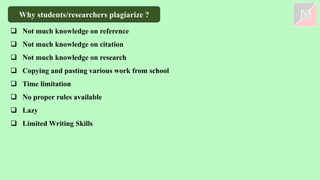
Why students/researchers plagiarize ?
❑ Not much knowledge on reference
❑ Not much knowledge on citation
❑ Not much knowledge on research
❑ Copying and pasting various work from school
❑ Time limitation
❑ No proper rules available
❑ Lazy
❑ Limited Writing Skills
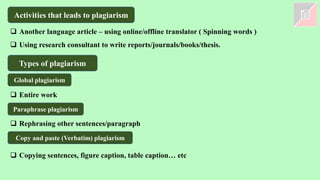
Activities that leads to plagiarism
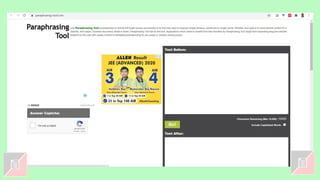
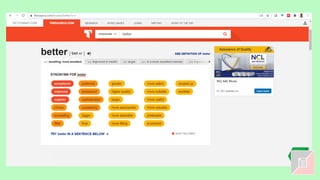
❑ Another language article – using online/offline translator ( Spinning words )
❑ Using research consultant to write reports/journals/books/thesis.
Types of plagiarism
Global plagiarism
❑ Entire work
Paraphrase plagiarism
❑ Rephrasing other sentences/paragraph
Copy and paste (Verbatim) plagiarism
❑ Copying sentences, figure caption, table caption… etc
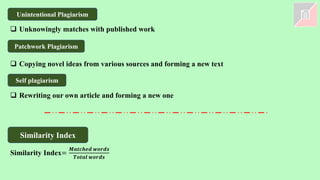
Self plagiarism
Unintentional Plagiarism
Patchwork Plagiarism
❑ Copying novel ideas from various sources and forming a new text
❑ Rewriting our own article and forming a new one
❑ Unknowingly matches with published work
Similarity Index
Similarity Index=
𝑴𝒂𝒕𝒄𝒉𝒆𝒅 𝒘𝒐𝒓𝒅𝒔
𝑻𝒐𝒕𝒂𝒍 𝒘𝒐𝒓𝒅𝒔
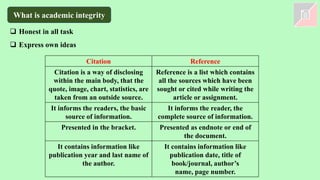
What is academic integrity
❑ Honest in all task
❑ Express own ideas
Citation Reference
Citation is a way of disclosing
within the main body, that the
quote, image, chart, statistics, are
taken from an outside source.
Reference is a list which contains
all the sources which have been
sought or cited while writing the
article or assignment.
It informs the readers, the basic
source of information.
It informs the reader, the
complete source of information.
Presented in the bracket. Presented as endnote or end of
the document.
It contains information like
publication year and last name of
the author.
It contains information like
publication date, title of
book/journal, author’s
name, page number.
APA
APA – 6th Edition
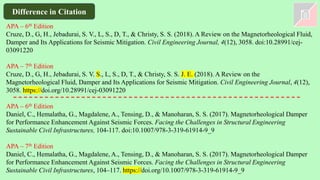
Cruze, D., G, H., Jebadurai, S. V., L, S., D, T., & Christy, S. S. (2018). A Review on the Magnetorheological Fluid,
Damper and Its Applications for Seismic Mitigation. Civil Engineering Journal, 4(12), 3058. doi:10.28991/cej-
03091220
APA – 7th Edition
Cruze, D., G, H., Jebadurai, S. V. S., L, S., D, T., & Christy, S. S. J. E. (2018). A Review on the
Magnetorheological Fluid, Damper and Its Applications for Seismic Mitigation. Civil Engineering Journal, 4(12),
3058. https://doi.org/10.28991/cej-03091220
APA – 6th Edition
Daniel, C., Hemalatha, G., Magdalene, A., Tensing, D., & Manoharan, S. S. (2017). Magnetorheological Damper
for Performance Enhancement Against Seismic Forces. Facing the Challenges in Structural Engineering
Sustainable Civil Infrastructures, 104-117. doi:10.1007/978-3-319-61914-9_9
APA – 7th Edition
Daniel, C., Hemalatha, G., Magdalene, A., Tensing, D., & Manoharan, S. S. (2017). Magnetorheological Damper
for Performance Enhancement Against Seismic Forces. Facing the Challenges in Structural Engineering
Sustainable Civil Infrastructures, 104–117. https://doi.org/10.1007/978-3-319-61914-9_9
Difference in Citation
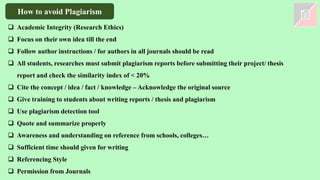
How to avoid Plagiarism
❑ Academic Integrity (Research Ethics)
❑ Focus on their own idea till the end
❑ Follow author instructions / for authors in all journals should be read
❑ All students, researches must submit plagiarism reports before submitting their project/ thesis
report and check the similarity index of < 20%
❑ Cite the concept / idea / fact / knowledge – Acknowledge the original source
❑ Give training to students about writing reports / thesis and plagiarism
❑ Use plagiarism detection tool
❑ Quote and summarize properly
❑ Awareness and understanding on reference from schools, colleges…
❑ Sufficient time should given for writing
❑ Referencing Style
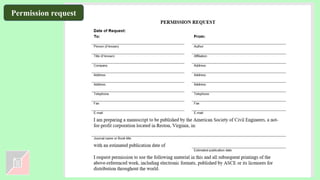
❑ Permission from Journals
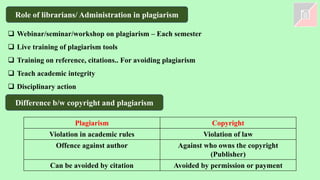
Role of librarians/ Administration in plagiarism
❑ Webinar/seminar/workshop on plagiarism – Each semester
❑ Live training of plagiarism tools
❑ Training on reference, citations.. For avoiding plagiarism
❑ Teach academic integrity
❑ Disciplinary action
Difference b/w copyright and plagiarism
Plagiarism Copyright
Violation in academic rules Violation of law
Offence against author Against who owns the copyright
(Publisher)
Can be avoided by citation Avoided by permission or payment
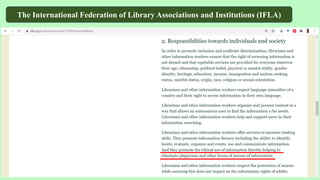
The International Federation of Library Associations and Institutions (IFLA)
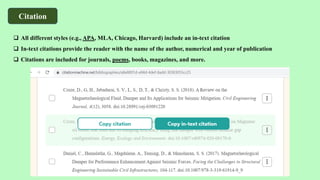
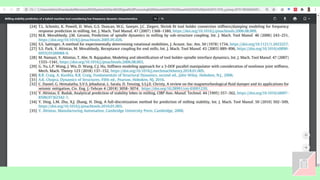
Citation
❑ All different styles (e.g., APA, MLA, Chicago, Harvard) include an in-text citation
❑ In-text citations provide the reader with the name of the author, numerical and year of publication
❑ Citations are included for journals, poems, books, magazines, and more.
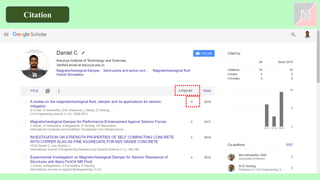
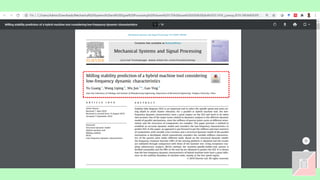
Citation
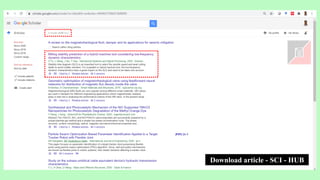
Download article - SCI - HUB
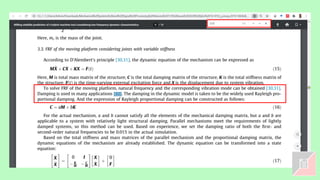
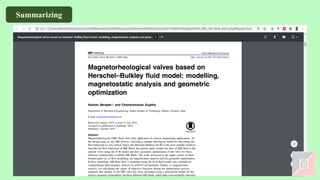
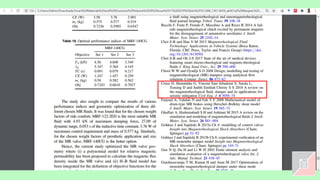
Summarizing
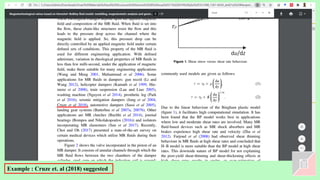
Example : Cruze et. al (2018) suggested
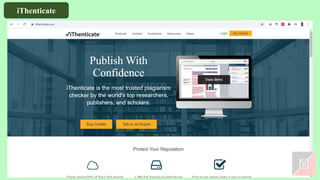
Plagiarism tools used by publishers
iThenticate
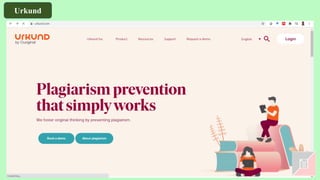
Urkund
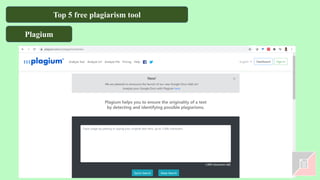
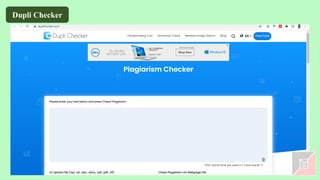
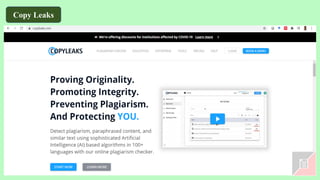
Top 5 free plagiarism tool
Plagium
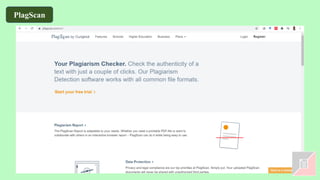
PlagScan
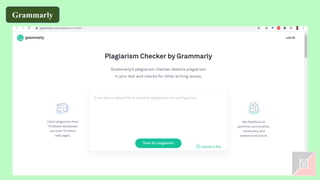
Grammarly
Dupli Checker
Copy Leaks
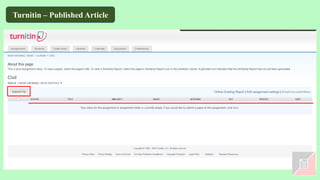
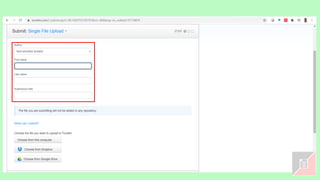
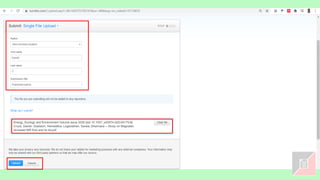
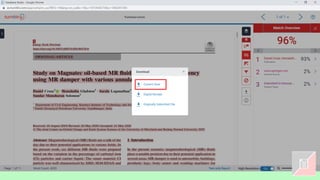
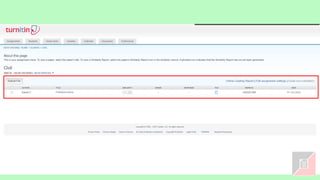
Turnitin – Published Article
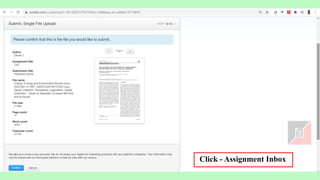
Click - Assignment Inbox
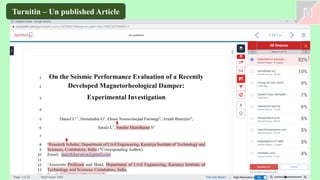
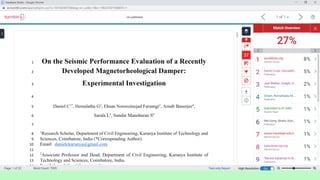
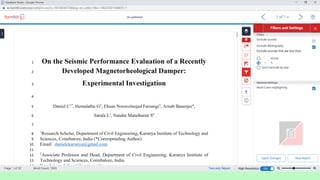
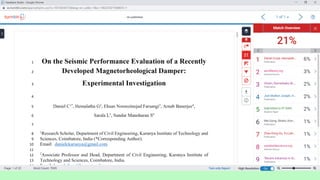
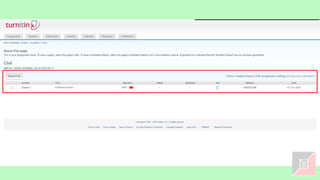
Turnitin – Un published Article
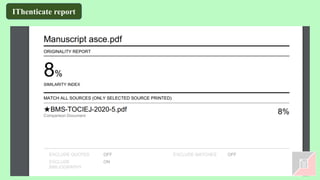
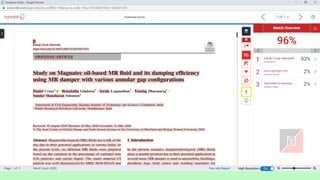
IThenticate report
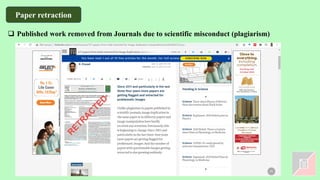
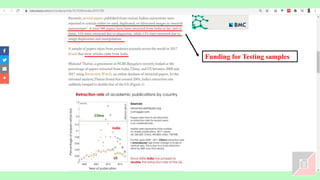
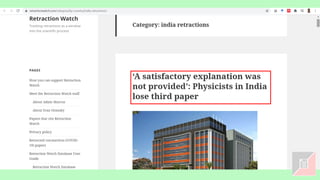
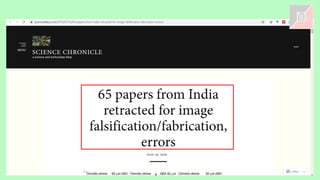
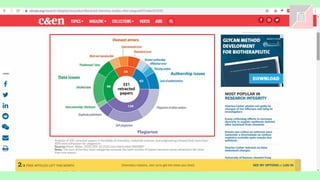
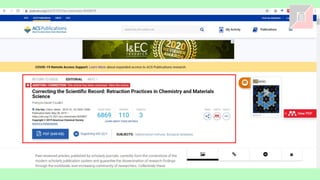
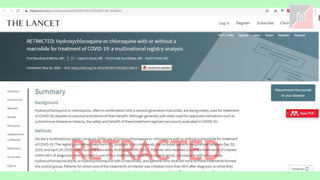
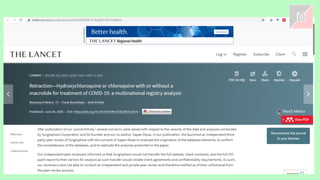
Paper retraction
❑ Published work removed from Journals due to scientific misconduct (plagiarism)
Funding for Testing samples
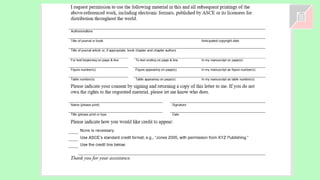
Permission request
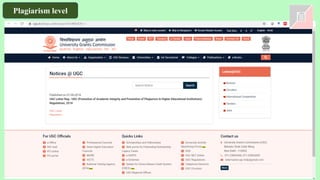
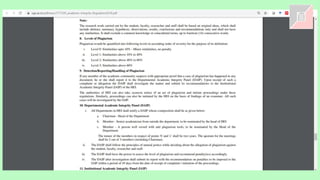
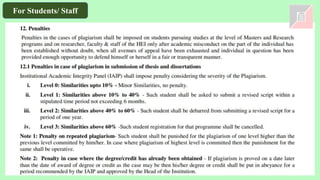
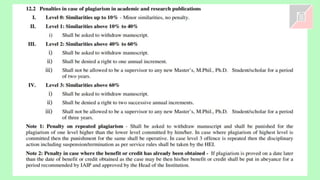
Plagiarism level
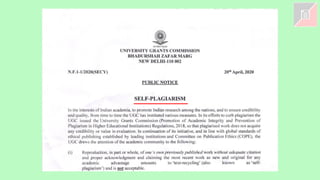
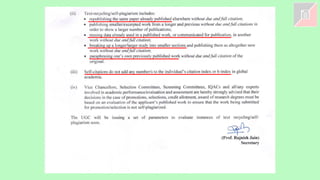
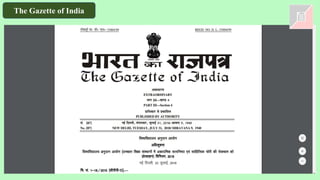
The Gazette of India
For Students/ Staff
For Students/ Staff
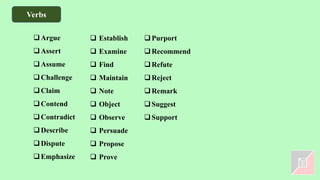
❑Argue
❑Assert
❑Assume
❑Challenge
❑Claim
❑Contend
❑Contradict
❑Describe
❑Dispute
❑Emphasize
❑ Establish
❑ Examine
❑ Find
❑ Maintain
❑ Note
❑ Object
❑ Observe
❑ Persuade
❑ Propose
❑ Prove
❑Purport
❑Recommend
❑Refute
❑Reject
❑Remark
❑Suggest
❑Support
Verbs
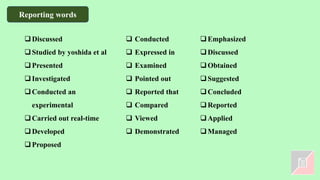
❑Discussed
❑Studied by yoshida et al
❑Presented
❑Investigated
❑Conducted an
experimental
❑Carried out real-time
❑Developed
❑Proposed
❑ Conducted
❑ Expressed in
❑ Examined
❑ Pointed out
❑ Reported that
❑ Compared
❑ Viewed
❑ Demonstrated
❑Emphasized
❑Discussed
❑Obtained
❑Suggested
❑Concluded
❑Reported
❑Applied
❑Managed
Reporting words
Thank You
Source : Manuscriptpedia and Internet
Follow our LinkedIn Page for future events - linkedin.com/company/manuscriptpedia
Follow our Facebook Page for Future updates - https://fb.me/manuscriptpediaindia
Follow our Facebook Group for Future updates - www.facebook.com/groups/manuscriptpedia
Join our Telegram Group - https://t.me/Manuscriptpedia
To learn more in research and about our events, click the below links to Join
For free research support call - +91 9150929629 / mail to manucriptpedia@gmail.com
For Training/Workshop/Seminars/Conference/Collaboration mail to – director@manuscriptpedia.com
All the best for your Research Endeavors
www.manuscriptpedia.com

Plagiarism and Academic integrity : Problems and Solutions

  • 1.
    Plagiarism and AcademicIntegrity : Problems and Solutions
  • 2.
    What is plagiarism? ❑ The word plagiarism is derived from the Latin word “plagiare”, which means to kidnap or abduct ❑ Taking word, ideas, data from other sources without citation / acknowledgement ❑ Work of another and presenting as yours ❑ In academic research, the creator should get the credit if anyone use their research ❑ Cheating, academic offence/theft, stealing others intellectual property Examples of Plagiarism ❑ A faculty or student or any researcher copying from the Internet, books, thesis, lectures, reports and submitting to another source (Journals, Books … etc) ❑ Intentionally copying data as a whole ❑ Self Plagiarism, authorship, words.. etc
  • 3.
    Why students/researchers plagiarize? ❑ Not much knowledge on reference ❑ Not much knowledge on citation ❑ Not much knowledge on research ❑ Copying and pasting various work from school ❑ Time limitation ❑ No proper rules available ❑ Lazy ❑ Limited Writing Skills
  • 4.
    Activities that leadsto plagiarism ❑ Another language article – using online/offline translator ( Spinning words ) ❑ Using research consultant to write reports/journals/books/thesis. Types of plagiarism Global plagiarism ❑ Entire work Paraphrase plagiarism ❑ Rephrasing other sentences/paragraph Copy and paste (Verbatim) plagiarism ❑ Copying sentences, figure caption, table caption… etc
  • 5.
    Self plagiarism Unintentional Plagiarism PatchworkPlagiarism ❑ Copying novel ideas from various sources and forming a new text ❑ Rewriting our own article and forming a new one ❑ Unknowingly matches with published work Similarity Index Similarity Index= 𝑴𝒂𝒕𝒄𝒉𝒆𝒅 𝒘𝒐𝒓𝒅𝒔 𝑻𝒐𝒕𝒂𝒍 𝒘𝒐𝒓𝒅𝒔
  • 6.
    What is academicintegrity ❑ Honest in all task ❑ Express own ideas Citation Reference Citation is a way of disclosing within the main body, that the quote, image, chart, statistics, are taken from an outside source. Reference is a list which contains all the sources which have been sought or cited while writing the article or assignment. It informs the readers, the basic source of information. It informs the reader, the complete source of information. Presented in the bracket. Presented as endnote or end of the document. It contains information like publication year and last name of the author. It contains information like publication date, title of book/journal, author’s name, page number.
  • 10.
  • 11.
    APA – 6thEdition Cruze, D., G, H., Jebadurai, S. V., L, S., D, T., & Christy, S. S. (2018). A Review on the Magnetorheological Fluid, Damper and Its Applications for Seismic Mitigation. Civil Engineering Journal, 4(12), 3058. doi:10.28991/cej- 03091220 APA – 7th Edition Cruze, D., G, H., Jebadurai, S. V. S., L, S., D, T., & Christy, S. S. J. E. (2018). A Review on the Magnetorheological Fluid, Damper and Its Applications for Seismic Mitigation. Civil Engineering Journal, 4(12), 3058. https://doi.org/10.28991/cej-03091220 APA – 6th Edition Daniel, C., Hemalatha, G., Magdalene, A., Tensing, D., & Manoharan, S. S. (2017). Magnetorheological Damper for Performance Enhancement Against Seismic Forces. Facing the Challenges in Structural Engineering Sustainable Civil Infrastructures, 104-117. doi:10.1007/978-3-319-61914-9_9 APA – 7th Edition Daniel, C., Hemalatha, G., Magdalene, A., Tensing, D., & Manoharan, S. S. (2017). Magnetorheological Damper for Performance Enhancement Against Seismic Forces. Facing the Challenges in Structural Engineering Sustainable Civil Infrastructures, 104–117. https://doi.org/10.1007/978-3-319-61914-9_9 Difference in Citation
  • 12.
    How to avoidPlagiarism ❑ Academic Integrity (Research Ethics) ❑ Focus on their own idea till the end ❑ Follow author instructions / for authors in all journals should be read ❑ All students, researches must submit plagiarism reports before submitting their project/ thesis report and check the similarity index of < 20% ❑ Cite the concept / idea / fact / knowledge – Acknowledge the original source ❑ Give training to students about writing reports / thesis and plagiarism ❑ Use plagiarism detection tool ❑ Quote and summarize properly ❑ Awareness and understanding on reference from schools, colleges… ❑ Sufficient time should given for writing ❑ Referencing Style ❑ Permission from Journals
  • 13.
    Role of librarians/Administration in plagiarism ❑ Webinar/seminar/workshop on plagiarism – Each semester ❑ Live training of plagiarism tools ❑ Training on reference, citations.. For avoiding plagiarism ❑ Teach academic integrity ❑ Disciplinary action Difference b/w copyright and plagiarism Plagiarism Copyright Violation in academic rules Violation of law Offence against author Against who owns the copyright (Publisher) Can be avoided by citation Avoided by permission or payment
  • 14.
    The International Federationof Library Associations and Institutions (IFLA)
  • 15.
    Citation ❑ All differentstyles (e.g., APA, MLA, Chicago, Harvard) include an in-text citation ❑ In-text citations provide the reader with the name of the author, numerical and year of publication ❑ Citations are included for journals, poems, books, magazines, and more.
  • 16.
  • 17.
  • 21.
  • 23.
    Example : Cruzeet. al (2018) suggested
  • 24.
    Plagiarism tools usedby publishers
  • 25.
  • 26.
  • 27.
    Top 5 freeplagiarism tool Plagium
  • 28.
  • 29.
  • 30.
  • 31.
  • 32.
  • 35.
  • 40.
    Turnitin – Unpublished Article
  • 44.
  • 45.
    Paper retraction ❑ Publishedwork removed from Journals due to scientific misconduct (plagiarism)
  • 46.
  • 53.
  • 55.
  • 56.
  • 58.
  • 60.
  • 63.
    ❑Argue ❑Assert ❑Assume ❑Challenge ❑Claim ❑Contend ❑Contradict ❑Describe ❑Dispute ❑Emphasize ❑ Establish ❑ Examine ❑Find ❑ Maintain ❑ Note ❑ Object ❑ Observe ❑ Persuade ❑ Propose ❑ Prove ❑Purport ❑Recommend ❑Refute ❑Reject ❑Remark ❑Suggest ❑Support Verbs
  • 64.
    ❑Discussed ❑Studied by yoshidaet al ❑Presented ❑Investigated ❑Conducted an experimental ❑Carried out real-time ❑Developed ❑Proposed ❑ Conducted ❑ Expressed in ❑ Examined ❑ Pointed out ❑ Reported that ❑ Compared ❑ Viewed ❑ Demonstrated ❑Emphasized ❑Discussed ❑Obtained ❑Suggested ❑Concluded ❑Reported ❑Applied ❑Managed Reporting words
  • 65.
    Thank You Source :Manuscriptpedia and Internet Follow our LinkedIn Page for future events - linkedin.com/company/manuscriptpedia Follow our Facebook Page for Future updates - https://fb.me/manuscriptpediaindia Follow our Facebook Group for Future updates - www.facebook.com/groups/manuscriptpedia Join our Telegram Group - https://t.me/Manuscriptpedia To learn more in research and about our events, click the below links to Join For free research support call - +91 9150929629 / mail to manucriptpedia@gmail.com For Training/Workshop/Seminars/Conference/Collaboration mail to – director@manuscriptpedia.com All the best for your Research Endeavors www.manuscriptpedia.com