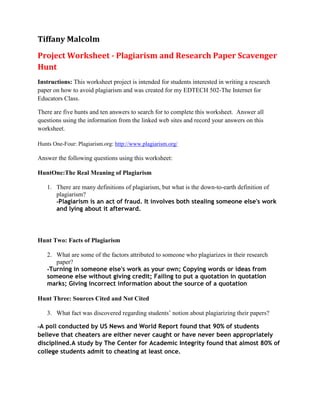
Tiffany Malcolm
Project Worksheet - Plagiarism and Research Paper Scavenger
Hunt
Instructions: This worksheet project is intended for students interested in writing a research
paper on how to avoid plagiarism and was created for my EDTECH 502-The Internet for
Educators Class.

There are five hunts and ten answers to search for to complete this worksheet. Answer all
questions using the information from the linked web sites and record your answers on this
worksheet.

Hunts One-Four: Plagiarism.org: http://www.plagiarism.org/

Answer the following questions using this worksheet:

HuntOne:The Real Meaning of Plagiarism

   1. There are many definitions of plagiarism, but what is the down-to-earth definition of
      plagiarism?
      -Plagiarism is an act of fraud. It involves both stealing someone else's work
      and lying about it afterward.


Hunt Two: Facts of Plagiarism

   2. What are some of the factors attributed to someone who plagiarizes in their research
      paper?
   -Turning in someone else's work as your own; Copying words or ideas from
   someone else without giving credit; Failing to put a quotation in quotation
   marks; Giving incorrect information about the source of a quotation

Hunt Three: Sources Cited and Not Cited

   3. What fact was discovered regarding students’ notion about plagiarizing their papers?

-A poll conducted by US News and World Report found that 90% of students
believe that cheaters are either never caught or have never been appropriately
disciplined.A study by The Center for Academic Integrity found that almost 80% of
college students admit to cheating at least once.
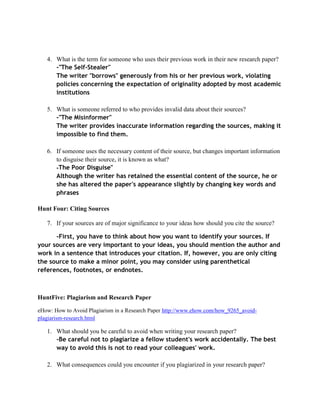
4. What is the term for someone who uses their previous work in their new research paper?
      -"The Self-Stealer"
      The writer "borrows" generously from his or her previous work, violating
      policies concerning the expectation of originality adopted by most academic
      institutions

   5. What is someone referred to who provides invalid data about their sources?
      -"The Misinformer"
      The writer provides inaccurate information regarding the sources, making it
      impossible to find them.

   6. If someone uses the necessary content of their source, but changes important information
      to disguise their source, it is known as what?
      -The Poor Disguise"
      Although the writer has retained the essential content of the source, he or
      she has altered the paper's appearance slightly by changing key words and
      phrases

Hunt Four: Citing Sources

   7. If your sources are of major significance to your ideas how should you cite the source?

      -First, you have to think about how you want to identify your sources. If
your sources are very important to your ideas, you should mention the author and
work in a sentence that introduces your citation. If, however, you are only citing
the source to make a minor point, you may consider using parenthetical
references, footnotes, or endnotes.


HuntFive: Plagiarism and Research Paper

eHow: How to Avoid Plagiarism in a Research Paper http://www.ehow.com/how_9265_avoid-
plagiarism-research.html

   1. What should you be careful to avoid when writing your research paper?
      -Be careful not to plagiarize a fellow student's work accidentally. The best
      way to avoid this is not to read your colleagues' work.

   2. What consequences could you encounter if you plagiarized in your research paper?
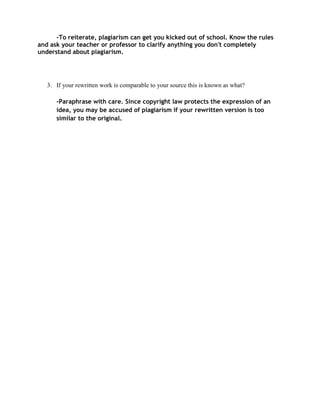
-To reiterate, plagiarism can get you kicked out of school. Know the rules
and ask your teacher or professor to clarify anything you don't completely
understand about plagiarism.


   3. If your rewritten work is comparable to your source this is known as what?

      -Paraphrase with care. Since copyright law protects the expression of an
      idea, you may be accused of plagiarism if your rewritten version is too
      similar to the original.

Plagiarism

  • 1.
    Tiffany Malcolm Project Worksheet- Plagiarism and Research Paper Scavenger Hunt Instructions: This worksheet project is intended for students interested in writing a research paper on how to avoid plagiarism and was created for my EDTECH 502-The Internet for Educators Class. There are five hunts and ten answers to search for to complete this worksheet. Answer all questions using the information from the linked web sites and record your answers on this worksheet. Hunts One-Four: Plagiarism.org: http://www.plagiarism.org/ Answer the following questions using this worksheet: HuntOne:The Real Meaning of Plagiarism 1. There are many definitions of plagiarism, but what is the down-to-earth definition of plagiarism? -Plagiarism is an act of fraud. It involves both stealing someone else's work and lying about it afterward. Hunt Two: Facts of Plagiarism 2. What are some of the factors attributed to someone who plagiarizes in their research paper? -Turning in someone else's work as your own; Copying words or ideas from someone else without giving credit; Failing to put a quotation in quotation marks; Giving incorrect information about the source of a quotation Hunt Three: Sources Cited and Not Cited 3. What fact was discovered regarding students’ notion about plagiarizing their papers? -A poll conducted by US News and World Report found that 90% of students believe that cheaters are either never caught or have never been appropriately disciplined.A study by The Center for Academic Integrity found that almost 80% of college students admit to cheating at least once.
  • 2.
    4. What isthe term for someone who uses their previous work in their new research paper? -"The Self-Stealer" The writer "borrows" generously from his or her previous work, violating policies concerning the expectation of originality adopted by most academic institutions 5. What is someone referred to who provides invalid data about their sources? -"The Misinformer" The writer provides inaccurate information regarding the sources, making it impossible to find them. 6. If someone uses the necessary content of their source, but changes important information to disguise their source, it is known as what? -The Poor Disguise" Although the writer has retained the essential content of the source, he or she has altered the paper's appearance slightly by changing key words and phrases Hunt Four: Citing Sources 7. If your sources are of major significance to your ideas how should you cite the source? -First, you have to think about how you want to identify your sources. If your sources are very important to your ideas, you should mention the author and work in a sentence that introduces your citation. If, however, you are only citing the source to make a minor point, you may consider using parenthetical references, footnotes, or endnotes. HuntFive: Plagiarism and Research Paper eHow: How to Avoid Plagiarism in a Research Paper http://www.ehow.com/how_9265_avoid- plagiarism-research.html 1. What should you be careful to avoid when writing your research paper? -Be careful not to plagiarize a fellow student's work accidentally. The best way to avoid this is not to read your colleagues' work. 2. What consequences could you encounter if you plagiarized in your research paper?
  • 3.
    -To reiterate, plagiarismcan get you kicked out of school. Know the rules and ask your teacher or professor to clarify anything you don't completely understand about plagiarism. 3. If your rewritten work is comparable to your source this is known as what? -Paraphrase with care. Since copyright law protects the expression of an idea, you may be accused of plagiarism if your rewritten version is too similar to the original.